A Definition of Hauntology, its Recurring Themes and Intertwining with Otherly Folk, Folk Horror and the Exploration of a Rural and Urban Wyrd Cultural Landscape

One of the recurring themes of the A Year In The Country project as a whole is a consideration of hauntology. This is a relatively niche cultural phrase and area of work that not all readers will necessarily know of, and so below is a definition or overview of hauntology.
Although it is hard to precisely define what hauntology is, it has come to be used as a way of identifying particular strands of music and cultural tendencies. As a cultural category, it is fluid and not strictly delineated and rather than being a well-defined genre is more a way of identifying work which explores and utilises certain kinds of atmospheres, themes, characteristics and source material, some of which are listed below:
1. Music and culture that draws from and examines a sense of loss, yearning or nostalgia for a post-war utopian, progressive, modernist future that was never quite reached, which is often accompanied by a sense of lingering Cold War dread.

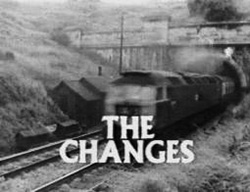
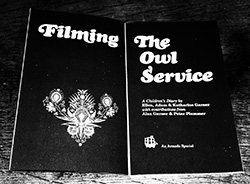
2. A tendency to see some kind of unsettledness and hidden layers of meaning in previous decades’ public information films, TV idents and young adult-orientated British television drama programmes, from the late 1960s until approximately the early 1980s, which had surprisingly complex and/or dark themes and atmospheres, particularly considered their intended audience. This includes the likes of The Owl Service (1969-1970), Children of the Stones (1977) and The Changes (1975).
 (Above: members of the BBC Radiophonic Workshop.)
3. Graphic design and a particular kind of more-often than-not electronic, often analogue synthesiser-based and/or previous period-orientated music that references and reinterprets some forms of older culture and related artifacts, often focusing on the period from approximately the mid-1960s to 1979 (or at times the early 1980s)1 and generally of British origin. Such reference points include previous decades’ library music (i.e., music created for industry use in films, television, adverts, etc, rather than for public sale); the electronic music innovations of the BBC Radiophonic Workshop; educational materials and book cover artwork, including period school textbooks; Pelican non-fiction titles which tended to have a distinctive aesthetic that combined functionality and a sense of idealism; and the stark sometimes seemingly almost accidentally darkly hued designs of the Penguin Modern Poets books of the 1960s and 70s, which often featured minimalist, heavily posterised images of nature.

4. A reimagining and misremembering of the above and other sources to create forms of music and culture that seem familiar, comforting and also often unsettling and not a little eerie; work that is accompanied by a sense of being haunted by spectres of its, and our, cultural past, to loosely paraphrase philosopher Jacques Derrida who coined the phrase and created the original concept of hauntology.2
 (Above: a still from the 2002 Carlton DVD releases of the British supernatural science fiction fantasy and slipstream-esque television series Sapphire & Steel, which has become a recurring touchstone for hauntological and wyrd culture; the still shows some of the glitches contained in the DVD edition which both via their visual aesthetic and the series’ connections and adoption by hauntology orientated culture have an inherent, albeit accidental, spectral hauntological-esque character.)
5. The use and foregrounding of recording medium noise and imperfections, such as the crackle and hiss of vinyl, tape wobble, and so on that calls attention to the decaying nature of older analogue mediums and which can be used to create a sense of time out of joint and edge memories of previous eras.
6. The drawing together and utilising of the above elements to conjure a sense of an often strange, parallel or imagined world, or “Midwichian”3 Britain.
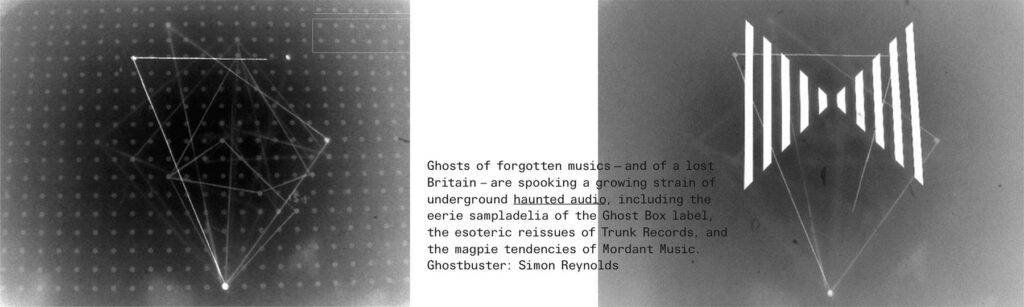 (Above: a section of the article “Haunted Audio” by Simon Reynolds, published in The Wire magazine issue 273, November 2006; the article explored hauntology and “the spectral presences in the work of Ghost Box, Trunk Records and others, mining resonances from British post-war TV, film and library music” and viewed today it acts as an interesting time capsule overview from when, as discussed below, hauntology began to coalesce.)
Hauntology is often, but not exclusively, used to refer to British culture and music, and it is thought to have been first used in relation to this by the writers Mark Fisher and Simon Reynolds to describe a loose cultural grouping of music and attendant culture which began to coalesce in the UK around the early-mid-2000s.
As a loose cultural category, hauntology has retained a fair degree of cultural and aesthetic diversity that takes in the eldritch educationalism of some Ghost Box Records’ releases, the playful psychedelic whimsy and breakbeats of Blank Workshop/Moon Wiring Club and the darkly humorous reinterpretations of period official warning posters of Scarfolk amongst others.
The term has also been used more widely to describe the likes of American hypnagogic pop and Italian Occult Psychedelia; musical categories which also reimagine and create spectral echoes of the past but which tend to utilise as their source material or inspiration, different areas and sometimes eras of culture.

Alongside this, the term “the haunted generation” has also increasingly been used to describe those who create or explore hauntological-orientated culture and also people who grew up when many of hauntology’s reference point touchstones – such as the previously mentioned young adult orientated unsettling television programmes etc – were first broadcast, often during the Cold War etc, and therefore had first-hand experience of them as they happened and potentially were left “haunted” by them. The term was coined by broadcaster, writer and performer Bob Fischer and first came to prominence in 2017 when he used it as the title for a cover article on hauntology which he wrote for Fortean Times magazine, and it was also used as the name of his subsequent regular column in it and his website, both of which focus on, amongst other interconnected areas, hauntological culture.
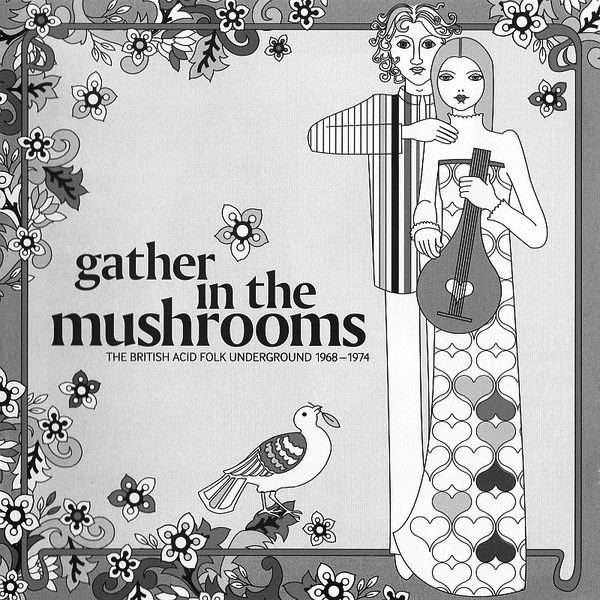 (Above: the cover art to the Gather in the Mushrooms: The British Acid Folk Underground 1968-1974 album, compiled by Bob Stanley and released in 2004 which is an accessible and concise starting point from which to begin exploring 1960s and 1970s British acid and psych folk.)
A further recurring theme of the A Year In The Country project is what may initially appear to be a curious and disparate occurrence, and which it may be helpful to add some background and explanation to.
Since approximately 2010-2014, a little later than the above mentioned initial coalescing of hauntological orientated work and themes, there has been a growth of interest in what, as discussed below, could be called “rural wyrd” culture (and which in this post and elsewhere I have also called “otherly pastoral”, “otherly folk” or “wyrd” culture). This has included folk music and rural and folkloricorientated creative work which has variously had and/or explored underground, acid, psych, exploratory, magikal,4 folk horror etc characteristics and this has come to share common ground with hauntological work, in particular synthesised electronica with a leftfield hauntological character.
 (Above: a section of the BBC Radiophonic Workshop studio in Maida Vale, London.)
This is an area of culture where the use, appreciation and romance of often older electronic music technologies, reference points and inspirations segues and intertwines with the more bucolic wanderings and landscapes of otherly folk and rural wyrd culture. In turn it has become a part of the cultural landscape, which in the words of author, artist, musician and curator Kristen Gallerneaux, is:
“Planted permanently somewhere between the history of the first transistor, the paranormal, and nature-driven worlds of the folkloric…”
On the surface, such otherly folk and spectral electronic musical and cultural forms are very disparate, and yet both have come to explore and share similar landscapes. What may be one of the underlying linking points with both otherly folk and hauntology is a yearning for lost utopias. Thus, in more otherly folk-orientated culture, this is possibly related to a yearning for lost (possibly imagined or only hoped for) Arcadian idylls, whilst in hauntological culture it may be connected to the previously mentioned yearning for lost progressive post-war futures that never fully came to fruition.
Both of these intertwined areas of music and culture have revered relics; for otherly folk etc work, these may include those from that lost idyll which are spectrally imprinted with some form of loss and which Rob Young described and listed in his 2010 book Electric Eden: Unearthing Britain’s Visionary Music as being “old buildings, texts, songs, etc, [that] are like talismans to be treasured, as a connective chain to the past.”
 (Above: Reyner Banham’s article from December 1955, originally published in The Architectural Review, which was the first published writing that attempted to define and codifiy the newly emerging architectural movement of Brutalism.)
Hauntological talismans may also include items from those referred to above: TV idents from previous decades, public information films and television series from the late 1960s to late 1970s which have gained unsettledness and hidden layers of meaning with the passing of time, alongside the likes of the BBC Radiophonic Workshop and Brutalist architecture, and which also are considered to contain spectral echoes in reference to the aforementioned lost progressive futures.
These two strands of otherly folk and hauntological work and culture may appear at first to be cultural cuckoos in the same nest and/or strange bedfellows. However, they have come to be seen as fellow travellers who, rather than being divided by differing surface aesthetics, are drawn together by a similarly exploratory and often visionary or utopian spirit, and which respectively shadow and inform one another’s journeys within an alternative cultural landscape.
This cultural intertwining and grouping does not have an overarching name, but increasingly “wyrd” is one that has come to be associated with it, often being used not as a genre name but rather as a way of describing and denoting it and the atmospheres and characteristics of related work.
Interconnected with which, wyrd is a word that has deep-lying roots and varied meanings stretching back through the centuries:
“‘Wyrd’ is the oldest spelling of the Anglo-Saxon spelling of ‘weird’, in Old English – recorded instances dating back to c.888, including instances in Beowulf c.1000… The earliest uses of ‘wyrd’ in Old English describe agencies of fate and destiny (relating to the consequences of one’s actions) or powers of foresight with magical or legendary elements. Later definitions… from the 1800s suggest ‘a supernatural or marvellous occurrence or tale’…” (Quoted from “Why Wyrd? Why folklore? Why now?”, Diane Rodgers, Screening the Unreal event at University of Brighton, 4th July 2018.)
Often, the word “wyrd” is used in the context of otherly folk and hauntology to imply an eldritch, uncanny, weird, eerie or unsettling sense of rural and folk-orientated culture, but it could be used – and is at points in this post – to refer to a widerreaching exploration in culture of a sense of mystery and hidden layers to things in a world that tends, conversely, to be inclined towards having and wanting everything rationally, scientifically and empirically explained. At the same time, “wyrd” culture does not necessarily involve a rejection or reaction against scientific etc viewpoints but rather can embrace and sit alongside them. Nor is it a straightforward acceptance of the otherworldly, preter- or supernatural but rather often reflects a fascination and being drawn to the idea of such things, rather than the actuality of them.5
What has come to be known as folk horror has been a particularly prominent aspect of the wyrd cultural landscape, while folk horror as a cultural mode or genre comes in many different forms a number of themes and tropes often recur in related film, television, fiction etc.
Folk horror often, although not exclusively, takes place in rural settings which are often isolated and this has enabled skewed moral, religious, pagan etc beliefs to take root amongst those who live there. While it is often related to and interconnects with supernatural horror film it is more likely to centre around the beliefs and actions of people rather than the overtly supernatural and to focus on outsiders who come up against these beliefs etc, often with deadly results.6 Indeed the central tension of folk horror often involves the conflict between those who vigorously and sometimes fanatically defend the position and idea that “we don’t go back” to the old ways and beliefs and consider that if we do then madness and chaos will ensue, and those who still live by the old ways such as pagan beliefs etc.7
Related work, as with much of hauntology, often creates and incorporates eerie, unsettled atmospheres which in turn at times interconnects and overlaps with some of the themes, tropes etc of hauntology.
The “unholy trio” wellspring of folk horror is often considered to be the British films Witchfinder General (1968), Blood on Satan’s Claw (1971) The Wicker Man (1973) all of which to various degrees contain and explore a number of the above-mentioned recurring tropes and themes.
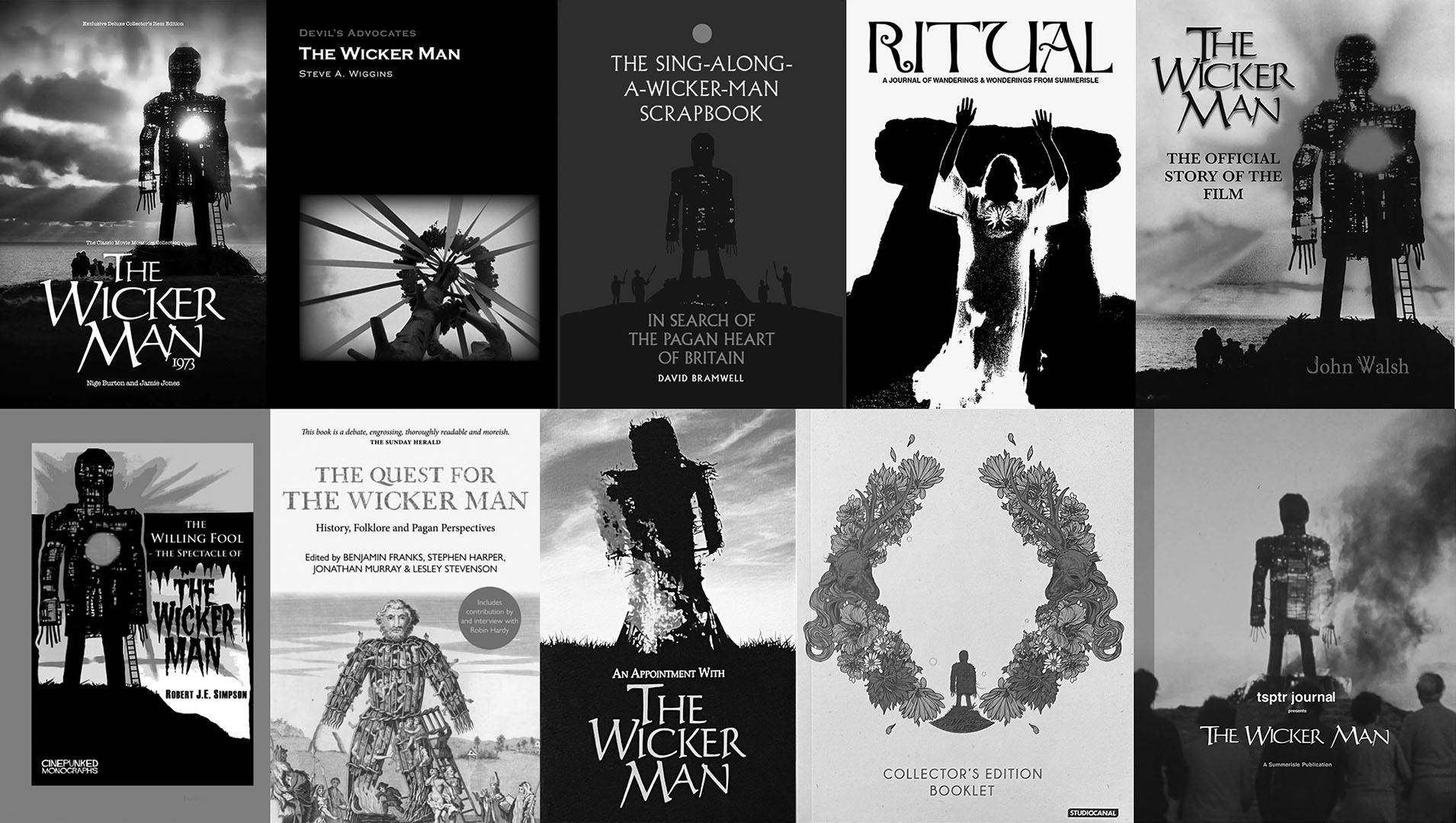
In recent years folk horror and wyrd cultural related themes etc have become a day-to-day part of mainstream culture. As an indicator of this The Wicker Man has moved far away from its previous cult status and has gained a culturally respected iconic stature, had an extensive number of books, zines etc devoted to it (see image above) and is often referred to in mainstream cultural discourse alongside having become a widely used short hand in mainstream and subcultural journalism etc as a way of indicating and referring to particular folk horror themes and tropes.
Alongside which the word and concept of “re-enchantment” has often come to be used when referring to rural wyrd orientated culture and its use generally tends to refer to and denote attempts to reawaken and rediscover a sense of mystery and magic in relation to rural landscapes and their layered and at times hidden history.
This has coincided with a new wave of wyrd culture orientated publications, projects etc which began to appear and gain popularity since around 2019 which includes amongst others The Stone Club, Roam magazine, the Weird Walk project, Ben Edge’s folk ritual paintings and the zines Hellebore, Hwaet!, Cunning Folk, Myth & Lore, Grimoire Silvanus, Undefined Boundary and Rituals & Declarations.
Weird Walk, which is a multi-stranded project that has incorporated live events and the release of zines, music, a podcast and books, has perhaps gained the highest profile of this “new wave” of wyrd orientated projects etc and on its website its methods and aims are set out as being:
“By walking the ancient paths, visiting the sacred sites, and immersing ourselves in the folklore and customs of these isles, we hope to fan the faint embers of magic that still smoulder in the grate and conjure that elusive temporal trackway of history and mystery, a weird walk that bypasses nostalgia and leads us back towards optimism and re-enchantment.”
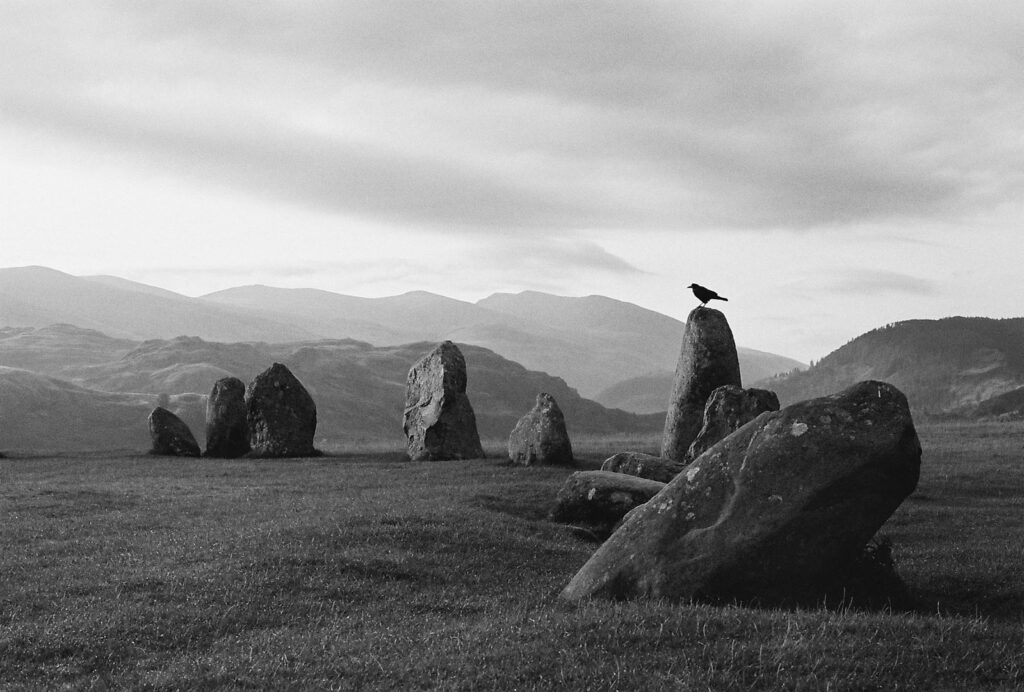 (Above: a photograph taken and posted online as part of Weird Walk’s “walking the ancient paths, visiting the sacred sites… back towards optimism and re-enchantment” which are discussed below.)
Connected to which, the reasons for the popularity and proliferation of such publications and wyrd culture in general may well include that in times of disruption people have often looked towards more esoteric, fringe, occult etc ideas and beliefs and in recent years Britain, the West and the wider world have experienced a considerable amount of turmoil in various forms.8
Weird Walk’s philosophy of using “weird walks” in the landscape to try and reconnect with a sense of “mystery… optimism… and re-enchantment” could well be seen to offer an attractive balm, escape from and signposted passage through the troubled contemporary world and similar could be said of many of the other abovementioned zines etc.
In turn the draw of the “re-enchanting” of the landscape could be seen to have parallels with events etc in the 1970s when Britain experienced high levels of social, economic, political conflict etc and this led sections of the British population, particularly those of a counter cultural bent, to move to rural areas and explore and rediscover folk music, traditional folk rituals and at times esoteric, occult, paranormal beliefs etc in part as a response and escape from society’s troubles and unsettling times.
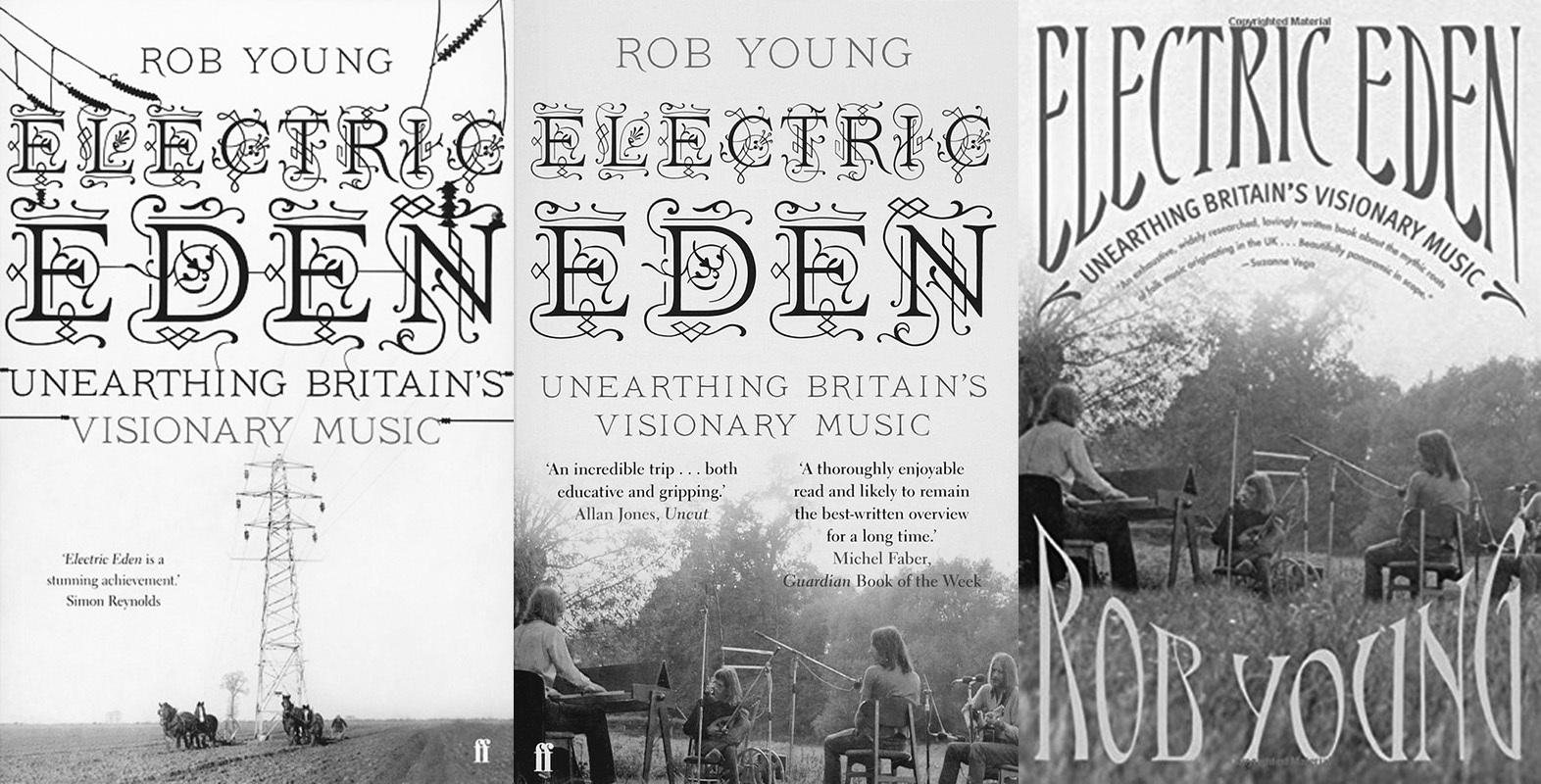
Looking back further to the earlier roots of the recent “reenchanting” of the landscape, a notable point in the growth of such things was the publication in 2010 of Rob Young’s abovementioned book Electric Eden which it has been suggested:
“Re-enchanted the cultural landscape in a manner not dissimilar to William Morris’s impact on the Victorian psyche.”9 (Quoted from “Enchanting the cultural landscape”, Cathi Unsworth, Fortean Times, December 2022.)10
Electric Eden had a high-profile release and explored and drew together loosely interconnected strands of British folk, otherly pastoral and hauntological music and culture and suggested that those involved in such culture have often undertaken a form of “imaginative time travel” whereby they draw from and reimagine culture etc from previous eras.

Its bringing together and exploration of these areas of culture could be seen to have helped plough and seed the pathways that led to the flowering of interest in wyrd rural culture that, as discussed above, began to gather pace around 2010-2014 and which has included, amongst many other projects etc, Folk Horror Revival and A Year In The Country and also the above-mentioned “new wave” of wyrd culture that began to appear around 2019.
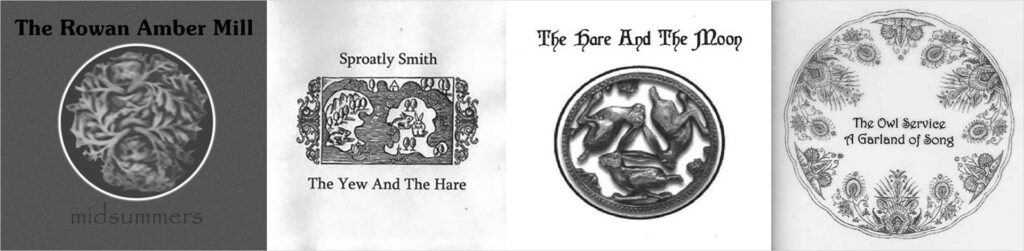 (Above: early releases by “the flagship bands of new wyrd folk” which are discussed below. L-R: The Rowan Amber Mill’s Midsummers originally released on CD by the band’s own Miller Sounds label in 2009; Sproatly Smith’s The Yew And The Hare orginally released on CD with this artwork by Reverb Worship in 2009; The Hare And The Moon’s eponymous album originally released by Reverb Worship with this artwork in 2009 ; and The Owl Service’s A Garland of Song originally released on CD with this artwork by Hobby-Horse in 2007.)
Accompanying which in 2009 just prior to the publication of Electric Eden, possibly during its final stages of preparation for publication and therefore in a manner that could be considered a synchronic exploration of parallel and at the time subterranean wyrd cultural ley lines, a trio of musicians/bands who could, alongside The Owl Service who are discussed below, be viewed as being the progenitorial flagship bands of new wyrd folk began to release music; these were Sproatly Smith, The Rowan Amber Mill and The Hare And The Moon who explored, reinvented and reimagined 1960s and 1970s acid/psych folk and folk rock and also incorporated aspects of wyrd culture and at times folk horror.
While in 2006 Steven Collins began to release music as The Owl Service, initially working on his own but later as part of a collective, a project that in part explored and reimagined 1960s and 1970s folk rock and its at times darker themes, while the project’s name was inspired by Alan Garner’s 1967 supernatural fantasy novel The Owl Service which was adapated for the previously mentioned eponymous television series and which as with the series has become a prominent and recurring touchstone for wyrd culture. While they released a number of albums, singles etc between 2006-2008 their releases would become notably prolific around 2010.
With hindsight these bands released their first music and/or became prolific and Electric Eden was published just prior to, during or just after the 2008 global financial crisis which caused severe economic and social repercussions around the world and with this in mind they could be viewed as the “canaries in the mine” which signposted the way towards the later upsurge of interest in wyrd culture and the interconnected way that this upsurge could be viewed in part as a response to unsettled times.
 (Above: a still from director Ben Wheatley’s 2013 historical folk horror film A Field in England which in a manner that coincided with and reflected the at the time relatively nascent but growing interest in and profile of wyrd culture and folk horror received a widely publicised simultaneous release in cinemas, mainstream free television, DVD and video on demand; the image was later used to headline Robert Macfarlane’s “The Eeriness of the English Countryside” article which is discussed below.)
Interconnected with which in some ways much of wyrd rural culture and folk horror could be considered at its heart to contain a fundamental contradition or dichotomy as the rural landscape and related pastoral culture are often viewed and enjoyed as things and places of respite, escape and repose from the pressures of the modern world but in wyrd culture and folk horror they are portrayed and repurposed as places etc with dark, hidden stories and/or eerie atmospheres that stem from the uknown or unknowable.
Related to which writer and academic Robert Macfarlane suggested in an article that was published in 2015 just as the interest in wyrd culture was beginning to bloom that an interest in the “eerie” landscape and related culture may be:
“…an attempt to account for the turbulence of England in the era of late capitalism. The supernatural and paranormal have always been means of figuring powers that cannot otherwise find visible expression. Contemporary anxieties and dissents are here being reassembled and re-presented as spectres, shadows or monsters: our noun monster, indeed, shares an etymology with our verb to demonstrate, meaning to show or reveal (with a largely lost sense of omen or portent).” (Quoted from “The Eeriness of the English Countryside”, Robert Macfarlane, theguardian.com, 10th April 2015.)
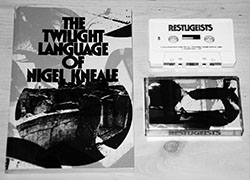
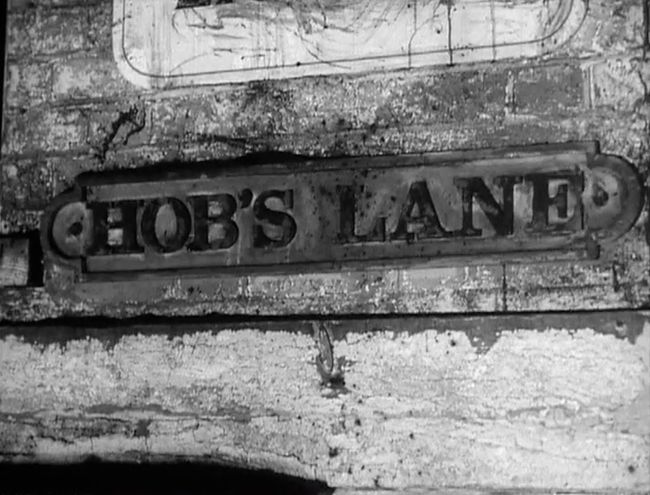 (Above: a street sign and location of unearthed ancient terrors from the 1958 British television miniseries Quatermass and The Pit, written by Nigel Kneale and later remade as a film in 1967, which is one of the core examples of “urban wyrd”.)
Much of the above might well be seen to suggest that the word “wyrd” is used largely only in relation to rural and related folkorientated culture. However, this is not exclusively the case and it can also be used to refer to urban-related culture etc, or, to use a phrase coined by writer and filmmaker Adam Scovell, urban wyrd; work that he describes as remythologising the fringes, “undercurrents”, “forgotten cracks” and “strangeness of the everyday” of the urban environment.11
It is, in part, an interest in exploring the semi-hidden layers of things and an associated seeking-out of the pathways between interconnected cultural fringes that, for myself, are some of the core characteristics of the “wyrd” and “re-enchanted” cultural landscape and its creation of a dreamscape edgeland of the imagination, and A Year In The Country in part documents a personal journey through it.
Footnotes
1. This period of the mid-1960s to the later 1970s may be chosen as significant for hauntologically-related work for a number of reasons, including the fact that during this time, the optimism and, at times, utopian ideals of the immediate post-war years to the 1960s tipped over in Britain into a period of social, political, economic strife and conflict. The later 1970s – 1979 in particular – when Margaret Thatcher’s right-leaning government was elected, is often considered to be a defining point when British society began to move towards being often dominated by a more neoliberal, individualistic and monetarist stance, and so has come to be associated with the yearning for lost post-war progressive futures that are referred to in this post. Also, this period is when many of those creating or interested in hauntological work were born or had their formative years. As such, culture from this era from which hauntological work often draws has a pre-existing resonance. Aside from its sometimes-inherent oddness, such culture may also be seen as being imbued with an antediluvian quality: broadcasts, remnants or echoes from an “other” time and the above-mentioned progressive lost futures. Sometimes, in hauntological work the early 1980s will also be referenced, which may in part be due to this being a transitional or liminal time in relation to changes in society.
2. “Hauntology” is a portmanteau or blending of the meanings of two words: “haunt” and “ontology”. Ontology is the philosophical study of “being”, which focuses on abstract questions such as whether there is such a thing as objective reality and what kinds of things or entities exist in the universe. Ontology is sometimes associated with foundationalist thinkers who believe that: “to arrive at truth it is necessary to start with the most fundamental issues – to be sure about the foundations of philosophy – and then work our way up from there to more specific questions.” (Quoted in part from philosophyterms.com, date and author unknown).
3. “Midwichian” is used to imply a sense of conventional, comfortable, sometimes bucolic places and society where something untoward, quietly unsettling and possibly unexplained has happened or lurks semi-hidden beneath the surface of things. It derives from John Wyndham’s book The Midwich Cuckoos (1957) and the subsequent film adaptation Village of the Damned (1960), in which, as is also discussed elsewhere in this post, a pleasant rural village existence is severely disrupted by a preternatural, stealthy and surreptitious alien invasion.
4. This spelling of magical is used to infer an esoteric interest in witchcraft, spells, rituals, the occult etc which at points intertwines with folk culture.
5. Reflecting this, when Mackenzie Crook, who wrote, directed and starred in the television series Detectorists (2014-2022) and Worzel Gummidge (2019-), which incorporate “wyrd” elements, was asked in an interview if he believed in ghosts he replied “No, no I don’t. I’m very cynical about all these things… I love the idea of them, though. Voices from the past, calling to us.” (Quoted from “’I was alone in my kitchen, doing a strange and lonely gold dance’: Mackenzie Crook and Toby Jones on Detectorists”, Anna Leszkiewicz, newstatesman.com, 8th November 2017.)
6. This section in part references and quotes from text included on the Wikipedia page on folk horror. It also incorporates concepts and theories put forward by Adam Scovell who has acted as a prominent and influential figure in wyrd, folk horror and urban wyrd orientated culture in particular via his writing at his Celluloid Wicker Man site which “brought many ideas surrounding Folk Horror and Urban Wyrd to prominence in the early 2010s” (quoted from text which accompanies the release of his 2025 book Local Haunts) alongside having written Folk Horror: Hours Dreadful and Things Strange (2017) which was the first non-fiction book to focus on folk horror.
7. The phrase “we don’t go back” is taken from a scene in Nigel Kneale’s 1975 television drama Murrain in which reason and contemporary rational beliefs do battle with the old ways; it was also used as the title for Howard David Ingham’s 2018 book We Don’t Go Back: A Watcher’s Guide to Folk Horror. Ingham also discusses related topics in the 2021 documentary Woodlands Dark and Days Bewitched: A History of Folk Horror, which as its title suggests is an “overview and dissection” of folk horror, largely concentrating on related film and television, and features contributions and clips by filmmakers, writers, publishers etc from around the world.
8. Similar ideas were explored by Bernice Glatzer Rosenthal in relation to the societal turbulence and change which took place in Russia between 1890-1927, before and after the Bolshevik Revolution there, and her observations could equally be applied to the West in recent years: “Occultism [i.e., a belief in the mystical, supernatural and/or magical powers, practices, phenomena etc] surges in periods of spiritual crisis, periods when the idea that encapsulates a society’s core values and beliefs loses its lustre… its ‘myth’ [which can also] apply to ideology… can be religious or secular [and] informs a society’s laws and institutions, permeates the culture, endows life with meaning, and helps shape personal and national identity. When the ‘myth’ fades, long-held values and moral norms are challenged; established institutions are called into question, identity issues come to the fore, and people feel anxious, or confused, or insecure. Many of them turn to the occult for certainty, or guidance, or solace. Occultism can supplement the ‘myth’ or replace it.” (Quoted from “Occultism as a Response to Spiritual Crisis”, Bernice Glatzer Rosenthal, The New Age of Russia: Occult and Esoteric Dimensions, edited by Birgit Menzel et al, 2012.)
9. William Morris (1834-1896) was an English textile designer, artist, poet, writer and socialist activist who championed handmade production in marked contrast with the Victorian era’s emphasis on industrial progress. Aspects of his work took inspiration from medieval times and/or explored a form of romantic utopianism although he is perhaps best known and celebrated for his interior design and related artwork which drew in part from gardens and nature. This often featured repetitive and mirrored patterns of plants and flowers and has an entrancing subtly “magikal” (see Footnote 4) quality which could be seen as a less overtly eerie precursor to some aspects of contemporary rural wyrd culture.
10. As an author and journalist Cathi Unsworth has a long history of working in and exploring subterranean history and culture; her 2018 novel That Old Black Magic incorporates elements inspired in part by real world history which have in part notably unsettling folk horror, “eerie” landscape and wyrd culture-esque aspects.
11. Quoted from and referring to “Urban Wyrd: An Introduction”, Adam Scovell, Folk Horror Revival: Urban Wyrd – 1. Spirits of Time, 2019.
Details of the collaged images at the top of the post:
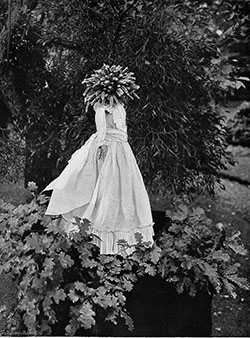
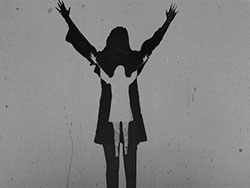
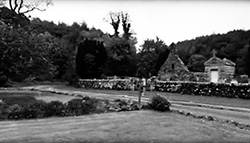
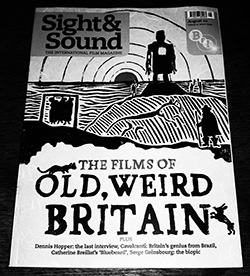
1. Top row and bottom right: various Ghost Box Records logos, video images and graphics.
2. Bottom left: album artwork from a release by Demdike Stare who have in part explored and incorporated wyrd and hauntological themes and atmospheres in their work.
3. Middle bottom row: an inverted image from the album cover of the 2010 album Electronics in the Classroom by D. D. Denham, an alias of Cate Brooks, formerly known as Jon Brooks, whose music, particularly when working as The Advisory Circle, has in part incorporated and explored hauntological themes and atmospheres. His 2005 release Mind How You Go was the first release on Ghost Box Records.
The text in this post is a revised and extended version of writing that was originally published on the A Year In The Country website, in the six non-fiction A Year In The Country books written by myself which were published between 2018-2024 and also the anthology Folk Horror Revival: Urban Wyrd – 1. Spirits of Time (2019).