The Blue Boy (1994) is a co-production between the BBC and the American public television station WGBH and was broadcast in the UK as part of the BBC’s Screen Two (1985-1998) anthology drama series but due to it being produced by the BBC, its supernatural dread filled themes and it being set at Christmas, albeit it was first broadcast in the UK on the 2nd of January 1994, it could be seen as an unofficial latter-day counterpart to the BBC’s original A Ghost Story for Christmas annual anthology drama strand that was broadcast between 1971 and 1978, or perhaps a bridge between the original strand and its post 2005 revival.
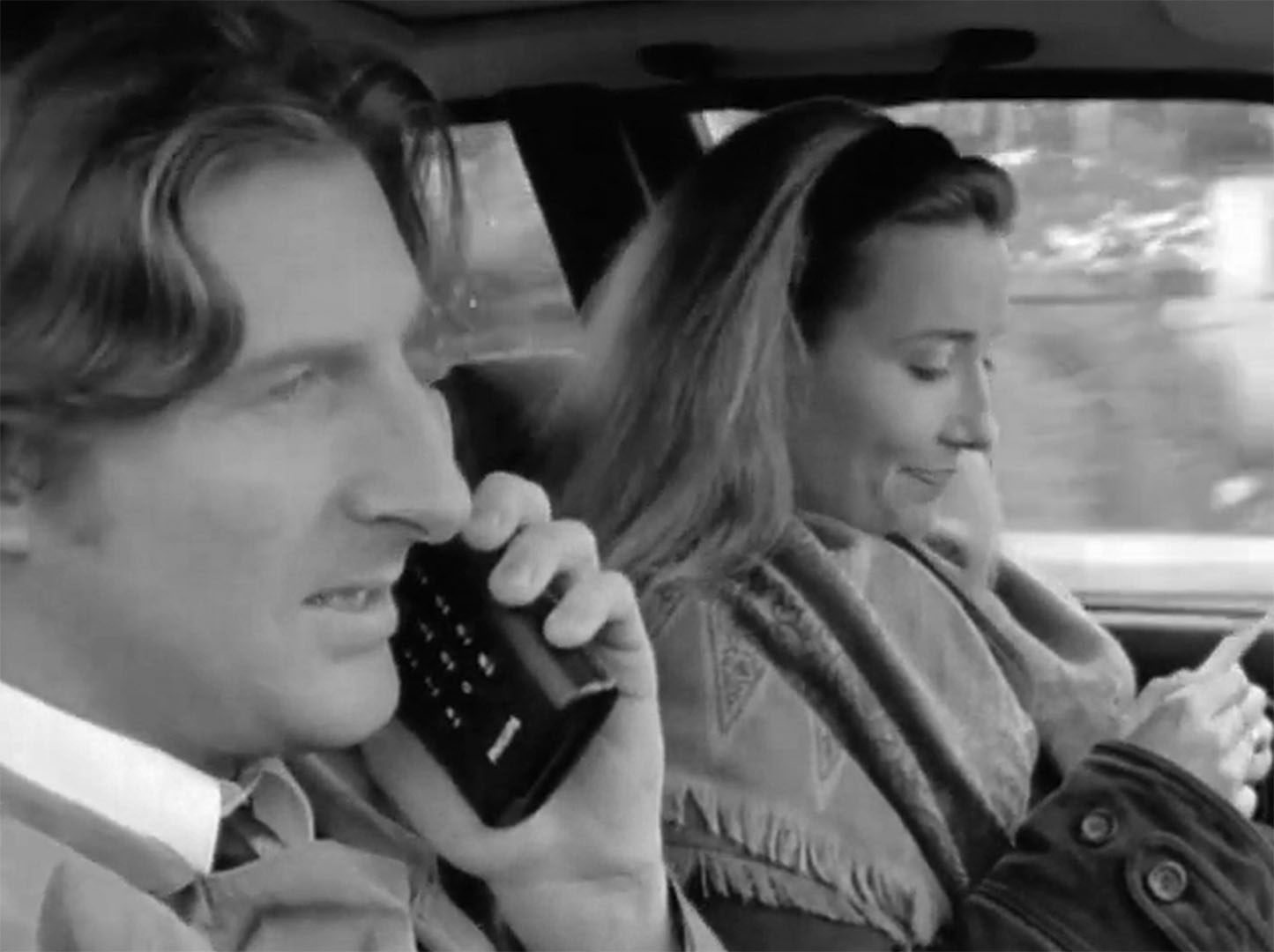
The story centres around a couple, Marie and Joe, played by Emma Thompson and Adrian Dunbar respectively, who go on vacation to an isolated rural Scottish hotel next to a loch. After they arrive, accidents and strange events begin to occur, and Marie, who is pregnant with her and Joe’s baby, begins to experience visions of a young boy who long ago was staying at the hotel and drowned in the loch, and she also discovers that Joe has been having an affair.
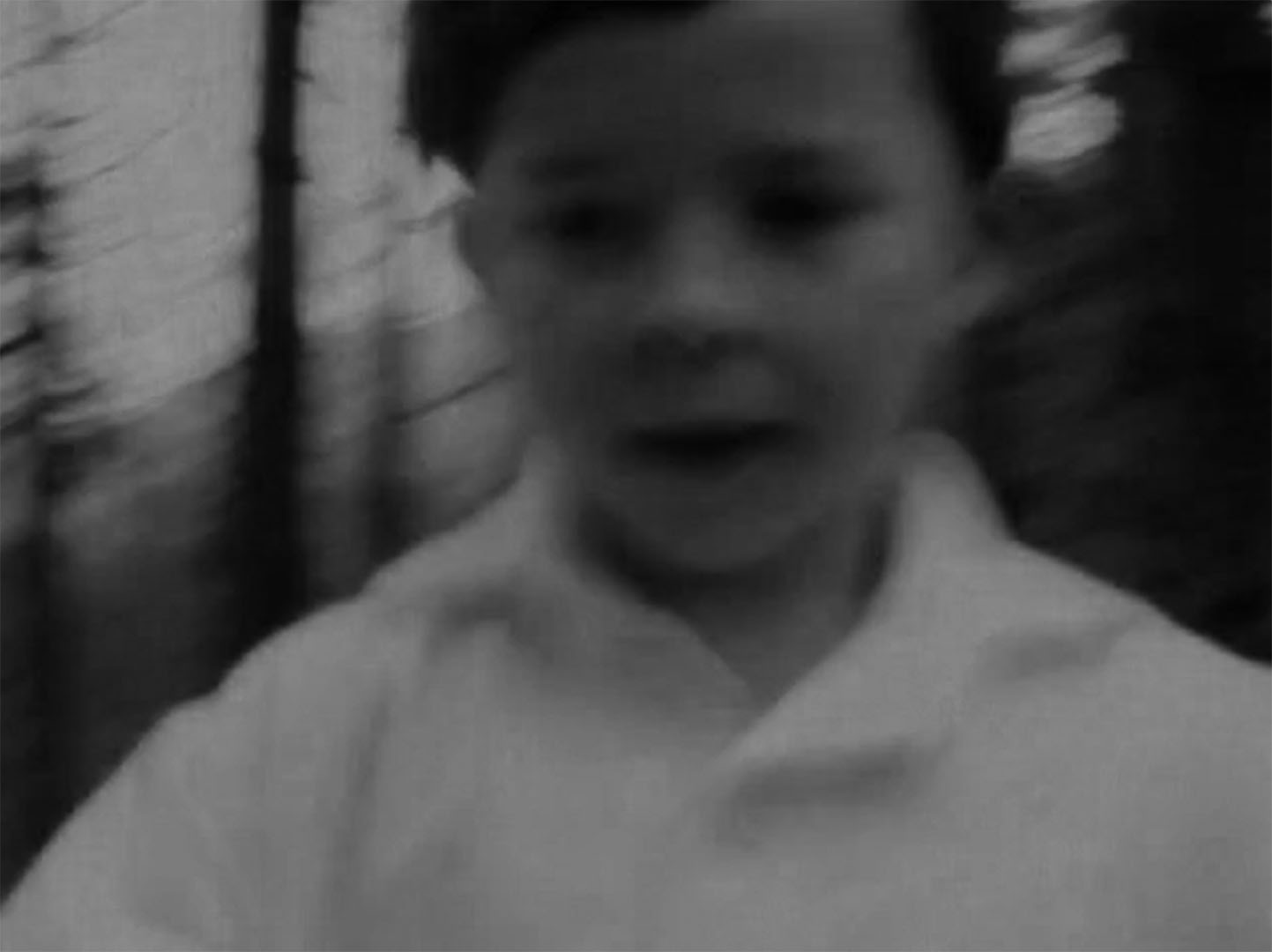
There is relatively little overt visual depiction of the supernatural and when unusual events happen the reasons for them are left ambiguous, while the visuals, tone and style of the main story about Marie and Joe is presented in the manner of a conventional domestic drama, although this is contrasted with the Blue Boy flashbacks, dream vision sequences etc that are markedly stylised and which are tinted blue and variously feature slow motion, unusual angles etc.
The young boy who drowned is the titular Blue Boy, who has become known as this because when his father discovered his body, the cold had turned him blue. He is shown to have stumbled on his father in bed with his nurse, after which he ran out of the hotel and into the lake, which led to his death and now, in a manner that interconnects with the traditional ghost story trope of “the past impinging on the present”,1 it seems as though his spirit may be seeking revenge on his father via Marie and Joe, whose situation, due to Joe’s infidelity and them staying in the room where he discovered his father’s infidelity, has parallels with his father’s affair.
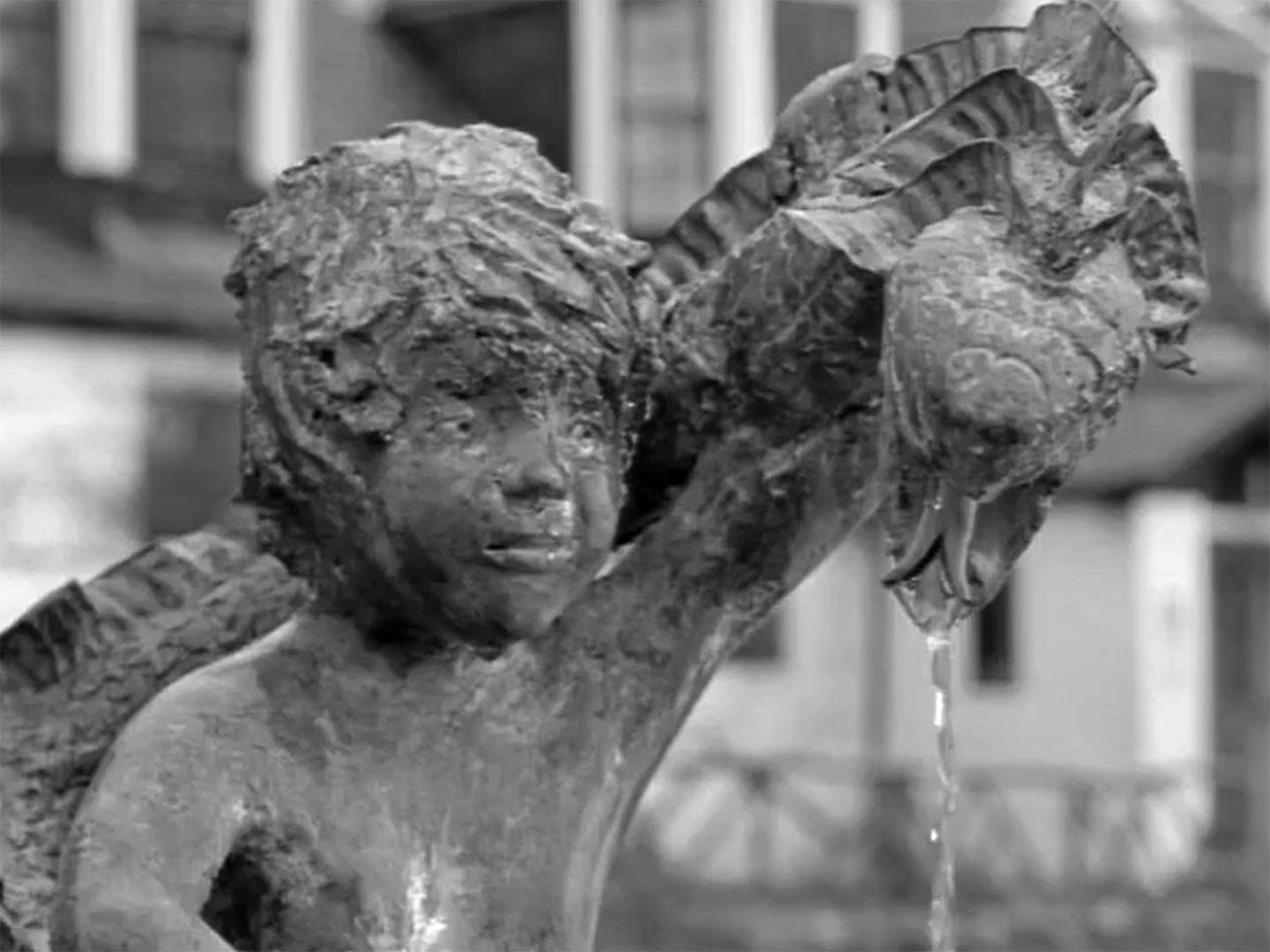
At one point, the water in Marie and Joe’s room and the memorial fountain to the Blue Boy, which is outside the hotel, stop running, which is implied may be due to the Blue Boy, but it’s revealed that it is actually because a water main outside the hotel has burst in several places. However, as with much of the story, there is a sense of ambiguity about whether this is the case, as in a manner that unspokenly implies a non-quotidian and perhaps supernatural cause, the leaking water has frozen and created strikingly beautiful, somewhat otherworldly ice shapes, and the hotel owner says he’s never seen the like of it. While earlier, the country road Joe was driving down was blocked by a fallen tree, and when he gets out to inspect it, his car begins to roll down the hill in a manner that ambiguously implies that it may be the Blue Boy’s doing, or it could be just that he’d accidentally left the handbrake off.
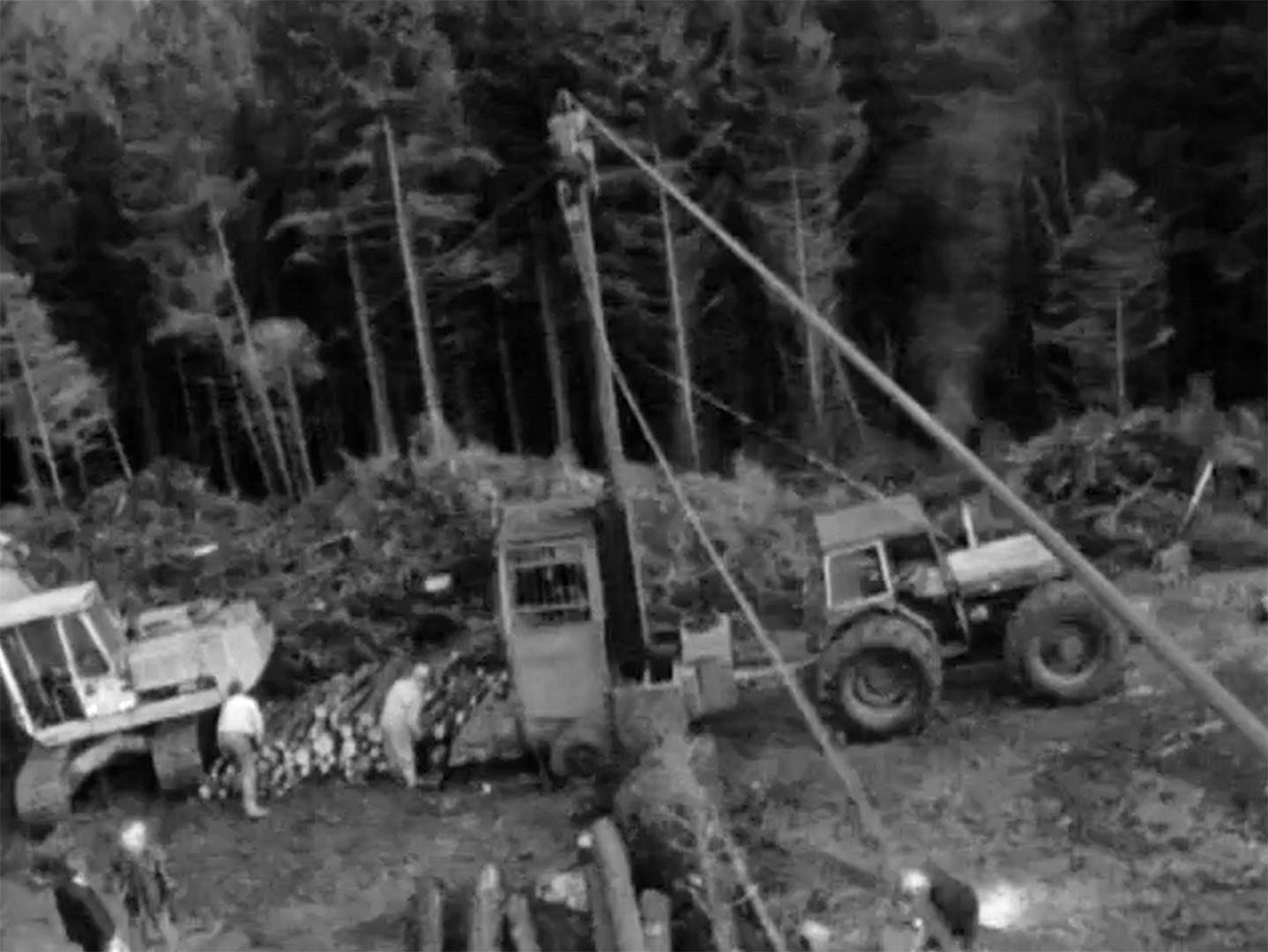
Joe is a timber merchant, and he’d previously visited a logging site, where the logging machinery, when it strips and chops the trees, seems to have a violent, brutal industrial quality that is at a distant, uncaring remove from the natural world. Subsequently, when his route is blocked by the fallen tree, this adds to the ambiguity around whether events are being caused by the supernatural, as there is a sense that nature and the forest, perhaps in conjunction with the Blue Boy, are fighting back against their destructors.
This aspect of The Blue Boy has parallels with Lorcan Finnegan’s eco folk horror film Without Name (2016) in which a land surveyor who is assessing a forest in preparation for it being cut down and built on begins to experience strange occurrences, malfunctioning equipment and finds his mind unravelling which appear to be caused by some form of preter- or supernatural force within the forest that is protecting it. In The Blue Boy, such aspects are also heightened as Joe hits and kills a deer when he is driving himself and Marie to Scotland, which, although it’s an accident, could be viewed as an early marker of Joe’s conflictual positioning against nature.
Interconnected with which, Joe is also the only major cast member who is shown driving and this ultimately becomes the method of his doom and “appointment with destiny”, in a manner that has parallels with the fate of a suburban father, played by Edward Woodward, who had previously played the male lead in the iconic folk horror film The Wicker Man (1973), in Lindsey Vickers’ 1981 supernatural part road movie horror film The Appointment. In this, as in The Blue Boy, the father (or father to be in The Blue Boy) meets his doom alone in a car on an isolated rural road, although, as is also the case with The Blue Boy, the supernatural forces that lead to this are left intriguingly ambiguous rather than being explicitly signposted and explained.
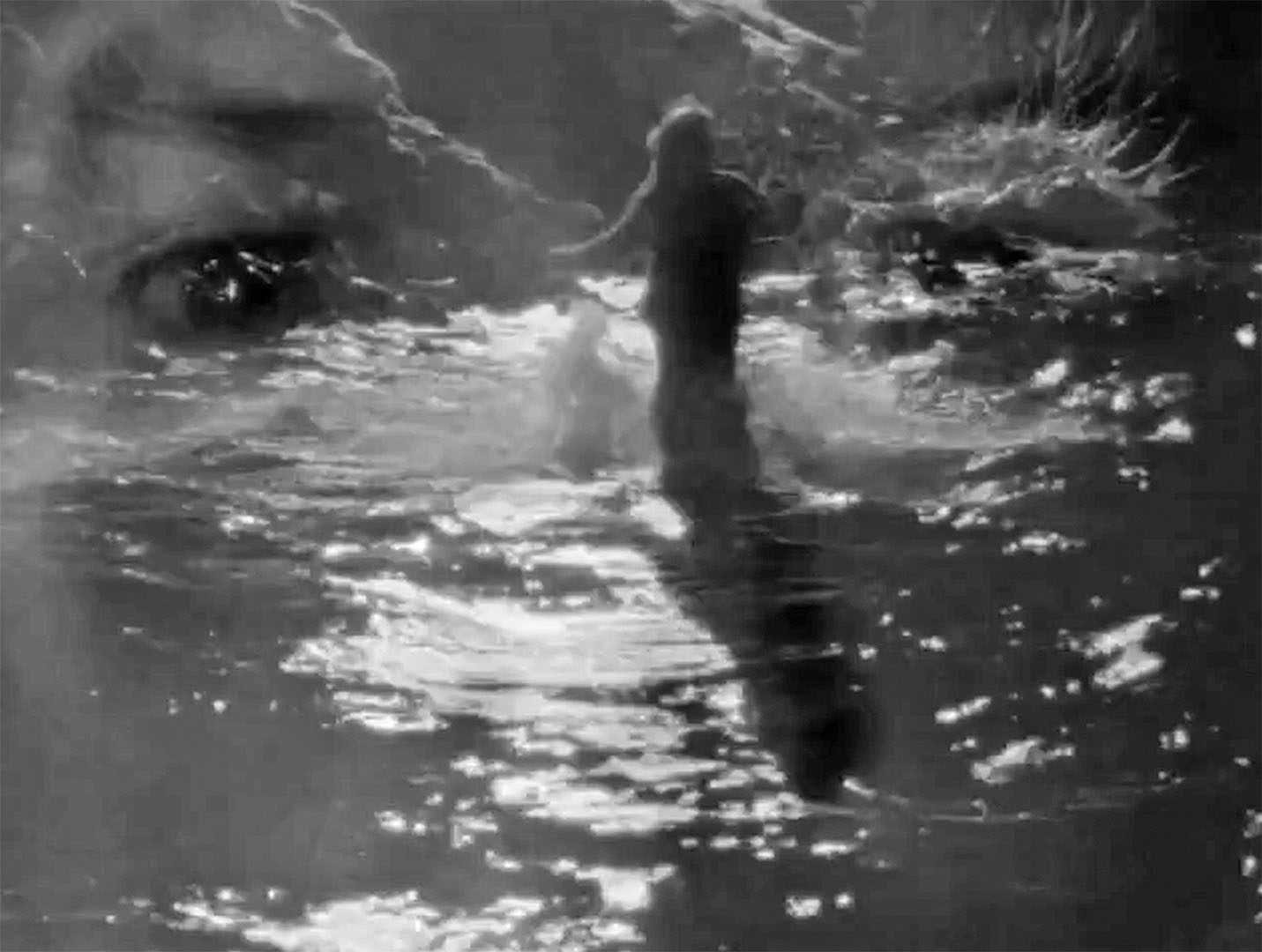
Throughout the story there are also other intimations and markers of Joe’s road to doom such as a photo of him on the loch, which was taken by his mistress Beth, played by Joanna Roth, when they had previously illicitly visited the area together, that is shrouded in an otherworldly blue mist that precedes and recalls the vision etc sequences when the Blue Boy appears, while at the logging site he narrowly avoids being crushed by a tree when equipment fails.
While one of the central themes appears to be the importance and responsibilities of parents to their children, which in the context of the Blue Boy’s history and anger at his father’s affair, and indeed much of societal values in general, Joe transgresses in multiple ways including having an adulterous affair and also when during a heated argument with Marie about his affair she physically flails at him and he defends himself by impulsively lashing out at her, knocking her to the ground and bloodying her nose, which in turn further seems to mark him out for doom.2
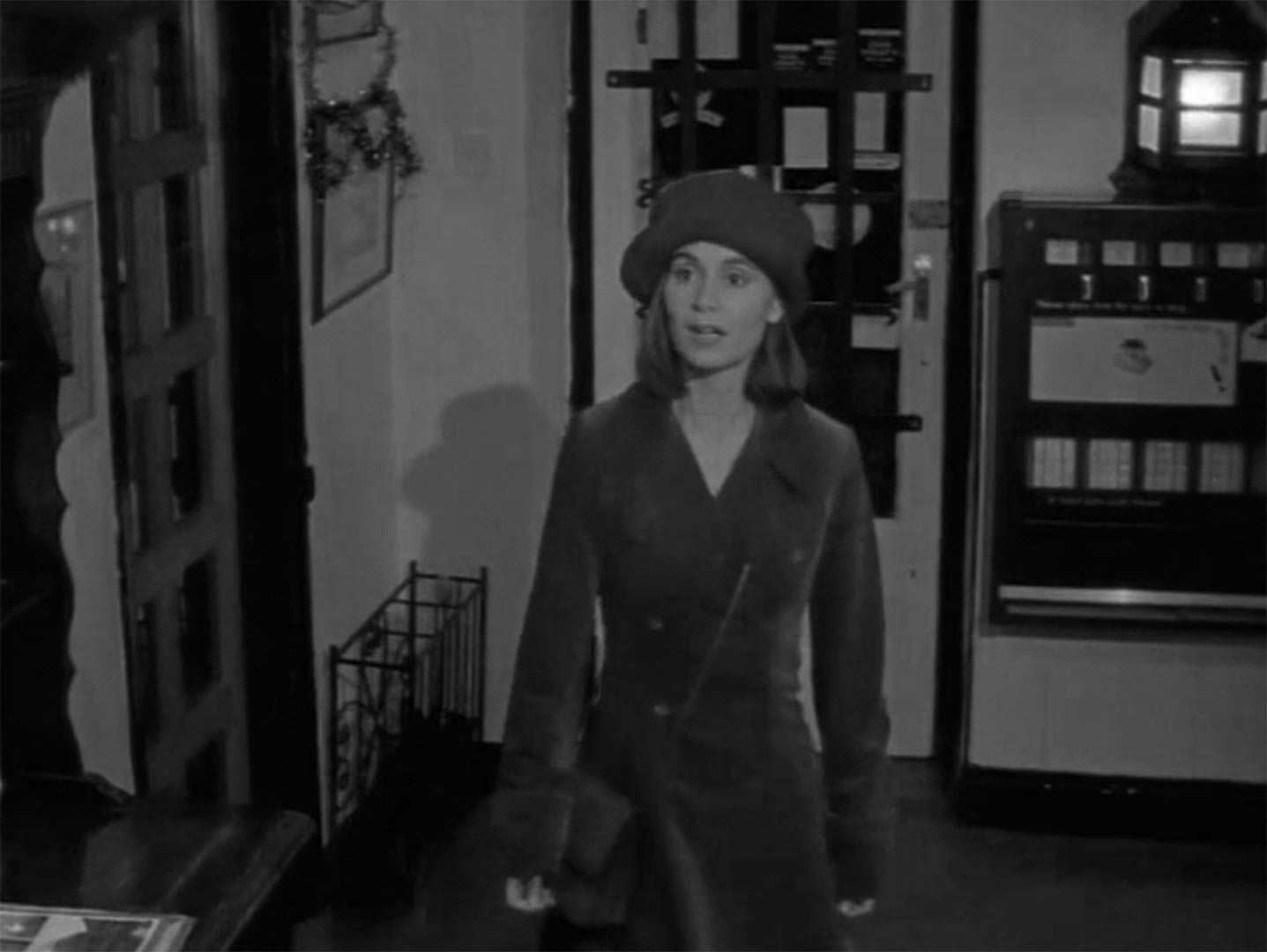
When his doom does arrive, it happens after he has been forced to surreptitiously meet his mistress Beth in his car at night due to her unannounced arrival at the hotel with the intention of forcing a decisive showdown about her, Joe and his partner’s relationships. Although he makes clear to her that he is ending their affair, this is not enough to save him, as when he is driving back to meet Marie at the hotel, in a manner that parallels and reflects his hitting a dear on his drive to Scotland, she suddenly appears in the middle of the road, which forces him to violently swerve and his car plunges into the lake in the only more special effect and spectacle orientated sequence. Although Marie is shown plunging into the water and shouting for him, it is not clear if it was actually her who appeared in the road or whether it was a supernatural manifestation created by the Blue Boy to ensure Joe’s doom, one which gives him the chance to demonstrate that he is prepared to choose his partner and their unborn child’s wellbeing over his own, albeit perhaps merely via reflexive instinctive response rather than conscious choice, but it’s too little and too late.
As The Blue Boy’s story progresses, it creates a subtly effective and growingly insistent sense of dread, which implies that it is building towards a cataclysmic conclusion. This is invoked partly through the increasing frequency of sometimes potentially deadly and possibly supernatural events that occur and intertwined flashbacks to the Blue Boy and his appearance in Marie and Joe’s dreams but also by, as Marie initially slowly discovers about Joe’s infidelity, their relationship beginning to violently fracture, particularly after his mistress Beth begins to self-declaredly wage war for his affections via disruptive phone calls to Joe and Marie and, as referred to above, arriving unannounced at the hotel.
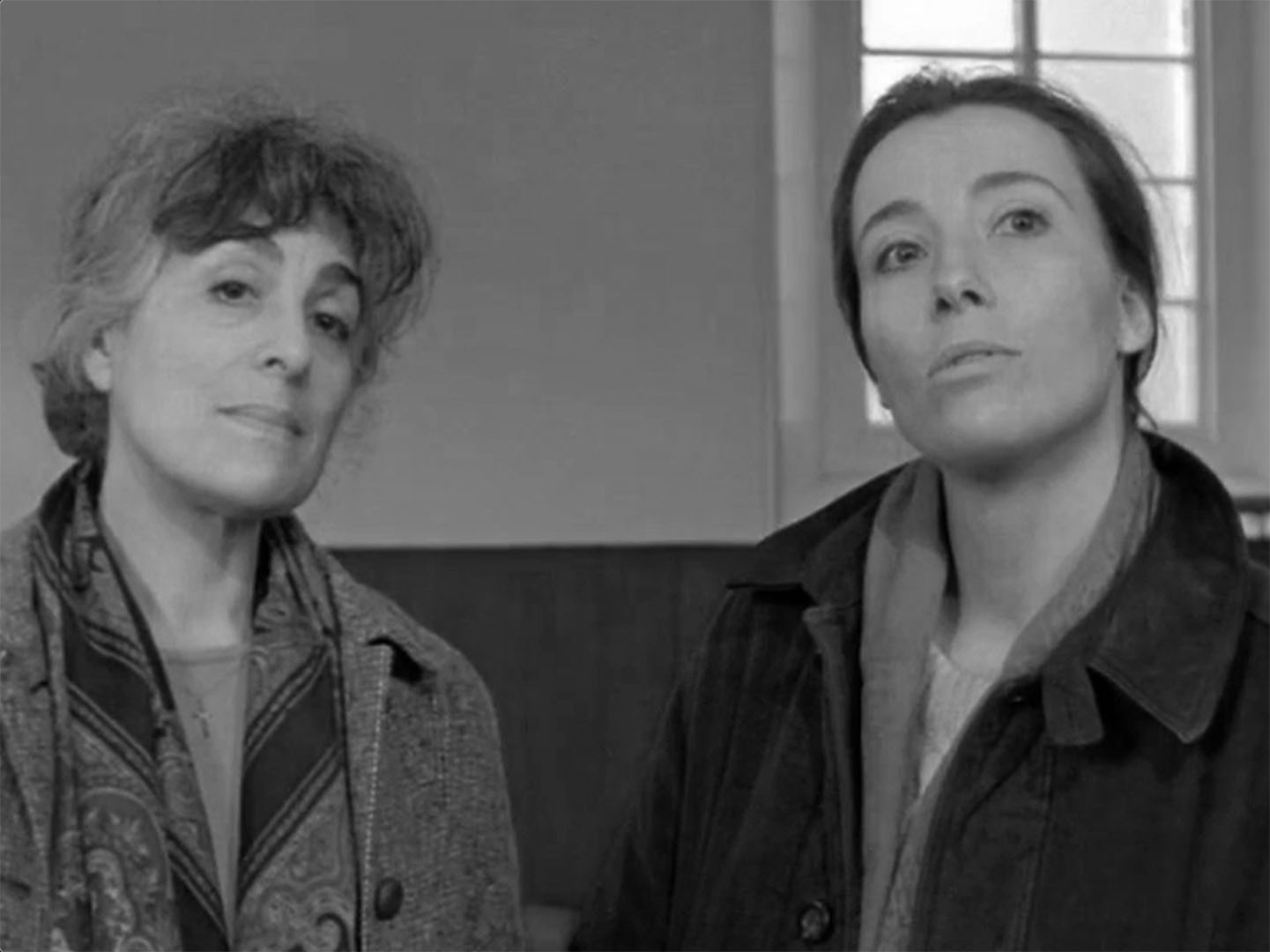
A local woman called Christine, played by Eleanor Bron, who works at the hotel and who is the last living descendant of the Blue Boy’s family, insistently and somewhat tittle tattlingly, keeps telling Marie unsettling details about the Blue Boy’s death and claims a deep psychic connection with his spirit for both herself and Marie, although it is not clear whether this is merely fanciful and wishful thinking on her point. However, she doesn’t tell Marie the truth about his death, and indeed her motives for telling her about it aren’t clear. She has a subtly witchily creepy air to her and at one point she surreptitiously and somewhat creepily examines a scan of Marie’s unborn baby that her and Joe have left on the bed in their hotel room, and it seems as though, via Marie’s pregnancy, she may in some way be trying to bring the Blue Boy back to life in a manner that intersects with horror tropes of the demonic or supernatural pregnancy. That this ultimately happens is ambiguously implied in the final sequence when Marie, who now seems to have a blank-souled quality to her that it is difficult to divine if it is due to Joe’s death or perhaps some form of supernatural enchantment, looks at her newborn child, which segues into a shot of the water in the Blue Boy’s memorial fountain stopping.
As an almost final note, The Blue Boy was written and directed by Scottish television presenter and broadcaster, filmmaker and historian Paul Murton and is something of an intriguing oddity amongst his other film and television work, which, apart from him having directed a few episodes of mainstream non-supernatural television dramas in the 1990s and early 2000s, consists largely of non-fiction travelogues.
In terms of its release, it has never been released on a physical format, and although it’s available on mainstream streaming services in the US, at the time of writing, it’s not officially available to stream in the UK.
Footnotes
1. Quoted from “Blue Boy, The (1994)”, Sergio Angelini, BFI Screenonline (screenonline.org.uk), date unknown.
2. The themes of the “importance and responsibilities of parents to their children” are lent a further, somewhat hidden layering and emphasis as Emma Thompson’s character Marie’s mother, who is markedly protective of her daughter, is played by her real-life mother Phyllida Law. (This footnote in part draws from “Blue Boy, The (1994)”, as Footnote 1.)
* * *
This post is an excerpt from the A Year In The Country book Ghost Signals: The Shadowlands of British Analogue Television 1968-1995.