File under: edgeland road journeys
File under: edgeland road journeys

I’m not so young anymore. Not yet old but definitely not young anymore. And this quest has taken up much of my life.
Well, that makes it sound like the central part of my life, which it isn’t. I’ve had a conventional education and jobs (searching for obscure cult films doesn’t put a lot of food on the table or coal in the fireplace, so needs must), a family, a broken heart, a broken marriage and all the rest.
But it’s always stayed with me, this quest for this mythical film.
It has become a form of modern-day mythology for me. I suppose when you live in a more secular society you might still want to have your own versions of myths and fairy tales, the unknown, the other. This is my version of that.
The internet has fed the flames of that myth, with its never- ending spaces for discussion, sharing, commenting and voracious need for content. Stories with no end, like the “Will it, won’t it be found?” of The Corn Mother are ideally suited to its open-ended nature.
I suppose you’re thinking “But surely somebody would have spoken up by now? If the film existed and if maybe a few preview copies were made then surely something would have resurfaced?”
You’d think so wouldn’t you?
The modern world leaves few spaces in which culture can be truly lost but this seems to be one time it is. From what the rumour mill says, all copies of the film, both dailies and the edited finished reels, were destroyed back in the eighties. Some say it was an oversight and that they were just thrown away during a storage clearout, others suggest they may have been deliberately destroyed and there is much debate about if that’s the case, then who arranged it?
All I know at the moment is that it seems as lost as The Werewolf, which was a 1913 silent short said to be the first werewolf movie, all prints of which are thought to have been destroyed in 1924 during a fire at Universal Studios. I’d probably have more chance finding that.

File under: the near but distant seeming past

Over the last five or six years I’ve noticed this phrase folk horror turning up more and more when I’ve searched for The Corn Mother online. It’s a particular niche area of culture that focuses on a sense of the rural and folk culture as having an uncanny flipside. The film The Wicker Man seems to be a particular touchstone and recurring reference point for it all.
There are books, albums, social media groups, all kinds of things that are being called folk horror.
And given the subject matter of The Corn Mother it’s not a huge surprise that is has started to be referenced in connection with folk horror. It’s even on this huge list of folk horor-esque film and television that’s been put together at one of the main online film websites. It’s at number 37 in a list that runs to several hundred. Which surprises me as it seems impossible to see, so I suppose it’s there more because of the intrigue that surrounds it, rather than as a comment on how good or relevant to folk horror the film is.
For years I’d half-hope each time I wandered into a video rental shop that I’d one day see The Corn Mother on its shelves but that’s unlikely to happen now. I might find it somewhere but its unlikely to be a rental shop. The entire landscape of how people watch films has changed a lot over recent years. Video rental shops were once nearly as ubiquitous as corner shops but now they’re nearly all gone, as people more and more watch stuff online. Even the big corporate chain Blockbuster shut its doors.
For a decade or two there were various mailorder rental DVD companies here and abroad but now there’s just one of those left in the UK.
I suppose to a degree you could say video rental has been nationalised as some local council run libraries still rent them out but I think the days of that being the case are somewhat numbered.

File under: there’s something to be learned from a rainstorm / hauntology precursors

Back in the late eighties and into the nineties I’d tried sending letters to people involved in the film, the cast, crew, production company and so on, asking them about it. Asking if they’d be prepared to be interviewed about The Corn Mother. I don’t know what my aim was. I just wanted more definite proof that it had existed I suppose and I’d thought about putting together a fanzine about it.
That was another big empty zero. Mind you it was hard back then to find the addresses of film people and then to know if they read the letters that were sent to them. Often I’d just send them to, say, their agent’s address and hope for the best.
To a degree the internet has changed that but less than you might think. Some industry people have their own website with a contact email or form but you never really know if they’re picking up any message you send or if somebody else runs their site for them. Anybody of any stature generally has layer after layer of agents and so on to guard them from, well, random people like me who want to know about some obscure film that they worked on more than a quarter of a century ago.
And then there are the rumours. Rumours that nobody really wants to talk about the film after they weren’t paid properly, that they’d rather just forget about it and even whispers that there are legal gagging orders in place to stop them discussing it.
Which of course is catnip to my quest. There’s nothing like a good bit of unknowable and unprovable backstory myth around a film to help nurture its cult status.

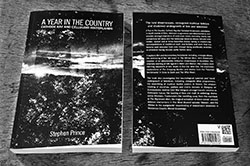
Crossing the Boundaries of Woodland Wraiths, the Uncanny City, Edgeland Expeditions and Frontier Dreamscapes
Released 9th October 2023.
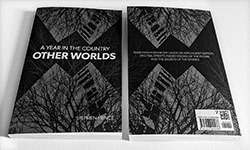
Author, artwork and design: Stephen Prince. 101 pages. Paperback and Ebook.
Paperback and ebook available from Amazon UK, Amazon US and their various other worldwide sites and also from Lulu.
The paperback is also available to order from other online and bricks and mortar shops; please contact them directly for more information.

A Year In The County: Threshold Tales is an exploration of the edgelands, borderlands and liminal places in film; of the places whether literal, in the mind, cultural or amongst the paranormal realm where the boundaries between worlds, ways of life, the past and the future become thin and porous.
The book wanders amongst the overlooked, the hidden from view, isolated spaces and parallel planes of existence in cinema, taking in films that interconnect with both rural and urban “wyrd” culture from the shores of Albion out into the American Deep South and across the snowbound landscapes of Europe.
Amongst its pages, you’ll find a wide-ranging interthreaded journey that takes in the woodland wraiths of Without Name and The Watcher in the Woods, Columbus’ love letter to a time capsule of modernist architecture, Nadja and Vampir-Cuadecuc’s media phantom reimaginings of their genres, Dark Tower’s concrete bound haunting, Ghost Dog’s intertwining of spectral hip-hop with ancient Japanese tradition, No Surrender’s black comedy set amongst 1980s urban decay, the creating and discovering of new worlds of electronic sound in The Shock of the Future and the darkly seductive temptations of a preternatural carnival in Something Wicked This Way Comes.
Elsewhere the book journeys through the American wyrd frontier in Searching for the Wrong-Eyed Jesus and explores the folk horror precursor The White Reindeer, the unearthing of buried secrets in Stephen Poliakoff’s Hidden City and Glorious 39, the rudderless tumbling down the rabbit hole in Kate and Laura Mulleavy’s Woodshock and the thinning of the barriers of time and place in Mike Hodges’ Black Rainbow.

The full chapter list is below:
The full chapter list is below:
1. Without Name: Stepping Over the Threshold of a Liminal Landscape
2. Dark Tower: Otherworldy Dysfunction
3. Columbus: Stasis and Escape Amongst Faded Utopian Dreams
4. The White Reindeer: A Folk Horror Precursor
5. The Watcher in the Woods and Something Wicked This Way Comes: Disney Darkness and the Curious Shadowed Side Paths of the House of Mouse (and an Intriguing Sidestep to British Housing Estates)
6. Nadja and Vampir-Cuadecuc: Hinterland Vampire Hunters and Spectral Hallucinatory Genre Flipsides
7. The Shock of the Future: Creating and Discovering New Electronic Worlds
8. Stephen Poliakoff’s Hidden City and Glorious 39: Unearthing Buried Secrets
9. Mike Hodges’ Black Rainbow: The Thinning of the Barriers of Time and Place
10. No Surrender and Ghost Dog: The Way of the Samurai: Views and Stories from the Rooftops and Urban Edgelands
11. Kate and Laura Mulleavy’s Woodshock: A Rudderless Tumbling Down the Rabbit Hole
12. Searching for the Wrong-Eyed Jesus: Journeys Through an American Wyrd Frontier
A Definition of Hauntology, its Recurring Themes and Intertwining with Otherly Folk and the Creation of a Rural and Urban Wyrd Cultural Landscape

As with the structure of the A Year In The Country project as a whole, which this book is part of, is inspired by the passing of time and the cyclical nature of the years, and so, as with months in a year, the book includes 12 chapters.
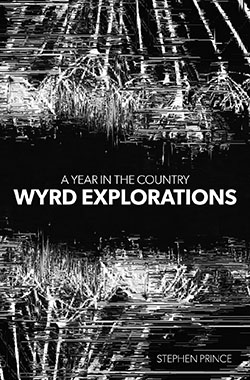
A Year In The Country: Cathode Ray and Celluloid Hinterlands is one of a number of books released by A Year In The Country. More details on those can be found either by clicking here or using the site’s menu to visit the A Year In The Country book page.

All of which just leaves me to say thanks to…
All who have bought, streamed and otherwise supported the A Year In The Country music releases, books and artifacts and everybody that visits the website and/or shares etc. posts elsewhere online.
All the performers who have contributed music to the A Year In The Country releases. It’s been a pleasure.
The people who have sold and distributed the A Year In The Country releases and/or lent their advice, including, amongst others: Jim Jupp of Ghost Box Records, The state51 Conspiracy in particular Shaun Yule and all at Norman Records especially Ant and Phil and Justin Watson of Front & Follow.
All the many, many people who have written about, commissioned pieces on etc A Year In The Country and its releases, including, to name just a few, John Coulthart, Cathi Unsworth, Simon Reynolds, DJ Food, Jude Rogers, Ben Graham, Neil Mason, Ian White, Matthew Sedition, Grey Malkin, James Gent, Massimo Ricci, Jon ‘Mojo’ Mills, Andy Morten, Isaak Lewis-Smith, Melanie Xulu, David V. Barrett, Sarah Gregory, Push, Sukhdev Sandhu, Alan Boon, Dave Thompson, Bob Fischer of The Haunted Generation and everybody else at Starburst, Fortean Times, Shindig!, Electronic Sound, Moonbuilding, We Are Cult and Moof. Also, to all at, amongst other publications, sites, etc Music Won’t Save You, Bliss Aquamarine, Wyrd Daze, The Golden Apples of the Sun, Mojo, Goldmine and Folk Horror Revival.
All those who have included A Year In The Country released tracks in their radio broadcasts, podcasts, etc, including Stuart Maconie, Gideon Coe, Nick Luscombe, James Papademetrie and Pete Wiggs of the The Séance, Kites and Pylons, Sunrise Ocean Bender, Flatland Frequencies, Gated Canal Community Radio, On the Wire and many others.
Ian Lowey for the dab hand design and editorial work for A Year In The Country and also Suzy Prince for the equally dab hand editorial work.
Verity Sharp for inviting me onto BBC Radio 3’s Late Junction and playing tracks from the A Year In The Country released albums and, Rebecca Gaskell for her admirable production of the show, Gary Milne of BBC Archives for his compiling and curation of video spectres, Tales from the Black Meadow author Chris Lambert for the audio journeys he created to accompany the A Year In The Country: Wandering Through Spectral Fields book and William “Billy” Harron as always for accidentally pointing me in the direction of the undercurrents of folk.
Also, my family for the ongoing support and to everybody whose work has inspired me on the wanderings, explorations and pathways of A Year In The Country.
Thanks, and a tip of the hat to you all!

File under: time to watch this again

I came across this site which launched last year that hosts videos online. Anybody can upload more or less whatever they want and it seems fairly unregulated and to be turning a blind eye to copyright. People are posting music videos, daft recordings of their pets, shaky videos of nights out and gigs, well-known and obscure films and TV programmes broken up into sections. All of human life and culture really.
What do you think I’ve mainly been looking for? Yes, that film. And of course it’s come back a big empty zero, apart from a few people mentioning it in comments below other videos.

File under: utopia and dysfunction

I thought when the internet began to get big that something would turn up. But it didn’t.
I can’t tell you how many times I’ve searched for the phrase “The Corn Mother film” online. It’s always the same old stories rolled out, the same often misinformed histories. I know all of it and more but still I’ll read the articles, follow the discussions in forums and just search, search and search again.
I try not to talk to people I know about it too much. I’ve seen their glazed over expressions, their polite nods of interest (that stopped being quite so polite a while ago now). I don’t really understand how this has gotten under my skin quite so much. From time to time I joke with myself about how I’m like one of King Arthur’s Knights searching for the Holy Grail but my search seems infinitely more trivial. It’s just a film I’m looking for. Not even one that anybody is sure is any good. But it’s my Grail, my search and I seem to need to keep seeking it out, no matter how unlikely my succeeding is.

File under: I do like a French DVD and Blu-ray / bridging and not bridging the class divide / uncovering hidden urban threats / The Hireling / Alien Nation
Act 3/4

So, here I am at another film convention. Somebody had told me that he’d heard about this bloke who had a stall at it who said he had a copy of The Corn Mother.
Of course, it wasn’t true. It was just yet another person who claimed to know somebody who’d seen it.
I can’t tell you how much of my life I’ve spent thinking about and looking for this film. Ever since I was a kid in the mid-eight- ies and I heard the guy behind the counter and a customer talking about it in my local video rental shop. I’d been looking at the family film section, while sneaking glances over towards the zombie films, wandering if I could get away with renting Poltergeist. And all the time I was listening to what they were saying.
They’d talked about this mythical lost film called The Corn Mother that they wanted to see, about how a handful of promotional video copies were said to have been made and planned to be sent out to the trade before it was pulled from the rental release schedules and nobody in the industry had ever received a copy.
One of them said they’d heard it was nearer to the original director’s earlier films, his more arthouse ones, while the other said from what he knew it was more like all the horror trash that littered the shelves of the shop. They talked about the different versions of the film’s script they’d read, ordered from an obscure mail order company’s advert in the back of a science fiction magazine, but they couldn’t decide which was more likely to have gone into production.
It seemed to open something up in my mind and create a fascination with the lost worlds of this film, a dreamscape with this unknown treasure at the end of it.

File under: concrete trees growing wild / gothic precusors

There’s to be a retrospective of my work at a prestigious film festival. Of course, they’re concentrating on my earlier films rather than my more director for hire work that I’ve doing for the last decade or more now. Still, a retrospective’s a retrospective.
I’d really love to show The Corn Mother. I know it’s not all my work, that somebody else directed parts of it but from a rough cut I saw after I’d been replaced a fair bit of the spirit of what I was trying to do was still in the film and hopefully made it into the final edit. And it’s never been seen. Never had a release, so it would be quite the story to show it.
I thought that maybe Gines would have mellowed about it all over the years. I tried contacting his people, even tried to phone him directly, see if anything could be done. I just came up against one brick wall after another. Eventually I resorted to flying over to his mansion hideaway. They wouldn’t even open the gates for me. Gines wouldn’t talk to me.
A month or so later I got a letter in the post. Inside was a copy of a paid invoice for the disposal of film materials. It was addressed to Gines’ production company and the date was 1984. There was no note or other explanation with it. I can only think that it’s Gines’ way of telling me that the film doesn’t exist anymore, that it was thrown out when everything imploded.
I phoned Conrad and he said he couldn’t remember any film reels being disposed of but they might well have been, without his knowledge, as he didn’t tend to have all that much to do with the day-to-day running of things, and even less so when the walls came crashing down. He said he’d just wanted out of there.


File under: like a Derek Jarman film made by somebody who had only previously directed Carry On Films and panto (said in a complimentary manner) / here come the plane’s again / takes me further from heaven / I must have read a while (unexplained and understated white collar noir?)

You’ll never guess what happened. My agent forwarded me a let- ter from somebody wanting to know if they could interview me about The Corn Mother for a fanzine they’re planning.
I’ve not thought about that film for years. I just wanted to put it all behind me after it never came out and I didn’t get properly paid.
I did get a bit of money from it but I had to sign a contract say- ing that I wouldn’t talk about it in the press. I think that was the result of legal action by one of the producers to stop anybody in- volved from ruining his reputation. What was his name? Oh yes, Gines. From what I heard he dodged the bullet after being caught with very sticky fingers when his production company collapsed. Probably still managing to live the high life somewhere sunny I expect.
I’d quite like to talk about it, even if it’s just for a fanzine. It’s almost as though it never existed, like it was an imaginary film. But it’s not worth the problems. Life’s too short.


File under: mini-genres / Code 46 / Logan’s Run / Aeon Flux / Oblivion / stepping aside from the “burning trash can future”

I was in the video rental shop the other day. They’re more like respectable businesses nowadays. Less like slightly shady places with shelves full of all kinds of stuff from the X-rated sides of cinema.
There’s even this American chain called Blockbuster that’s been opening shops in the UK, with corporate branding and staff in uniforms.
I’d heard that back in the eighties there were some promotional copies made of The Corn Mother and there were plans to release it on video but it never seemed to happen and I don’t even know if the original film reels still exist.
But even knowing that, I still half expect to see a copy of it when I’m in the rental shop, though I know I never will. It always makes me a bit wistful looking along the shelves.
I sort of lost touch with the film world after all that hassle with Gines and the subsequent fall out, and apart from when I’m in here I don’t really think about back then all that much. I’ve got my job and my family and they both keep me pretty busy.
That young chap who ate baked beans while he toiled away at script revisions seems like another person to me now. Somebody I once met who told me about it, rather than it being me with ink on my fingers and a head full of ideas and dreams. Dreams of the corn mother and her nighttime kingdom.

File under: dystopic pop / the cities are in flower now