Electronic music pioneer and BBC Radiophonic Workshop member Delia Derbyshire, who passed away in 2001, has become a notable icon and ongoing inspiration for various contemporary creative projects, some of which have had high profile releases.
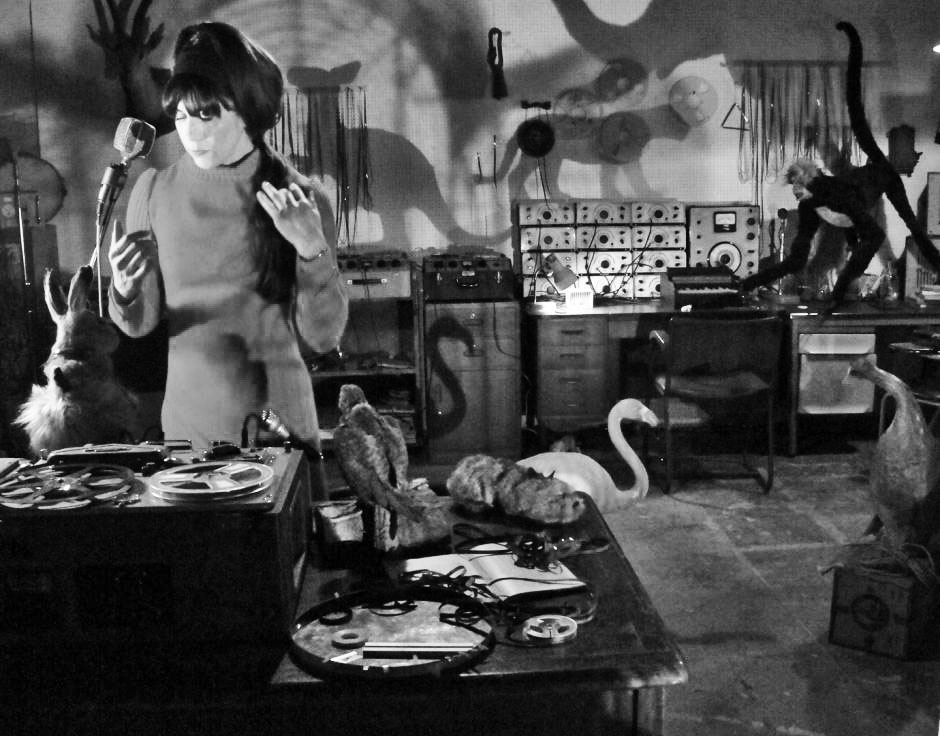
One notable example of such work is Caroline Katz’s intriguing, impressionistic and non-conventional film length docudrama Delia Derbyshire: The Myths and Legendary Tapes (2020) which Katz wrote and directed, and also played Delia Derbyshire in, which was broadcast on the BBC alongside gaining extensive mainstream and niche press coverage.
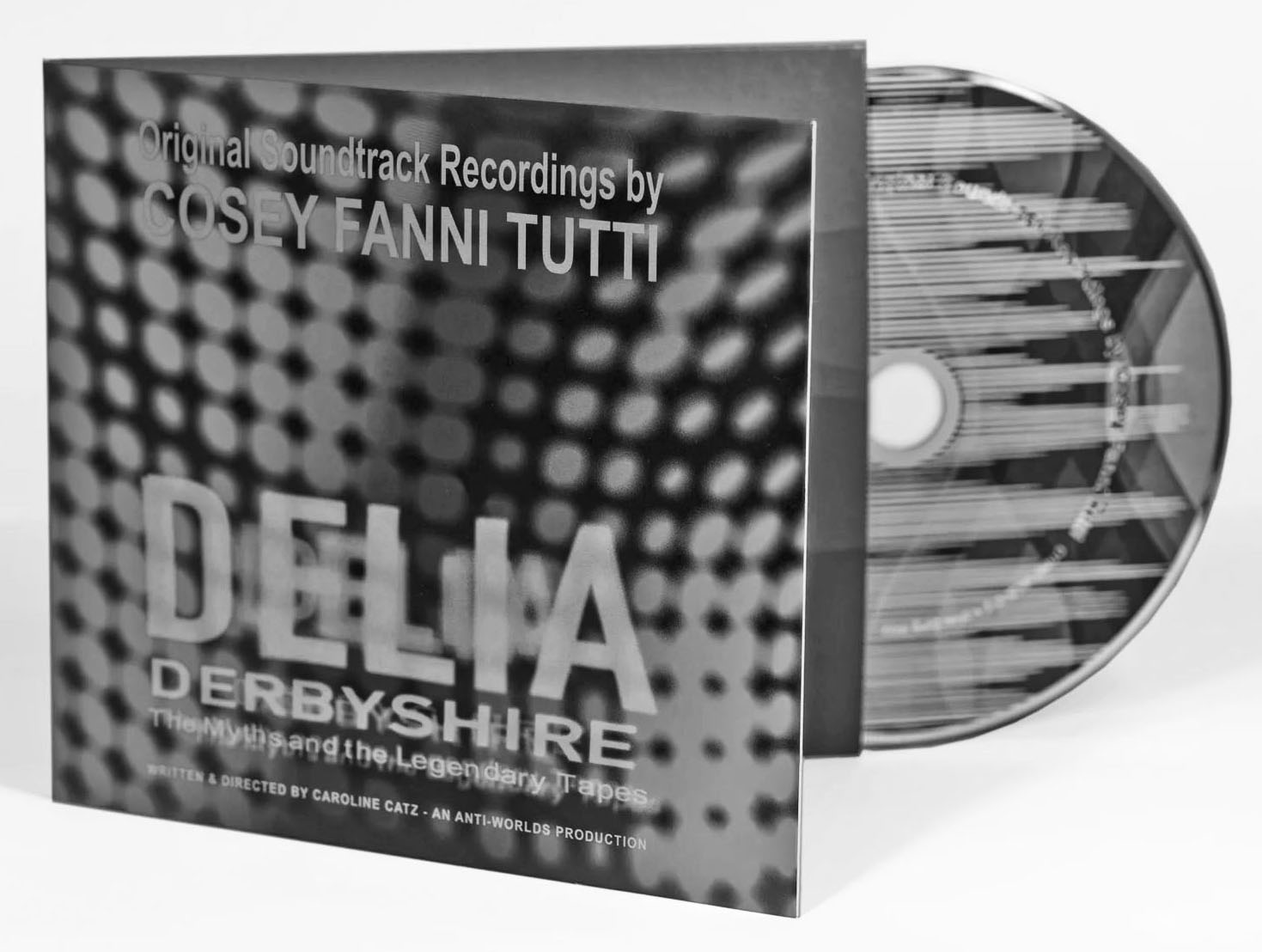
Katz’s film, in some ways and in part, could be considered to be a form of collaboration with Delia Derbyshire that spans the decades as it featured a soundtrack by Christine New by, aka experimental electronic musician and artist Cosey Fanni Tutti, whose work has at times been controversial due to its sometimes- challenging provocative nature and transgressing of societal norms.
For the soundtrack she utilised samples from 267 reels of tape recordings that were found in Delia Derbyshire’s attic after her death. And reflecting the background of its creation the resulting music, which has been released digitally as well as on vinyl and CD, has a contemporary, timeless and shape of the future’s past quality and is deeply experimental in nature while also variously being envelopingly comforting, unsettling and at times can feel like tumbling and drifting through a never ending seeming collaged fever dream soundscape.
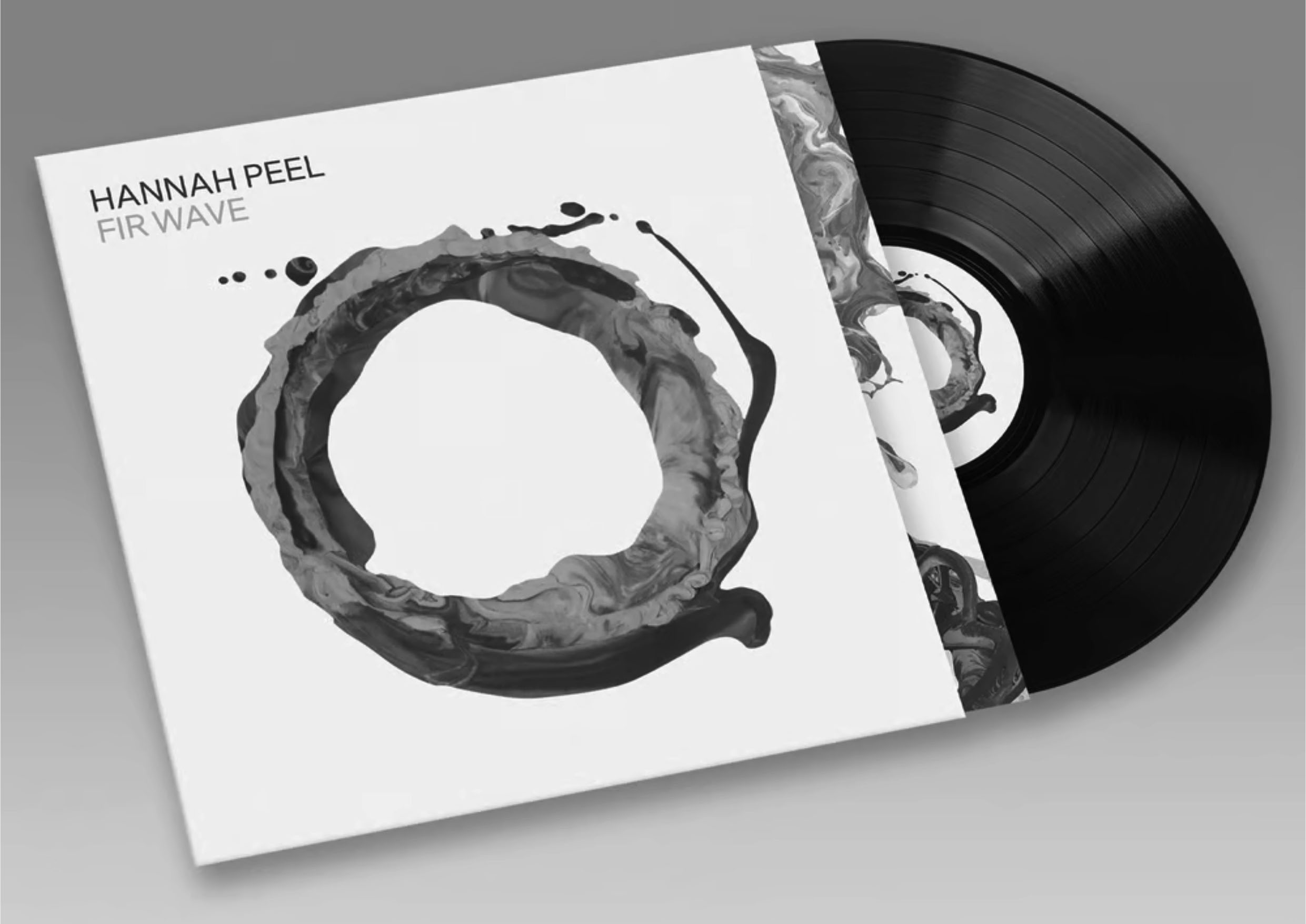
Another relatively high profile “collaboration over the decades” between Delia Derbyshire and a renowned contemporary electronic musician was Hannah Peel’s 2021 album Fir Wave, which was shortlisted for the prestigious Hyundai Mercury Music Prize and garnered extensive public and critical praise.
For the album Peel was given permission by the library music label KPM to reinterpret the Electrosonic library music album, which was originally released in 1972 and was a collaboration between Australian composer and musician Don Harper, Delia Derbyshire working as Li De La Russe and Brian Garner Hodgson, who was also a member of the BBC Radiophonic Workshop and in this instance worked under the pseudonym of Nikki St. George.
The Fir Wave electronic-orientated album is in part experim- ental but also melodic and accessible and combines and intertwines Delia Derbyshire and co.’s vintage electronica with contemporary technology, production and aesthetics, which in text that accomp- anied the album’s release is said to have been inspired by and connect with the patterns of “the Earth’s ecological cycles”.
While at points the tracks become almost dance music-esque or rave-like, it also often has a warm organic and reflective analogue sound that alongside connecting back to Delia Derbyshire’s work from previous decades also seems at times to echo Brian Eno’s pioneering 1970s ambient music work, in particular the album Ambient 1: Music for Airports (1978).
Flying comparatively lower under the radar in terms of public exposure, recent years have seen a number of other albums which in various ways have been inspired and/or influenced by Delia Derbyshire.

These include the instrumental electronic music duo Delia Derbyshire Appreciation Society’s eponymous 2017 album, which was their first full length release. The connection to Delia Derbyshire in this instance is more oblique than the above work and rather than there being a direct connection to her work the duo’s name and the spirit of their music are a homage to her.
The album also interconnects with Hannah Peel’s Fir Wave as it brings to mind some of Brian Eno’s ambient albums if they had gone a bit more techno but still didn’t have beats. Also, as with much of the work on Fir Wave there is a lovely warm vintage sound to the duo’s album, without it being overly retro and there are some sub-bass sections that are all enveloping and which I have found myself listening to over and over again.

Another “collaboration over the decades” with Delia Derbyshire, which as with the above work by Hannah Peel and Christine Newby, draws from and utilises her work, is The Radiophonic Workshop’s soundtrack to Matthew Holness’ psychological horror film Possum, both of which were released in 2018.
As mentioned in its sleeve notes, the album includes “elements composed and recorded by Delia Derbyshire”, which are taken from the Delia Derbyshire archives held at the John Ryland Library at the University of Manchester. And as suggested by the group’s name, the soundtrack was composed and performed by the reformed BBC Radiophonic Workshop, although they could perhaps be considered to be more autonomously recreated rather than reformed as they are no longer a department of or directly connected to the BBC.
The album begins with pastoral flute sounds which may mislead the listener into thinking they are about to listen to something pleasant, even “nice” or calming. However, the reality is far from such things; the first intimations that something is awry are briefly reversed sections of music and then… well darkness and melodic dissonance tumbles forth and builds until it just suddenly stops on a reversed note. And that’s just the first track. Unsettling doesn’t quite cover it.
“Unsettling doesn’t quite cover it” is a description that can also be applied to the film Possum, which has its own unique character, atmosphere and presentation that is unlike, and separate from, much of contemporary cinema. Set in a psychic and literal hinterland or edgeland, watching it is akin to stepping into an inescapable recurring personal nightmare, one where the “bogey man” keeps returning no matter what you do.
The artwork for the film’s soundtrack was designed by Julian House of hauntology progenitors and mainstays Ghost Box Records, experimental music trio Children Of Alice and the Intro design agency.

His design for the album features a number of his signature graphic design styles: the front cover has a subtle slightly off kilter vintage cathode ray television effect coupled with a form of cosmic light show that adds a darkened dreamlike atmosphere to it, while elsewhere there are stark gridded duotone stills from the film, all of which are accompanied by a minimal modernist type layout. The overall effect is both beautiful (or should that be entrancing?) while also being in some not easy to define way unsettling and something that you want to get away from you as quickly as possible, and this sense of being drawn in and also repulsed in turn reflects and interconnects with the character of Holness’ film.

And finally, another “collaboration over the decades” with Delia Derbyshire is hauntology and folk horror music, sound and cultural pioneer and explorer Drew Mulholland’s Three Antennas in a Quarry album. This was released in 2019 by Buried Treasure, a label founded by Alan Gubby whose work, related music and book releases, events etc often explore and interconnect with hauntological themes and aesthetics.
It features rather fine design work by Nick Taylor of Spectral Studio who could almost be considered to be the unofficial inhouse graphic designer for hauntology due to him having created the cover art for a considerable number of related music releases.

Mulholland’s album was inspired by a copy of a graphic music/ sound score that Delia Derbyshire sent Mulholland after they became friends in the late 1990s. Apparently, she could not remember what the score was for but dated it vaguely as “the late ‘60s” and in his sleeve notes for the album Mulholland talks of how Derbyshire had provided him with a fragment of a recipe but no indication of what either its ingredients nor intended sound sources were.
He goes on to say that in order to create the album he began to “sketch with sound” after studying enlargements of the score that he had pinned to his study wall and the album could be considered a ghost-like, will-o’-the-wisp interpreting of the score and in turn the spirit of Delia Derbyshire’s music.
In what could be thought of as a hauntological psychogeographical manner it utilises field recordings Drew Mulholland made when visiting the university where Delia Derbyshire had studied music and mathematics.
The resulting music is resolutely experimental but also at the same time accessible, and has a homespun character while also seeming to conjure up images of some long-lost studio hall.
As mentioned above Drew Mulholland was something of a pioneer in the loosely interrelated areas of hauntology, folk horror and wyrd culture. In the 1990s and early 2000s, long before the more recent upsurge of interest in such things and related cultural touchstones such as the iconic 1973 folk horror film The Wicker Man, Nigel Kneale’s renowned Quatermass science fiction films and television series which were released between 1958 and 1979, the original incarnation of the BBC Radiophonic Workshop and so on, Mulholland seems to have been exploring these areas and navigating paths through and interlinking them.

Alongside contacting Delia Derbyshire in the 1990s, working as Mount Vernon Arts Lab he released the 2001 album The Séance at Hobs Lane; a concept album which took as its inspiration the television series and film Quatermass and the Pit, which were broadcast and released in 1958-1959 and 1967 respectively and that was influential on Ghost Box Records, who subsequently reissued it in 2007.
In the late 1990s he also made field recordings at the locations of key scenes of The Wicker Man that he subsequently used in what was described as the “sonic archaeology” of his 2019 album The Wicker Tapes, which was released by TDO Cassettes.
For this Mulholland also repurposed as tape guides fragments of the wicker man wooden figure featured in the film’s final scene and that in turn sections of which were included as artefacts that came with the release.
This was a “blink and you miss it” limited edition release which sold out and to my knowledge it has not been reissued in any form, nor is it available in complete form digitally. This adds a spectral-like quality to the album which interconnect with the “myths and legends” that surround The Wicker Man, in particular how no complete version of the film is known to exist and related tales of footage being buried amongst the landscape when it was used as filler for motorways.