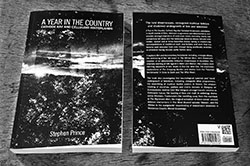
The Fallen by Watchbird is a conceptual pop album/project by Jane Weaver released in 2010 on her own Bird Records label in conjunction with Finders Keepers Records and discovering it and exploring related culture proved to be one of the early signposts that pointed me towards what would be become A Year In The Country
The theme of the album is:
“A floating storyline based around missing seamen, telekinesis, avian messengers, white witchkraft and death & re-birth…”
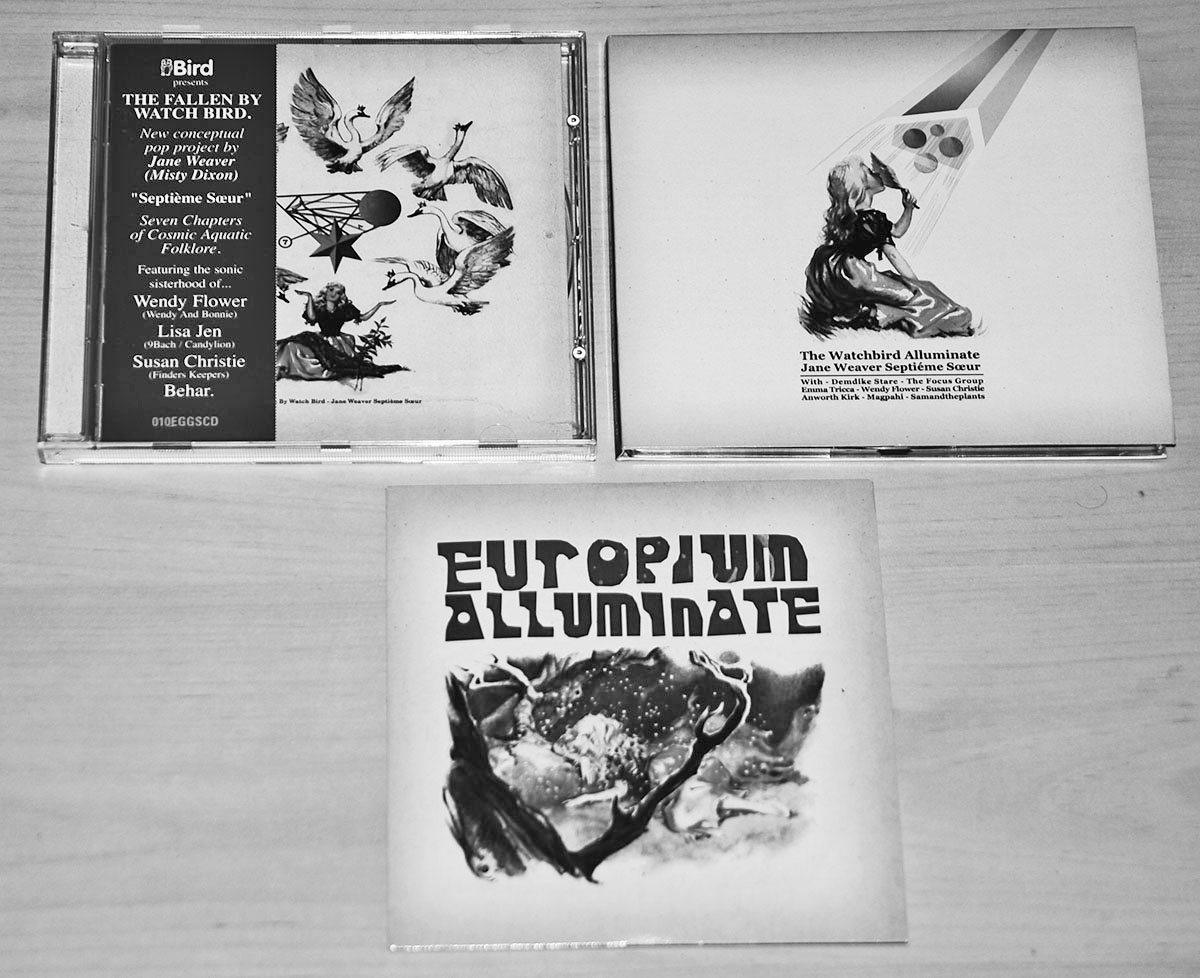
The project includes the main album The Fallen by Watch Bird, the also previously mentioned sequel or companion record called The Watchbird Alluminate that revisits and reinterprets the main album, an illustrated fictional book, video work, a poster and an accompanying compilation mix called Europium Alluminate which was released on CD.
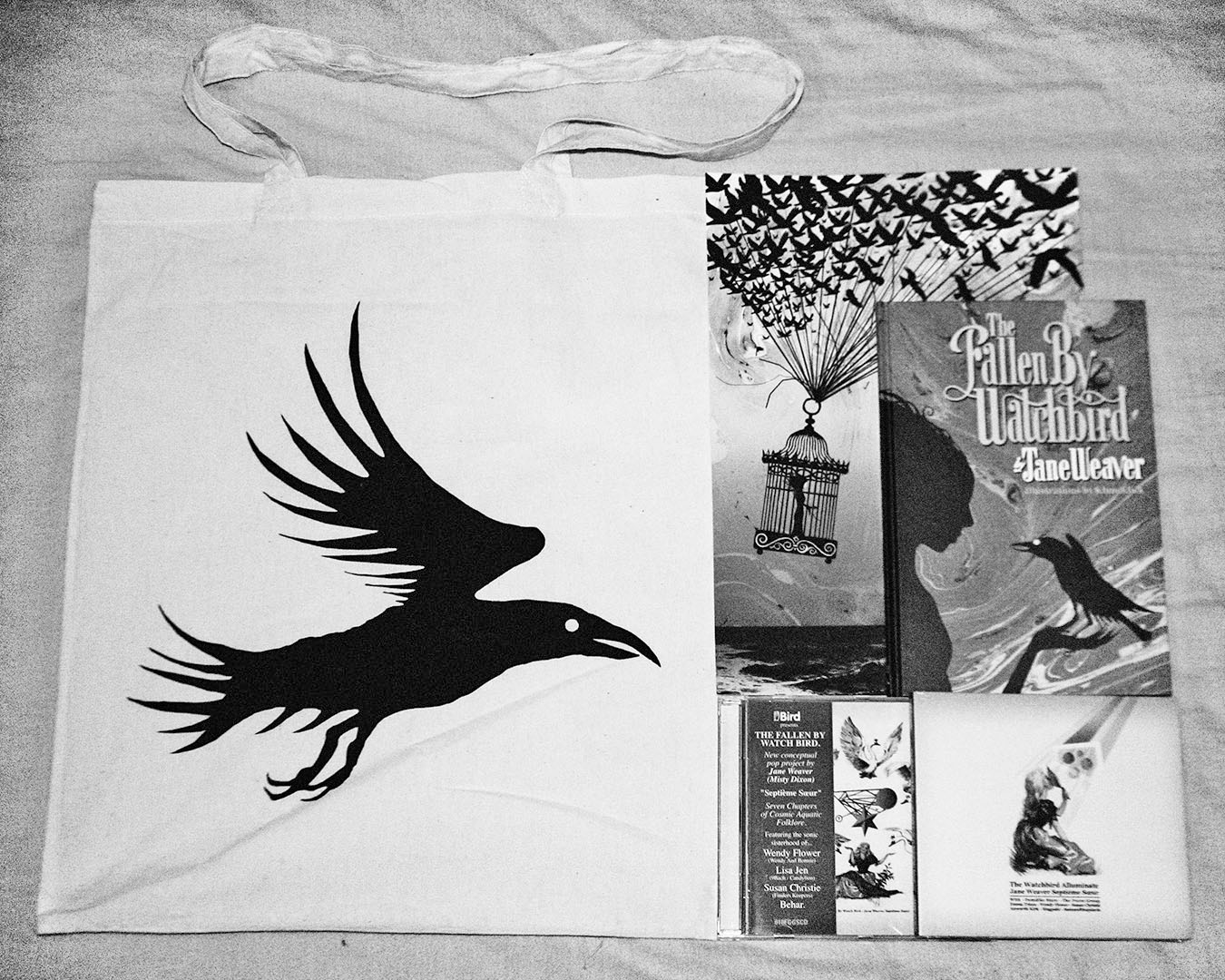
It is not a project or album which is easily definable within any particular genre or culture and it weaves and creates a unique and multi-layered world unto itself.
The project takes inspiration from a number of areas of inspiration including Eastern European children’s cinema, Germanic kunstmärchen (fairy tales or one online service literally translated it as “art fairy”), 1970s television music and traces of 1980s synth pop to create what is described as “cosmic aquatic folklore”; the resulting work creates a fable like atmosphere that contains a sense of it connecting or belonging to some of its source material but is far from being a homage, with any such aspects being via a reimagined dreamscape.
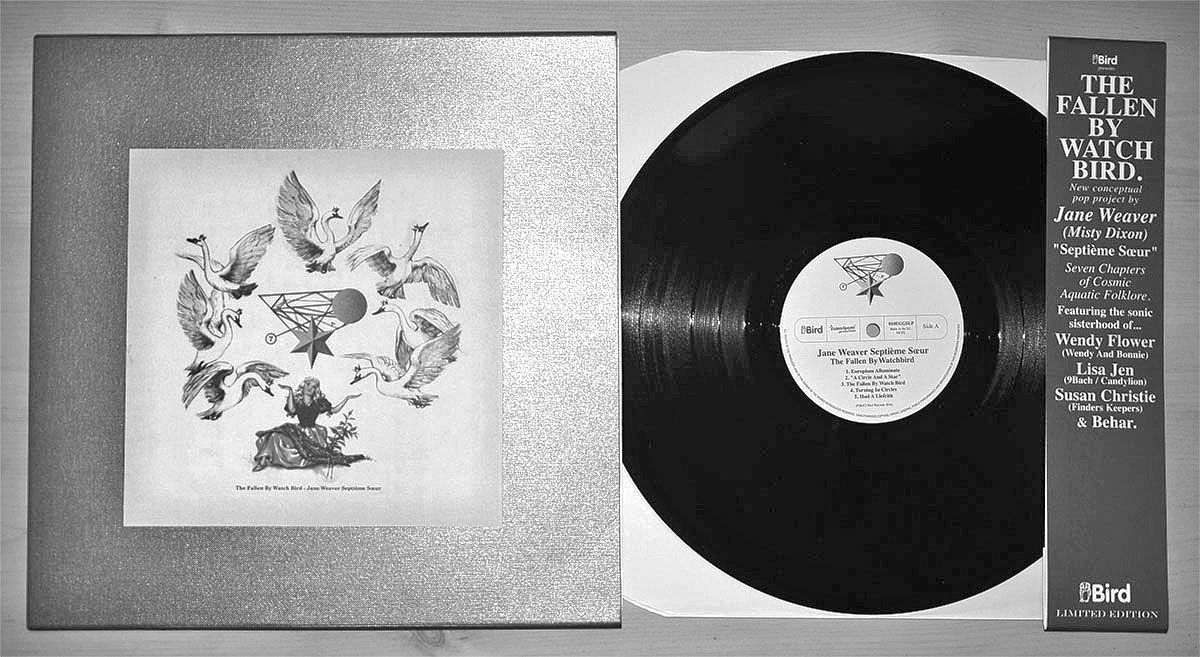
The Fallen by Watch Bird is credited to Jane Weaver Septième Soeur and features seven other female musicians alongside Jane Weaver, including Susan Christie who’s once lost 1960s acoustic pop recordings were released by Finders Keepers Records, 1960s soft psych pop rock musicians Wendy & Bonnie, Lisa Jen who is a member of Welsh language folk band 9Bach and members of Jane Weaver’s former band Misty Dixon.
While the album contains a number of different intertwined styles and atmospheres, at points the 1960s roots of some of the collaborators makes it presence felt in a certain almost Californian, hazy sunshine pop, psych and folk aspect to The Fallen by Watch Bird album, albeit through a distantly and very refracted filter.
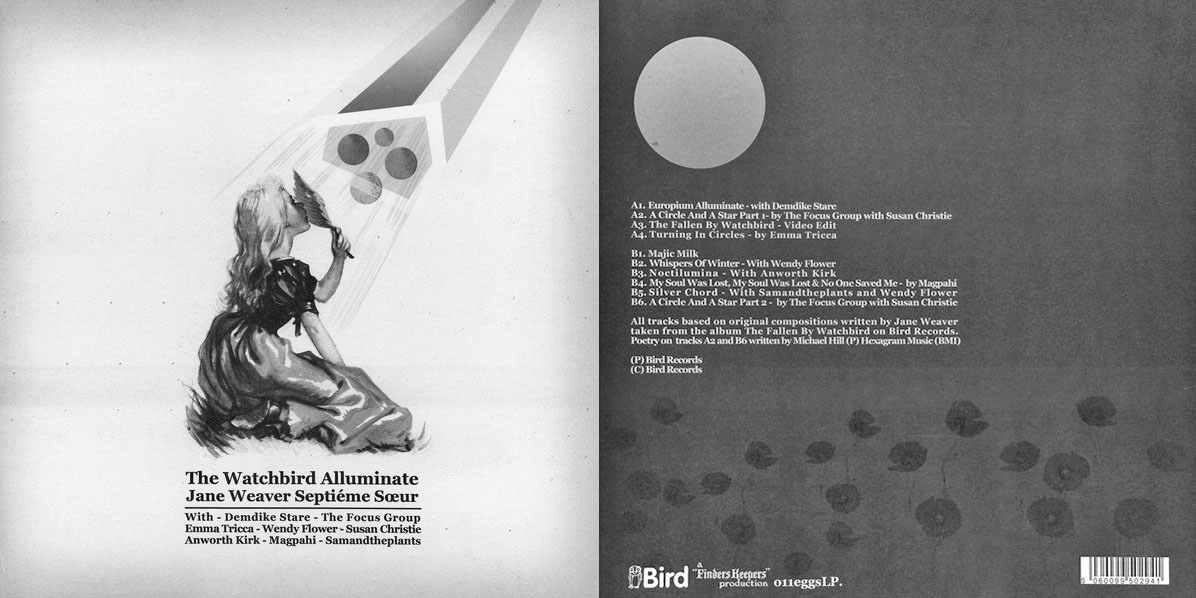
The Watchbird Alluminate adds to the project’s cast and includes collaborations, extensions, revisitings and reinterpretations of The Fallen by Watch Bird also by Jane Weaver Septième Soeur, alongside Ghost Box Records’ co-founder Julian House’s The Focus Group, Emma Tricca, Wendy Flower, Susan Christie and the previously mentioned Demdike Stare, Andy Votel’s pseudonymous Anworth Kirk, Magpahi and Samandtheplants. The album also adds to the project’s loose conceptual theme and is said to be about “telepathy, technology, lost-love, wiccan, war and watchbirds”.
In contrast with The Fallen by Watch Bird it is more overtly experimental than purely conceptual pop-orientated and adds a certain spectral, hauntological aspect via the likes of the unsettled soundscaping of Demdike Stare and the woozily cutup chimes and tinkling of The Focus Group, alongside tremulous, enchanting folkstress revisitings by Emma Tricca and Magpahi.

The previously mentioned Europium Alluminate mix CD that was part of the project’s release was compiled by Jane Weaver alongside Andy Votel and it is described as:
“A 70-minute transmission of cosmic aquatic folklore, flickering luminescent lullabies & hand-plucked pop.”
It is an explorative and intriguing musical journey which serves as an accompaniment and musical backgrounding for The Fallen by Watch Bird, one that hints at some of the possible influences and inspirations for the project but leaves these as hints as there is no tracklisting.

The project’s influences led me down a path to discover and/or rediscover the strand of cinematic history known as the Czech New Wave (also known as the Czechoslovak New Wave or Czechoslovak film miracle), which was mentioned in relation to Andy Votel’s work and the film Valerie and her Week of Wonders in the Wyrd Explorations 12 post.
The Czech New Wave cinema movement began in 1963 and lasted until the early 1970s and was a movement/group of Czechoslovakian filmmakers who began making films during a period of post-Stalinist liberalisation which included a more relaxed and less censored attitude towards cultural and intellectual activities within the Eastern Bloc countries, which included Czechoslovakia, that were aligned with the communist Soviet Union.*
Associated films often contained dark and absurd humour and at times surreal elements, which was effectively an attack and riposte to films made in the social realist style, which “was the official cultural doctrine of the Soviet Union that mandated an idealized representation of life under socialism in literature and the visual arts”.**
Accompanying which some of the Czech New Wave films in various ways took advantage of the liberalisation in Czech society, censorship etc and criticised and/or ridiculed the establishment and the state, including Miloš Forman’s The Firemen’s Ball (1967) which is set at the annual ball of a small town’s volunteer fire department and portrayed the corruption and incompetence that was present at all levels in society and Věra Chytilová’s Daisies (1966) which ridiculed the establishment via the anarchic pranks of two young women.

The 1976 Czech film Malá Morská Víla, directed by Karel Kachyna and also known as The Little Mermaid but something of a world away from the more well-known mainstream 1989 Disney film, was influenced by surrealism and the Czech New Wave and creates an entrancing and visually distinctive fairy tale world, with the ornate blue hair of its main characters being particularly striking.

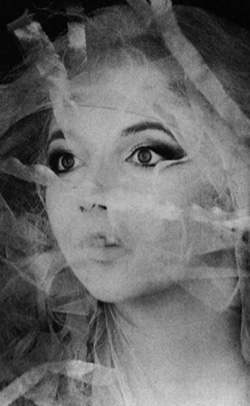
Jane Weaver quotes an unsubtitled copy of Malá Morská Víla as having been the starting point for her The Fallen by Watchbird work and some of the stylings from it, in particular the hair and robe like garb of its main character, found their way into photography associated with the album and the title track’s accompanying video by klunklick.
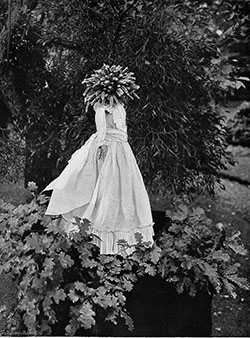
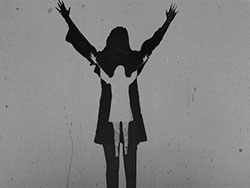
That video brings together many of the elements of The Fallen by Watch Bird project and concept. It mixes photography of Jane Weaver dressed as a fallen-through-a-portal sister of one of the characters of Malá Morská Víla, found illustrations from children’s fairy stories (which also accompany the project’s albums’ artwork), live action mixed with animation, cosmic symbolism, fantasia like pastoral and at sea scenes, the appearance and reappearance of black feathered birds and documentary war photography all of which interweave with the left-of-centre pop of the song to create a phantasmagorical, darkly hued and yet also whimsically entrancing fairy tale fable.

The layering present in the video and song expresses one of the defining characteristics of The Fallen by Watch Birdproject which is its culturally multi-layered nature. Part of that layering includes avant-garde elements in terms of its concept, influences and at times presentation. However, it also works as left-of-centre pop culture and music, having tunes you may well find yourself humming as you walk down the street and a distinct visual accessibility.

*In Czechoslovakia this period of liberalisation culminated and peaked during what has come to be known as the Prague Spring in 1968 when the reformist leader Alexander Dubček was elected as the leader of the Communist Party of Czechoslovakia and there was an increased loosening of restrictions on citizens etc. However, this period of reform ended when the Soviet Union and several affiliated Warsaw Pact communist countries invaded Czechoslovakia in order to suppress the country’s liberalisation and which in turn led to the strengthening of the authoritarian wing of the Communist Party of Czechoslovakia.
**This quotes from the Wikipedia.com webpage on social realism.