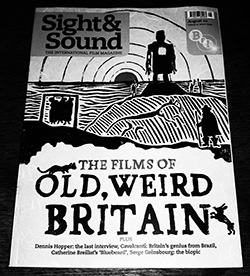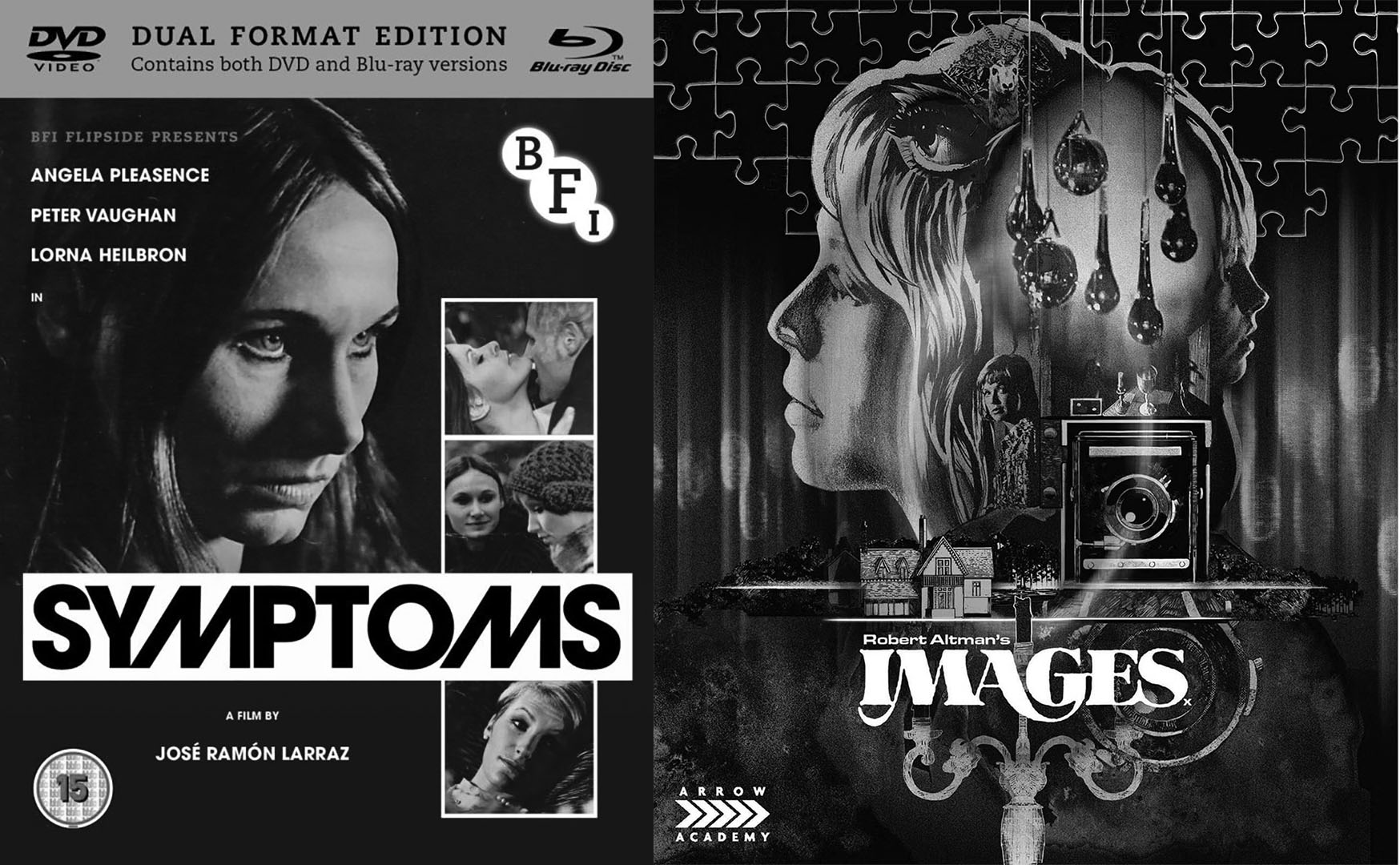
The BFI’s Flipside strand of DVD/Blu-ray releases and cinema events began in 2009; its intention is said to chart “the untold history of British film” and it has taken in a wide variety of the fringes of film and cinematic work which for various reasons has often fallen outside the critically accepted and/ or acknowledged canon of cinema.
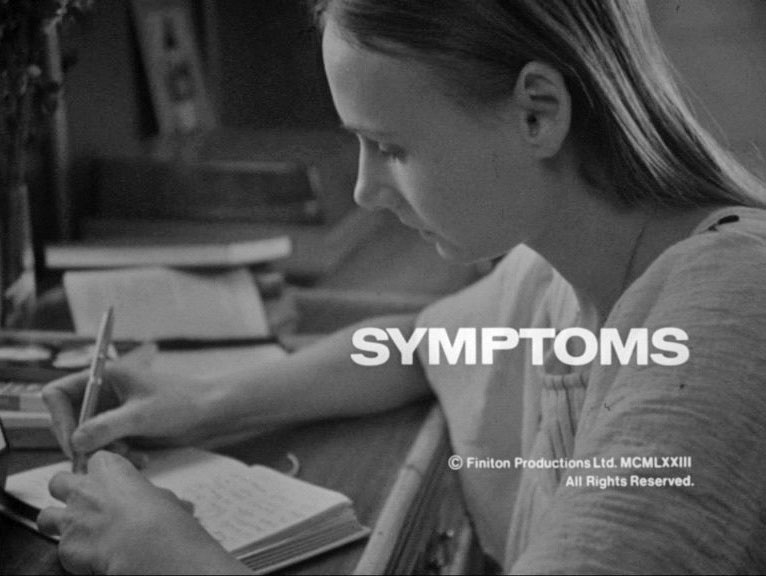
The DVD/Blu-ray releases have included what could be considered subterranean, exotica or mondo cinema, forgotten or lost film, arthouse and odd B-movies and occasional strands of unsettled or otherly pastoralism. These cinematic outcasts have been sympathetically restored and released with extended extras and notes and in 2016 the 1974 José Ramón Larraz film Symptoms was released as part of the Flipside strand of films.
As a brief précis of the film’s history and plot, it was produced in 1973, came out in 1974, received a fair amount of critical attention and praise and then largely disappeared for the best part of forty years, apart from via privately circulated bootleg copies and its story centres around two young women who go for a break in a large rurally located house, wherein one of their mental states begins to splinter and fracture.
In a Record Collector magazine review from 2016 it was described as “…gothic-bucolic… the sort of thing that begat hauntology and Peter Strickland…”, ending on “…it’s a revelation”.
The phrase gothic-bucolic connects with certain aspects of A Year In The Country wanderings and interrelated wyrd culture, particularly in terms of views of the landscape that deal with an unsettled flipside or subterranean, darker-hued bucolia.

Peter Strickland does not appear to mention the film in any interviews, nor lists it as one of the films that he noted as having fed into, influenced or were an inspiration for his 2014 film The Duke of Burgundy. However, in many waysSymptoms appears connected with that film, and could be seen in part as an unintended companion or sister piece.
The setting and setup is not all that dissimilar from The Duke of Burgundy; two women living in a relatively isolated rurally-set grand house that is decorated in a slightly faded, possibly slightly aristocratic or upper class, decadent or luxuriant manner and a depiction of the increasing tensions and dysfunctions of their relationship.
While the sense of connection and even sisterhood is increased by Angela Pleasance, who plays the lead in Symptoms, having a degree of physiognomic similarity to Chiara D’Anna who plays one of the main characters in The Duke of Burgundy.
Both have a slightly unworldly, almost childlike air to them, although Angela Pleasance’s character is more otherworldly than just unworldly, as compared to Chiara D’Anna’s character’s slightly brattish pique; Angela Pleasance’s character feels nearer to The Woman Who Fell to Earth.
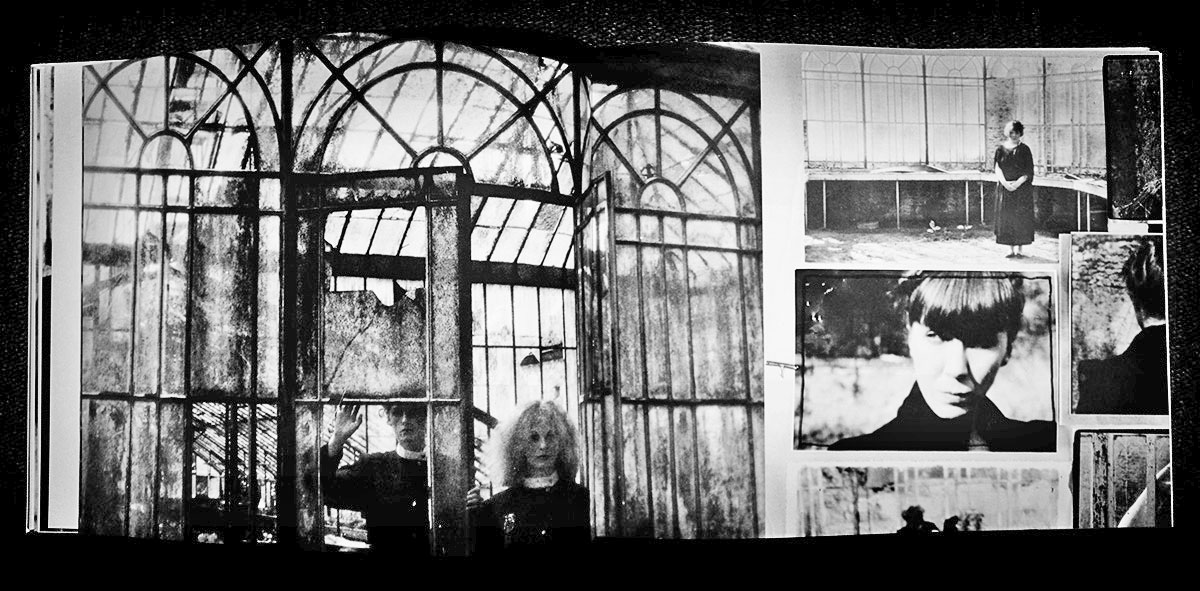
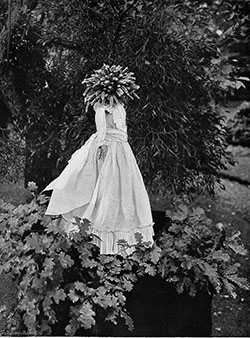
Symptoms also brings to mind the work of fashion photographer Deborah Turbeville and the use in many of her photographs of crumbling textures, decaying glamour and grandeur, alongside a certain shared languor to its characters and the use in both of edge of rural isolation settings.
Peter Strickland’s The Duke of Burgundy seems to exist in an indefinable never-land era: to take place in its own self-contained, quietly fantastical world, one where any possible external world or infrastructure are not seen and the markers and technology of contemporary life are hardly acknowledged.
In contrast Symptoms to a degree acknowledges the outside world and the contemporary time of its making: London and visitors from there are mentioned, or indeed they visit via car, the women travel to the local village for supplies and so forth.
However, their world still has the intensity of an isolated couple, one which increasingly intensifies and collapses into itself, with anything outside of the house and/or their relationship being seen as and indeed feels like an intrusion.
To a large degree The Duke of Burgundy’s pastoral idyll seems generally richly honey toned; mellifluous is a word that comes to mind but within this idyll conflict and imbalance between the two main characters builds into an unresolvable tension.

The rural location in Symptoms also has a certain entrancing beauty but it is a darker, more overshadowed gothic bucolia. There is a calm present and the house’s inhabitants go row boating on leaf-filled water and as in The Duke of Burgundy they also partake in carefree bike rides. However, as in The Duke of Burgundy there is an ever-increasing build-up of pressure and tension but with more literally fatal and psychotic results than the emotional wounds that are depicted in Peter Strickland’s film.
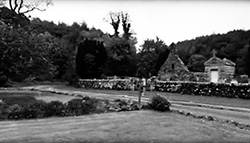
Although in Symptoms there is an underlying sense of dread, the viewer can at points or to a degree relax, sink into and enjoy its views of nature and escape. Such elements are very much part of the film’s enclosed, self-contained, claustrophobic world which is all overhanging branches and wooded enclosure rather than wide-open spaces. Here and there light may break through the trees but it seems to only just be breaking through, to be almost battling or momentary. And while the viewer can appreciate the natural beauty the film contains, it also instils a sense of “never has the British countryside been so quiet and calm and yet so unnourishing”.
As mentioned earlier, Symptoms acknowledges the period in which it was set, including some intriguingly slightly incongruous Carnaby-Street-become-tourist-attraction latter period hippie garments in an early sequence.
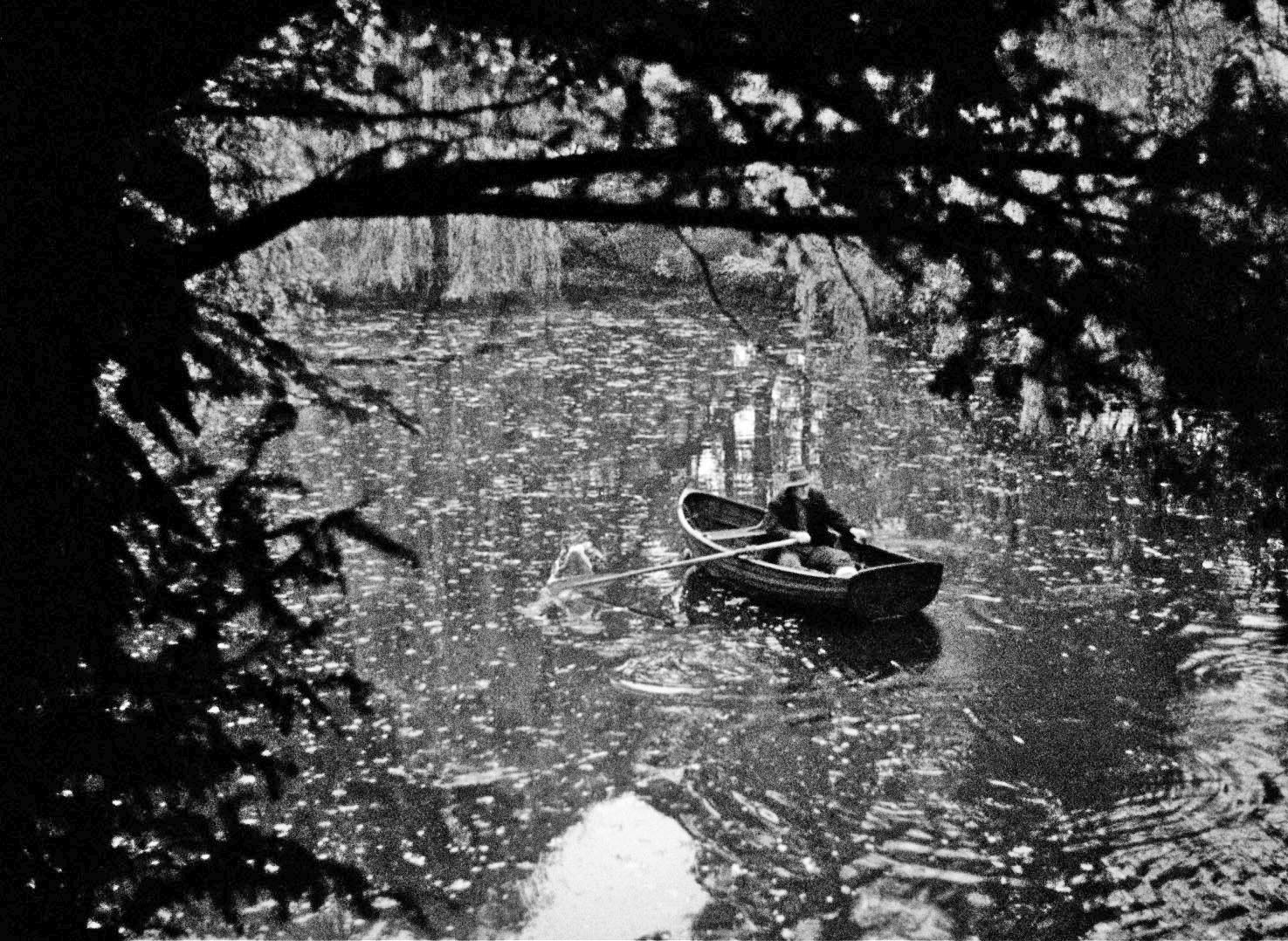
However, it is a film that is difficult to place in any particular era (something which it also shares with The Duke of Burgundy). This is particularly so once the participants are ensconced in the subtle grandeur, grounds and nature which are part of and surround their house, which seems to a degree to be a timeless place that is separate from the contemporary world.
This lack of being able to fully place it in a particular era is despite its muted grey-green visual atmosphere; one that was rather prevalent in film and television from the period of Symptoms’ production in the early to mid 1970s.
Accompanying which, the not being able to precisely pinpoint a decade when watching the film may also in part be due to a certain sharpness, glamour and style to the imagery that does not seem to fully belong to its time of production in the 1970s and that period’s often gritty representation in British film, television and media of the time.
This dischronicity could also be due to the contemporary restoration of the film, as the related visual qualities can cause a certain sense of time period dissociation, possibly due to the push and pull of the aesthetics of technological processes from different eras.
Although it is not overly filled duration-wise with such things, this is a film that not so much wanders as lunges, sparks and darkly shatters into intense, particularly unsettling physical violence and related genre tropes. Associated posters and promotion from Symptoms’ release often focused on those genre tropes but it is generally at a fair remove from more conventional genre film; it has its own distinctive character and atmosphere and is odder than much of such work alongside which there is a layering, intelligence and unspokeness in the film that seems to battle with and against genre expectations.

Symptoms shares a number of similarities with its almost cinematic period contemporary Images, a Robert Altman film from 1972 and both, as is also the case with The Duke of Burgundy, straddle a line between arthouse, enquiring cinema and a certain exploitational sensationalism.
In both Symptoms and Images, the main female protagonists undergo extreme mental disturbance with somewhat deadly results, while living in largely isolated rurally based homes. However, whereas Symptoms generally has a more subtly fractured dreamlike quality in the way it expresses such things and atmospheres, Images has a more overt, ongoing literal and graphic expression of those disturbances.

The plot involves a children’s author Cathryn, played by Susannah York, who receives a series of disturbing phone calls at her home in London, which leave her in a state of confused disarray. When her husband comes home, they decide to take a vacation at their isolated country cottage in Ireland, hoping that it will ease and calm her.
However, once there Cathryn’s mental state deteriorates, she begins to witness hallucinations or apparitions of people who are not there: past lovers, doppelgangers of herself and reality seems to crumble.
As a viewer it becomes difficult to decide and decipher what is real and what is not, with all such things seamlessly linking into one another and being presented in a largely realist manner rather than possible hallucinations that are signposted by overt visual effects.

As with Symptoms it is a study of the fracturing of a mind in an isolated rural setting, amongst a landscape that should contain bucolic ease, escape and rest but that underlyingly could be seen to represent and capture a sense of 1970s psychic malaise.
In part that may be because despite the rural setting, both films have an understated murky, subdued colour palette, which as previously mentioned, seems to have been prevalent around the time when they were made.
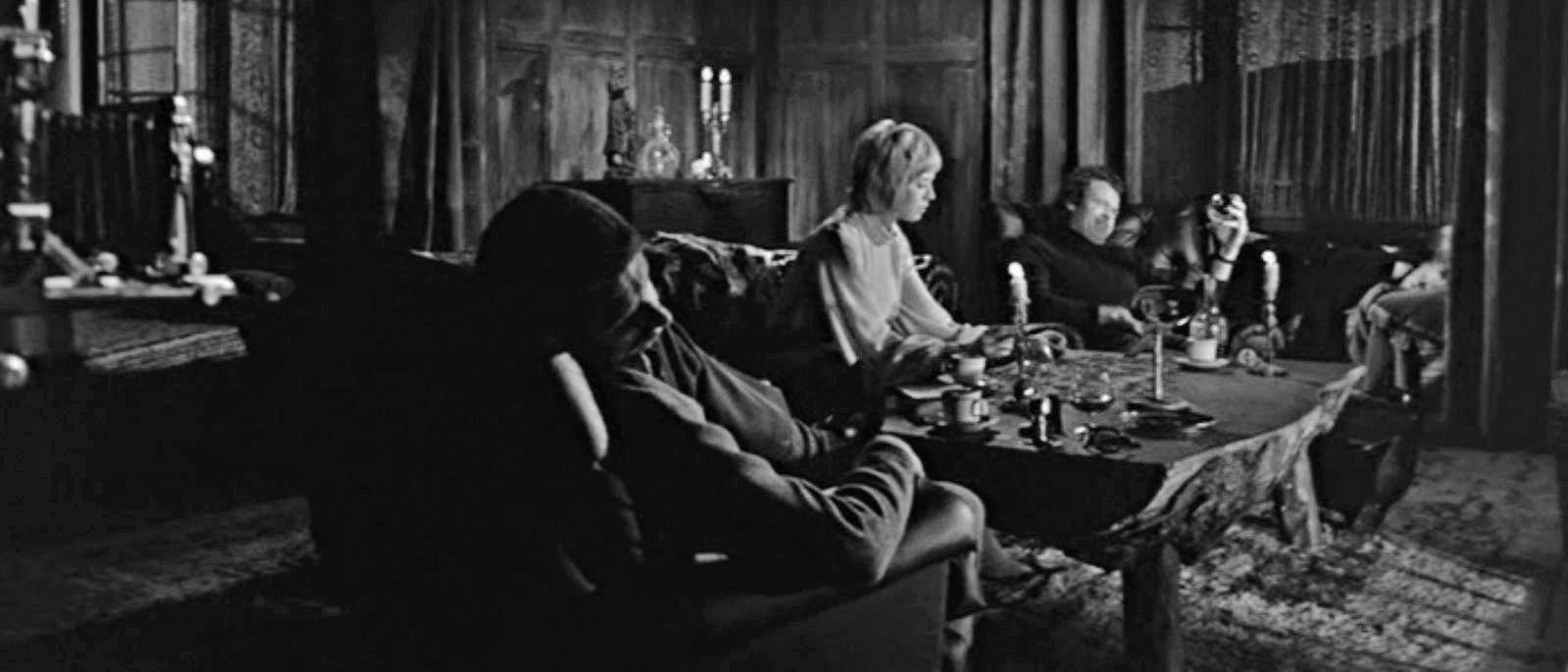
Also, within both films the interior scenes of the country houses are claustrophobic, confined, dark spaces, seemingly worlds unto themselves, decorated in what could be described as a gothic, bohemian, Hammer Horror mansion bric-a-brac style.

Symptoms is possibly more overtly claustrophobic, with its exterior scenes seeming to consist largely of overhung, sunblocking trees and vegetation, whereas in Images there are views of rolling moors and open hillsides but even within such shots there is little sense of ease and the landscapes and skies contain a foreboding, brooding sense of menace.