Gentle, drifting, softly woozy psych-ambient from 1968 and a band that have been said to be an influence on Broadcast and Portishead…

Gentle, drifting, softly woozy psych-ambient from 1968 and a band that have been said to be an influence on Broadcast and Portishead…

Hot Fuzz (2007) is a British-made buddy cop action comedy film, directed by Edgar Wright and co-written by him and its lead actor Simon Pegg, which centres around and depicts an idyllic rural village that has in large part gone rogue and become rotten and corrupt.
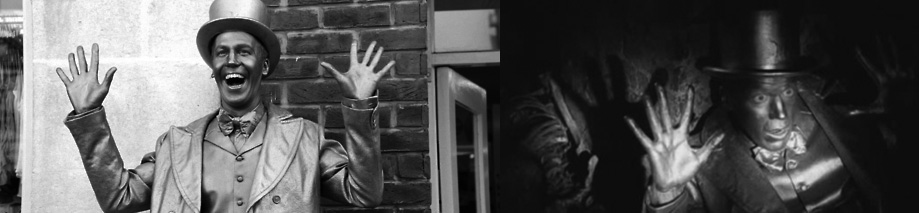
In the film, over-achieving London police officer Nicholas Angel, who takes his work very seriously, is relocated to Sandford; a place which initially appears to be a typical sleepy quaint British village. However, things are not as they seem, and Angel and his colleagues are soon embroiled in a murderous conspiracy by prominent members of the village who are intent that, no matter what, Sandford will continue to win the area’s Village of the Year competition: cue fellow villagers and visitors who may get in the way of this being sent to their demise via the likes of large-scale explosions, tumbling masonry and decapitation in a car accident. Notably these murders are often instigated due to relatively minor infractions that are considered by the conspirators to impinge on the village’s bucolic “ye-olde worlde” view of itself, such as a metallic painted “living statue” mime street artist who when found by Angel is comically still holding his mime pose despite being deceased.
Angel is shown as being somewhat out of place in supposedly sleepy Sandford, after the hustle and grittier experiences of city policing, something which is heightened by his wearing of modern protective police wear and equipment despite the seeming unlikeliness of his needing to use it in the general peace and calm of his new surroundings. This is also in contrast to his new police duty partner Danny Butterworth, played by Simon Pegg’s frequent collaborator Nick Frost, who at least until the later action sequences, is more likely to be seen wearing a woollen policeman’s jumper and in both character and appearance is nearer to the idealised image of the classic friendly British country policeman.
Butterworth is portrayed as a sweet, gentle, good-hearted soul, but also as somebody who, in a similar manner to the film itself, is in thrall to American buddy cop action films and their notions of the excitement and glamour of the shoot-out, the chase etc, and so he is more than slightly in awe of this “big city” newcomer and his metropolitan experiences.
Edgar Wright has said that he wanted to make a cop action film because unlike much of the rest of the world at the time, Britain did not have a strong tradition of such cinema – although, to a degree, it did on television via the likes of the gritty police drama The Sweeney (1975-1978). Indeed, with regard to this, in Hot Fuzz two of the police detectives, both of whom happen to be called Andy Wainwright, seem to be channelling characters from a previous decade’s television, in terms of their belligerent swaggering attitude, moustaches and vaguely period clothing – possibly the aforementioned The Sweeney or perhaps the 1980s-set, police timeslip series Ashes to Ashes (2008-2010).

There have, of course, been a long line of American buddy cop action films including Point Break (1991), Bad Boys (1995) and the Lethal Weapon series of films released between 1987 and 1998 etc, and as with many such films, at the heart of Hot Fuzz is the relationship between the contrasting characters of two “buddy” police officers, Angel and Butterworth.
Hot Fuzz transfers Hollywood action and cop movie aesthetics to a British rural setting (Wright has said that he originally pitched Hot Fuzz with the title Rural Weapon) and makes direct and indirect references to such American films – in particular Point Break and Bad Boys – in an often-humorous manner. However, Hot Fuzz is not so much a parody, spoof or satire of them but rather an affectionate homage which seems to hold its source material in high esteem. However, despite the relatively high production values, special effects and so forth, in some indefinable manner Hot Fuzz retains a sense of being British drama; there is a subtle and appealing characteristic awkwardness to some of the action scenes etc that seems to reflect a national film industry that has never fully embraced the flash and spectacle of Hollywood-style cinema.
Connected to which there is a curious disconnect when watching an, at times, all out action film of this type set in a British village and its local supermarket etc, and on seeing Hollywood- style action, heroics and gunplay undertaken by British policemen. And so, much of the film’s humour and character is derived from the appearance and use of the trappings of American cinema’s action cop films, such as chases, fight scenes, automatic weapons and explosions etc, in the unexpected setting of a rural British village.

Alongside referencing American buddy cop action films, Hot Fuzz also makes a more than cursory nod towards other genres, including Westerns (towards the end of the film Angel is shown armed and riding into town on a horse in a manner redolent of the avenging hero in a Western); previous British horror and folk horror films, in particular The Wicker Man (1973), The Omen (1976) and gothic Hammer Horror; and even “giant monsters on the rampage in the city” films such as the numerous versions of Godzilla.
With regard to Hot Fuzz’s relationship to The Wicker Man, in both films a priggish outsider policeman attempts to solve a mystery in a rural community where something untoward may be afoot, and is led a merry dance by its inhabitants. This connection is made all the more implicit by the presence of Edward Woodward in Hot Fuzz, in what was to be his penultimate cinema role.
Woodward’s role in The Wicker Man, of a police sergeant investigating the rural folk as a representative of the law of the land and (to his mind) societal decency, is stood on its head in Hot Fuzz as he is involved in the village’s murderous conspiracy and is eventually shown as the last living rogue villager, when near the film’s end he bursts into the police station and attempts to shoot Angel. He is foiled but accidentally activates a sea mine that Angel had earlier confiscated as part of an arms cache, from another local. Woodward’s character is ultimately killed and the station is destroyed in a manner that seems to bring to an end, and close the circle of, a story cycle in British cinema.

The film’s nods towards 1970s British horror cinema – in particular that era’s portmanteau films and preoccupations with witchcraft and the occult – can be seen in the fact that the murderous conspiracy is shown to be the result of the actions of an essentially morally corrupt and very misguided local community group, the Neighbourhood Watch Alliance or NWA (an acronym which is a humorous and incongruous reference to the notorious American gangster rap group). When Angel visits a secret NWA meeting, rather than finding them to be a conventional local community group, they are presented as nearer to a coven or cult who choose to gather at night in black shawls and hoods around a stone table in a castle. However, they still retain a curious, friendly neighbourhood committee air as they discuss their dastardly deeds and this unlikely juxtaposition is mined for comic effect.
In a further connection to 1970s horror, the murder, with the use of falling church masonry, of a journalist who is planning on revealing information about goings-on in the village appears to be a direct reference to The Omen, in which a priest who is similarly attempting to reveal secrets is killed by a lightning rod falling from a church roof during a storm. Alongside which, Hot Fuzz’s references to Hammer Horror-esque gothic films, in particular, can be seen in the scene in which Angel flees the NWA and falls into a catacomb filled with the bones and remains of those they have killed.
At the above-mentioned NWA meeting, the head of the local police, Inspector Frank Butterman (played by Jim Broadbent) who is also Danny’s father, is revealed as being one of the instigators of the conspiracy the roots and aims of which turn out to be a thoroughly misguided attempt to honour his wife’s memory and her wish for Sandford to keep the Village of the Year title. Meanwhile in comparison to that of Nicholas Angel, Inspector Butterman’s uniform appears to be suggestive of an earlier era of policing and this subtly unsettles expectations and norms as, in a rural setting, this serves to summon up an avuncular sense of the “good old British bobby”1 and with it a bygone gentler way of life.

As with The Wicker Man, Hot Fuzz flips the chocolate box idyll of the British village and rural communities and presents them as the “unknown” or “other”; a threatening and deceitful group closed and separate to the outsider or city dweller, with ways, morals and motivations that appear foreign and at a far remove from mainstream and urban society’s mores.
Hot Fuzz’s reversing of expectations and settings is further heightened when in a climactic scene Angel pursues and fights another of the conspiracy’s prime instigators, local supermarket manager Simon Skinner, played by former James Bond Timothy Dalton, who is the film’s resident arrogant bad guy.
This scene takes part within a conspicuous symbol of gentle Britishness, a miniature model village complete with “Please Keep Off The Grass” signs, with Angel and Skinner towering over the buildings and is nearer at points to the kind of giant battling monsters that might be found in science fiction and fantasy films. As with similar sequences in such films, their fight leads to the literal destruction of whole structures, although here they are the small-scale replicas of the components of a typical rural village rather than city skyscrapers.

After his first defeat and mirroring many such multiple returns of the bad guy in American genre film, Skinner rises back up and attempts to attack Angel, albeit with a small plastic-handled box- cutting knife – presumably normally used in a day-to-day manner at the supermarket – rather than say a machete or similar weapon, that might be seen in its American cinematic equivalent. The use of this prosaic and relatively small weapon along with the general wrongness of a pitched violent battle in a model village further emphasise the comic out-of-place nature of such actions amongst a bucolic idyll.
At one point Skinner appears to be winning and shouts: “Get out of my village”, to which, before overwhelming his foe, Angel replies with extreme conviction “It’s not your village anymore”.
And ultimately the forces of corruption are vanquished, with Sandford being shown as returning to conventional societal norm and equilibrium.


Grey Malkin who has also worked as, alongside other names, The Hare And The Moon and Widow’s Weeds, has been a stalwart supporter of A Year In The Country over the years, both as a contributor to the themed A Year In The Country compilations and also by writing reviews of the AYITC books, a number of which have been published in Moof magazine.

Below are two of the AYITC book reviews which he wrote on spec but that haven’t yet been published elsewhere.
I wanted to post them as, aside from them being about books that I’ve written and published, as with all his AYITC book reviews they’re interesting and thoughtful explorations of wyrd, hauntological etc themes and culture.

A Year In The Country – ‘Threshold Tales’ by Stephen Prince
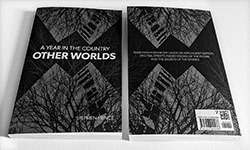
The A Year In The Country imprint continues its literary exploration into the more hidden and arcane aspects of both hauntological and folkloric culture with its new publication ‘Threshold Tales’. This new text follows fast on the heels of its previous collection, ‘Lost Transmissions’, which focused on such celluloid ghosts as the obscure supernatural TV compendium ‘Leap In The Dark’, and on investigations into the cinema of ‘Rollerball’ and ‘Gattaca’, as well as a deep dive into the uncanny aspects of the music of Delia Derbyshire, Sharron Kraus and Burial. These writings, as well as previous publications ‘Wandering Through Spectral Fields’, ‘Straying From The Pathways’ and ‘Cathode Rays and Celluloid Hinterlands’, provide an encyclopaedic dissection and reference point for unusual, occult and often dystopian TV shows, books, music and cinema. Highlighting and often lingering at the crossroads where both folklore (and folk music) and a more urban, electronic or modern culture meet or intersect, A Year In The Country’s landscape is filled with such cult televisual outings as ‘Sapphire and Steel’, ‘Children of the Stones’ and ‘The Owl Service’, with spooked cinema like ‘The Wicker Man’ and ‘Stalker’, writers in the ilk of Alan Garner, Nigel Kneale and John Masefield, and music that ranges from obscure acid folk albums to the electronica of the BBC Radiophonic Workshop, Broadcast and Boards of Canada. A Year In The Country also operate as a record label themselves, and have an treasure trove of a back catalogue, both under their own name and as compilers of various themed compilations featuring the likes of The Rowan Amber Mill, The Heartwood Institute and Vic Mars. These can be sourced at their Bandcamp page, alongside their other publications and novellas; all are beautifully curated and mirror the deeply strange and haunted culture that permeated the UK during the 1970s and 80s, often penetrating the mainstream in an esoteric and apocalyptic manner, and which still resonate and inspire today.

‘Threshold Tales’ explicitly sets out its stall with its subtitle of ‘Crossing the Boundaries of Woodland Wraiths, the Uncanny City, Edgeland Expeditions and Frontier Dreamscapes’, and does indeed wander down each of these paths by means of looking at relevant or associated cultural artefacts. Taking a wider derive outside of the confines of the haunted horizons of the UK, various international sources and media are examined; the eerily beautiful Finnish shapeshifter film ‘The White Reindeer’ (1952) is explored as a precursor to the current folk horror genre and Mike Hodge’s ‘Black Rainbow’ (1989) reveals the darkness at the heart of American industry through a paranormal and surrealist lens, whilst also hinting at nature’s eventual dominion over man and his urban environment. The supernatural Disney adaptation of Ray Bradbury’s autumnal American chiller ‘Something Wicked This Way Comes’ is also given a chapter, in hindsight its Lynchian and unsettling atmosphere a curious project or release from ‘the house of the mouse’. A Year In The Country have wandered down more global routes previously, and it is telling that many of the same thematic concerns, and aspects of folklore or urban mythology, are transient; they cross borders and do not belong to any one country or culture alone. Staying with Disney, the Bette Davis starring ‘The Watcher In The Woods’ (1980) is given a perhaps overdue evaluation as a quality and enduring piece of supernatural television, its troubled inception and its place within a canon of equally haunted cinema given a proper telling. In a similar vein, the crossover of urban wyrd and folk horror is dealt with in a chapter looking primarily at 2016’s ‘’Without Name’, a film that eerily juxtaposes human disenchantment with nature with a sense of a woodland alive in its reactions to being intruded upon. It is the presenting of this sense of the uncanny (or something that by logic shouldn’t exist or be there) that A Year In The Country do so well, whether it is ‘The Watcher…’’s. English manor house ghosts or ‘Without Name’s more contemporary forest wraiths.

A more singular focus on the urban strange is given with a study of tower blocks as a televisual or cinematic motif for something ominous or malevolent, in particular 1987’s ‘Dark Tower’ starring Jenny Agutter, which is further given resonance (in terms of the theme of interactive or impactful architecture) by a chapter on 2017’s modernist and melancholic ‘Columbus’, Elsewhere, the human results of urban dereliction, and the concept of the forgotten edgelands of cities as liminal places, are given close attention, both in the US in Jim Jarmusch’s ‘Ghost Dog: The Way of the Samurai’(1999), and in the UK in Alan Bleasdale’s ‘No Surrender’ (1985). Both are darkly comedic and offer up eccentric and embattled characters who exist amongst (and possibly in reaction to) the dilapidated, forgotten streets and blocks that they inhabit, Such liminality and its effects upon not just human behaviour, but also art and culture, is taken up in the section on the documentary ‘Searching for the Wrong Eyed Jesus’ (2003), in which musician Jim White travels the hinterlands of the American South, meeting such iconoclasts as the novelist Harry Crews, banjo player Lee Sexton, and David Johansen of the New York Dolls. Further chapters continue the overarching themes of urban alienation and rural menace, be it via Stephen Poliakoff’s conspiratorial ‘Hidden City’ (1987) or the vampiric entities in the truly unique independent film ‘Nadja’ (1994).
‘Threshold Tales’, then, is a consistently fascinating and in-depth read, offering new insights and an overarching context and thread to what might at first appear disparate or unconnected films, books and cultural media. As with previous publications, it serves as an excellent jumping off point for exploring some of the creations written about in and focused upon within the book, as well as a guide to return to, having sat and watched, listened to or read. Prince’s writing is equal parts approachable and immersive, inviting us to notice similarities and connections, resonances, and echoes between different works – whether it’s in tone or mood, or perhaps developing from a similar set of influences. Highly recommended, as are all things A Year In The Country, which is fast becoming a reference library for the haunted generation.

The A Year In The Country imprint continues its deep dive and submersion into matters both hauntological and folkloric with its new publication ‘Lost Transmissions’, following on from previous collections ‘Wandering Through Spectral Fields’, ‘Straying From The Pathways’ and ‘Cathode Rays and Celluloid Hinterlands’, each a thorough (and essential) exploration of spooked, strange and often dystopian British culture. Known for the ongoing website of the same name that collates and examines cultural artifacts both past and recent, from obscure acid folk recordings to proto-electronic BBC Workshop styled experimentation (as well as the more spectral or occult UK TV programmes and films of previous eras), A Year In The Country also have an extensive back catalogue of music themselves, both under their own name and as compilers of various themed collections that featured the likes of Sproatly Smith, The Heartwood Institute, and The Rowan Amber Mill. Each of these hidden treasures can be found at their Bandcamp page, alongside their other publications and novellas; all are fascinating, carefully curated and assembled, and emphasise the blend of folk, psychedelia, electronica and haunted culture that was prevalent throughout the 1970s and 80s, and which still rears its esoteric head at points today.

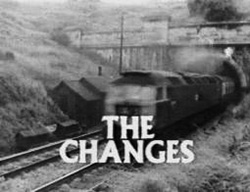
With ‘Lost Transmissions’, Stephen Prince (the creative figure behind A Year In The Country), sets out his stall with the book’s subtitle; ‘Dystopic Visions, Alternate Realities, Paranormal Quests and Exploratory Electronica’ – the chapters and themes are subsequently set out in these subdivisions, though there is a connection, a crossover and undercurrent that pulses between and links each one. Written during the Covid pandemic, there is a held awareness of the cultural responses of a crumbling or traumatised society at times of such turbulence; indeed, many of the 1970’s or 80’s hauntological touchstones such as ‘The Changes’ or ‘Doomwatch’ emerged from a period of political unrest, blackouts, strikes and economic uncertainty. The opening chapter (a significant potion of the book), which details the (mostly) lost or wiped TV series ‘Leap In The Dark’, highlights how an interest in matters occult or paranormal seems to arise at a time of spiritual crisis or instability in society, for example, in the 1970s when the utopian promises of the swinging 60s were seen to have failed and our politicians offered little comfort or hope. This was witnessed in the rise of such popular publications as ‘Man, Myth and Magic’, in media interest in instances of modern, suburban witchcraft (seen in the 1971 documentary ‘Secret Rites’) and, ultimately, in programmes such as ‘Leap In The Dark’. Prince draws many interesting observations and concepts from why such interests seem to peak at different eras, before rescinding and fading again when such instincts or preoccupations become overdone or commercialised, with the generation that was drawn to them aging and naturally moving on. This reader couldn’t help but draw a comparison with the welcome but near saturation of folk horror and folklore-based publications at present, as well as numerous deliberate attempts to capture this ‘genre’ in film, literature and in popular or academic conferences. Prince refers to ‘the haunted generation’, a term coined by writer Bob Fischer to describe those who grew up during the 1970s and 80s and who absorbed (and were therefore potentially haunted by) these cultural oddities. Perhaps there is such a draw for a generation of adults at present, and those younger, to hark back to more nature-based themes, to cinema such as ‘The Wicker Man’, television such as ‘Children of the Stones’, or to more land-based, folkloric fascinations such as standing stones, during this current post-Covid era of Brexit, with its spiralling cost of living and climate fear? Are we living through one of these times of spiritual crisis and our particular cultural interests and fascination are perhaps reflecting this? Will future generation be ‘haunted’ by growing up with Covid adverts on television, or featured in posters pasted up in public spaces? This is one of ‘Lost Transmissions’ great strengths, in that it is a rich jumping off point for a wealth of questions or reflections, and it takes cultural artefacts such as ‘Leap In The Dark’ as a basis for examining wider permutations in society. Additionally, it quite simply also provides a perfect referral or guide for seeking out some of these lost broadcasts and programmes, with ‘Leap In The Dark’ itself featuring luminaries such as occult writer Colin Wilson as a sometime presenter, and with later fictionalised stories from the likes of Alan Garner, Fay Weldon and David Rudkin all touching on supernatural or paranormal themes, and now reintroduced to a new generation via Prince’s writing.

Similarly, the chapter ’77 Posters…The Phantasmagoric World of Polish Film Posters and Other Celluloid Alternate Realities’ is an invitation to search out some of the images that are beautifully described, again with a strong sense of the context and history in which they were conceived (during the censorious Russian occupation), as well as the films that occupy this strange alternate/parallel hinterland and troubled era (such as ‘The Man Who Haunted Himself’). These posters exert their influence throughout the generations, such as on the artwork of album releases by Ghost Box Records, and the movies exist as a reflection upon a fractured society and the consequent pull towards a speculative or supernatural reading of events. The following chapter on the electronica of the Lothian based Boards of Canada also reflects on the ‘past informing the present’ (a refrain used in one of their songs), and the establishing of hauntology as a loose genre that uses the sounds and imprints of the past in modern ways to invoke a curious nostalgia; for something that may never have existed as such, but which draws on our innate sense of time, place and the oft (haunted or sepia tinted) emotions that these illicit. There is a theme here, perhaps more explicit than in previous A Year In The Country writings, of the human need or inclination towards these forms of expression or creation when we might otherwise feel unanchored in historical time and space. Chapters on the musical work of Finder’s Keepers record label impresario Andy Votel, Burial, Paul Weller’s work with Ghost Box Records and Cumbria’s The Heartwood Institute also investigate their incursions into the hauntological arena, and the connections and early reference points that join the dots between these and similar projects.
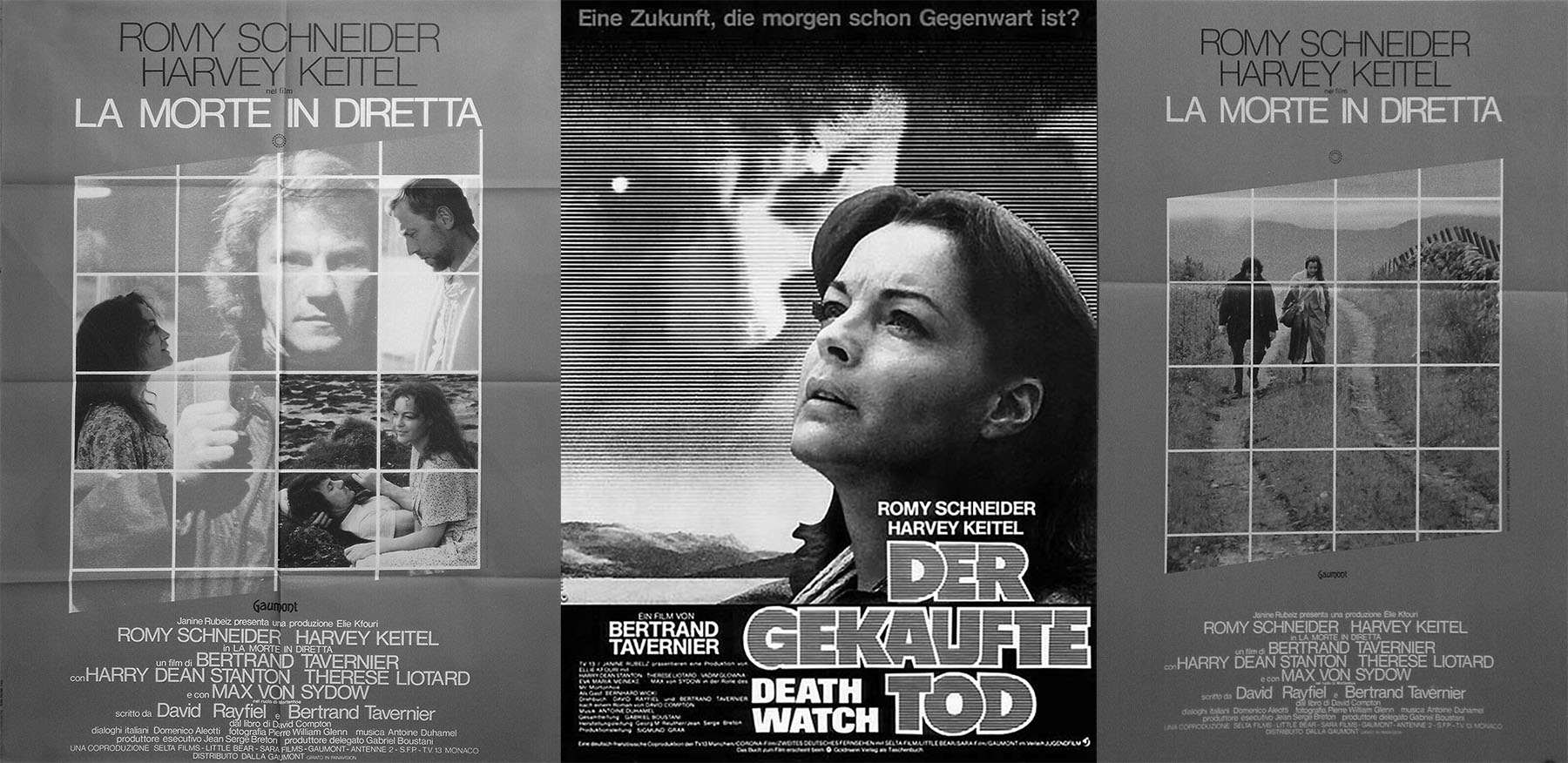
Dystopian cinema such as ‘Gattaca’ (1997), ‘Rollerball’ and ‘Three Days of The Condor’ (both 1975) are also examined, with the earlier films and their paranoia, distrust of power and conspiratorial narratives a potential reaction to the recent, failed hippie dream of the previous decade. Nigel Kneale’s bleak and prophetic ‘The Year of the Sex Olympics’ (1968) and the prescient ‘Death Watch’ (1980) also offer a foundation for analysis, of the past foretelling of an authoritarian future with a distinct lack of personal privacy, and our lives offered up for entertainment to the subdued masses, all from which some might conjecture that we are at least partly already there.
The A Year In The Country bibliography is becoming a wide and integral repository and reference point for much of the unusual, supernatural and generally wyrd aspects of (mostly) English culture over the last five decades. But these are no simple books of lists, or a dry academic exercise, instead there is a passionate sense of research and investigation, an interrogation of these artefacts and their connection to each other, and their meaning or influence as reflected upon society as a whole. Hugely readable and immersive, whilst remaining thought provoking, questioning and philosophical about these particular strands of music, cinema or television, ‘Lost Transmissions’ comes highly recommended for anyone who has ever delved into the worlds of spooked vintage television, the writings of Alan Garner and Nigel Kneale, or the sounds of Broadcast or the BBC Radiophonic Workshop. The book itself comes with a suggested Spotify playlist featuring some of the artists mentioned in the text, as well as others who form a part of the same haunted landscape.
 (Above: The Trappist Afterland & Grey Malkin’s The Trappist & The Hare album artwork, originally released on CD with this artwork by Reverb Worship in 2020.)
Grey Malkin has an extensive back catalogue of music which he has released and/or co-released under, amongst others, the names Widow’s Weeds, The Hare And The Moon and Meadowsilver, alongside him having collaborated with, again amongst others, Trappist Afterland, Kitchen Cynics and Fogroom.
His work has often included a contemporary take and exploration of the “wyrd” side of folk rock and acid/psych folk but has also at times incorporated elements of such things alongside exploring other genres, themes, atmospheres etc.
One example of this “cross pollination” is the 2020 album The Trappist & The Hare, which was a collaboration between Grey Malkin working under his own name and The Trappist Afterland; if you should imagine some far off hill where 16 Horse Power have recovened and echoes of their work meet and intertwine with a Coil-esque “hidden reverse” and shades of neofolk, while off in the distance sounds of Appalachian folk drift in on the wind then you might be heading vaguely in the direction of this album.
It is both traditional and experimental and while having an in part contemporary character it also seems to draw from some indefinable past, alongside which it contains a subtle undercurrent of darkness and unsettledness and is intriguing work that does not give up its secrets easily.
The Trappist & The Hare is available digitally at The Hare And The Moon and also the Trappist Afterland’s Bandcamp pages.

A rare vocal track from cosmic new age synth explorers Emerald Web… an arpeggiated fairy tale flight of fantasy…


There is an area of photography which concerns itself with documents of British folkloric rituals and costumes. A starting point for such things is Sir Benjamin Stone’s work in the late 19th and early 20th century, when he photographed British traditional customs, collected in book form in A Record of England: Sir Benjamin Stone and the National Photographic Record Association 1897 -1910, which was published in 2007.
The people, times and places in Benjamin Stone’s photographs seem as though they belong to somewhere now impossibly distant from our own times.
The physiognomy of those portrayed, their stances and very being have gained layers of difference and otherliness as the years have gone by. There is a sense at times of them being photographs not from Benjamin Stone’s land of birth but rather of them being documents of rituals in exotic foreign lands.

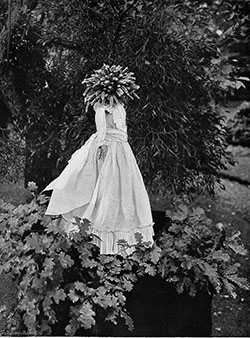
Alongside this they can also possess an air of surreality: in one photograph a stuffed figure is shown as if it is floating in the air amongst the foliage of a tree; dressed in a white flowing dress its face and hands are completely obscured or replaced by what appear to be harvest crops.
As an image it brings to mind more a sense of being from a fairy tale rather than 19th century reality captured via documentary photography.
Other photographs contain numerous stag’s antlers worn as part of ritual costume. This, along with the challenging stance and stares of their subjects, lend them a folk horror aspect, almost as though they are a glimpse forwards and backwards to the transgressive rituals of the villagers in 1970 Play for Today television drama Robin Redbreast.

Benjamin Stone’s work is an early point in a lineage that leads to more recent books which document British folkloric tradition, ritual and costume such as Homer Sykes Once a Year: Some Traditional British Customs (1977), Sarah Hannant’s Mummers, Maypoles and Milkmaids: A Journey Through the English Ritual Year (2011), Merry Brownfield’s Merry England – the Eccentricity of English Attire (2012) and Henry Bourne’s Arcadia Britannica: A Modern British Folklore Portrait (2015).

As a starting point, Homer Sykes Once a Year is a collection of photographs from seven years of journeying around Britain and was reissued in 2016 by Dewi Lewis Publishing.
As with sections of Benjamin Stone’s work, some of the photographs in Once a Year have a genuinely eerie or unsettlingly macabre air, particularly the cover photograph of the original edition which features the custom of burning tar barrel-carrying in Allendale, Northumberland.
This presents a sense of a ritual that feels considerably separate to mainstream contemporary society and mores, whether at its original time of publication or today and although it is a documentary photograph, as with some of Stone’s photographs, seems to hint at or lean more towards the fictional worlds and tropes of folk horror rather than the real world.
Alongside which Once a Year also acts as a document of period 1970s detail and style, while also capturing the way traditional customs existed in amongst such things.
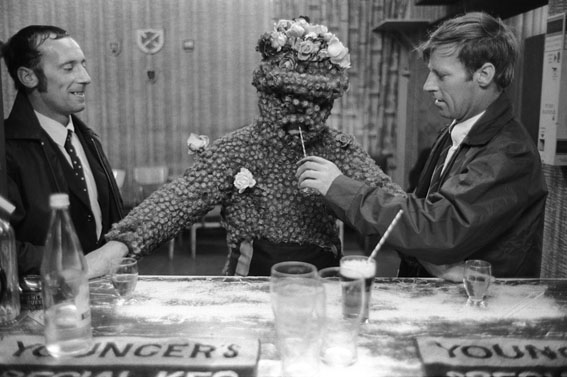
One of the key images in the book is of somebody completely enclosed in a Burry Man folkloric costume, which is made from sticky flower or seedheads, in a pub who is being helped to drink through a straw. It is a precise distilling and capturing of a particular moment in British life, full of subtle signifiers of a way of life which, while only being a few decades ago and not yet as inherently distant as the world captured by Benjamin Stone’s photographs, still seems to belong to a world very far apart from our own.

In a number of ways Sarah Hannant’s Mummers, Maypoles and Milkmaids is similar to Once a Year in that both books are documentary photography social histories of the ongoing observance and enactment of British folk rituals.
Although Hannant’s photographs are in colour, some of the photographs could almost be exchanged from one book to the other, although they are set apart by subtle period signifiers and details.
As with Once a Year one intriguing aspect of this book is the way that these sometimes-arcane rites and rituals are pictured alongside and in contrast to symbols of modern-day life.

In Sarah Hannant’s book this positioning and juxtaposing is shown in photographs which, for example, picture somebody dressed in a straw bear folkloric costume next to a local metro supermarket and a fluorescent-clad safety officer next to carnival float queens.
It is also given expression in her book through more subtle details such as a digital camera next to people whose faces have been blackened as part of a folkloric ritual, the modern eye wear of a traditional jester as he wanders down a country lane and possibly in the modern-day physiognomy and clothing of the observers of burning tar barrel carrying.
Often the rituals pictured have a playful, dressing up, knockabout air but just once in a while something else seems to creep into the photographs, in particular in one photograph where the blackened faces of those who, as mentioned above, are engaged in and wearing the costume of folkloric rituals peer and appear through a pub window.
As with Once a Year, such photographs suggest the tropes of folk horror rather than being purely documentary photographs and they begin to hint at or conjure up an otherly Albion, slithers of a view through the portal as it were.

Alongside Once a Year and Mummers, Maypoles and Milkmaids, Merry Brownfield’s Merry England is a book which utilises documentary photography via its photographs of its subjects in real world settings.
At first glance and from the book’s cover, which features somebody dressed in traditional green man folk costume, it appears to be another book in this lineage, one which directly focuses on folkloric traditions and photographs of people in traditional folk costume forms the heart of the book with sections titled “Straw Bear”, “The Castleton Garland Day”, “Holly Man”, “Mummer’s Plays” and “Morris Dancers”.
However, it also travels considerably further afield to encompass pop culture tribes and styles such as mod and people who appear to have tumbled from the pages of the humorously eccentric vintage lifestyle magazine The Chap in “The Tweed Run” and “Vintage Style” sections.
Alongside which it also documents the city-based London East End tradition of pearly kings and queens, the comic convention- esque costumes of attendees to the World Darts Championship, traditional Billingsgate fish market bobbin hats and a number of possibly more contentious hunting and aristocratic areas.
Because of the way in which the book explores a breadth of different areas of traditional and celebratory wear it reminds me of Jeremy Deller and Alan Kane’s Folk Archive book and exhibition from 2005, being more a “from the people” view of things than specifically what could be considered folk aesthetics.

Henry Bourne’s Arcadia Britannica takes a different approach to the above books in that, as its subtitle suggests, the book contains more formal posed portraits of those in folkloric costume.
The photographs are described as being “shot in the wild” at various events and festivals but apart from the occasional appearance of grass beneath the feet of some of those in the photographs, due to the use of a blank white backdrop aesthetically they could be studio portraits.
The white backdrop removes those in the photographs from the wider world and accompanied by the capturing of detail which is enabled by the formal posing and controlling of light sources it lends the project the air of an almost scientific recording of its subjects; through these choices of technique the book represents and contains a precise documenting of a particular point in folkloric time archived for future generations.
While the book largely focuses on those wearing traditional folkloric costume, although less so than in Merry England it also branches out further to include Pearly King and Queen costumes, while also taking in practising witches and warlocks (and in an interconnected manner includes an introductory essay by Simon Costin, who is the director of the Museum of Witchcraft alongside being the founder and director of the Museum of British Folklore).

All the above books and photography focus on the British Isles but there are a number of books which carry out similar studies and documenting of folkloric rituals and costumes elsewhere in the world, one of which is Charles Fréger’s Wilder Mann: The Image of the Savage originally published in 2012. This takes as its theme:
“The transformation of man into beast [which] is a central aspect of traditional pagan rituals that are centuries old and which celebrate the seasonal cycle, fertility, life and death.”
Reflecting such transformations, generally the images in the book are of costumes where the human features of their wearers are no longer visible, being much more hidden than many British folkloric costumes.

Fréger travelled throughout Europe to document such rituals and while his project took him to the UK the costumes in his photographs seem to the untrained eye to largely be exotically foreign.
In British folklore-focused photography and books the sense of unsettling folk horror-esque undercurrents are more glimpses here and there; with Charles Fréger’s images such atmospheres are much more prevalent.
Many of the costumes in his photographs could well be escapees or prototypes for the 1970s British BBC costume and creature effect department in terms of their design. They could well be creatures from a forgotten Doctor Who episode from back then, possibly compatriots of the befurred yetis or abominable snowmen that had a nation’s children hiding behind the sofa.

One photograph in Wilder Mann pictures somebody smoking a cigarette, which should break the spell but it does not; the wearer’s masked white costume, makeup, walking stick, stance and the way they are staring at the camera makes it wander off into some very odd almost slasher film territory and more childhood nightmares. These could be creatures from the television series Sesame Street turned into monsters, ones which have crawled from under the bed and out of the cupboards and are wandering the landscape freely.

The images in Wilder Mann and the above books of British folkloric rituals often focus on documenting rurally-orientated or located events and customs. Axel Hoedt’s book Once a Year from 2013 shifts focus more exclusively to streets and towns, in particular the Swabian Alemannic carnival known as Fasnacht, Fastnacht or Fasnet, a custom in southwest Germany. The carnival is described in text which accompanies the book as being:
“When the cold and grim spirits of winter are symbolically hunted down and expelled. Every year around January and February processions of people make their way through the streets of Endingen, Sachsenheim, Kissleg, Singen,
Wilfingen and Triberg dressed up lavishly as demons, witches, earthly spirits and fearful animals to enact this scene of symbolic expulsion.”
The language used seems brutal and harsh; hunted down, expelled, expulsion, fearful and to view these photographs is to step in amongst the denizens of a land far from the twee fields of folklore and carnivalesque dressing up.

The creatures his photographs capture (that particular word is used somewhat appropriately and possibly hopefully) seem like the darker urban cousins of Wilder Mann.
The images put the viewer in mind of folklore as rethought by club kids (think 2003 film Party Monster), while sharing a sense of Wilder Mann’s 1970s Doctor Who-esque “How do we scare the heck out of people for relatively tuppence ha’penny?”.

While in Estelle Hanania’s Glacial Jubilé book (2013), some of the European folkloric costumes and creatures from Wilder Mann seem at points to reappear and breach the rural/urban divide, but this time they can seem like alien invaders as they are shown advancing in formation across the landscape and then appearing in urban streets and shopping centres.
Alongside the rural/urban division that is at times present in such folkloric-based photography work there could also be seen to be further separate but interlinked strands, themes, atmospheres and approaches.
As mentioned above there is the more documentary-like photography which focuses on British folklore and that can be found in the work of Benjamin Stone and the books Homer Sykes’ Once a Year, Sarah Hannant’s Mummers, Maypoles and Milkmaids, Henry Bourne’s Arcadia Britannica and Merry Brownfield’s Merry England.

Alongside these in a connected but parallel strand are the photography books and projects which focus more on European and non-UK folklore such as Charles Fréger’s Wilder Mann, his Yokainoshima – Island of Monsters (2016) which is a study of Japanese folkloric costume, Axel Hoedt’s Once a Year and Dusk (2015) which takes his folkloric/carnival photographic studies to Austria and Switzerland and Estelle Hanania’s Glacial Jubilé.
Both loose groupings of books and work are essentially photographic portraits and documenting of folkloric costume but just in different locations.
The European-focused books seem in part to be more a reflection of a fine art like take on photography and to be partly an expression of the photographer’s own creative intent and stories as well as being documentary in nature; although being photography projects which focus on the real world, within them is often a sense of an intention to create a particular atmosphere or personal narrative that at various points interacts with or even to a degree supersedes the documentary aspects.

This fine art, expressive intent is given full reign in Laura Thompson’s Senseless photography series from 2016 where she produced staged photographs of figures in the landscape dressed in costumes made from disposable man-made objects.
These photographs appear to recall European folkloric or mythical costume that may have appeared in say Charles Fréger or Estelle Hanania’s work but filtered as though via a story of outer space creatures who are lost and wandering the earth.


Within “wyrd” and hauntological cultural circles Adam Scovell is perhaps best known for his 2017 non-fiction book Folk Horror: Hours Dreadful and Things Strange which as its title suggests focuses on folk horror in various forms and was, I think, the first non-fiction book which focused on folk horror. He also coined the phrase “urban wyrd” which he used as a way of denoting films etc that he describes as remythologising the fringes, “undercurrents”, “forgotten cracks” and “strangeness of the everyday” of the urban environment; a sort of parallel and interconnected flipside of folk horror.
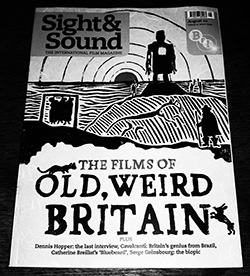
Local Haunts: Non-Fiction 2012-2024, which will be published in April 2025 by Influx Press who have also published three of Scovell’s novels, collects together revised versions of previously published articles etc in which he writes about “the strange connections between place and culture… of the connections between art and the landscapes that inspire it” and which were previously published by, amongst others, Sight & Sound, Literary Hub, Caught By The River, Little White Lies, Port Magazine, The Nightjar and on his own Celluloid Wicker Man site.

The book is split into three overlapping and intertwining sections: it opens with writing that focuses on writers, ends with work that explores film and television and has a “bridging” middle section that includes his travelogue writing and photographs. While some of the chapters are more conventionally journalistic/analytical in character, all three sections contain travelogue elements as they often incorporate writing about his visits and explorations of places which have inspired writers, where films and television were made and/or at times places that don’t directly have a connection with a particular film, writer etc but that when Scovell visited them he found that they resonated with a certain film etc.
The book serves as a fascinating insight into the interests and explorations of its author and his wanderings “off the beaten track” of culture and at times geography. And interestingly in the Introduction he openly admits that while the book:
“…represents a geographical as much as a mental map of the last ten years or so of my life, I am under no illusion that such visits or approaches guarantee any new understanding of particular book, film or anything else…”
This admission places the book apart from the more openly mystical side of geographic-cultural explorations and psychogeography which can at times claim an almost magus or damascene-like connection to and understanding of place and its connections to culture.
(Related to which, it made me chuckle at one point in the book when Scovell says that he was banning the word “liminal” from his dictionary that year, presumably due to its at times preponderance in a certain kind of “high faluting” analytical, academic etc writing.)

At the same time in the book’s chapters there is a sense that it documents a form of, if not exactly mystical pilgrimage, then at least a form of geographic and cultural “dérive” that has been part of him trying to find, explore and unearth the hidden stories of culture and the landscape.
The book includes chapters that focus on writers, films, television etc that interconnect with wyrd and hauntological culture including M.R. James, Alan Garner’s work including The Owl Service and Red Shift, Penda’s Fen, Requiem for a Village and Quatermass but equally it has a broad remit that, at least in relation to the films and television etc it explores, leans towards BFI and broadsheet friendly culture; work which is generally, although not exclusively, more literary and arthouse than say mainstream and mass appeal.
The book has a central focus on “key figures [who] emphasised place in their work” including W.G. Sebald, Agnès Varda, Marguerite Duras and the above mentioned Alan Garner and M.R. James alongside also including writing and explorations of place related to amongst many others the writers, filmmakers, films etc J. G. Ballard, Marcel Proust, Georges Perec, Anita Brookner, Muriel Spark, Harold Pinter, Derek Jarman, Francois Truffaut, Jean-Luc Godard, Chantal Akerman, Blowup, The Discreet Charm of the Bourgeoise, The Green Ray.
Inevitably not all of the chapters and the films, writers etc they explore will hold the same amount of interest for all readers but while the book can be read in a conventional linear manner, the standalone nature of each chapter and its cultural and/or geographic areas of exploration lends itself equally to a more selective cherry-picking way of reading it. Or indeed it could well be a book that the reader finds themselves returning to if or when, for example, they have watched a particular film etc that Local Haunts explores but that they didn’t know about when they first bought or read it.
Alongside which while Scovell has a notable depth of cultural knowledge and analysis and an in part academic background – he completed a PhD in 2018 – Local Haunts isn’t a dryly written academic treatise but rather his writing is accessible, personal and personable which in turn makes easily accessible what may at times and for some readers be unknown or esoteric subject matter.

One of my favourite sections, originally published by Caught by the River in 2018, is in the middle travelogue section where Scovell writes about how he stumbled on a double sided row of garages when he was in search of writer Angela Carter’s old house in an area of London that has become an affluent property hotspot and which the contemporary reality of didn’t reflect photos he had seen from the late 1980s which showed the area and Carter’s house as “battered but lived in and filled with eccentric bric-a-brac”:
“The Chase where Carter lived is now… a prime property hotspot. The Clapham I’d come to find had long since passed, or so I thought. It was then that I walked down an alleyway that led to a set of garages behind Carter’s road, and I was whisked sharply away to another realm… [the area was] filled with old garages adorned with green and white rusted doors… The walls all around are cracked and covered with dead leaves. Trees hang over the brickwork and sometimes intermingle with the streetlights. Walking through it quite by chance was like travelling back in time at least thirty years, similar in tone to the images I’d surrounded myself with before moving down to London a couple of years back… [Which included the] strange realms of the [1960s-1980s popular British television series] Callan, The Sweeney, Minder and all those other programmes [which] had seemed to be filmed in an alien world full of open spaces, land left to its own devices and a surreal affordability. That London is as fantastical as Forbidden Planet in comparison to the city today. But these garages were absolutely part of that same world – somewhere the developers have forgotten… Such places that have managed to survive the scrubbing [sanitising effects of gentrification], tell of a time when space was not a defined commodity; when there was still some sense of affordability and even an unfathomable beauty in the ordinary and forgotten brownfields of the capital. There’s no slogan, no catchy marketing brand or price-tag attached to this place. It just is… In the London of today, it is an incredible and lovely thing to find.”

This section, in spirit, reminds me of an opening section of Benjamin Myers non-fiction 2018 book Under the Rock: The Poetry of Place:
“We leave London early one June morning, Della and I. It is a decade ago and all our combined possessions have been crammed into a removal van that left the night before. What remains is shoved into the back of my car… We hit the morning traffic and an hour later are still edging along Vauxhall Bridge Road into Victoria. Our mood is strained, conversation terse. The stress of a house move is underpinned by the knowledge that once you leave the city it is very difficult to return; one only moves to London when either young or wealthy, and now we were neither… Twelve years earlier… I had tracked a similar journey in reverse, driving a borrowed car full of clothes, books, records and treacle down from the north-east of England to find myself circling Piccadilly Circus at five o’clock on a Saturday evening, Eros looking down at me as I attempted a U-turn much to the chagrin of the dozen black cabs caught in my slipstream… Eventually I edged my way south of the river over the same bridge I crossed now, to move into a dilapidated transpontine squat in a labyrinthine Victorian building… Here I lived rent-free for four years… But now it was the height of a recession and London was no city in which to be poor. Where once it was a dizzying maze to be navigated one day at a time, a playground for constant reinvention, now it was a place owned by the property developers, the oligarchs. The old one-bedroomed flat, with its bath on breeze blocks in the kitchen and infestation of mice, abandoned by the local council for thirty years, had recently sold for £800,000.”
In turn Local Haunts could be seen on some levels as being Scovell’s attempts to circumvent, even if only for a psychogeographic day or two’s wandering at a time, the modern day “enclosure” of much of Britain and in particular its “fashionable” city centres that has effectively made it financially prohibitive to live and work in them for much of the population.
Links:
Local Haunts at Influx Press’s site
Adam Scovell’s Celluloid Wicker Man site
Local Haunts at Waterstones
Local Haunts at Amazon UK
Benjamin Myer’s site
Benjamin Myer’s Under the Rock: The Poetry of Place book at Elliot & Thompson’s site
Caught by the River’s site
Sight & Sound at the BFI’s site
Adam Scovell’s Folk Horror: Hours Dreadful and Things Strange at the BFI’s site
Folk Horror: Hours Dreadful and Things Strange at Amazon UK

Otherworldly pop with shades of Nico and Broadcast, all wrapped up in artwork by Julian House of Ghost Box Records. A B-side discovered a fair old time ago now via the “lucky dip”-esque racks of cheap promo CD singles that you used to find in second hand record shops.


Folk horror is a loosely defined genre or style which creates an alternative, flipside view of the landscape and pastoralism; it draws from and/or is frequently set in the landscape and creates unsettled and unsettling tales and atmospheres, in contrast to more bucolic representations of the countryside as a place of calm and restful escape.
Related work may include elements of a more hauntological nature rather than being purely rurally based and can take in the hidden and layered histories within places and there is often a sense of their inhabitants living in, or becoming isolated from, the wider world, allowing moral beliefs to become untethered from the dominant norms and allowing the space for ritualistic, occult, supernatural or preternatural events and actions to occur.

As a phrase, “folk horror” often conjures images of a trio of British films released between 1968 and 1973 which have become somewhat iconic: Witchfinder General (1968), The Blood on Satan’s Claw (1971) and The Wicker Man (1973).
Looking back today such films could be seen as a result or offshoot of there being at the time of their production, a growing interest in folk music and culture, which was accompanied by a romantic sense of wishing to return to and embrace simpler and more natural or rural ways of living. However rather than being an expression of such inclinations and idyllic bucolia, folk horror’s often bleak nihilistic nature and stories seem to be more an expression of the souring of related dreams and yearnings and in terms of the above films, a rural and folk reflected curdling of 1960s utopian optimism as it entered the 1970s.
This trio of films are not always easy films to watch and particularly the first two, which respectively centre around the sadistic and opportunistic activities of a witchhunter in 17th century England and a rural village where the younger residents fall under the influence of a demonic presence after a farmer unearths a mysterious deformed skull, could be seen as sharing ground with exploitation cinema. Along which lines, both Witchfinder General and The Blood on Satan’s Claw featured Tony Tenser as their executive producer.
Tony Tenser had a cinematic background as a producer in the more lurid side of the film industry – more Soho backstreet than high-end Cannes – producing titillating and/or exploitation pseudo-documentaries such as Naked as Nature Intended (1961), Primitive London and London in the Raw (both 1965), which provided often prurient views of naturism and events in the capital as their prime exploitation selling points. Related to which Witchfinder General and The Blood on Satan’s Claw are films which could be seen to have their roots and onscreen expression in both the more arthouse inclinations of their directors (Michael Reeves and Piers Haggard respectively) and the exploitation aspects of their producer Tony Tenser. However, although over time critical appreciation of them has tended to tip more towards the arthouse side of things, without both sides of this coin one could debate whether these films would have existed or have come to be such resonant cultural artifacts.
Their visceral, more shocking exploitation-esque moments may be part of what has helped to create their cult appeal and have become confluent with consideration of them as films which also explore such themes in a more layered, explorative manner than that which may be found in more strictly straightforward exploitation work or some areas of mainstream cinema.

Tony Tenser and his exploitation orientated sensibilities seems to have been partly responsible for a considerable portion of the late 1960s/early 1970s arrival of what has since come to be known as folk horror as he was also executive producer on Curse of the Crimson Altar (1968). This explores and utilises some of the themes of folk horror (a rural setting, connections to the old beliefs and magic) and centres around the activities of a witchcraft cult at a remote country house; an antiques dealer visits the house as it was the last known whereabouts of his brother before he went missing and he subsequently finds himself drawn into the cult’s nefarious activities.
The film is particularly memorable in its conjuring up of phantasmagorical occult scenes, which are made all the more striking by a film-stealing Barbara Steele as Lavina Morley, Black Witch of Greymarsh, who is dressed in striking, opulent and almost surreal folkloric garb, including a behorned headdress. She serves as mistress of the film’s woozily transgressive dreamlike ritual ceremonies, helping create almost a film within a film; one which seems quite separate to the more mainstream and fairly conventional presentation of the film as a whole.
These scenes, as with The Blood on Satan’s Claw and Witchfinder General, borrow from the more sensational aspects of exploitation cinema while intertwining such elements with something of a more layered, exploratory cinematic aspect.
The late 1960s to around the mid 1970s was the main era for the production of the initial and now iconic examples of film and television that have come to be known as folk horror. However, in terms of cinematic forebears, around 1960 there was a small grouping of horror and/or supernatural films which could be seen as being part of a lineage that would one day become or bring about what is known as folk horror.

These include Mario Bava’s Black Sunday from 1960, also starring Barbara Steele, Jack Clayton’s The Innocents from 1961 and Roger Vadim’s Et Mourir De Plaisir (or Blood and Roses to use its American title) from 1960. Their tone and expression vary from the classic black and white gothic and grotesque horror of Black Sunday to the almost decadent aristocratic Technicolor sensuality of Et Mourir de Plaisir via the repressed supernatural hauntings amongst the reeds of the British countryside in The Innocents.
All of these films are set rurally, but it is not this which causes them to be gathered together in this way (and as commented on above what has come to be known as folk horror does not have to be exclusively set rurally); it is something more subtle and underlying, possibly something in their atmosphere, their spirit and a sense that they are telling the stories of unsettled landscapes.
As with the later films that are mentioned above, these early 1960s films variously contain a curious and intriguing mixture of mainstream, transgressive, at times exploitation and arthouse cinema, the themes and tropes of which are used and explored to create rather classy, exploratory and nuanced work.


If Boards of Canada had recorded a female singer who was accompanying Archie Fisher on his epic cinematic folkloric track “Orfeo” it might sound a little like this. Somewhere in a parallel universe, records that sound like this gave Fatboy Slim a run for his money in the pop charts.


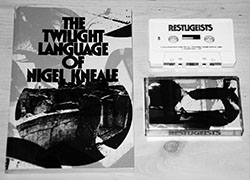
The Twilight Language of Nigel Kneale was published by Texte und Töne to accompany a one-day event in New York called A Cathode Ray Séance: The Haunted Worlds of Nigel Kneale, which took place in 2012 and was organised by the Colloquium for Unpopular Culture and Mark Pilkington of the fringe culture publisher Strange Attractor.
Nigel Kneale was a British screenwriter who wrote prof- essionally for more than 50 years and whose work has gained considerable cult and popular success and is considered highly influential on contemporary work. He is probably best known for the creation of the character Professor Bernard Quatermass who featured in a number of popular television series and films,14 and his output often comprised of thrillers that used science fiction and horror elements, although he also wrote the 1959 film adaptation of John Osborne’s iconic angry young man play Look Back in Anger (1956).

Although often working within science fiction and the fringes of horror, Nigel Kneale’s work seems to explore and resonate beyond conventional genre expectations and restrictions, to create what writer and musician Dan Fox, in a piece on the A Cathode Ray Séance event in frieze magazine published in 2012 has called “a uniquely haunted form of science fiction” – one which drew from and connected with intriguing intertwined and multi-layered points of reference and:
“…fused the white heat of technology and broadcasting with rural occultism, and drove parapsychology headlong into Cold War fear. With their ominous BBC Radiophonic Workshop soundtracks and infusions of eldritch dread into the dreary landscapes of post-war Britain, Kneale’s screenplays – inheriting the restrained malevolence of ghost story writer M.R. James – have exerted a strong influence over a number of musicians and writers, not to mention those like myself who were terminally spooked by re-runs of his work, stumbled across as a kid on rainy Saturday afternoons spent in front of the TV. Pink Floyd, Stanley Kubrick, Steven Spielberg, John Carpenter, Patrick Keiller, Chris Carter (who originally approached Kneale to write The X-Files), Broadcast, the Ghost Box record label, The League of Gentlemen, China Miéville and Mark Fisher have all cited Kneale as an influence on their work, and in recent years his work has also become a touchstone for hauntology.” (Quoted from the above-mentioned article in frieze.)
The Twilight Language of Nigel Kneale comprises of a set of essays, conversations etc, produced in response to Nigel Kneale’s work and features contributions from Sophia Al-Maria, Bilge Ebiri, Mark Fisher, William Fowler, Ken Hollings, Paolo Javier, Roger Luckhurst, China Miéville, Drew Mulholland, David Pike, Mark Pilkington, Joanna Ruocco, Sukhdev Sandhu, Dave Tompkins, Michael Vazquez and Evan Calder Williams.
It also came with a cassette tape featuring specially composed work from The Asterism, Emma Hammond, Hong Kong In The 60s, Listening Center, The Real Tuesday Weld, Mordant Music and Robin The Fog (aka Howlround) – a number of whom have since come to be associated with hauntology.
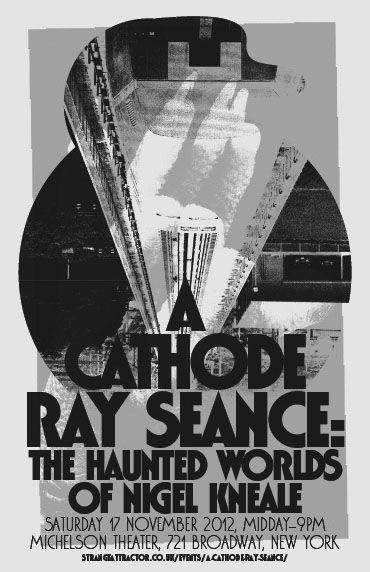
The A Cathode Ray Séance event included screenings of work written by Nigel Kneale including The Stone Tape (1972), Murrain, an episode of Beasts (1976), Quatermass and the Pit (1967), a multimedia performance of his lost work The Road (1963) and a panel discussion. The latter of these, as reported by Dan Fox in his above-mentioned article on the event for frieze, drew comparisons between Nigel Kneale’s work and Rod Sterling’s American produced fantasy science fiction horror anthology television series The Twilight Zone (1959-1964) and articulated its similar concerns with science and the paranormal; although Kneale’s work is possibly more “out there” and exploratory, both can be seen as examples of when mainstream genre television pushes back against sometimes strictly defined expectations and limitations, to produce thought-provoking, intelligent work while still maintaining broad accessibility.
In the above article Fox also wrote that America and Britain’s differing relationships to landscape and history suggests one reason why Nigel Kneale’s screenplays had a particular force in Britain that could not be mapped onto the American experience. The relatively compact and layered history of Britain has led to a vertical, stacked sense of the past in which modern housing developments were erected alongside Victorian terraces, medieval castles were founded on Roman ruins and nuclear submarines were submerged in ancient lochs. By contrast it was noted that the vast scale of the US has resulted in a more horizontally spread sense of the past and so the experience of history is not always found to be one of more extreme juxtapositions:
“Arguably, Kneale’s writing is less about hauntings in the paranormal sense, than being haunted by history; by aggregations of belief and technology built over centuries that give ragged, uneven contours to our present landscapes.”

The pieces produced for The Twilight Language of Nigel Kneale take an eclectic and varied approach to their subject matter and include amongst other chapters:
1. Roger Luckhurst’s piece which in part takes in an examination of parapsychology in the 1970s.
2. Drew Mulholland’s discussion of discovering Quatermass in his youth within a cultural milieu that included English classical composer Holst, tape loops, ghosts, space, memory and telepathic insects from Mars and how it lead to the esoteric techniques which produced some of the sounds on his Quatermass-inspired album Séance at Hobs Lane (2001).
3. Ken Hollings’ intertwining of the space race and the electronic music explorations of the BBC Radiophonic Workshop and others such as Brian Eno, Hawkwind and Cabaret Voltaire.
4. William Fowler’s examination of Nigel Kneale’s curious foray into comedy with the series Kinvig (1981).
5. Sophia Al-Maria’s notes, stills and script of an imaginary lost and now found series of Quatermass.
6. An enigmatic piece of fantasy orientated fiction by Mark Pilkington that appears in part to be rooted in imaginary British history and the early optimistic days of post-war development.
7. China Miéville and Michael C. Vasquez’s conversation on Nigel Kneale that becomes a freeform almost psychogeographic wandering and takes in Sapphire & Steel (1979-1982), Ghost Box Records, Doctor Who (old and new), M.R. James’ ghost stories, J.G. Ballard, zombies and the literal crawling of a bug across the screen in a recording of The Quatermass Experiment (1953) due to it being recorded by a film camera being pointed at a monitor that was playing the live broadcast.

The eclectic and multidisciplinary nature of the work that has been produced and its themes could be considered an expression of the earlier-mentioned way in which a relatively small core of 1960s and 1970s British film and television, that has come to be connected with wyrd culture and hauntology, continues to inspire a wide range of responses and contemporary creative output.


There’s a purity and simplicity to this 1956 version that feels like a moment of peace and calm…
As also recorded by sometimes A Year In Country contributors Lutine…


Bagpuss is a children’s television animated series made by Oliver Postgate and Peter Firmin’s Smallfilms and was first broadcast on British television in 1974. It creates a dreamlike atmosphere of an imagined lost Arcadian idyll and is set in some unnamed past era, probably early twentieth century, and based around a shop owned by a young girl called Emily, in which nothing was sold but rather she displayed lost and broken things in order that their owners would hopefully discover and collect them.

Each episode begins with a sepia-tinted sequence that explains about Emily and the shop and the things in it, and during which Emily brings a new “thing” to the shop and says a magical evocation to wake up her much-loved cloth cat Bagpuss, who lives in the shop, after which she leaves (although she isn’t pictured doing so).
Bagpuss and his toy animal, doll and ornament friends who also live in the shop then wake up and come to life, the world changes from sepia to colour, and they discuss what the new object is. One of them would then tell a story related to the object, often accompanied by a song which would generally draw from British traditional and folk music. After this, the mice in the shop would mend the object while in squeaky voices they would sing of their work to a tune adapted from the traditional song “Summer is Icumen in”.
There would be much banter and bickering between the characters (with pompous academic and wooden woodpecker Professor Yaffle notably often finding fault with the playful mice of the shop), but by the end of each episode peace would be restored and the newly-mended object would be placed in the shop window, hopefully to be seen and claimed by its owner. Bagpuss would then yawn and fall asleep, with both him and his friends becoming inanimate objects again and their world fading once more to sepia.

Writing this synopsis caused me to remember just how odd, fantastical and unexplained the world and premise of Bagpusswas. How did Emily know that Bagpuss and his friends could be brought to life? Where did she discover the magical evocation that brings them to life? And was the wider “real” world actually sepia coloured, only turning into colour when Bagpuss woke up? Also, curiously, nobody apart from Emily ever seems to see or discover the shop when the toys have sprung to life and their world has become subtly unreally full of vivid colour.
All I can say is that in the world that Bagpuss creates it all makes seamless sense and rational questions do not intrude.
Bagpuss is possibly the most fondly remembered and iconic example of Peter Firmin and Oliver Postgate’s Smallfilms work, and as I have written previously “it contains a sweetness, a uniqueness and gentle melancholia that arguably has never been repeated or equalled”2 and conjures up a sense of a warmly enchanting never-never land.

The music from Bagpuss was created by John Faulkner and Sandra Kerr, and in 1999 was released as a 21 track CD album by Smallfolk/Fellside under the title Bagpuss: The Songs & Music. Then in 2018 it was given something of a spruce up via a remastered and extended album called The Music from Bagpuss, which was released on CD and vinyl by Earth Recordings.
I first became aware of The Music of Bagpuss album via a review of it by Helen Skinner in issue 2 of Actual Size magazine published in 2018:
“Some 44 years ago, an audience of young children was introduced to and fell under the spell of the titular saggy old cloth cat in a charming, gentle, handmade stop motion animation. If you need any kind of confirmation of the magic of this show, you only need to listen to the plucked strings of first track ‘Opening’ on this newly remastered soundtrack album and you’ll be whisked back to that comfy, sepia-tinted world… That’s not to say only fans of the show can enjoy this album; the music here is a beautiful patchwork of British folk which stands up on its own as a really rewarding listen, much like The Wicker Man soundtrack before it… The 32 tracks which make up the main body of the album are – like all good folk music – a patchwork of traditional pieces, half-remembered tunes and pure improvisation.”
The Music from Bagpuss was released by Earth Recordings in four different editions, including a CD in one of the hardback book-style sleeves with inner pages that have been used more frequently over the last decade or so, including Earth Recordings’ reissue of Anne Briggs’ 1971 folk album The Time Has Come;4 various of their solo releases by Bert Jansch (who was one of the founders in 1967 of the renowned folk-jazz band Pentangle); and their release of the DVD and soundtrack CD set of the documentary The Ballad of Shirley Collins (2017), which focuses on the work and life of English folk singer Shirley Collins, who played a significant role in the English folk revival of the 1960s and 1970s and whose work has been an influence and reference point for contemporary wyrd culture and related folk music.
These “bookbacks” are a rather handsome way of presenting CDs and DVDs and it would be nice to see them used by more labels, as there is something about them which makes releases feel more precious or thought about in some way, particularly in contrast to, say, a standard plastic DVD case without even a booklet, as is often the case. Anyway, I digress…
There are 49 tracks in total on The Music from Bagpuss, including a number of outtakes and alternate versions, and there are also accompanying sleeve notes on Bagpuss from the illustrator Daniel Postgate, who is Bagpuss’ co-creator Oliver Postgate’s son, writer and comedian Stewart Lee, singer and songwriter Frances McKee who performed with the Scottish indie/alternative rock band The Vaselines, Sarah Martin of the band Belle & Sebastian who have been stalwarts of independent music for a number of decades and the co-founder of archival record label Finders Keepers Records Andy Votel.5
It is always something of a treat to be able to revisit the folk and traditional music-orientated soundtrack for Bagpuss, and to have it so well presented, restored and comprehensively collected as on this release is icing on the cake. Just writing about it now makes me want to go and relisten to “The Miller’s Song”, which as I have previously written is:
“…a lilting, life-affirming and yet also curiously quietly melancholic song about the cyclical nature of farming and rural life, the growing of crops and the passage of those crops to the mill and eventually via the baker to become loaves of bread…” (Quoted from A Year In The Country: Wandering Through Spectral Fields, 2018.)

As is in part mentioned above, the style of the series suggested the early twentieth century Edwardian Era, but although it had a notable vintage quality, as also mentioned previously, it more seemed to exist in a sepia-toned time all of its own. The sense of a time unto itself is also present in the artwork for The Music from Bagpuss album, for which the characters from Bagpuss have been reinterpreted by Hannah Alice in a contemporary illustration/ graphic design manner. These bring to mind retro-styled but contemporarily produced children’s book illustrations, with the uncluttered minimal vintage tinged illustrations adding to the atemporal nature of the world of Bagpuss.
When I first watched Bagpuss in the 1970s it felt like being offered a brief view or portal into a magical otherly world, and looking back now it may have been a very early childhood influence and discovery of more left-of-centre or even subtly experimental forms of pastoralism or “wyrd” rural and folk culture which would quietly sow the seeds for A Year In The Country.
Similar themes are discussed in Andy Votel’s sleeve notes for The Music from Bagpuss, where he writes that for “those fifteen minutes that followed shortly after lunchtime your TV set became a secret shop window”. He also writes of how he has wondered if his childhood watching and being entranced by Bagpuss and Emily’s shop of lost curiosities may have been one of the things that fuelled his future fascination with visiting dusty second- hand shops and hoping to find and then release “lost” music and objects.

He also goes on to talk of how the music in Bagpuss, and in particular the dulcimer twangs that accompany Bagpuss coming to life and the mice’s squeaky re-worded version of “Summer is Icumen In”, may well have subliminally stoked his obsession with The Wicker Man (1973), which featured a version of the song. Related to which, Finders Keepers Records, which as mentioned previously Andy Votel co-founded, released the compilation album Willow’s Songs in 2009, which collected traditional British folk songs that inspired The Wicker Man soundtrack, and also reissued David Pinner’s novel Ritual that was first published in 1967, which was one of the inspirations for The Wicker Man.
Both Sarah Martin and Frances McKee talk in their sleeve notes for The Music from Bagpuss about how “The Mouse Mill” episode is their favourite, something which they seem to share with a number of people. In that episode, the mice in Emily’s shop appear to be able to make an endless supply of chocolate biscuits using “breadcrumbs and butter beans”, which to young viewers with a sweet tooth and limited access to money may well seem like a magical nirvana-like ability. Sadly, it is all just a ruse and sleight of hand as the mice are merely rotating the same one biscuit over and over again…
Perhaps the lack of money being necessary at Emily’s shop is part of the magic of Bagpuss that has made it so enduringly entrancing for younger viewers with only pocket-money to spend and/or who rely on grown up’s generosity and money in order to buy toys, sweets and so on; as Andy Votel says in his sleeve notes for The Music from Bagpuss, the shop was a place where “the toys themselves were the shopkeepers and mum’s purse wasn’t needed.”

Acting as something of a companion piece to The Music from Bagpuss is Jonny Trunk and Richard Embray’s The Art of Smallfilms book, released by Four Corners Books in 2014, which collects objects, artwork, stills and so on from the Smallfilms archive:
“It’s a book full of pipe cleaners, cotton wool, wire and pingpong balls and it provides a behind the scenes or glimpse behind the curtain view of [the television series] Bagpuss, Clangers, Ivor the Engine, Noggin The Nog and so on.” (Quoted from The Art of Smallfilm’s cover text.)
Interestingly, despite it offering an at-times near forensic study of the television series created by Smallfilms and “a glimpse behind the curtain”, the book does not break the spell of their work and the worlds it created. This may in part be due to a number of the items featured, such as for example the adjustable skeletons of the figures used to animate characters in the series, often having an intriguing folk art-esque quality and their own particular charm to them, which merely adds to the spell and worlds they create rather than puncturing them.
In the Introduction to The Art of Smallfilms, the above- mentioned comedian and writer Stewart Lee talks of how the book presents the archive of Smallfilms “as one would a collection of artifacts in an exhibition detailing some much-admired 20th century art movement, like Fluxus or Dada”.

It does indeed present objects from the archive in a museum like and, as suggested above, an at times almost forensic manner, but it also brings to mind a rather poshly-produced scrapbook.
That sense of scrapbooking, of the importance and sheer enjoyment in childhood that tracking down and collecting things could bring is something that may be considered to be present in a number of the archival books which Jonny Trunk has worked on, and also his record label Trunk Records’ release of archival film soundtracks etc7 (and also the archival releases of the earlier mentioned Finders Keepers Records).

The books Jonny Trunk has worked on have often focused on what was originally considered ephemeral or purely utilitarian, whether the archiving of one man’s collection of old sweet wrappers, tickets, badges etc in Wrappers Delight (2020), library music cover art in The Music Library (2005, 2016), flexi disc art in Wobbly Sounds (2019) or the 1960s and 1970s packaging design work of a supermarket’s design studio in Own Label (2011, 2019), amongst other books and subjects.
These books can be seen as a form of elevating and focusing on such work in a way that, consciously or not, acknowledges that for much of the population the culture they connected with and/or came into contact with on a regular basis in previous decades, was more likely to arrive via television sets, record players, the aisles of the pick’n’mix-like high street store Woolworths and so on, rather than art galleries and museums. They are not necessarily dismissive of or in conflict with more fine art and highbrow culture orientated gallery and museum-based archiving and exhibiting, but, as with The Music from Bagpuss, rather make the case for also valuing, archiving and studying creative work from other sometimes more overlooked, populist and/or utilitarian areas of previous decades’ culture.


The final track on The Fallen by Watchbird conceptual pop project album of “cosmic aquatic folklore”… the soundtrack to a Czech New Wave film from the edges of imagination…

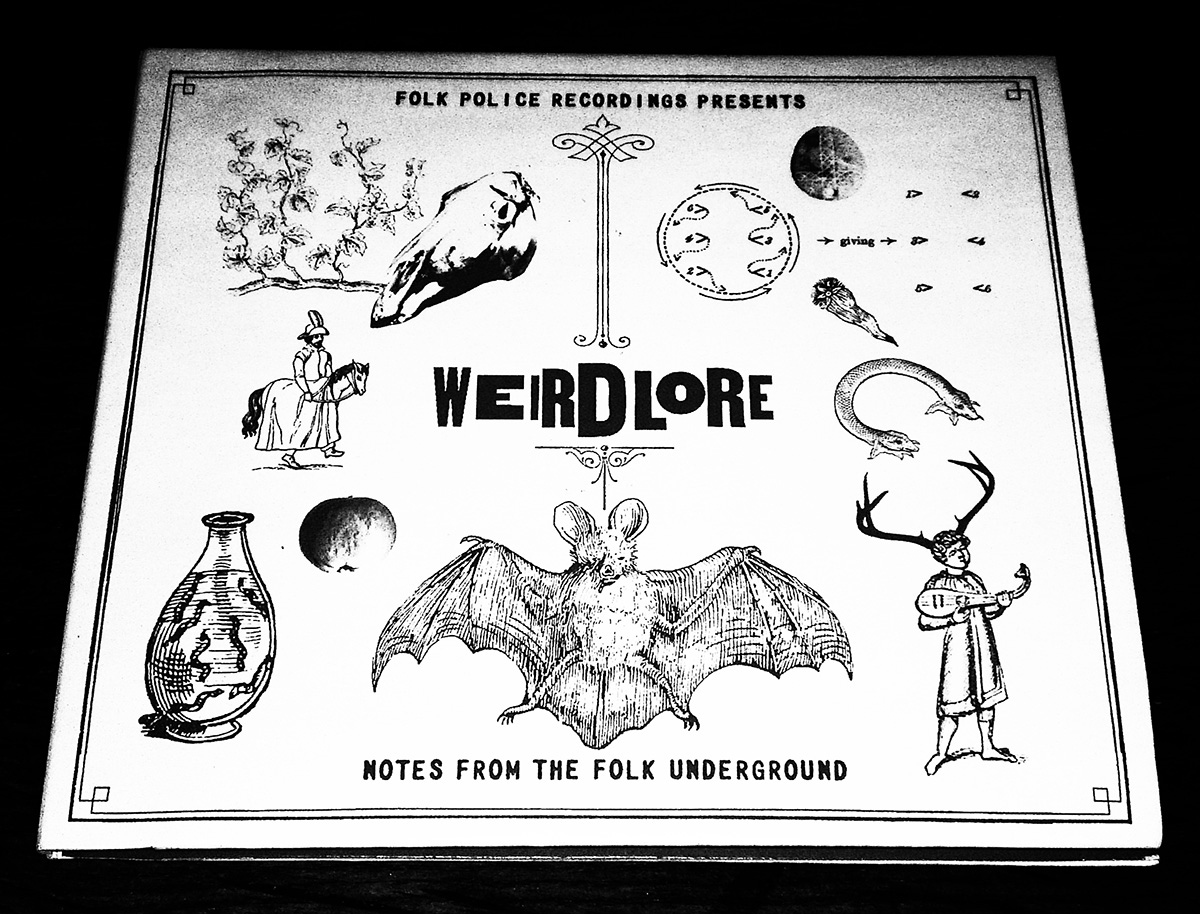
Once upon a time in 2012 there was an event called Weirdlore, which could well in future years have come to be known and referred to as a focal point for a new wave of what has variously been called acid, psych, underground or wyrd folk.
The phrase weirdlore was coined by Ian Anderson, formerly of fRoots magazine, who organised this event, as a name for the one-day gathering and also as a possible genre title for such things. Unfortunately, the event was cancelled as apparently there was a lot of enthusiasm for it but this did not translate into actual ticket sales. However, an accompanying compilation album also called Weirdlore was still released in 2012 by the at the time of writing no longer-operating Folk Police Recordings.

Folk Police Recordings was a Manchester-based record label which was active from 2010-2013 and was a home for work that took folk music as its starting point but which wandered off down its own paths (while still generally keeping an eye cast towards its roots).
To quote the label:
“We are purveyors of folk brut and other rough music. We like our folk skewed, raw and otherworldly. We’re basically traddies at heart but we also like stuff that can trace its ancestry back to the Incredible String Band and the first psych-folk explosion. We like a bit of folk rock too, but not when it’s cunningly disguised pub rock, and we even like some singer songwriters, especially if they’re a little deranged. And we are always on the lookout for the new Bert Jansch – all self-respecting labels should have this as one of their goals.”
In keeping with the above, it was a label that seemed to sidestep the more strict gate-keeping of tradition aspects of folk music and put out work that while it could be experimental, was also particularly listenable to and accessible. That is not always an easy fence to stay standing upon but they seemed to have a good ear for such things.
Their releases included work by amongst others Sproatly Smith, The Woodbine & Ivy Band, The Owl Service, Harp And A Monkey and Lisa Knapp as well as an album by Frugal Puritan which was alleged to have been a recording of lost Christian acid folk (please note the “allegedly” as this may well in fact have been a project created and imagined in contemporary times).
Folk Police Records could be seen to be one of a number of record labels and music orientated projects which to various degrees have worked in and released left-of-centre, exploratory folk and related work and/or work related to the flipsides and undercurrents of pastoralism and the land.
Along which lines are included amongst others Deserted Village, Was Ist Das?, Hood Faire, Patterned Air Recordings, Front & Follow, Caught By The River’s Rivertones, Stone Tape Records, Clay Pipe Music, The Geography Trip, Folklore Tapes, Rif Mountain and A Year In The Country itself.

The Weirdlore album is, as was the intended event, a snapshot of things musically weirdloric (or wyrdloric) and includes tracks by performers whose work was released separately by Folk Police Recordings and others and included songs by Telling The Bees, Emily Portman, Rapunzel & Sedayne, Nancy Wallace, Pamela Wyn Shannon, Katie Rose, The False Beards, Foxpockets, Boxcar Aldous Huxley, The Straw Bear Band, Starless & Bible Black, Alasdair Roberts, Corncrow, Rosalind Brady, The Witches with Kate Denny, Harp And A Monkey and Wyrdstone.
Aside from the music the album is also well worth a peruse in part for the accompanying text by Ian Anderson, which was written with Weirdlore still a month away and not yet cancelled. In it he rather presciently describes the album as “celebrating a day which has yet to happen and a genre that quite conceivably doesn’t exist”.
A particular standout track is Sproatly Smith’s version of traditional folk song “Rosebud in June”, which was described by website The Gaping Silence as being:
“…like something from The Wicker Man, if The Wicker Man had been a 1960s children’s TV series about time travel.”
Which sums up the song and the atmosphere it creates rather well; otherworldly, transportive, dreamscape acid or psych folk.
 (Above a later edition of The Yew And The Hare self released by the band.)
Sproatly Smith, who released their first album The Yew and the Hare in 2009, were described by fRoots magazine as “the mystery flagship band of the new wave of weirdlore” and in keeping with that sense of mystery, for a while back when there did not seem to be any photographs of them online.
On the Folk Police Recordings released Minstrel’s Grave album from 2012 by Sproatly Smith two songs in particular stand out: “Blackthorn Winter” which manages to be shimmeringly stark, dark and beautiful all at once and “The Blue Flame”, which while gentler conjures visions of a land rolling away just out of sight of the mind’s eye.

Another recording of Sproatly Smith’s which is something of a standout in amongst a back catalogue of stand out work is a split seven-inch single with fellow Folk Police Recordings released performers The Woodbine & Ivy Band on Static Caravan, released in 2012.
On this release they both covered the traditional and evocatively erotic and unblushing song “Gently Johnny” which was reinterpreted by Paul Giovanni for The Wicker Man’s soundtrack in 1973 and about which Static Caravan wrote:
“In his 1958 exploration of the more ribald aspects of English folksong, The Idiom of the People, James Reeves suggests that ‘Gently Johnny’ has its roots in medieval minstrelsy. However, it is better known as the slightly sinister song of seduction sung by the regulars in the Green Man pub in the cult British horror film The Wicker Man. The song has continued to exert an influence over musicians, but many of the recordings that have been made of it are a little reverent and bloodless – either too faithful to the film version or treating the song as a precious and fragile faux- pagan remnant, maybe these two versions will go some way to redress the balance.”
Sproatly Smith’s version has a lilting gentleness to it that does not belie its salaciousness, while The Woodbine & Ivy Band’s has a graceful delicateness that is all English Rose and soft wantonness with just a hint and twang of dustbowls across the sea here and there; both build visions of pastoral otherliness, taking the roots of folk and late 1960s and early 1970s acid or psych folk music and quietly wandering somewhere new.

Within Weirdlore’s album packaging there is an extended piece of writing by Jeanette Leech who is the author of the book Seasons They Change: The Story of Acid and Psychedelic Folk (2010), which to quote the back cover “tells the story of the birth, death, and resurrection of acid and psychedelic folk”. Which it does indeed do, dropping a trail of breadcrumbs largely chronologically through that particular story.
Seasons They Change was at the time of its publication one of only a small number of books that focused on such or interconnected areas, which included Rob Young’s Electric Eden (2011) and The Electric Muse: The Story of Folk into Rock (1975).
Seasons They Change draws connecting lines of history between everything from 1960s psychedelic folk to the 2000s arrival of freak folk such as Devendra Banhart and Joanna Newsom via the apocalyptic underground folk of Current 93, contemporary wyrd folk such as Sproatly Smith and older privately pressed folk music.
Today when it can be a relatively easy task to record and put music out into the world via home recording, digital distribution and sites such as Bandcamp and Soundcloud it is almost hard to imagine the dedication and commitment that was once required to do such things.
Without the support of a record company, the money, expertise and access to equipment needed to record and press vinyl records in the 1960s and 1970s proved a heavy-handed filtering system.
However, some records made it through that system and a handful of the privately-pressed (i.e., without the support of a record label) results in the area of acid or psych folk have become rarefied, treasured artifacts, totems and tokens of semi-hidden and once almost lost culture, a selection of which are mentioned below.
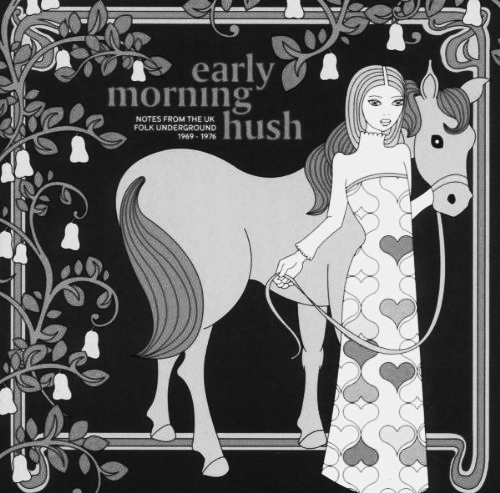
Some of those featured in Seasons They Change appear on the compilation Early Morning Hush: Notes from the Folk Underground 1969-76, released in 2006 and compiled by musician and writer Bob Stanley, which included privately pressed folk amongst its tracks.
Along with its companion album Gather in the Mushrooms: The British Acid Folk Underground 1968-1974 from 20044 it presented folk music that was a far stranger set of concoctions than anything that springs to mind under the label of folk before, which is a description that could well be applied to much of privately pressed folk from the later 1960s and 1970s.
The Early Morning Hush album features songs that were originally released via private pressing by Stone Angel on their eponymous album from 1975 and Shide & Acorn from their 1971 album Under the Tree, of which just 99 copies were pressed. The album also includes a track by Midwinter (who later evolved into Stone Angel) that was part of a set of recordings from 1973 which were not released until 1994.

Other privately pressed folk from the time includes the eponymously titled Caedmon album from 1978 and the album A Midsummer’s Night Dream from 1971 by Oberon, which as with Under the Tree was originally pressed in an edition of just 99 copies.
Oberon’s version of the traditional song “Nottanum Town” opens the latter of these albums and can be filed alongside other privately pressed psych folk from that period such as Stone Angel and Midwinter, in the way that it features transportive female vocals and conjures and captures a very particular otherly spirit of Albion atmosphere that seemed to prevail around the time of its release.
There is a mixture of the lost and found, the strange and familiar to such music which is possibly a result of it springing from earlier traditional music while progressing and exploring elsewhere.

When writer, artist and graphic designer John Coulthart was discussing at his Feuilleton website the A Year In The Country-released themed compilation album The Forest/The Wald from 2016, which in part contained music that could be seen as a continuum of the experimentations of the acid or psych folk found on such private pressings, he said that it is:
“…a response to British folk traditions that acknowledges the history without seeming beholden to it.”
Which could also be a way to describe both the likes of Midwinter and Shide & Acorn or the contemporary visitings and revisitings of traditional folksongs and acid or psych folk by Sproatly Smith (whose work is featured on The Forest/The Wald).
Similarly, to some of those privately pressed records, quite a number of Sproatly Smith’s records have been released by independent limited-edition CD-R based record label Reverb Worship; it can now be hard to find the CDs as the relatively short runs they are released in tend to sell out.
Although from different times, in spirit this could be seen as nearer to privately pressed records from years gone by than a more mainstream or conventional form of release.
 (Above: the cover art for The Hare and The Moon’s eponymous first album, released on CD in several editions by record label Reverb Worship and digitally by the band.)
In turn, while, as mentioned above, Ian Anderson called Sproatly Smith “the… flagship band of the new wave of weirdlore”, for myself they formed part of a trio of “flagships of the new wave of wyrd folk” that began releasing music around approximately 2008-2009 and that also included The Rowan Amber Mill and The Hare And The Moon.
The Hare And The Moon – which is one of the names under which Grey Malkin has created, collaborated and released music – released their eponymous first album in 2009 which undertakes a “fiend beneath the furrows” journey through the undercurrents of folk that is both beautifully entrancing and quietly and darkly unsettling. It is an album of haunting gothic or spectral folk by the way of the “hidden reverse” subterranean undercurrents of culture of the likes of Coil which whenever I listen to it always seems to conjure up an alternative personal time line where it was a fortuitous find back when on the 4AD label that had been filed next to the likes of the neoclassical otherworldly darkwave band Dead Can Dance in one of my favourite local independent record shops.

The Rowan Amber Mill began releasing music around 2008 and is one of the various band names, projects etc under which Stephen Stannard has released music, both as a solo artist and collaboratively.
A number of the albums etc Stephen Stannard has created, collaborated on and/or released have been themed concept albums. These include, amongst others, the imaginary soundtrack album and project The Book of the Lost (2013) and also the 2019 Rowan : Morrison album In the Sunshine We Rode the Horses, which was a collaboration between him and Angeline Morrison.
This narrative of this latter album intertwines hauntological and wyrd television related themes and tropes:
“[The album] takes a snapshot of an imagined history of the land. It explores the conflict taking place at the same area (The Ridgeway) through time periods between the land and man with their developing technologies. These events take place throughout time, from pre-history through to the near future. In a very 1970s Play for Today sort of way, they start to bleed into each other as over time, the earth begins to enter a period of hibernation to heal itself from the destruction wrought upon it.” (Quoted from text which accompanied the album’s release.)

It is a rather lovely album of acid or psych folk which while not being purely a retro retreading brings to mind a sense of being a recently unearthed, privately-pressed folk album from some undefined point, possibly in the very late 1960s, or the 1970s, which might be filed alongside the likes of the above-mentioned privately pressed 1971 folk albums Shide & Acorn’s Under The Tree and Oberon’s A Midsummer’s Night Dream, or from which tracks might eventually turn up on compilation albums such as, Early Morning Hush: Notes From the Folk Underground 1969-76 (2006). Indeed, to quote from a review of In the Sunshine We Rode the Horses on the Terrascope website:
“This is a beautifully packaged yet somehow understated album destined, it seems, for ‘lost classic’ status, to be rediscovered and cherished by generations of pilgrims on the old straight track. Somehow, we think they would approve.”
All three of these bands and/or their various founders, intertwinings, offshoots and outgrowths continue to wander down the “old straight tracks” and otherly furrows of wyrd folk, sometimes crossing paths and collaborating with one another, and between them they have created an extensive and impressive back catalogue which has explored and reinvigorated the lysergic fields and lineage of acid folk.