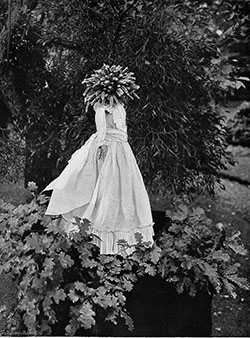
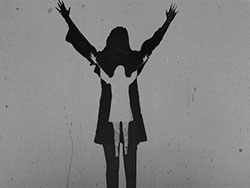
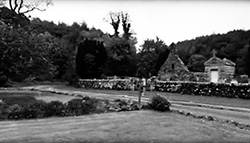
“That summer the countryside had suddenly become an unknown world. A ghost story without the ghosts but they were expected any minute.” (Quoted from Rainy Day Women.)
Rainy Day Women (1984), written by David Pirie and directed by Ben Bolt, was one of the later episodes of the BBC’s Play for Today television anthology drama strand that was broadcast between 1970 and 1984, and it is a thought-provoking and unsettling piece of work which uncompromisingly, and in at times a transgressively blunt and even shocking manner, explores both historic and ongoing gender roles, norms and related societal priorities. Viewed today, it is almost difficult to comprehend that challenging work such as this was once part of the everyday mainstream British television landscape.
Set during the Blitz in the Second World War, its main location is an isolated and classically British bucolic (in appearance at least) village where a male army officer who is suffering from shell shock/PTSD is sent to investigate rumours of a German spy.
While having its own character, the drama recalls the likes of Witchfinder General (1968), Straw Dogs (1971) and The Wicker Man (1973) in the way it deals with the fear and persecution of women, rural communities as an unknowable and threatening “other” which distrusts and closes ranks against outsiders, an outsider in a position of authority who is removed from the infrastructure which supports that authority and subsequently finds it neutered and the escalation of tensions into violent mob rule.
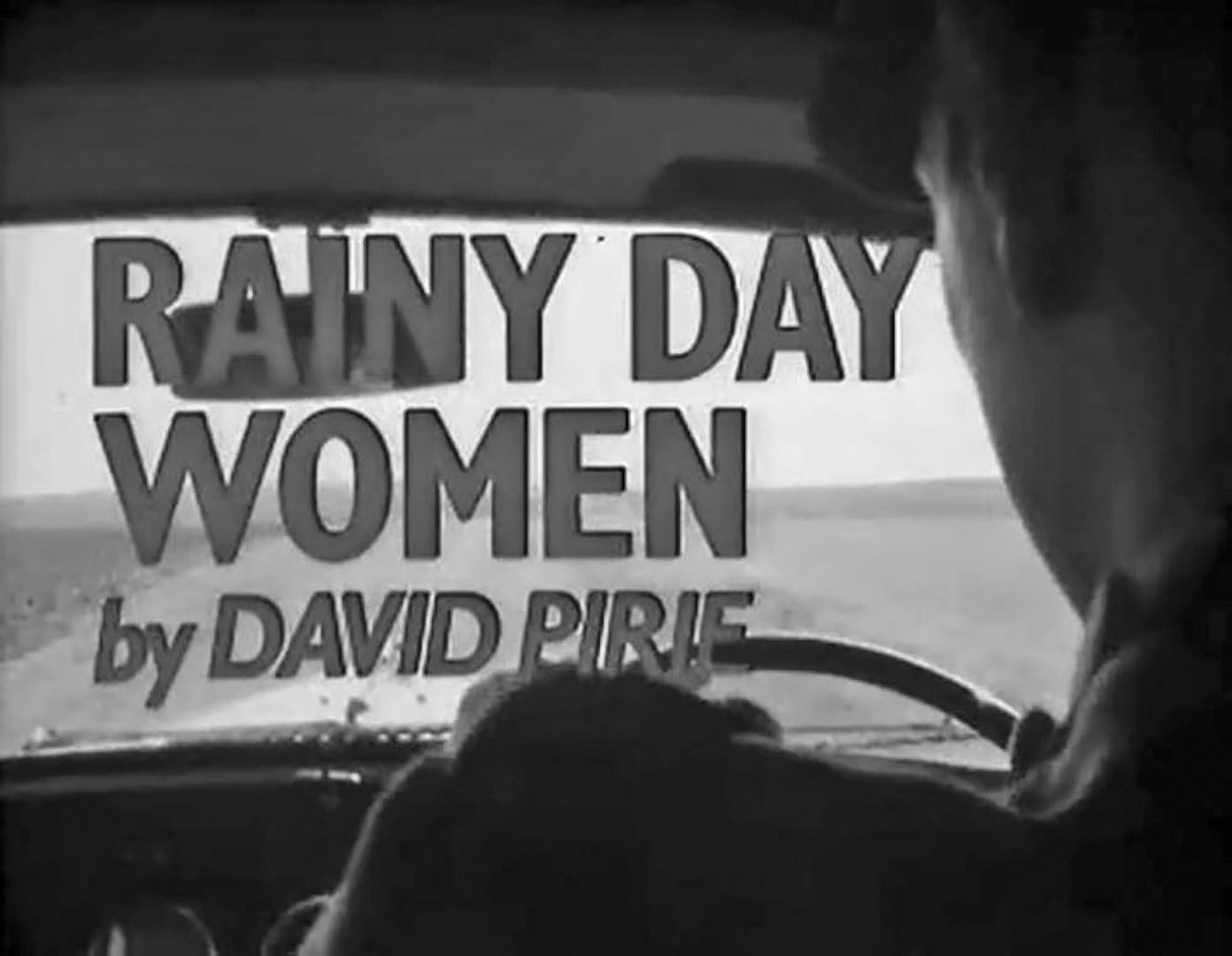
The few men who have not gone off to fight in the war and who remain in the village have become drunk with the power that their position as part of the auxiliary local defence Home Guards and the guns that go with it provide, and rather than seeming like patriots who wish to defend their country against invasion and the enemy within, they have become bullying jobsworths… and then much worse.
Their fears, worries and hatred of potential German spies does not seem so much an expression of patriotism but rather to be a form of moral panic and folk devils. That this is the case is implied through their fears etc being expressed and finding focus and release via their persecution of a local, independently-minded, politically progressive and cultured woman who challenges and threatens their traditional male authority and associated expected social norms.
For the local men the woman’s independence etc marks her out as somebody to be mistrusted and she is known as a “witch” and thought to most probably be a spy. Their suspicions regarding her are supposedly in part because of her husband having been interned due to being German, but this seems more like a convenient excuse which enables the Home Guard’s persecution of her, rather than the actual cause of their suspicions.

The incomer Land Girls who have come to work on the local farms due to the men going off to war have been billeted with this woman in her isolated home and there are rumours of sexual “deviancy” amongst them, alongside a seemingly ever-present undercurrent of fear amongst the men with regards to female emancipation. This is accompanied by worries that the woman will “turn” or corrupt the Land Girls and this will lead to an ending of their acquiescence to the men and disrupt the traditional social hierarchy.
When the men’s suspicions, paranoia and perceived threats to their positions of masculine authority grow with regards to the woman, this leads to a deadly denouement and the killing of both her and her supposed acolytes by the men, some of whom in turn are also killed when higher outside authorities attempt to intervene.
Prior to this, the attempts to control the men’s actions and protect the women by the outsider officer fail as his position of power and authority are made ineffective in the face of the local men’s mob rule which is able to flourish due to the village’s isolation from the outside world, and as referred to previously this isolation causing a neutering of his externally bestowed and underpinned authority. Even when he tries to seek help from the nearest military base, desperately fleeing the village on foot after the Home Guards disable his vehicle and travelling at night through a difficult and forbidding rural landscape, he is unsuccessful. The women’s plight is seen by the commanding officer at the base as being a lower priority than dealing with the start of a German invasion (which turns out to not be actually happening), and the outsider officer’s pleas for help are also dismissed due to his shell shock meaning he is thought to be mentally unstable.

At the end of the play, it is revealed that the events in the village have been covered up by the authorities who, after the deaths, blew up the house where the women took refuge in order to hide evidence of what happened, disguising the explosion as the result of a German air raid.
As with the exploration of conflicts between genders and about social norms and priorities that are depicted in Rainy Day Women, this somewhat bleak ending is not used purely for dramatic and atmospheric purposes but appears to be a way of enabling an exploration and comment on societal and institutional attitudes.
In the play, it is suggested that those responsible for the nation’s internal propaganda during the war were willing to do whatever it took in order to prevent possible threats to morale, which events in the village are considered to be due to them being a source of potential scandal and an example of extreme societal conflict and fracture.
Rainy Day Women can be loosely placed alongside work which has been labelled as folk horror, in particular because of the way that it depicts rural areas as isolated places where the norms and conventions that govern and restrict society, individuals and behaviour are able to fall away. The drama’s story also contains what writer Howard David Ingham has described as being the central tensions of folk horror; the conflict between those who wish to return/retain the “old ways” and those of a more modern mind set who take the standpoint that “We don’t go back” and think that madness and chaos will ensue if we do.
Accompanying these aspects there is the push and pull contrast that is at times found in folk horror between the play’s rural location and its bucolic beauty and the immediate and ever- growing sense of threat and moral disintegration. Intertwining with this is the way that the quality of the unofficially distributed online streamable version, which as I discuss below is currently one of the only ways in which the play can be more easily viewed in the UK, is considerably degraded, and this lends a darkened, grimy air and atmosphere to the village and events there.

At the time of writing, Rainy Day Women is only available in a licensed manner in the UK via a private viewing as part of the BFI National Archive at one of five BFI Mediatheque centres. It is more widely available in the UK via unofficially distributed DVDs, and also unofficially through having been posted online at public video streaming platforms such as YouTube.
However, in a manner that reflects the notably patchwork and convoluted nature of contemporary online television distribution, particularly in relation to productions from previous decades, Rainy Day Women is available to watch in the US in an officially licensed manner via the archival film and television orientated subscription based streaming service Britbox.

Which leads me to the article “Folk horror and Play for Today, the ‘National Theatre of the airwaves’”, written by William Fowler, that was posted at the BFI’s site on 20th October 2020 and which was where I discovered about Rainy Day Women. In the article he wrote:
“Analogue broadcast television is truly still the undiscovered country, countless artifacts lying in wait to be overturned by the plough… There are countless oddities and genre hybrids, folk horror and otherwise, to discover across the huge, unlikely vistas of British TV land, including but also going far beyond Play for Today. Large and unwieldy, the dales and dark woodland of this landmass are at least partially fenced in with the ceasing of the analogue signal in 2012. Or earlier still with the 1990 Broadcasting Act, which opened up the bandwidth, coaxing what would become Sky television into existence and increasing the levels of now overt competition between the channels… From that point on, it was less likely that strange things, even politically pertinent and radical things, might occupy a primetime mainstream platform… [The best of Play for Today] still say something about the lie of the land. They are all plays for today: slippery, open to different contexts, and ready for resurrection.”

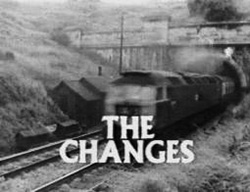
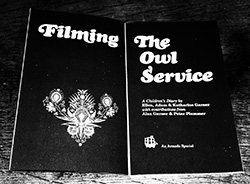
As suggested through the historical context provided in the above quote, Rainy Day Women was produced towards the end of a period when there was space in British mainstream television for “strange… and radical things”, which had previously allowed for the production and broadcasting of the likes of challenging work that included The Owl Service (1968), Penda’s Fen (1974), The Changes (1975) and Stargazy on Zummerdown. Such work could be seen to indicate how during the 1970s the experimentation and liberalism within society and culture that occurred during the late 1960s and into the 1970s had come to also be present to a degree in institutions such as the BBC.

Andy Beckett and Roger Luckhurst suggested in The Disruption (2017), a booklet that featured a conversation between them on The Changes and from which the above quote is taken, that this had the result of enabling and allowing for experiments and, to a degree, the pushing of boundaries:
“Permitting experiments and allowing the pushing of boundaries here and there…”
The peak for this “boundary-pushing” may well have been during the 1970s but to a degree examples of it, including Rainy Day Women, can also be found in the 1980s, albeit in an increasingly embattled manner:
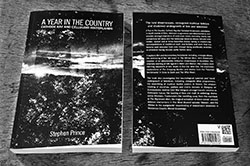
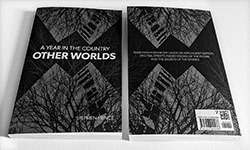
“[The 1980s could perhaps] be seen as having been part of a golden age in British television drama, which was given space to take risks and provide its audiences with [television drama] that was challenging, dealt with sometimes contentious issues but which also entertained… notable series to do so from this period might include the likes of Dennis Potter’s The Singing Detective (1986), Alan Bleasdale’s The Monocled Mutineer (1986)… Troy Kennedy Martin’s Edge of Darkness (1985)… [and A Very Peculiar Practice (1986-1988)]. In some ways, such work can now be seen as flashes of rearguard resistance to a sea-change in society and broadcasting culture brought about by the increasing dominance of free-market economics and an ascendant right-leaning political philosophy…” (Quoted from A Year In The Country: Straying From The Pathways, 2018.)