Shadows was a supernatural and fantasy young adult- orientated British television anthology drama series which featured 20 approximately half-hour long stand-alone episodes and was produced by the commercial broadcaster Thames Television and broadcast for three series between 1975 and 1978. In more recent years it has been broadcast by archival British television channel Talking Pictures TV and released on DVD by film and television releasing company Network.
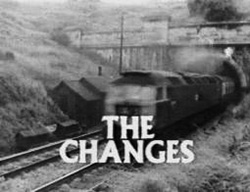
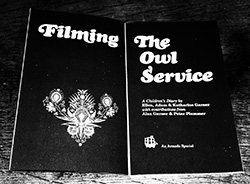
It is part of the strand of late 1960s and 1970s British children’s and young adult television drama that also included the likes of The Owl Service (1969-1970), The Changes (1975), Children of the Stones (1977) and Raven (1977), which often contained and explored surprisingly complex, challenging and at times dark or unsettling themes and atmospheres, particularly considering its intended younger audience, and which in part due to these characteristics has become a reference point for hauntological related and/or otherly pastoral or wyrd culture.

The Inheritance episode, originally broadcast in 1976 as part of Shadows’ second series, and written by Josephine Poole involves a son called Martin, who is on the threshold of adulthood and though he lives in an urban area he wants to work in the countryside. As with a number of other episodes in the series it explores issues around youthful autonomy as he is at odds with his mother, who wants him to take up an office job in insurance.

Martin’s aged and ill grandfather, who has spent his life working rurally as a deer harbourer, comes to stay with them and shows him a deer antler he once found, which is from a type of deer he had never seen and which mysteriously left no tracks. The grandfather, who very much seems as if he belongs to another era and has little time for modern ways nor the mother’s wish for her son to work in an office, goes on to tell Martin of how in the old days antlers were worshipped and people used to do a horn dance, the meaning of which he says went back to “the dark days”. He also tells Martin of how a close bond grows between the harbourer and the deer, who seem to know when one of the harbourers has died or will do soon, and come to pay their respect.

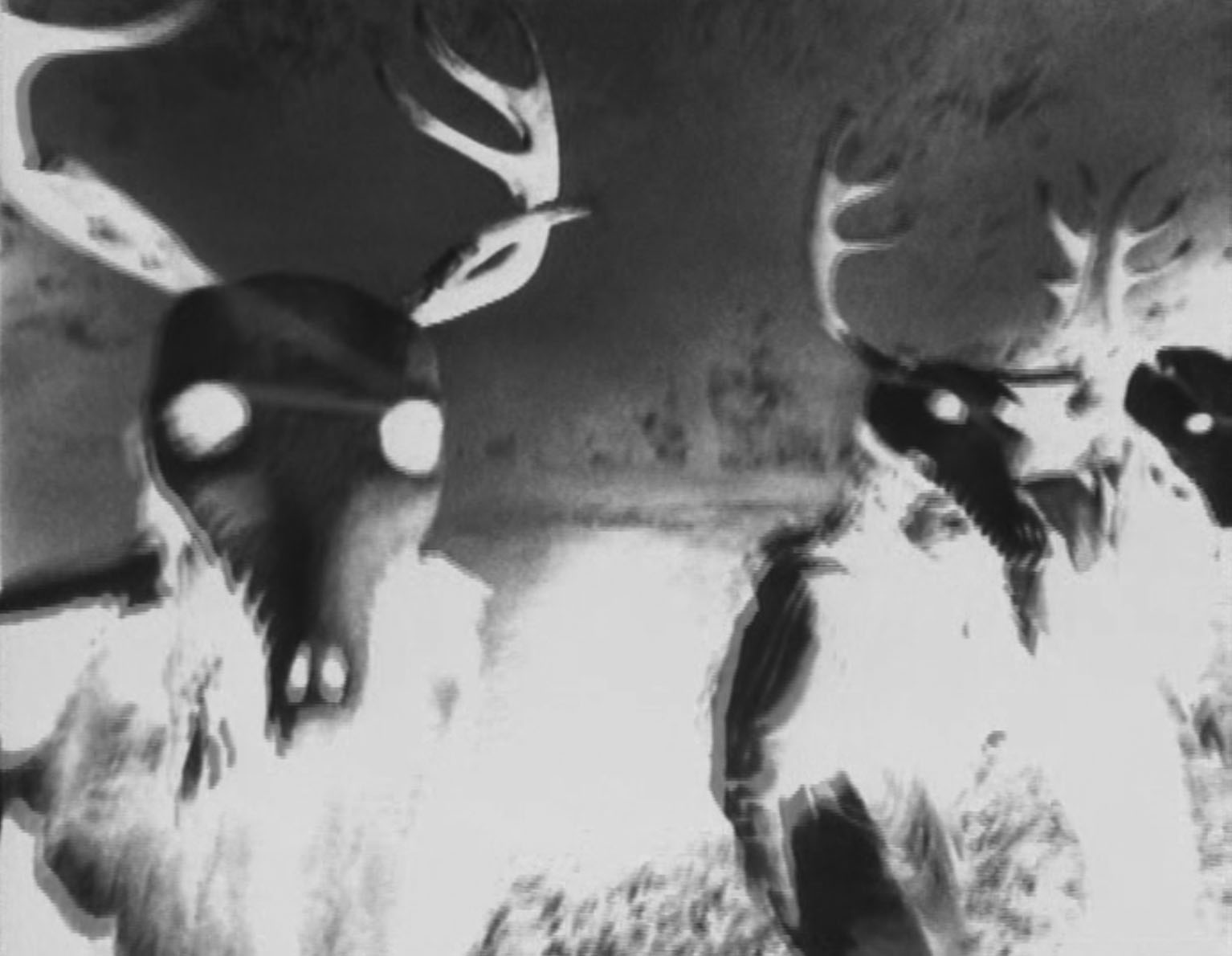
His grandfather’s tales and connection with the land further fuel Martin’s desire not to work in an office, and they both set off to a nearby park early in the morning in order to watch the wild deer. When Martin subsequently wanders through the park on his own, he sees a group of five men in medieval-style costumes, who are wearing deer skull and antler horn headdresses, and who undertake a form of folkloric ritual dance to also medieval-style music before fading away, after which he finds a similar rare antler to the one his grandfather has.
The horn dancers seem to be an intrusion onto the mortal plane of the spirit world and curiously Martin seems largely unperturbed by seeing them, or even to find it especially unusual, and after telling his grandfather about it, his grandfather replies by saying the dance was incomplete as there should have been six participants, and that he wishes he could have seen the dance before he died.

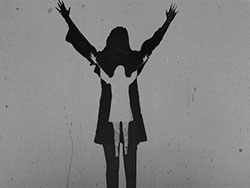
Following this, the episode features a very visually-striking sequence where it steps away from realist aesthetics when Martin has an unsettled night’s sleep and has fever dream-like visions of the horn dancers but this time they are depicted via a form of tinted negative. As the sequence segues into colour it is revealed that one of the dancers is his grandfather, who says his grandson’s name as Martin awakes.
The grandfather has died in the night, apparently not being able to see the horn dance before he died, but rather to have joined it in the afterlife. Martin’s mother gives Martin his grandfather’s inheritance, which is the key to his harbourer’s cottage, and therefore a way for Martin to more easily fulfil his wish to work in the countryside.
In a final discussion, or relatively mild-mannered showdown, between Martin and his mother over his futures plans, she talks about how she grew up in the countryside and just wanted better for her children and to “get away from the mud”. Martin’s reply is that he has to make his own choice and that he is “opting for the wind”.
Martin’s wish to work in the countryside in the episode connects with the back to the land movement which gathered pace after the late 1960s as part of which people wished to reconnect with the basics of life, nature and agriculture and were drawn to a rural way of life. As with Martin’s similar desires, this was not so much a strictly counter-cultural movement but it overlapped with it in terms of participants and inspiration, such as a rejection of rampant consumerism and careerist defined lives.

As previously mentioned, the episode was written by Josephine Poole, who since 1961 has published more than two dozen books for children, young adults and adults. These include the young adult novel Billy Buck (1972), which shares some similar themes with The Inheritance, in particular the way it revolves around an ancient horn dance. However, whereas in The Inheritance the folkloric dance is depicted in a positive light, in Billy Buck it is used in conjunction with bonfire night revels as a way of exploiting a rural village for sinister purposes by driving the locals to hysteria and tapping into their appetite for persecution in order to destroy an ancient family.

Billy Buck can be grouped with two other young adult books published in the early 1970s, William Rayner’s Stag Boy (1971) and Penelope Lively’s The Wild Hunt of Hagworthy (1971), all three of which draw from similar mythical and folkloric associations with deer and related real-world folk rituals:
“[These books] share the setting of Exmoor and the Devon/ Somerset border, where a deeply-buried folk heritage rises from the landscape – [including] a horn dance of the type still enacted today at Abbots Bromley, a wild hunt, [and] an ancient antlered helmet.” (Quoted from “Running with the Deer – 1971 in Children’s Literature”, Jem, Whistles in the Wind (whistlesinthewind.wordpress.com), 2012.)

Alongside sharing these folkloric themes, the books also connect with a wider trend in 1970s literature:
“The invasion of ancient folklore and myth into the present is a feature of many novels for ‘young adults’ of the late sixties and early seventies. There had been… the Alan Garner effect: in 1967 [his novel] The Owl Service redefined the remit of this type of writing, beyond ‘writing for children’, ambitious in the way it dealt with human emotions against an older, wiser and more powerful landscape. The stories were different because they were as rooted in everyday realism as the kitchen-sink dramas of British film… They existed against a particular sense of modernity at the time: heritage culture hadn’t really begun; things were either ‘old-fashioned’, or they were ‘modern’… [A possible name for this type of story could be] ‘British Ancient Landscape Hauntological Domestic Realist Wilderness’” (Quoted from “Running with the Deer – 1971 in Children’s Literature” and “Appreciating Josephine Poole – Moon Eyes”, Jem, Whistles in the Wind (whistlesinthewind.wordpress.com), 2012.)
This “invasion of ancient folklore and myth into the present” in fictional young adult-orientated work was also a feature of 1970s British television including the likes of the previously mentioned The Changes and Raven, that draw from Arthurian legend, alongside both The Inheritance and Dark Encounter episodes of Shadows, the latter of which I discuss in another post.