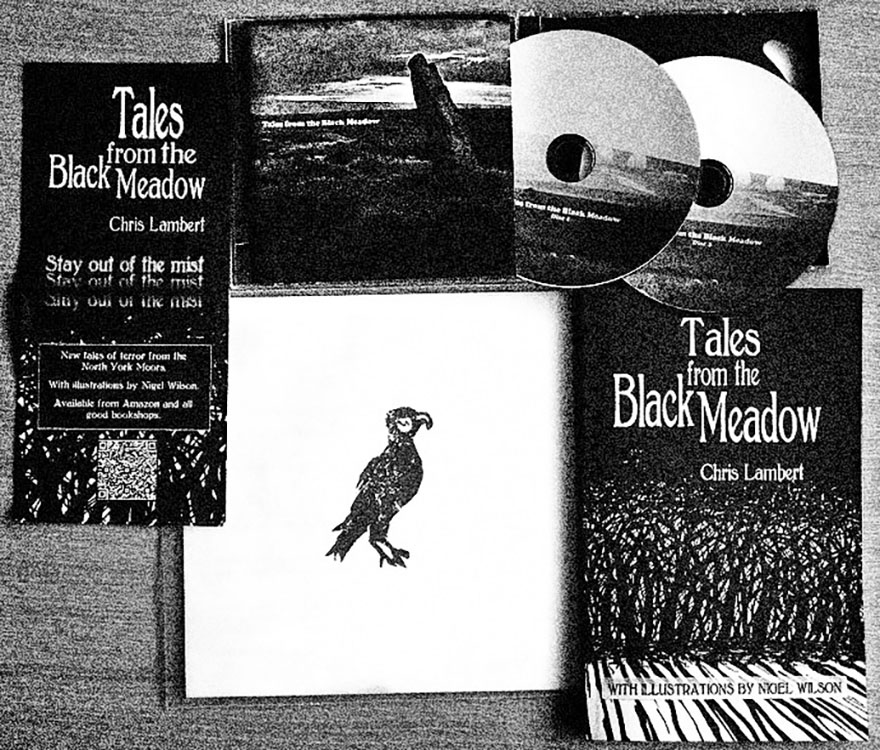
In recent years there have been a considerable number of soundtracks for imaginary films released which have explored wyrd, folk horror and hauntological themes and looking back Tales from the Black Meadow (2013), The Book of the Lost (2014) and The Equestrian Vortex helped to create the pathways which has lead to the popularity of such things.

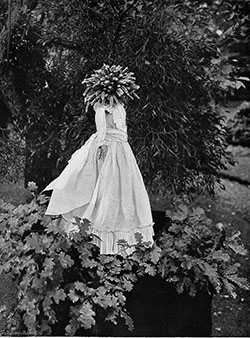
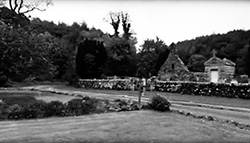
Tales from the Black Meadow (2013) is part of a multi-faceted project which has taken the form of, amongst other things, books, album and video work and takes as its core story the imagined story of Professor R. Mullins who went missing in 1972 in an area known as the Black Meadow atop the North Yorkshire Moors. The accompanying story tells of how he left behind an extensive body of work regarding his investigations of the folklore and oral history of the Black Meadow, in particular with regard to the phenomena of a local disappearing village.
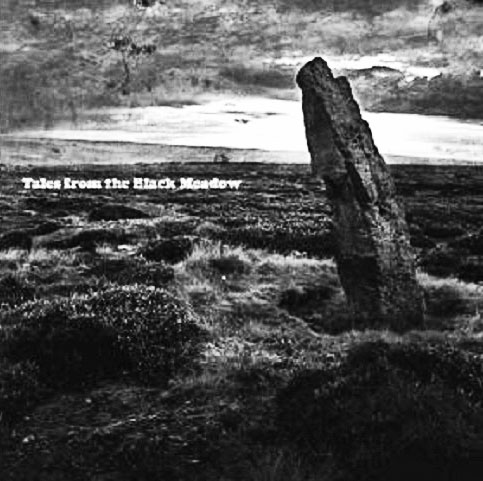
As part of this fictional history within the world of the Black Meadow it is said that in 1978 Radio 4 produced a rare documentary about the folklore, mystery and tales surrounding the Black Meadow area and commissioned music for the show, which has been unearthed and released to the public and the resulting soundtrack was released as Tales from the Black Meadow by The Soulless Party.
Even though it is widely known that it is a created history, revisiting the project leaves some lingering doubt as it plays with a hauntological sense of misremembered and faded cultural memories through the documentary backstory and the use of created archival material.
The soundtrack could also belong to a period television programme the name of which you can’t quite remember but which is possibly a forgotten and somewhat unsettling series, something that may belong in similar territory as Tales of the Unexpected (1979-1988) but as if it was created by Nigel Kneale.

The Book of the Lost (2014) is a collaboration between Emily Jones and The Rowan Amber Mill, the latter of which is one of the names that Stephen Stannard has released work as and the project in part draws from folk horror films such as The Wicker Man (1973), Witchfinder General (1968), Blood on Satan’s Claw (1971) and Psychomania (1973) and creates an intriguing world and backstory for the resulting music.
Instead of an imagined documentary as is the case with Tales from the Black Meadow, The Book of the Lost creates the soundtrack to episodes from an imagined period television series, which are called to life via the project and accompanied by details of their casts, synopsis, crew, production companies etc.
The backstory tells of how these would have been broadcast as part of a late-night television series called The Book of the Lost, from which the album took its name and it is reminiscent of early 1970s British portmanteau horror which often seemed to feature the iconic actress Joan Collins. In particular, Tales from the Crypt (1972) or Tales That Witness Madness (1973), films which have a certain period charm, entertainment value and cultural interest but which also reflected a time when British cinema was tumbling and hurtling towards its own demise via its focus on cheap exploitation fare, sex comedies or schlock and horror. Along loosely similar lines is The Equestrian Vortex: a filmwithin-a-film that appears in Peter Strickland’s cinematically released 2012 film Berberian Sound Studio; this is set in and around 1970s Italian giallo film culture and creates the phantasmagorical closed world of a recording studio which is being used to produce the sound effects for a horror film.
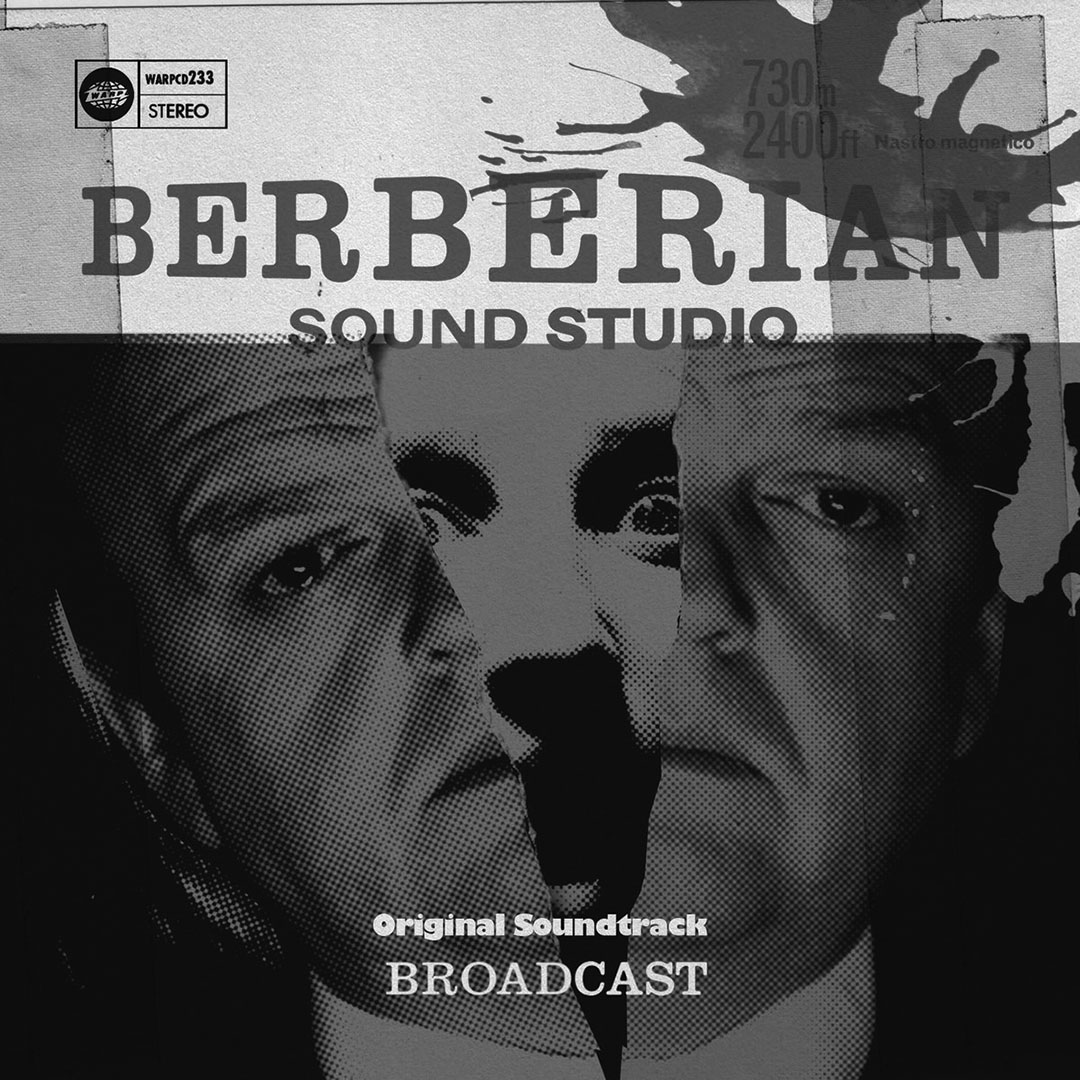
As with The Book of the Lost, The Equestrian Vortex draws from many of the classic tropes of folk horror and as part of its hermetic world creation it lists credits for an imagined cast, director, soundtrack and so forth.
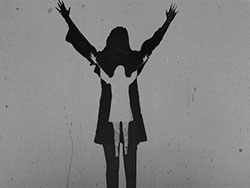
Created by Julian House of Ghost Box Records/Intro design agency and soundtracked by Broadcast, The Equestrian Vortex appears purely as an introductory sequence created using found imagery and via sound effects in Berberian Sound Studio but without ever showing the actual film. It offers a brief window into the complete film and when watching it, there is a wish to see the full-length version, to seek out something that logically the viewer knows does not exist.
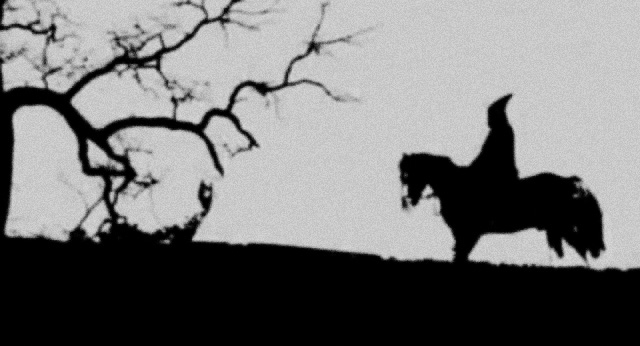
This is a reflection of the strength of such work as the aboveimagined soundtracks and films; they present only glimpses and fragments of the imagined worlds, tales and histories that they are said to come from, drawing on shared and sometimes faded cultural memories, leaving the viewer/listener space to weave, create and imagine the fully finished programmes and films.

It may not be merely budgetary or resource constraints that stop practitioners from creating whole new films or programmes, as work along these lines can be more part of a process of interacting with, distilling and capturing the spirit of the original programmes and films.
They could be seen as expressions of an urge to remember, misremember, reinterpret, rehabilitate, create and recreate connected themes, sounds and imagery; a way in which to summon or revisit the thoughts, visions and journeys that they have inspired rather than creating or attempting picture perfect simulacra of fully-realised episodes of television programmes and finished feature films.