Ghost Box Records work and releases often have a very playful element which intertwines with the more parallel world or occult side of things. This is particularly present on the The Belbury Poly album New Ways Out from 2016, which was described in Electric Sound magazine as:
“…transporting you to those especially daft places only Belbury Poly can – Tizer-fuelled 70s youth club discos with side-rooms for Ouija boards…”
That quote creates anticipation of a sense of fun or playfulness from the album and indeed New Ways Out has that via a set of rather catchy pop hooks, but with that playfulness being quietly filtered through a Ghost Box parallel world filter.
Writer and academic Mark Fisher, who was a longstanding supporter of Ghost Box, spoke of how the circuit between the avant-garde and the mainstream was broken and how exploratory culture now has its own niches and audiences separate to and no longer crossing over with that of the mainstream.Due to the album’s accessible pop-like aspects in another cultural landscape, where that circuit is not broken, on a Thursday evening at some loosely defined point in the Ghost Box parallel world timeline you might expect to hear the words:
“And now, on Top of the Pops with a track taken from their album New Ways Out, here’s The Belbury Poly with ‘The New Harmony’.” While seven-inch singles of “Playground Gateway”, also taken from the album, would be piled up in Woolworths.

In part, the album conjures and refers to an imagined, indefinable golden age of synthesised exploration, one where such things were intertwined with the pop/mainstream music world and charts. It is an album of experimental and explorative music but it is such things not as a moody teenager in its bedroom with the curtains drawn, more a form of such work that has got itself down a teenage Panda Pops disco and is having “a bit of a boogie”. (As an aside I tend to think of youth club discos from back when as being more Panda Pops rather than Tizer fuelled – perhaps this is the result of different geographic fizzy pop distribution areas in the days before the universal brand ubiquity and organisation of such things.)
In the mind’s eye, on that just mentioned episode of Top of the Pops, “The New Harmony” would have shared a set of stages on a show that featured Kraftwerk, Donna Summer collaborating with Giorgio Moroder, Lieutenant Pigeon, a band playing a Chin and Chapman glam rock classic, The Wombles and possibly a folk band having their pop moment in the charts in between moonlighting for the Bagpuss soundtrack.
Possibly, if it was a particularly good week and just to show that the avant-garde/mainstream circuit was alive and functioning well it might also include some early-ish work by Kate Bush.
Ah, we can but dream.

A particular highlight of the album is “The New Harmony”, which seems to channel the aforementioned Kraftwerk, Donna Summers at her Moroder peak and who knows quite what?
Which is one of the defining characteristics of New Ways Out and indeed much of Ghost Box’s output, such as the woozy cut-up sampling of The Focus Group; often it is reminiscent of something just on the edge of memory.
Also, as with much of work created and released by the label there is a sense of reference points and lines drawn from the past but without it being overly or overtly retro; more that it exists in a separate slipstream of its own.
Returning to “The New Harmony”, on a first hearing there is a temptation to check that somehow it is not playing on a seamless loop as it has an endless, almost Kafka-esque quality, filtered via a warm, synthesised Ghost Box viewpoint, a sense of never leaving and it seems to make time lose traction.
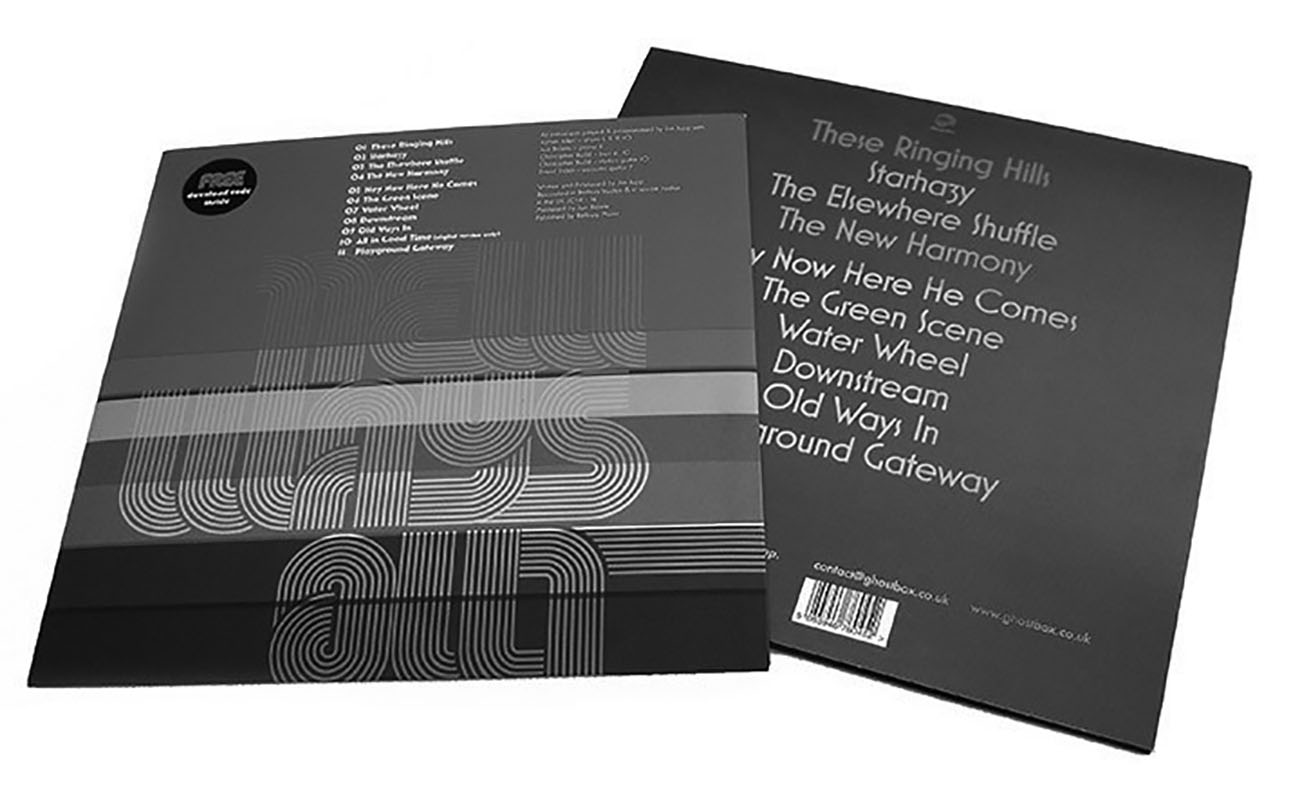
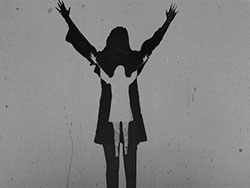
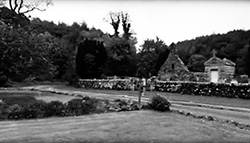
(Above photograph and some of the others in this post by djfood.org)
“Playground Gateway” ends the album and in that other slipstream world it begins as though it would be the second single taken off the album. It starts with a knockabout schoolyard glam chant air before wandering off to perhaps soundtrack science fiction tales that featured gleaming golden crystal floating cities that our hero approaches on a winged white horse (!)
“Starhazy” from the album is the slightly more challenging third single that was played on late night radio. The devoted fans loved it, the audience on Top of the Tops did their “not quite sure if I like this/if I should dance to this” shuffle that they often did for such not quite so commercially mainstream things and there were headlines after the recording of the show along the lines of “Police called to break up pitched battle between Polyites and Numanoids”.
It would not necessarily have been quite as big in the charts but would still have had gents at EMI Records and the like popping champagne corks to a backdrop of one those upward travelling sticky taped sales charts.
“Hey Now Here He Comes” is the album’s other glam-stomp (with a mild pastoral air) that the record company wanted as an A-side in the UK, but which due to scheduling and contractual problems in the Ghost Box parallel world only came out as a small quantity of 7” singles in Belgium, and many years later was rediscovered and featured on a compilation of lost glam rock along the lines of the 2003 album Velvet Tinmine which collected such records.

As always with Ghost Box’s releases the packaging and design adds an extra layer of complementary, constellatory elements to consider and peruse, including an illustration by Jim Jupp.
This depicts a pastoral landscape and has a gentle bucolic air while also somehow managing to convey an atmosphere of off- centredness and seems to be both contemporary but also to have tumbled from a never-was but is out there somewhere children’s television show from an indefinable time back when.