Abandoned and decommissioned bunkers are a subsection of utilitarian brutalist architecture that has come to gain totemic significance and to have a form of romance attached to them; this can take a hauntological form where Cold War bunkers in particular have come to represent and be symbols of the spectres of history.
This in turn connects with a central defining tenet of hauntological strands of interest: explorations of and fascinations with lost futures and areas of culture alongside artifacts, buildings, institutions etc which are imprinted with spectres of those lost histories. In this sense such bunkers are physical embodiments of the (thankfully) lost futures of previous decade’s end of days conflicts: the unsettling and disquieting counterpart to social and municipal brutalist buildings from a similar epoch and the yearning for lost progressive utopian futures that they can represent.
Generally, we tend to think of Cold War bunkers, particularly those built by governments, as being located in the countryside and intended more for use by high end and/or control personnel. However, a nuclear attack bunker exists buried underneath Germany’s capital city Berlin, which was intended for use by the general population.

This is a somewhat spectral reminder of the Cold War, in both a hauntological and fear-instilling manner. Or as writer, artist and graphic designer John Coulthart has said bunkers are:
“A source of contemporary horror that doesn’t require any supernatural component to chill the blood.”
This Berlin bunker contains outdated technology but is still fully functioning and maintained. It was designed to hold 20,000 people in the near dark, in almost total humidity and without medical care. While the air filters were designed to operate for only two weeks, which would not have been sufficient time for contamination levels outside to fall to a safe level before the bunker’s population had to leave.
It features row upon row of metal bunk beds and is an interesting and intriguing but definitely not fun place to visit, even for less than an hour. As part of a bunker tour, visitors are shown a short video that features the attack sirens sounding and the bunker door slamming shut. This serves as a stark reminder of the realities of these structures and the futility of their use as a form of defence; a very physical representation of the Cold War dread which underpins much of hauntology.

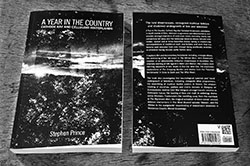
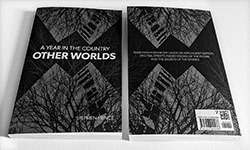
Connected to that sense of futility or delusional projections of their effectiveness, in 2014 as part of A Year In The Country a themed compilation album called The Quietened Bunker was released.
This featured work by Keith Seatman, Grey Frequency, A Year In The Country, Panabrite, Polypores, Listening Center, Time Attendant, Unknown Heretic and David Colohan and interpreted the album’s theme via recordings that included field recording subterranean ambience, paranoid industrial distortion, Radiophonic inflected electronica and elegiac end of days sequences.
The album’s accompanying notes are as follows:
“The Quietened Bunker is an exploration of the abandoned and/ or decommissioned Cold War installations which lie under the land and that would have acted as selectively populated refuges/control centres if the button was ever pushed.
“These bunkers could be seen as once modern fortresses – reinforced concrete and blast doors replacing moats and stone battlements. The intention [in the UK] was that they would form part of a network of civil defence and management, accompanied by government-issued Protect and Survive leaflets/broadcasts that would have offered advice on how to protect home and hearth via little more than whitewashing windows as blast protection and forming a shelter by leaning mattresses against an inner wall of your house. Looking back, such preparations can seem a reflection of some kind of madness or delusion in the collective consciousness and the halls of power – a tilting at windmills that was necessary to protect national psyches from the reality and aftermath of the sudden use and descending of mechanisms with almost indescribable destructive power. Now it can all seem like a dream from another world, one where for a number of decades populations lived under the day-to-day threat of total annihilation and where millions [were] spent on this network of shelters and defences; preparations to allow fiddling once all had burned, such bunkers possibly being nearer to utilitarian national follies than fortresses – indeed, today they are as likely to be signposted tourist attractions as operative defences. The Quietened Bunker reflects on these chimeric bulwarks and the faded but still present memory of associated Cold War dread, of which they are stalwart but mouldering symbols.”
The album is part of a lineage of work that explores, is inspired by and documents bunkers, shelters and related infrastructure.

The book Waiting for the End of the World by Richard Ross published in 2004 is part of this lineage and it contains photographs of active and decommissioned bunkers and shelters around the world, both those built by governmental/military organisations and by private individuals.
One intriguing thing about some of the photographs of domestic shelters are the details of the way they have been made to feel homely and the amount of aesthetic consideration often given to their entrances, in the face of and opposition to what their occupants would be faced with if their intended purpose was ever called upon.
While many of the institutionally-built shelters are shown as harsh, utilitarian or crumbling places, this is contrasted by the entrance and blast doors for one Swiss public shelter which have been painted a somewhat incongruous seeming bright, friendly welcoming pink.

Rather than being purely documentary in nature, Richard Ross’ book belongs more to the world of fine art photography in that it is a photography project which is underpinned with a sense of the creative or personal expression of its author.
In this instance Richard Ross says that he wishes to make the shelters and their present status real and tangible by presenting them as visual images rather than as more abstract intellectual ideas. As is also referred to in the above notes to The Quietened Bunker, he comments on their ineffectiveness as a logical solution or salvation, in particular due to the minute number of them that exist in comparison to the size of population. However, he also found a sense of hope and optimism in their repurposing as clubs in St. Petersburg, Russia and how these have become places where people go to celebrate life rather than anticipate destruction.

Other photography-based work which explores such buildings and installations is more strictly documentary in nature, in particular that done by the British based Subterranea Britannica society, whose members:
“Study and investigate man-made and man-used underground places – from mines to railway tunnels, military defences to nuclear bunkers and everything in between.”
The society has published a number of comprehensive books featuring bunker-related work, including Nick Catford’s Cold War Bunkers (2010) and Mark Dalton’s The Royal Observer Corps Underground Monitoring Posts (2011).
The work in these books and by its members, which involves photography and text-based notes and observations, is more a rigorous archival recording rather than the more expressive nature of Waiting for the End of the World.
Via its publishing activities, the collecting of archival material and photographs and notes from exploratory expeditions to locations by members which are viewable on its website, the society’s work represents a comprehensive mapping of these often once secret or inaccessible to the public places and infrastructure networks.

A predecessor to the above Cold War bunker related lineage of work is Paul Virilio’s book Bunker Archaeology, originally published in a French edition in 1975. This collects his photography and writing on the abandoned World War II German bunkers and related installations that lie along the coast of France.
Along with their Cold War counterparts, these could also be filed as a form of brutalist architecture as they share a number of similarities in terms of the materials used and their aesthetics.
In comparison to many Cold War bunkers and structures, those in Paul Virilio’s book seem to more inherently contain a curious and surprising, considering their nature, beauty or even poetry and they have a unifying flow or philosophy to them despite their once aggressive and defensive intentions.

The above refers to their aesthetics and artistic aspects rather than their political underpinning. However, within the totalitarian regime that instigated them there was often something of an intertwining of such things.
Viewed now they seem to almost be a form of accidental utilitarian art: something they share with the likes of at times similarly appreciated pragmatic constructions such as telegraph poles, pylons, Soviet era bus stops or even library music.
Although they were created with a very practical intent, looking at them now, they seem nearer to monuments or tributes and are reminiscent of the Cold War era Spomenik memorials that Jan Kempenaers photographed and which are collected in his 2010 book of the same name.

With the structures in Bunker Archaeology, whatever their original intents, viewing them today they seem as though they could be artifacts from an almost science fiction-esque future that never was, a form of hauntology possibly but one that steps aside from or precedes many of the more often referred to British cultural history related tropes.
That science fiction-esque quality seems particularly present in some of the structures that have been partly covered by or have sunk into the sand; their appearance at times brings to mind sentient or anthropomorphic crashed spaceships and seem subtly reminiscent of the original Planet of the Apes film from 1968 and its mingling of crashed future/past visitors and part-buried monuments to mankind’s folly.
As with the earlier-mentioned, still actively maintained, Berlin bunker, decommissioned Cold War bunkers have also become part of the heritage tourist industry in the UK and as mentioned in the notes to The Quietened Bunker album they are “as likely to be signposted tourist attractions as operative defences”.

Curiously they are even available to hire for events: one such of which is The Delaware Road event organised by the Buried Treasure record label, which was founded and is run by Alan Gubby, that took place in 2017 at a former British “secret nuclear bunker”.
This was part of a wide-reaching conceptual project of the same name that has also included amongst other things a themed compilation album, graphic novels etc and the narrative and themes of which are said to be:
“London, 1968. Two brilliant musicians create innovative sound using reel-to-reel tape. Whilst working for a large media organisation they stumble upon a conspiracy with seismic implications for themselves and for Britain. Exploring folklore, magic, propaganda, television and radio broadcasting, counter-culture and early electronic music,
The Delaware Road is an incredible, alternative vision of Britain during the second half of the 20th century.”

The 2017 event, as do a number of the label’s releases, interconnected with hauntological themes and tropes and featured a number of performers whose work has been to various degrees linked with such areas of work including Dolly Dolly, Howlround, Radionics Radio, Ian Helliwell and Saunders & Hill:
“[The event is an] immersive mix of theatre, film and live music [and] takes place deep underground in a nuclear bunker, hidden in remote Essex woodland. The audience is free to explore the secret, Cold War facilities where they will encounter a host of performers, experimental artists and musicians… [It takes place at] The Kelvedon Hatch Secret Nuclear Bunker… in the Borough of Brentwood in the English county of Essex… a large underground bunker maintained during the Cold War as a potential regional government headquarters. Since being decommissioned in 1992, the bunker has been open to the public as a tourist attraction, with a museum focusing on its Cold War history.” (Quoted from text which accompanied the event.)
As with some of the bunkers in Waiting for the End of the World which have come to be used as clubs, this is a repurposing of such structures for entertainment or cultural purposes, albeit in this case a form of cultural exploration which explicitly refers to and explores the history of them rather than being more purely hedonistic socialising and escape orientated. It could also be seen as being part of a lineage of interrelated work:
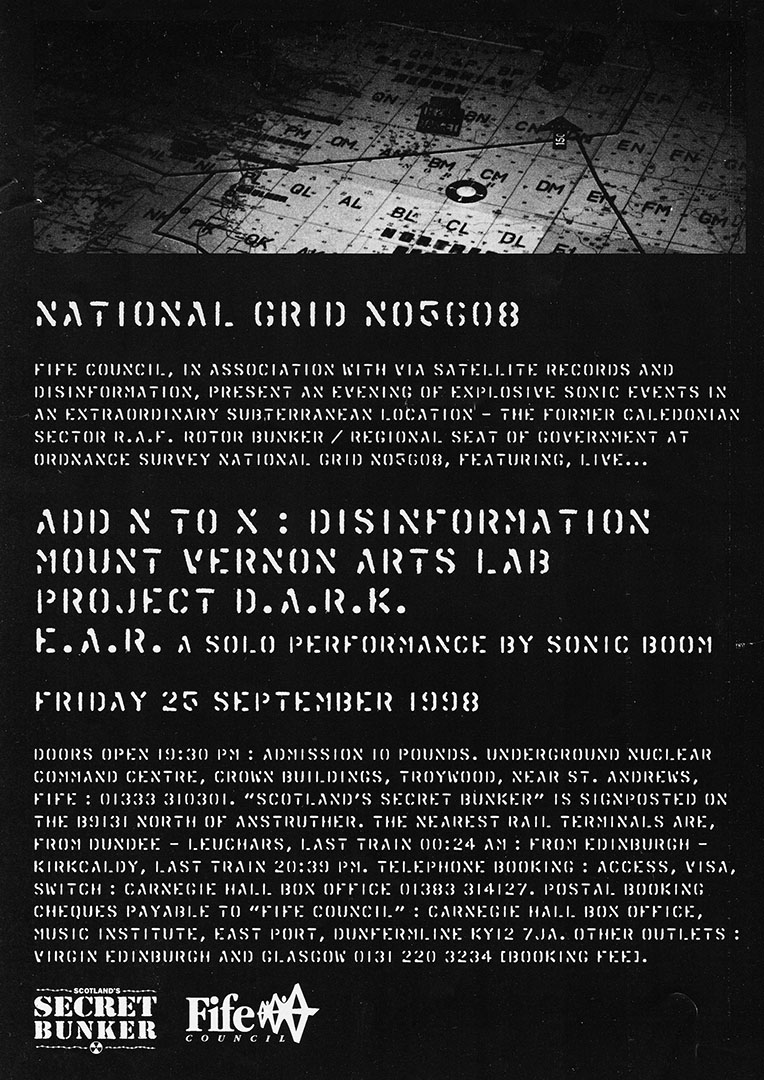
In 1999 Joe Banks, who often works under the name Disinformation, and Drew Mulholland co-curated two events organised by “Fife Council in association with Via Satellite Records and Disinformation” at a once “secret” Cold War era bunker in Scotland near Anstruther, Fife.
The “secret bunker” where this event took place was built 100 feet beneath a field on two levels across 24,00 square feet and was originally opened in the 1950s as a Royal Air Force radar bunker after which it became a “Regional Seat of Government” location that would have been used in the event of a nuclear attack and the destruction of Britain’s cities etc. It was eventually decommissioned in 1993 after which, as with the Kelvedon Hatch “secret bunker”, it was opened to the public as a Cold War museum.
Text which has been published at Joe Banks’ Disinformation Flickr account provides an overview of one of the events:
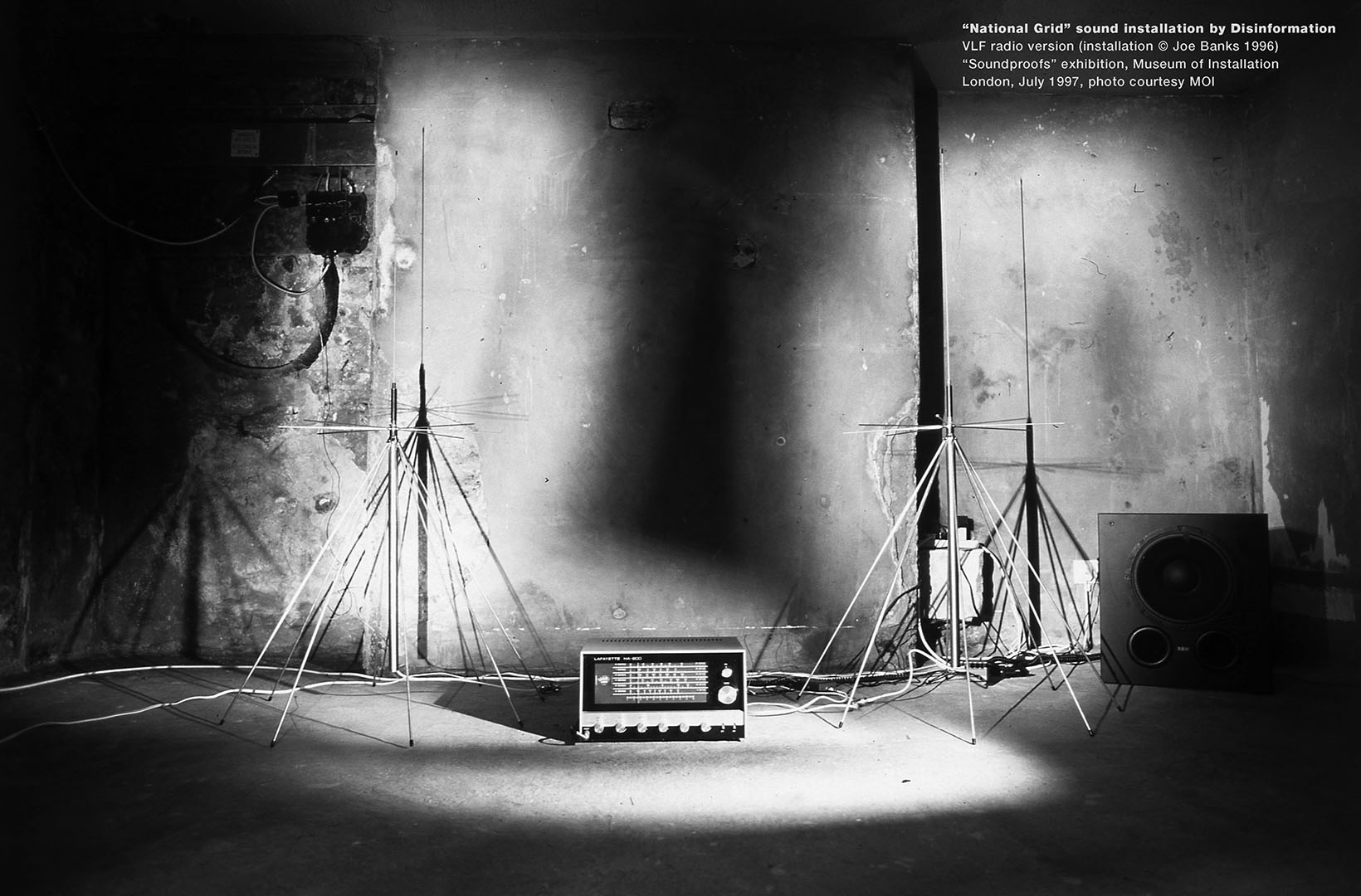
“Visitors arrived outside a superficially innocuous rural outbuilding, and entered to find, not in fact a ground floor in a building filled with conventional furnishings etc, but a large open stairwell going down. One storey underground, visitors then found a 50-metre access corridor, disappearing off to one side, sloping down into darkness and into a mass of shockingly powerful and exhilarating [ultra-low frequency] sub-bass sound [which was an installation by Disinformation]. Beyond the steel blast doors at the end of the corridor, visitors entered a two storey deep underground complex, filled with radar screens, military plotting tables and communications equipment…. [The] concert featured electronic music from E.A.R. (Pete Kember, aka Sonic Boom), Disinformation, Add N to X, Project DARK and Mount Vernon Arts Lab [aka Drew Mulholland].”
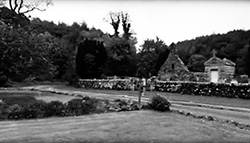
The ground level entrance building to both the “secret bunker” where this event took place and the one at Kelvedon Hatch are remarkably similar in design as both look like fairly conventional single-story bungalow-like domestic homes with pillared fronts and a single loft window on the front side of the roof. Alongside which footage and photographs etc of either events could almost have tumbled forwards or backwards in time from one to the other due to the similarity of the two bunker’s entrance buildings, the utilitarian Cold War era design of their subterranean levels and equipment, the two event’s exploration and use of Cold War imagery etc and the experimental left field electronic nature of the music which was performed and/or created at them.
While due to the nature of their locations etc some similarities between the two events might be expected, the degree to which they have parallels is somewhat intriguing in a “porosity of time and journeying of cultural ideas” manner as they took place almost two decades apart and, to my knowledge, they were not directly connected in terms of their organisers nor did The Delaware Road event in 2017 appear to have been inspired or make reference to the Disinformation co-organised event in 1997.
Returning more directly to the heritage and tourist industry repurposing of such installations, on British roads you can find official road signs that direct you towards the tourist destination of a “Secret Nuclear Bunker”, often appearing on the same sign as one which also points drivers to an industrial estate and various towns.

Viewing these signs may bring kind of mental disconnect – a mixture of disbelief, humour and relief that we are no longer living in a political situation where these bunkers are considered necessary and possibly a touch of sadness, anger and grief for us having once done so.
In part this disconnect is due to the very Britishness of names like Chipping Ongar and Chigwell that the road signs also point to. It may also be due to their sometimes positioning in amongst day-to-day normal housing or the gentle grey-green of the landscape, all of which are juxtaposed with these signposts to once end-of-days refuges.

Accompanying and interconnected with such road signs are the bizarre seeming estate agent signs for when a decommissioned bunker has been made available for sale; the hoardings name the property for sale as a nuclear bunker and list its square footage and acreage of land.
Which begs the question: is this a buyer’s or a seller’s market?
There is scarcity value to the property but presumably only a very limited number of potential buyers and allowable uses (data storage seems to be one such usage that is mentioned on these boards).
Which caused me to think of the equally bizarre prospect of people coming across them on general commercial property websites and seeing search results that, for example, brought up a warehouse for rent that was listed as having plenty of onsite parking and then just after it a former secret nuclear bunker listed as razor wire and emergency air filtration system included (!)