Howlround which has been humorously self described as being a “tape loop supergroup” was founded by sound artist and composer Robin The Fog and the group/project came to prominence with their first album, 2012’s The Ghosts of Bush. This is a recording that documents the last days of Bush House, the once home to broadcasting stalwart the BBC World Service. It takes as its initial source material indoors field recordings which were captured late at night in the empty rooms and corridors of the building towards the end of the BBC’s tenure of it and the resulting album is a culturally and musically fascinating and intriguing piece of work.
The album is a tribute to its subject from whence it sprang, one which is made up of many layers; whether literally in terms of the sounds it contains and how they were made, the history of where it was made or the Robin The Fog’s own connection to the work (at the time he was a studio manager at Bush House).
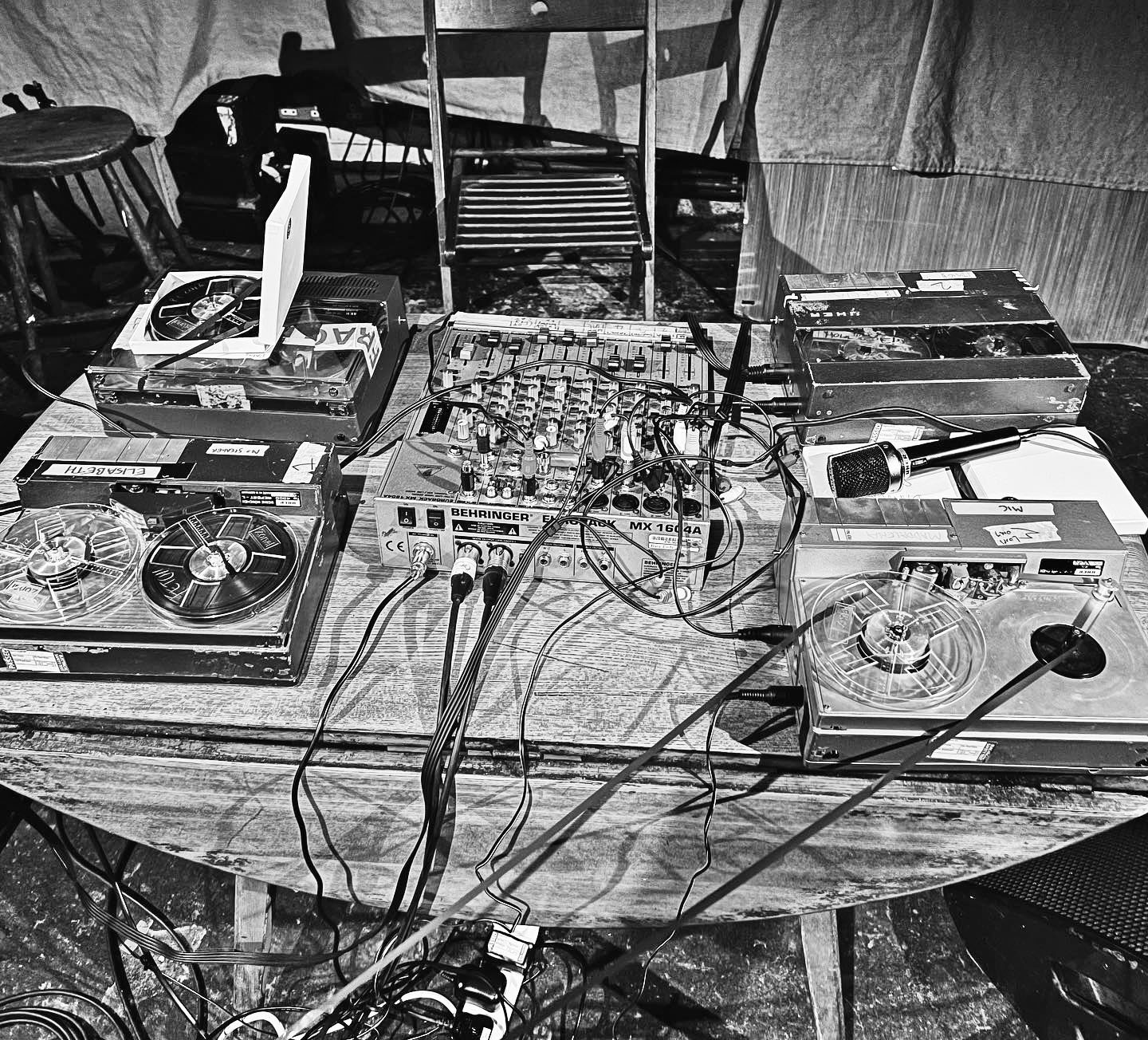
Part of that layering process and how the recording was made comes about by a literal layering of sound. The record was created using only tape loop manipulation which utilised some of the last remaining of such machines in Bush House. This process feels like an intrinsic part of the work and its cultural connections, a way of reflecting and capturing the spirit and history of the building, related institutions and their technological stories and legacy.

It also connects with a contemporary romance and at times nostalgia that has come to be attached to analogue technologies, something that is also expressed through and a partial explanation of interest and fascination with the BBC Radiophonic Workshop and its analogue based musical explorations and pioneering. Robin The Fog has said of the The Ghosts of Bush:
“These are the sounds the building makes when it thinks no-one is listening, the sounds of many sleepless nights spent isolated in a labyrinthine basement surrounding by a crepuscular soundtrack of creaks and crackles. It’s an attempted homage to the work of the BBC Radiophonic Workshop* who crafted the most incredible of sound-worlds from the most basic of sources. But mostly it’s my way of saying goodbye to a building that I and so many people have loved. When talking of historic structures, the old clichéd approach is to wonder what one might hear if the ‘walls could speak’. I like to think that with The Ghosts of Bush we come closer to hearing them sing: one last song about the passage of time and the impermanence of all things, with the ghosts of the machines joining in. The last hurrah of a bygone era, of obsolete equipment and of a studio that has since fallen silent forever.”

When I listen to The Ghosts of Bush I often think of the distant howls of long-lost and departed creatures, huge as dinosaurs. Which in these days of almost ubiquitous free market culture, may well be somewhat appropriate as Bush House was responsible for transmissions from that possibly endangered philosophical idea, publicly owned broadcasting in the free market-orientated West. Which along with Robin The Fog’s reference to it in the notes above, brings us back to the BBC Radiophonic Workshop.

The BBC Radiophonic Workshop connects with a hauntological sense of a yearning for lost progressive futures. It was one of those occasional, brief and often relatively small areas within culture where, partly through the effectively publicly funded space afforded it by the BBC and partly due to the explorations and curiosity of those who worked there, creative work was to a degree shaded from the sometimes restrictive or prescriptive pressures of commercial imperatives and able to burgeon and blossom into work which still resonates and inspires today.

*The BBC Radiophonic Workshop was established in 1958 to produce sound effects and new music for BBC radio and later television, and was closed in 1998. During the late 1950s through to the 1970s in particular it was responsible for creating a body of renowned and technically innovative work, with this often being considered the “classic” period and the one that hauntological interest generally revolves around. Often the sounds required for the atmosphere that programme makers wished to create were unavailable or non-existent through traditional sources. This led to some of those working at the BBC Radiophonic Workshop to explore new techniques to produce effects and music for their pieces utilising tape manipulation, experimenting with electronic music equipment etc. Using such methods allowed them to create often unique soundscapes and music, notably the iconic theme tune to Doctor Who which was created electronically by Delia Derbyshire in 1963 utilising Ron Grainer’s score. Delia Derbyshire herself has become somewhat iconic as a member of the BBC Radiophonic Workshop and a musical explorer and pioneer. It is well worth seeking out The Delian Mode, a 2009 documentary on her life and work directed by Kara Blake if you should wish to know more.