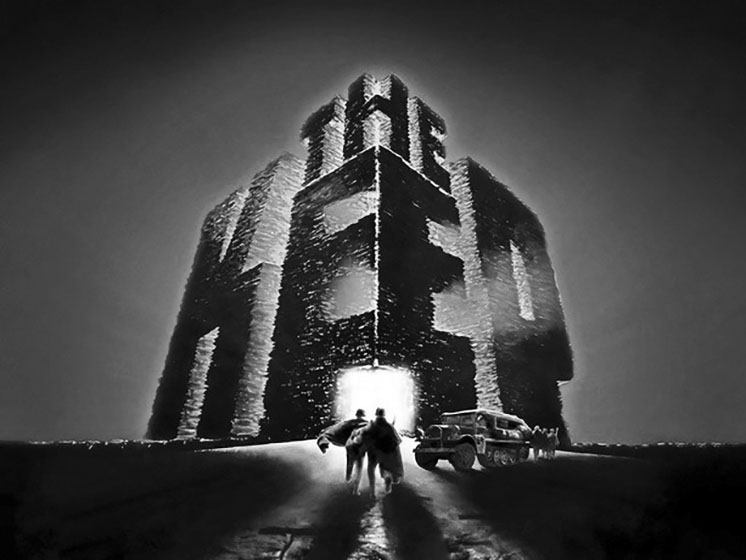
The Keep is a loosely genre film from 1983 that has something of a unique, fractured and almost dreamlike character which combines horror, the supernatural, war film and at points now period pop promo aesthetics in its tale of a unit of German troops who occupy a mysterious citadel in a Romanian village and unleash, and are hunted by, a spectral entity called Molasar.
There was a seemingly lost and to a degree never actually existed earlier longer director’s cut of the film which ran for 210 minutes; however, for its release the producers had the film re-edited and its length was cut to 96 minutes. However, while possibly of detriment to the film in the sense of it removing a more conventional narrative and flow, its re-editing and the at times irrational and unexplained nature it introduces to elements of the plot also seem to play a notable part in lending the film its fractured dreamlike quality and intriguing character.

A longer more complete version of The Keep appears potentially to be fully lost, as Michael Mann has implied that he doesn’t wish to revisit and restore the film. Alongside which the film’s visual effects supervisor passed away two weeks into post-production, and nobody else who was working on it knew how he planned to finish the visual effects scenes, in particular its original ending, so any longer version that was produced would not be how the film was originally envisaged and adding to this it is thought that the footage needed to assemble a new director’s cut has been lost to time. Further adding to the lost aspects of the film, Tangerine Dream created a soundtrack for The Keep but Michael Mann is said to have removed this and included other pieces of their work and it is unclear if or to what degree the original soundtrack was included even on the earlier longer cut.
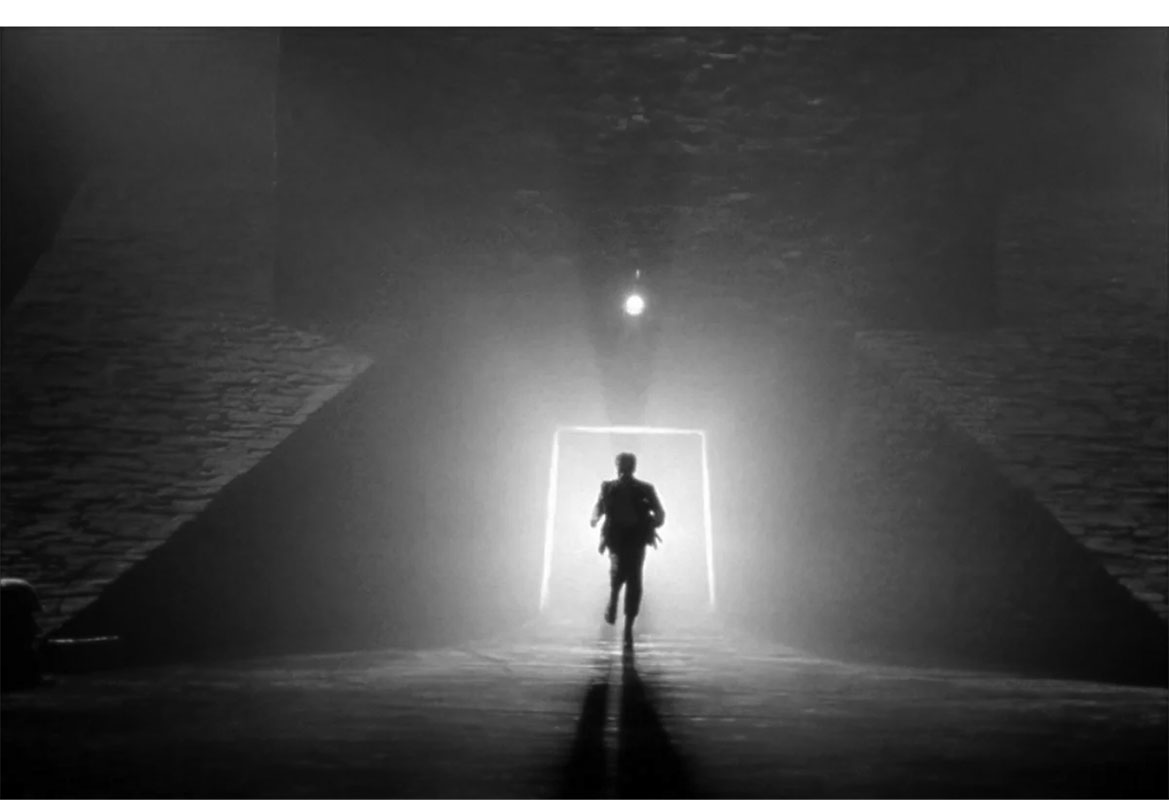
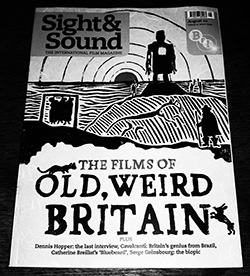
Writer and academic, Mark Fisher, wrote in his book Ghosts of My Life (2013) of how due to the proliferation of contemporary digital and related media storage of culture, there is a sense of loss itself being lost. That is, everything is now potentially available to watch and rewatch ad infinitum. And while this is generally, and broadly, the case today, the expectation which that brings of universal ease of access to and availability of culture, also serves to heighten the now more occasional times when culture or complete versions of it seem to genuinely be lost or becomes unavailable, such as is the case with the original versions of Wolfen and The Keep, the iconic folk horror film The Wicker Man (1973) or going back more than a century The Werewolf, which is thought to be the first werewolf film but sadly all the prints of it are thought to have been destroyed in a 1924 fire at Universal Studios.
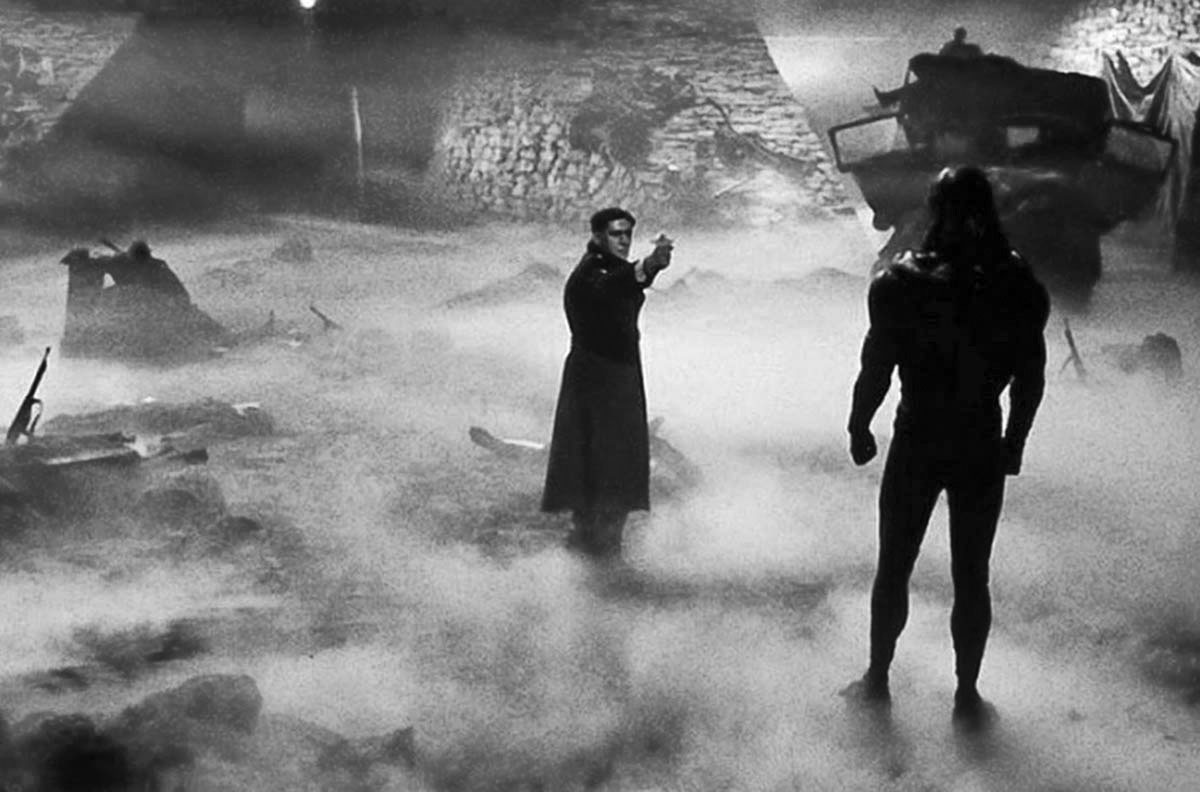
Equally, as is the case with The Wicker Man, it is often the unknowable spectral nature of such partly or completely lost films that adds to their sense of intrigue and mystery and has in turn helped to bring about and maintain their hold on people’s imagination.