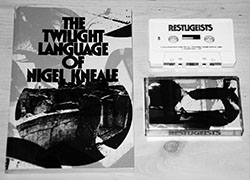
Writer Nigel Kneale’s work for film and television has been something of an ongoing touchstone, point of reference and inspiration for those interested in or creating work that takes in a wyrd sense of the uncanny or unsettled in the landscape and the spectral concerns of hauntology.
The Stone Tape is a 1972 television drama written by him which features a team of British scientists holed up in a country mansion while they attempt to create a new recording technique (and presciently to compete with the Japanese at such things). They discover a form of historic, spectral recording which exists within the substance or literally the stone of the house itself and attempt to study, initiate and possibly capture it as part of their research and development process.

The programme mixes and layers scientific techniques along with an interest in preternatural or supernatural occurrences and while it is set in a country mansion it is not overtly concerned with depicting a rural setting but has nonetheless come to be connected with an interest in folk horror.
This is commented on in reference to The Stone Tape by Andy Paciorek in his article “From the Forests, Fields and Furrows”, which acts as an introductory essay to the loose genre of folk horror at the Folk Horror Revival website:
“Some consider that the setting should be rural for the film [etc to be considered folk horror], but I think a broader view may be considered. The tradition of the horror may indeed have rustic roots and pastoral locations may provide the setting for many of the stronger examples [of folk horror], but people carry their lore and fears with them on their travels and sometimes into a built-up environment. Also, below the foundations of every town is earth with a more ancient past.”
The premise behind the programme comes from stone tape theory, which speculates that ghosts and hauntings are analogous to tape recordings and that electrical mental impressions released during emotional or traumatic events can somehow be “stored” in moist rocks and other items and “replayed” under certain conditions.
This was an idea that was first proposed by British archaeologist turned parapsychologist Thomas Charles Lethbridge in 1961 (philosopher H. H. Price also formed a similar concept in 1940). Lethbridge believed that ghosts were not spirits of the deceased but were simply non-interactive recordings similar to a movie. The Stone Tape television drama helped to popularise the idea and the phrase and as with the recordings in the walls of the mansion featured in it, has continued to echo down the years.
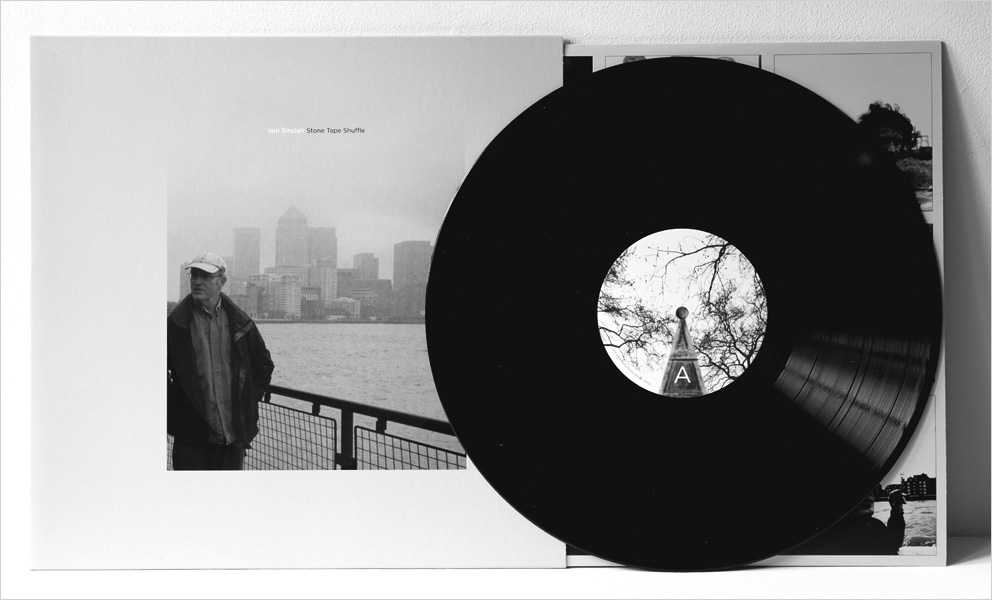
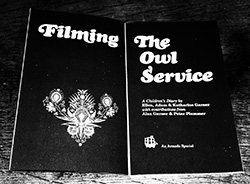
This is particularly so in terms of its title that has been used as the name of record label Stone Tape Recordings, which was founded by Steven Collins who was also the founder member of folk rock band The Owl Service, as the title of an album of site specific spoken word recordings by Iain Sinclair called Stone Tape Shuffle released by Test Centre in 2012 and the name of hauntological otherly folkloric explorers duo The Stone Tapes.

In 2015 there was also a radio play version of The Stone Tape which was broadcast on BBC Radio 4 as part of their Halloween Fright Night season. This added extra layers of cultural intertwinings with hauntological related culture; it was directed by Peter Strickland who wrote and directed the 2012 film Berberian Sound Studio, which in itself has a number of hauntological intertwinings, not least its depiction of an imagined folk horror-esque giallo film and sound recording studio and the inclusion of film and design work by Julian House of Ghost Box Records.
The radio play also featured music by James Cargill of Broadcast (who also created music for Berberian Sound Studio). The soundscape was by Andrew Liles, who has worked with a number of musicians/performers that through the title of a 2003 book by David Keenan which explored such areas of at times culturally subterranean music, have become known as England’s Hidden Reverse, including Current 93 and Nurse With Wound.

Further connections to hauntological points of interest include that the script was by Matthew Graham who was also the writer and/or co-creator of mainstream hauntological-esque timeslip television drama series Life on Mars (2006-2007) and Ashes to Ashes (2008-2010), alongside post-apocalyptic accidental cryogenic time travel science fiction series The Last Train (1999).
Andy Paciorek’s mention of an “ancient past” below the earth in relation to Nigel Kneale’s work connects with one of the recurring themes in his writing; that of the existence of echoes or artifacts from far distant times that may be hidden from view, or literally buried beneath the ground.
In The Stone Tape this takes the form of the spectral recordings in the material of the house, while in the television series and film Quatermass and the Pit (1958-1959 and 1967 respectively), which were also written by Nigel Kneale, it is depicted via the discovery of an ancient alien spacecraft under London which is found to have a malign influence and be part of an alien experiment in genetic modification and manipulation of humans over hundreds or thousands of years, which has been responsible for much of the war and conflict in the world.
As an aside and returning to a sense of echoing down over the years, the main location in Quatermass and the Pit is used in the 2001 album title The Séance at Hobs Lane by Mount Vernon Arts Lab. This album was created by Drew Mulholland and is in itself an exploration of the echoes of society and culture, being a psychogeographic exploration of London’s hidden and underground spaces, eighteenth century secret societies and Quatermass itself. It is seen as a forebear of hauntological work and in what could be seen as an acknowledgement of the pathways it helped to pioneer was reissued by Ghost Box Records in 2007.