Once upon a time, Disney wasn’t the (almost) all-conquering, multi-franchise-owning media and entertainment conglomerate that it is now. Back in the late 1970s, it was struggling somewhat as its family-friendly films, which were in large part its bread and butter, were out of vogue. As a response, the corporation tried to create films for more “mature” markets and the young adult orientated supernatural horror thriller The Watcher in the Woods (1980), based on Florence Engel Randall’s 1976 novel A The Watcher in the Woods, was one of the results of this as was Something Wicked This Way Comes (1983) which was based on Ray Bradbury’s 1962 novel of the same name and which centres around a visiting carnival that by using supernatural powers grants a small town’s inhabitants their deepest desires but which come with a dark sting in their tale.

Set in rural Britain, the story centres around a family who rent a large old mansion-style house in the middle of a wood, after which the family’s two young daughters seem to variously be contacted, haunted, spied on and possibly even possessed by what may be the spirit of a young girl who had disappeared in the area decades previously.
In terms of genre, it is somewhat multi-layered and mixes elements and tropes of haunted house, ghost story, teen romance, family, slasher, folk horror and science fiction films. Alongside which it features, by today’s standards, often fairly simple practical effects, but these are generally utilised well, particularly during the depiction of unexplained supernatural seeming events involving mirrors and windows which in turn help to create a strong sense of “spook” in the film. Accompanying these elements, elsewhere, some unknown presence seems to be watching the family from the woods, and the use of point of view shots in these sequences contain a notably effective sense of menace and threat.

At times, the film is genuinely unsettling and tense and features a number of effective jump scares, but equally it seems to be straining against restrictions placed on it by Disney’s background in family-friendly fare in terms of how darkly toned it could be and reflecting this it had a mixed and contrasting production background.
The film’s co-producer Tom Leetch is said to have pitched the project to Disney executive Ron Miller by suggesting that it “could be our Exorcist”, although Leetch and Miller are said to have subsequently battled over their differing visions for it, with the former wishing to keep its darker tone and the latter wanting to make it more family-friendly.1 However, that the studio went ahead with the production after Leetch saying the above implies that initially it, or at least Miller, were open to making a much more adult and even unsettling film.
Others involved in its production had, in part, notably non Disney family-friendly credentials: the original screenplay was written by Brian Clemens, who amongst many other productions had previously variously written, produced and/or directed the likes of the iconic and at times surreal pop art-esque secret agent television series The Avengers (1965-1969) which is generally fairly family friendly but he also directed the swashbuckling horror mystery Captain Kronos: Vampire Hunter (1974) and the stalker thriller And Soon the Darkness (1970), the latter two of which are most definitely adult orientated. He also created and scripted the majority of the anthology British television drama series Thriller (1973-1976) which often featured notably adult plots and events that included murder, unsettling supernatural occurrences etc.
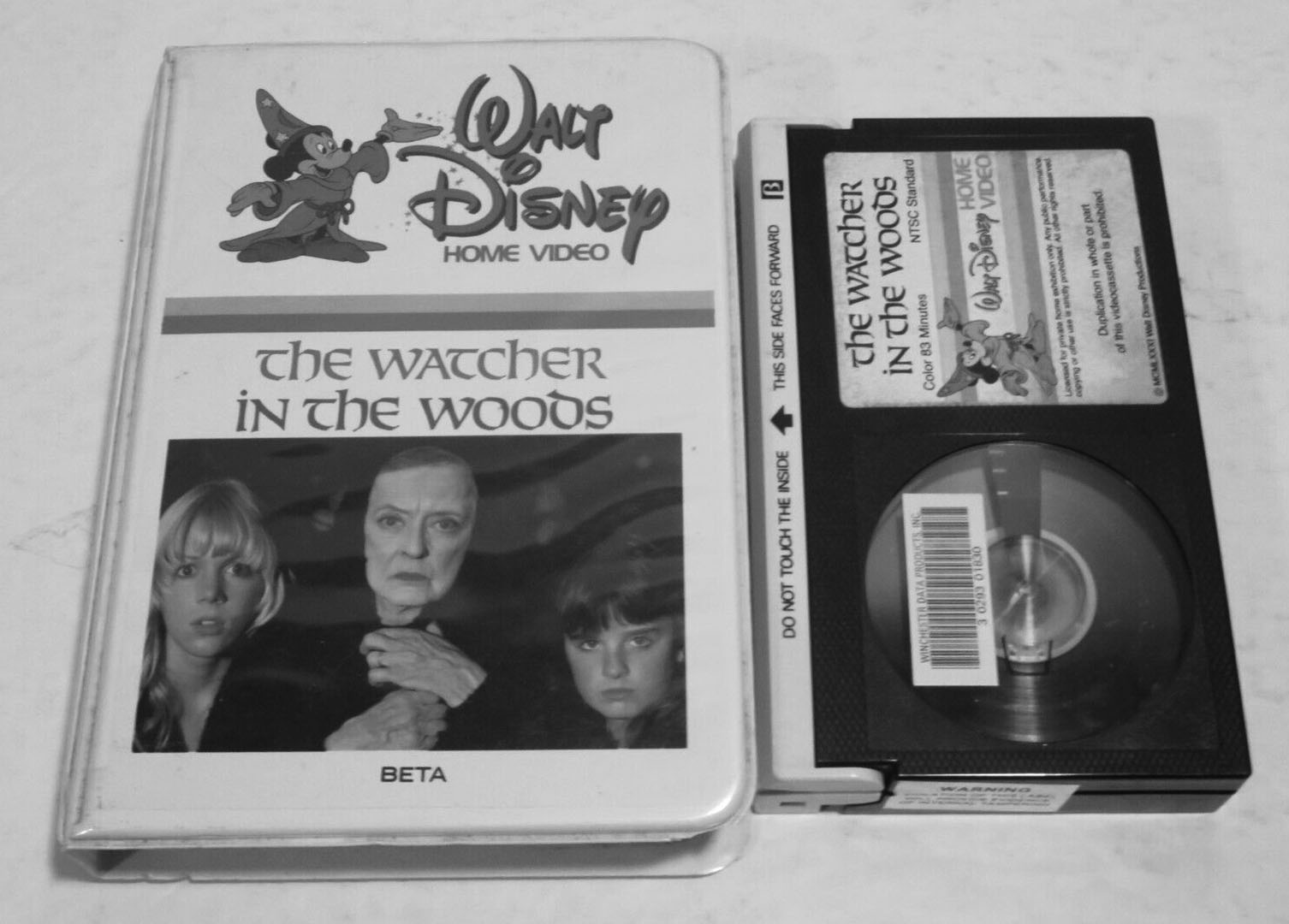
It was in large part directed by John Hough, who had, to a degree, a background in more traditional Disney fare as prior to making The Watcher in the Woods, he had also directed the two Disney paranormal family-orientated films Escape to Witch Mountain (1975) and Return from Witch Mountain (1978).
However, he had also previously directed the occult horror Twins of Evil (1971) and haunted house horror The Legend of Hell House (1973), which are very adult-orientated. It was after seeing the latter of these that Miller chose him to direct The Watcher in the Woods, which seems like something of a curious choice when it is considered that Miller would later try to make the film less dark in tone.

The family’s mother in The Watcher in the Woods is played by Carroll Baker, a now-retired American actress who had a highprofile during the 1950s and part of the 1960s but who, after various contractual disputes with film studios was effectively blacklisted in Hollywood and moved to Europe in order to find work. She subsequently appeared in a number of adult-orientated Italian giallo-related thrillers, including exploitation and horror films in the later 1960s and early 1970s, which often showed her in nude scenes. With this in mind, even taking into account that Watcher in the Wood’s director was a long-time admirer of her work, it is perhaps a little surprising that a family-orientated studio like Disney accepted her for the role, which in turn adds another intriguing layer to the film and its production.
Clemens’ screenplay for The Watcher in the Woods was reworked due to Disney executives considering that it and the film as a whole was “too dark and threatening and black” and also an opening unsettling title sequence that was filmed which featured a young girl’s doll which is set on fire by an unexplained preternatural force was cut for similar reasons. The original version of the film was withdrawn from cinemas after receiving a negative critical and public response due in part to its plot being considered too confusing, and a re-edited version with a different ending directed by Vincent McEveety was released, which is the version used for all subsequent home releases.
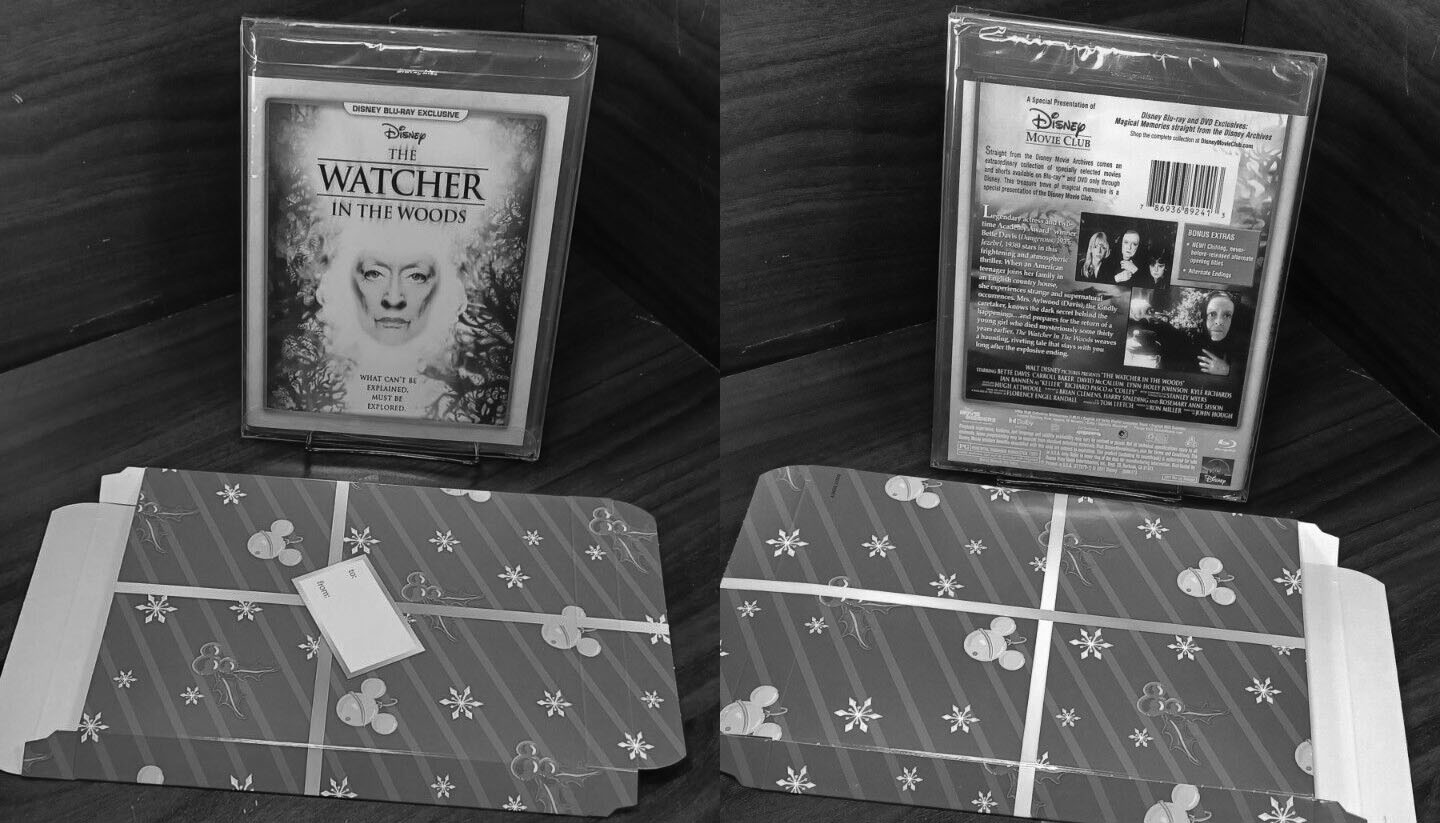 (Above: Disney Movie Club exclusive Blu-ray release and its gift presentation packaging – released in 2021.)
As with the iconic folk horror film The Wicker Man (1973), no full, complete, definitive version of The Watcher in the Woods seems to exist, nor indeed could any version be said to be, and watching it with knowledge of its production is an intriguing experience where it is almost as though you are viewing the shadowed phantom of an adult orientated folk horror film filtered through a many-faceted prism. However, in notable contrast with The Wicker Man, there have been no successful attempts to piece together and release a more “complete” version, and it has been suggested by a consultant who worked on the 2002 Anchor Bay Home Entertainment DVD release of the film that Disney have held back the release of a more darkly toned version which is closer to the original vision for the film due to it not fitting with the Disney brand. Accompanying which, at the time of writing, it is not available to legitimately stream in the UK nor US on either Disney’s own streaming platform nor anywhere else, although it has had various physical home releases.
It seems somewhat as if the original darker vision for the film is something that the corporation would rather forget about or perhaps just doesn’t know quite what to do with.