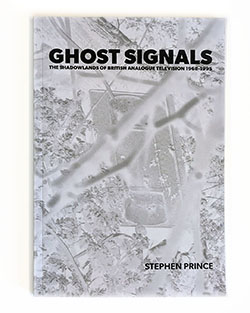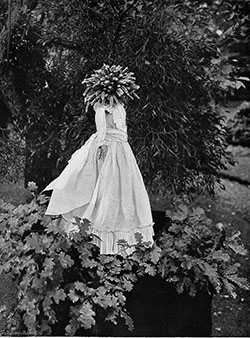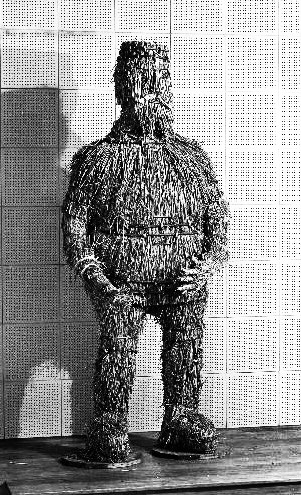
A somewhat regal folk art-esque straw sculpture… or is it another 1970s Doctor Who monster that’s escaped into the real world?
“This is a straw ‘sculpture’ of the Anglo-Saxon King Alfred. Originally, the figure had a wooden sword in one hand and a straw scroll in the other, representing both the warrior and the scholar. It is actually one of three figures made by master thatcher Jesse Maycock for the annual University College ball, Oxford, in 1961. One figure was a seated King Alfred, while the other was William Archdeacon of Durham, the founder of the College in 1247. Jesse created King Alfred using the same techniques involved in making a thatched roof, where straw or reeds are used protect the top of a building.” (Quoted from “King Alfred”, The Museum of English Rural Life (merl.reading.ac.uk/collections/objects/king-alfred/), date and author unknown.)

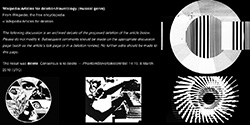
A Popular Witchcraft poster design by Julian House of Ghost Box Records for, I think, a 2012 exhibition in Scotland at the Good Press Gallery, which was in the back of the Mono cafe bar and music venue, where the Monorail record shop also is…
It incorporates a number of “classic” Julian House Ghost Box design tropes; “otherly geometry”, jumpcut-like collaging and the sense of being some kind of possibly educational (meets occult) journal or magazine from the later 1960s or 1970s that you can only remember on the edges of memory…

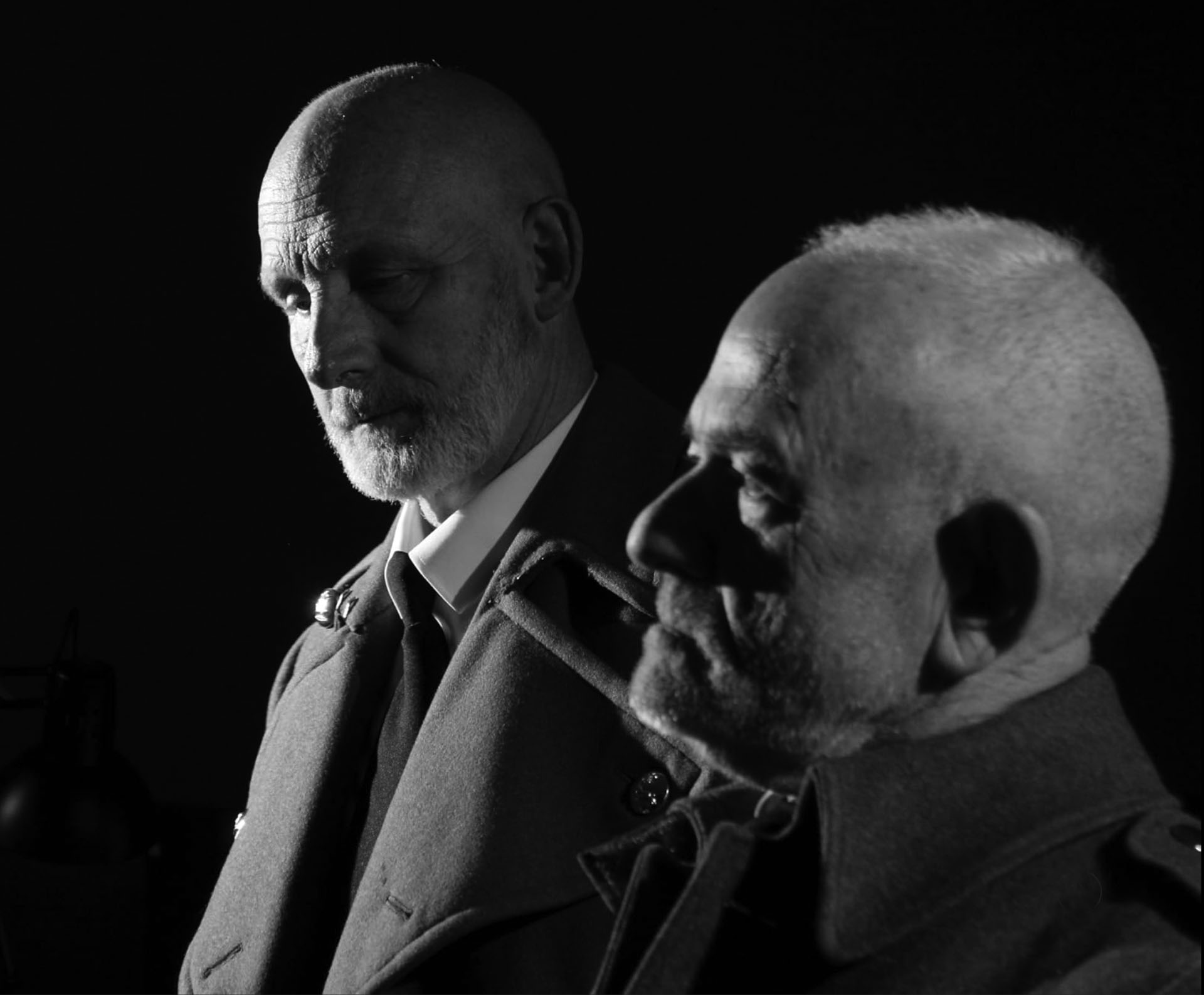
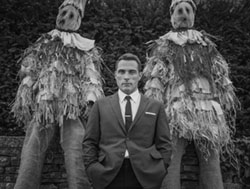
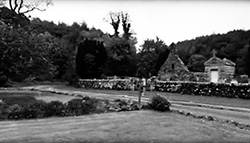
This is a still from the 2000-2001 remake (revival?) of the supernatural detective series Randall & Hopkirk (Deceased), which was created and written by Charlie Higson and starred Vic Reeves, Bob Mortimer, Emilia Fox and Tom Baker.
I still find myself thinking about the series quite a bit. Perhaps in part because, at times, as suggested by the folk art creepily folk horror-esque figures above, it explored various “wyrd” and folk horror-like themes a fair while before the more recent(ish) post-2010 upsurge of interest in such things:
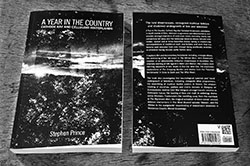
“The episode Man of Substance… seems to predate Edgar Wright & Simon Pegg’s Hot Fuzz film of 2007 by a year or few in a number of its themes, borrowings, and the story of a sleepy country idyll gone bad and is rather folk horror-like in its setting and plot… The village has a dark secret or two, and quite quickly it becomes apparent that something is not quite right in this particular chocolate box and the village is revealed as having a kind of parallel world existence… Its population have been trapped in between life and death, unable to leave the village since the days that a pestilence had caused the demise of a considerable percentage of the English population a number of centuries previously… Along the way towards the almost taking over the world shenanigans that the villagers get up to, the episode wanders into the territory of and borrows from: The Wicker Man, with petal scattering woodland nymphs dancing through the churchyard. 1970s and early 1980s British horror portmanteau films, such as The Monster Club (1981) and one of their “you’re never going to escape from the village” plots. Medievalistic fetishistic pleasures by way of Curse of the Crimson Altar (1968). A touch of Hansel and Gretel and the fattening up of the chosen calves. The… unpleasant punishments of the incarcerated via Witchfinder General (1968) or its less well-known brethren The Bloody Judge (1970). Possibly even a touch of Penda’s Fen (1974) and its sense of the mythic and mystical in the landscape and returning kings. And then back to The Wicker Man, as the fool becomes the king for the day (and eternity) during a local festival in service of the community’s ends, where a pyre is made for a sacrificial burning.” (Quoted from A Year In The Country: Wandering Through Spectral Fields (2018).)

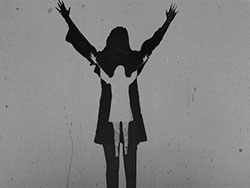
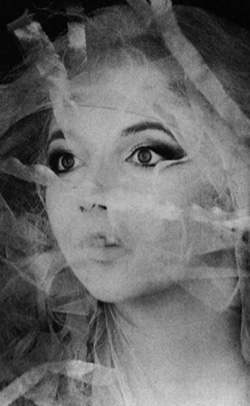
An ethereal, spectral, otherworldly image of Kate Bush from her self-directed Experiment IV music video, which could maybe be considered and odd choice for a single and video released to help promote a greatest hits album ( 1986’s The Whole Story)… although looking back at Kate Bush’s work I supposed “a bit odd as a choice for a single” could well be considered to be a fair part of her modus operandi…
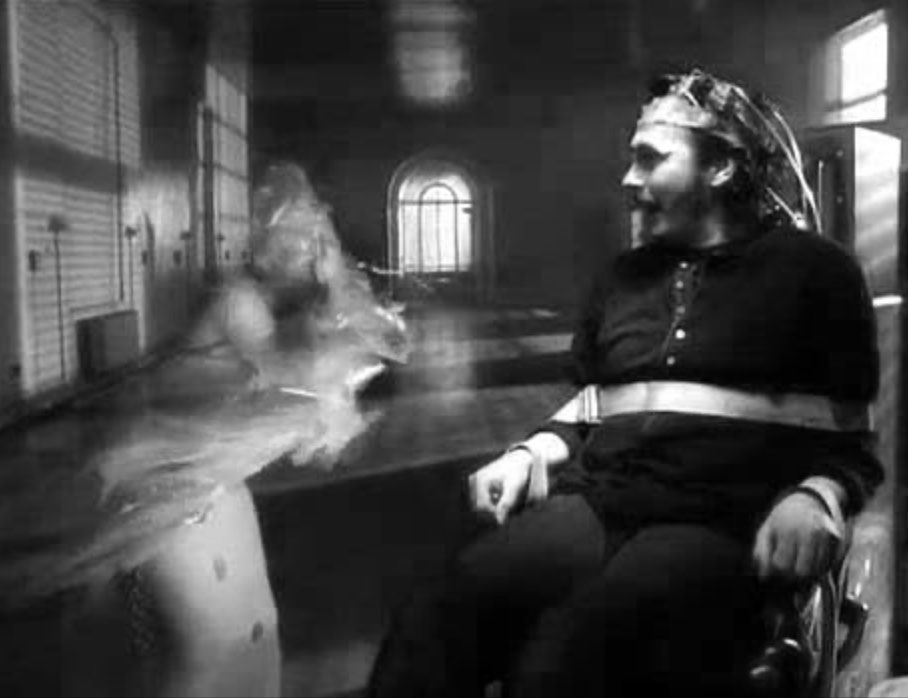
Why potentially a bit odd for a greatest hits album’s promo single choice? Well, it’s a mini-concept song and video about a secret military plan to create a sound which is horrific enough to kill people. The video was shot in a disused military hospital, and by the end of it, nearly every person who has worked on the project has been killed by the sound, which has conjured and is personified by Kate Bush, who transforms from an angelic apparition into a terrifying flying monster.
According to cultural norms, that should be thoroughly mainstream chart music unfriendly (!)… although as The Whole Story album went to Number 1 in the UK charts, and Experiment IV went to number 23, perhaps a lesson could be learnt from them, as with the success and popularity of Kate Bush’s work in general, about the public’s willingness to embrace more left-of-centre exploratory work.
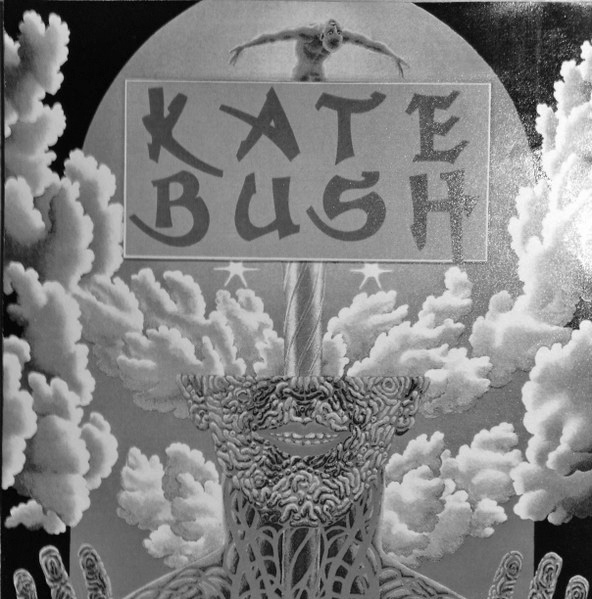
(As an aside, the cover art for the Experiment IV singles almost all featured a fairly standard promo-style portrait headshot of Kate Bush that gave no hint of the unsettling nature of the song and the video… apart from one Italian radio promo single which featured somewhat curiously markedly, and in part, grotesquely, psychedelic artwork that looks closer to something you might find being used as, say, the cover art for a 1970s scifi novel or maybe a 1970s prog rock album.)
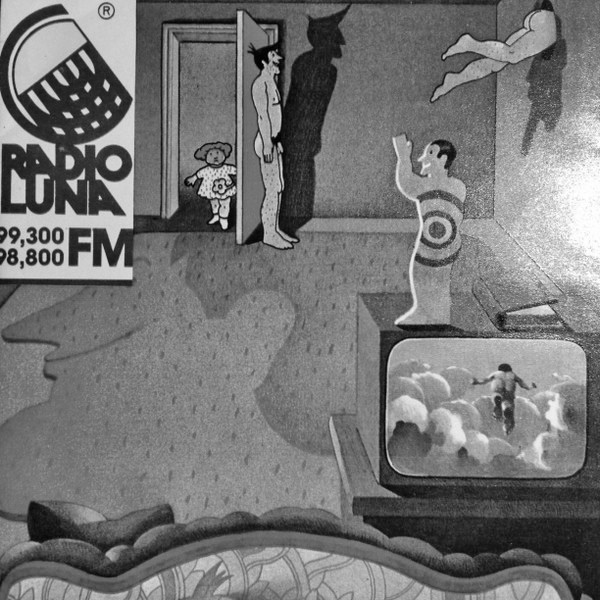
A one-minute version was created for the BBC’s popular and highly influential chart music show Top of the Pops, but they refused to play it as it was considered “too violent”
Looking back, Experiment IV could be considered to have parallels with and connections to Cold War-inspired and often apocalyptic pop music singles that were released during the early to mid-1980s, including, amongst others, Nena’s 99 “Red Balloons”, Strawberry Switchblade’s “Since Yesterday” and Frankie Goes to Hollywoods “Two Tribes”. Those, as with Experiment IV, were released to a background of heightened Cold War tensions, although the Experiment IV video seems, perhaps, in part, to more hark back to an earlier time of unsettling and paranoid science fiction, such as the earlier Quatermass series, rather than be an overt reference to and exploration of Cold War fears during the 1980s.
Curiously, two of the prominent members of the Experiment IV cast, Dawn French and Hugh Laurie, were people who were known at the time (and to a degree still are) as comedians, which, back when, and to a certain extent still does, added a curious sense of disjuncture to watching it.
And further curiously, it seems to have been remade/reimagined as a 7-minute black and white short film in 2025 by, I think, Manchester/Salford-based student filmmakers who are connected with the EX4 Collective.
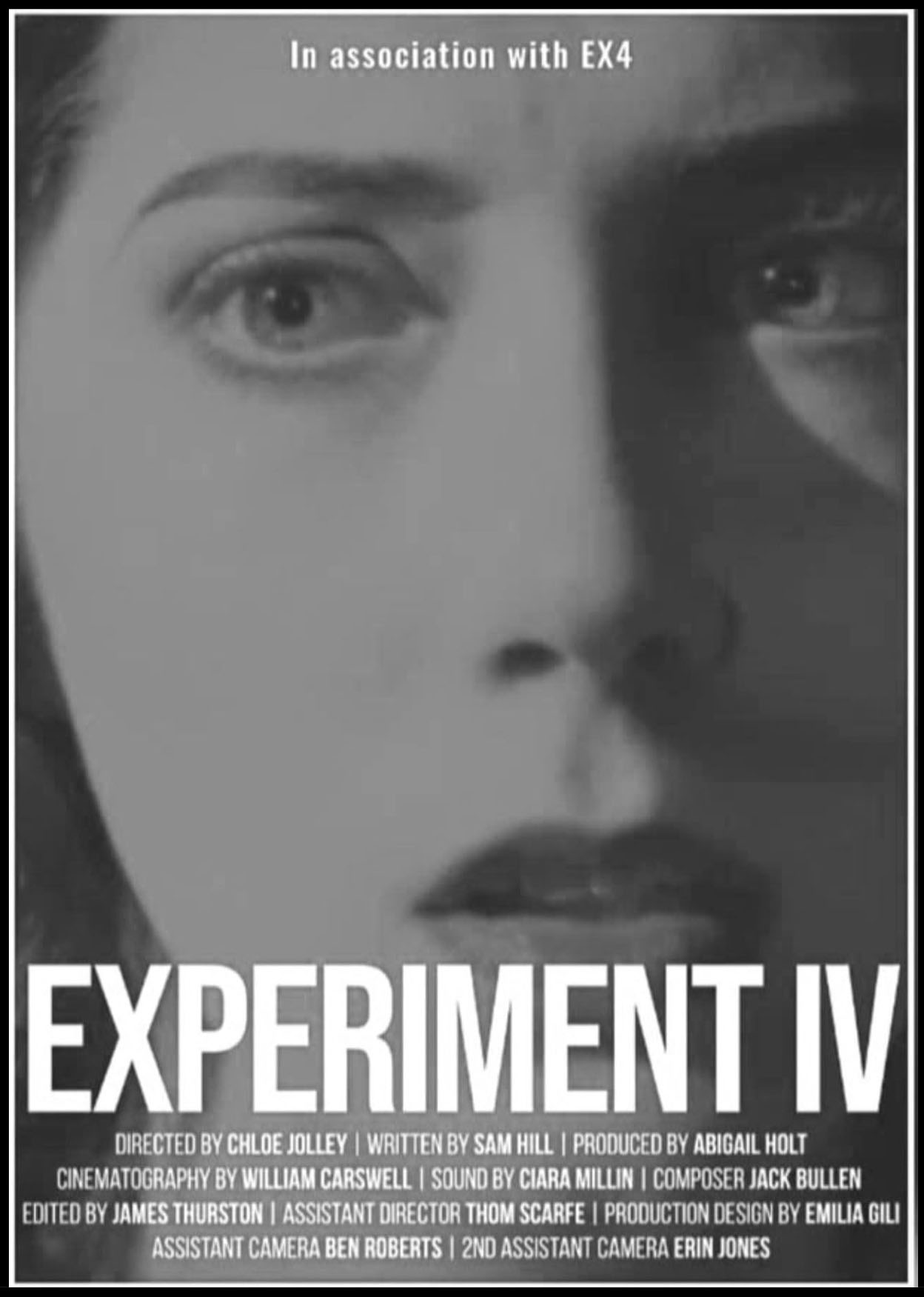
That has an IMDb page with some limited details, such as it being directed by Chloe Jolly and written by Sam Hill and some photographs etc but other than that there seems to be little information about it online, although its plot looks like it’s been lent an added poignant slant as in it a “deaf scientist is forced to create a sound that can kill or face the wrath of her military captors”.