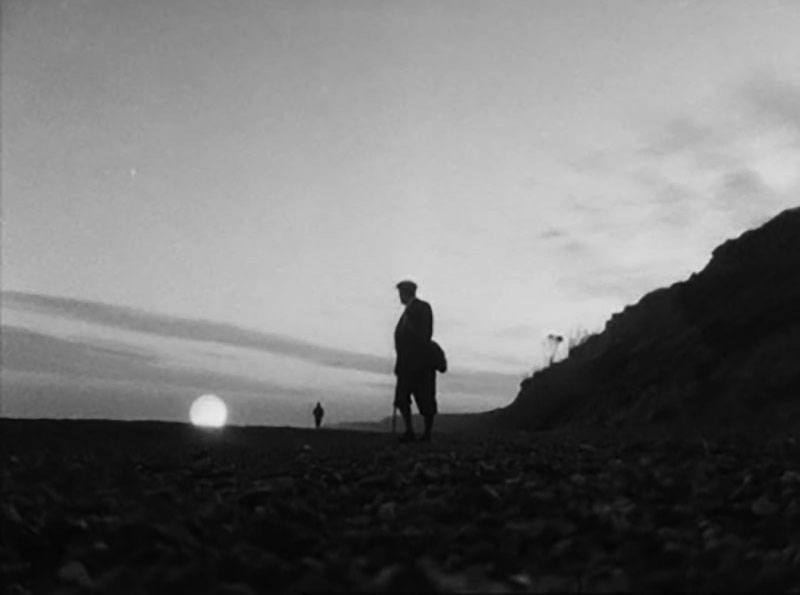
The supernatural short drama Whistle and I’ll Come to You (1968), which was written and directed by Jonathan Miller and aired as an episode of the BBC documentary series Omnibus (1967-2003), inspired Lawrence Gordon Clark to create the first strand of the renowned yearly BBC supernatural anthology drama series A Ghost Story for Christmas (1971-1978), which Whistle and I’ll Come to You has come to be considered a part of, and that he directed all but the final episode of. The first five of these that were officially broadcast, as with Whistle and I’ll Come to You, were based on the ghost stories of author and academic M.R. James (1862-1936), which are considered by many critics, authors and readers to be some of the genre’s finest English language examples and also to have been widely influential on modern horror.
In Whistle and I’ll Come to You, an academic, Professor Parkin, who is on an off-season holiday at a guesthouse in a coastal village where the guests are pampered in a primly formal manner, finds an old whistle amongst the bones from a grave that has been exposed by coastal erosion. The whistle has a Latin phrase on it which translates as “Who is this who is coming?” and when the Professor blows it, he appears to unleash a supernatural force or creature which begins to haunt and markedly unsettle him.
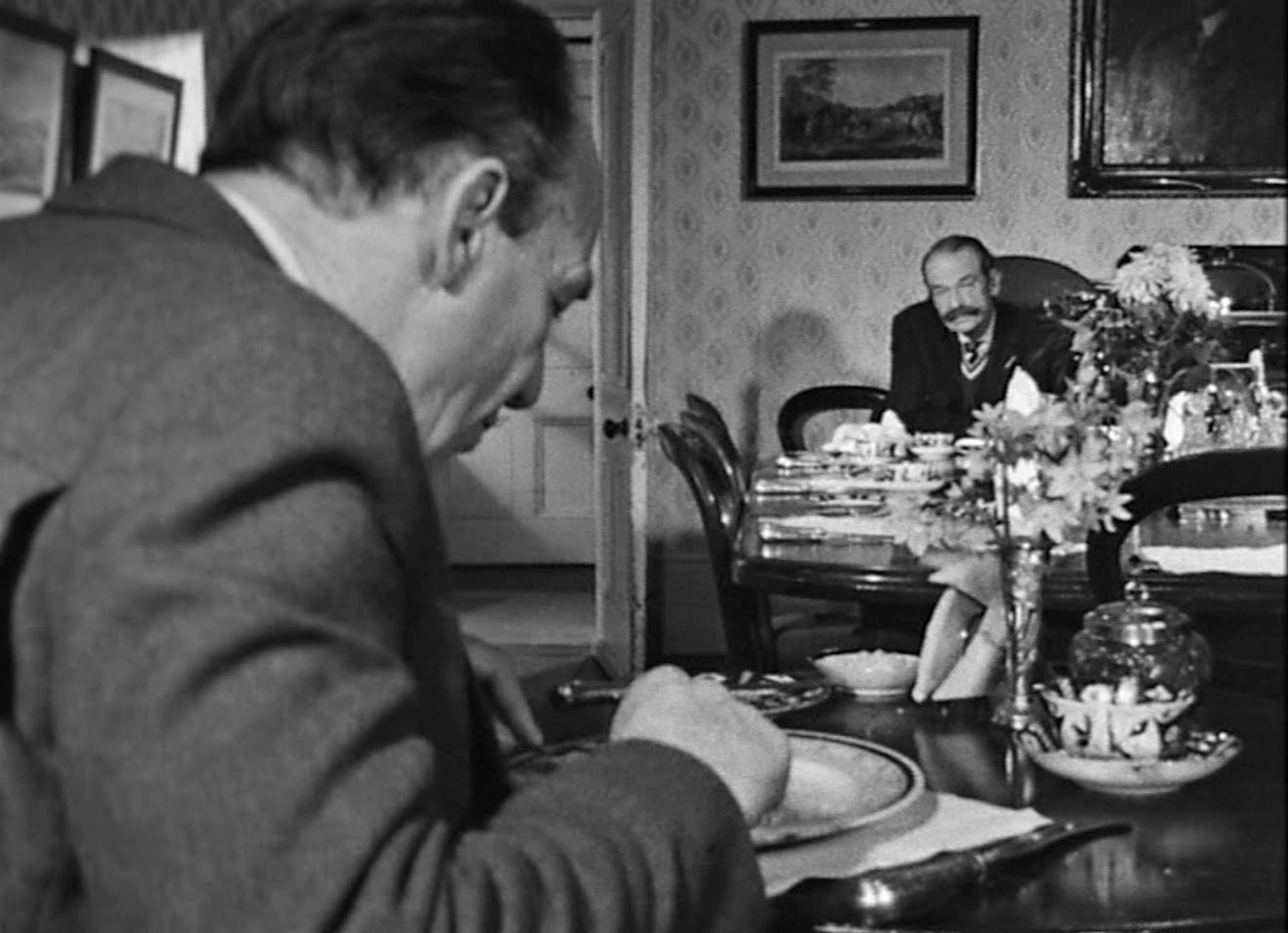
The professor initially seems like a bumblingly likeable eccentric, which is aided by Michael Hordern’s screen presence and persona, that, for some viewers, myself included, may conjure up hazy memories of gently comedic film and television from childhood. However, he is subtly but steadily revealed to be a self-satisfied academic who, at best, struggles, or more likely can’t be bothered, with even the most basic common politeness in his interactions with others.
Filmed in black and white, it creates a notably eerie atmosphere often largely through suggestion, although it uses to great effect what has now become a staple in horror film and television, the distant, implacable supernatural creature that steadily hunts down its conversely panicked prey. Here, the “creature” is seen in the real world, biding its time as it watches the professor from a distance on the beach and appears to finally catch up with him in his dreams before issuing a startlingly effective jump scare-inducing truncated roar. Accompanying which the production, design etc, as a whole often seems closer to, say, an almost experimental arthouse film rather than a mainstream television drama due to its use of, amongst other things, unusual and borderline surreal high and low camera angles and a markedly restrained stillness in terms of pacing, events and atmosphere.
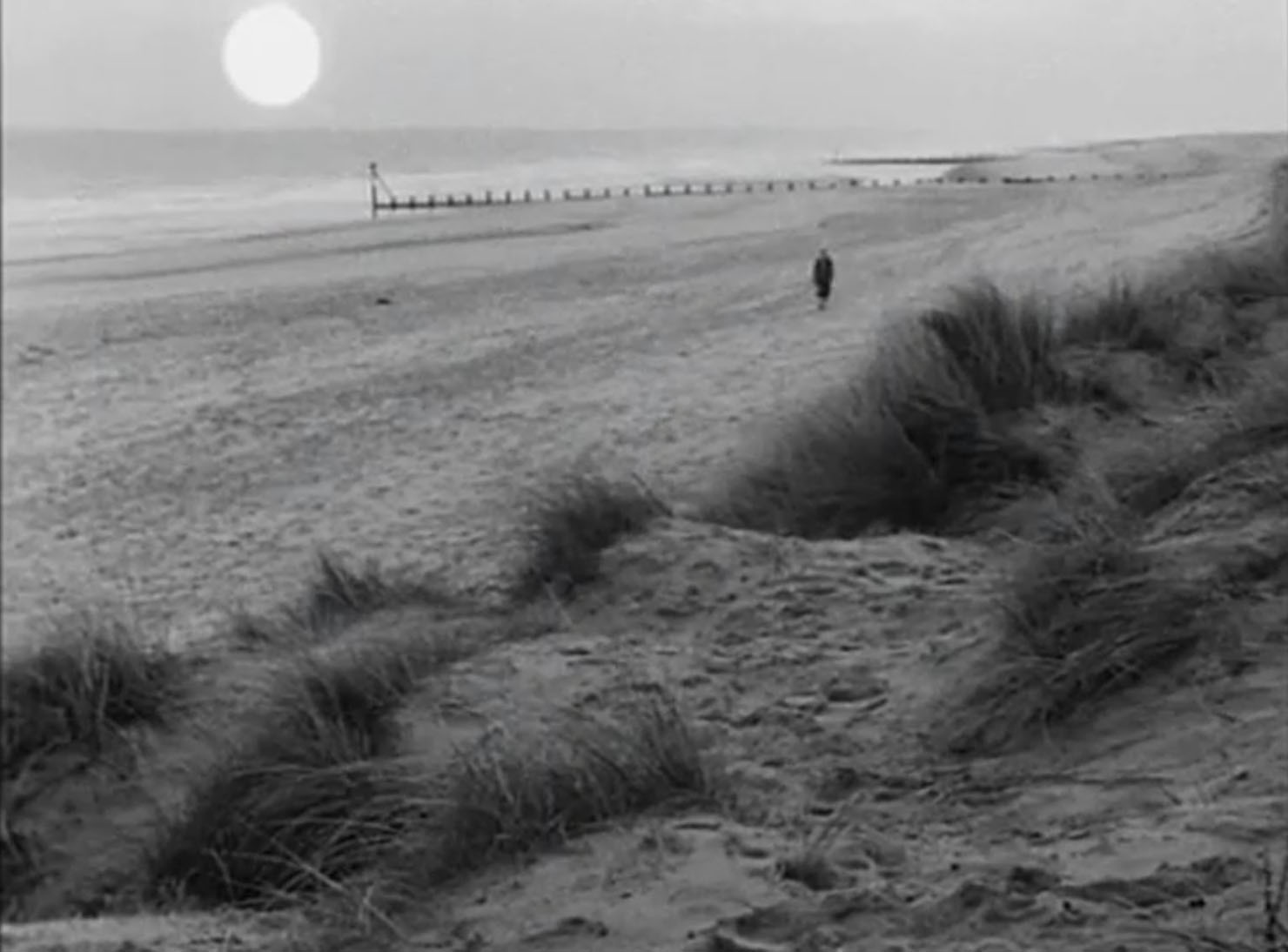
The story is somewhat ambiguous, and it isn’t clear if the professor is losing his mind or is he actually experiencing supernatural phenomena, and if he is, whether or not it is a form of harsh punishment for his self-absorbed intellectual arrogance, refusal to accept other and others’ viewpoints and dabbling in things better left alone, which are recurring themes in M. R. James’s ghost stories. The answers to such questions are left forever unanswered on the stark and eerie monochrome beaches of Whistle and I’ll Come to You.
As a final point, the first strand of A Ghost Story for Christmas has been released on DVD and Blu-ray by the BFI, but its official streaming availability in the UK has been, particularly for such a renowned and relatively high-profile series, intriguingly intermittent. It was made available, for a limited time, on both BBC iPlayer and BFIPlayer, but at the time of writing, none of the episodes are available to officially stream in the UK.
* * *
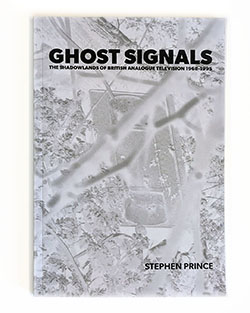
This post is an excerpt from the A Year In The Country book Ghost Signals: The Shadowlands of British Analogue Television 1968-1995.