In the “Hauntology and the Wyrd Landscape” page here at the A Year In The Country website (see link above in the Menu bar) I write that one of the characteristics of hauntology is
“The use and foregrounding of recording medium noise and imperfections, such as the crackle and hiss of vinyl, tape wobble, and so on that calls attention to the decaying nature of older analogue mediums and which can be used to create a sense of time out of joint and edge memories of previous eras.”
Interconnected with which for myself is an interest in culture that represents and/or explores older and sometimes lost forms of media and technology, and in turn interconnected with that in a recent post I described Dan Hays’ series of paintings that replicated compressed and degraded digital photographs as being “lossy snapshots of technological time”…
…which put me in mind of another “snapshot of technological time” or more precisely the dystopian cyberpunk Blade Runner-esque comic Shatter which was published between 1985-1988:
“It is the not-so-distant future. All jobs are temporary. Control is in the hands of a ruthless few. And the world’s biggest media conglomerate has discovered a new source of cheap creative talent: stealing other people’s brains. Only one man can stop them… SHATTER. A temporary policeman with a mission. A man with a golden brain, capable of absorbing the talens and abilities of others–permanently. A science-fiction hero called… SHATTER.” (Quoted from text which accompanied the Shatter: The Revolutionary Graphic Novel collection which was published in 1988.)

This was created by Peter B. Gillis and Mike Saenz and was the first commercially published comic where all the art was entered by hand on the computer. It was drawn on an original Macintosh, stored on 800K floppy discs and apparently the drawing were difficult to manage due to the monchrome screen of the Macintosh being only 512 x 342 pixels, which is approximately 0.175 megapixels, which meant that only around two thirds of the screen could be worked on at one time.
Now to put that in context, 800K is 0.0008 Megabytes and it’s not uncommon for contemporary mechanical computer hard drives to have 8, 10, 12 or more terabytes of storage which is the equivalent of 8, 10 or 12 million megabytes. While a lot of contemporary computer screens have a resolution of 3840 x 2160 or 8+ megapixels, which is over 47 times higher than the Macintosh’s screen that Shatter was created on. However, as is often the way with technology and its limitations, it is in part the grainy visible pixel quality of the artwork in Shatter that creates its distinctive character. Equally it manages to avoid looking like computer/video game cut scene graphics, which some more contemporary computer created artwork can.
Shatter first appeared in the March 1985 issue (#12) of UK computer magazine Big K which was published by the mainstream publishing company IPC, and during the same period it appeared simultaneously as both a one-shot special and as a backup feature in First Comics’ Jon Sable superhero comic, which is said to have been “one of the first of the independent and dark superhero stories of the 1980s and ‘helped usher in the grim and gritty sensibility that came to define the genre'”. (Quoted from the wikipedia.org page Jon Sable.)
There were 14 issues of Shatter, although issues 4-7 utilised traditionally drawn artwork that was scanned into the computer, and returning to it now (I think I read some issues of it back when it was first published), as in part just suggested it reflected, utilised and impressively overcame the technical limitations of the technology it was created with, and also seemed to synthesize and distill a “classic” cyberpunk low life hi-tech neo-noir-ish aesthetic possibly before such things had become a firmly established cultural trope.
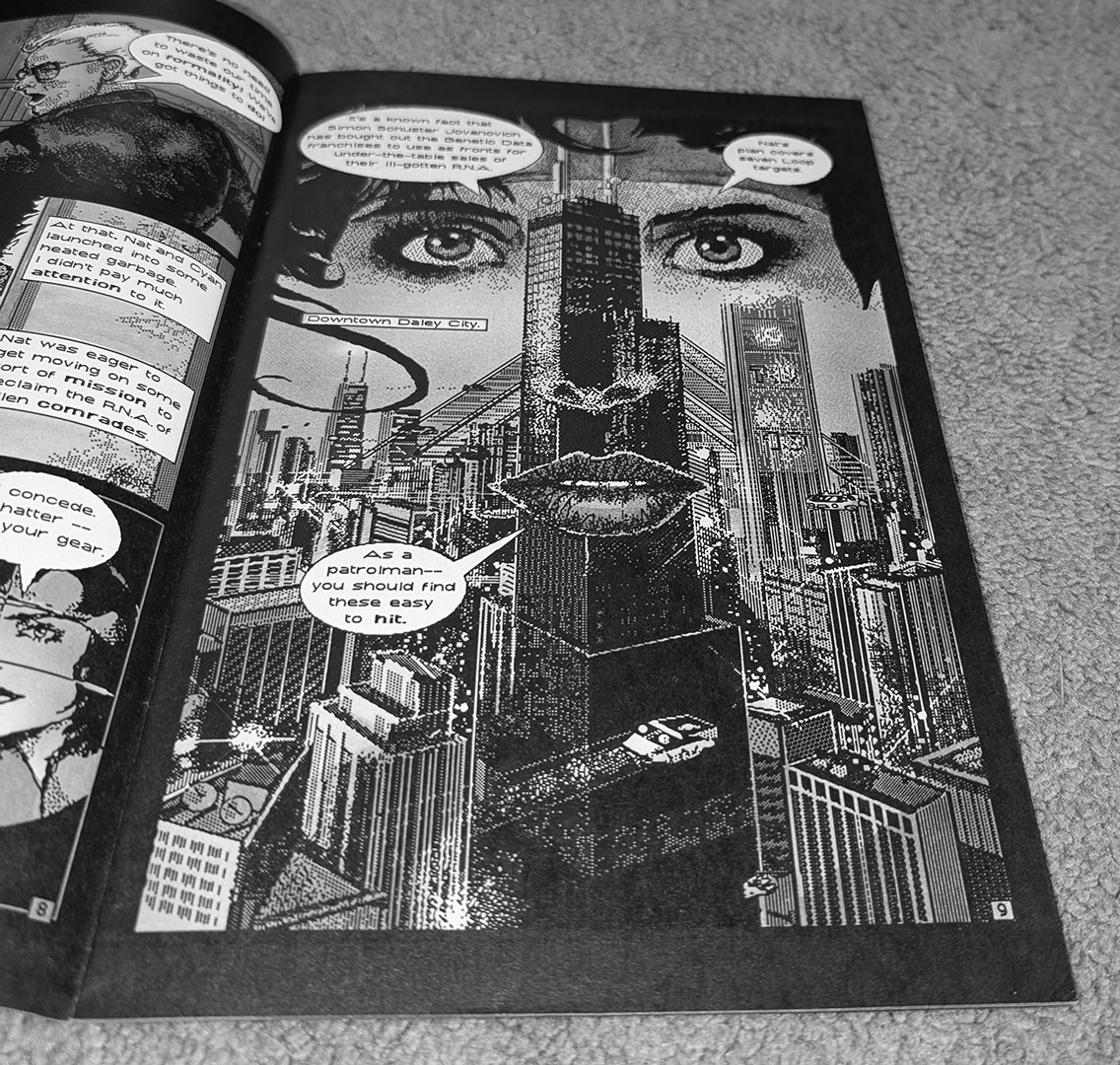
Some of my favourite pages and imagery in it are the one page landscape images such as the ones above and below which experiment with form, perspective and so on and work well as self-contained pieces of art.
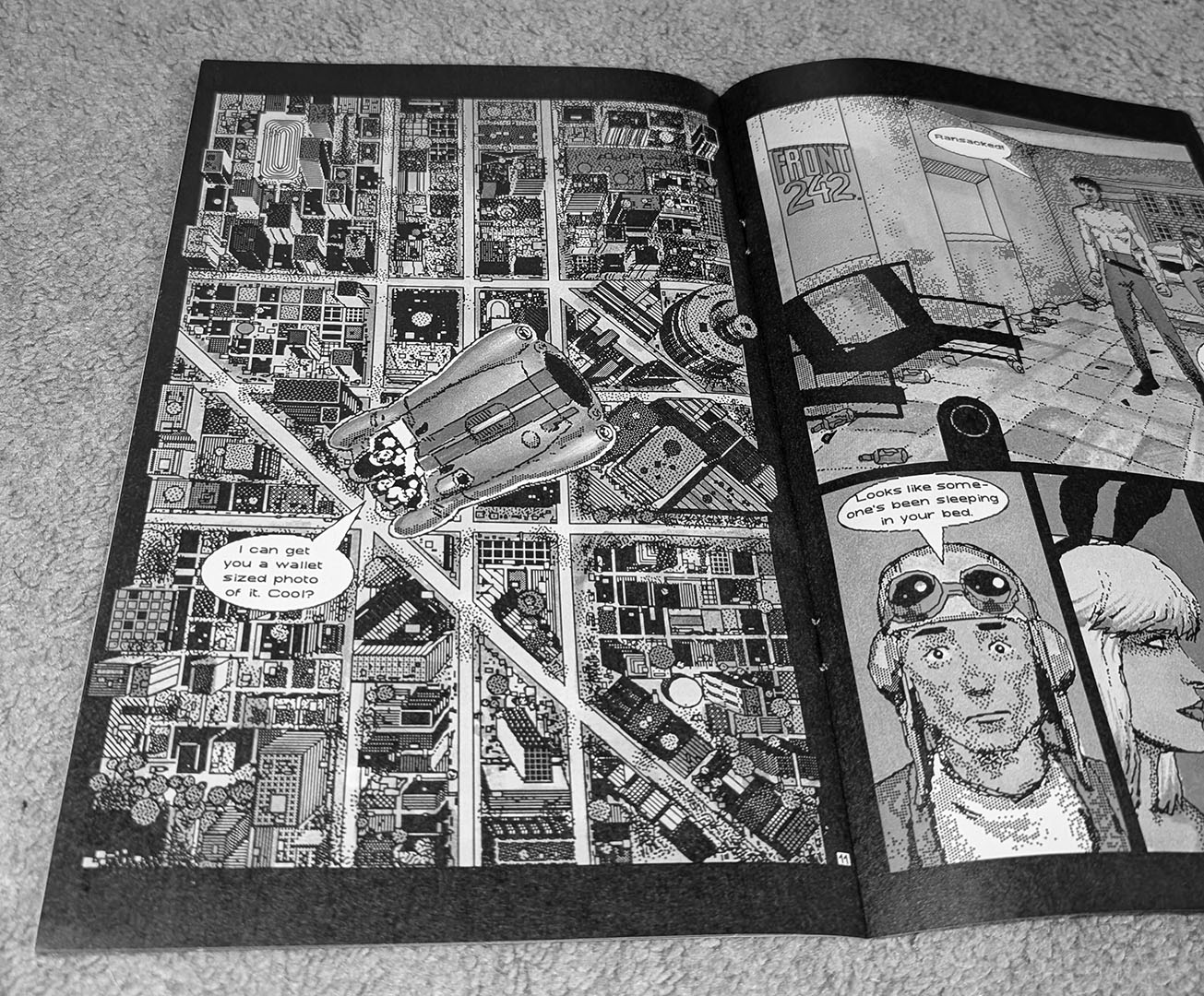
One of the things I like about it is that you can play “spot the cultural reference”: the cover of the one-shot special features the names of various post punk and industrial/EBM bands hidden in plain sight, including Joy Division, Xmal Deutschland and Front 242, the latter of whom’s aesthetic intersected with cyberpunk.
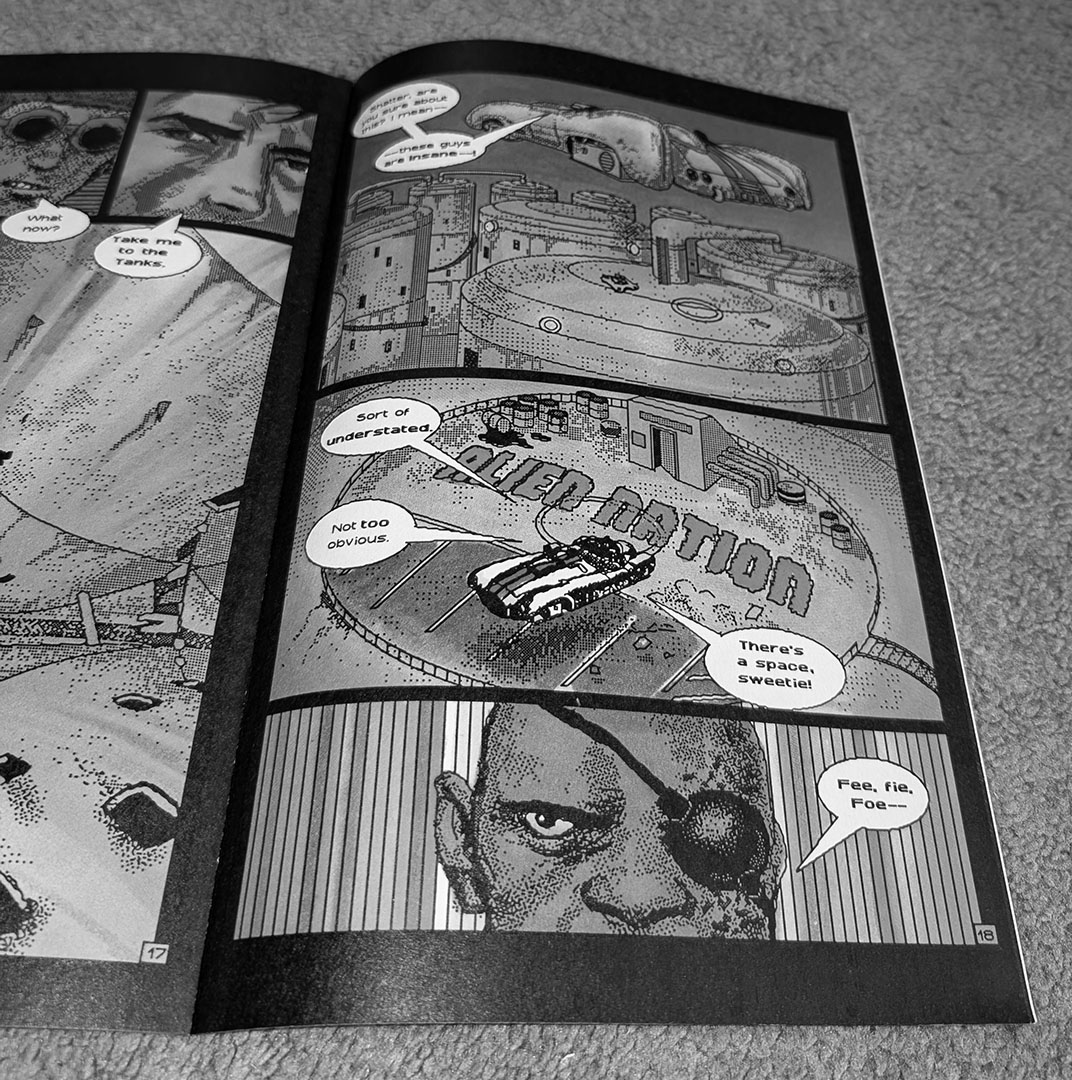
Elsewhere Front 242’s iconic song “Headhunters” is referenced in the artwork, as is the 1988 buddy cop neo-noir science fiction action film Alien Nation (which as an aside explores racism and immigration related issues via its story that revolves around a large community of aliens who are stranded on Earth while not forgetting that it’s also intended to be a piece of accessible entertainment rather than a didactic lecture.)
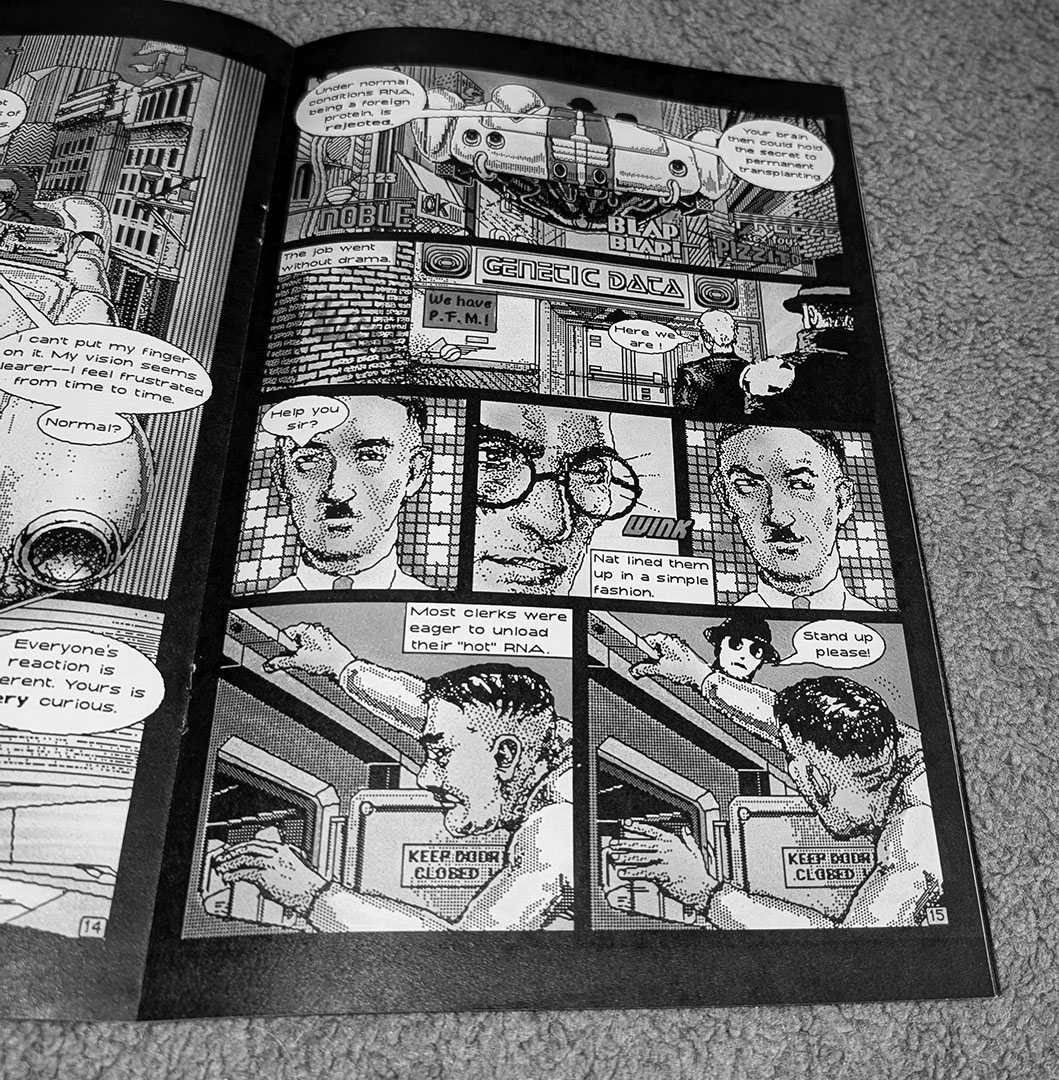
And I don’t know if it’s just me but is the style of the moustached clerk character above a reference and nod to Ron Mael of Sparks? Hmmm, maybe but also it possbibly references the style of a certain national socialist leader who shall remain nameless.
As a final point, Shatter has been collected in two paperback versions but they are both out of print and often quite pricey, although the individual issues can often be found fairly cheaply on Ebay.