Posted on

Broadcast and Pathways Through Otherworldly Villages: Wyrd Explorations 5

Broadcast, like Ghost Box Records, were early explorers of many of the cultural, aesthetic etc touchstones that have since come to be associated with hauntological and wyrd culture.

The band formed in Birmingham, England in 1995 and have featured a number of different members and collaborators, including Roj Stevens, Steve Perkins and Tim Felton, with the core of the band being James Cargill and Trish Keenan.

They are an odd, intriguing cuckoo in pop’s nest; they have been described as avant-pop, which is probably heading along the right lines and heir recordings feature a mixture of electronic and acoustic elements, melodic pop and more experimental audio techniques.

While their work as a whole connects with, signposts, layers, explores and takes inspiration from a wide variety of cultural reference points, including psychedelia and the dreamlike surreal nature of some of Czech New Wave film, although this is more in a reinterpreted rather than recreated manner.

Their 2009 album Broadcast and The Focus Group Investigate Witch Cults of the Radio Age was something of an early research and reference point for A Year In The Country. It explores a number of pathways that have come to be a part of or an influence on the project; from half-remembered (or misremembered), half-seen television of my youth to the undercurrents and flipside of pastoral concerns.

The album is a collaboration between Broadcast, the members of which at this point were James Cargill and Trish Keenan and their longstanding visual collaborator/designer Julian House of Ghost Box Records working under the name of his musical project The Focus Group and it is a music box collage of the “classic” dream-like exploratory pop sound of Broadcast and the jump-cut, woozy, disorientating loops and sampling techniques of The Focus Group.

Exploring connections to the album led me to an interview with James Cargill of Broadcast which was published on the website XLR8R in November 2009 around the time of the Witch Cults album’s release, wherein he talks of drawing from witchcraft references but not taking it too seriously, more as a pulp cultural reference point by way of older horror films such as the folk horror-esque 1968 film Curse of the Crimson Altar which centres around a rural coven and witchcraft.

(Related to which some of the sampled audio sources used in Witch Cults appear to be in part previous era’s exploitation-esque witchcraft orientated pseudo-documentaries.)

Cargill also discusses how British young adult and children’s television of the late 1960s and 1970s such as Children of the Stones (1976), Sky (1975) and The Owl Service (1969) and their odd, sometimes unsettling, “why were they like that when they were intended to be viewed by children?” atmospheres were also a reference point for the album.

He comments that he only half remembers the programmes, that they are just fragments of memory and that is part of the attraction of them as he does not want to know everything about them and how having watched them on breaking up television receptions or an old faded video recording added something to the aspects which made the memory of them interesting.

That half-remembered sense of programmes from youth was an early ongoing theme of A Year In The Country; there are television programmes which I only saw in snatches at the time, but which intrigued me for years and partially led to the creation of the project.

One example of children’s television which dealt with unsettling, challenging themes and which I just glimpsed at the time is the speculative fiction series Noah’s Castle from 1979. This reflected and extrapolated from then-national worries and conflicts, taking as its core the surprisingly serious and adult subjects of hyperinflation, societal collapse and food shortages in contemporary Britain.

Partly through only knowing about or remembering them in a fragmentary manner, over the years some of such programmes existed for myself merely as loosely defined themes and concepts and that not fully knowing meant that they had space to gain layers of interest and mystique.

Watching them now that could sometimes be dispelled, or the experience was closer to viewing a completely different programme to my hazy or misremembered cultural memory of them.

This may in part be a result of an aspect of the programmes that James Cargill comments on in the above XLR8R interview, where he says that in order to watch these shows you need to recalibrate yourself, as these previous era’s broadcasts had a different, slower pace and the modern mind and viewer is not necessarily always geared towards their rhythms.

Alongside which it is also possible that related misremembered cultural memories have already been effectively subconsciously recalibrated, which may heighten the sense of disjuncture when rewatching the actual programmes and their use of different rhythms and pacing.

The introduction sequences to such series can often seem to capture and conjure that misremembered spirit in a condensed form without the need for a form of recalibration.

Along which lines, an interesting starting point for exploring such things if you are new to them is the introduction sequence for the previously mentioned The Owl Service television drama series based on Alan Garner’s 1967 fantasy novel of the same name which was broadcast between 1969-1970 and that has become a prominent touchstone for wyrd culture.

The series’ introduction layers a gently tinkling melody, dissonant noise, pastoral scenes, a flickering solitary candle against a blackened background, pulsing geometric shapes, hand shadow games and a mirrored illustration where the same elements can be seen as both owls and flowers and viewed today it feels like an almost otherworldly flipside of folklore and the landscape communique from another time.

Interconnecting Broadcast and their interests and inspirations with such things, in 2007 when Trish Keenan and James Cargill appeared as guest record selectors on Trunk Records’ founder Jonny Trunk’s OST radio show, amongst their selections they included the music from the introduction sequences for both The Owl Service and also the 1976 fantasy drama series Children of the Stones, the latter of which as with The Owl Service has also become a prominent touchstone for wyrd culture.

Trish Keenan commented that the avant- garde without the popular can be rubbish and that the popular without the avant-garde can be rubbish could almost be seen as a manifesto for Broadcast and their work and their exploration and blurring of the boundaries between the two.

Witch Cults more overtly steps towards the avant-garde than pop or popular music but if you should want to hear a melding of those two sides then a visit to their Mother is the Milky Way release from 2009 may well be the thing to do. For a considerable period of time it was not the easiest of records to obtain as it was initially released and sold only during a selection of live dates but fortunately in 2022 it was reissued. Despite its EP or mini-album running time, it seems like more of an album, possibly because by the record’s end it appears to have explored, created or conjured a world, themes and atmosphere that the space within a longer playing record would allow.

It could be seen as the summation of a particular set of peaks and aims of Broadcasts work: a collection that gathers both their more pop and avant-garde influences, mixing, matching and balancing both sides of such things in a way that somehow makes its mixture of quite off-centre jump cuts, lo-fidelity nuances, a certain dreamy surreality, dissonance, scattering and gathering of pop melodies and the use of reversed and found sounds all seem very accessible.

It also seems at times to be a very personal, intimate record and possibly some kind of insight into the actual lives of its makers (whether real and/or imagined), with the song “Elegant Elephant” in particular serving as a fond homage to a mantelpiece ornament and the memories it keeps.

Albeit it is a homage to a mantelpiece ornament that in a melodically woozy way connects to James Cargill’s comments and other points of reference for the band, as it variously recalls a forgotten previous era’s children television series and possibly a soundtrack to a fantasia like Czech New Wave film.

Czech New Wave film has been referenced and mentioned as a point of inspiration by Broadcast a number of times over the years, in particular the unsettling fairytale-like Valerie and her Week of Wonders (1970). On their 2003 album Haha Sound the song “Valerie” was inspired by the film and its soundtrack, the album of the latter of which was released in 2006 by Finders Keepers Records and featured sleeve notes by Trish Keenan, in which she wrote:

“Not since The Wicker Man has a soundtrack occupied my mind like Valerie and her Week of Wonders. It was like a door had been opened in my subconscious and fragments of memories and dreams rejoiced right there in my living room.”

In its use of the sounds of nature and in particular the gentle ambling of “Milling Around the Village”, the Mother is the Milky Way album may also be a pointer towards the post-Broadcast wyrd undercurrents of folklore and at points pagan-influenced work of Children Of Alice.

This was a music project that featured Broadcast members and collaborators past and present James Cargill, Julian House and Roj Stevens and their music initially appeared on various Folklore Tapes releases between 2013 and 2016 which were collected on a Warp Records-released album in 2016, the latter of whom have also released most of Broadcast’s records.

The visual elements of Broadcast’s work, including the packaging of their albums, videos and live projections have been an inherent part of their exploratory avant-pop nature.

Generally, these aspects have been created by Julian House, at points to varying degrees in collaboration with the band and for Witch Cults they collaboratively produced the #1: Witch Cults and #2: I See, So I See So videos, which feature two of the more conventional songs on the album.

Julian House’s video work for Ghost Box Records often features a signature style that includes mandalas, Op art graphics, rapidly changing layered and dissolving images and psychedelic lights and patterns, all of which make an appearance in these two videos. These bring together many of the above and other strands that can be found in Broadcast’s work and are layered, occult (in the sense of hidden) collages of the land, bucolia as imagined through a lysergic glass darkly and pop filtered through the avant-garde.

They may also act as signposts towards the more pastoral concerns of Mother is the Milky Way and then once again onto Children Of Alice in their phantasmagorical representation of rural settings.

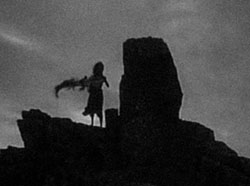
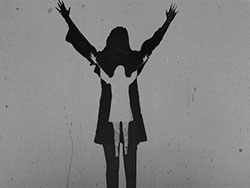
Of the two #1: Witch Cults is the more overtly surreal, with the normal world and its colours very rarely making an appearance and the video containing imagery which seems to invoke a sense of an otherworldly rural summoning. The video features (presumably) Trish Keenan’s silhouette flickering and strobing in the landscape in ritualistic stances as the natural world melds and dissolves into an unsettling almost psychedelic set of images before the more conventional melody of the song also dissolves to become a gently unsettling set of tinkling noises accompanied by what may be roaring wind.

The final section of the video promises a return to the ease and calm of an almost natural world and sunset with the reappearance of the lone silhouetted figure in a windswept landscape but it is only the promise as once again the imagery melds and layers to become some kind of ritualistic summoning.

#2: I See, So I See So is more obviously set in a recognisable real, realist or natural world, but it is still very much a view through the looking glass.

Connecting back again to James Cargill’s comments about children’s television broadcasts from earlier eras and their unsettled atmospheres, the video and its layering of geometric shapes, objects and the natural world brings to mind the introduction sequence of the likes of the above-mentioned The Owl Service or the science fiction children’s series The Tomorrow People (1973- 1979) that eerily layers, amongst other things, plants, faces and images of the cosmos. It could also perhaps be part of a flipside Camberwick Green-esque animation series and seems to shadow, layer and reflect such things but without being a replication.

At one point a crudely rendered orb flies across the screen, from a room to outside a building, out into the countryside and almost to a child’s hand, which calls to mind an effect from a 1960s or 1970s Children’s Film Foundation release of some flying creature, spirit or visiting alien. Elsewhere in the video a box is filled with objects, shapes and a staring disembodied eye, which also seem to connect back to a previous era’s children’s television, although it is a view of such things through an avant-garde, experimental film co-op filter.

As mentioned previously the songs which accompany these videos are two of the more conventional songs on Witch Cults. However, they still contain elements of the collaging and jump cuts that characterise the album as a whole, of which and in reference to Broadcast’s collaborative work with Julian House on the Witch Cults album he and others have said:

“[Julian] House is a fan of the inadvertent avant-gardness of ‘bad’ or ‘clunky’ design, as seen in Polish movie posters or library music sleeves. He intentionally achieves similar effects through [what he describes as] ‘bad looping… looped samples that change their start and end points’. [He also says that] ‘With visual collage there’s a way in which images that are cut out ‘badly’, maybe with bits of their background or surrounding image, make it difficult to discern where one part of the collage begins and another ends. This trompe l’oeil [visual illusion] effect brings you deeper into the collage, confuses your ability to discern images as surface. In the same way the shifting loop points of the samples mean that it’s difficult to discern which sample is which. Indeed, if you can’t identify a definite loop, it’s difficult to label it as a sample at all.”

“[Julian House’s music is] assembled using a sampling method which makes a virtue of its imperfection. [He] evidently delights in the inexact fit, the abrupt cut, and for the most part, the rhythms on Witch Cults are irregular, giddily tripping over themselves and each other. In drawing attention to the awkwardness of each edit, House does not demystify the art of sampling so much as emphasise its position at the intersection of magic and science…”

Returning again to the earlier-mentioned sense of misremembering, Joseph Stannard has described Broadcast’s songs as often resembling memories, of being similar to distant, fuzzy impressions of an emotion, time or place while Trish Keenan described such things as being formed from imaginary time travel; a way of creating music where time and space dissolve to create shadowy, faint impressions through clouded lenses.

It is the underpinning of their work by such faint, clouded impressions that is part of what is so intriguing about Broadcast; associated interviews, videos and imagery do not seem to be purely merely another aspect of standard promotional exercises but rather to belong to an overall process of multi-layered cultural exploration and inquiring, a tumbling and delving through the looking glass and sometimes hidden sides of things.

Mark Fisher in his 2014 book Ghosts of my Life talks about how it is the culture that surrounds and constellates around music that has been as important as the music itself in conjuring seductively unfamiliar worlds and that during the 20th century these gatherings of culture acted as a probe for such explorations and alternatives to existing ways of living and thinking.

Broadcast are a fine, brightly shining example of such constellations and constellators and to this day continue to act as a guide to such explorations and alternative pathways of culture.


Posted on

Broadcast and The Focus Group’s “Witch Cults” from Broadcast and The Focus Group Investigate Witch Cults Of The Radio Age: Songs for A Year In The Country 4

I sometimes think that somewhere in the universe there should be a TV channel that only ever broadcasts the “wyrd surreal collaged landscape” video that was made to accompany this. For me the song is pretty much the perfect blend of Broadcast’s avant-pop sensibilities and The Focus Group’s spectral cutups and soundscaping.

Posted on

Paul Weller’s In Another Room, Broadcast’s Psychedelic Reimaginings and Signposts Towards Ghost Box Records’ Parallel World: Wyrd Explorations 4

It may have seemed like something of a surprise cultural meeting to hear that in early 2020 Paul Weller, who has longstanding connections with mod music and culture, was to release an EP called In Another Room on Ghost Box Records which is known for, amongst other things, releasing hauntology related records.

However, looking back there have been all kinds of pointers towards the possibility of this collaboration happening – or at least points of connection between Paul Weller’s, Ghost Box’s and interconnected hauntological and “wyrd” folk or otherly pastoral work – that make it a lot less unlikely seeming that Paul Weller might one day collaborate with, Ghost Box and in this post I discuss some of those points of connection (but there are a whole lot more!).

Alongside which, and as just referred to, although Ghost Box as a label is often associated with hauntological electronica their releases have actually explored a number of different music styles, genres etc that has included various forms of hauntological-esque instrumental electronica but also the softly and hazily sun inflected and at times gently and achingly melancholic or yearning filled pop psych of Beautify Junkyards; Justin Hopper and Sharron Kraus’ collaboration that intertwines a sense of the layered wyrd histories of the land via spoken word passages, synthesisers and a folkish medievalism; Large Plants whose work wanders from psych rock to acid folk and seems somehow both thoroughly contemporary and to have tumbled forwards from a dreamscape of the past; the electronic and subtly hypnagogic vocal pop of The Pattern Forms etc.

Connected to which, although as suggested above, Paul Weller is often associated with mod music and culture, one of the main things that has characterised his work has been exploring, combining and reinterpreting different musical styles and eras, and an associated exploring of unexpected tangents. His work at various times has eclectically contained and explored elements of punk, new wave, jazz, soul, electronica, funk, folk, psychedelia, prog etc, and his experimenting with hauntological-esque work that incorporated tape loops and field recordings on his In Another Room EP, which was released digitally and as a limited edition gatefold sleeve 7” by Ghost Box, could be seen as being part of this lineage of exploring different cultural areas and influences, albeit in a more further-flung reaches of culture manner.

Accompanying which, Paul Weller’s work often shares with Ghost Box, and much of hauntological related work, a sense of drawing from past eras, while at the same time not attempting to create a straightforward replication of them; rather it contains a reimagining and intertwining of different styles and times:

“[Iconic 1960s band] The Small Faces wanted to sound like Booker T. & The M.G.s and they added another edgy thing to it. I loved all that. Why close yourself off to any one influence. Mod? The clue’s in the title innit?” (Paul Weller quoted from an interview with Jon ‘Mojo’ Mills, “Different Little Worlds”, Shindig! issue 69, July 2017.)

Also at times, as with Ghost Box, in Paul Weller’s work there has been a sense of parallel or imaginary world creation, particularly during his earlier years with The Style Council, the band he formed with Mick Talbot in 1982 after Weller’s previous band The Jam had split earlier that year. Related to which, the mod cultural style or genre with which Paul Weller is often associated and has drawn inspiration from, has an inherent aspect of parallel world creation: one where the daily grind is kept at bay and escaped from by the creation of a subtly parallel world through meticulous attention and even obsession with clothes, style in general, music etc.

Weller’s creation of an imaginary parallel world in his work found one of its peaks around the time of The Style Council’s first non-compilation album Café Bleu, which was released in 1984.

For this, Paul Weller and Mick Talbot reinvented and reimagined the “clean”, sharp mod style and way of life and seemed to create a world unto itself by channelling a form of imaginary European New Wave-esque lifestyle and music which, amongst other areas, explored and created jazz and soul orientated music and sophisticated left-wing leaning pop. The resulting work seemed to be contemporary, belong to a time of its own and also, as with much of hauntological orientated work, to draw from and reimagine an indefinable past era.

The gatefold cover image for The Style Council’s 1985 album Our Favourite Shop, to a degree, returned the band’s creation of an imaginary parallel world back to the shores of Blighty. The cover created and imagined a shop which was full of many of Paul Weller and Mick Talbot’s favourite things and cultural touchstones at the time, including albums, books, posters, magazines, clothes etc. The items for sale in the shop, its fittings and Weller and Talbot’s clothes draw from a number of different decades and styles, including that of a traditional British shop or gent’s outfitters, and although the overall impression is one of being mod friendly, the cover and “shop” do not portray a collection of narrowly defined traditional 1960s mod reference points. Rather, as with the Café Bleu period of The Style Council’s work, it seems to draw from and reimagine some indefinable past and create a form of atemporal space or world of its own, one which exists separately to history’s timeline, and casts a spell over the viewer which may well convince them that somewhere in time the shop exists and is open for business, the bell above its door just waiting to sound as you step over its threshold.

For a number of years preceding the release of his In Another Room EP, Paul Weller had mentioned in interviews that he liked Broadcast, a band founded by Trish Keenan and James Cargill, and which prior to Weller’s collaboration with Ghost Box had worked with the label and the associated The Focus Group (aka, as mentioned above, Ghost Box co-founder Julian House, who also created the majority of Broadcast’s artwork and worked on a number of their videos).

Broadcast share with Paul Weller and Ghost Box’s work a sense of drawing from and reimagining past eras and influences:

“It’s hard to cite many latter-day bands that have taken the aesthetics of ‘60s psychedelia and avant-garde music, and moulded them like a child playing with multicoloured blobs of plasticine: but that’s exactly what the otherworldly West Midlands collective Broadcast have been doing for the past 18 years…” (Quoted from “The Children of Alice, Broadcast: A Love Story”, author unknown, Shindig!, issue 32, 2013.)

The music Broadcast have released is both contemporary and also seems to belong to some separate time and place all of its own, with psychedelia incorporated in a manner nearer to an explorative portal then rosy-eyed nostalgia, and Trish Keenan has said:

“I’m not interested in the bubble poster trip, ‘remember Woodstock’ idea of the sixties. What carries over for me is the idea of psychedelia as a door through to another way of thinking about sound and song. Not a world only reachable by hallucinogens but obtainable by questioning what we think is real and right, by challenging the conventions of form and temper. Bands like The United States Of America, White Noise, A To Austr and… The Mesmerizing Eye, all use audio collage, clashes of sound that work more in the way the mind works, the way life works, extreme juxtapositions of memories and heavy traffic noise say, or reading emails and wasps coming through the window. But as well, I feel that in my own small way I am part of that psych band continuum, but in a make-believe reality stemmed off to exist outside of the canon.” (Trish Keenan quoted from an excerpt of the unedited transcript of Broadcast’s interview with Joseph Stannard featured in The Wire issue 308, October 2009: “Unedited Broadcast”, thewire.co.uk, March 2020.)

Paul Weller included “Come On Let’s Go” by Broadcast as the opening track on the cover CD he compiled for Mojomagazine’s April 2012 issue: a compilation which featured work by a number of different performers and took its title from the Broadcast track featured on it. In the accompanying notes for the CD, he says that:

“I only discovered Broadcast in 2009, when I heard their album with The Focus Group, Witch Cults of the Radio Age. Well, I heard that and I had to go out and buy all their other records. There’s a real otherworldly quality about their music. There’s an early Floyd synth sound in there, but really it’s very English sounding, that otherworldly electronica state.”

This sense of an “otherworldly” quality to Broadcast’s music could, in an oblique manner, be interconnected with Paul Weller’s work with The Style Council that is discussed above, particularly in relation to The Style Council’s creation of a world and time of its own, both visually and in some of the music on the Café Bleu album, which as suggested earlier is difficult to place as belonging to a particular era, and almost seems to exist in a dreamlike imagined world.

The Mojo cover CD Come On Let’s Go is described in the magazine as having “themes of English folk and psychedelia, [while]… moods of autumnal melancholy… [run] through many of the 15 tracks” and throughout his accompanying notes Paul Weller repeatedly references folk, psychedelia and other musical styles from previous eras when talking about the tracks’ atmospheres etc, but as referred to above in relation to The Style Council, Ghost Box and Broadcast’s work, there is a sense that one of the things which draws him to related music is that it is not a straightforward, purist or traditional replication but rather a cross pollination, reinterpreting and reimagining:

“[Diagrams’ ‘Night All Night’ has] got that English folk feel with an electronic edge to it, modern but rooted in tradition… [Cow’s ‘Black Harvest’ has also] got a very sort of English psychedelic feel to it, quite folky as well… [Fleet Foxes’ ‘White Winter Hymnal’ is] another track that’s tapping into that mystical English folk feel and, as the title suggests, it has the feel of an old English hymn. It makes me think of Gregorian chant a little bit as well as that whole tradition of the cyclical English folk song… [With Tame Impala] they’re obviously influenced by psychedelic music but it’s a modern sort of take on it as well, so it’s familiar but different as well… [With Joanna Newsom’s work] I like not knowing whether it’s her song or an old traditional song…” (Paul Weller quoted from his notes for the Come On Let’s Go cover CD, Mojo, April 2012.)

Interconnecting with such themes are the pastoral aspects that have recurred throughout Weller’s work, including in poems of his that were published in the early 1980s in the December’s Child fanzine, which was published by his Riot Stories publishing project:

“Weller’s poem, ‘In the Summer Months’, displayed a beautiful, pastoral innocence, its stanzas talking about ‘butterfly catching without nets’, and ‘boating on a lazy river’… while ‘Re-Birth’ [talked] about ‘country lanes’, ‘glistening sunshine’, set against the ‘volatile world of yesterday’… ‘Ten Times Something Else’ was… full of analogising, the final verse detailing ‘like a Sussex summer field, with tall wheat’ set on a ‘country road, walking lonely but carefree’ [and] was redolent of the sort of bucolic landscape Weller enjoyed losing himself in.” (Quoted from “excerpt: in echoed steps: the jam and a vision of albion”, Simon Wells, 3:AM magazine, 13th March 2017.)

(As an aside, Simon Wells co-wrote with Ali Catterall the book Your Face Here: British Cult Movies Since the Sixties, which was published in 2002 and includes a particularly fine chapter on the 1973 film The Wicker Man, which has become somewhat iconic and influential with regards to folk horror and wyrd folk culture. I have something of a longstanding soft spot for the book, which is very accessibly written and for which the authors put in a fair bit of legwork by visiting filming locations, carrying out interviews etc.)

The pastoral themes in Paul Weller’s work and where he found his inspiration for them have at times sprung from and explored territory which also interconnects with wyrd culture and otherly pastoralism, and in an article titled “A Vision of Albion” in issue 69 of Shindig! published in July 2017, which was written by one of the magazine’s editors Andy Morten, he is quoted as saying that around the time of Sound Affects, the fifth album by The Jam, which was released in 1980, he was:

“Really into King Arthur. I remember organising the band and our road crew a trip to Glastonbury to go and find some of the Arthurian sites.”

Andy Morten goes on to write in the above article that:

“The [Arthurian] dream of Albion – an ancient Britain united in an age of peace – was writ large all over Sound Affects, from the quote from radical/romantic poet Percy Bysshe Shelley’s The Masque of Anarchy printed on the back cover to the soft-focus photo of the band shrouded in mist as they gaze at an ancient country pile, used on the inner sleeve…”

Paul Weller’s Albion related inspirations at that time came in part from fairly esoteric sources:

“Weller would later admit, the main inspiration behind [the Sound Affects album track] ‘Set the House Ablaze’ [was] Geoffrey Ashe’s book Camelot and the Vision of Albion. Published in 1977, Ashe’s book was not a bestseller, nor something that was referenced freely other than in fairly erudite circles. Ashe, a noted authority on Arthurian history, had drawn a line with noted English poets and visionaries through the centuries who’d attempted to decode the human condition – a continuum that had… stemmed from King Arthur’s vision of Albion. Assessing the quandaries that beset humanity over the ages, Ashe concluded that humanity had lost sight of its goals and had its perception obscured and distracted via political or material obstacles, [and he concluded that] ‘Somehow human beings must recapture the lost glory in themselves, must transcend their present state if they are to change the world.’ Weller had come upon the book [via] his wide coterie of informed friends, and it clearly had a profound effect on him… ‘The ideas behind the Sound Affects lyrics were influenced by Ashe’s book,’ recalled Weller to the NME. ‘Which were we had lost sight of our goal as human beings, that material goals had hid the spiritual ones that had clouded our perception. There was also religious overtones. I suppose, on reflection, that the ideas are quite ‘heady’ and ‘hippyish’ but it was… a phase I was going through basically because of the books I was reading. Doors of Perception by Aldous Huxley was another – because they were concerned with mysticism and raising the spiritual and intellectual level of people.’” (Quoted from “excerpt: in echoed steps: the jam and a vision of albion”, as above.)

Other signposts which could be seen as pointing towards the possibility of Paul Weller working with Ghost Box and/or ways in which his work intersected with Ghost Box’s, can be found in the above-mentioned issue 69 of Shindig!magazine, published in 2017 prior to the release of In Another Room. In that issue in Andy Morten’s interview with Paul Weller it is commented on how the track “Green” from his 2012 album Sonik Kicks is a “textured piece, [which] showed the influence of Ghost Box’s haunted electronica”, and accompanying this in the interview Weller also expresses his appreciation for Ghost Box and Broadcast.

The strobing, hallucinogenic, geometric patterns, collaging of ‘60s-esque and cosmic imagery in the video by Ruffmercy (aka Russ Mercy) which accompanied “Green” are not dissimilar to some of Ghost Box co-founder Julian House’s video work for the label, albeit in “Green” they are more mod-psych-pop art-esque filtered via digital artwork rather than seeming to be woozily abstract fragmented TV transmissions from a time you can’t quite place or remember, as is often the case with Julian House’s Ghost Box video work.

It was Shindig! magazine that provided the introduction and initial point of contact between Paul Weller and Ghost Box, which seems somewhat appropriate as the magazine draws from and covers past eras and musical styles which interconnect with a number of Paul Weller’s inspirations and reference points – including 1960s and 1970s psychedelia, pop, rock, soul, folk etc and contemporary performers who draw from and reinterpret such work – but as with Weller’s work, the magazine blurs the lines between years and genres somewhat, and at times wanders off into more tangential territory. At times this can include coverage of hauntological electronica and wyrd folk-orientated performers, and those that have influenced and inspired them, including work released by Ghost Box and also some of the performers who have contributed work to the A Year In The Country themed compilations, and also the likes of electronic music pioneers Emerald Web, Delia Derbyshire and the aforementioned Broadcast, who were the cover stars of issue 32.

All of which brings me back to Paul Weller’s Ghost Box released In Another Room EP; it’s a fascinating record which shares with some of Broadcast’s work a sense of being equally resolutely avant-garde, melodic and accessible.

Due to these shared aspects and Paul Weller’s referencing of Broadcast in interviews etc a fairly clear path could be drawn from Broadcast’s later more experimental work such as their above- mentioned collaboration Broadcast and The Focus Group Investigate Witch Cults of the Radio Age and their 2009 release Mother is the Milky Way, the latter of which is discussed further below, and In  Another Room.

The EP contains four tracks called “In Another Room”, “Submerge”, “Embarkation and “Rejoice”, which were created by Paul Weller and his long-time engineer Charles Rees from a fragmented musique concrète-esque collage of sounds, a number of which were created from field recordings made by Weller and subsequently manipulated via analogue tape.

The recordings for the EP had some direct and aesthetic roots in Paul Weller’s soundtrack for the 2017 film Jawbone which he also worked on with Charles Rees; the film’s soundtrack album opened with a 21-minute track called “Jimmy/Blackout”, which in its experimental but melodic character and collaging and evolving journey of different sounds, instruments, atmospheres, more out there and more conventional song elements etc shares similarities with and could be seen as a precursor to In Another Room; while the track “Embarkation” on the EP was a reworked version of an unused recording from the Jawbone sessions.

As with “Jimmy/Blackout”, In Another Room takes the listener on a multi-faceted journey: as its tracks play a looping, possibly child’s voice appears and reappears and fades away; bucolic church-like bells peel; gnomic chants arrive from out of the ether; somebody begins to play pleasantly and gently melancholic piano; running water burbles away; birds quietly tweet; sounds appear and then suddenly drop away in a jump cut-like manner; at points it is as though a distant radio broadcast is trying to break through; and elsewhere bursts of unidentifiable electronic sound have a Nigel Kneale-ian/Quatermass-like otherworldly menace to them.

The final track “Rejoice” begins with subtly unsettling cosmic seeming sounds before a cheerful and uplifting piano jam oscillates to the fore, like some long-lost tape loop that is somehow transmitting from the corner of a sunny attic that everybody had forgotten about, and towards the end of the track, as also happens towards the end of “Jimmy/Blackout”, conventional vocals are introduced and for a moment it almost becomes like a segment from a more conventional song by Paul Weller. But it is only for a moment and then the song quickly and suddenly oscillates away and the track and EP ends on a very Ghost Box-like archival public information film-sounding sample of a woman’s voice saying “Oh dear”.

Stewart Gardiner wrote about the EP at his Concrete Islands website and captured its essence rather well:

“[In Another Room] contains a plethora of inviting avantgarde ideas that don’t trip over themselves into selfindulgence. It’s The Prisoner via [The Beatles’ sound collage track] ‘Revolution 9’ whilst maintaining easy restraint. If that sounds contradictory then so be it, for this is a 7” of delightful contradictions… The title track is the sonic equivalent of a door wedged open but a crack, allowing snippets of sounds to be overhead from the universe beyond. Magic is taking place inside or else the magic of places is seeping out…”

The Beatles reference in the above review intertwines with Ghost Box’s co-founder Jim Jupp being quoted in a review of In Another Room in the March 2020 issue of Mojo magazine as saying that the EP is “like a late Beatles studio experiment”, and listening to the EP can be like hearing the lost and refound ghosts of such work carried out by The Beatles that evaded view and was left hidden away somewhere pleasantly bucolic but also subtly and quietly unsettling for 50 or so years, with the sounds of the surroundings somehow imbuing themselves onto the tape as time passed by.

That subtle sense of unsettledness is particularly heightened when watching In Another Room’s final track’s accompanying video which has been posted online by Ghost Box (and is presumably created by Julian House, as it contains his distinctive hazily dreamlike faltering transmission, layered collage, jump cut and minimal duotone, tritone etc style and draws from the colour scheme and visual elements of the EP’s artwork which he created). Just before halfway through the track an ominous tone appears and it seems as though the pastoral fever dream landscape depicted on the screen tips over into darker territories and urban drudgery, which are all the more unsettling for their sudden and brief arrival and departure, although the way in which and why they are unsettling is difficult to quite put your finger on or define and the resulting combination of the audio and visual elements seem both entrancing and deeply unsettling. Brrrr.

At times In Another Room is not a million miles away from some of the melodic, cut-up experiments and pastoralism of the above-mentioned Ghost Box affiliated Broadcast and The Focus Group Investigate Witch Cults of the Radio Age album, which as also mentioned previously was the first album of Broadcast’s that Paul Weller heard.

Interconnected with which, In Another Room also brings to mind the more out there sections of Broadcast’s above-mentioned Mother is the Milky Way EP/mini-album which was released in 2009, and its use of pastoral field recordings and an accompanying sense of a melodic, avant-garde and otherworldly “milling around the village”. In this sense and its melding of the experimental and accessible, In Another Room could be seen as an exploration of Trish Keenan of Broadcast’s comment that “The avant-garde is no good without popular, and popular is rubbish without avantgarde” and what, as I also discuss earlier in the post, writer and academic Mark Fisher described as “the circuit between the experimental, the avant-garde and the popular”.

(As a further aside and in relation to Broadcast, listened to now the instrumental track “In Amsterdam” on Paul Weller’s 2010 album Wake up the Nation can seem like something of a signpost towards his eventual “stepping through the door” and “into the other room” of Ghost Box’s parallel world, as during the track’s brief one minute and 28 seconds audio journey it seems to channel Broadcast via a sunny day out on a seaside pier that only happened in distant dreams.)

As is also discussed earlier in the post, an inherent part of Ghost Box releases and the narratives, atmospheres and moods they conjure and create are the packaging, artwork and design and this is particularly so with In Another Room,

Reflecting the multi-layered audio collaging of the EP, the front cover artwork for In Another Room is also multi-layered: the topmost layer is a scene of what may be urban decay and which brings to mind the social strife in British society from the later 1970s, and then through a portal-like doorway can be seen shadowed and silhouetted figures, while just behind them are a group of children singing and playing guitar. Off in the distance and seemingly in a field in the middle of nowhere people sit on park benches with their backs to the viewer and further again in the distance another portal-like doorway opens off into… well presumably another room and universe and another doorway and another room and universe and another doorway and…

Each panel of the EP’s gatefold packaging images seems to exist in a space of its own, related to which Jim Jupp said in a January 2020 interview with Bob Fischer on his BBC Radio Tees show, which Fischer transcribed for his The Haunted Generation site that:

“[Julian House’s artwork was intended to capture the] idea of rooms, and doorways, and moving through into other spaces. But what he’s also done… he looked at some graphic scores, which used to be part of the avant-garde, where the musical score was a piece of artwork itself. So, you’d often start with a conventional musical stave, but there’d be dynamic paint splatters or shapes on the sheet of music. So, on the gatefold of the single, he’s taken that idea and overlayed a collage onto a musical stave.”

The resulting imagery seems to also capture a sense of possibly being some form of previous era’s more experimental “Music and Movement” educational material, which is an aspect of culture that Ghost Box releases and interconnected hauntological related work at times explore. In this sense it could perhaps be some distant and even more out there relation to Ronald Duncan and David Cain’s The Seasons album:

“Originally issued in 1969, The Seasons has become almost mythical over the last few years. With its mix of unexpected electronics, percussion, tape manipulation and austere poetry, it sounds like no other. The Seasonshas also become a major influence on bands such as Broadcast and a key reference in the development of Ghost Box and the whole ‘hauntology’ soundscape. It is seen and heard very much now as an important and lost classic. And after over one year of detective work and rights investigation (which is a lot in this modern world of instant communication), this impressive, strange and wholly unique album is seeing the light of day once again… Originally made as part of the BBC’s Drama Workshop broadcasts, this album was meant for educational purposes. Coming in the later period of what is commonly known and remembered as ‘Music and Movement’ or ‘Movement and Mime Classes’, the album was issued briefly as a teaching aid for the modern thinking 1960s classroom. The idea was to play the album and get the school children to dance, improvise, think and create to the sounds and words.” (Quoted from text which accompanied The Seasons’ 2012 reissue by Trunk Records.)1

(As another aside, in an intertwining connections amongst the cultural landscape manner, as commented on by Bob Fischer in the above interview with Jim Jupp, Cathy Berberian created a graphic score for her experimental 1966 sound work Stripsody, while her name inspired Peter Strickland’s 2012 film Berberian Sound Studio, which is also featured in the above-mentioned issue of Shindig! that featured Broadcast as the cover stars, and in which a sound engineer’s reality fragments and fractures into a dreamlike world while recording a horror film’s audio effects in the cloistered environment of an overseas recording studio. Ghost Box’s Julian House created the titles, poster designs, the film-within-a-film The Equestrian Vortex, graphic design for the tape boxes etc used in the film and also the artwork used for the album release of Broadcast’s soundtrack work for the film.)

As an almost final note on Paul Weller’s work with Ghost Box, in issue 97 of Shindig!, there was an article on In Another Room, which was based in part on an interview with Ghost Box’s Jim Jupp and also the time when Jon Mills and Paul Osborne from the magazine’s editorial team visited Paul Weller in his Black Barn studio in Surrey, which is not all that far away from Woking where he was born, to hear a preview of and discuss In Another Room and his collaboration with Ghost Box. The article ends on a humorous note which is quite refreshing in the way that it undermines the sometimes more po-faced aspects of avant-garde and experimental music:

“As our conversation… comes to an end, Shindig! asks if he considered releasing the EP under a pseudonym more in line with previous artists that have graced Ghost Box’s output. ‘No but I’m equally happy to do that as well, I’ll call myself Woking Watermills or something,’ jokes Paul. ‘Cycling Club maybe!’”
Posted on

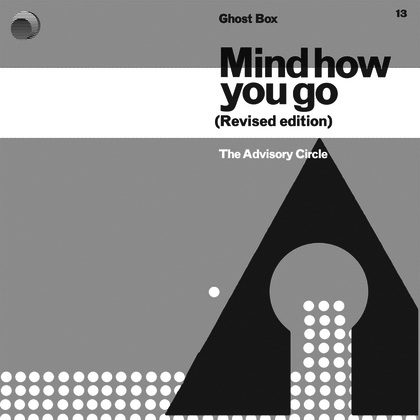
The Advisory Circle’s “And the Cuckoo Comes” from Mind How You Go: Songs for A Year In The Country 3

An early inspiration and reference point for A Year In The Country… a swirling pastoral “ghost box” of time out of joint.
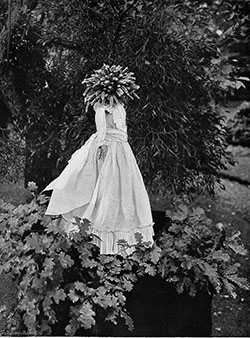
It was the first record to be released on Ghost Box Records and in a “rounding the circle manner” in 2024 was the final The Advisory Circle release.

It’s been released at various points with its original tracklisting and as an expanded edition and has also been available on four formats: a 3″ mini-CD, 12″ vinyl, a standard 5″ CD and 10″ vinyl.

(Photographs of the 3″ mini-CD by DJ Food.)

Posted on

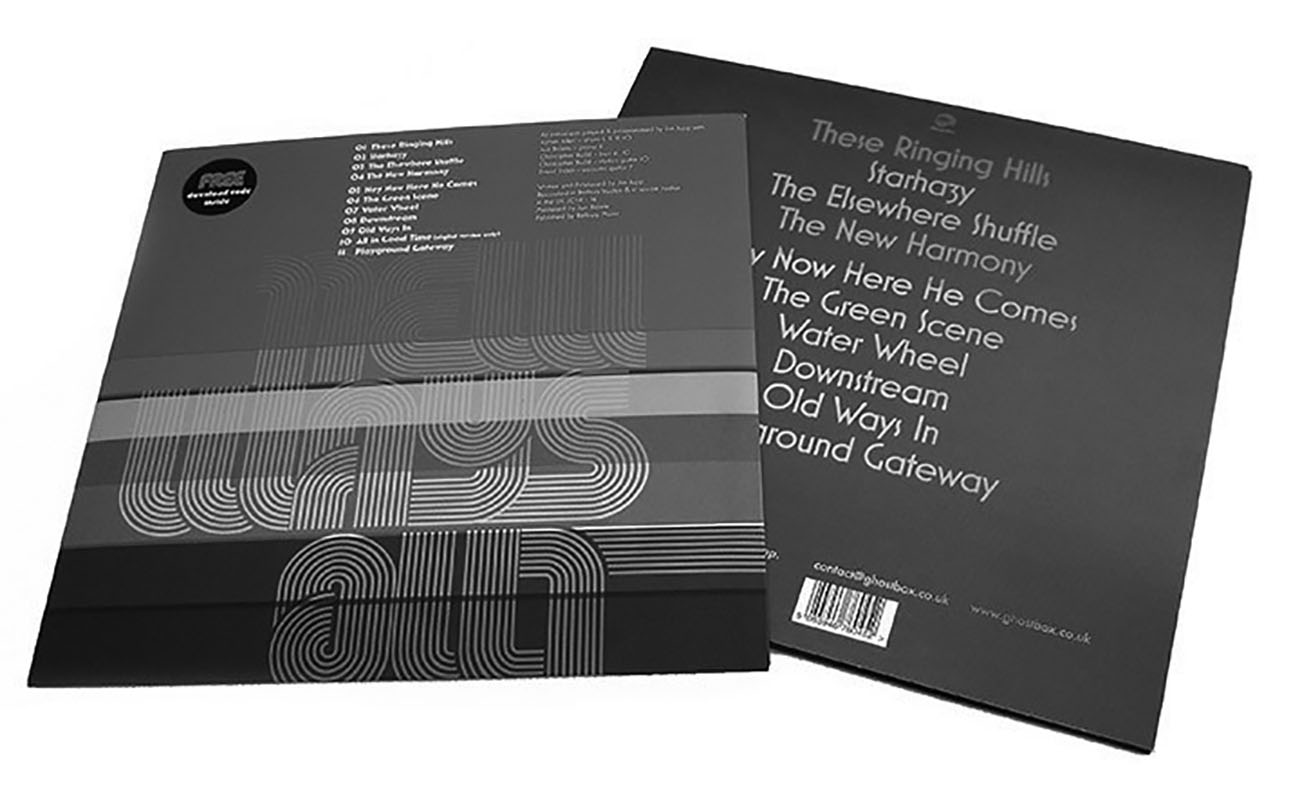
The Belbury Poly’s New Ways Out and Tizer-Fuelled 70s Youth Club Discos With Side-Rooms for Ouija Boards: Wyrd Explorations 3

Ghost Box Records work and releases often have a very playful element which intertwines with the more parallel world or occult side of things. This is particularly present on the The Belbury Poly album New Ways Out from 2016, which was described in Electric Sound magazine as:

“…transporting you to those especially daft places only Belbury Poly can – Tizer-fuelled 70s youth club discos with side-rooms for Ouija boards…”

That quote creates anticipation of a sense of fun or playfulness from the album and indeed New Ways Out has that via a set of rather catchy pop hooks, but with that playfulness being quietly filtered through a Ghost Box parallel world filter.

Writer and academic Mark Fisher, who was a longstanding supporter of Ghost Box, spoke of how the circuit between the avant-garde and the mainstream was broken and how exploratory culture now has its own niches and audiences separate to and no longer crossing over with that of the mainstream.Due to the album’s accessible pop-like aspects in another cultural landscape, where that circuit is not broken, on a Thursday evening at some loosely defined point in the Ghost Box parallel world timeline you might expect to hear the words:

“And now, on Top of the Pops with a track taken from their album New Ways Out, here’s The Belbury Poly with ‘The New Harmony’.” While seven-inch singles of “Playground Gateway”, also taken from the album, would be piled up in Woolworths.

In part, the album conjures and refers to an imagined, indefinable golden age of synthesised exploration, one where such things were intertwined with the pop/mainstream music world and charts. It is an album of experimental and explorative music but it is such things not as a moody teenager in its bedroom with the curtains drawn, more a form of such work that has got itself down a teenage Panda Pops disco and is having “a bit of a boogie”. (As an aside I tend to think of youth club discos from back when as being more Panda Pops rather than Tizer fuelled – perhaps this is the result of different geographic fizzy pop distribution areas in the days before the universal brand ubiquity and organisation of such things.)

In the mind’s eye, on that just mentioned episode of Top of the Pops, “The New Harmony” would have shared a set of stages on a show that featured Kraftwerk, Donna Summer collaborating with Giorgio Moroder, Lieutenant Pigeon, a band playing a Chin and Chapman glam rock classic, The Wombles and possibly a folk band having their pop moment in the charts in between moonlighting for the Bagpuss soundtrack.

Possibly, if it was a particularly good week and just to show that the avant-garde/mainstream circuit was alive and functioning well it might also include some early-ish work by Kate Bush.

Ah, we can but dream.

A particular highlight of the album is “The New Harmony”, which seems to channel the aforementioned Kraftwerk, Donna Summers at her Moroder peak and who knows quite what?

Which is one of the defining characteristics of New Ways Out and indeed much of Ghost Box’s output, such as the woozy cut-up sampling of The Focus Group; often it is reminiscent of something just on the edge of memory.

Also, as with much of work created and released by the label there is a sense of reference points and lines drawn from the past but without it being overly or overtly retro; more that it exists in a separate slipstream of its own.

Returning to “The New Harmony”, on a first hearing there is a temptation to check that somehow it is not playing on a seamless loop as it has an endless, almost Kafka-esque quality, filtered via a warm, synthesised Ghost Box viewpoint, a sense of never leaving and it seems to make time lose traction.

(Above photograph and some of the others in this post by djfood.org)

“Playground Gateway” ends the album and in that other slipstream world it begins as though it would be the second single taken off the album. It starts with a knockabout schoolyard glam chant air before wandering off to perhaps soundtrack science fiction tales that featured gleaming golden crystal floating cities that our hero approaches on a winged white horse (!)

“Starhazy” from the album is the slightly more challenging third single that was played on late night radio. The devoted fans loved it, the audience on Top of the Tops did their “not quite sure if I like this/if I should dance to this” shuffle that they often did for such not quite so commercially mainstream things and there were headlines after the recording of the show along the lines of “Police called to break up pitched battle between Polyites and Numanoids”.

It would not necessarily have been quite as big in the charts but would still have had gents at EMI Records and the like popping champagne corks to a backdrop of one those upward travelling sticky taped sales charts.

“Hey Now Here He Comes” is the album’s other glam-stomp (with a mild pastoral air) that the record company wanted as an A-side in the UK, but which due to scheduling and contractual problems in the Ghost Box parallel world only came out as a small quantity of 7” singles in Belgium, and many years later was rediscovered and featured on a compilation of lost glam rock along the lines of the 2003 album Velvet Tinmine which collected such records.

As always with Ghost Box’s releases the packaging and design adds an extra layer of complementary, constellatory elements to consider and peruse, including an illustration by Jim Jupp.

This depicts a pastoral landscape and has a gentle bucolic air while also somehow managing to convey an atmosphere of off- centredness and seems to be both contemporary but also to have tumbled from a never-was but is out there somewhere children’s television show from an indefinable time back when.


Posted on

Cat’s Eyes’ “The Duke of Burgundy” from The Duke of Burgundy Soundtrack: Songs for A Year In The Country 2

To quote myself on Radio 4’s Late Junction “[The Duke of Burgundy] seems to exist outside of time, almost in an imaginary never never European hinterland… and the track… has an [accompanying] hazy, dreamlike, almost half-remembered sense of being a semi-lost pop treasure from a time you can’t quite place.”

Posted on

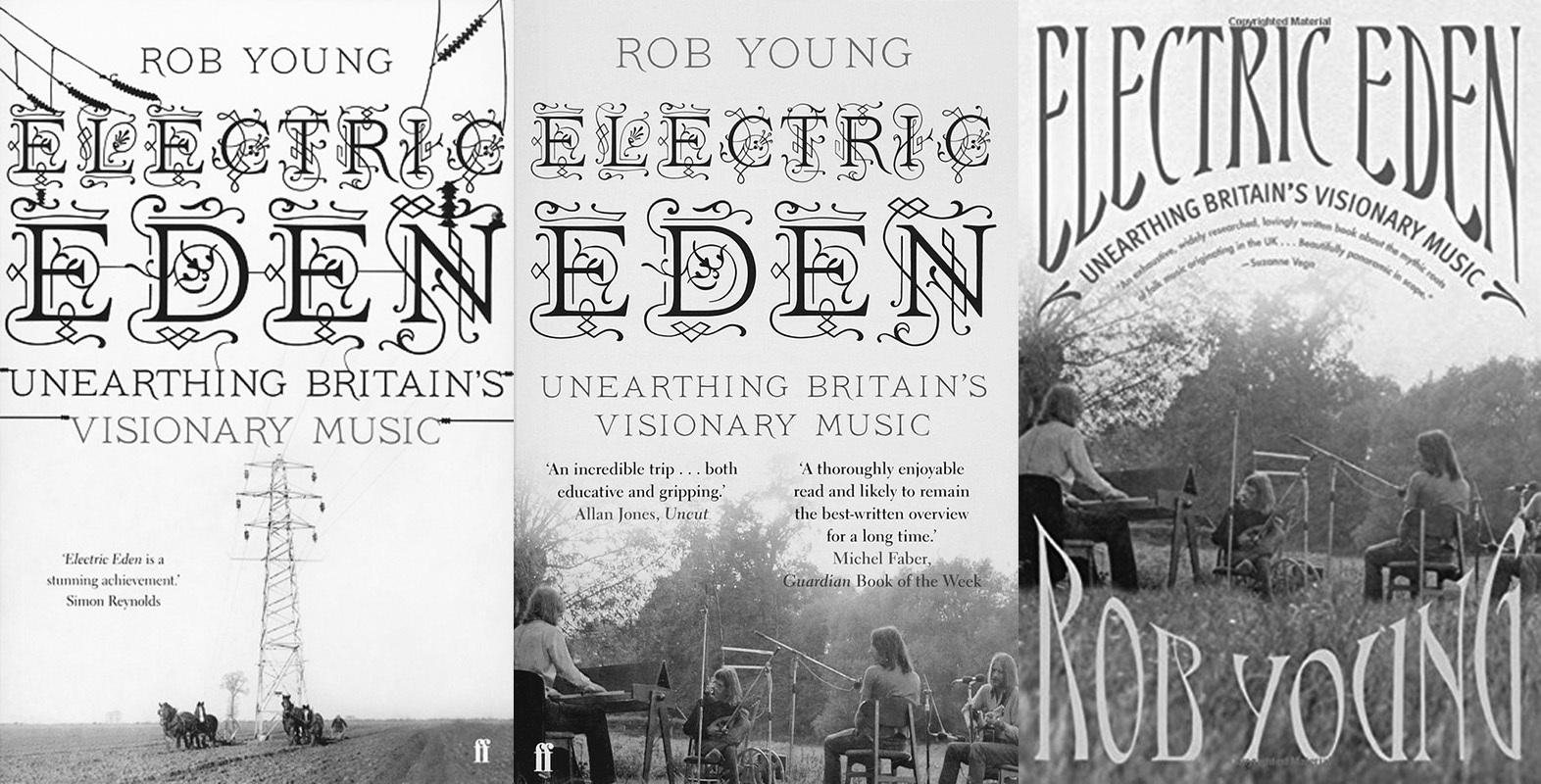
Electric Eden: Unearthing Britain’s Visionary Music: Folk vs Pop, the Harvesting of Cultural Landscapes and Acts of Enclosure Old and New: Wyrd Explorations 2

Electric Eden: Unearthing Britain’s Visionary Music, the 2010 book by Rob Young, served as an ongoing reference for much of the earlier years of A Year In The Country.

It is an epic tome of a book which, in simple terms, is a journey through British folk and pastoral music and related culture from its roots to the modern day, but instead of serving as a straightforward documenting of such things, is more an exploration of its undercurrents, of at times semi-hidden or overlooked cultural history and its interconnected strands.

The book explores folk revivalist collectors such as Cecil Sharp, the social idealism of William Morris and Ewan MacColl, the late 1960s/early 1970s folk rock of the likes of Fairport Convention and Pentangle, the acid or more experimental folk of Comus and Forest, the iconic 1973 folk horror film The Wicker Man and related occult folklore, contemporary esoterically interconnected hauntological practitioners such as Ghost Box Records, the pastoral tinged work of pop music explorers Kate Bush, David Sylvian and Talk Talk and pastoral speculative/science fiction.

There is a sense within the book of folk and related culture seeming to point towards an otherly Britain: an imagined Albion of hidden histories and sometimes arcane knowledge, wherein there is still the space or possibility to sidestep some of the more ubiquitous, dominant and monotheistic tendencies of modern- day culture, beliefs and systems.

The later chapter in the book, “Towards the Unknown Region”, explores the more overtly undercurrent or semi-hidden areas of pastoral-orientated work and the just mentioned interconnected realms of hauntology. In this chapter Rob Young recalls a time when he attended a Ghost Box Records event and he relates a sense of the excitement and envelopment that stepping into a separate seeming created world or reality via cultural forms, scenes and events can provide, even if only for the duration of a record playing, or an evening or two.

He comments that at such times the creators and participants engage in a form of consensual sensory hallucination, which is a succinct and evocative description of the sense of giving yourself up to otherworldly cultures and its stories. Connected to which the book contains a number of phrases which deftly and briefly capture cultural activities, including “imaginative time travel”.

This is used to describe a personal and cultural form of exploring and taking inspiration from different historical periods, possibly mixing them with contemporary techniques and modes to produce work that creates new forms rather than being strictly recreations of times past.

For example, work within folk culture such as late 1960s/early- to-mid 1970s folk rock and acid/psych folk, where the participants at times seemed to actively attempt to will into existence musical, aesthetic and social forms that drew from the past but in a refracted and reinterpreted manner and which existed in a never- never land of their own creation.

The book doesn’t contain a judgemental distinguishing between what could be considered authentic folk that has been handed down in an oral or traditional manner over the centuries and the latter-day exoticism of contemporary folklore-influenced work such as the above-mentioned The Wicker Man; all such strands could be seen as authentic, work has to spring from somewhere and it could be considered that it is the intention and effect rather than age and historical traceability that implies whether it is the “real” thing or not.

In Electric Eden and related writing and interviews Rob Young has also considered the roots of the words and concepts of folk and pop.

The phrase “folk music” can seem a little confusing initially. There is a tendency to think of folk as meaning “from the people”, as in all of the folk of a land, which leads to the question, how can music that seems to have often, today at least, a relatively limited appeal therefore be called folk music? How can it be of the people if it is not widely popular? And it is definitely not pop music.

Rob Young has put forward the case that rather than referring to a sense of all the people of the land, folk music is the music of the “volk”, derived from the Germanic/Teutonic wald – the wild wood – whereas the word “pop” (i.e., popular music) comes from the Latin populous, which refers more to the larger populations of cities etc.

He talks of how pop culture derives from centrally controlled, regimented urban communities (Roman urban populi) which were entertained, appeased and distracted by mass spectacles such as gladiatorial entertainment and comedic dramas: that pop is a culture that belongs to or springs from imperial socialisation, institutionalised religion, related consensus and commerce.

In contrast, folk is much older than pop, originating from the wild wood and a culture where peasants, vagrants and villagers bore song from those woods, the forest, the barbaric heath – societies which were sometimes savage, often ad hoc, structured in a less hierarchical manner, pre-Christian and where rituals endured and perplexed their heirs.

The Romans made efforts to clear away these potentially problematic, less governable areas but Rob Young notes that they still survive in English place names that end with “wald”, “wold” or “weald”.

As cultural forms and phrases therefore, one comes from the city, one from elsewhere out amongst the land.

In many ways, the story of folk music, culture and folklore is in part one that tells of the differences and separateness of culture from the city vs the wald or the populi vs volk or more literally folk vs pop. Which brings things round to The Wombles and what happens when folk meets or tries to become pop.

What appeared to happen in the mid-1970s is that music arrived at a point where one of folk rock’s more popular bands Steeleye Span had a hit single with their version of the traditional folk song “All Around My Hat”, which reached number five in the UK singles charts in 1975.

The single was produced by Mike Batt, who also oversaw records for the novelty pop band The Wombles: these were a musical offshoot of an animated children’s television series originally broadcast from 1973-1975 where furry, pointy-nosed creatures who live in burrows on Wimbledon Common spend their time recycling rubbish in creative ways.

“All Around My Hat” is folk that has wandered quite a way from its roots and seems intrinsically to be nearer to pop, a kind of glam romp with folk trappings. Which is not to dismiss this version as it is a rather catchy and full of life interpretation, with the song and its video capturing a certain point in time and period nuances of British cultural history: of pop music and culture that was not yet overly-styled, honed and scientifically marketed and that in its own particular way is still from a less tamed cultural landscape.

This is one of the themes of Electric Eden; a sense of a taming of the cultural and at points literal landscape of what Rob Young presents as music and culture of a utopian or visionary nature that draws from the land and folk culture.

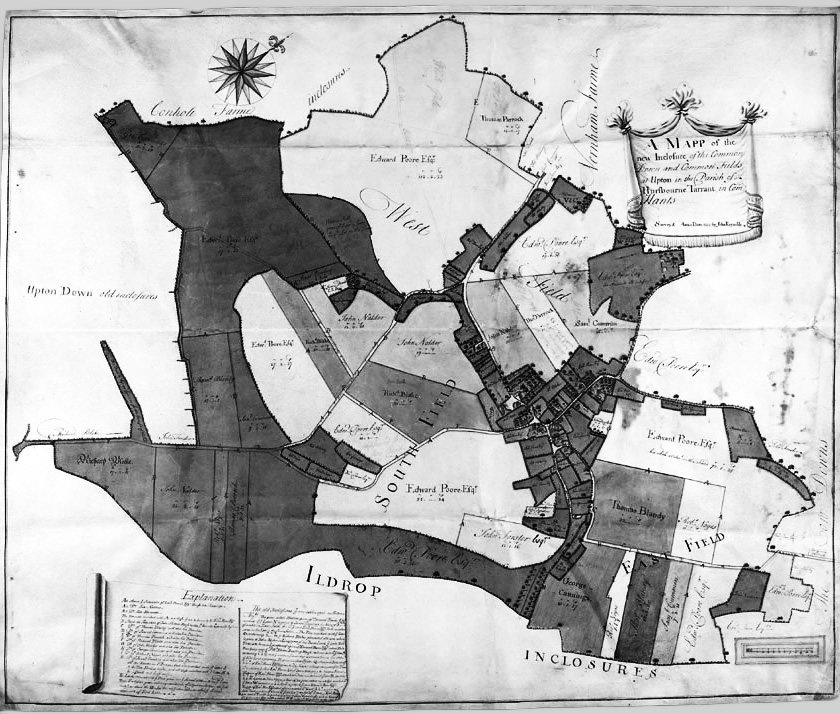
He has discussed the connection between such areas of work and culture and how there is a connection to historic acts of land enclosure and clearance; the way in which from around 1760 onwards in Britain common land was put into private ownership by government Inclosure Acts, forcing agricultural workers towards the newly expanding cities and factories and how this displacement could be one of the roots of the British empathy with the countryside, with such as songs or texts from the world before this change having come to be revered as they seem to represent or connect to a pre-industrial “Fall” golden age.

It could be said that Inclosure Acts are not a purely historical practice.

In recent years a proportion of the population have found themselves increasingly priced out of certain areas of the country; the cost of putting a roof over your head (in terms of the ever upward path of rental and property prices), of keeping the lights on and the wolves from the door seems to quietly, gradually be removing a certain less material wealth funded or directed way of life out of cities and in particular city centres and the capital city of Britain.

This could be considered to be a form of enclosure; a more subtly enacted mirror image of the earlier 18th century version.

In recent times this has happened in part through decisions to not take or delay particular actions as well as the ending of acts of Parliamentary regulation (removing, watering down, delaying or refusing to implement statutory rent control or regulation for example), with the result that the “common people” are being removed from the inner cities rather than forced into them.

Also, more physical, bricks and mortar-related acts of enclosure have been accompanied by an undercutting of the economic infrastructure for creative work, whereby large-scale transnational corporations effectively gain access to a huge library of content and very low paid or unpaid workers for their often advertising orientated delivery systems and hardware, often at minuscule cost, such as with online music streaming or even for free in the case of social media.

This has often been done under the guise of ease of distribution, expression and choice, which while it can be useful in the sense of “getting your work out there without being massively bankrolled”, the end result of which is often a technological or creative form of enclosure.

This in turn often leaves the ongoing viability, in terms of keeping those aforementioned lights on and cupboards full, of such work largely in the hands once again of the few, of those selected and patronised by high-end conglomerates and/or those who are privately or institutionally funded. In this system a small elite of, for example, globally ubiquitous popstars are able to reap huge rewards and to a lesser degree some of the “influencer” stars of social media have also benefited financially but this seems to largely have been at the (financial) cost of much of what could be considered to be the working and middle classes of creative culture.

Connected to this the space needed for the creation of more wayward forms of culture has become a harder path to follow.

There seems to have been an element of choice being taken away and of things reverting to older forms of wealth and class division, resulting in a form of social and economic clearing out and exclusion, a removal of access for those of lesser financial means to the clustering and critical mass of population that is sometimes required within cities for cultural forms to develop and take hold.

At the same time rural, as opposed to urban, environments do not tend to have such a publicly displayed saturation or overload of culture and input, although this can still be present in a less visible sense to a degree as many homes now contain multiple digital devices that via online access can allow or enable vaststreams of cultural information and input.

Out in the country you rarely see billboards, there are fewer shop windows, generally fewer cultural events and venues, flyposters are relatively rare, the headlines and covers of newspapers and periodicals cannot catch your eye from every corner and there is also often relatively less CCTV surveillance and recording in country towns and villages compared to cities.

Accompanying which, at times, some of the inherent character or spirit of folk music, alongside certain areas of hauntology and pastoral/subterranean ambient/electronic music, their rhythms, cadences and the stories they tell can seemingly make more sense beyond youth and out amongst the fields.

It is important to point out that all cities and compact urban population environments are not inherently evil, nor that the countryside and country living is all green grassed idyll, nor that pastoral and folk culture is part of some dichotomous good/bad pathway with urban/pop culture.

It is possible that we know the stories of pop and its associated alternative or fringe culture a little too well, as they have been told, retold and used too often by the mainstream and non- mainstream media, until for many people their stories no longer carry the meanings and connections they once did.

Since the advent and popularity of more urban-based pop music/culture, what has been called folk music and culture has only periodically and/or nichely been popular or considered acceptable for wider marketing and consumption, for example at times such as the high summer of folk rock in the late 1960 to early or mid 1970s, or the interest in freak folk in the earlier-to- mid 2000s.

Interconnected with which the direct sunlight of media and mass attention can be a potentially double-edged sword for subcultures, as at times it does not allow cultural forms the space they need to grow and develop fully and leads to culture being plucked and harvested too early.

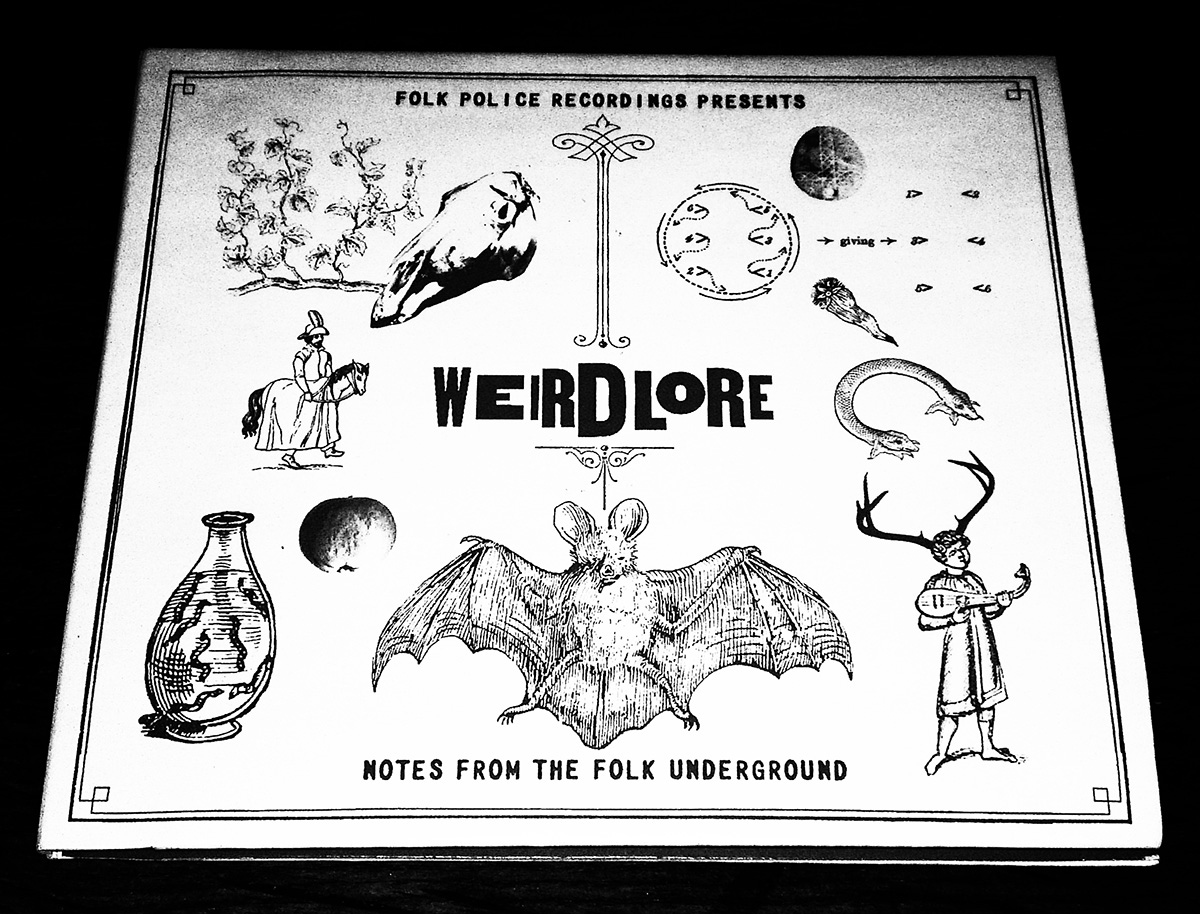
As Jeanette Leech says in her introduction to the 2012 Weirdlore compilation album of underground and exploratory folk:

“…when light is not on a garden, many plants will wither. But others won’t. They will grow in crazy, warped, hardy new strains. It’s time to feed from the soil instead of the sunlight.”

Within the undercurrents of folk and wyrd culture there is a sense of it having been left alone to a degree; it is a cultural form which has been allowed to gain nourishment from the earth rather than the brighter rays of public attention.

As is suggested by Rob Young in Electric Eden, the space around such work feels less regulated. There is still some space to move and dream around such things, which may be less so in other areas of culture; you can possibly (or hopefully) still walk these “wild woods” a little more freely.”

Posted on

Magnet and Paul Giovanni’s “Gently Johnny” from The Wicker Man Soundtrack: Songs for A Year In The Country 1

It seems rather appropriate to begin this set of Songs for A Year In The Country with a visit to Summerisle, via this song which conjures a sense of a timeless and atemporal world…

Above: Silva Screen’s edition of the soundtrack artwork by Richey Beckett.

A few years or so ago I posted a series of “Songs for A Year In The Country” and after that I included an expanded version of the list of songs in the A Year In The Country: Lost Transmissions book.

This series of posts is intended to be a revised version of that list and it contains some of the songs that have variously acted as signposts, touchstones, significant markers and discoveries for A Year In The Country.

In some ways the list is also a form of Desert Island Discs but, reflecting the passage of the year, there are 52 songs, as there are weeks in the year, rather than the eight which the guests on the BBC Radio show choose for their imaginary time as castaways.

With that in mind, the selection includes some of the songs that I find myself repeatedly returning to, ones that I’d “save from the waves” or bundle up to take into the storm shelter if a Wizard of Oz-esque twister appeared on the horizon.

Posted on

The Wicker Man Soundtrack and Carving Out Cultural Dream Spaces: Wyrd Explorations 1

There are two distinctively different versions of  The Wicker Man’s soundtrackwhich have been released on vinyl, CD and/or digitally: one in 1998 by Trunk Records and another by Silva Screen in 2002, the latter of which was also included with the 40th anniversary DVD and Blu-ray release of the film and has also had various reissues on CD and vinyl.

The soundtrack was composed and arranged by Paul Giovanni, and performed by him and the band Magnet, which was assembled by the film’s associate musical director Gary Carpenter in order to record the soundtrack.

As with the film itself, it is easy to forget just how odd and unique the soundtrack is and it feels very much part of older British traditional folk music even though only a small part of it is directly traditional in origin, and in effect, it creates a hauntological-esque reimagining of such culture.

The current interest and critical appreciation of The Wicker Man can in part be traced back to the Trunk Records’ release of the soundtrack in 1998, which was the first time it had been released in any form other than as part of the film. At the time interest in the film was still more niche and cult-orientated and the release of the soundtrack was one of the notable events which contributed towards the film’s rehabilitation, and in this sense it can be included in a timeline which also includes, amongst other events, the publication of The Wicker Man focused issue of Cinefantastique in 1978, it being broadcast on the British mainstream television channel BBC Two as the first film in Alex Cox’s cult film series Moviedrome in 1988 and the release of the first edition of Allan Brown’s book Inside The Wicker Man in 2000.

The Trunk Records release is described on its cover as being “The original motion picture soundtrack music and effects” and it is not a conventional soundtrack album where each song is presented as an isolated whole, possibly with snippets of dialogue from the film between the tracks. On the album the songs, effects and so on segue into one another and at points fragments of earlier songs reappear and fade in and out, of which on the Trunk Records’ website, most probably written by the label’s founder Jonny Trunk, it is said:

“The original music and effects tapes were found and carefully copied, and the LP release is an identical copy of the sounds found on these tapes.” (Quoted from “The Wicker Man”, trunkrecords.com, date and author unknown.)

However, rather than appearing to be a straightforward replication of the film’s audio, the resulting album takes the listener on an impressionistic chronological journey through the atmosphere of the film; one which evokes a sense memory of its story, rather than telling it in full.

Presented in mono, the album was created using a shorter cut of the film and therefore does not include the lilting fecund ballad “Gently Johnny”, which is one of the best-known songs from The Wicker Man, as this was not included in the shorter version. The Silva Screen edition of the soundtrack is in stereo and was created using cues from a tape held by Gary Carpenter, mixed with recordings from the Trunk Records’ edition. It is more conventional in terms of its format and features isolated complete songs accompanied by some snippets of the film’s dialogue, and at times it seems almost curiously showbiz-like in comparison to the Trunk Records’ edition. It also differs in that it does not present a chronological journey through the story as it is essentially split into two parts or sides: Songs from Summerisle, which includes many of the “hits” or more well-known songs including “Corn Rigs”, “The Landlord’s Daughter”, “Willow’s Song” and “Gently Johnny”; and Incidental Music From The Wicker Man such as the music from the islander’s procession, the opening and final sequences etc.

Both versions of the soundtrack have their pros and cons and they complement one another in a manner which is in keeping with the film’s history, in relation to the earlier mentioned sense of there not being a definitive, complete and final version of the film known to still be in existence.

The Wicker Man Collage-A Year In The Country-1080

Accompanying this, interest in The Wicker Man only seems to grow as the years pass, as do the number of releases and reissues of books, DVDs, Blu-rays, posters, zines, documentaries, trading cards, soundtracks etc related to it, and the film has inspired a mini-industry all unto itself, which intertwines with and is a reflection of the way it continues to intrigue viewers and inhabits, carves out and conjures its own cultural dream space.

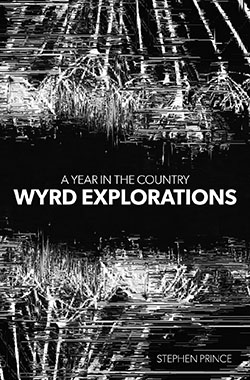
The “Wyrd Explorations” series of posts include a selection of excerpts/edited sections from the A Year In The Country: Wyrd Explorations book.

Posted on — Leave a comment

Revisiting and (Almost) Rounding the Circle – The Eccentronic Research Council, The Kunsthaust Gallery, Ben Wheatley and Tam Lin

As is a (semi) custom at A Year In The Country, this year’s posts are (almost) ending with something of a round up of cultural curios… and this year it involves something of a revisiting of things that have appeared at the site before. First up is a revisiting of a “wyrd memento”…

Above is the flier design for a 2012 Finders Keepers Records/Bird Records event featuring The Eccentronic Research Council, Jane Weaver and Andy Votel (who I think probably design the flier as it has a similar handcrafted style as quite a bit of his other work), around the time the witchcraft history orientated 1612 Underture album by The ECR was released.

It’s a prime example of what elsewhere at A Year In The Country I’ve described as graphic design/art that utilises “otherly geometry” and in this case uses very simple and effective minimalistic geometric shapes to represent a gathering of witches via the shapes of their hats and could be considered  a more folk art-like variation on the 1612 Underture cover art.

Looking at it again now it’s also an interesting memento from a time just before the interest all things wyrd, folk horror etc began to really gather pace…

Which brings me (back) to The Kunsthaus Gallery and the shape of the future’s past…

Above is a photograph of the very distinctively designed Kunsthaus gallery in Austria (its name translates as “arthouse”) which its architects Peter Cook and Colin Fournier describe, somewhat appositely considering its science fiction-like appearance, as a “friendly alien”.

It features a “20-meter-high active facade, which displays animations and text messages”, which presumably is the set of illuminated mini-porthole-like circles to the left of the photograph and that in a way could be considered something of a public, stationery, almost 8-bit-like precursor of, say, GIFs that are posted on social media.

The photograph is reproduced in a clipping from I think, possibly, an old issue of The Face magazine, probably from the 1990s or early 2000s.

The Face was part of a set of type of magazines known as “the style press” that had a fairly prominent mainstream-ish profile in the later 1980s through to the early 2000s and could often be bought in many high street and corner newsagents etc, which also included other titles such as i-D, Blitz, Sleaze Nation, Dazed and Confused etc.

Once upon a time such titles were reference points and arbiters for  fashion, “hip” culture and the like but they have now largely either stopped being published or have become much more niche titles and looking back at them they have become curious time capsule snapshots of a particular cultural time. In that sense, I would perhaps file them alongside the CD promos that you could once buy cheaply in second hand record stores, which I have written about before at A Year In The Country, and that now have largely been filed into history as a way of promoting or discovering music.

In an interconnected manner, the Kunsthaus gallery seems like a notable example of “the shape of the future’s past” and a now retro-future idea of the coming modern age, when we would all be living in silver saucer shaped houses and flying via jetpack to work… and, well, it is 2023 now and still no jetpack (!)


And then to end the post… revisiting American Gothic, Ben Wheatley, Pentangle, pathways to Tam Lin and unsettling cinematic worlds…

The above American Gothic-esque illustration by Rumbiozai Marilyn Savanhu of director (and occasional graphic novel author) Ben Wheatley accompanied an interview with him in a 2020 issue of Little White Lies magazine around the time when his film adaptation of the novel Rebecca  was released.

Rebecca is an interesting oddity even amongst his notably varied career, in that it was less obviously a Ben Wheatley wyrd/transgressive/folk horror etc film that easily slots next to the likes of Kill List and High Rise but rather, if memory serves correctly as it’s a while since I’ve seen it, is a more mainstream-friendly gothic romance film and a thoroughly entertaining one at that.

However alongside its more mainstream-friendly aspects it does include a number of, at times almost flashes of, moments, images, atmospheres etc that connect it with his other more overtly unsettling work. It was also a pleasant unexpected surprise to hear Pentangle’s jazz folk rock take on traditional folk song “Let No Man Steal Your Thyme” on its soundtrack, which seemed to connect it back to the 1960s hippie-dream-gone-sour tale of bewitching and sorcery film Tam Lin (1970) which also used songs by Pentangle in its soundtrack and in turn to the more folk horror etc orientated work by Ben Wheatley.

Links at A Year In The Country:


Links elsewhere:


Posted on — Leave a comment

The White Reinder – A Folk Horror Precursor Under a Leaden Sky

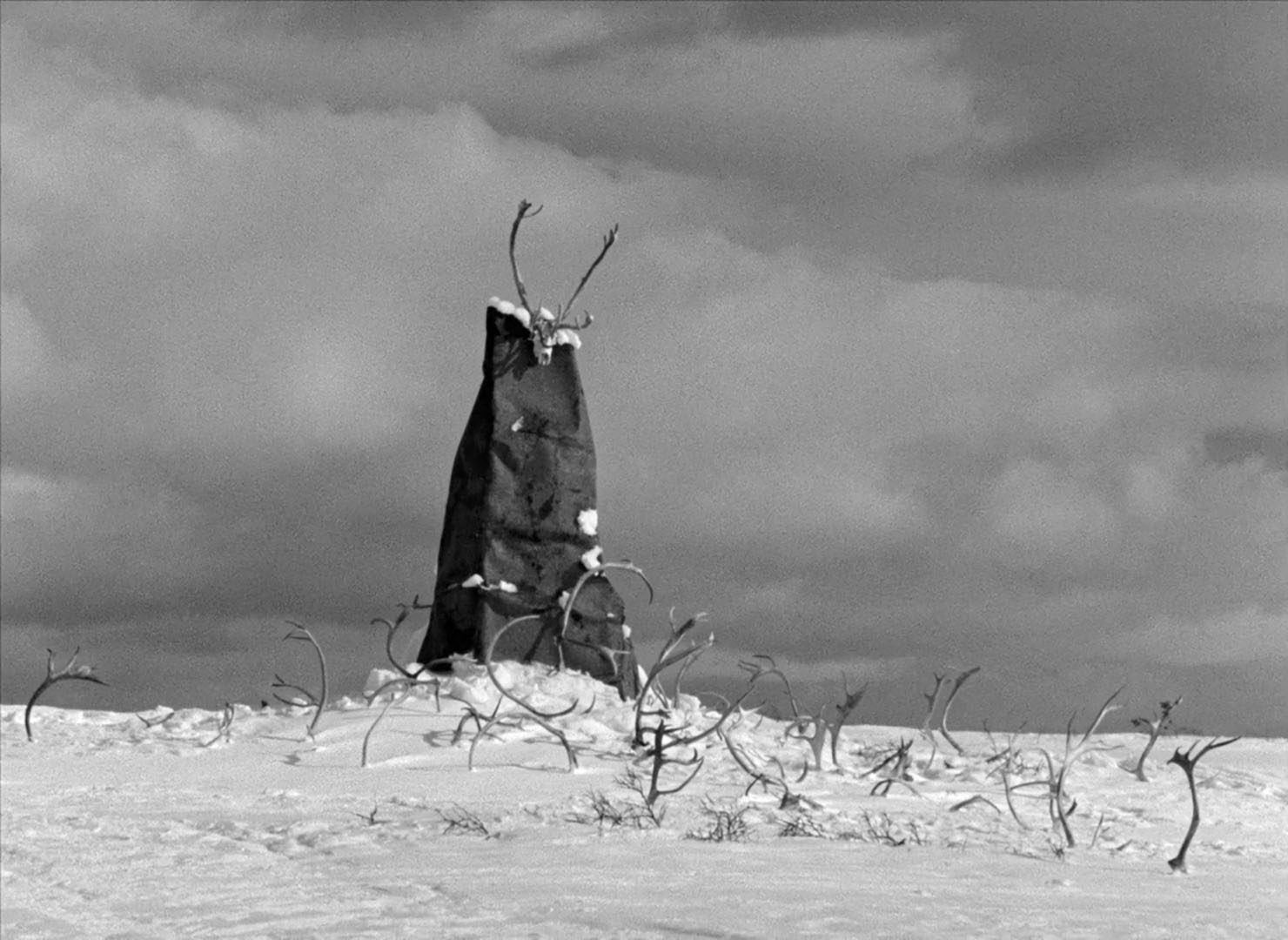
The  White Reindeer (1952) was the first film made by Finnish cinematographer Erik Blomberg. It is set amongst the bleakly beautiful snowbound landscape of Finnish Lapland and tells the story of a newly married young woman called Pirita who becomes lonely, frustrated and desperate for affection due to her husband often being away herding reindeer, which leads her to seek out a shaman who gives her a potion which will make her desirable to all men.

However, this leads to deadly consequences as the magic powers she gains are beyond her control and cause her to become a vampiric shapeshifter who can assume the form of a white reindeer, which she does in order to lure male herders out to isolated spots where she then kills and consumes them.

It’s a strange experience watching a horror film when you know that there are unlikely to be any graphic scenes of any kind due to such things generally being neither the norm nor allowed due to censorship and societal expectations at the time when it was made. Even with knowing that when watching The White Reindeer, I still found myself tensing and expecting all of a sudden beasts, gore, fangs, etc, to jump out of the screen.

Despite this lack of more graphic visual shock, etc, the film still has a distinctly unsettling atmosphere, perhaps in part because of the way it initially lulls the viewer into a false sense of security and seems almost like a family-friendly period documentary, with the early scenes showing Pirita and the other villagers in their traditional Finnish clothes carefreely frolicking in the snow and good-heartedly racing one another on reindeer-drawn sledges.

But The White Reindeer is soon revealed to be far removed from being a period romp rather, it shares a number of similarities with John Carpenter’s science fiction horror classic The Thing (1982), with both showing an isolated group of people in a bleak snowbound landscape who must try to identify and fight a deadly being that is able to hide amongst them by taking on human form. However, rather than being a straightforward genre film, Blomberg’s film has a dream and almost fairy tale-like quality and is nearer to being a form or precursor of arthouse horror.

As the film progresses, almost without the viewer realising, the atmosphere and tone become ever darker, particularly after a notably folk horror-like sequence where, in order to “activate” her potion, Pirita is required to sacrifice a young fawn to a stone god, the physical marker for which is a tall standing stone that is be topped with the skull and antlers of a reindeer and is sited amongst a sacrificial graveyard of antlers. She then goes on to claim victim after victim in the snow-filled landscape, which, rather than being crisp and brightly white, is more often shown in various shades of grey under a leaden sky.

Initially, it appears as though Pirita has little control or volition over her transformations and deadly actions, and it seems as though she may not even be all that aware of them when she is her “normal” self. Alongside which, she seems to have been damned from birth as a haunting opening song tells of a woman, presumably Pirita, who unbeknownst to her was born a witch with “evil in her belly” and indicating this, even before she has taken the potion, she is shown leering menacingly over the shaman, apparently uncontrollably revealing her inner “witch”.

These aspects, combined with her siren-like supernatural deadly irresistibility and taking the form of a reindeer when she is entrapping her male victims, could be seen as an exploration and expression of masculine and societal fear regarding unfettered, animalistic female sexuality and its power over men. This is given further expression when once Pirita has given in to and used her power, she then seemingly becomes beyond redemption. Despite her desperate attempts to reverse the magic curse when she comes to realise what has happened to her and sees the villagers arming themselves and preparing to hunt down the “evil” white reindeer, her fate seems sealed.

The ending is particularly poignant and bleak, as it is her husband, who does not yet know what has happened to his wife nor that he is actually hunting his spouse, who is shown singlehandedly tracking her down in a snowy valley while she is in the form of the white reindeer. He kills her with the “cold iron” of a spear and, for a brief moment, is shown as being joyously happy at, presumably, both his success and also returning safety and the status quo to the villager’s way of life.

However, his joy in this is very short-lived as on her death, Pirita has regained her human form, and she is shown impaled against the snow, and he realises what he has done and lost. The camera then pulls away to show just how isolated and alone they both are amongst the snowbound landscape. While the end song plays, the screen goes dark, but the film continues to roll almost interminably, causing the viewer to hope beyond hope that there will be another final act and that somehow things will turn out okay. But they don’t and, for Pirita and her husband, at the very least, never can.