A Year In The Country Artwork Archive 40

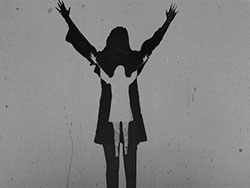
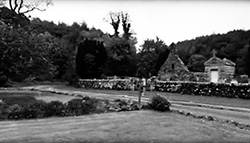
In a “does what it says on the can” kind of a way this is a lovely “milling around the village”. Well for a while but then towards the end when things go a little bit “odd” shall we say and suddenly the village is more than a little lysergically Midwichian… brrrr (!)


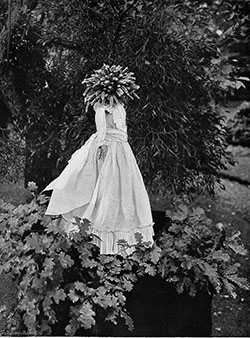
The Fallen by Watchbird is a conceptual pop album/project by Jane Weaver released in 2010 on her own Bird Records label in conjunction with Finders Keepers Records and discovering it and exploring related culture proved to be one of the early signposts that pointed me towards what would be become A Year In The Country
The theme of the album is:
“A floating storyline based around missing seamen, telekinesis, avian messengers, white witchkraft and death & re-birth…”
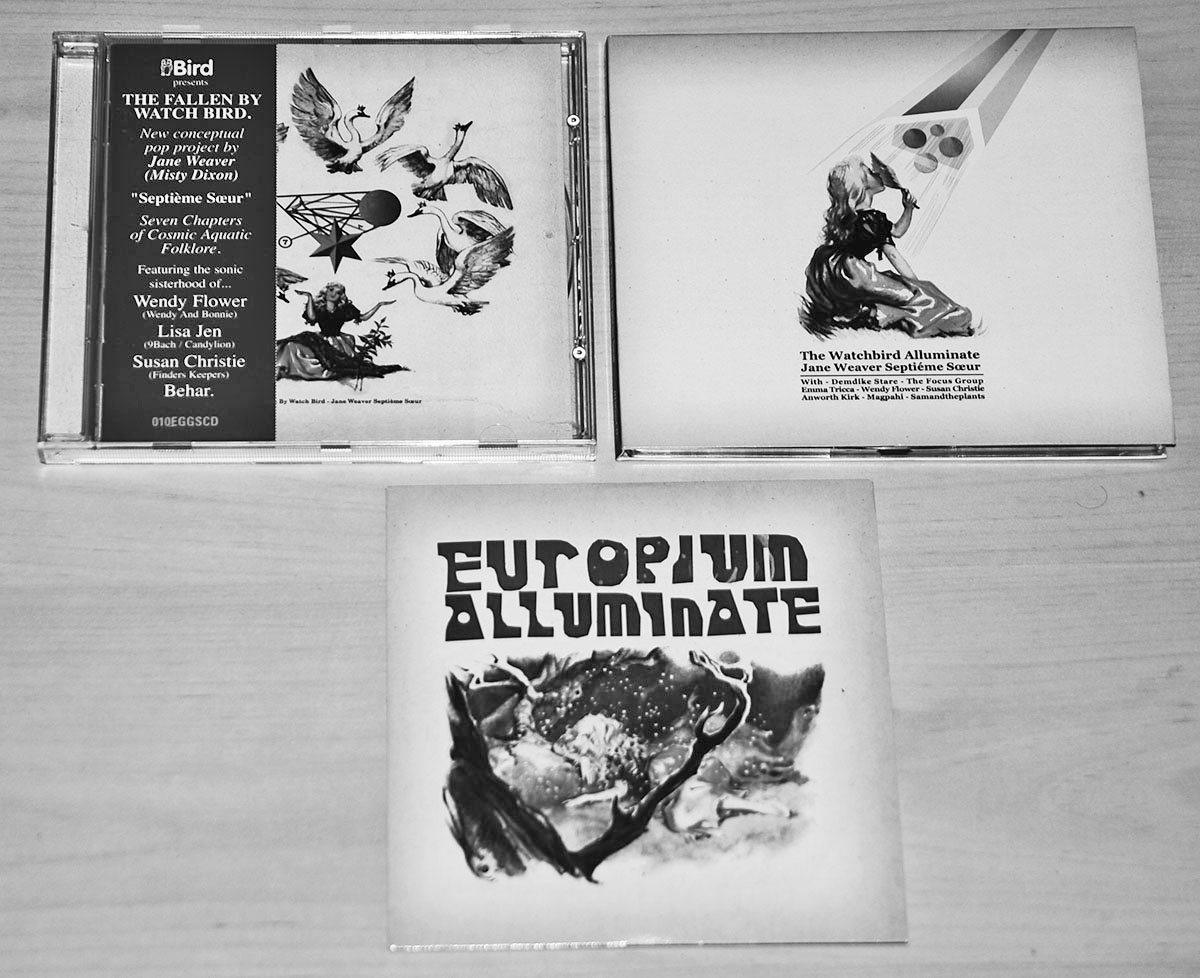
The project includes the main album The Fallen by Watch Bird, the also previously mentioned sequel or companion record called The Watchbird Alluminate that revisits and reinterprets the main album, an illustrated fictional book, video work, a poster and an accompanying compilation mix called Europium Alluminate which was released on CD.
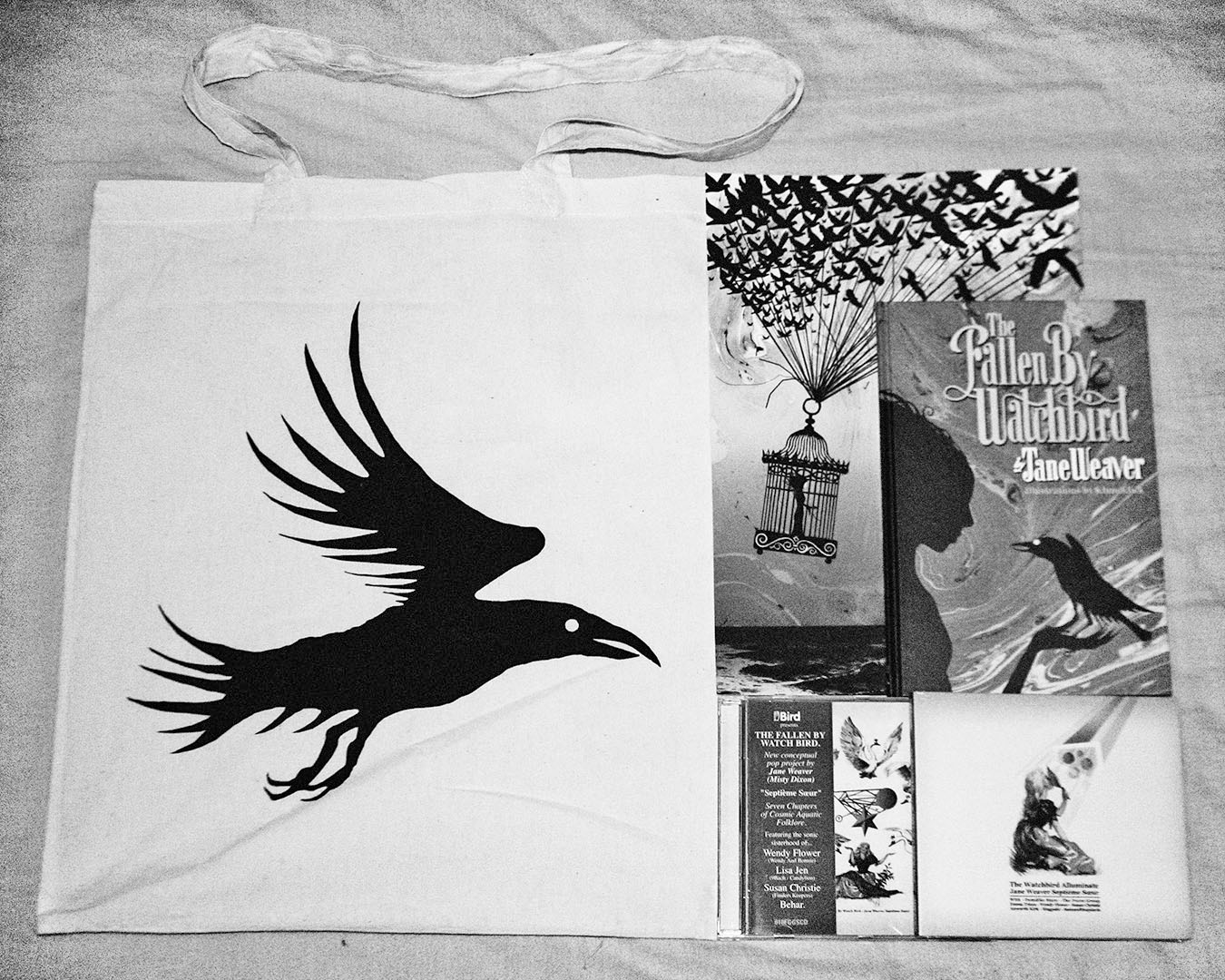
It is not a project or album which is easily definable within any particular genre or culture and it weaves and creates a unique and multi-layered world unto itself.
The project takes inspiration from a number of areas of inspiration including Eastern European children’s cinema, Germanic kunstmärchen (fairy tales or one online service literally translated it as “art fairy”), 1970s television music and traces of 1980s synth pop to create what is described as “cosmic aquatic folklore”; the resulting work creates a fable like atmosphere that contains a sense of it connecting or belonging to some of its source material but is far from being a homage, with any such aspects being via a reimagined dreamscape.
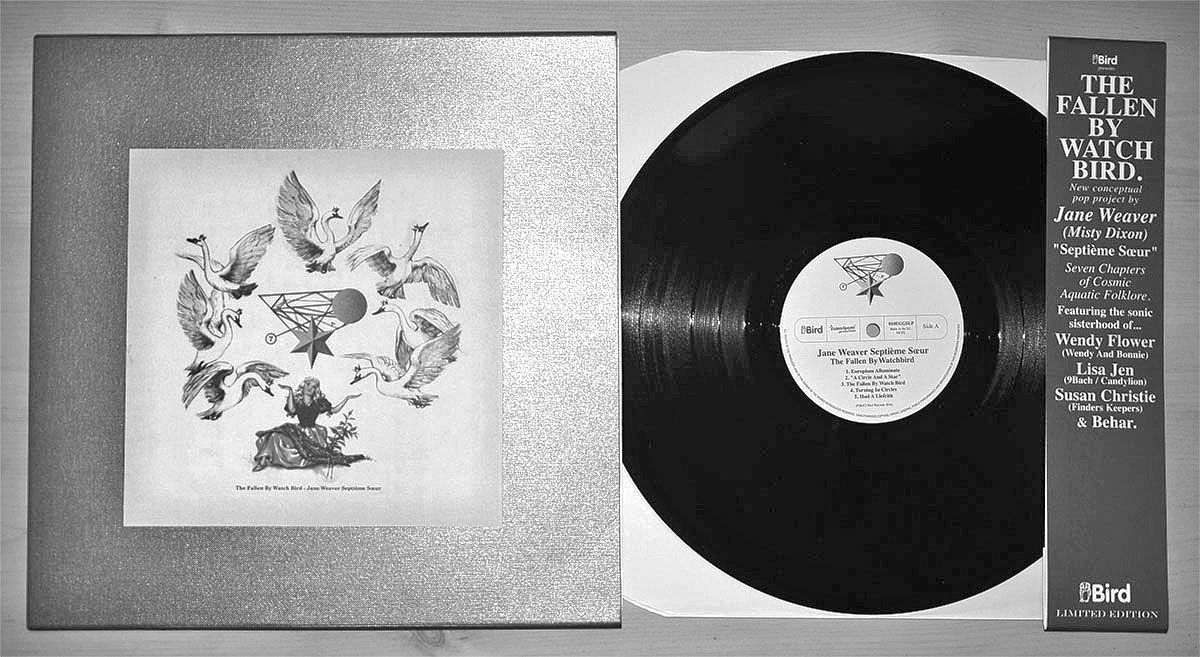
The Fallen by Watch Bird is credited to Jane Weaver Septième Soeur and features seven other female musicians alongside Jane Weaver, including Susan Christie who’s once lost 1960s acoustic pop recordings were released by Finders Keepers Records, 1960s soft psych pop rock musicians Wendy & Bonnie, Lisa Jen who is a member of Welsh language folk band 9Bach and members of Jane Weaver’s former band Misty Dixon.
While the album contains a number of different intertwined styles and atmospheres, at points the 1960s roots of some of the collaborators makes it presence felt in a certain almost Californian, hazy sunshine pop, psych and folk aspect to The Fallen by Watch Bird album, albeit through a distantly and very refracted filter.
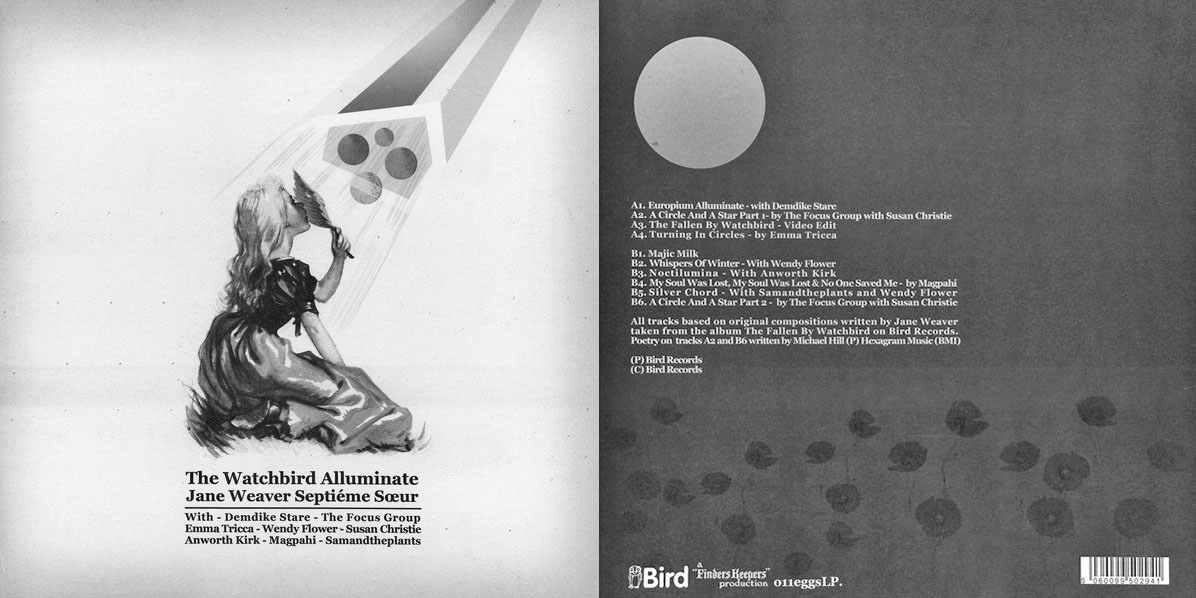
The Watchbird Alluminate adds to the project’s cast and includes collaborations, extensions, revisitings and reinterpretations of The Fallen by Watch Bird also by Jane Weaver Septième Soeur, alongside Ghost Box Records’ co-founder Julian House’s The Focus Group, Emma Tricca, Wendy Flower, Susan Christie and the previously mentioned Demdike Stare, Andy Votel’s pseudonymous Anworth Kirk, Magpahi and Samandtheplants. The album also adds to the project’s loose conceptual theme and is said to be about “telepathy, technology, lost-love, wiccan, war and watchbirds”.
In contrast with The Fallen by Watch Bird it is more overtly experimental than purely conceptual pop-orientated and adds a certain spectral, hauntological aspect via the likes of the unsettled soundscaping of Demdike Stare and the woozily cutup chimes and tinkling of The Focus Group, alongside tremulous, enchanting folkstress revisitings by Emma Tricca and Magpahi.

The previously mentioned Europium Alluminate mix CD that was part of the project’s release was compiled by Jane Weaver alongside Andy Votel and it is described as:
“A 70-minute transmission of cosmic aquatic folklore, flickering luminescent lullabies & hand-plucked pop.”
It is an explorative and intriguing musical journey which serves as an accompaniment and musical backgrounding for The Fallen by Watch Bird, one that hints at some of the possible influences and inspirations for the project but leaves these as hints as there is no tracklisting.

The project’s influences led me down a path to discover and/or rediscover the strand of cinematic history known as the Czech New Wave (also known as the Czechoslovak New Wave or Czechoslovak film miracle), which was mentioned in relation to Andy Votel’s work and the film Valerie and her Week of Wonders in the Wyrd Explorations 12 post.
The Czech New Wave cinema movement began in 1963 and lasted until the early 1970s and was a movement/group of Czechoslovakian filmmakers who began making films during a period of post-Stalinist liberalisation which included a more relaxed and less censored attitude towards cultural and intellectual activities within the Eastern Bloc countries, which included Czechoslovakia, that were aligned with the communist Soviet Union.*
Associated films often contained dark and absurd humour and at times surreal elements, which was effectively an attack and riposte to films made in the social realist style, which “was the official cultural doctrine of the Soviet Union that mandated an idealized representation of life under socialism in literature and the visual arts”.**
Accompanying which some of the Czech New Wave films in various ways took advantage of the liberalisation in Czech society, censorship etc and criticised and/or ridiculed the establishment and the state, including Miloš Forman’s The Firemen’s Ball (1967) which is set at the annual ball of a small town’s volunteer fire department and portrayed the corruption and incompetence that was present at all levels in society and Věra Chytilová’s Daisies (1966) which ridiculed the establishment via the anarchic pranks of two young women.

The 1976 Czech film Malá Morská Víla, directed by Karel Kachyna and also known as The Little Mermaid but something of a world away from the more well-known mainstream 1989 Disney film, was influenced by surrealism and the Czech New Wave and creates an entrancing and visually distinctive fairy tale world, with the ornate blue hair of its main characters being particularly striking.

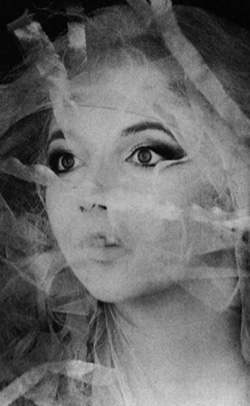
Jane Weaver quotes an unsubtitled copy of Malá Morská Víla as having been the starting point for her The Fallen by Watchbird work and some of the stylings from it, in particular the hair and robe like garb of its main character, found their way into photography associated with the album and the title track’s accompanying video by klunklick.
That video brings together many of the elements of The Fallen by Watch Bird project and concept. It mixes photography of Jane Weaver dressed as a fallen-through-a-portal sister of one of the characters of Malá Morská Víla, found illustrations from children’s fairy stories (which also accompany the project’s albums’ artwork), live action mixed with animation, cosmic symbolism, fantasia like pastoral and at sea scenes, the appearance and reappearance of black feathered birds and documentary war photography all of which interweave with the left-of-centre pop of the song to create a phantasmagorical, darkly hued and yet also whimsically entrancing fairy tale fable.

The layering present in the video and song expresses one of the defining characteristics of The Fallen by Watch Birdproject which is its culturally multi-layered nature. Part of that layering includes avant-garde elements in terms of its concept, influences and at times presentation. However, it also works as left-of-centre pop culture and music, having tunes you may well find yourself humming as you walk down the street and a distinct visual accessibility.

*In Czechoslovakia this period of liberalisation culminated and peaked during what has come to be known as the Prague Spring in 1968 when the reformist leader Alexander Dubček was elected as the leader of the Communist Party of Czechoslovakia and there was an increased loosening of restrictions on citizens etc. However, this period of reform ended when the Soviet Union and several affiliated Warsaw Pact communist countries invaded Czechoslovakia in order to suppress the country’s liberalisation and which in turn led to the strengthening of the authoritarian wing of the Communist Party of Czechoslovakia.
**This quotes from the Wikipedia.com webpage on social realism.
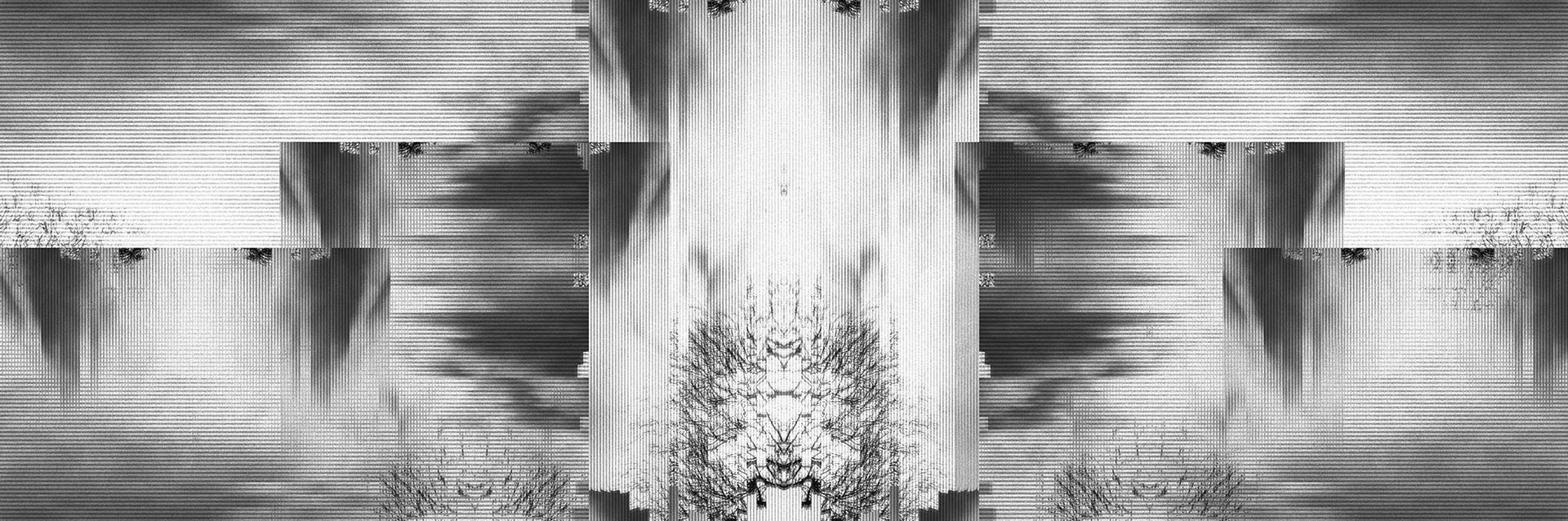
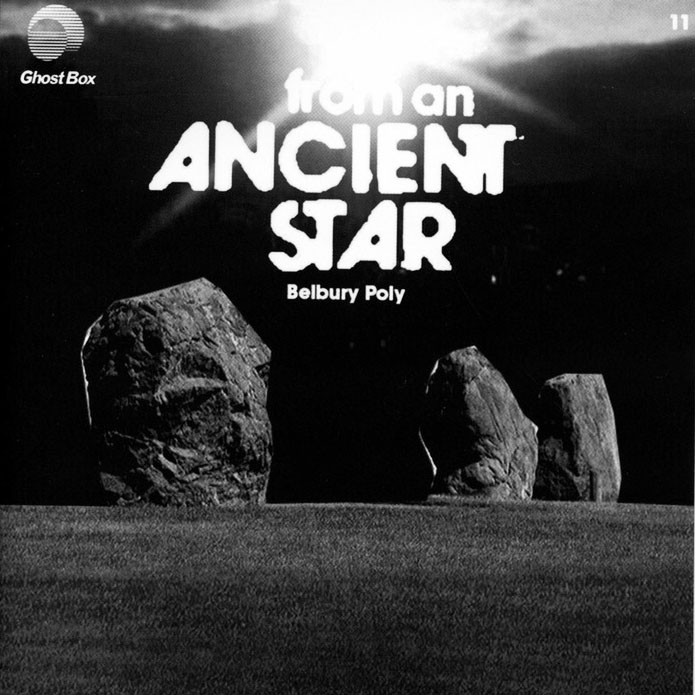
The chimes that open this song seem to instantly transport the listener to a TV show from another world, time, place and universe back when but the song doesn’t seem like a simulacra or homage to TV soundtracks from years gone by but to literally conjure the show for real…


The Heartwood Institute’s Tomorrow’s People (2019) is an album of hauntological electronica that draws from distant hazy memories which have an at times darker and transgressive flipside:
“The Heartwood Institute mine the dark underbelly of the electronic psychedelic experience of Britain in the 1970s. Their hauntronica recalls a time when the hippy dream of the 60s had curdled into that peculiar era when black magic and witchcraft was in vogue. The Heartwood Institute is built where Radiophonica meets The Wicker Man. Once inside, you’ll be enveloped by a haze of oscillator fizzes and uncanny folksy weirdness as provoked by the kind of mushroom experience seen in the film Performance.” (Quoted from Electronic Sound magazine, issue number and author unknown, 2019.)
The album is inspired by a fascination with 1970s counterculture, alternative ways of living, its darker flipside and/ or unravelling and by those who at times, and in part, became society’s folk devils; hippies, bikers, occultists, idealists and activists. It also in part draws from related utopian and idealistic events and communities such as the rural idyll and eco village of Findhorn, the Albion Fairs which combined pop festival culture “with the reinvention of traditional rural or nomadic seasonal gatherings, and a back-to-the-land early green ethos” and the Phun City free festival which took place in 1970.

Such idealistic source material is intertwined with what is described in text which accompanied the album’s release as “fragmenting Ballardian cities choked with uncollected rubbish”; the layering of these elements in the album and its themes could be considered reflective of both the social, political and economic strife which the UK underwent during the 1970s and also the manner in which some sections of society looked to alternative, rural etc ways of life, possibly as a reaction to and/or escape from that strife.
These contrasting aspects of society and history are notably reflected on the track “Findhorn” which combines woozy, pulsing, distorted electronica with more bucolic pastorally inflected folkish instrumentation and may well leave the listener not quite knowing whether to bask in a rural idyll or to batten down the hatches against the outside world’s encroaching dread.
The track “The World Turned Upside Down” adds a further historical layering to this, as the sampled period voice semi-quotes the 17th century reformer, activist, idealist and communalist Gerrard Winstanley when he spoke of:
“…some people could not bear my words, and amongst those revelations this was one, that the earth shall be made a common treasury of livelihood to whole mankind without respect of persons… [and the whole of] mankind was made equal, and knit into one body by one spirit of love… freedom is the man that would turn the world upside down therefore no wonder he hath enemies.”
A clear line can be drawn between the spirit of Winstanley’s words and some of the 1970s post-hippie utopian ideals explored on Tomorrow’s People, albeit the speaker sampled in “The World Upside Down” has revised and adapted them in a more sectarian manner.

As an extended aside Gerrard Winstanley was the leader and one of the founders of the English group known to themselves as the True Levellers and by others as Diggers. The group called for the collective ownership of property on the basis of radical religious principles which included a communal sense of existence. They occupied public lands that had been privatised by enclosures, digging them over, pulling down hedges and filling in ditches in order to farm them. Local landowners responded with force and sent hired armed men to beat the Diggers and destroy their colony and although Winstanley protested to the government this was to no avail and eventually the colony was abandoned. Gerrard Winstanley is the subject of a biographical film by Kevin Brownlow and Andrew Mollo called Winstanley which was released in 1975.

The film adds another further layering and intertwining of different eras, their idealism and some of the inspirations for Tomorrow’s People; one of the actors in the film was Sid Rawle, who in real life shared some interests and activist aims with Gerrard Winstanley as he was a campaigner for peace and land rights, a free festival organiser and one of the leaders of the London squatter movement. Quite directly connecting him with Winstanley through the organisation’s name he also formed the Hyde Park Diggers, who campaigned on the issues of land use and ownership. Further layering and intertwining historic idealism and activism “The World Turned Upside Down” is also the name of an English ballad published in the mid 1640s as a broadside – a large sheet of paper printed on one side only – as a protest against parliament outlawing traditional English Christmas celebrations and its intention to make Christmas a solemn occasion.)

Although the Tomorrow’s People album partly draws from utopian etc post hippie ideals, it is often far from a sunshine and brightness filled view of the world, but rather often invokes an atmosphere of dread that seems to reflect a sense of utopian ideals and accompanying ways of life either having turned inwards and corrupted and/or to be under threat by a disapproving and ever more encroaching conventional but fractured wider world.
Although far from unrelentingly dark the listener may well come away with a sense that all is not right in the alternative Albion which the album explores. A number of the other tracks besides “The World Turned Upside Down” also contain period spoken samples, and also talk of utopian ideals and alternative ways of living but in the album’s overall atmosphere and context they no longer seem to carry their once optimistic intentions but to have been refracted though a glass darkly.

The album’s cover quote and title (I think) are taken from/ inspired by Jeremy Sandford and Ron Reid’s 1974 book Tomorrow’s People which via its text and photography documents British alternative and counter-cultural outdoor festivals in the 1960s and 1970s:
“[The book Tomorrow’s People chronicles] a time when festivals were not an accepted, mainstream, commercially minded activity… [a period in the 1960s and 1970s] when, in part, festivals were an experiment in alternative ways of living and thinking, and were often inspired by hippie, new age, utopian and later anti-authoritarian ideals, and in keeping with their less commercial and non-mainstream nature they sometimes took place without charging an entrance fee. Indeed, such events could be seen as part of an attempt to consciously create short-lived temporary autonomous zones where such experiments and ideals could take place and flourish.” (Quoted from A Year In The Country: Straying From The Pathways, 2019.)

This sense of experimentation is reflected in the album’s cover quote, which is credited to Sandford and Reid’s Tomorrow’s People:
“The most important purpose served by a pop festival is that it provides a test bed for the working out of the running of some future society…”

Designed by Nick Taylor of Spectral Studio the album’s front cover art seems to reflect an air of optimism during that period and is a collage of images that create a sense of joyous celebration and communal gathering at festivals. This continues to a degree on the back cover, where it is accompanied by an illustration of tree branches and leaves but it also seems to wander down darker pathways.
One of the back sleeve photographs is inverted and this introduces an unsettling atmosphere, which makes the accompanying images of gathered people at a festival, some of whom have had their facial features bleached out by the high contrast of the reproduction, to appear to be almost zombie herdlike.

It also brings to mind the relentless and ultimately doomed seeking and gathering of the hippie-like Planet People in Nigel Kneale’s final Quatermass series that was broadcast in 1979, a series which can be read in part as a comment and/or critique of when utopian hippie ideals and alternative ways of living go out of kilter.
The sense of a darkening of utopian and alternative ideals in Tomorrow’s People’s artwork is continued on other artwork that accompanies the album, where images of hippie gatherings, festival participants, banners etc are collaged amongst images of hells angels and tabloid newspaper attacks on them, advocates of questionable and extreme lifestyle choices, medical techniques and so on.
The resulting effect could be viewed variously as a fascinating time capsule snapshot, a celebration of alternative ways of life and as containing an almost hellish sense of them having gone awry and become adrift.

Gently bucolic and gently otherworldly. From Powell and Pressburger’s 1950 film Gone to Earth which as with this song and the scene it features in could be considered to be a notable forebear of wyrd rural culture…


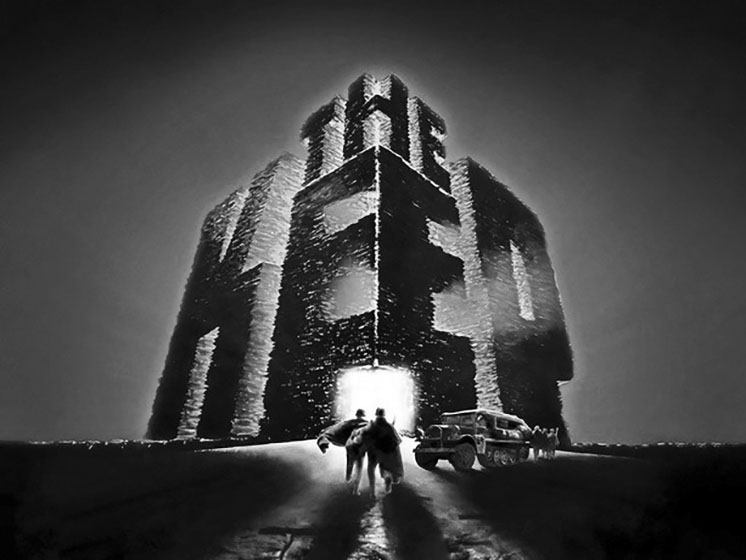
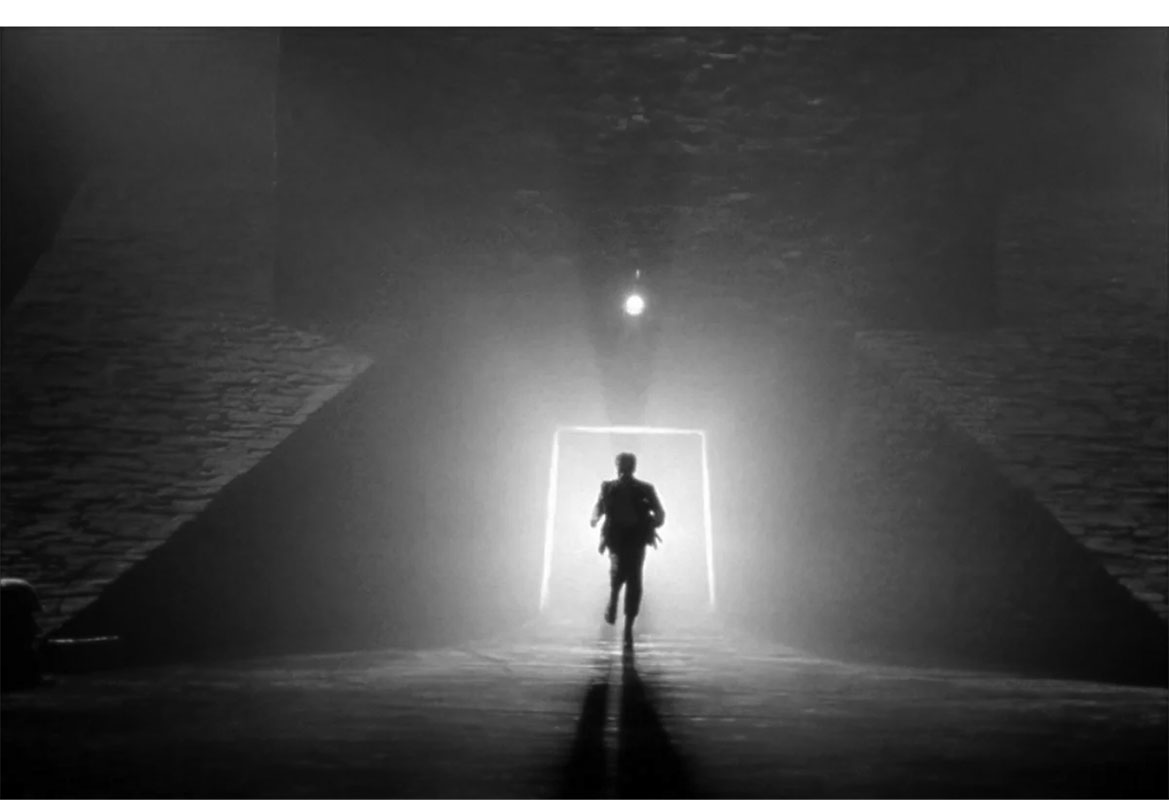
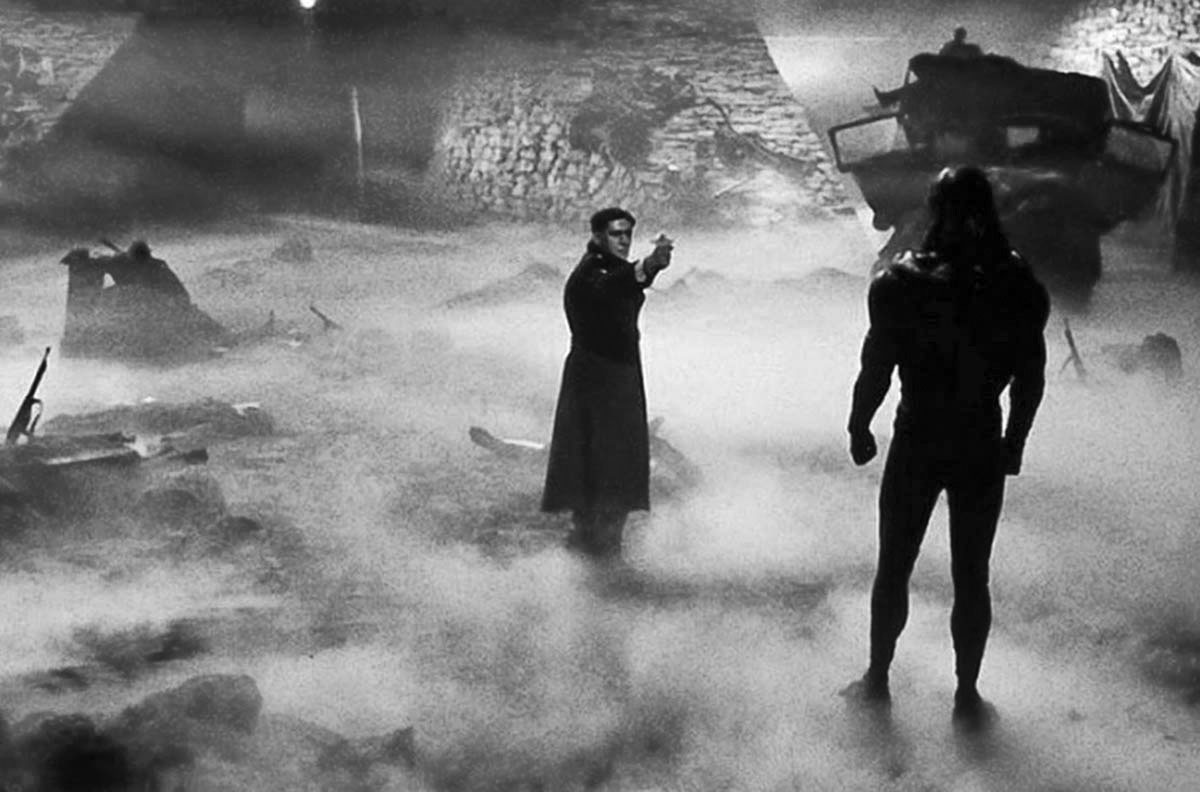
The Keep is a loosely genre film from 1983 that has something of a unique, fractured and almost dreamlike character which combines horror, the supernatural, war film and at points now period pop promo aesthetics in its tale of a unit of German troops who occupy a mysterious citadel in a Romanian village and unleash, and are hunted by, a spectral entity called Molasar.
There was a seemingly lost and to a degree never actually existed earlier longer director’s cut of the film which ran for 210 minutes; however, for its release the producers had the film re-edited and its length was cut to 96 minutes. However, while possibly of detriment to the film in the sense of it removing a more conventional narrative and flow, its re-editing and the at times irrational and unexplained nature it introduces to elements of the plot also seem to play a notable part in lending the film its fractured dreamlike quality and intriguing character.

A longer more complete version of The Keep appears potentially to be fully lost, as Michael Mann has implied that he doesn’t wish to revisit and restore the film. Alongside which the film’s visual effects supervisor passed away two weeks into post-production, and nobody else who was working on it knew how he planned to finish the visual effects scenes, in particular its original ending, so any longer version that was produced would not be how the film was originally envisaged and adding to this it is thought that the footage needed to assemble a new director’s cut has been lost to time. Further adding to the lost aspects of the film, Tangerine Dream created a soundtrack for The Keep but Michael Mann is said to have removed this and included other pieces of their work and it is unclear if or to what degree the original soundtrack was included even on the earlier longer cut.
Writer and academic, Mark Fisher, wrote in his book Ghosts of My Life (2013) of how due to the proliferation of contemporary digital and related media storage of culture, there is a sense of loss itself being lost. That is, everything is now potentially available to watch and rewatch ad infinitum. And while this is generally, and broadly, the case today, the expectation which that brings of universal ease of access to and availability of culture, also serves to heighten the now more occasional times when culture or complete versions of it seem to genuinely be lost or becomes unavailable, such as is the case with the original versions of Wolfen and The Keep, the iconic folk horror film The Wicker Man (1973) or going back more than a century The Werewolf, which is thought to be the first werewolf film but sadly all the prints of it are thought to have been destroyed in a 1924 fire at Universal Studios.
Equally, as is the case with The Wicker Man, it is often the unknowable spectral nature of such partly or completely lost films that adds to their sense of intrigue and mystery and has in turn helped to bring about and maintain their hold on people’s imagination.

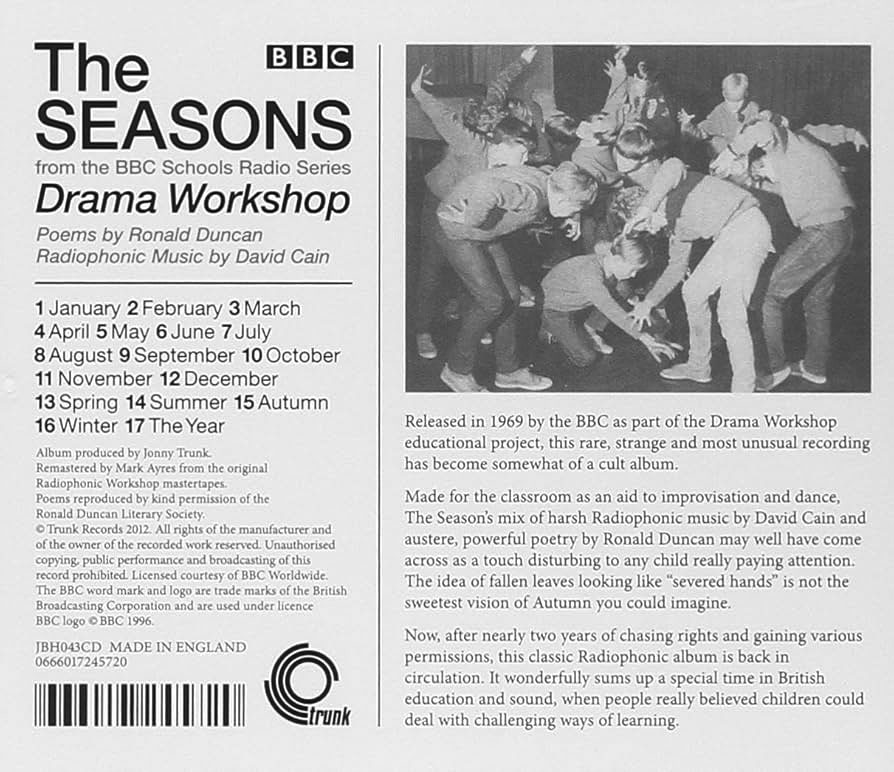
Part of BBC Radio for Schools broadcasts “designed to stimulate dramatic dance, movement, mime… speech” and to quote Jonny Trunk “it’s weird, spooky, unsettling, very British… full of unexpected metaphors, pagan oddness, folk cadences and insane noises”. It’s one of those “shake your head and be pleasantly slightly stunned” moments in culture.


Possibly the most well-known wolf-orientated dark fantasy tale is Little Red Riding Hood; the origins of which can betraced back to 10th century European folk tales, with the bestknown versions being based on stories written by Charles Perrault and The Brothers Grimm in the 17th and 19th centuries.
Although there are numerous versions of Little Red Riding Hood, a general summary of its plot tells of a girl who wears a red hooded cape or cloak, taking a walk from her village home, through the woods to deliver food to her grandmother, having been ordered by her mother to stay strictly on the path. She is approached by a Big Bad Wolf who wants to eat her and the food in her basket. She naively tells him where she is going and as a delaying tactic, he suggests she picks some flowers, which she does. The wolf then races ahead to the grandmother’s house, gains entry by pretending to be the girl, eats the grandmother and disguises himself as her.
When the girl arrives at her grandmother’s she does not initially realise that the disguised wolf is not her grandmother but rather, only notices that she looks very strange. They have an exchange where she comments on this:
“What a deep voice you have.”
“The better to greet you with!”
“What big eyes you have.”
“The better to see you with!”
And which culminates with:
“What a big mouth you have.”
“The better to eat you with!”
The wolf then jumps up from bed and eats the girl whole, after which it falls asleep. Some versions end here but in others a hunter or woodcutter comes to the rescue and, using an axe, cuts open the sleeping wolf allowing the girl and the grandmother to emerge unharmed. They then fill the wolf’s body with heavy stones and when it awakens and attempts to flee the stones cause it to collapse and die.

Little Red Riding Hood has been interpreted in a number of different ways, some of which suggest that it is variously a warning about the contrast between the safe, civilised world represented by the village and the dangers of the forest; the dangers of not obeying one’s parents; or the sometimes possibly predatory nature of men. It has also been suggested that it is a rite-of-passage story in which a girl leaves home, enters a transitional state and by going through the events in the tale becomes a woman.

The story seems to have an enduring appeal and is a near ubiquitous presence within children’s literature and even many centuries after its advent is still reinterpreted and used as inspiration for film and television dramas – one of which is The Company of Wolves, a 1984 film directed by Neil Jordan who also co-wrote the screenplay with Angela Carter, basing it on her earlier short story and radio adaptation.
The film is framed as possibly being the dreams of a sleeping girl in contemporary times, and it contains a number of cautionary interwoven stories based loosely around Little Red Riding Hood, the mythology of wolves and werewolves, the dangers of the woods etc.
These interwoven stories are set in and around the woods and a small village in an unspecified time in an earlier century, and they create an enclosed mystical dream world, conjuring a claustrophobic fairy tale forest where the sun and daylight rarely seem to enter, giant mushrooms grow, children’s toys come to life and mythological creatures roam. Tonally The Company of Wolves can be seen as being akin to a children’s film or television programme that has veered off into a much darker realm, accompanied by an aesthetic which brings to mind the Gothic horror of Hammer Horror films.

The result is an intriguing and curious example of British cinema and has a distinctive and appealing lack of totally polished expensively produced slickness that seemed to be an often-recurring characteristic of British horror, science fiction and fantasy television and film of the time. For example the sequences where humans transform into wolves are, if considered purely objectively, somewhat unreal and unconvincing but, in spite of that, they still have a mesmerising shocking impact and repellent visceral character (although when viewed today their unconvincing nature could in part be due to a comparison with, and expectations of, a certain amount of realism in special effects which has been brought about by the visual proficiency available in contemporary advanced CGI techniques).
The Company of Wolves appears to focus on the cautionary tale aspects of its source material, particularly in the way in which it repeatedly presents men, and their sexuality, as highly predatory, alongside the depicting of the passage into adulthood of a young girl and the trials and threats she may face in the process, especially with regard to that predatory male behaviour. Ultimately though, The Company of Wolves version of the Little Red Riding Hood character appears to reject her elder’s warnings about the “wolves that reside in men” and the comforts and security of civilisation as, when in the woods she meets somebody who declares himself to be neither man nor a wolf, despite her initial resistance she eventually appears to join him after he has transformed into a wolf, becoming a wolf herself and fleeing into the forest with him.
The film seems ambiguous about this ending as during its conclusion a voiceover by the actress playing the Little Red Riding Hood character warns, “As you’re pretty, so be wise, wolves may lurk in every guise… Now as then is simple truth, sweetest tongue has sharpest tooth.”

The Company of Wolves features a number of notable cameos, including Terence Stamp as the devil who anachronistically drives a Rolls Royce through the woods and stops to tempt a young boy/ man with an enchanted potion in a manner reminiscent of the White Witch’s use of Turkish delight sweets to corrupt her victim in C.S. Lewis’ novel The Lion, the Witch and the Wardrobe (1950). At this point Terence Stamp was in his mid-40s and, in The Company of Wolves he has a striking, slightly grey-haired almost regal presence, which appears to forebear his future standing as one of the elder statesmen of British acting.

The experimental musician, artist, alternative almost pop star, interior designer and gardener, Danielle Dax, also appears briefly as a she-wolf from a world beneath the village and whom, despite meaning no harm, is shot at by villagers and ultimately returns to her subterranean lair as she feels she is not fit to stay. In The Company of Wolves, Danielle Dax’s performance and the stylised way in which she moves recall the performance-art-meetscontemporary-dance aspects of Kate Bush’s live and promotional video work earlier in her career, with whom Danielle Dax’s other music and performance work in the 1980s shares some similarities (although Dax’s background and music-orientated output from the 1980s is more rooted in, and explores, the cultural underground and to a degree psychedelic and gothic culture).
These similarities included the way in which both performers’ work contained a certain pop-hook sensibility while having leftof-centre characteristics and themes which they explored and also Danielle Dax’s live performances around the time of The Company of Wolves’ release in the mid-1980s shared a multi-faceted and non-conventional aspect with Kate Bush’s in the later 1970s and featured dancers/performers, body paint, hand-painted sets, costumes and the films of Holly Warburton, whose layered dream like collages also appeared on a number of her record covers.

In addition to this, Kate Bush’s work, particularly in the earlier part of her career, could also be seen to connect loosely with some of themes and aesthetics of The Company of Wolves: her songs and other work at the time drew inspiration from, and explored, a mixture of mythology, pastoral unsettledness and even outright horror and often seemed to describe a world unto itself. Her song “Hammer Horror”, for instance, utilises a gothic aesthetic and lyrics which talk of “The first time in my life, I leave the lights on to ease my soul”. Meanwhile, “Hounds of Love” borrows the line “It’s in the trees! It’s coming…” from the 1957 British film Night of the Demon which has come to be associated with folk horror, and “Waking the Witch” starts as a gentle rousing from sleep and then becomes a jarring nightmare of sorcery accusations and persecution, intertwining lyrics from the traditional shanty song “Blood Red Roses”.
Describing Danielle Dax as an “alternative almost popstar” is a reference to the nature and journey of her work in music and performance during the 1980s and early-90s. At one point she was signed to a major record label, which together with her visual flair and aforementioned pop-hooks should have been enough to propel her to more mainstream success. However, that this was not to be is reflected in the title of her 1995 compilation, Comatose Non-Reaction: The Thwarted Pop Career of Danielle Dax.

While visually striking on its own terms, Danielle Dax’s appearance in The Company of Wolves is intriguing due to her own background as an, at times, experimental performer and the manner in which her presence appears to possibly, unexpectedly, bridge the cultural worlds of mainstream film and underground culture. However, this “bridging” of different cultural worlds is not as surprising as it may initially appear, particularly as the film’s producer, Stephen Woolley, was one of the founders of the London-based Scala cinema in the late 1970s; a cinema renowned for its screening of a then unique mix of exploitation, horror, high art and transgressive film:
“The Company of Wolves pays homage to… and subconsciously draws from Woolley’s eclectic programming of London’s Scala repertory cinema, with shades of An American Werewolf in London (1981), Czech fantasy Valerie and Her Week of Wonders (1970) and The Draughtsman’s Contract (1982)… Too arty for mainstream horror fans but much gorier and more muscular than the arthouse expected, The Company of Wolves remains an endless delight for film enthusiasts and lovers of the Gothic tradition.” (Jane Giles writing in The Enchanted Screen: Picturehouse Presents a Season of Folk and Fairytale Films, 2017.)


The opening track from an album of “vintage recordings of haunting, rowdy and risque British balladry” said to have influenced the soundtrack to The Wicker Man; it has a timeless quality and is indeed haunting, both musically and in its heartbreaking tale of dispossession due to the “unrelenting cruelties” of the powerful.


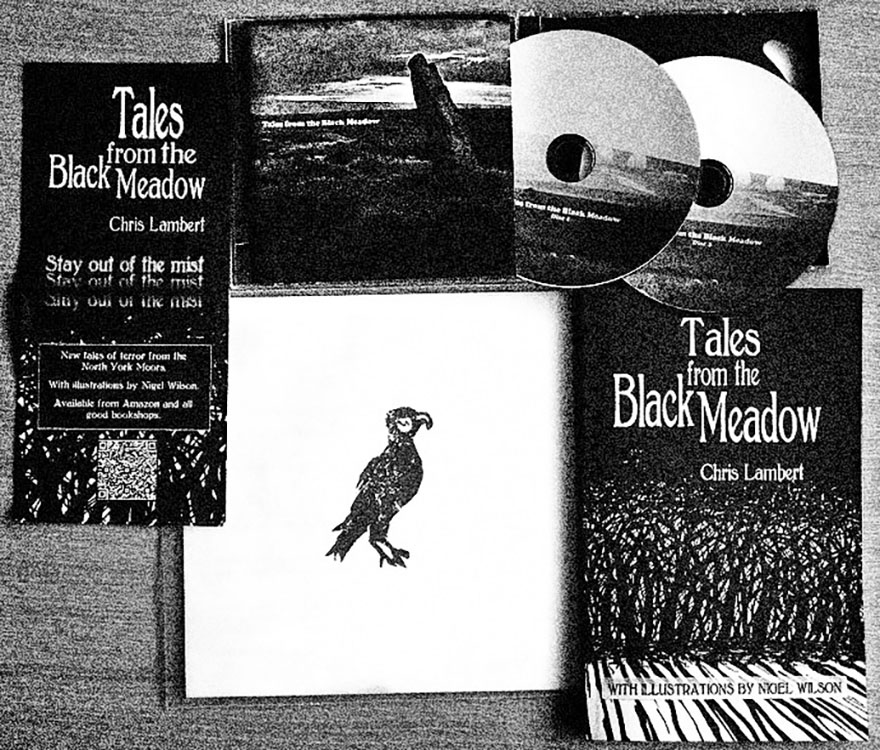
In recent years there have been a considerable number of soundtracks for imaginary films released which have explored wyrd, folk horror and hauntological themes and looking back Tales from the Black Meadow (2013), The Book of the Lost (2014) and The Equestrian Vortex helped to create the pathways which has lead to the popularity of such things.

Tales from the Black Meadow (2013) is part of a multi-faceted project which has taken the form of, amongst other things, books, album and video work and takes as its core story the imagined story of Professor R. Mullins who went missing in 1972 in an area known as the Black Meadow atop the North Yorkshire Moors. The accompanying story tells of how he left behind an extensive body of work regarding his investigations of the folklore and oral history of the Black Meadow, in particular with regard to the phenomena of a local disappearing village.
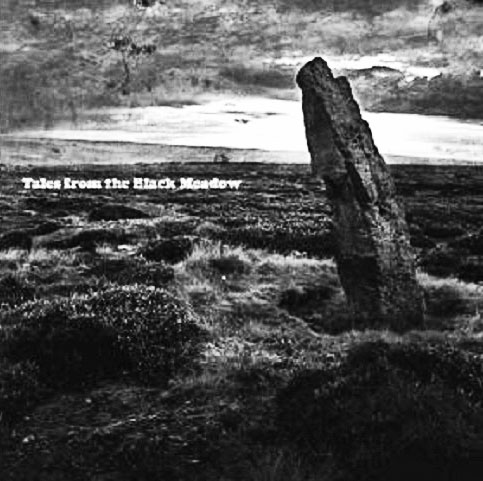
As part of this fictional history within the world of the Black Meadow it is said that in 1978 Radio 4 produced a rare documentary about the folklore, mystery and tales surrounding the Black Meadow area and commissioned music for the show, which has been unearthed and released to the public and the resulting soundtrack was released as Tales from the Black Meadow by The Soulless Party.
Even though it is widely known that it is a created history, revisiting the project leaves some lingering doubt as it plays with a hauntological sense of misremembered and faded cultural memories through the documentary backstory and the use of created archival material.
The soundtrack could also belong to a period television programme the name of which you can’t quite remember but which is possibly a forgotten and somewhat unsettling series, something that may belong in similar territory as Tales of the Unexpected (1979-1988) but as if it was created by Nigel Kneale.

The Book of the Lost (2014) is a collaboration between Emily Jones and The Rowan Amber Mill, the latter of which is one of the names that Stephen Stannard has released work as and the project in part draws from folk horror films such as The Wicker Man (1973), Witchfinder General (1968), Blood on Satan’s Claw (1971) and Psychomania (1973) and creates an intriguing world and backstory for the resulting music.
Instead of an imagined documentary as is the case with Tales from the Black Meadow, The Book of the Lost creates the soundtrack to episodes from an imagined period television series, which are called to life via the project and accompanied by details of their casts, synopsis, crew, production companies etc.
The backstory tells of how these would have been broadcast as part of a late-night television series called The Book of the Lost, from which the album took its name and it is reminiscent of early 1970s British portmanteau horror which often seemed to feature the iconic actress Joan Collins. In particular, Tales from the Crypt (1972) or Tales That Witness Madness (1973), films which have a certain period charm, entertainment value and cultural interest but which also reflected a time when British cinema was tumbling and hurtling towards its own demise via its focus on cheap exploitation fare, sex comedies or schlock and horror. Along loosely similar lines is The Equestrian Vortex: a filmwithin-a-film that appears in Peter Strickland’s cinematically released 2012 film Berberian Sound Studio; this is set in and around 1970s Italian giallo film culture and creates the phantasmagorical closed world of a recording studio which is being used to produce the sound effects for a horror film.
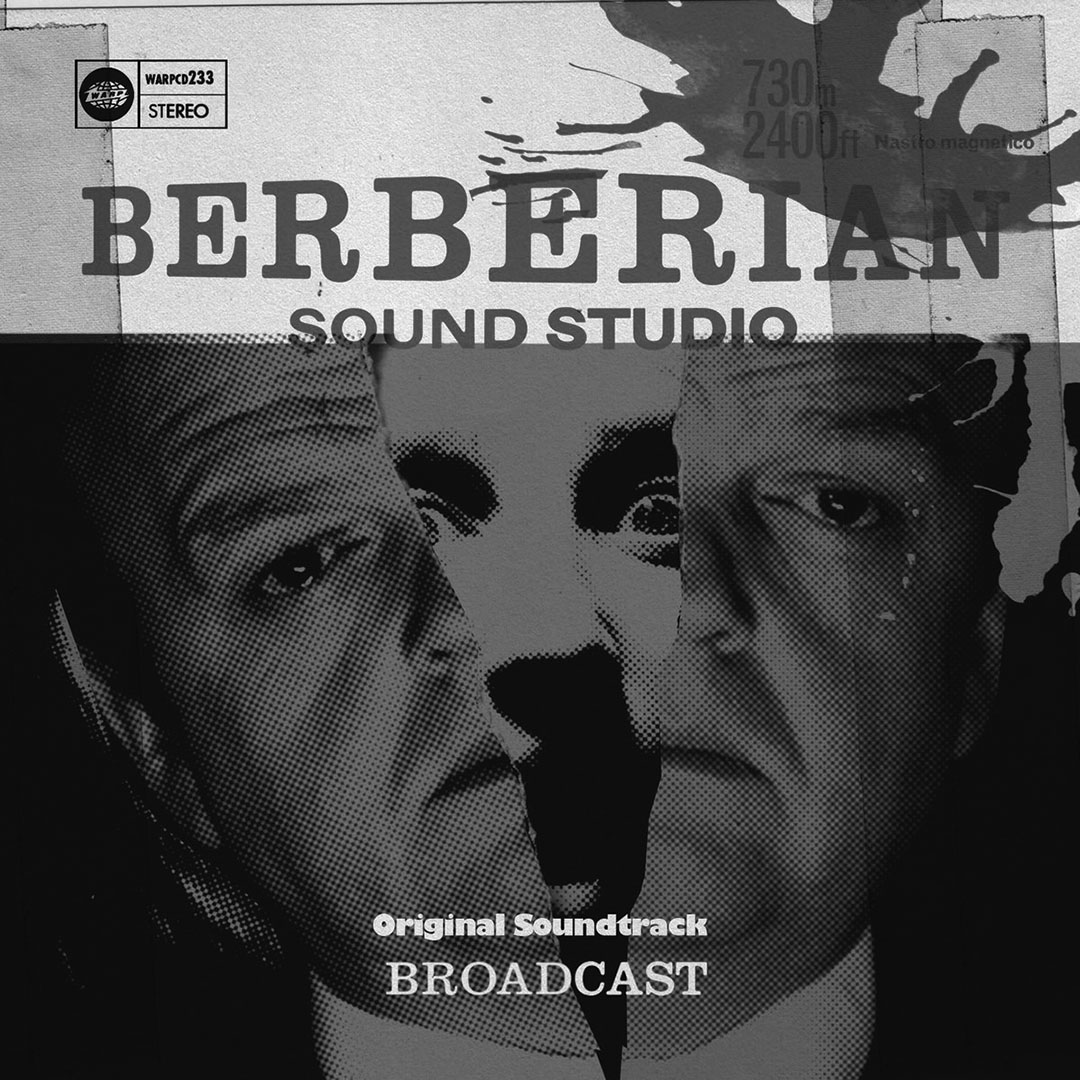
As with The Book of the Lost, The Equestrian Vortex draws from many of the classic tropes of folk horror and as part of its hermetic world creation it lists credits for an imagined cast, director, soundtrack and so forth.
Created by Julian House of Ghost Box Records/Intro design agency and soundtracked by Broadcast, The Equestrian Vortex appears purely as an introductory sequence created using found imagery and via sound effects in Berberian Sound Studio but without ever showing the actual film. It offers a brief window into the complete film and when watching it, there is a wish to see the full-length version, to seek out something that logically the viewer knows does not exist.
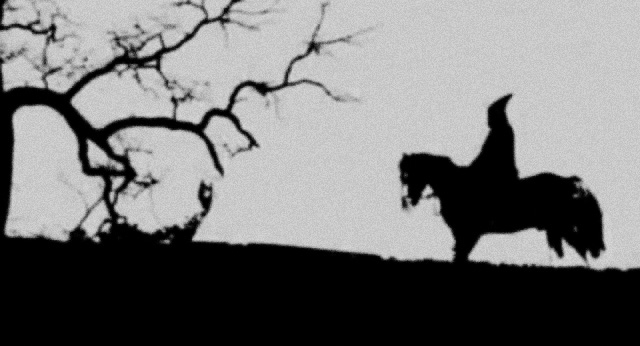
This is a reflection of the strength of such work as the aboveimagined soundtracks and films; they present only glimpses and fragments of the imagined worlds, tales and histories that they are said to come from, drawing on shared and sometimes faded cultural memories, leaving the viewer/listener space to weave, create and imagine the fully finished programmes and films.

It may not be merely budgetary or resource constraints that stop practitioners from creating whole new films or programmes, as work along these lines can be more part of a process of interacting with, distilling and capturing the spirit of the original programmes and films.
They could be seen as expressions of an urge to remember, misremember, reinterpret, rehabilitate, create and recreate connected themes, sounds and imagery; a way in which to summon or revisit the thoughts, visions and journeys that they have inspired rather than creating or attempting picture perfect simulacra of fully-realised episodes of television programmes and finished feature films.

And while we’re talking about rescuing artifacts from far flung corners of culture (see Songs for A Year In The Country 34), hats off to Jonny Trunk and Alan Gubby for their years long dedication in bringing about an official release of the music to one of the wyrd and hauntological television touchstones.


Edgelands is a word that refers to the edges of towns and cities that are neither urban nor rural; transitional, undeveloped or developing areas such as the land surrounding power stations, scrublands, wastelands, semi-derelict areas, semiindustrial areas and so forth. These are often the places where society creates, stores, repairs, discards, forgets about and disposes of the things it physically needs and they can also be starkly aesthetically neglected, though in contrast and in part because of that neglect or overlooking can also become something of a haven for nature and wildlife.
Edgelands contain many of society’s overlooked and often unsupervised nooks and crannies and so can seem to represent an ideal playground for a child (although they may not seem quite so ideal to parents due to them often containing various hazards and dangers).
 (Photograph from Bernard Lowry’s Pillboxes and Tank Traps book.)
Edgelands are random places and fascinating for a child: for myself they included building a dam across the river next to an old crystal deposit encrusted railway tunnel, a concrete military pillbox sitting incongruously at the edge of a field, an overgrown and more or less abandoned local graveyard where you could scare yourself by moving and peering inside the walls of old monuments.
Or a road that had broken up and collapsed down a hillside where if feeling intrepid you were able to pry the cats-eyes1 the remains of the middle of the road, the craters on hillsides where you could excitedly scavenge rusted machine remains, thinking they were sites where planes had crashed (they may have been discarded agricultural equipment, but these remains could have been aeronautical in origin as historically planes had crashed nearby).

Alongside these more rural edgelands lie actual edgelands: places that could have been real life 1970s British public information film settings. Related to which I also found myself playing among humming electricity pylons and tumbling amongst the abandoned fridges and washing machines on a hillside which led down to a river that would change colour depending on what was being pumped into it upstream.
For myself, such youthful edgeland playgrounds also took in an edge of town decommissioned airforce base, which had become a semi-developed camping park complete with can, bottle and possibly spectre-filled air raid shelters.
In later years they would include wandering on grey Sundays through the local industrial estate, where a coffin factory shared space sandwiched between fields and the main road with a poultry-processing establishment, which I would walk around to the soundtrack of suitably upliftingly depressing music on a borrowed portable cassette player (!)
Marion Shoard is thought to be the first person to use the term “edgelands” to describe these areas in her Edgelands essay from 2002, where she eloquently describes and defines them and considers how they are often overlooked by society:
“Britain’s towns and cities do not usually sit cheek by jowl with its countryside, as we often casually assume. Between urban and rural stands a kind of landscape quite different from either. Often vast in area, though hardly noticed, it is characterised by rubbish tips and warehouses, superstores and derelict industrial plant, office parks and gypsy encampments, golf courses, allotments and fragmented, frequently scruffy, farmland. All these heterogeneous elements are arranged in an unruly and often apparently chaotic fashion against a background of unkempt wasteland frequently swathed in riotous growths of colourful plants, both native and exotic… Huge numbers of people now spend much of their time living, working or moving within or through it. Yet for most of us, most of the time, this mysterious no man’s land passes unnoticed: in our imaginations, as opposed to our actual lives, it barely exists… As we flash past its seemingly meaningless contours in train, car or bus we somehow fail to register it on our retinas.”
In a continuum from Marion Shoard’s observations, an extensive body of literature and creative work exists which has focused on these hinterlands.

One of the early and most renowned documents or celebrations of such overlooked, often unloved parts of our world was Richard Mabey’s The Unofficial Countryside book, originally published in 1973 (and reissued in 2010 by Little Toller Books, who specialise in work which takes in a gentle flipside of rural, pastoral and landscape concerns).
The Unofficial Countryside records Richard Mabey’s explorations and wanderings through edgeland areas and the natural world, which has made a home in places that had previously often been considered inauspicious for plants and wildlife such as inner-city car parks, gravel pits and rubbish tips.
Rather than being purely a natural history document, within the book he also proposes another way of seeing and experiencing nature during our daily lives, whether wildflowers glimpsed from a commuter train, fox cubs playing on a motorway fringe or a kestrel hawking above a public park.
The social, political and economic strife of the UK at the time of its original publication makes its subject matter of plants and nature creeping and surviving through broken concrete, covering bombsites, thriving in cities and the associated sense of neglect and collapse somehow rather appropriate.

In more recent times Paul Farley and Michael Symmons Roberts’ 2012 book Edgelands – Journeys into England’s True Wilderness undertakes a literary, poetic exploration of such areas and in it the authors document their travels, personal memories and connections to these transitional landscapes, taking in along the way childhood dens, container ports, wastelands, ruins, mines and the endpoints for society’s automobiles.

In a more audiovisual manner the 2013 film, music and photography project by Karl Hyde and Kieran Evans’ Edgeland/The Outer Edges presents a psychogeographic expressive, creative and documentary wandering through what feel like semi-uncharted lands and lives, ones which are overlooked, strewn with debris and contain a faded battered beauty amongst the mixture of nature and pylons.

Edward Chell’s 2013 Soft Estate also makes use of multiple forms, including a book, traditional gallery exhibiting and what are effectively returning to their source installations and takes as its subject matter such edgeland places when they are found at the side of motorways.
Its title is taken from and refers to the description given by the UK Highways Agency to the natural habitat that the motorways and trunk roads it manages occupy; an often unstopped-on hinterland that most of us only view as a high-speed blur from the corner of our eyes as we travel past these autobahn edgelands.
Soft Estate interacts with and documents these verges and landscapes, sometimes in a quite literal sense as some of the work is printed using road dust from such places, other work uses (presumably) engine oil, features plant life illustrations from these verges laser etched onto brightly chromed exhaust pipes or uses the same materials and colours as road signs.

In his paintings of the tubing which protects sapling trees in “soft estate” locations (many millions of which have been planted on such lands), the mind’s eye sees them not so much as trees but rather as gravestones. Indeed, there is a ghostly, spectral quality to these paintings; they have a hauntological aspect in that although they are created in contemporary times, they also seem like documents of modernity’s future and past.
Alongside which they also capture the spirit and point at which nature tumbles alongside and into mankind’s march of progress and there is a meditative, calming sense to them; they ease the soul and provide a moment’s respite.
The Soft Estate book is also a collection of essays and effectively an exhibition catalogue, albeit one which exists as a handsomely produced artifact in its own right. It includes a piece of writing by Richard Mabey and the inclusion of his writing here can be seen as providing a continuing line from and through considerations of edgelands in their various forms.

Intriguingly, some of Edward Chell’s Soft Estate work was installed in a number of the restaurants which formed part of the popular Little Chef chain of British roadside family restaurants that was founded in 1958 and which was inspired by American diners.
For many British children, these provided a first taste of what are now regarded as American-style burgers and fries. Although in the 1970s and 1980s (and possibly later) in Little Chefs they were served on a plate with knives and forks in what was nearer to a traditional restaurant setting rather than eaten by hand in a burger bar or cafe as would become standard with burgers in later years; along with the nature of edgelands themselves, such places, presentation and foodstuffs can be seen as another transitional/ liminal point.

When I wrote the original version of this chapter, which was included in A Year In The Country: Wandering Through Spectral Fields (2018), the number of Little Chefs had been dwindling for a number of years since their peak of 439 in the 1990s but I would still have rare sightings of them.
However, they felt like endangered species; a quaint remnant of times gone by before the ubiquity of transnational chains and the more utilitarian seeming widespread installation of motorway service stations
They proved to be an actual endangered species, of sorts, as they had all closed down by around 2018 but it still brings a smile to think of Edward Chell’s artwork in them, which seems like an apposite, humorous coming together of cultures.


They just don’t make them like this anymore. Rescued by Finders Keepers Records from the faded history and furthest fringes of arthouse theatre. Experimental, accessible, haunting. Beautiful.