Posted on

E4’s Wicker Man Ident – Further Glimpses of Albion in the Overgrowth: Wyrd Explorations 34

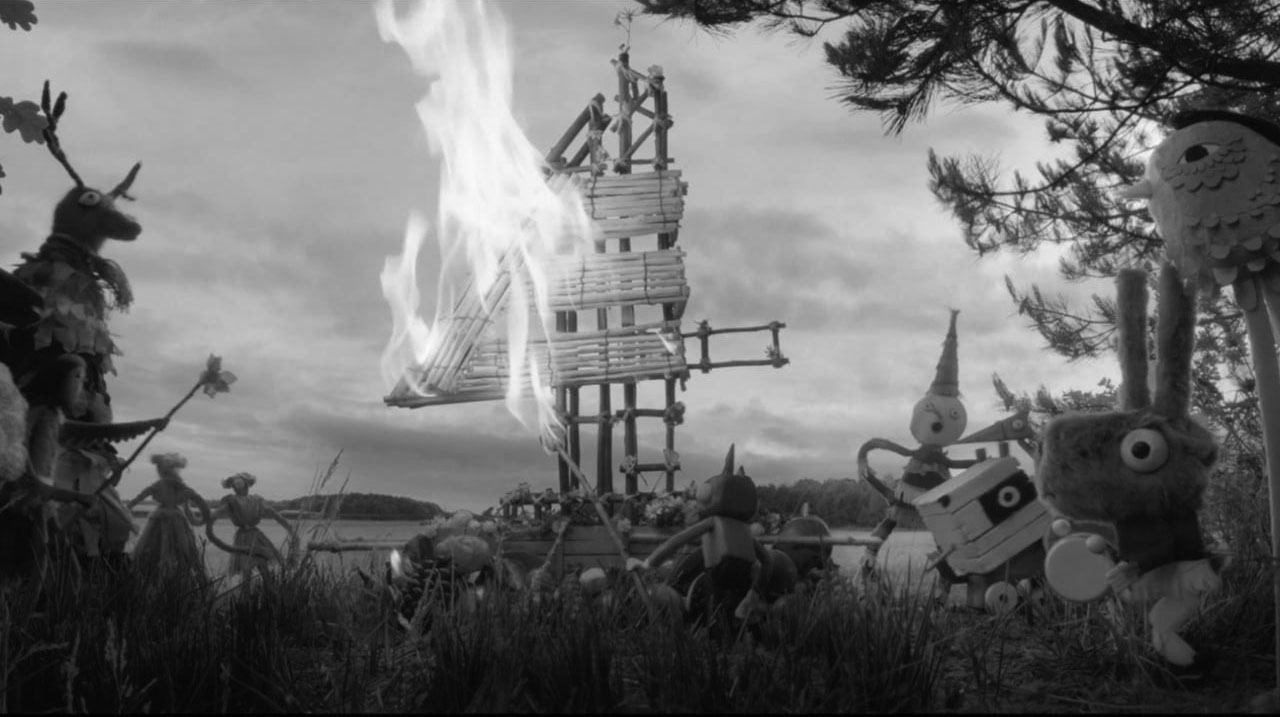
In terms of “Albion in the overgrowth”, the 2018 Wicker Man ident for British television’s Channel 4’s subsidiary channel E4 could well be grouped alongside the “Savage Party” trailer which I posted about in Wyrd Explorations 33.

It is an animated short film made by Parabella Animation Studio, which was founded by Mikey Please and Daniel Ojari, that was used as a link between programmes, and seems to variously be channelling 1960s or 1970s British children’s television animated series, lost Eastern European animation from an indefinable earlier decade, bucolic calm, folk rituals, folk art and folk horror – in particular, and not surprisingly considering the ident’s name, the previously mentioned iconic folk horror film The Wicker Man – all in a brief 30 seconds or so. It is the kind of thing that you could imagine being part of some semi-forgotten children’s television series originally broadcast back when that the esoteric archival record label Finders Keepers Records would release the soundtrack to.

The animation and figures that appear in the ident are at a notable remove from polished contemporary CGI based work, appearing (I assume) to have been done by hand and have a pleasingly handcrafted folk art-ish feel and seem to be made from materials such as fabric, wood etc. In terms of their handcrafted aesthetic and animation style, they recall the 1960s and 1970s Smallfilms animated children’s television work by Oliver Postgate and Peter Firmin, such as Bagpuss (1974) and Clangers (1969-1974), and like those series the ident seems to offer a glimpse or portal viewing of a magical self-contained world unto itself.

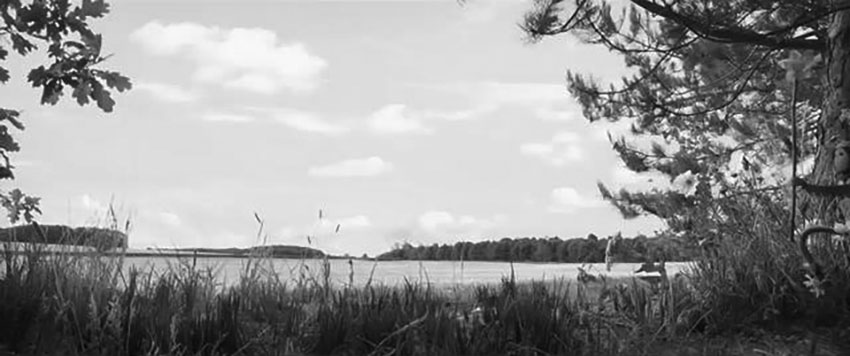
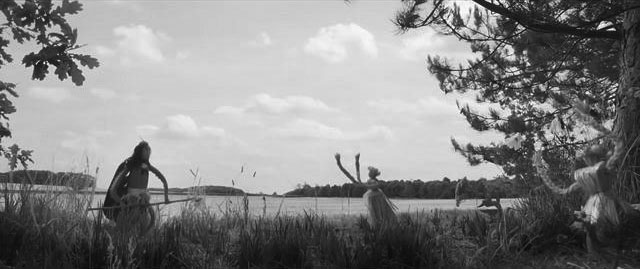
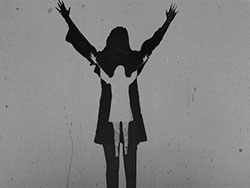
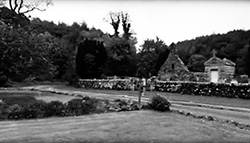
The ident opens on a view over a neatly recently harvested looking field, taking a viewpoint from the uncultivated edges of the field, which is where events take place as though to show that they are at a remove from the norms and orderliness of civilisation. Initially, a lone king-like figure walks onto the screen, wearing a cape and holding a flower by its stem as though it is a sceptre. He is vaguely human-like in shape but without facial features, has long thin bendy pipe cleaner-esque limbs and his body/fabric skin are green.

He is soon joined by other figures and creatures, who to varying degrees often have anthropomorphic human characteristics, and they begin folk ritual-esque revels and dancing. The other revellers include, amongst others, two frolicking corn dollies, a sheep that walks on its hind legs and is carrying a flag standard that bears the E4 logo, a strange tall folk ritual costume-esque pyramidical creature with a stag’s antlered head, a cockerel that only seems to consist of a blue head and unnaturally long stilt-like orange legs, a staring eyed blue-headed rabbit and a black and white creature, possibly a cow, made from layered wooden sections and that has a squared head. The soundtrack during this section mixes the stomp of the king walking, rural field recordings of birdsong etc and a free form seeming acoustic folk tune (loosely) played by the revellers.

A fox wearing human-style clothing, which also walks on its hind legs, and some kind of clown that is reminiscent of an unsettling, skewed memory of a Victorian child’s toy, wheel on a cart which contains a folk art-esque wicker structure that forms the E4 logo. Once this is in place at the centre of the revellers the day darkens and the fox sets fire to the wicker logo, and it is at this point that the ident begins to take a darker turn, and marking this the soundtrack quickly and briefly changes to a form of choral drone.

Night suddenly descends, the folk music resumes and the revels continue but now there is something, if not bacchanalian, then at least subtly frenzied about events as the participants dance around the burning wicker structure. The king sets light to one of the wicker dollies, which continues merrily dancing, and the clown also seems to be on fire but not making any attempt to halt this. The ident then ends but there is a sense that the revels and their transgressions will continue.

What it brings to mind is Mackenzie Crook’s reimagining of the rural magic realism children’s television series Worzel Gummidge (1979-1989), which in Crook’s version, that began to be broadcast in 2019, features a living scarecrow who befriends two visiting children and via preternatural means, and with the assistance of his fellow scarecrows, helps to mend the seasons which have gone out of joint, which has both light-hearted and humorous aspects but that also at points can seem like a friendly nightmare and contains an unsettling unpredictable atmosphere, which is emphasised by the scarecrows at points seeming unfettered by convention and even chaotic, especially when they meet and gather together.

E4’s Wicker Man ident has a not dissimilar sense of both playfulness and an unsettling air, and as at the end of the original The Wicker Man film, which as suggested above the ident seems to fairly directly draw from and interconnect with, there is a sense of a folkloric ritual orientated rural community having come adrift.

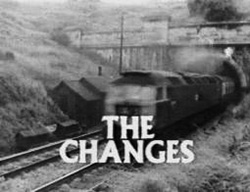
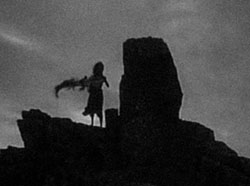
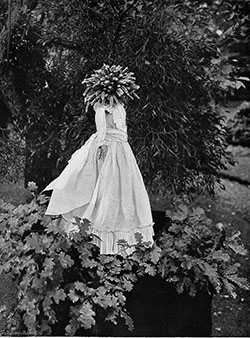
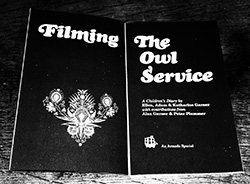
What both Mackenzie Crook’s Worzel Gummidge and E4’s Wicker Man ident both also bring to mind is the (possibly) accidental at times surprisingly dark or unsettling atmospheres of some sections of late 1960s and 1970s British children and young adult-orientated rurally set television drama series that have become hauntological and wyrd rural cultural mainstays – such as the drama series The Changes (1975), Children of the Stones (1976) and The Owl Service (1969-1970),and also possibly some public information films from that time – with the Wicker Manident sharing with them a sort of headshaking “What? What was that?” aspect.

Posted on

“Savage Party” – Glimpses of Albion in the Overgrowth: Wyrd Explorations 33

Now onto Hollyoaks. No, don’t run for the hills… In 2012 in the earlyish days of planning for A Year In The Countrythere was a trailer being broadcast for an episode called “Savage Party” of the British television youth-orientated soap opera Hollyoaks.

The trailer is in large part a mainstream high street fashionesque take on some of the visual language, themes and tropes of the flipside or undercurrents of folkloric culture expressed in the likes of The Wicker Man (1973): a glimpse of Albion in the cultural overgrowth, a step through the gates into the secret garden (with spangly hotpants as your attire).

It shows the young cast of the series, many of whom are animal masked, behorned and May Queen crowned, entering a gated slightly magical-seeming area of woodland and join a gathering which has a carnivalesque atmosphere and seems to subtly hark back to earlier almost pagan times. This is accompanied by flickering projections, preternatural weather, torchlit processions and a subtle sense of dread to come for some of its inhabitants.

The trailer’s soundtrack is Stealing Sheep’s “Shut Eye” (2012), which is a lovely catchy sort of psych-folk indie-pop song, with the band’s music reminding me in a way of a more youthful, British Coco Rosie (the sister duo who were loosely connected with American freak folk in the 2000s, along with the likes of Devandra Banhart and Joanna Newsom). And yes, the trailer is perhaps a simulacra of folklore-inspired culture but it is still enjoyable, evocative and culturally intriguing.

This brings into play notions of authenticity; what they actually mean and why we place such a high value on authenticity, which is such an elusive and intangible thing but at the same time often seems very apparent when it is there and when it is not.

For some reason this promotional video blurs those lines a touch. It is a joyous playful copy but one which seems to have been created with a degree of love or passion for its source material.

All stories are created or summoned forth from imagination at some point, even the most precious and longstanding folkloric tales probably originally stumbled out of the mind/s of individuals but somewhere along the line they have put down roots and become thought of as authentic.

The original 1973 version of The Wicker Man is a prime example; this was a fictional film created with quite a pile of cash by one of the moneyed sides of the culture business as a commercial project and the music was created by a band put together for this purpose but it has become an authentic totem of a particular kind of otherly Albion and wyrd folklore.

At the time of the “Savage Party” trailer broadcast folk horror and related themes and tropes had not yet been as incorporated into mainstream culture as is the case today and so the appearance of such, at the time, less well travelled cultural tropes etc in a mainstream television broadcast was an unexpected treat.

Posted on

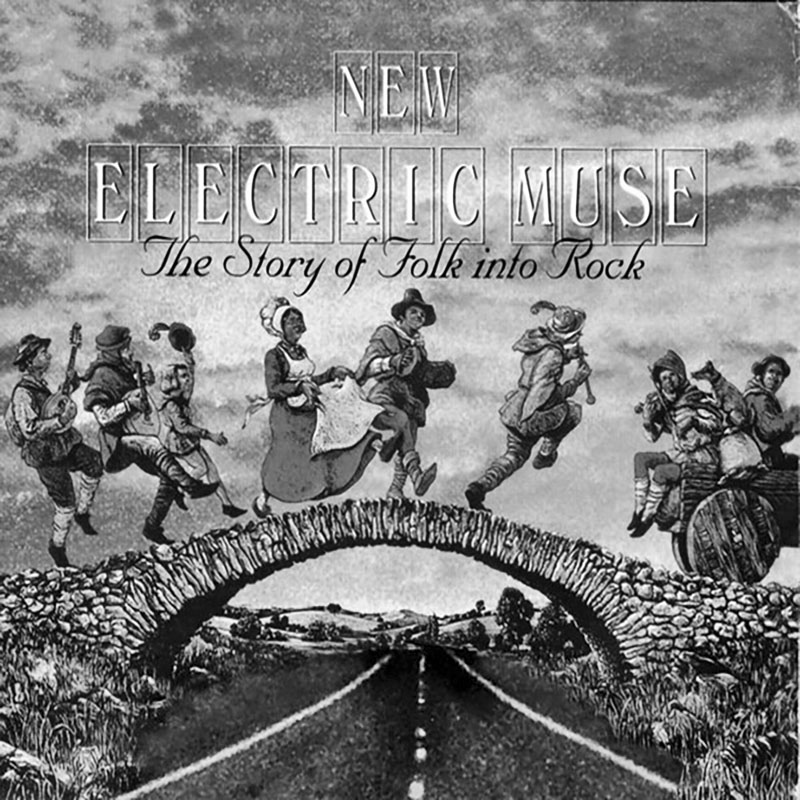
Battlefield Band’s “Tae the Beggin'” from New Electric Muse The Story of Folk Into Rock: Songs for A Year In The Country 32

An insanely catchy version of a traditional song with a repetitive minimal electronic hook/pulse on it that I’d like to think was made using an analogue synth that cost 20p but I think might be either an electric piano or pedal organ… “And who would be a monarch when a beggar lives so well?”…

Posted on

Resistance and Tank 432 – Conflict in the Landscape and Interconnected Pathways to the Outer Edges of Genre Film: Wyrd Explorations 32

Often war films are action and/or large-scale spectacle orientated but the two films discussed in this chapter, Resistance (2011) and Tank 432 (2015), take a different approach and instead focus on small groups of soldiers and are lower key in terms of their story telling. Accompanying which to a large degree while they are set in and around conflicts and military related operations in terms of their plots, atmospheres and so on only indirectly connect with conventional war films.

Resistance, directed by Amit Gupta and based on Owen Sheers’ 2007 novel of the same name, is set in an alternate history version of 1944 after D-Day has failed and Germany has invaded Britain.

Rather than concentrating on the spectacle of military battles etc it is a relatively low-key film set in an isolated Welsh valley that contains a few small farming households, which are now being run only by the local women as all their husbands and the other local men have left to join the resistance.

The main rural setting of the film is at times shown to be a harsh place to live but it also contains a considerable amount of natural beauty which makes the arrival of German soldiers jarring and almost surreal and this is even more pronounced during a traditional local country fair which is emblazoned with Nazi Swastikas etc.

The German soldiers commandeer an empty farmhouse while they search in the area for a hidden Medieval map which is based on the real-world Hereford Mappa Mundi that it has been suggested is connected with an anti-Semitic leader of a religious cult in the 13th century. The German captain says somewhat disparagingly, which reflects his general disillusionment and personal lack of fanaticism with regards to his country’s rulers and their aims, that such artifacts are used by the higher echelons of the German state to justify what they do, i.e., the fanatical persecution of Jews.

While being very different in terms of eschewing spectacle etc, these aspects of the plot have similarities with Steven Spielberg’s pre-WWII set action-adventure blockbuster Raiders of the Lost Ark (1981) in which German soldiers and their accomplices hunt an ancient Biblical artifact in order to make use of its preternatural powers.

It also interconnects with one of the recurring tropes of folk horror film, that of isolated rural places enabling social norms to fall away. The German soldiers are removed from their army’s power structure which enables them to try and escape the horrors of the war by living a more normal life alongside the Welsh women who pragmatically accept their help on their farms. Ultimately though this proves to be an unsustainable idyll when the conflict inevitably arrives at their door and the film ends on an ambiguously hopeful but also desolate note.

While Resistance is decidedly not a conventional genre film, Nick Gillespie’s science fiction horror film Tank 432 more directly utilises genre tropes but is still at quite a remove from conventional genre work.

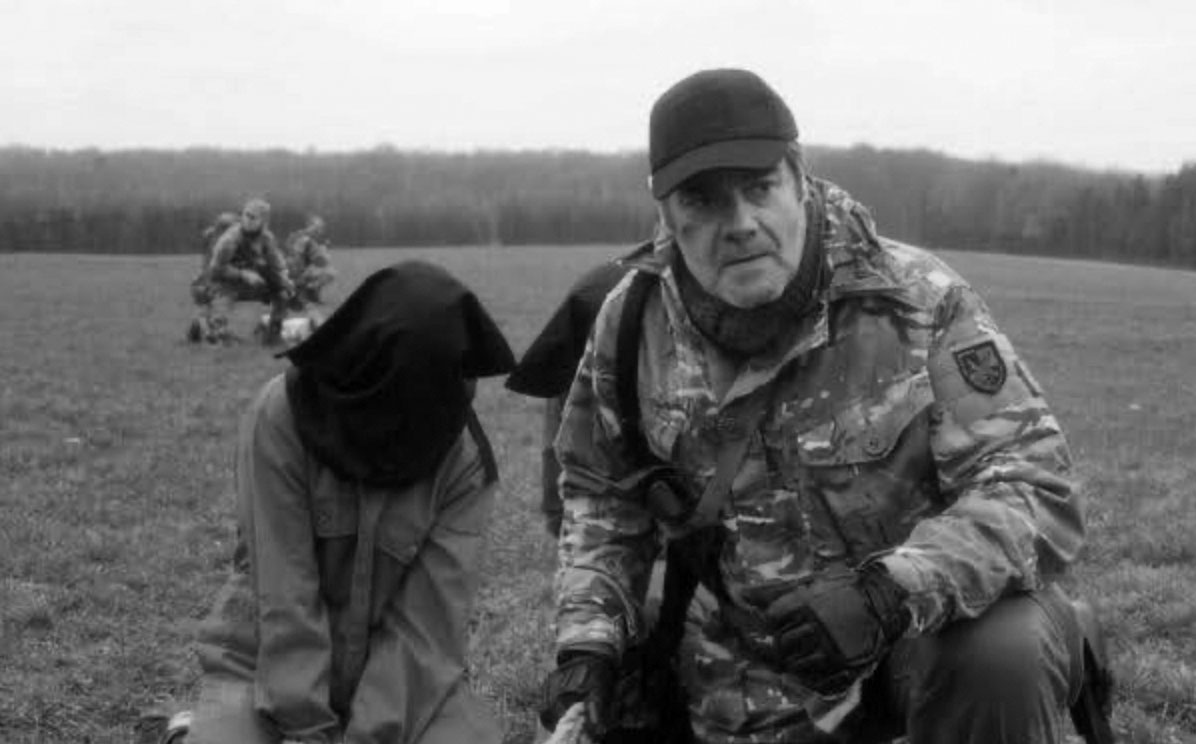
Gillespie wrote and directed the film which is based on his short story The Smith Hill Forest Incident and it has been described as Dog Soldiers (2002) meets Jacob’s Ladder (1990) due to the way that it explores similar plotlines etc, including, as in Dog Soldiers, a small group of soldiers in an isolated rural area who are under attack from a mysterious or preternatural seeming external force and, as in Jacob’s Ladder, military experiments involving psychotropic drugs which have deadly consequences.

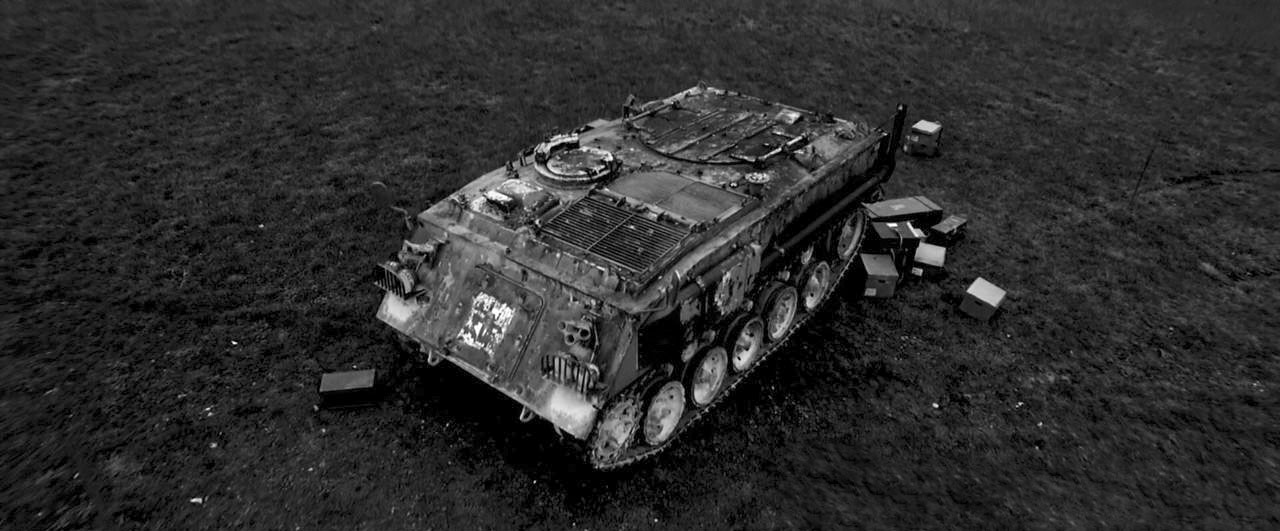
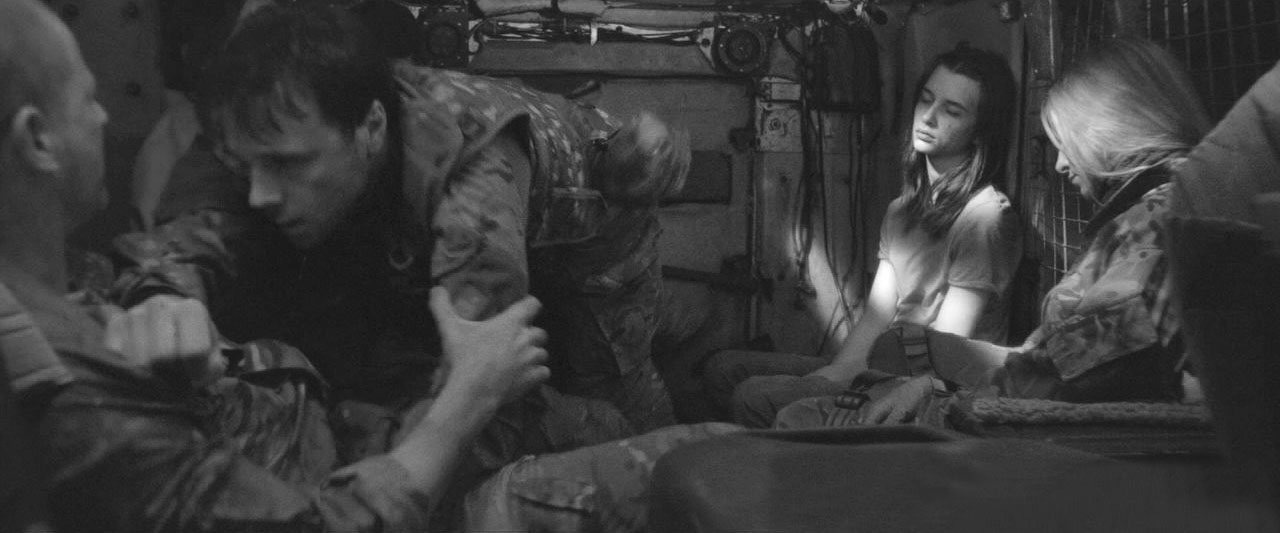
It is set in a seemingly deserted rural unnamed but probably British landscape and centres around a group of six mercenaries who are attempting to flee on foot from an unseen enemy while transporting two hostages. They eventually take refuge in an abandoned armoured personnel carrier where they become trapped and their psyches appear to unravel.

Little or no backstory is initially offered as to who their enemy is, how the mercenaries arrived in this isolated location nor what conflict they are part of is but various uncommented on details such as the orange detention suits of the hostages and the use of mercenaries on British soil imply that the film is possibly set in a dystopian near-future.

There are brief flashes of their “enemy” off in the distance, who have an otherworldly insectoid-like facial appearance and appear to be impervious to gunfire and until the end of the film it is not clear if they are real or not or even whether they are aliens or preternatural creatures of some sort.

Unbeknownst to them the group are part of an experiment in which they have been exposed to a form of drug via an orange powder of unknown origin which they repeatedly come across and which has also been placed surreptitiously in pills they take to help them sleep. The drug is being tested for its military application, which may in part be the heightening of aggression and while this is not made fully clear one of its effects in their case is that it causes them to hallucinate and become psychotic which leads them to turn on and kill one another.

The film creates a hallucinatory, claustrophobic and hellish atmosphere within the, sometimes literal, confines of its story and combines genre filmmaking with more left of centre thought provoking aspects in terms of its distinctive exploration of the morality of military research and development. In relation to which it also has points of connection with an interconnected group of British filmmakers who often work in and/or draw from threshold areas of genre film and who have worked together in various capacities. These include, amongst others who are discussed below, Peter Strickland and Ben Wheatley, both of whom Tank 432’s director Nick Gillespie has worked with as, variously, a director of photography, cameraman and photographer and the latter of whom directed the unsettling occult edgeland set folk horror film Kill List (2011) and is also the executive producer of Tank 432, alongside having been one of the producers for Strickland’s The Duke of Burgundy (2014) and In Fabric (2018).

All three have also worked with Andrew Starke – with who Ben Wheatley alongside Amy Jump formed the production company Rook Films that produced Peter Strickland’s above-mentioned films – and who has been a producer on a number of the films they have worked on.*

This interconnected grouping of filmmakers could be seen as (loosely) following a path or lineage laid down by David Cronenberg whose work has often combined exploitation-esque and genre cinema tropes etc with a left-field, auteur-like character and an accompanying cerebral exploration.

Interconnected with which, Starke was a director and producer of the 1999 documentary series Eurotika! that was broadcast on the mainstream British television channel Channel 4.

This focused on and gave relatively early critical credence to films and filmmakers including, amongst others, Jean Rollin, Jesús Franco and José Ramón Larraz, whose work often contained exploitation-like aspects intertwined with auteuresque and left-field characteristics. At the time such filmmakers had not yet received all that much mainstream or respectable critical attention and the series could be considered to be part of their rehabilitation, which has led in recent years to related work receiving “serious” critical consideration, being released and promoted by the British Film Institute etc.


*Lines of connection could also be drawn between these filmmakers and John Carpenter’s film work; while this is generally more conventional and mainstream friendly than Cronenberg’s as with his work it has also often intertwined genre tropes with a distinctive auteur-like character. While in the films The Thing (1982), Prince of Darkness (1987) and They Live (1988) these aspects were also intertwined with respectively a notably non-mainstream friendly bleak nihilism, a layered and thought provoking exploration of arcane beliefs and a satire of the structures of power and consumerism.


Posted on

Simon Perkins’ Lurgy and Fellfoul – Tumbling Into Parallel Worlds With Mulgrave Audio

This week I’ve spent a fair bit of time in the magical worlds of audio drama company/project Mulgrave Audio; in a post earlier this week (visit that here) alongside discussing their third audio drama Patchwuff I discussed the ethos behind Mulgrave Audio, who its founders were, their backgrounds etc so I won’t go into that again here but rather I’ll jump straight in to writing about their first two releases.

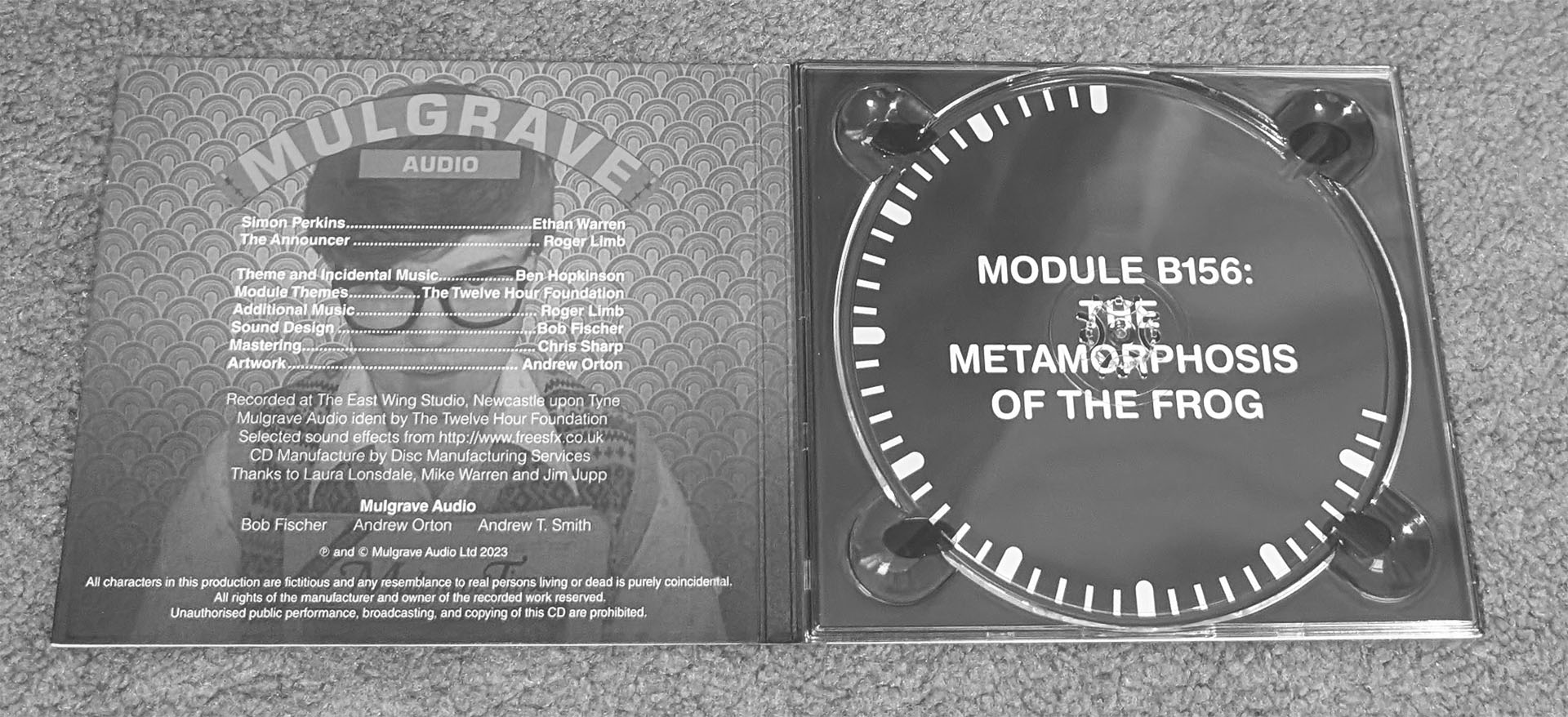
Simon Perkins’ Lurgy (that for shorthand purposes I’ll refer to as SPL) was released in 2023 and was their first release. It was written by Mulgrave Audio co-founder Bob Fischer, who readers may also know from his The Haunted Generation website and its accompanying regular column in Fortean Times where he discusses and explores all things hauntological and wyrd.

SPL is set in September 1974 and centres around a 15-year-old school boy called Simon, played by Ethan Warren, who has been struck down by some undiagnosed illness  – the “lurgy” of the title – which has sapped him of energy, caused him to have extreme joint pain, swollen ankles and more, all of which leaves him laid up on his grandma’s sofa as his parents are at work, where he is almost immediately isolated from both his parents and his peers and often only has daytime Open University television programmes for company.

Some folk reading this, particularly overseas readers, may not know what Open University broadcasts were so I’ll give a brief overview of them; they were created to accompany study at the Open University, which is a non-campus British university which by number of students is the largest university in the UK. Its television broadcasts, that began in 1971, were at one time a fairly intrinsic part of British life and although they continued to be broadcast until 2006 their peak years in terms of public profile seem to have been the 1970s and to a degree the 1980s, and for those who grew up when they were broadcast, they immediately conjure up visions of kipper tie wearing bearded lecturers/presenters. Their inclusion accompanies SPL’s note perfect reproduction of its 1974 setting that in a very naturalistic manner is chock full of period details, many of which, if you’re of a particular age, will no doubt bring a smile of recall to your face.

The Open University broadcasts play a central role in SPL as in Britain when the drama is set conventional television wasn’t broadcast continuously throughout the day but rather at points just a test card was broadcast and/or there would be Open University broadcasts, and so if, as is Simon Perkins in the drama, a schoolchild was off school due to illness then out of desperation they might well find themselves watching Open University programmes.

But in SPL they prove to be something of a portal to a parallel plane of existence; the programmes’ announcer, played by Roger Limb who adds impressive backstory credentials and real world meets fiction layering to the drama as he was a member of the legendary BBC Radiophonic Workshop alongside having worked at the BBC in the 1970s as a continuity announcer, begins to talk to Simon and it’s unclear whether or not this is due to him hallucinating due to his high temperature or if it’s actually happening. In fact, much of the drama feels like a fever dream where intriguingly the listener, even at its end, doesn’t know what’s real or what’s not.

The announcer begins to beckon Simon to escape his illness and the prosaic humdrum nature of reality, which Simon struggles with, by reaching out to touch the television screen which will enable him to become part of an alternate reality. This “beckoning” and the promise of a better life through the portal of the television variously recalls and intersects with the behaviour of The White Witch in C.S. Lewis’ 1950 portal fantasy novel The Lion, the Witch and the Wardrobe who attempts to lure and control one of the child characters through the use of addictively and alluringly enchanted turkish delight sweets. There are also lines of connection to the titular spectral and sinisterly beatific character in David Rudkin’s 1987 television drama White Lady, which he described as “A parable on the agro-chemical destruction of nature”, who attempts to lure a father’s children via encouraging them to eat crops that have been grown with deadly pesticides, which she is the corporeal embodiment of, to her world where she says they will never die and will have “strawberries and asparagus all year”. There are also points of connection with the 1982 supernatural horror film Poltergeist in which a family’s young daughter makes contact with supernatural spirits through the medium of post-broadcast television static before she is pulled via a portal into the spirit world.

However, SPL differs from such stories as while the announcer’s beckoning to Simon to join him in another reality seems both sinister and beneficent in its intentions, whether or not the potential results of that beckoning are disastrous for Simon, as in part referred to earlier and as with much of SPL, are left open to interpretation.

Interconnected with which, as a drama I expect its enigmatically unexplained mysteries will stick in my mind for a good while and I won’t be surprised to find myself wondering about them for a fair while to come.

And as with all the audio dramas that Mulgrave Audio have so far released, SPL has impressive production values that help to paint and create their stories and worlds for the listener. In SPL this includes music by Ben Hopkinson, cast member Roger Limb and The Twelve Hour Foundation, the latter of whom (I think) created the introductory audio ident that begins in an acoustic manner that brings to mind a mid-1970s privately pressed once lost pastoral folk album that’s only recently been discovered before intertwining those elements with a classic “hauntological” sounding analogue synth. The main part of the drama then opens with a gently fever dream-esque layered section of subtly tape-oscillation-like music that recalls a wyrd children’s television series from the 1970s and which is overlayed with a montage of voices that you can’t quite hear what they are saying, all of which creates an atmospheric introduction and stall setting for the drama’s dreamscape-esque story.

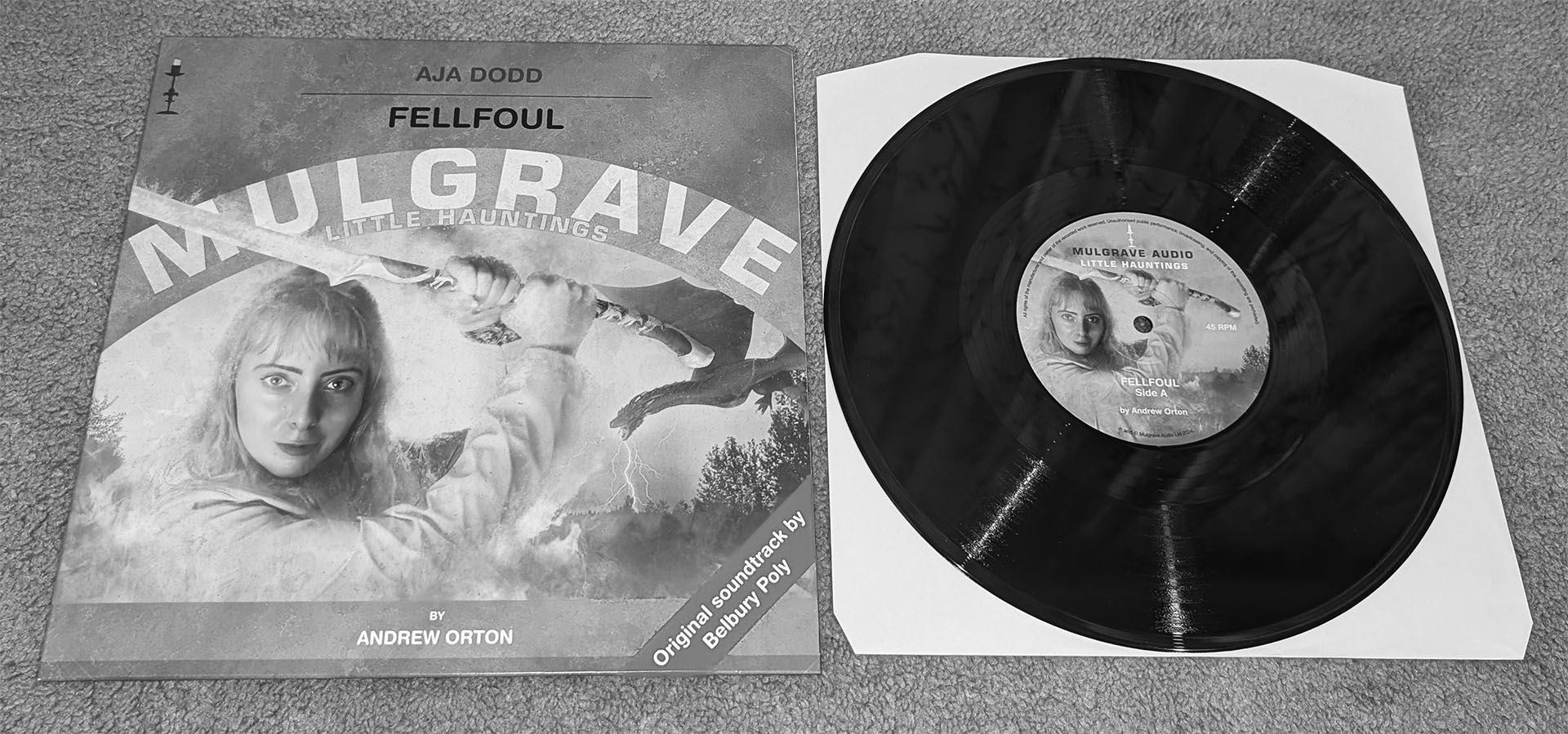
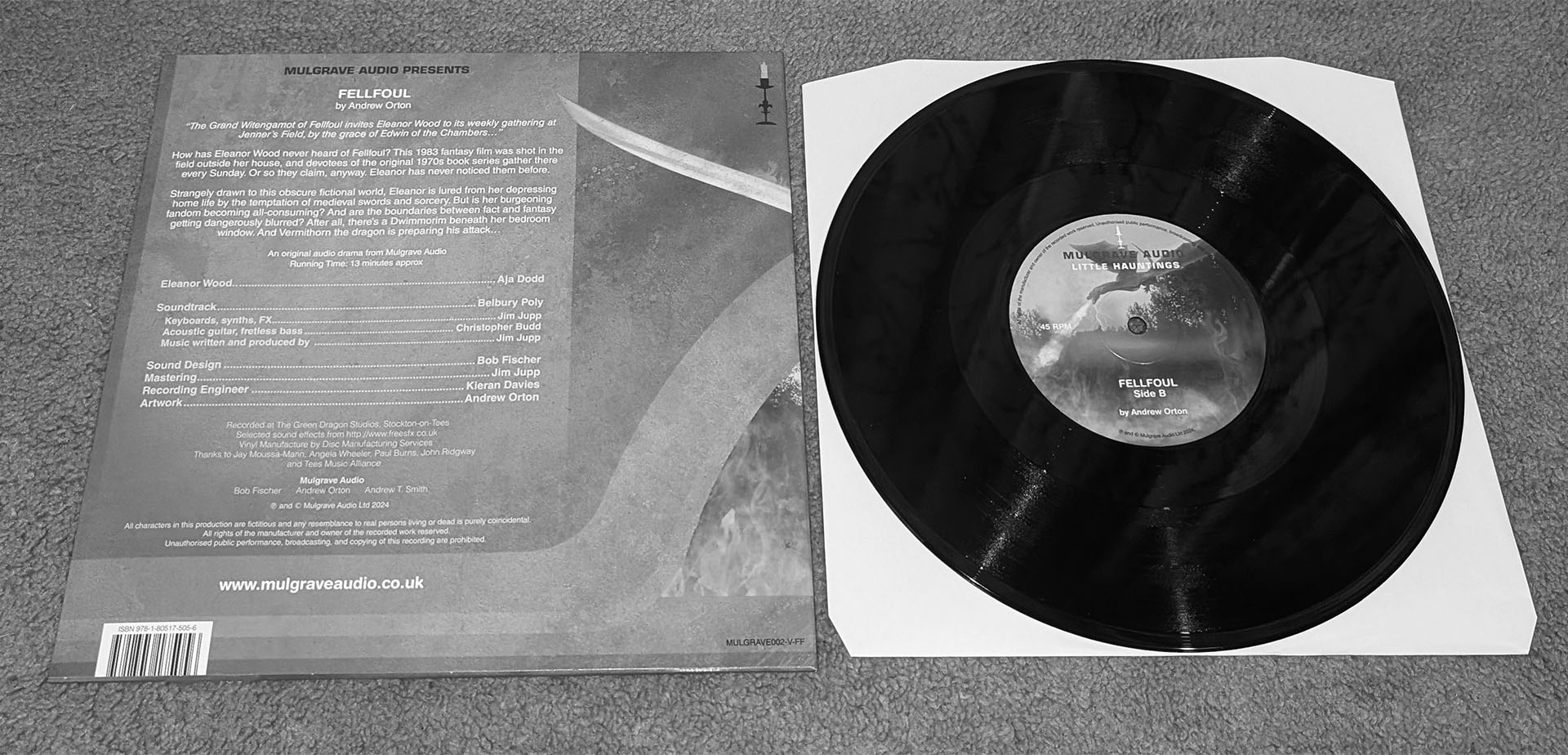
Which brings me to Mulgrave Audio’s second audio drama release Fellfoul (2024), which was the first in their series of short form “Little Hauntings” audio dramas (Patchwuff that I’ve written about previously was the second).

This interconnects with the 1980s fantasy film boom, which in turn – as do the themes, aesthetics and cultural reference points of Fellfoul – interconnects with the rise of popularity during the 1980s of the fantasy role playing game Dungeon and Dragons and also the “choose your own adventure” Fighting Fantasy series of books.

Fellfoul is a brief but satisfying 13 minutes long; written by Mulgrave Audio co-founder Andrew Orton it it tells the tale of Eleanor Wood, played by Aja Dodd, who becomes ever more drawn to the fictional world of the Fellfoul series of fantasy books. The low budget 1983 British film adaptation of one of the books was shot in the field outside her garden but strangely despite devotees of the books supposedly gathering in the field every Sunday she hasn’t ever heard of either Fellfoul nor noticed them and for some reason, although the Fellfoul books and their plots etc are shown to be discussed and referred to online, the books themselves remain curiously elusive.

(As a slight aside, this aspect of the drama’s story intersects with the hauntological-esque cultural trope of mysteriously and possibly preternaturally lost films, songs and so on, the recurrence of which could be considered to be in part a reflection of how in the contemporary cultural landscape, to paraphrase and in part reference author and academic Mark Fisher, digital storage etc has enabled all of culture to be easily archived and recalled which has resulted in there being a sense of the loss of loss, which in turn has resulted in people being drawn to stories which explore culture that has become lost in some way.)

As with SPL, Fellfoul explores a sense of blurred boundaries between reality, fiction and (possibly) parallel worlds, and also as with SPL it does not fully explain or neatly round off the mysterious occurrences of its story, which leaves space for the viewer’s imagination to wander and wonder about it. Alongside and interconnected with which its brief running time and concise enigmatic self-contained fantastical storytelling brings to mind the classic American fantasy science fiction horror anthology television series The Twilight Zone (1959-1964), the stories and occurrences of which would also often have intriguingly mysterious, unexplained and not neatly rounded off aspects.

As with the other Mulgrave Audio dramas, Fellfoul has an impressive music soundtrack, which in this case is by Belbury Poly aka Jim Jupp, the co-founder of the record label Ghost Box Records, which was one of the pioneers and has become a mainstay of hauntological and related culture, who here is accompanied by fellow musician Christopher Budd. Their synth and traditional instrumentation based opening and main title tracks for Fellfoul recall an early 1980s science fiction or fantasy series from somewhere on the furthest fringes of your memory, something that you maybe watched around a similar time as the 1981 BBC television adaptation of the first two of Douglas Adams’ The Hitchhiker’s Guide to the Galaxy series of books but which for some unknown reason you can’t find any reference to online…

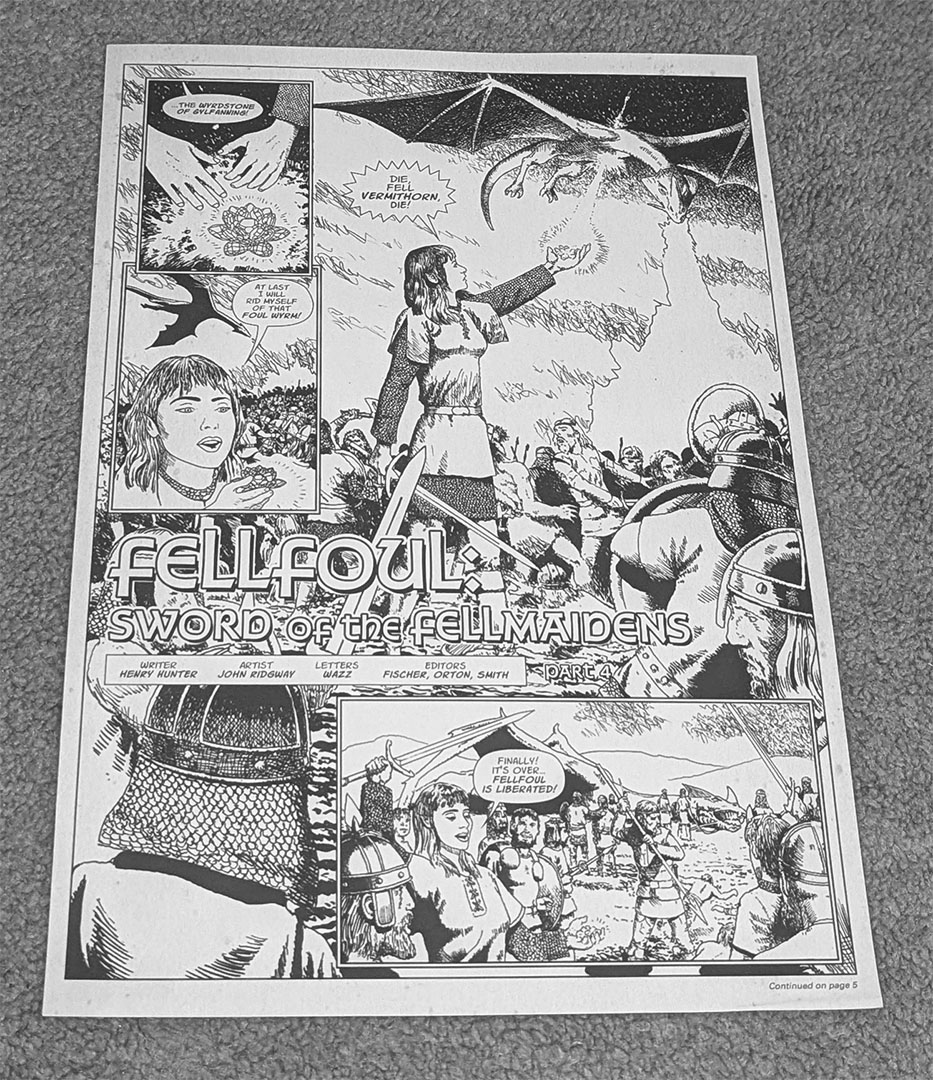
(Above: a page of the “lost” Fellfoul comic from 1983 – artwork by John Ridgway of 2000AD and Doctor Who Magazine fame.)

Links:

Posted on

Brian Rice and Tony Evans’ The English Sunrise – Industrially Produced Folk Art

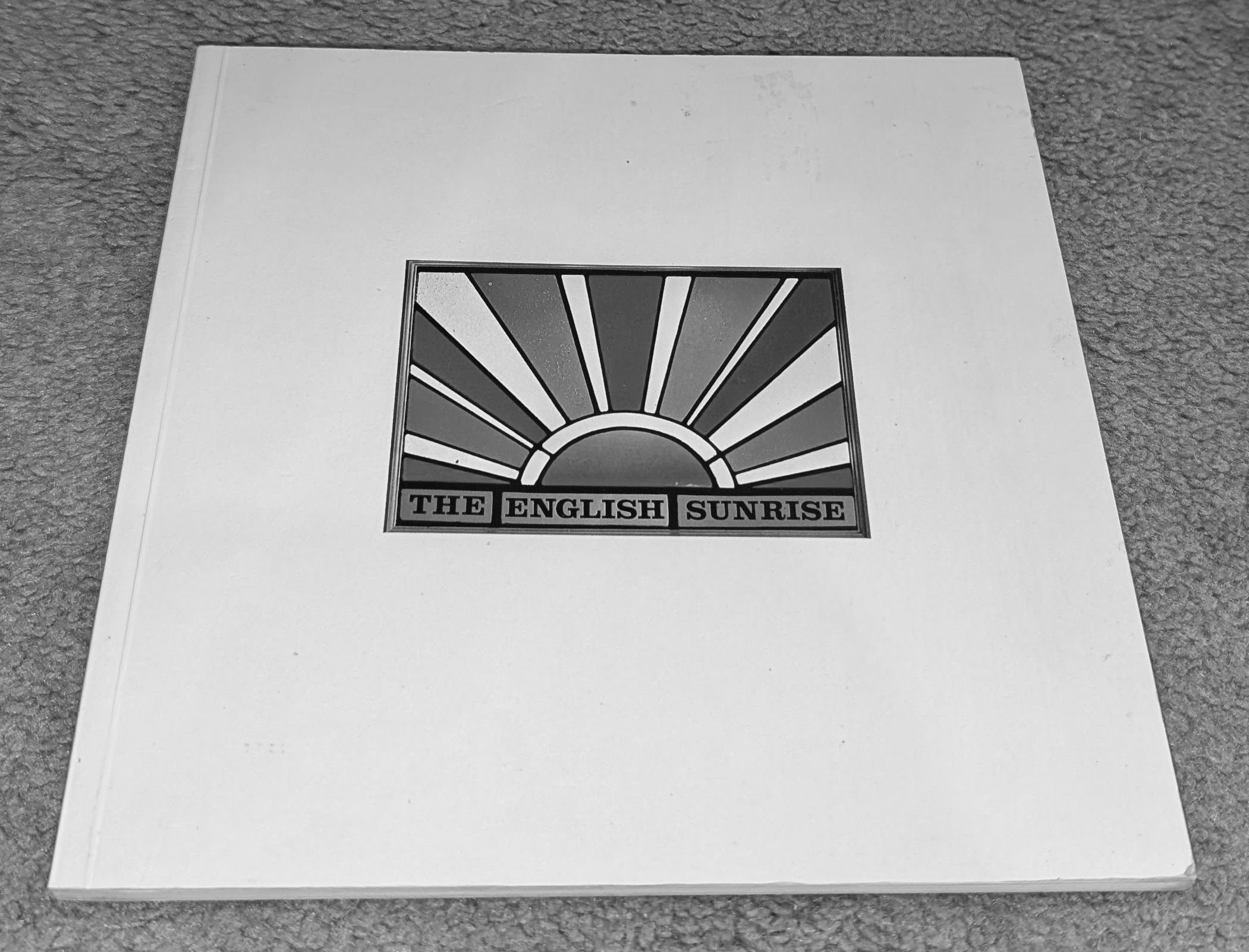
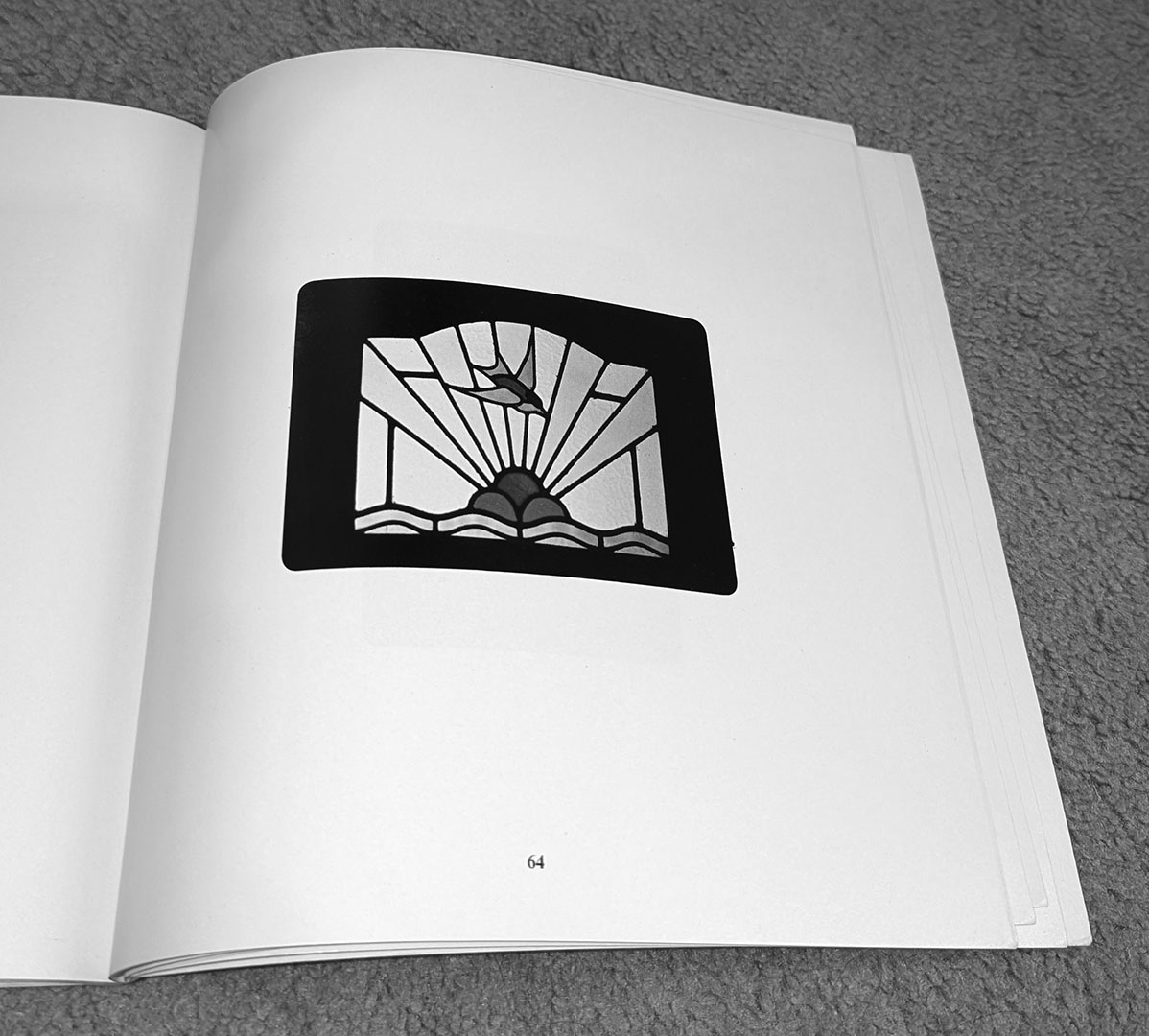
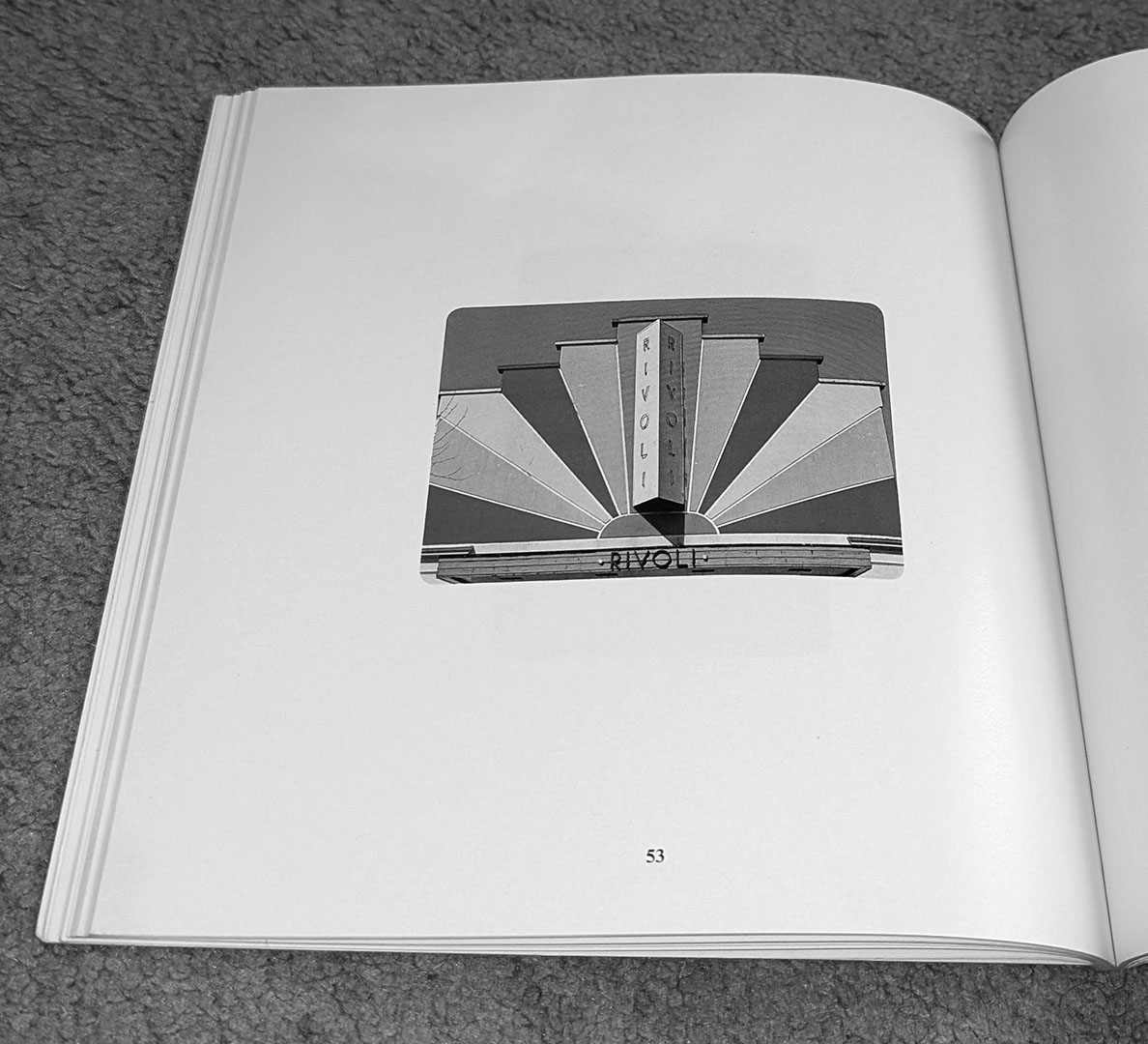
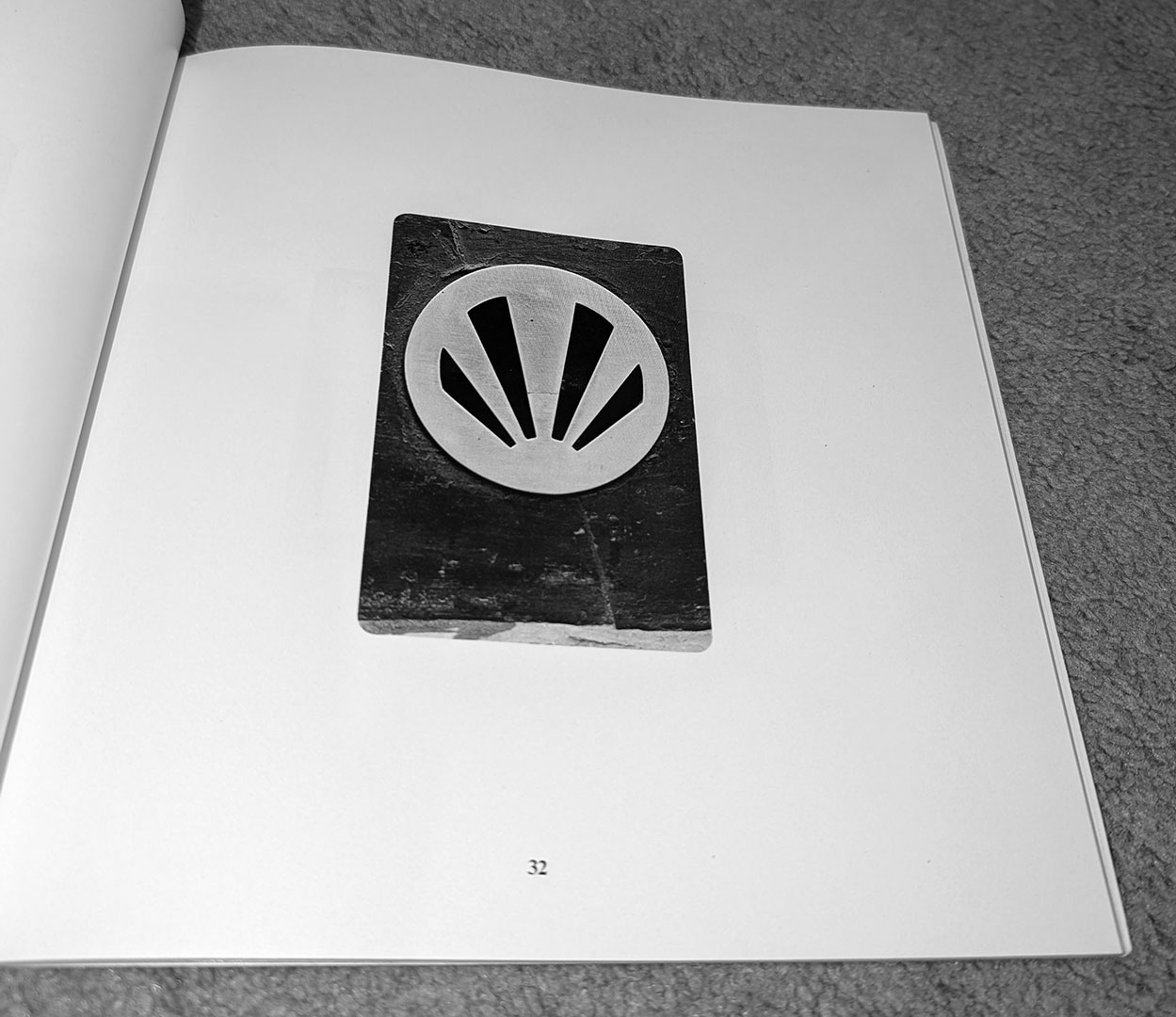
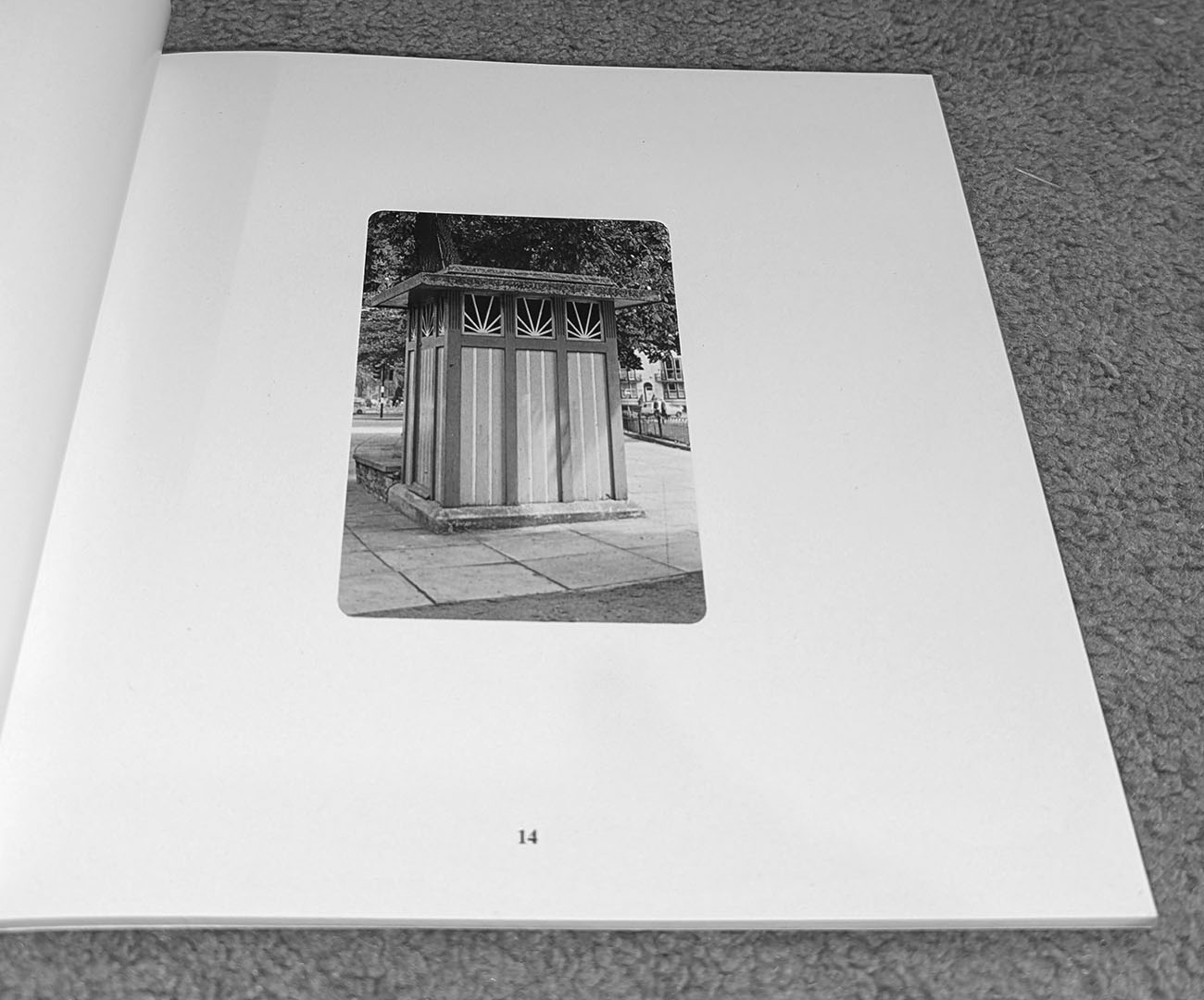
Brian Rice and Tony Evans’ book The English Sunrise, first published in 1972, collects together photographs of often day to day and relatively prosaic items, buildings etc that, all but one, are from England such as doors, windows, packaging, architectural features, household objects etc which feature a sunrise in their design.

I’ve previously written about the sense of accidental utilitarian art that can be found in the design of say electricity pylons and telegraph poles; the items in The English Sunrise interconnect with such things but lean further towards not so much accidental utilitarian art  but  often what could maybe in part be described as industrially produced folk art. In that sense they are probably closer to say some of the bus stops in Christopher Herwig’s Soviet Bus Stops books, such as the one above, which often feature ornate, extravagant etc designs that seem pleasingly at odds with their utilitarian purpose.

This is the 1986 reprint of The English Sunrise and apart from a page of standard publishing credits and a couple of pages that say where the photographs were taken and what they are of etc there is no other text in the book. In fact Brian Rice and Tony Evans’ names aren’t even on the cover and the publisher’s name seems to have only been added as a sticker on the spine after it was printed. There’s no printed price on the cover or inside either.

It’s not fully clear who took the photographs; they’re listed as being copyright of Tony Evans in the publishing credits but in the list of where they were taken often it says that they’re “Collection of…” or “Courtesy of…” but it’s not obvious whether that means that the photograph is part of somebody other than the author’s collection and/or if it means that the actual items in the photographs are part of somebody else’s collection etc. Alongside which, it’s not clear what part Brian Rice played in the book’s creation as other than being listed as its co-designer alongside Tony Evans and David Hillman there is nothing to indicate his other role/s. The most obvious explanation is that he possibly came up with the idea of the book or perhaps curated the selection of items and/or photographs but without more information that’s pure speculation of course.

All of which makes it something of an intriguing enigma as there’s no explanation of how or why the book came into being, what the impetus behind it was etc. However, perhaps in part because of the uplifting natural character that sunrises inherently contain, there seems to be a subtly arcadian sense to the book.

It’s also something of a snapshot of previous decade’s design, particularly for readers of a certain age, as a fair few of the photographs in the book show things which seem immediately familiar but which you haven’t noticed that they’ve quietly disappeared, or at the very least largely faded from view, as windows have been replaced and so on.

Anyways, without further ado, here’s a selection of images from The English Sunrise.

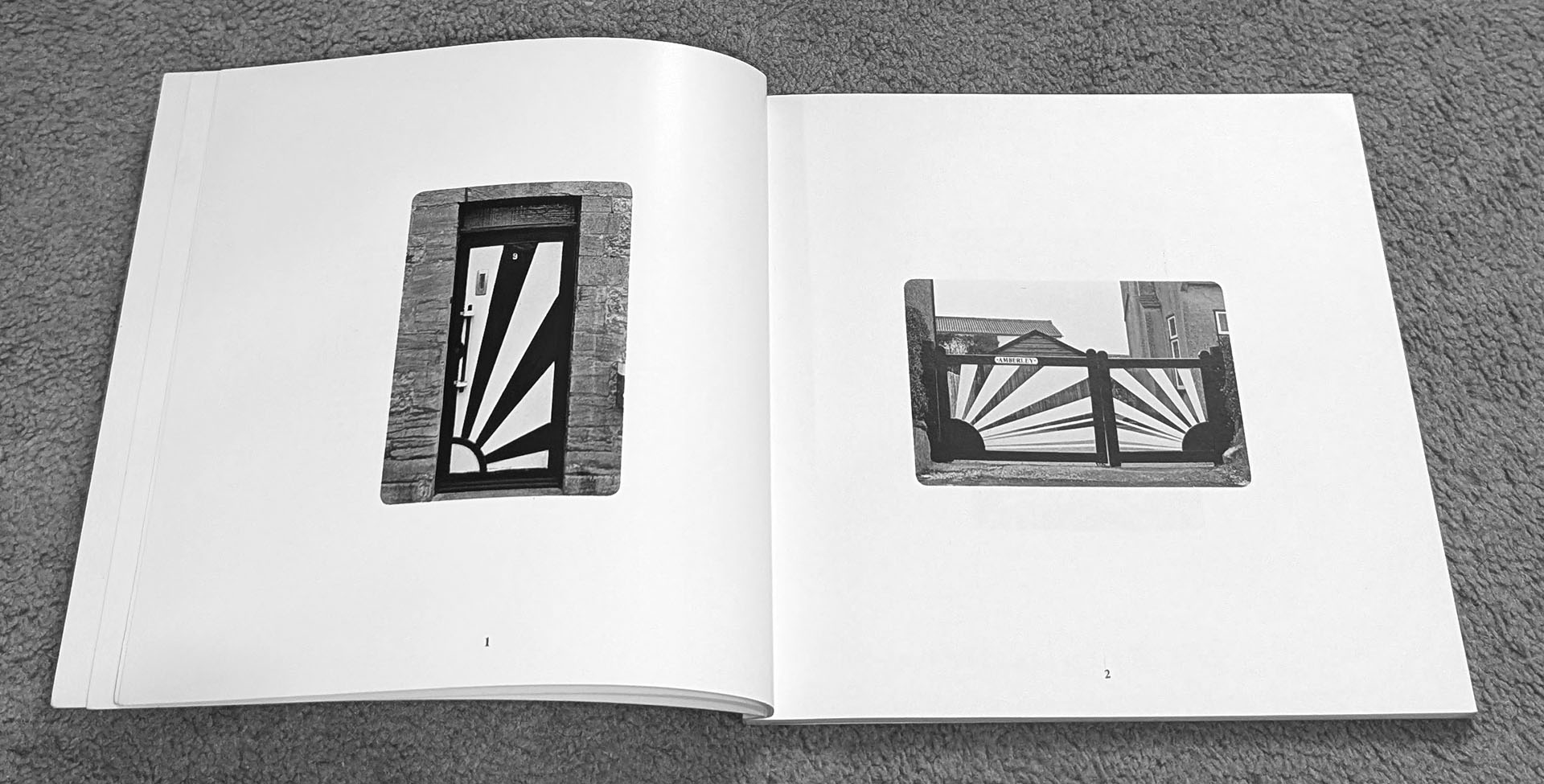
The first two images in the book, which are a fine opening salvo of sunsets.

In the credits it says that the left-hand one is a shop door. I wonder what kind of shop it was? Because of the close cropping of the photograph it makes it look as though the shop didn’t have any windows or a sign and that this door was the only thing on its frontage, which I like the idea of. It makes it seem like it was the door to some kind of mysterious or almost magical emporium that sold… well, who knows what? Perhaps if you stepped though it you’d bump into Mr Benn about to set off on one of his adventures (!) Or maybe it was a mod meets hippie dandy boutique known only to a select few?…

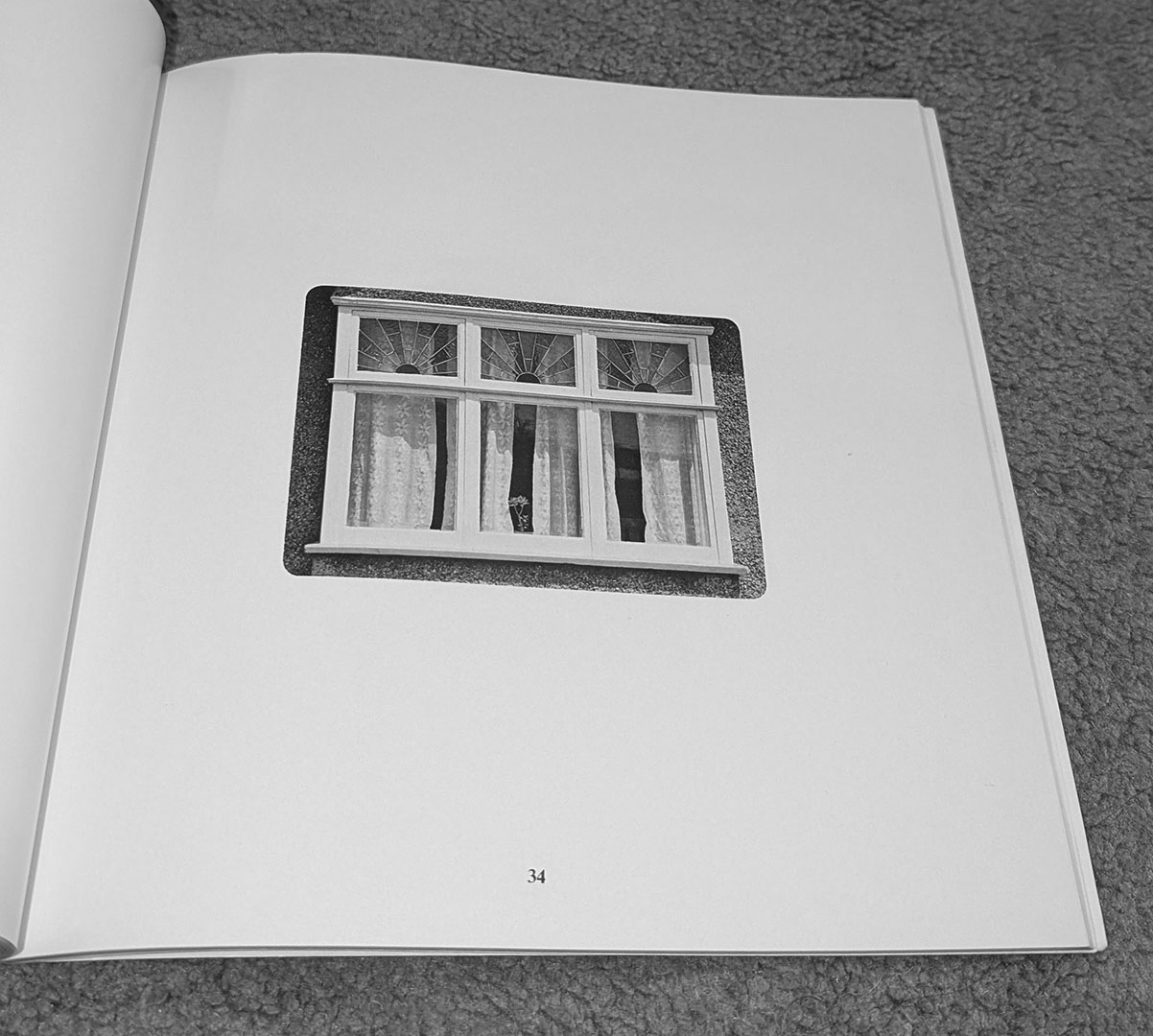
I used to see a lot of windows like this but as I in part mention above they seem to have quietly faded from view. There’s a quiet dignity to this photograph and the window somehow and for some reason that I can’t put my finger on. Perhaps even a sense of melancholy…

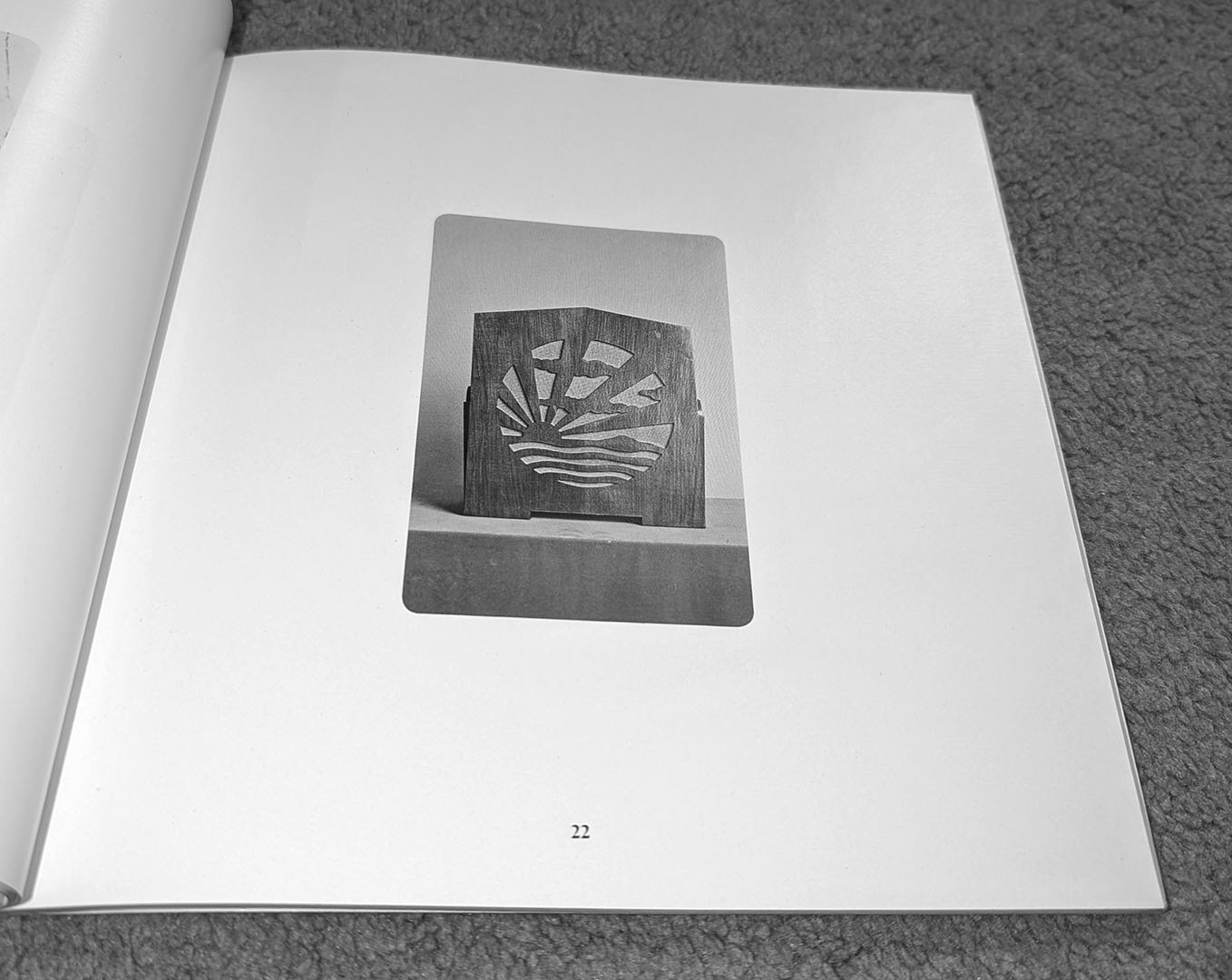
Something of a classic. Now if they made wooden cased radios that looked like this nowadays I’d probably be straight in the queue for one although I expect that whereas this was possibly a fairly normally priced item, if something like this was made today it would be a more niche pricey thing.

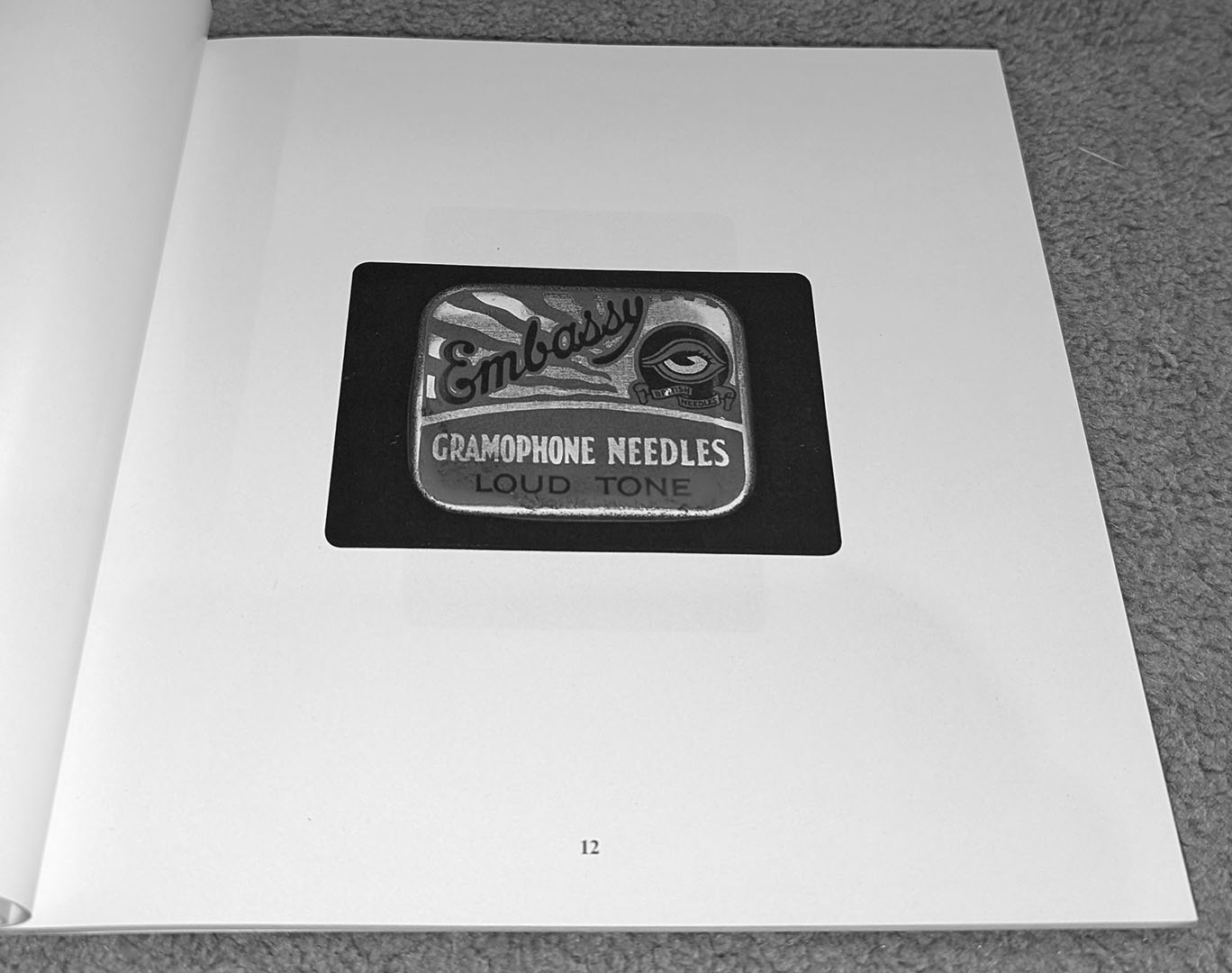
I’m rather taken by this gramophone needle tin box. There’s something almost Lovecraftian about the eye illustration that lends it a subtly eerie quality.

As it says on the tin these were “Loud Tone” needles; looking it up online apparently you could also get Extra Loud, Medium and Soft tone needles. Probably others as well. I wonder how much difference the differently toned needles made to the sound and did you have audiophiles discussing the merits and pros and cons of different types and brand etc as you do with record player styluses today?

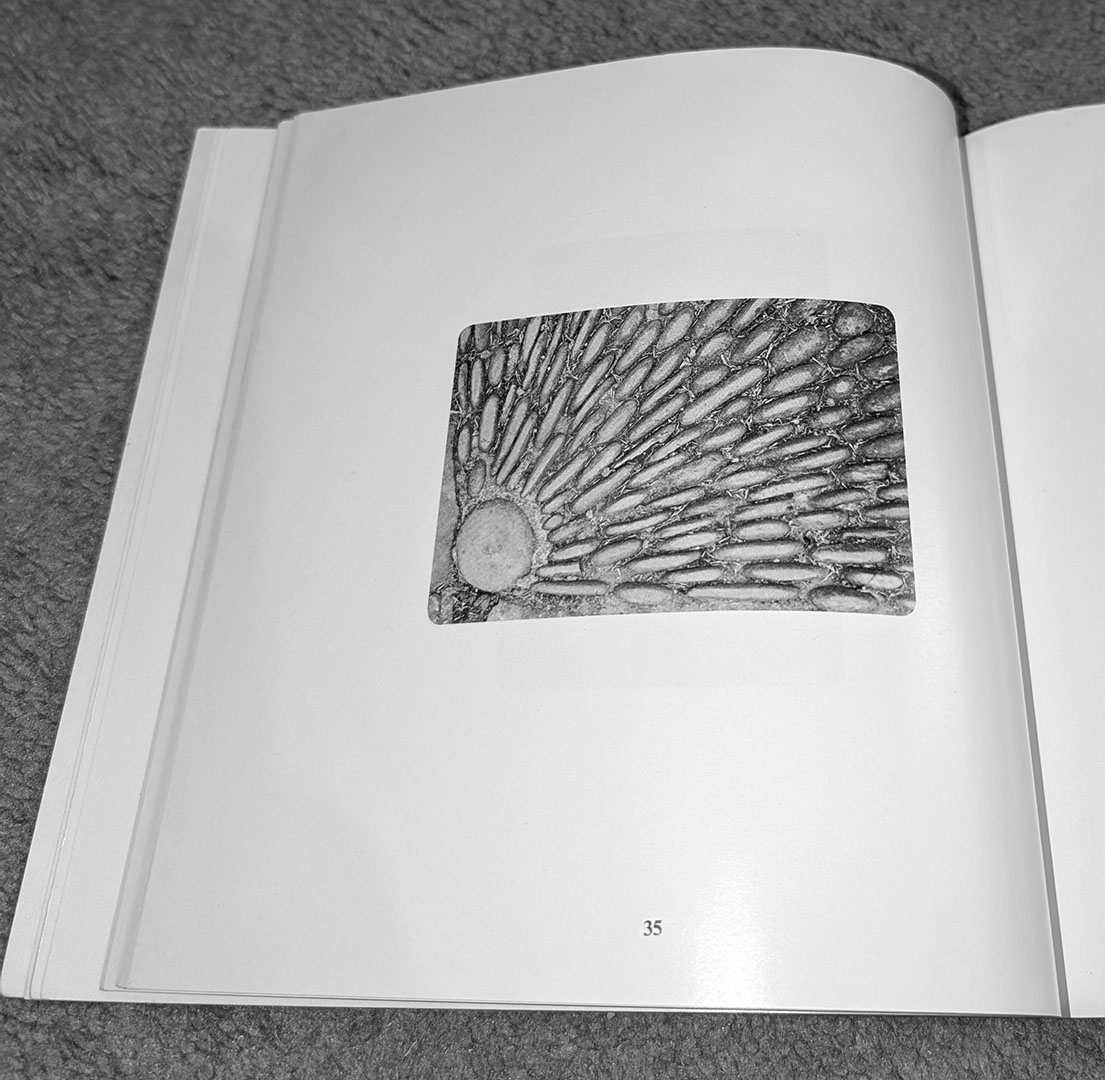
And while we’re talking about subtly eerie… I think this is probably the most “wyrd”-esque item in the book. I wasn’t sure what it was until I looked it up in the credits; apparently it’s cobblestones near former Prime Minister Lloyd George’s grave.

It’s also the only non-English item in the book.

A classic window design of the sort that again once seemed fairly commonplace but which have faded from view.

Now I’m wary of knocking people’s work but I think this cinema facade is a bit more impressive than a lot of contemporary utilitarian retail park situated cinemas. Even just looking at a photograph of it in the book makes cinema going seem like an event.

At first I thought this was another wooden cased radio, albeit of a simpler and much more solidly wooden cased design than the one above. Apparently though it’s a ventilator grill, although the credits don’t say what it was a ventilator for.

I’m not sure what this landbound TARDIS-like relative is. At first I wondered if it was a small public toilet? A folly? Something connected to public utilities? A police box of some sort? Looking it up in the credits it just says “Kiosk” but doesn’t explain what it’s a kiosk for.

The credits say it was in Brighton. I wonder if it still exists?

Posted on

Paul Hillery’s Folk Funk & Trippy Troubadours’ Explorations and Unearthings

Earlier in the year I spent quite a bit of time listening to 1960s, 1970s and 1980s folk funk, which looking back was actually some of the more outer fringes of folk music that I first listened to back when I started out on the cultural journey that would become A Year In The Country. It interconnects with 1960s and 1970s folk rock and acid/psych folk but is often more, not unsuprisingly given its loose genre name, funk infused and it also cross pollinates with psychedelia and soul. Much of it is lovely warm, indefinable in terms of conventional genre and at times dreamy music that seems to both recall a lost summer back and also has a timeless quality.

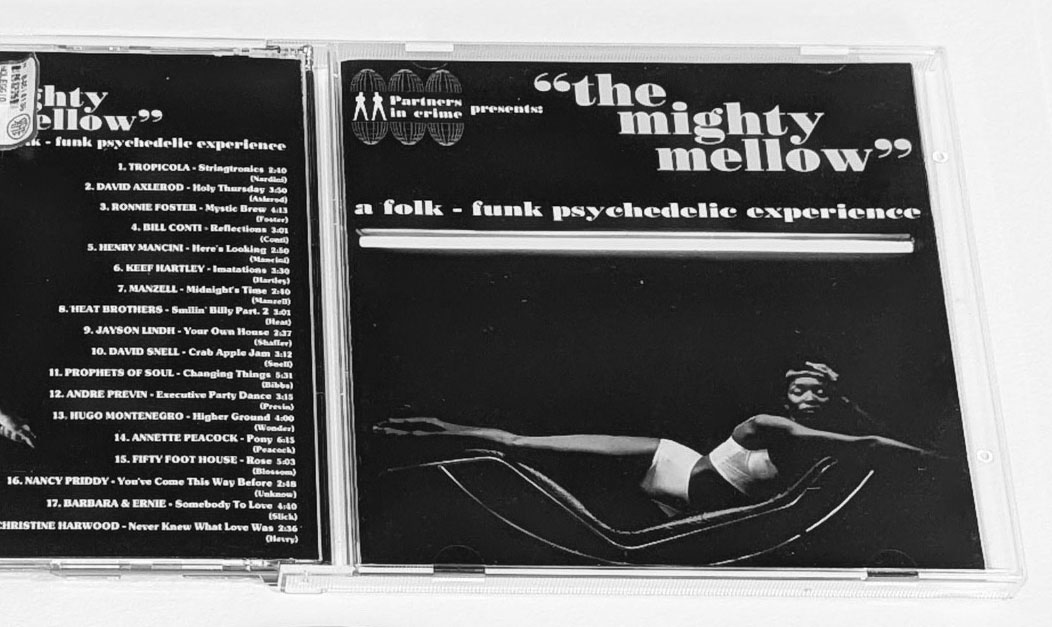
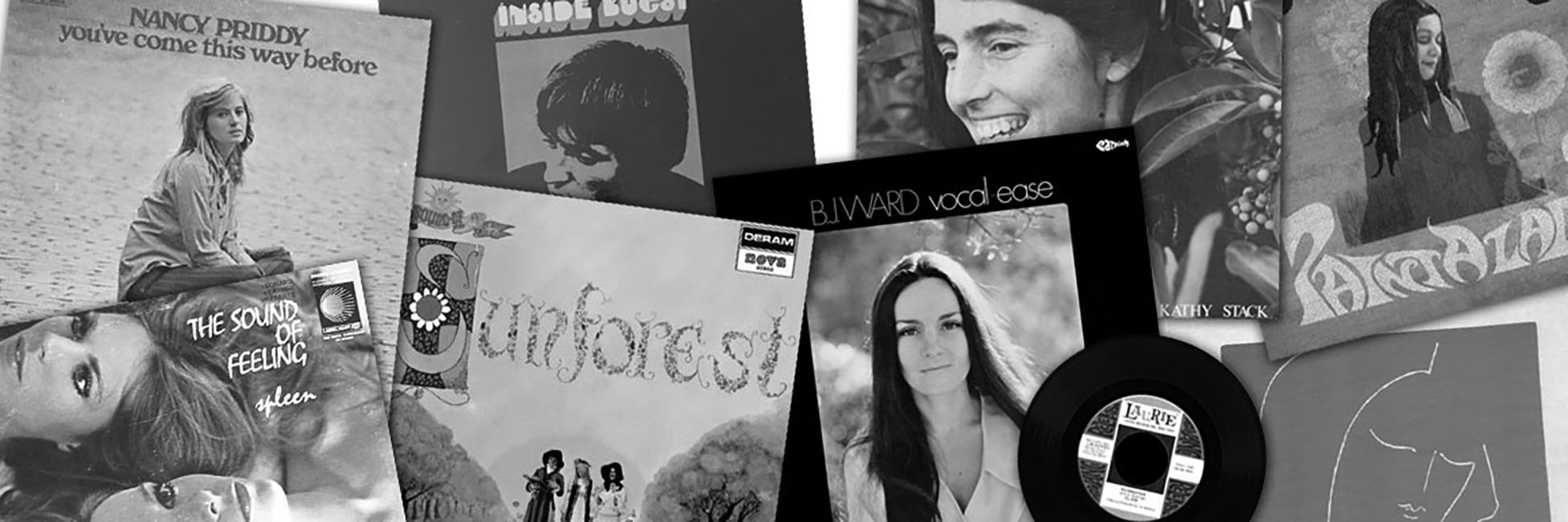
(As an aside I first discovered folk funk sometime around 2010 via the 2005 compilation album Folk is Not a Four Letter Word  that Andy Votel of Finders Keepers Records compiled for the Delay 68 label… I’ve always had a soft spot for the wood cut/folk art-esque covers of the first and second of the Folk is Not a Four Letter Word albums that are pictured above alongside the Feel the Spirit: Otherworldly Folk Music Gems and Pscychedelics album released in 2006 that was compiled by Mark Pritchard, which is another good “resource” for folk funk and related music… and for good measure, below is The Mighty Mellow: A Folk-Funk Psychedelic Experience album from 1997, which is also a rather fine resource for such things… as a further aside, I discovered Folk is Not a Four Letter Word via a local library… libraries stocking music on CD? Blimey, that seems like another age now.)

For me folk funk seems, perhaps in a way that sets it apart from some 1960s and 1970s folk rock and acid/psych folk, to be deeply infused with a certain kind of pastoralism but one that in some not easy to define way has a certain “cool” (but not uptightly so) urban quality to it and its sense of hazy sun drenched fields seems as though it maybe springs more from the dreamscapes of the mind rather than being literally from and created in the rural landcape; a sort of psychedelic and maybe even at times utopian tinged yearning for the escape and imagined bliss of a pastoral mindset and places.

When I was exploring and re-exploring folk funk I came across Paul Hillery Folk Funk & Trippy Troubadours section on his site and his related Mixcloud mixes, compilation albums etc which are a particularly great source of all things folk funk.

(To quote him he added “Trippy Troubadours” to give him a little more “wiggle room and avoid the genre police”, which makes me smile!)

He’s done an awful lot of work surrounding collecting, compiling, online broadcasting etc folk funk; at the time of writing there were 144 “Folk Funk & Trippy Troubadours” mixes on his Mixcloud page and that’s before you get to the folk funk compilation albums he’s curated for the Warm and BBE labels, all of which might seem a bit overwhelming in terms of where to start when exploring folk funk.

Luckily there’s a solution at hand as his Mixcloud mix A Brief History of Folk-Funk has got “just” 34 tracks on it and acts as a great primer to all things folk funk, plus there’s an accompanying post A Brief History of Folk-Funk post at his site, originally posted in an edited form at the Stamp the Wax site, which gives a background on, as it says on the can, folk funk.

Carrying on from that  his Folk Funk Top Forty also acts as a concise primer to folk funk. There’s some crossover between the two but when you’re listening to tracks like Nancy Priddy’s “You’ve Come This Way Before”, Sunforest’s “Magician in the Mountain” and Heaven & Earth’s “Feel the Spirit” I don’t think that really matters.

If you’re wondering what folk funk is well the paragraph below from Paul Hillery’s Folk Funk Top Forty post might give you some kind of idea and background:

“But what is this folk-funk thing anyway? I’m not sure if I can put a finger on it, not in precise words anyway. To me, the groove sounds like it has one leg shorter than the other, like a funky limp. Oh, and a flute is always a nice addition. Feel The Spirit by Heaven & Earth is a great place to start. Does that help? I was told the name was adopted in the late 80s as a way to describe a certain sound that record hunters had started to dig for, Christian McBride seems to be the culprit for the adoption of the name. Bobby Rush will come up in a web search as the Grammy award-winning American blues musician who called his 2004 album ‘Folk Funk’ although it has little in common with the music we are talking about here. Are you still with me?”

But really as he says in that post folk funk is something that’s difficult to put your finger on but once you’ve heard it and start to know what you’re looking for “you’ll just know if it’s… folk funk or isn’t”.

Links:

Posted on

Shatter – Further Snapshots of Technological Time

In the “Hauntology and the Wyrd Landscape” page here at the A Year In The Country website (see link above in the Menu bar) I write that one of the characteristics of hauntology is

“The use and foregrounding of recording medium noise and imperfections, such as the crackle and hiss of vinyl, tape wobble, and so on that calls attention to the decaying nature of older analogue mediums and which can be used to create a sense of time out of joint and edge memories of previous eras.”

Interconnected with which for myself is an interest in culture that represents and/or explores older and sometimes lost forms of media and technology, and in turn interconnected with that in a recent post I described Dan Hays’ series of paintings that replicated compressed and degraded digital photographs as being “lossy snapshots of technological time”…

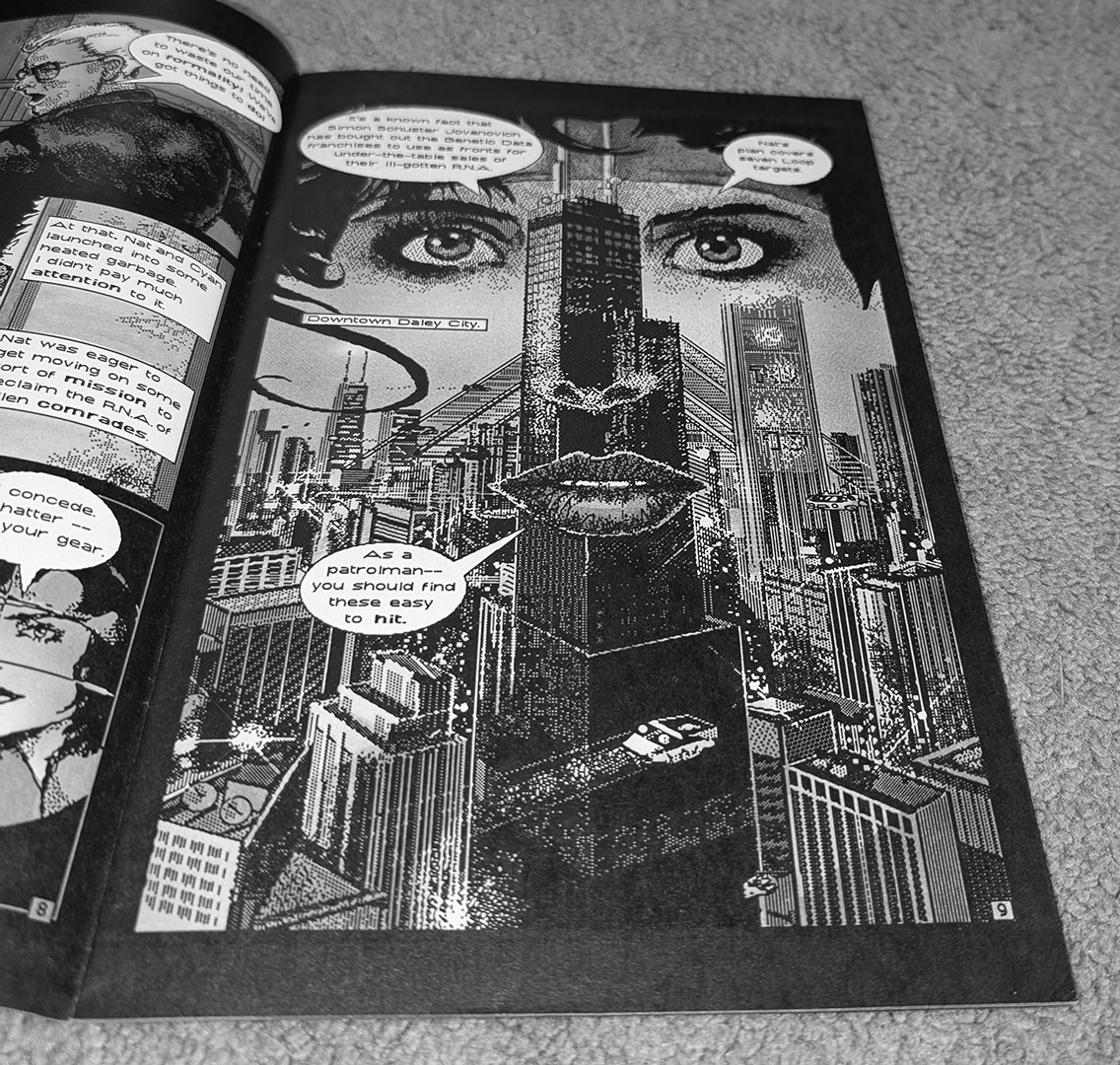
…which put me in mind of another “snapshot of technological time” or more precisely the dystopian cyberpunk Blade Runner-esque comic Shatter which was published between 1985-1988:

“It is the not-so-distant future. All jobs are temporary. Control is in the hands of a ruthless few. And the world’s biggest media conglomerate has discovered a new source of cheap creative talent: stealing other people’s brains. Only one man can stop them… SHATTER. A temporary policeman with a mission. A man with a golden brain, capable of absorbing the talens and abilities of others–permanently. A science-fiction hero called… SHATTER.” (Quoted from text which accompanied the Shatter: The Revolutionary Graphic Novel collection which was published in 1988.)

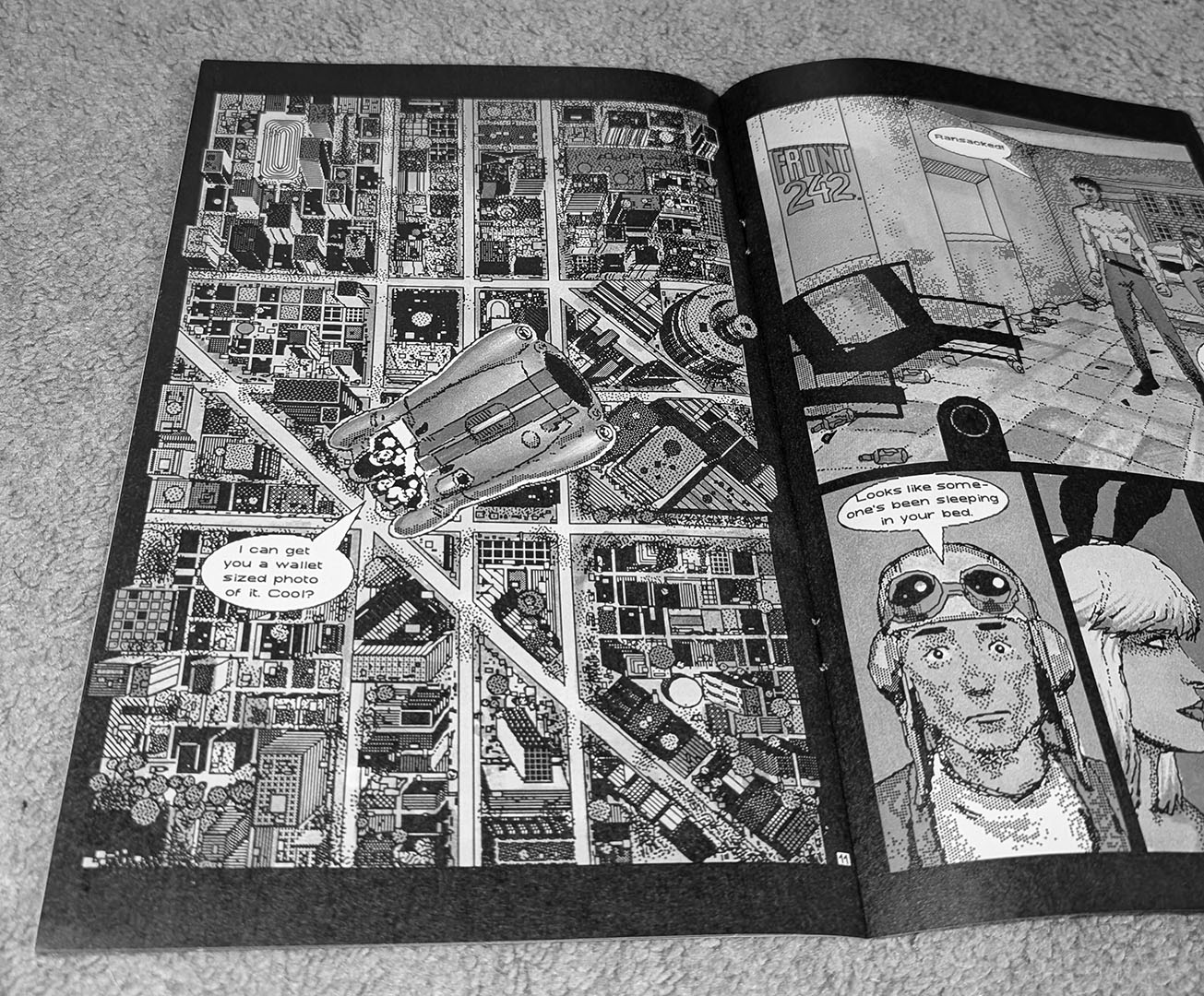
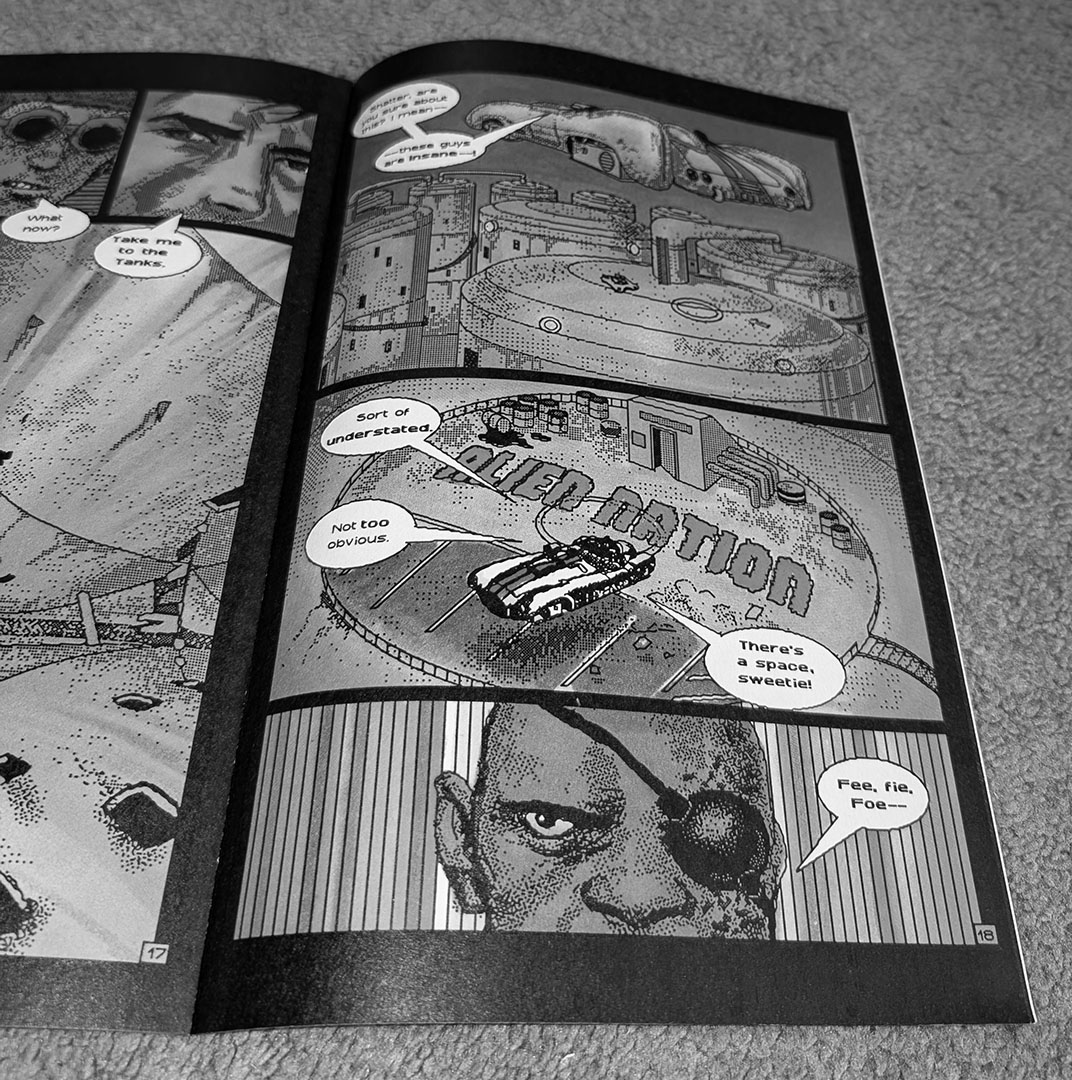
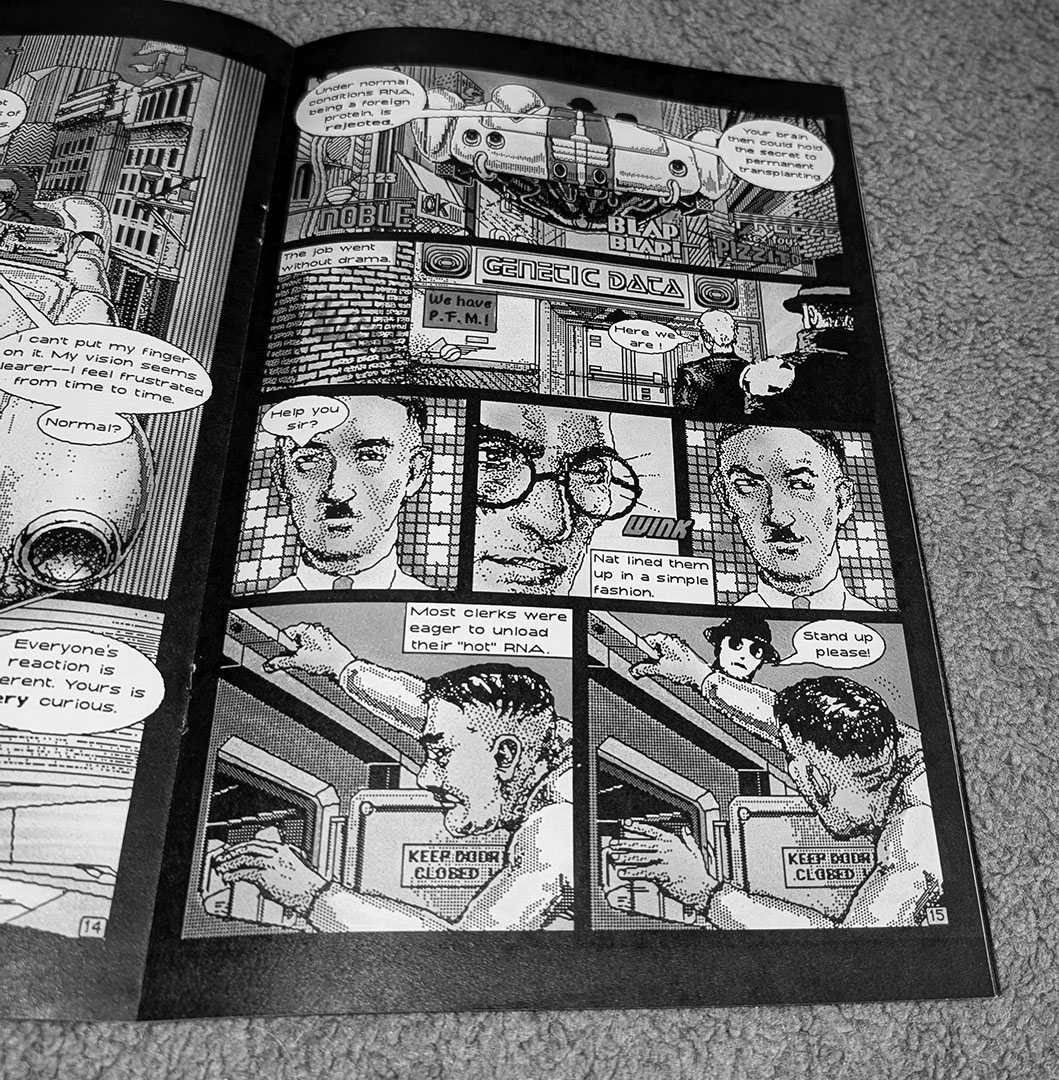
This was created by Peter B. Gillis and Mike Saenz and was the first commercially published comic where all the art was entered by hand on the computer. It was drawn on an original Macintosh, stored on 800K floppy discs and apparently the drawing were difficult to manage due to the monchrome screen of the Macintosh being only 512 x 342 pixels, which is approximately 0.175 megapixels, which meant that only around two thirds of the screen could be worked on at one time.

Now to put that in context, 800K is 0.0008 Megabytes and it’s not uncommon for contemporary mechanical computer hard drives to have 8, 10, 12 or more terabytes of storage which is the equivalent of 8, 10 or 12 million megabytes. While a lot of contemporary computer screens have a resolution of 3840 x 2160 or 8+ megapixels, which is over 47 times higher than the Macintosh’s screen that Shatter was created on. However, as is often the way with technology and its limitations, it is in part the grainy visible pixel quality of the artwork in Shatter that creates its distinctive character. Equally it manages to avoid looking like computer/video game cut scene graphics, which some more contemporary computer created artwork can.

Shatter first appeared in the March 1985 issue (#12) of UK computer magazine Big K which was published by the mainstream publishing company IPC, and during the same period it appeared simultaneously as both a one-shot special and as a backup feature in First Comics’ Jon Sable superhero comic, which is said to have been “one of the first of the independent and dark superhero stories of the 1980s and ‘helped usher in the grim and gritty sensibility that came to define the genre'”. (Quoted from the wikipedia.org page Jon Sable.)

There were 14 issues of Shatter, although issues 4-7 utilised traditionally drawn artwork that was scanned into the computer, and returning to it now (I think I read some issues of it back when it was first published), as in part just suggested it reflected, utilised and impressively overcame the technical limitations of the technology it was created with, and also seemed to synthesize and distill a “classic” cyberpunk low life hi-tech neo-noir-ish aesthetic possibly before such things had become a firmly established cultural trope.

Some of my favourite pages and imagery in it are the one page landscape images such as the ones above and below which experiment with form, perspective and so on and work well as self-contained pieces of art.

One of the things I like about it is that you can play “spot the cultural reference”: the cover of the one-shot special features the names of various post punk and industrial/EBM bands hidden in plain sight, including Joy Division, Xmal Deutschland and Front 242, the latter of whom’s aesthetic intersected with cyberpunk.

Elsewhere Front 242’s iconic song “Headhunters” is referenced in the artwork, as is the 1988 buddy cop neo-noir science fiction action film Alien Nation (which as an aside explores racism and immigration related issues via its story that revolves around a large community of aliens who are stranded on Earth while not forgetting that it’s also intended to be a piece of accessible entertainment rather than a didactic lecture.)

And I don’t know if it’s just me but is the style of the moustached clerk character above a reference and nod to Ron Mael of Sparks? Hmmm, maybe but also it possbibly references the style of a certain national socialist leader who shall remain nameless.

As a final point, Shatter has been collected in two paperback versions but they are both out of print and often quite pricey, although the individual issues can often be found fairly cheaply on Ebay.

Posted on

Dan Hays Impressions of Colorado – Lossy Snapshots of Technological Time and Place

Dan Hays’ book Impressions of Colorado is something of a cultural curio.

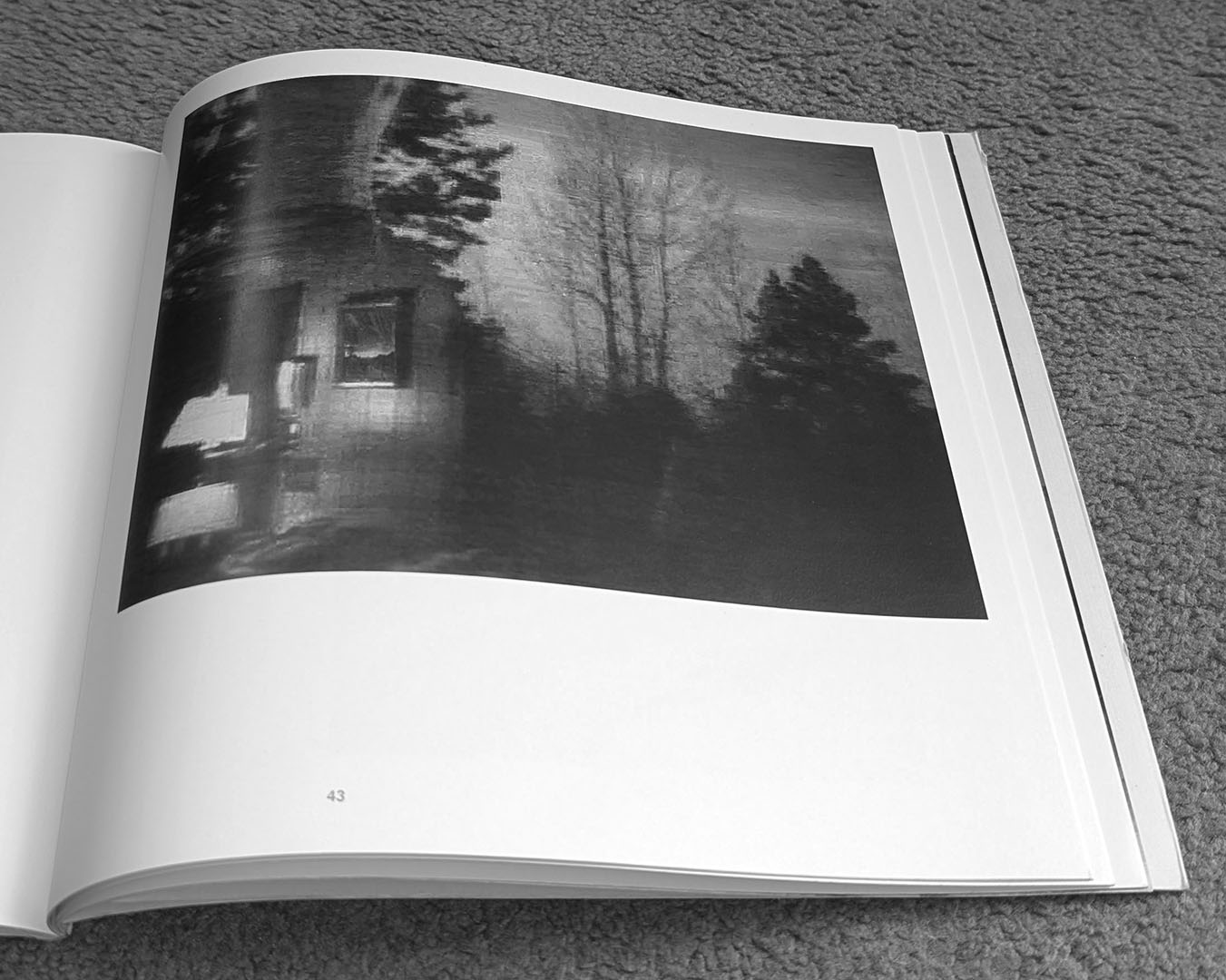
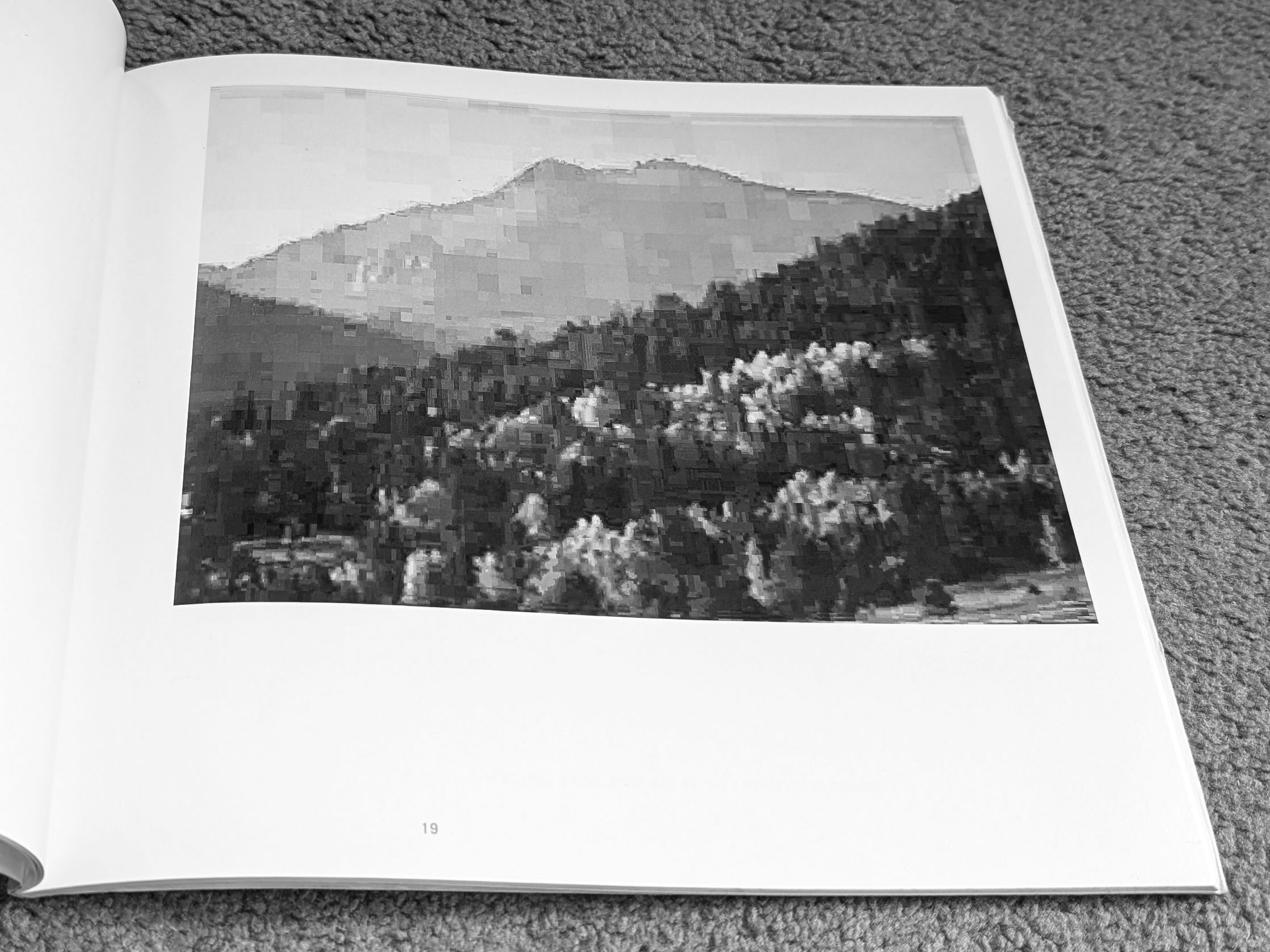
Published in 2006 to accompany a touring exhibition it includes a selection of his paintings that reproduce compressed lossy digital photographs and videos of the landscape that surrounds somebody who is also called Dan Hays’ house in the Rocky Mountains of Colorado, which he stumbled upon online.

The paintings capture the aesthetics of a now largely lost – or at least left behind – technology, that of the digital compression of photographs and videos and the resulting degradation that happens to images.

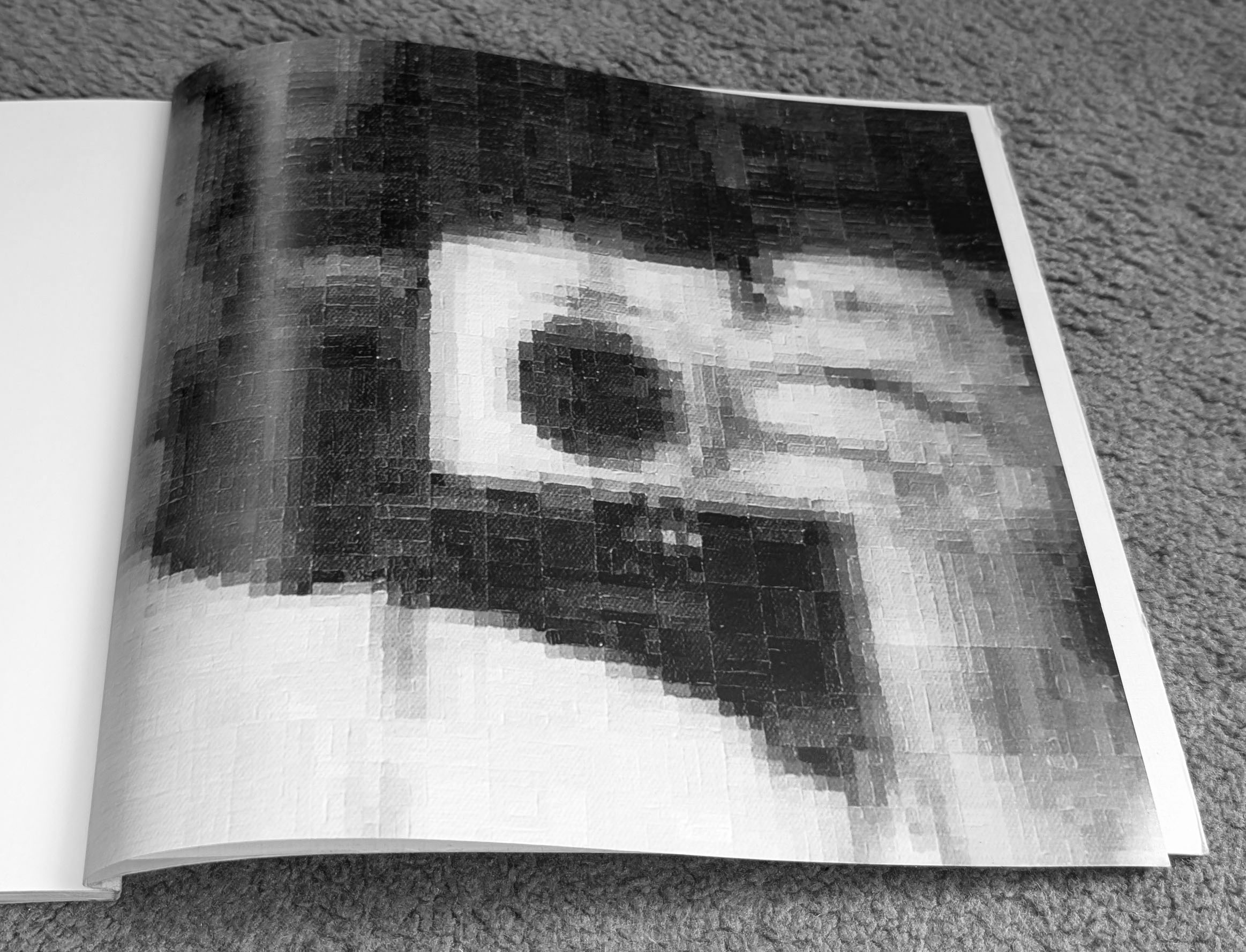
On first glance and as reproduced in the book, Dan Hays’ paintings of the compressed photographs etc appear to be fairly conventional replications that have been created without the use of individual pixels but the final image in the book (see image below) is a close up detail of a self-portrait which shows that the paintings are in fact built up from thousands of painted pointillist-like “pixels”, which explains why in the book Dan Hays says that the painting above took three or four months… which is sort of head boggling and illustrates an intensely focused dedication to his work.

Interconnected with which, in Impressions of Colorado, Dan Hays describes himself somewhat humorously and only half-jokingly as a very slow and low quality printer.

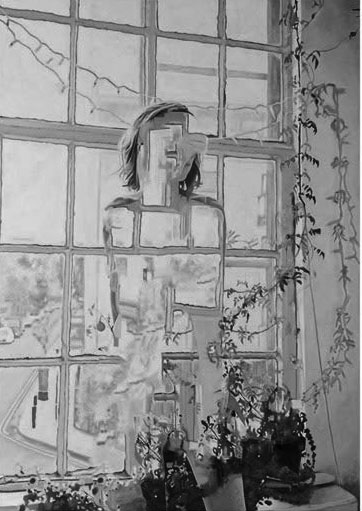
(Above: one of John Squire’s Disinformation paintings.)

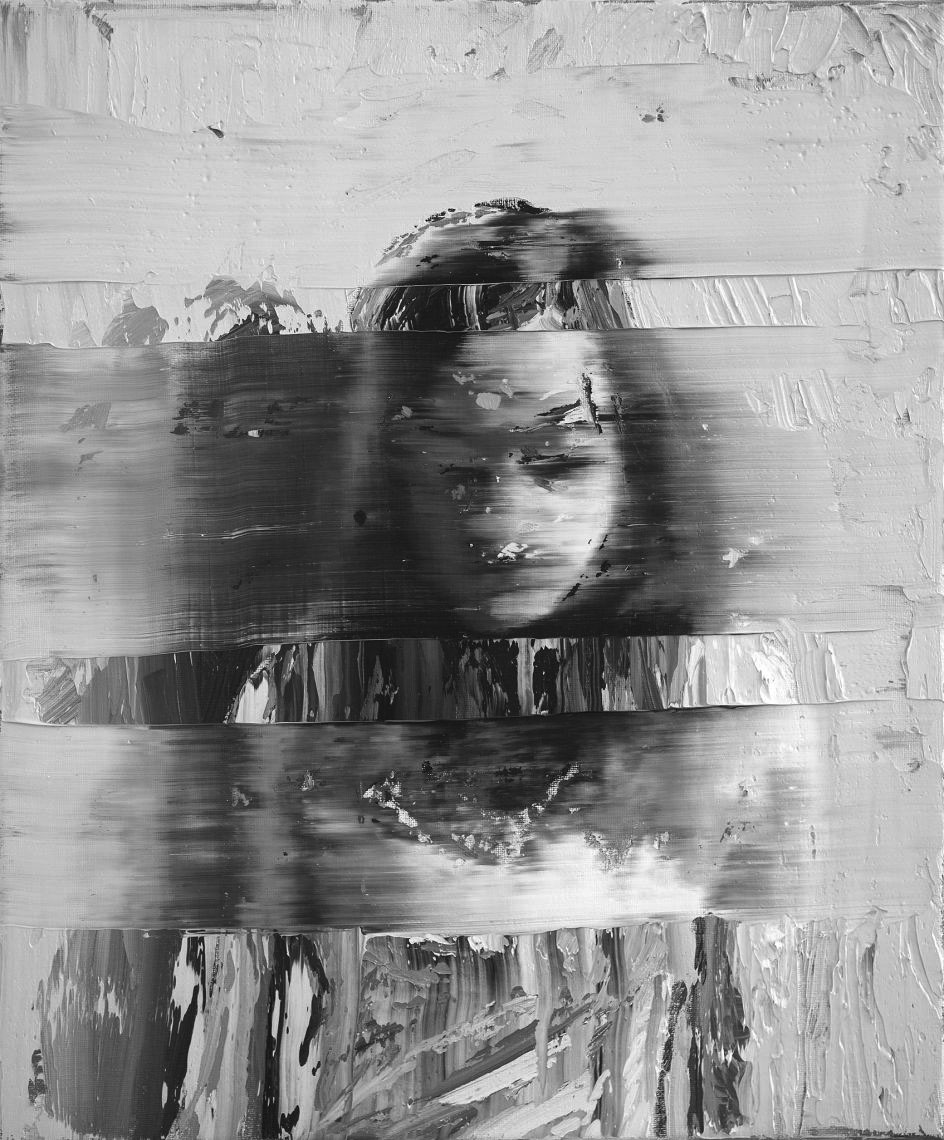
Because of their exploraition and recreation of digital imperfections, Dan Hays’ paintings bring to mind both John Squire’s Disinformation series of large-scale oil paintings that are based on photographs that he took or which he found online and which he then edited to add visual glitches and create distorted fragmented images and Andy Denzler’s glitch paintings, although Squire and Denzler’s related work tends to explore a more “beautified”, albeit in a distorted manner, version of glitch art aesthetics, whereas Dan Hays’ paintings have a sort of prosaic primitive snapsot of technological time quality.

(Above: one of Andy Denzler’s glitch paintings.)

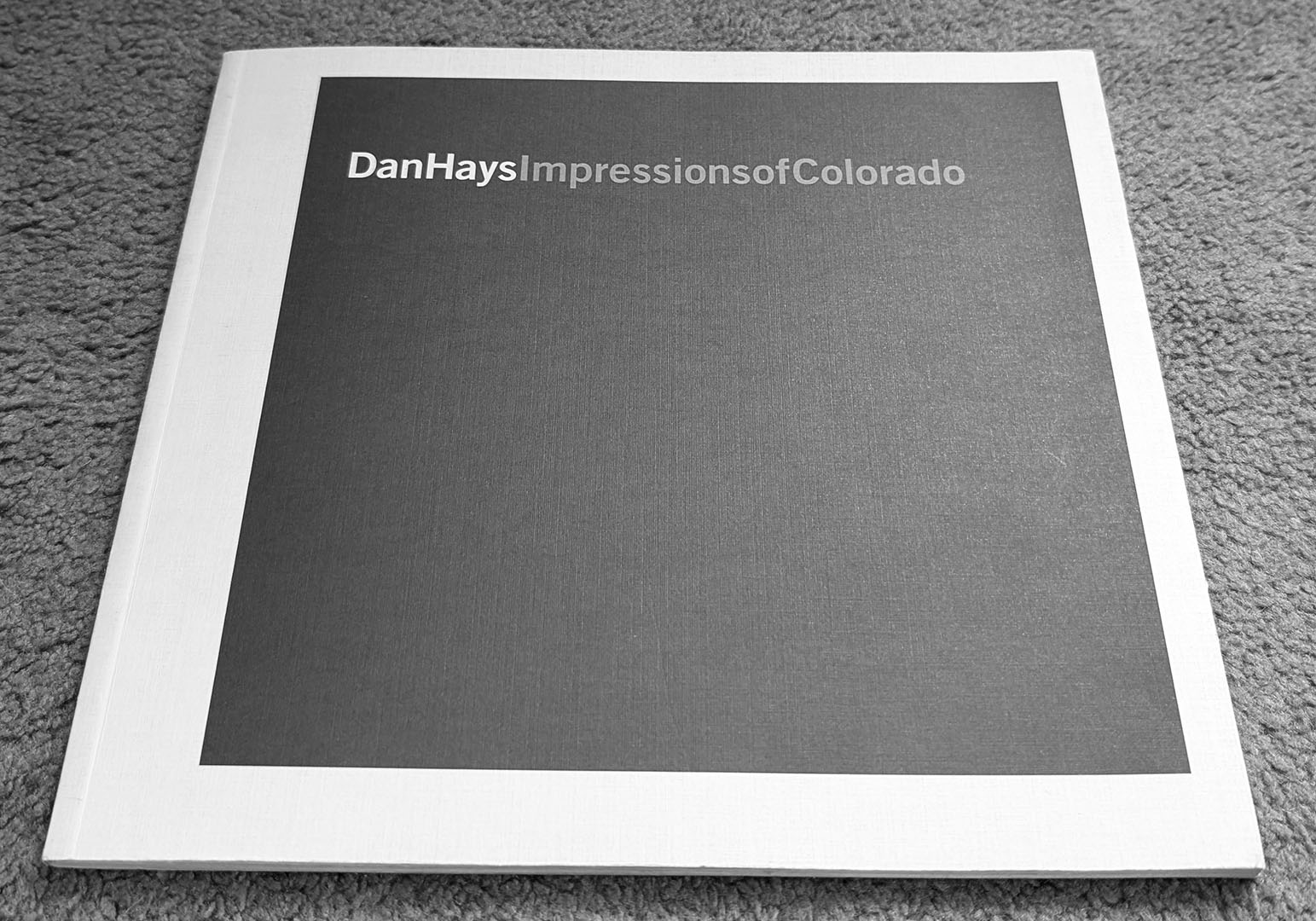
As a final point, intriguingly the cover of Impressions of Colorado gives very little, well nothing really, away in terms of its contents…

Posted on

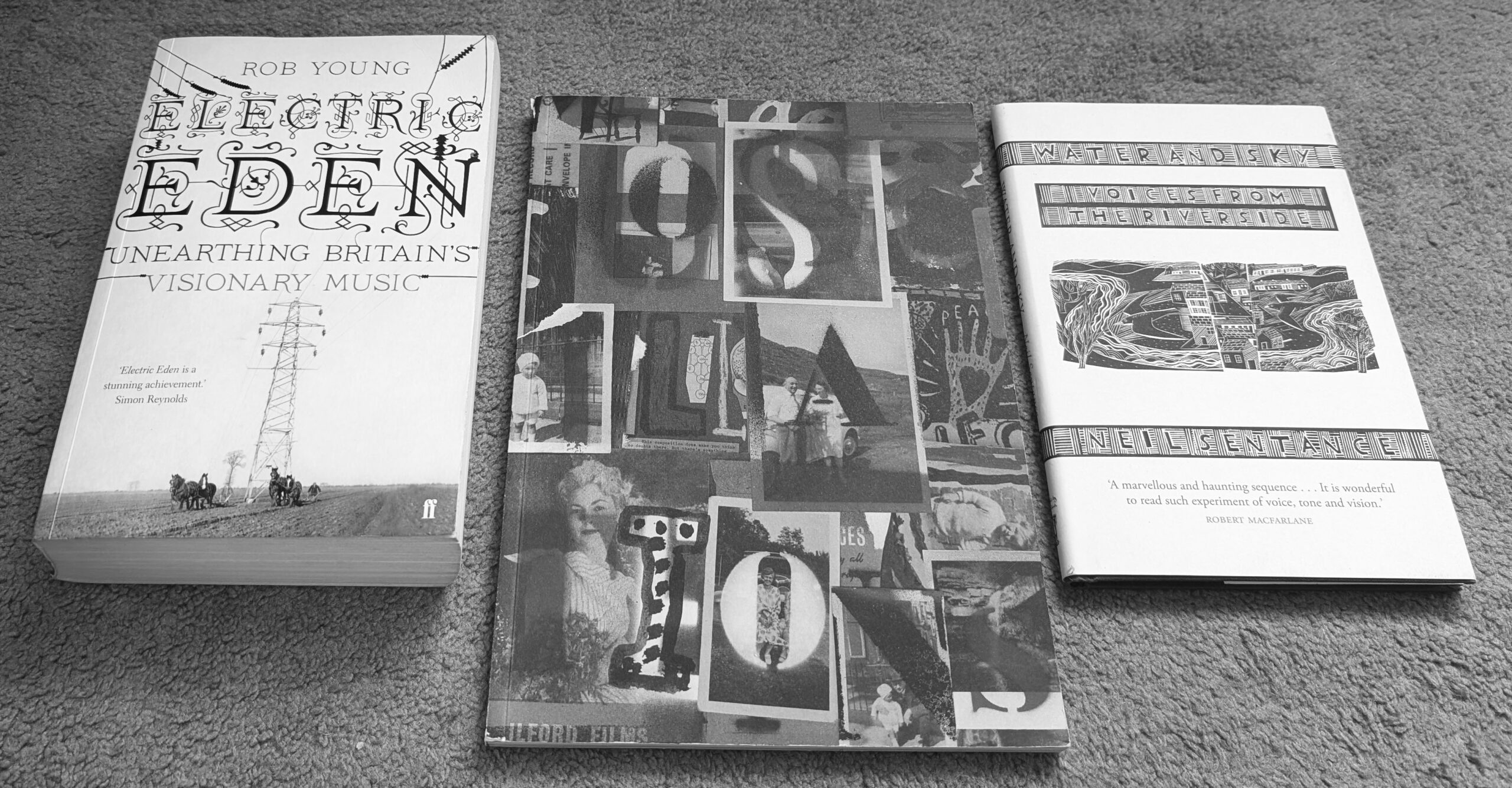
Oscillations, Clay Pipe Music, Frances Castle, Rob Young’s Electric Eden and Neil Sentance’s Water and Sky – Gentle Wyrd Finds and Arcadian Sounds and Art

You know how sometimes you go in a charity shop or a second hand shop and it seems like somebody’s who’s into a particular area of culture has been in and donated or sold items to them as there’s a mini-collection of things?

Well, this mini-haul was possibly from one of those times in connection to the gentler side of rural wyrd culture or maybe it’s me connecting the cultural dots as it were.

First up is Rob Young’s Electric Eden… something of a return visit to these shores but at only £3 for 664 pages of “Unearthing Britain’s Visionary Music” (less than 0.5p per page!) I couldn’t really leave it there…

Then there’s Neil Sentance’s book Water and Sky: Voice from the Riverside which collects a sequence of his essays where he “revisits his native Lincolnshire riverlands and fields, farms and market towns, to explore the history of his family and the landscape which shaped them” and features modern-vintage linocut style illustrations by Jonathan Gibbs and a cover quote by psychogeographical wanderer Robert Macfarlane. The essays first appeared on the Caught by the River website between 2010-2013 and the book was co-published by Caught by the River and Little Toller in 2014, both of whom operate in and explore the gentler side of rural wyrd culture, all of which piqued my curiousity…

Which brings me to…

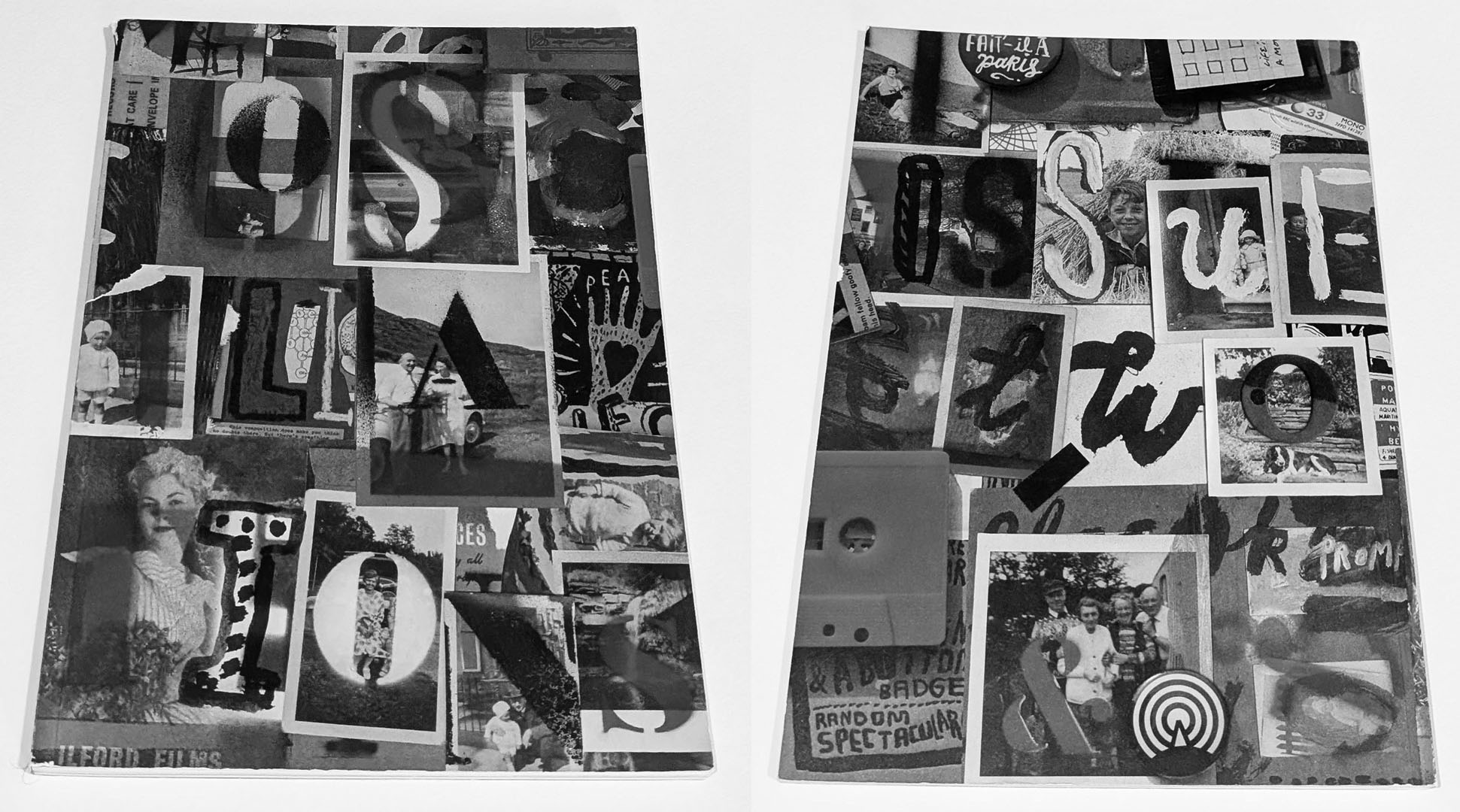
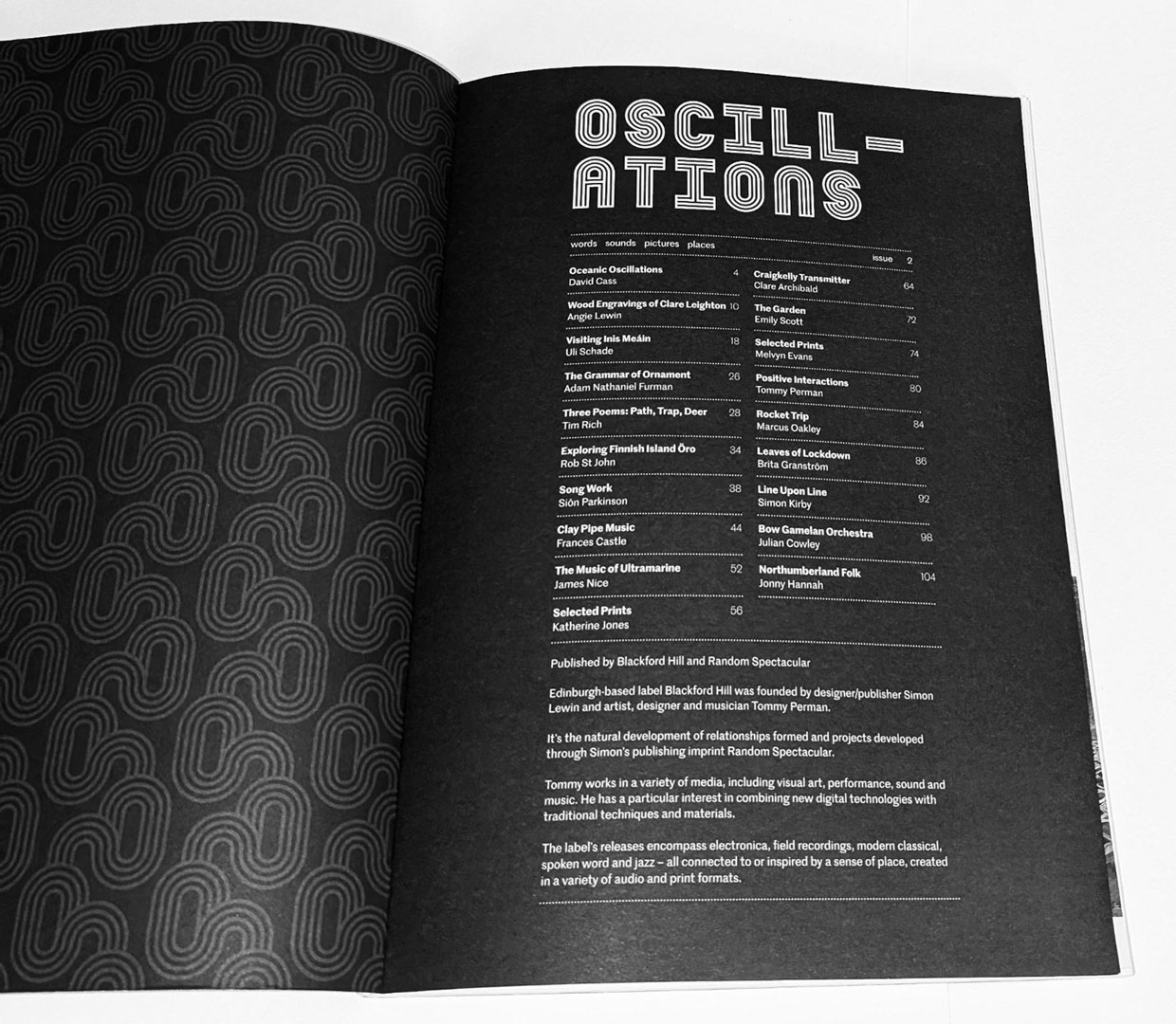
Issue 2 of Oscillation magazine which was co-published in 2021 by Random Spectacular, which is a publishing imprint of the design collective and print gallery St Judes, and the record label/arts collective Blackford Hill, the latter of whose:

“Releases encompass electronica, field recordings, modern classical, spoken word and jazz – all connected to or inspired by a sense of place, created in a variety of audio and print formats.” (Quoted from text at Blackford Hill’s Bandcamp page.)

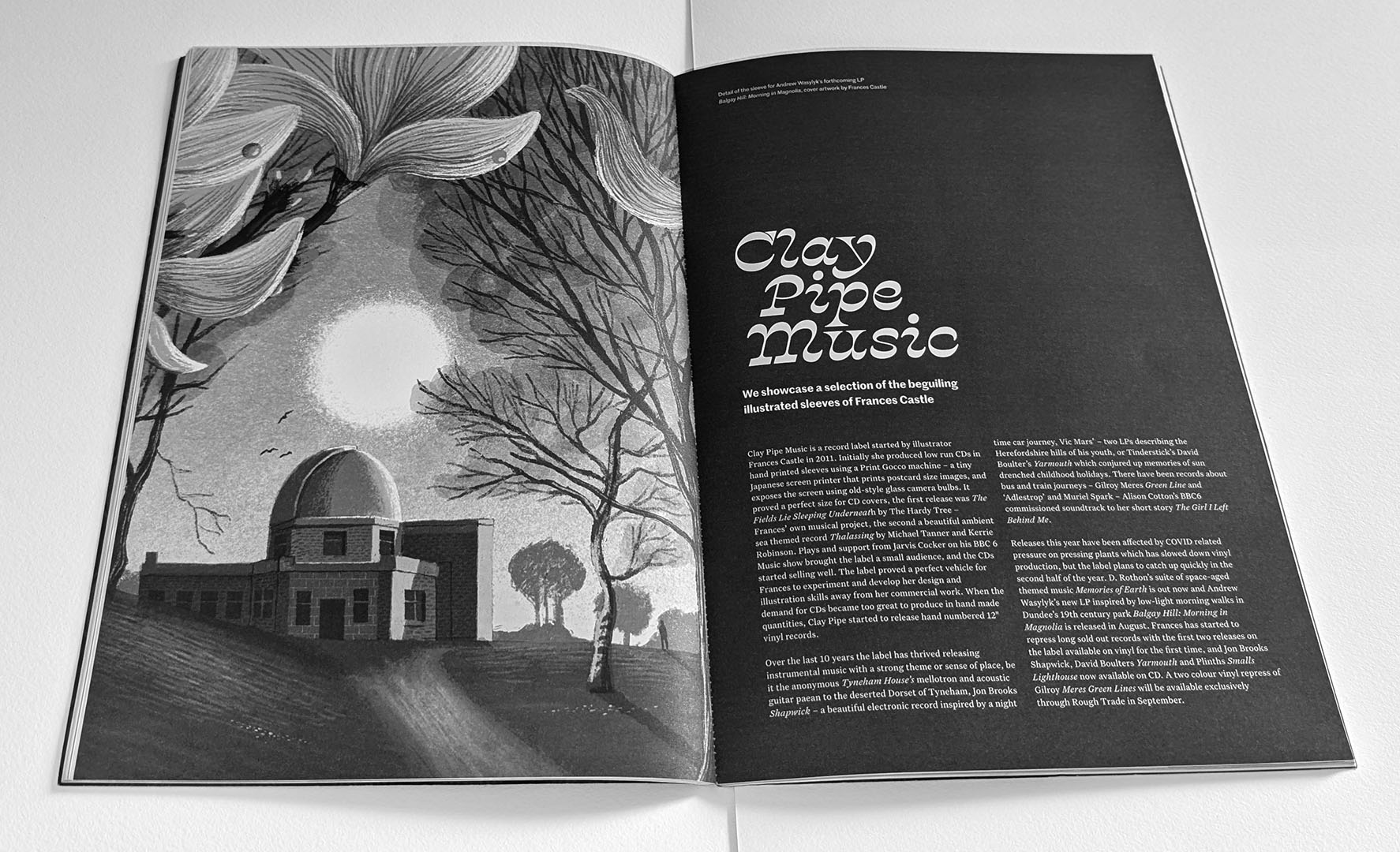
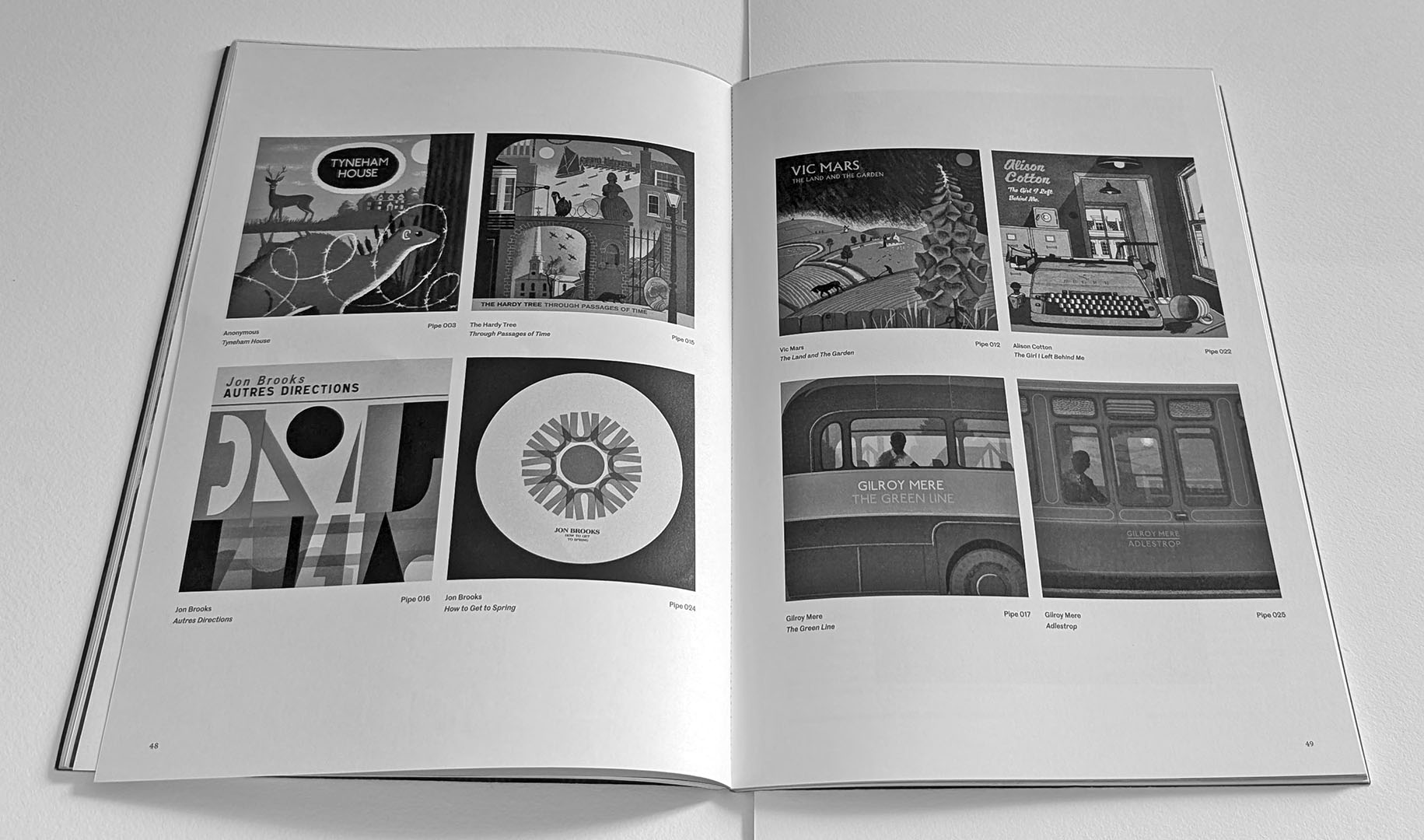
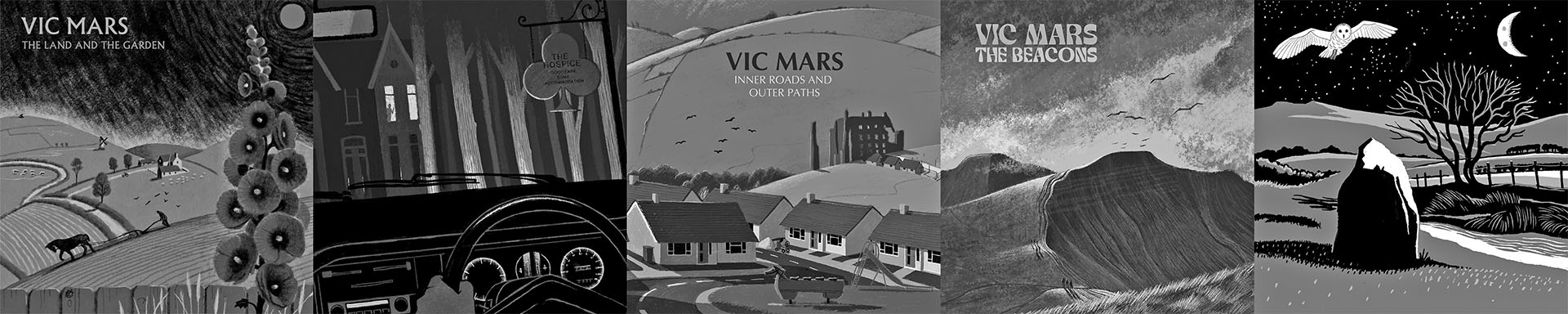
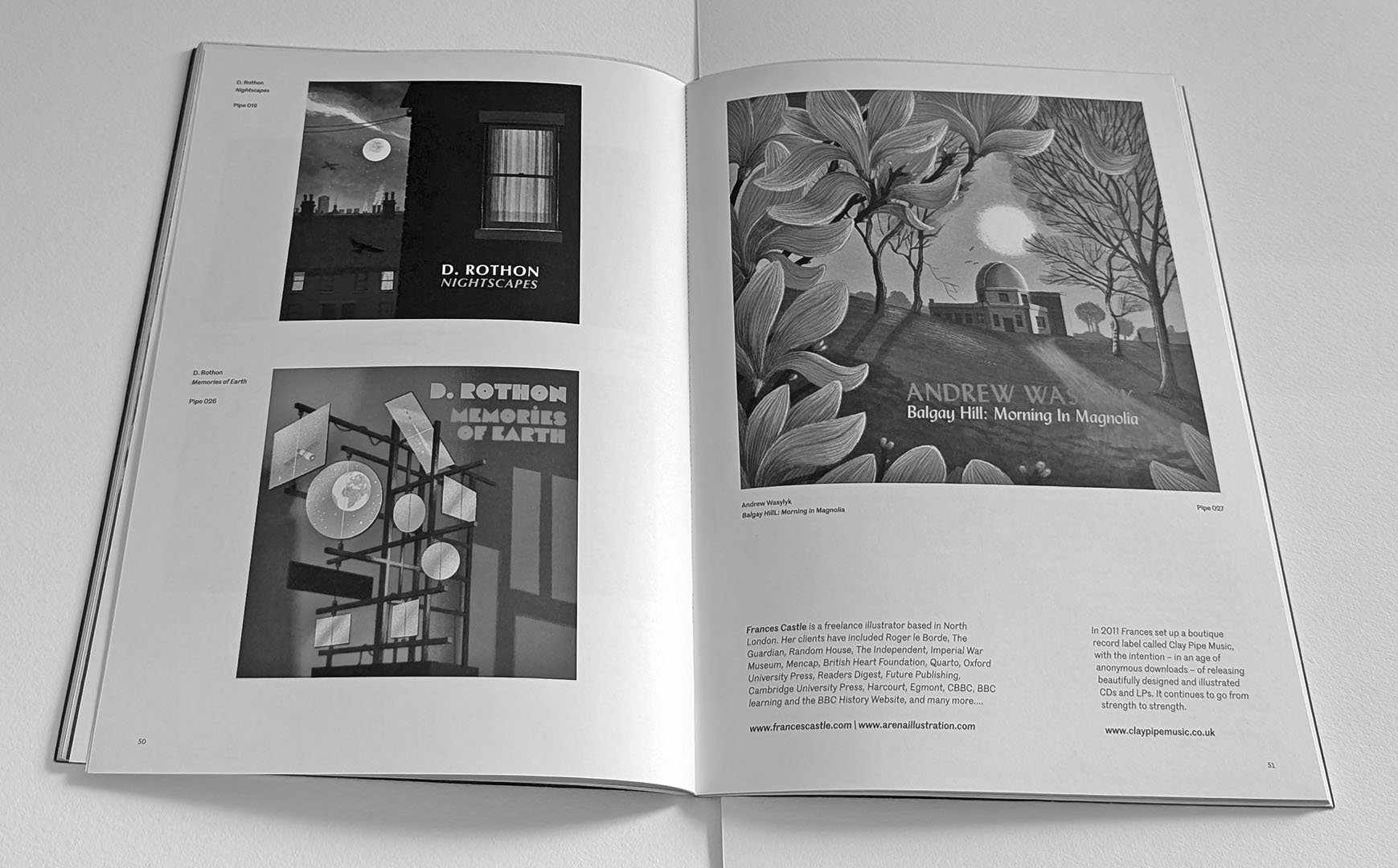
The magazine features an article that showcases a selection of Frances Castle’s illustrations for her record label Clay Pipe Music, which she founded in 2011. She creates all the cover art or the label’s releases and this gives them a distinctive and cohesive aesthetic that is both contemporary and seems to be tinged with past decades in some way that is difficult to quite put your finger on. If I was looking for a concise way of describing the label’s visual aesthetic I might choose “arcadian gentle wyrd”.

A number of the records released by Clay Pipe Music, and indeed the label as a whole, have a pastoral quality and this is particularly so on the five albums by Vic Mars which have been released the label. These incorporate lush and entrancing acoustic-electronic conceptronica that at times contains shades of folk and is often inspired by the British landscape and which also at times, to semi-quote text from Norman Records’ site, is like an English form of hauntology but without the more overtly eerie and unsettling “spooky” aspects of such things.

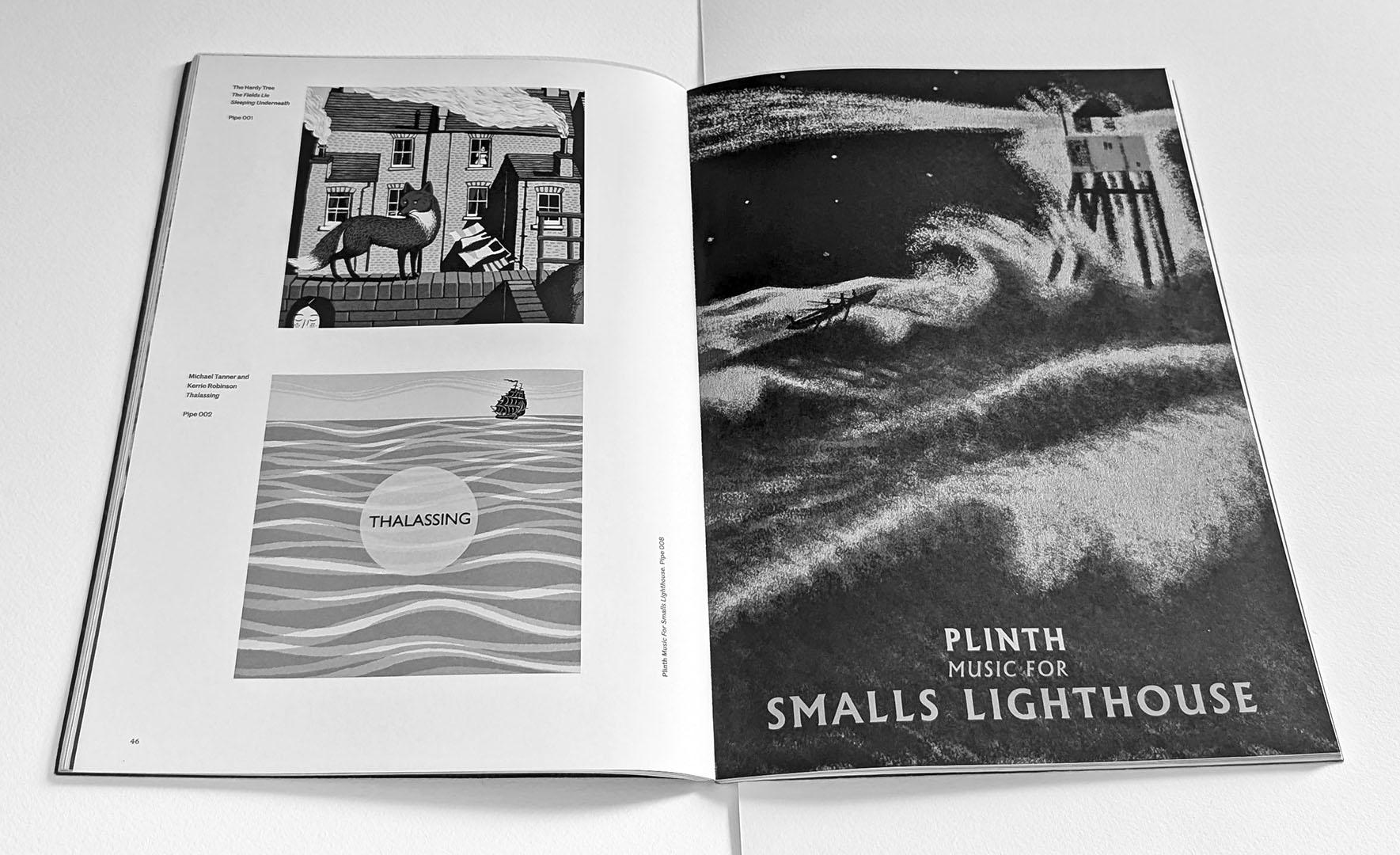
(As an aside Vic Mars has also contributed music to the themed A Year In The Country compilation albums and there are further lines of connection between A Year In The Country and Clay Pipe Music as the second release on Clay Pipe was a collaboration by Kerrie Robinson and Michael Tanner, the latter of whom’s Nine of Swords album was released by A Year In The Country in 2014 during the project’s first year of “wanderings”.)

Returning to Oscillations, the magazine has high quality production values and, as is also the case with some of Blackford Hill’s music releases, explores at times some not dissimilar gentle wyrd-pastoral-arcadian territory to Clay Pipe Music, albeit with a perhaps more fine art slant, and so it seems like something of a natural (second) home from home to find a selection of Frances Castle’s Clay Pipe Music artwork in it, some of the selection of which is reproduced in this post.

Oscillations was described by Blackford Hill as a journal that “looks at art, music, architecture, poetry, travel and photography, more often than not connected to a sense of place” and issue 2 includes a wide range of contributions, from/about Rob St John, David Cass, Angie Lewin, Clare Leighton, Uli Schade, Frances Priest, Adam Nathaniel Furman, Tim Rich, Siôn Parkinson, Ultramarine, James Nice, Katherine Jones, Clare Archibald, Emily Scott, Melvyn Evans, Tommy Perman, Marcus Oakley, Brita Granström, Simon Kirby, Bow Gamelan Ensemble, Julian Cowley, Simon Lewin, and Jonny Hannah.

It’s an intriguing publication. Shame its out of print, although the occassional copy can be found used online.

Links:


Posted on

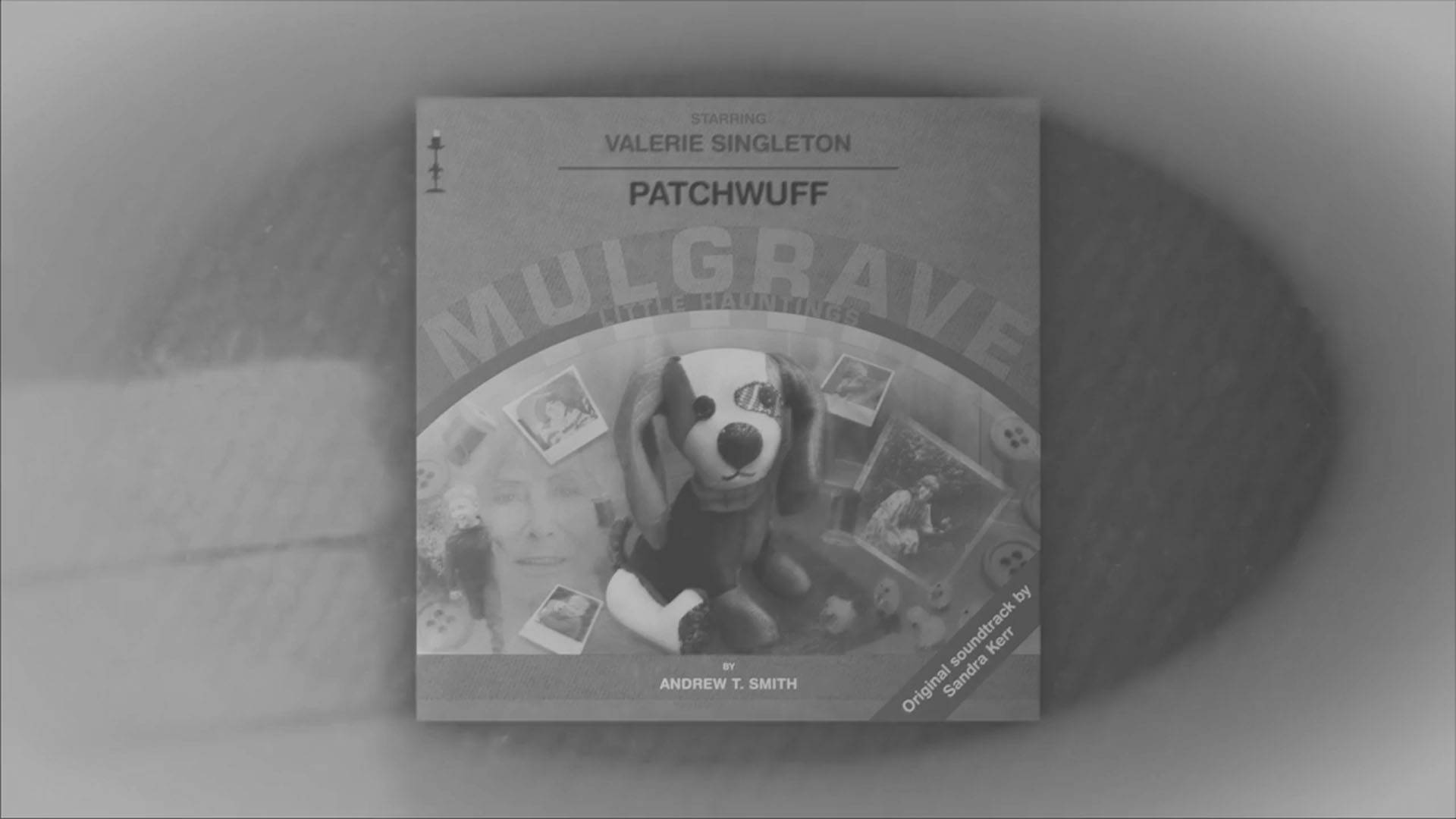
Patchwuff, Mulgrave Audio, Valerie Singleton and Sandra Kerr – Dreamscape Adventures Tumbling Through the Years

Mulgrave Audio is a company/project that was started in 2023 by writers Bob Fischer, Andrew Orton and Andrew T. Smith which produces original audio dramas, the inspiration for the founding of which is said at its website to be “the fading memories of childhood television, the shadows of traditional folklore and the thwarted dreams of a space-age future”. These points of inspiration and Mulgrave Audio’s releases and their themes and atmospheres variously interconnect with and/or draw from the recurring themes and tropes of hauntological and wyrd culture and related cultural touchstones such as the young adult orientated television series The Owl Service (1969-1970) and Children of the Stones (1976). In fact, the audio dramas that Mulgrave Audio has released have an air of being fever dream versions of “uncanny” series that were broadcast back when alongside the likes of Children of the Stones but which for some unknown reason nobody can remember and that have somehow tumbled through a portal and come to life in the modern day.

Patchwuff is Mulgrave Audio’s latest release and it tells the story of Peter and his adventures with his patchwork dog companion the titular Patchwuff which was hand-made by his grandmother:

“A long time ago, when Peter was just a little boy, his favourite place to visit was his grandmother’s sewing room. Because this was the home of the most clever, the most adventurous, the most caring old dog in the world – Patchwuff… But when a Very Important Man decides to put Patchwuff’s stories on the television, Peter finds his loyalties divided. Patchwuff becomes an incredibly famous dog indeed, and Peter doesn’t really want to talk about him any more. As he grows older, however, life gets increasingly complicated. Can Peter really face the greatest adventure of all without Patchwuff by his side?” (Quoted from text which accompanies Pathchwuff’s release.)

Patchwuff was written by Mulgrave Audio co-founder Andrew T. Smith who says that:

“The idea [for Patchwuff] came to me after seeing a photograph of Emily, the girl from Bagpuss, a grown up… It made me wonder how the very public friendship between a child and their stuffed pal would change over the years… Through the eye of a children’s series, I wanted to explore more adult themes – our relationship to the past, our approach to ageing, and how our formative experiences can shape our future.”

The drama enchantingly and evocatively creates its own distinctive world that intertwines with a hauntological timeslip-esque take on some of the themes, music and atmospheres etc of Bagpuss while also exploring issues around ageing and its challenges.

And talking of Bagpuss and children’s television series, Patchwuff has an impressive television pedigree as it was read by Valerie Singleton who was one of the iconic presenters for the BBC children’s television show Blue Peter from 1962 to 1975, while the music is by Sandra Kerr who alongside her husband John Faulkner co-created the soundtrack to Bagpuss. Their work and appearances in Patchwuff further add to its comfortingly timeslip fever dream-esque sense of listening to a story that you’re sure you listened to back when but that you can’t quite place.

Mulgrave Audio and their releases impressively weave, conjure and create their own multi-layered and generously packaged worlds and Patchwuff is no exception; the vinyl and digital versions include a digital download of the audio drama, Sandra Kerr’s original songs, a digital “Revox Version” of Patchwuff that has been created by passing it through a vintage Revox reel-to-reel tape machine, a JPEG of the album artwork and a PDF of the script. While further adding to Patchwuff’s impressive credentials, it was mastered by Jim Jupp of Ghost Box Records, who also mastered and created the soundtrack for Mulgrave Audio’s second release Fellfoul. Alongside which Mulgrave Audio’s co-founders have an impressive backgrounding in television and other culture: amongst other work Bob Fischer created The Haunted Generation website which is a resource and standard bearer for hauntological and wyrd orientated culture and wrote the sci-fi convention travelogue Wiffle Lever To Full!, Andrew Orton is the author of the two volumes of Hooded Man which details the production of the 1980s British historical fantasy television series Robin of Sherwood and Andrew T. Smith is the co-creator of the internationally broadcast Gerry Anderson-esque puppet television series Nebula-75 and has written books about the Marx Brothers and Last of the Summer Wine.

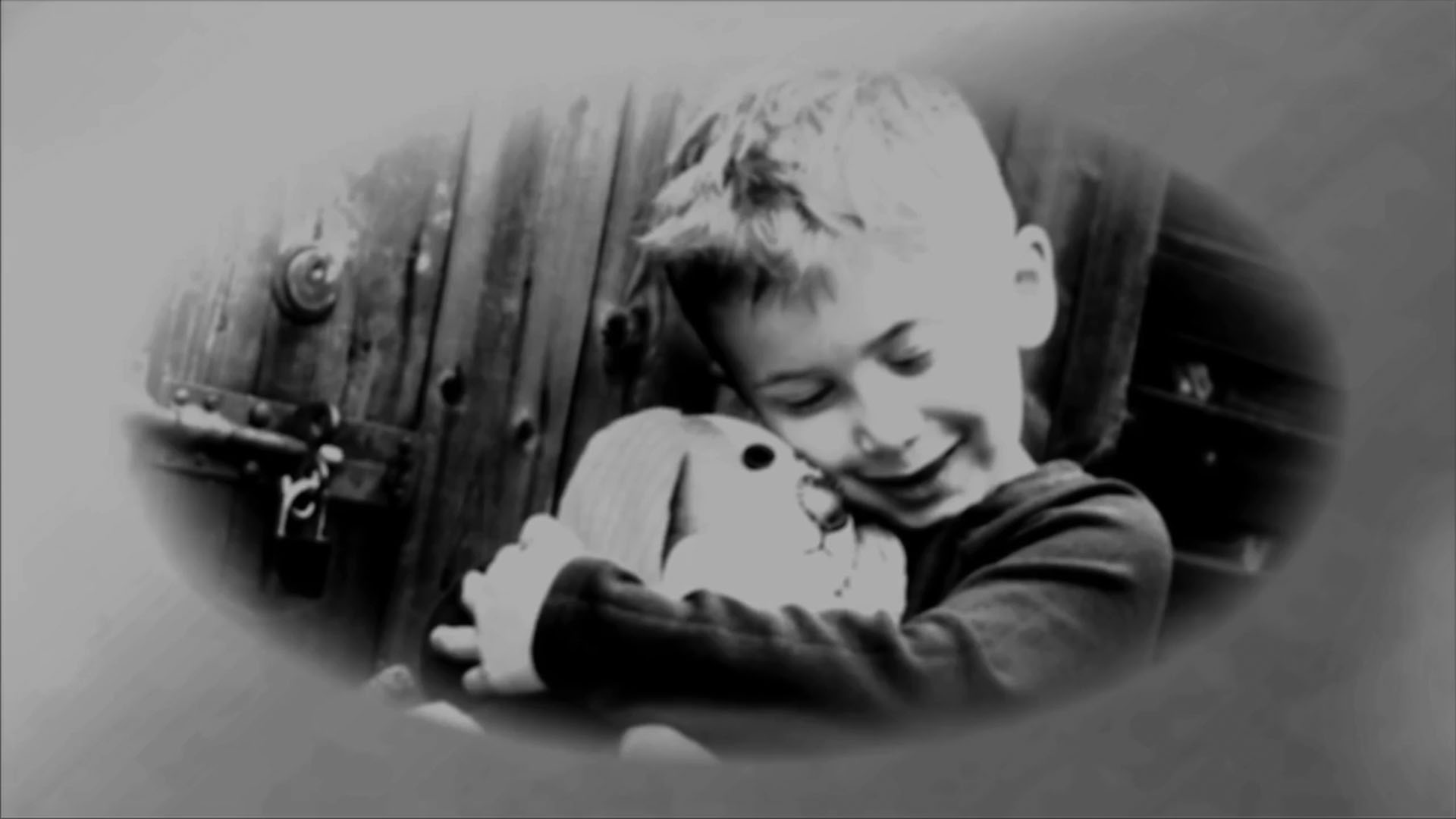
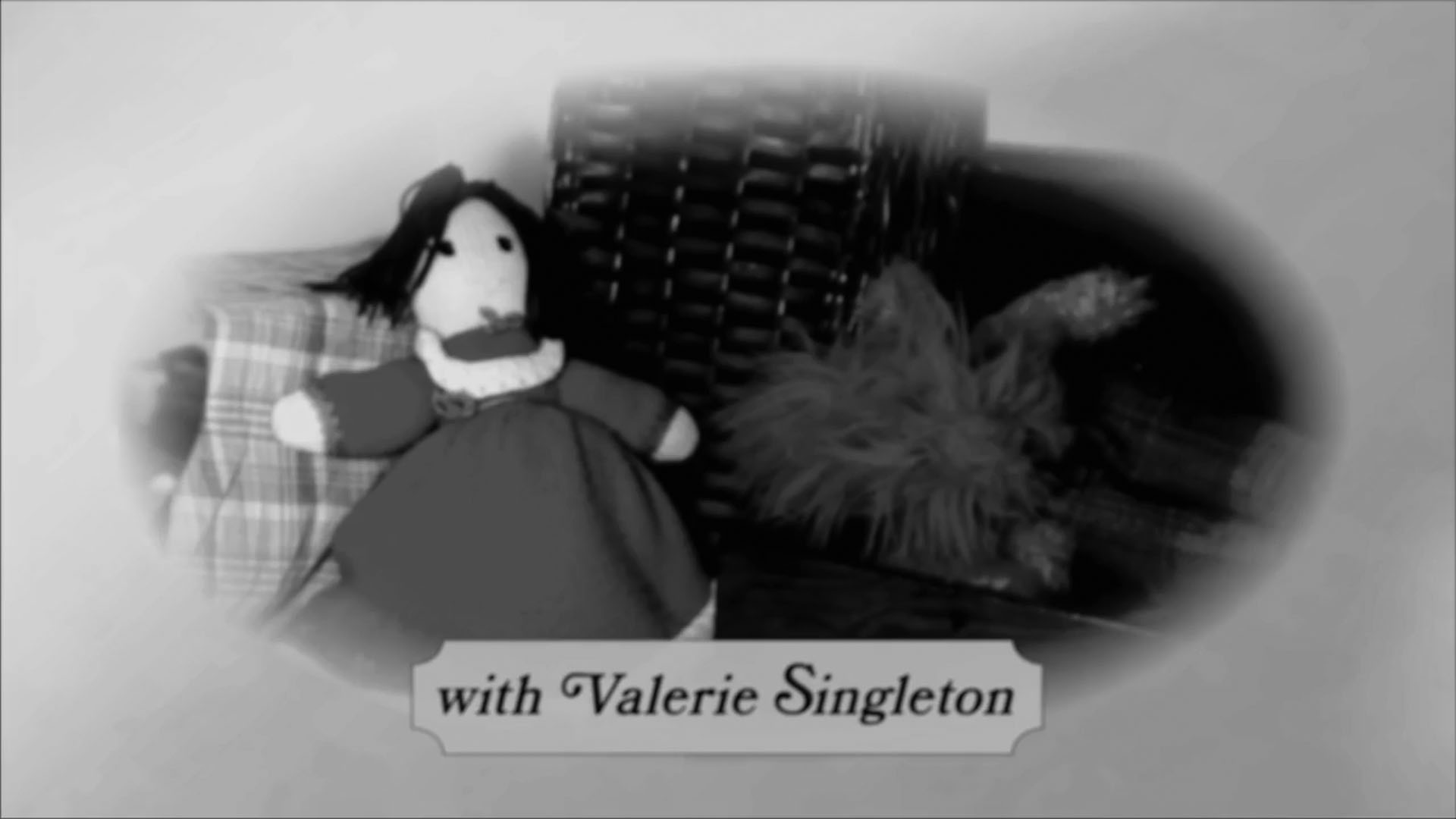
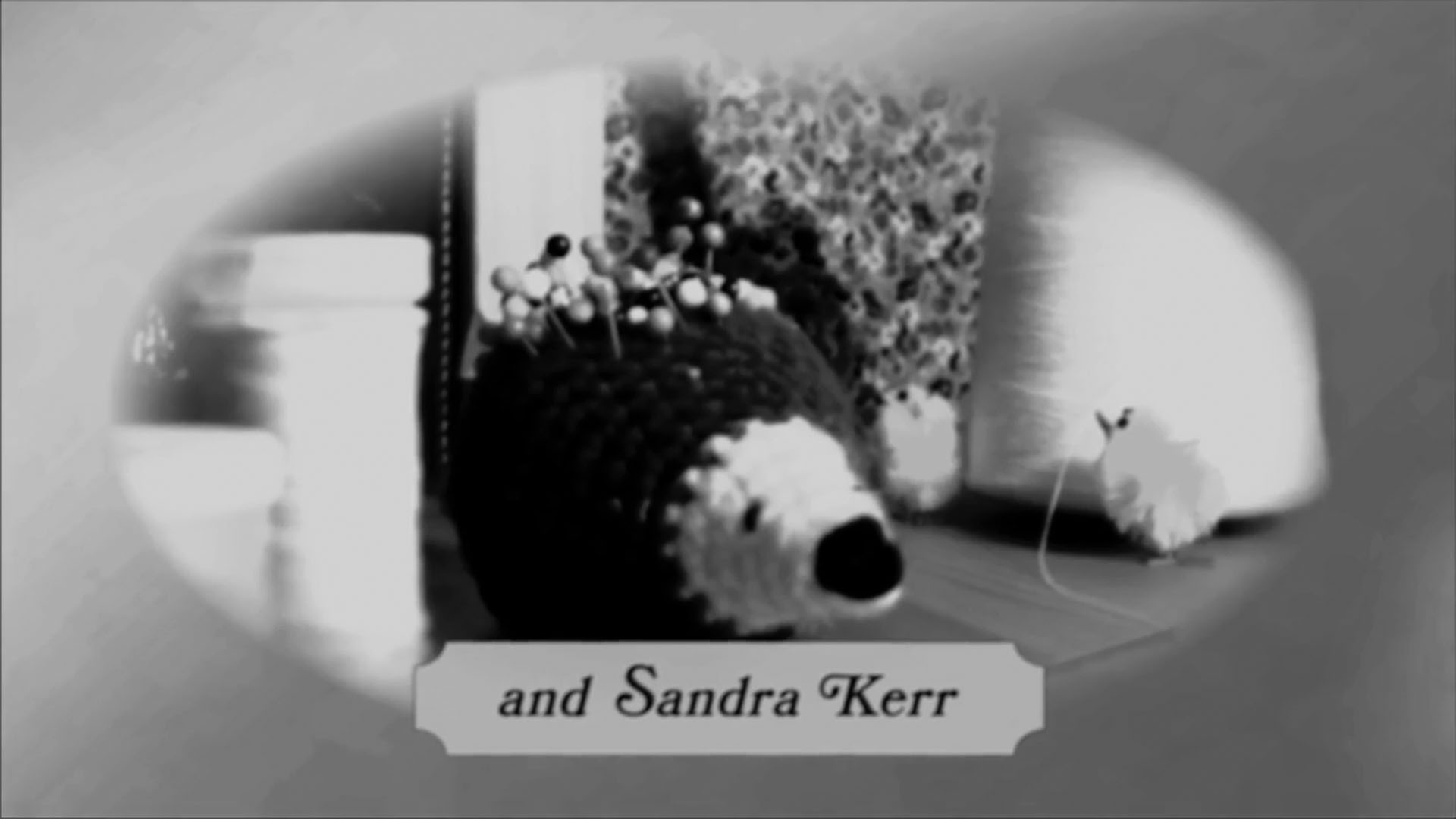
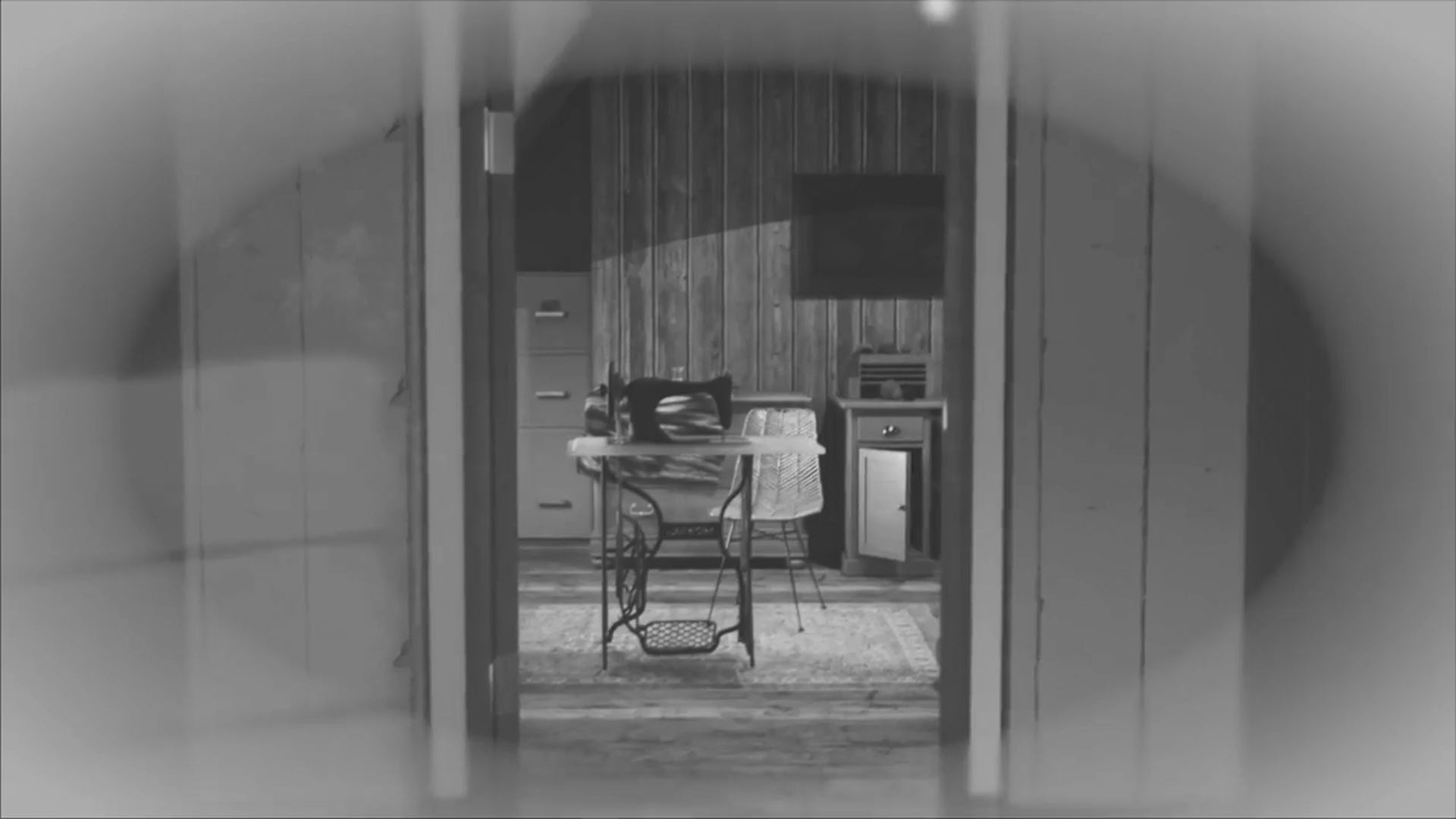
There is also a promotional Patchwuff video trailer which opens the door and invites the watcher in to Peter and Patchwuff’s world, including Peter’s grandma’s sewing room where she made Patchwuff.

Patchwuff himself makes an appearance and it appears that he may have been “made for real” for both the trailer and the album cover, which made me wonder where he lives now and what adventures is his he having?

Links:

Posted on

Burial – Spectres of Spectres Awash in a Landscape of Static: Wyrd Explorations 31

Burial is the recording alias of William Emmanuel Bevan, who has been releasing music since 2005, initially anonymously until his identity was revealed in 2008, although he has remained reclusive, giving few interviews and avoiding public appearances.

While Burial’s eponymous debut album released in 2006 and the 2007 follow up Untrue could be considered a spectral take on electronic dance music, they still retain a discernible and reasonably easily recognisable sense of drawing fairly directly from dance music genres such as garage and jungle.

However, much of the work on his 2019 compilation album Tunes 2011-2019, which collects together work from a number of singles and EPs he has released on Hyperdub, sounds more akin to the spectres of spectres of dance music: a far-off faded fever dream of it.

The music on Tunes 2011-2019 could be considered to create and represent an alternative view or version of hauntology, one which may only subconsciously, coincidentally or even accidentally connect with or be informed by some of the recurring themes and characteristics of hauntology such as a melancholia, yearning or nostalgia for lost futures, the reimagining and misremembering of past cultural forms and the use of the audio flaws of older physical media to create a sense of time out of joint and edge memories of previous eras.

If you could leave digital files of electronic dance music buried in the earth for a decade or two and they slowly rotted and deteriorated here and there, as photographic film can, then when they were unearthed, they might sound like sections of Tunes 2011-2019. But only if the music somehow contained dreams and memories not so much of nights lost in the euphoria of clubland but rather created an atmosphere that invokes a sense of roaming the streets and late-night garage forecourt shops of a city that you know but can no longer remember the name of, as you look for some way out, something you can never find, that you never knew but hoped and longed for.

The tracks on Tunes 2011-2019, as with much of Burial’s work, are full of the imperfections, crackle, drop outs etc of physical recording mediums, and on the album’s track “Nightmarket” the listener is taken on a journey through a fractured audio landscape where melodies and elements of more traditional song forms offer a false sense of security, expectancy and normality before it all not so much fades away but at times just suddenly drops away below you and leaves you awash in a landscape of static.

It is both brutally urban and softly dreamlike, and there’s a John Carpenter meets Blade Runner atmosphere at times as voices infrequently intone “Come with me”, “The frontier” and “I’m here”, which seem like seductive invitations that are more siren call than rave siren.

Interconnected with what writer and academic Mark Fisher called the conjuring of “audio-spectres out of crackle” in relation to the work of Burial, Tricky and Pole, Burial and Boards of Canada could be considered to represent two flip sides or undercurrents of spectral or hauntological audio; distantly related publicity shy urban/rural cousins. Both use older analogue media’s flaws to conjure a hazily distant “past inside the present” and almost hallucinatory atmosphere, although Burial’s perhaps has a more submerged and less overt or conscious philosophical underpinning. Rather Burial’s work on Tunes 2011-2019 contains a more instinctive-seeming creation of its spectres, which could be seen as interconnecting with the spectres of the primal release and escape of dance music, culture and events which can be found in his music.

Returning to conjuring “audio-spectres out of crackle”, below is the section of the article which that quote is taken from: Mark Fisher’s “London After the Rave: Burial” article, which was originally published on his k-punk website in 2006 and republished in his 2013 book Ghosts of My Life: Writings on Depression, Hauntology and Lost Futures. The book was one of the first, if not the first, to focus on and extensively explore hauntology as a cultural form and in it, Fisher wrote passionately and evocatively about Burial’s work, alongside interviewing him:

“[Burial’s debut album could be considered] a collection of the ‘dreamed songs’ Ian Penman imagined in his epochal piece on Tricky’s [debut album] Maxinquaye. Maxinquaye would be a reference point here, as would Pole; like both these artists, Burial conjures audio-spectres out of crackle, foregrounding rather than repressing sound’s accidental materialities. Tricky and Poles ‘crackology’ was a further development of dub’s materialist sorcery in which [as written by Penman] ‘the seam of its recording was turned inside out for us to hear and exult in’… But rather than the hydroponic heat of Tricky’s Bristol or the dank caverns of Pole’s Berlin, Burial’s sound evokes what the press release calls a ‘near future South London underwater. You can never tell if the crackle is the burning static off pirate radio, or the tropical downpour of the submerged city out of the window.’”

Posted on

The Delaware Road, Bunker Archaeology, Waiting for the End of the World, Subterranea Britannica, The Quietened Bunker and Disinformation – Ghosts, Havens and Curious Repurposings Beneath our Feet: Wyrd Explorations 30

Abandoned and decommissioned bunkers are a subsection of utilitarian brutalist architecture that has come to gain totemic significance and to have a form of romance attached to them; this can take a hauntological form where Cold War bunkers in particular have come to represent and be symbols of the spectres of history.

This in turn connects with a central defining tenet of hauntological strands of interest: explorations of and fascinations with lost futures and areas of culture alongside artifacts, buildings, institutions etc which are imprinted with spectres of those lost histories. In this sense such bunkers are physical embodiments of the (thankfully) lost futures of previous decade’s end of days conflicts: the unsettling and disquieting counterpart to social and municipal brutalist buildings from a similar epoch and the yearning for lost progressive utopian futures that they can represent.

Generally, we tend to think of Cold War bunkers, particularly those built by governments, as being located in the countryside and intended more for use by high end and/or control personnel. However, a nuclear attack bunker exists buried underneath Germany’s capital city Berlin, which was intended for use by the general population.
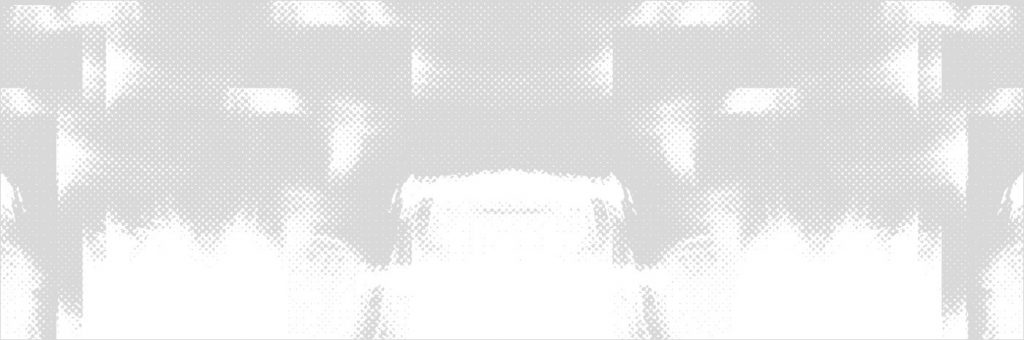
This is a somewhat spectral reminder of the Cold War, in both a hauntological and fear-instilling manner. Or as writer, artist and graphic designer John Coulthart has said bunkers are:

“A source of contemporary horror that doesn’t require any supernatural component to chill the blood.”

This Berlin bunker contains outdated technology but is still fully functioning and maintained. It was designed to hold 20,000 people in the near dark, in almost total humidity and without medical care. While the air filters were designed to operate for only two weeks, which would not have been sufficient time for contamination levels outside to fall to a safe level before the bunker’s population had to leave.

It features row upon row of metal bunk beds and is an interesting and intriguing but definitely not fun place to visit, even for less than an hour. As part of a bunker tour, visitors are shown a short video that features the attack sirens sounding and the bunker door slamming shut. This serves as a stark reminder of the realities of these structures and the futility of their use as a form of defence; a very physical representation of the Cold War dread which underpins much of hauntology.
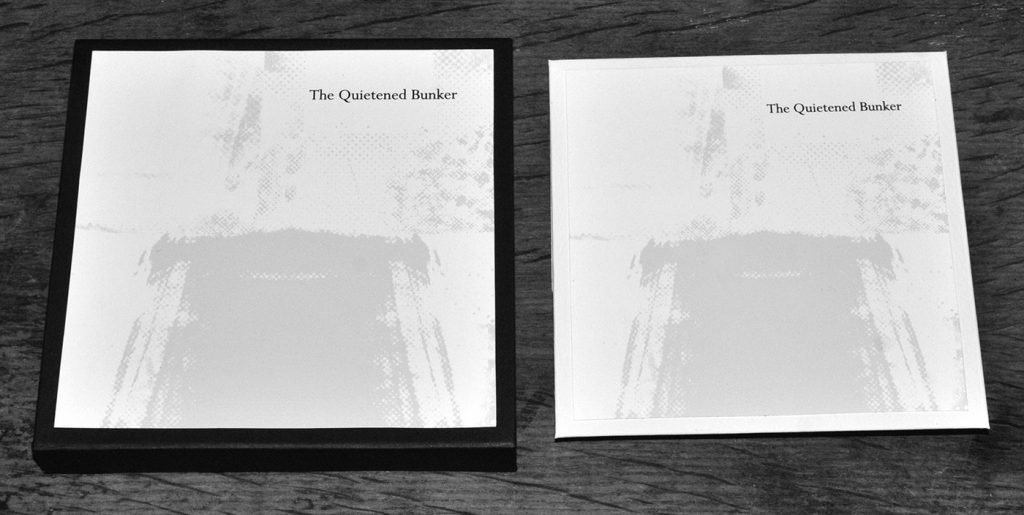
Connected to that sense of futility or delusional projections of their effectiveness, in 2014 as part of A Year In The Country a themed compilation album called The Quietened Bunker was released.

This featured work by Keith Seatman, Grey Frequency, A Year In The Country, Panabrite, Polypores, Listening Center, Time Attendant, Unknown Heretic and David Colohan and interpreted the album’s theme via recordings that included field recording subterranean ambience, paranoid industrial distortion, Radiophonic inflected electronica and elegiac end of days sequences.

The album’s accompanying notes are as follows:

“The Quietened Bunker is an exploration of the abandoned and/ or decommissioned Cold War installations which lie under the land and that would have acted as selectively populated refuges/control centres if the button was ever pushed.

“These bunkers could be seen as once modern fortresses – reinforced concrete and blast doors replacing moats and stone battlements. The intention [in the UK] was that they would form part of a network of civil defence and management, accompanied by government-issued Protect and Survive leaflets/broadcasts that would have offered advice on how to protect home and hearth via little more than whitewashing windows as blast protection and forming a shelter by leaning mattresses against an inner wall of your house. Looking back, such preparations can seem a reflection of some kind of madness or delusion in the collective consciousness and the halls of power – a tilting at windmills that was necessary to protect national psyches from the reality and aftermath of the sudden use and descending of mechanisms with almost indescribable destructive power. Now it can all seem like a dream from another world, one where for a number of decades populations lived under the day-to-day threat of total annihilation and where millions [were] spent on this network of shelters and defences; preparations to allow fiddling once all had burned, such bunkers possibly being nearer to utilitarian national follies than fortresses – indeed, today they are as likely to be signposted tourist attractions as operative defences. The Quietened Bunker reflects on these chimeric bulwarks and the faded but still present memory of associated Cold War dread, of which they are stalwart but mouldering symbols.”

The album is part of a lineage of work that explores, is inspired by and documents bunkers, shelters and related infrastructure.

The book Waiting for the End of the World by Richard Ross published in 2004 is part of this lineage and it contains photographs of active and decommissioned bunkers and shelters around the world, both those built by governmental/military organisations and by private individuals.

One intriguing thing about some of the photographs of domestic shelters are the details of the way they have been made to feel homely and the amount of aesthetic consideration often given to their entrances, in the face of and opposition to what their occupants would be faced with if their intended purpose was ever called upon.

While many of the institutionally-built shelters are shown as harsh, utilitarian or crumbling places, this is contrasted by the entrance and blast doors for one Swiss public shelter which have been painted a somewhat incongruous seeming bright, friendly welcoming pink.

Rather than being purely documentary in nature, Richard Ross’ book belongs more to the world of fine art photography in that it is a photography project which is underpinned with a sense of the creative or personal expression of its author.

In this instance Richard Ross says that he wishes to make the shelters and their present status real and tangible by presenting them as visual images rather than as more abstract intellectual ideas. As is also referred to in the above notes to The Quietened Bunker, he comments on their ineffectiveness as a logical solution or salvation, in particular due to the minute number of them that exist in comparison to the size of population. However, he also found a sense of hope and optimism in their repurposing as clubs in St. Petersburg, Russia and how these have become places where people go to celebrate life rather than anticipate destruction.
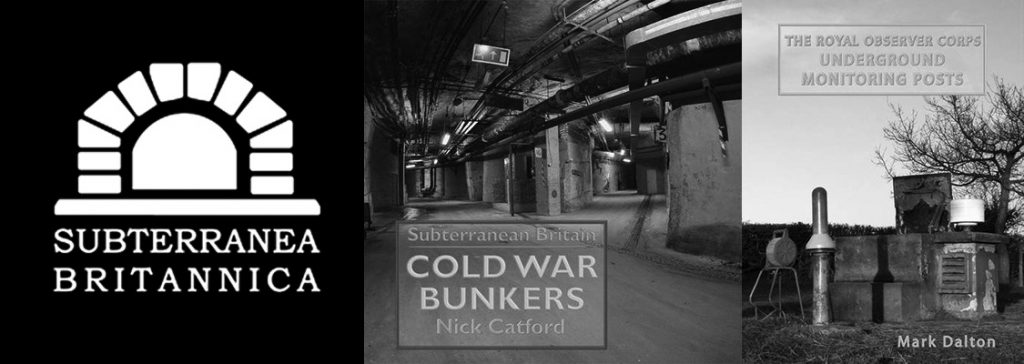
Other photography-based work which explores such buildings and installations is more strictly documentary in nature, in particular that done by the British based Subterranea Britannica society, whose members:

“Study and investigate man-made and man-used underground places – from mines to railway tunnels, military defences to nuclear bunkers and everything in between.”

The society has published a number of comprehensive books featuring bunker-related work, including Nick Catford’s Cold War Bunkers (2010) and Mark Dalton’s The Royal Observer Corps  Underground Monitoring Posts (2011).

The work in these books and by its members, which involves photography and text-based notes and observations, is more a rigorous archival recording rather than the more expressive nature of Waiting for the End of the World.

Via its publishing activities, the collecting of archival material and photographs and notes from exploratory expeditions to locations by members which are viewable on its website, the society’s work represents a comprehensive mapping of these often once secret or inaccessible to the public places and infrastructure networks.

A predecessor to the above Cold War bunker related lineage of work is Paul Virilio’s book Bunker Archaeology, originally published in a French edition in 1975. This collects his photography and writing on the abandoned World War II German bunkers and related installations that lie along the coast of France.

Along with their Cold War counterparts, these could also be filed as a form of brutalist architecture as they share a number of similarities in terms of the materials used and their aesthetics.

In comparison to many Cold War bunkers and structures, those in Paul Virilio’s book seem to more inherently contain a curious and surprising, considering their nature, beauty or even poetry and they have a unifying flow or philosophy to them despite their once aggressive and defensive intentions.
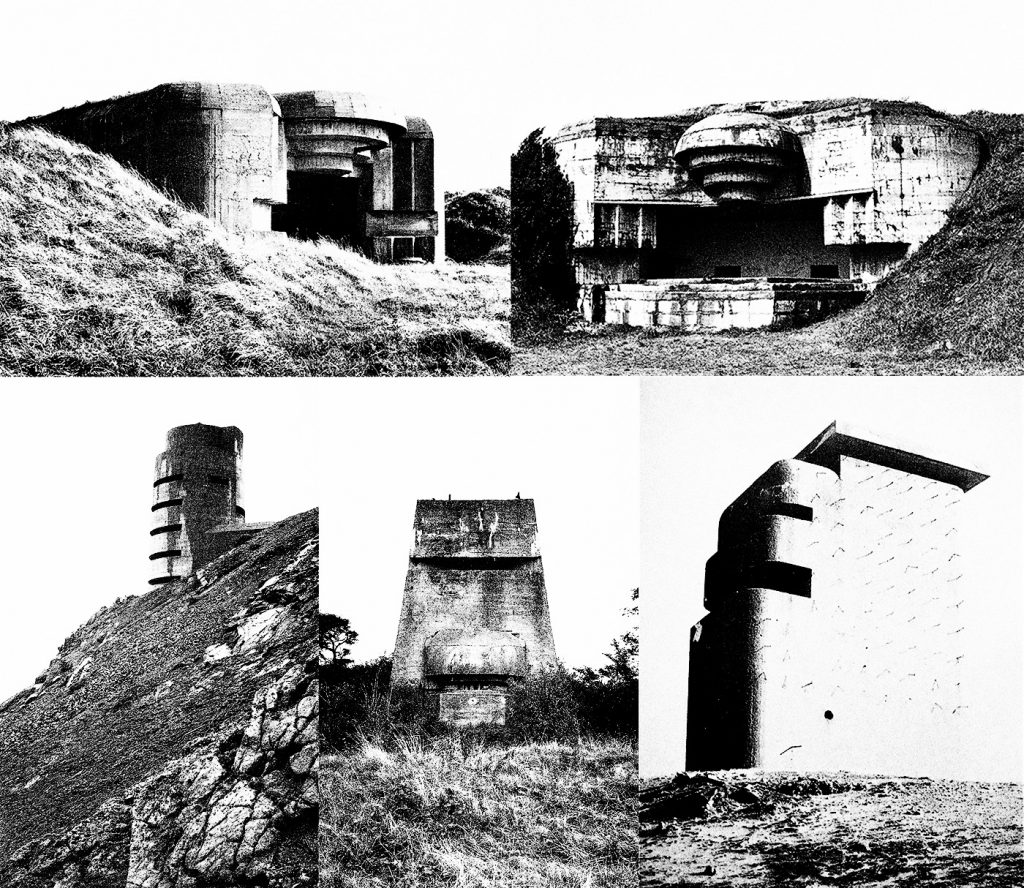
The above refers to their aesthetics and artistic aspects rather than their political underpinning. However, within the totalitarian regime that instigated them there was often something of an intertwining of such things.

Viewed now they seem to almost be a form of accidental utilitarian art: something they share with the likes of at times similarly appreciated pragmatic constructions such as telegraph poles, pylons, Soviet era bus stops or even library music.

Although they were created with a very practical intent, looking at them now, they seem nearer to monuments or tributes and are reminiscent of the Cold War era Spomenik memorials that Jan Kempenaers photographed and which are collected in his 2010 book of the same name.

With the structures in Bunker Archaeology, whatever their original intents, viewing them today they seem as though they could be artifacts from an almost science fiction-esque future that never was, a form of hauntology possibly but one that steps aside from or precedes many of the more often referred to British cultural history related tropes.

That science fiction-esque quality seems particularly present in some of the structures that have been partly covered by or have sunk into the sand; their appearance at times brings to mind sentient or anthropomorphic crashed spaceships and seem subtly reminiscent of the original Planet of the Apes film from 1968 and its mingling of crashed future/past visitors and part-buried monuments to mankind’s folly.

As with the earlier-mentioned, still actively maintained, Berlin bunker, decommissioned Cold War bunkers have also become part of the heritage tourist industry in the UK and as mentioned in the notes to The Quietened Bunker album they are “as likely to be signposted tourist attractions as operative defences”.

Curiously they are even available to hire for events: one such of which is The Delaware Road event organised by the Buried Treasure record label, which was founded and is run by Alan Gubby, that took place in 2017 at a former British “secret nuclear bunker”.

This was part of a wide-reaching conceptual project of the same name that has also included amongst other things a themed compilation album, graphic novels etc and the narrative and themes of which are said to be:

“London, 1968. Two brilliant musicians create innovative sound using reel-to-reel tape. Whilst working for a large media organisation they stumble upon a conspiracy with seismic implications for themselves and for Britain. Exploring folklore, magic, propaganda, television and radio broadcasting, counter-culture and early electronic music,

The Delaware Road is an incredible, alternative vision of Britain during the second half of the 20th century.”

The 2017 event, as do a number of the label’s releases, interconnected with hauntological themes and tropes and featured a number of performers whose work has been to various degrees linked with such areas of work including Dolly Dolly, Howlround, Radionics Radio, Ian Helliwell and Saunders & Hill:

“[The event is an] immersive mix of theatre, film and live music [and] takes place deep underground in a nuclear bunker, hidden in remote Essex woodland. The audience is free to explore the secret, Cold War facilities where they will encounter a host of performers, experimental artists and musicians… [It takes place at] The Kelvedon Hatch Secret Nuclear Bunker… in the Borough of Brentwood in the English county of Essex… a large underground bunker maintained during the Cold War as a potential regional government headquarters. Since being decommissioned in 1992, the bunker has been open to the public as a tourist attraction, with a museum focusing on its Cold War history.” (Quoted from text which accompanied the event.)

As with some of the bunkers in Waiting for the End of the World which have come to be used as clubs, this is a repurposing of such structures for entertainment or cultural purposes, albeit in this case a form of cultural exploration which explicitly refers to and explores the history of them rather than being more purely hedonistic socialising and escape orientated. It could also be seen as being part of a lineage of interrelated work:
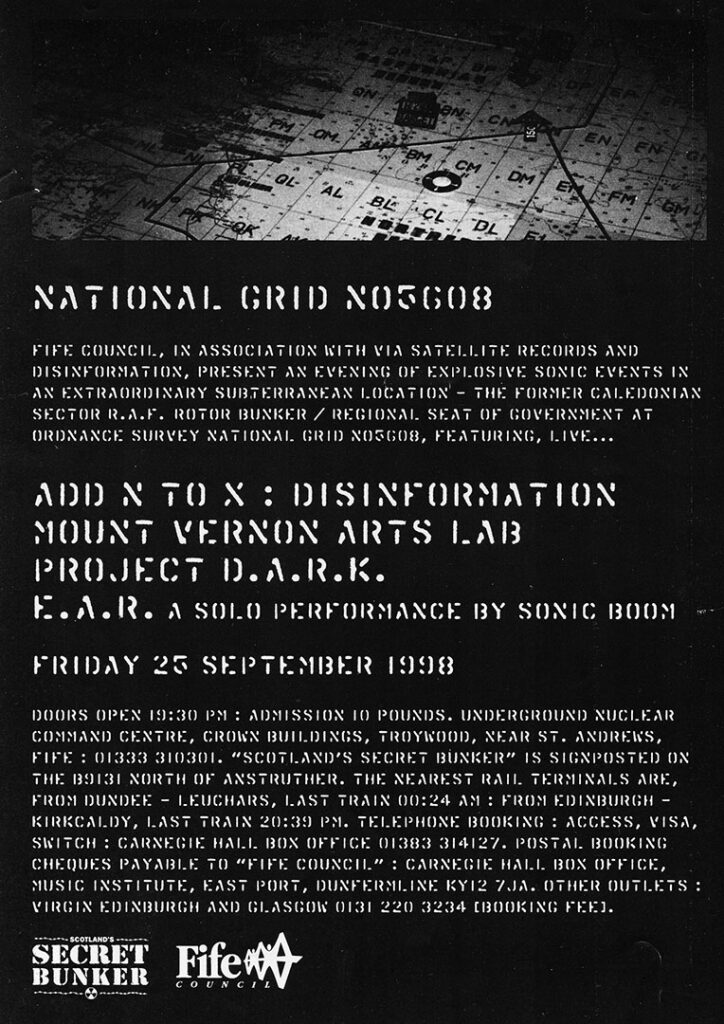
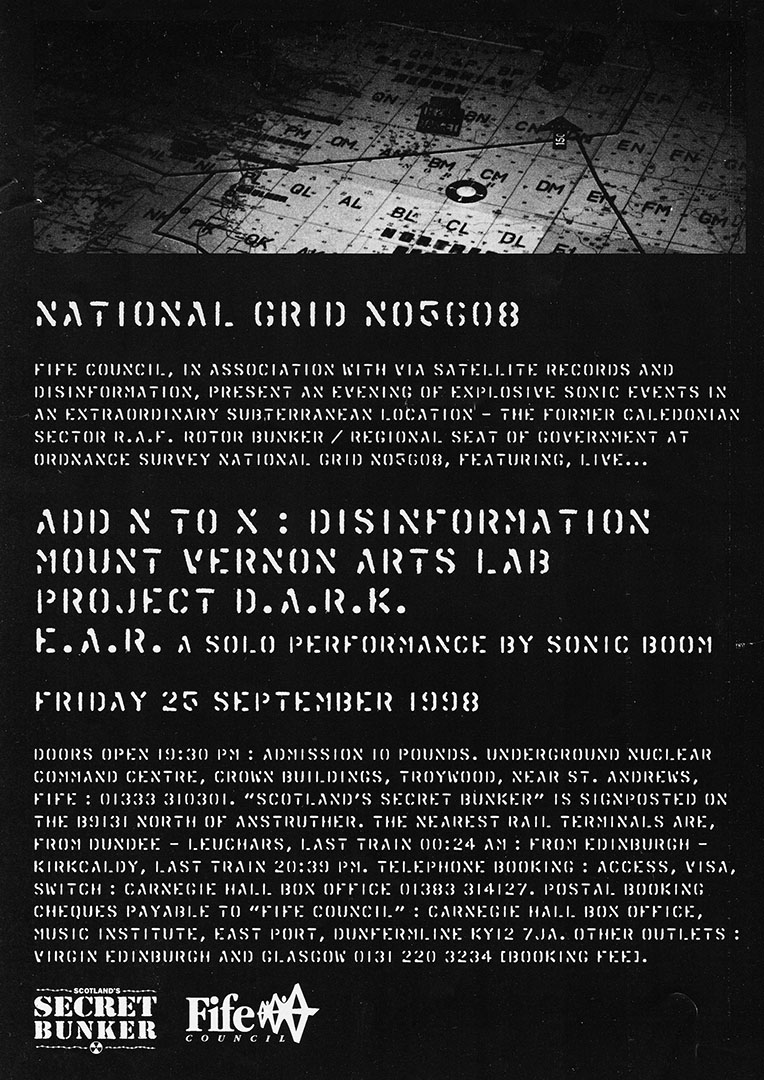
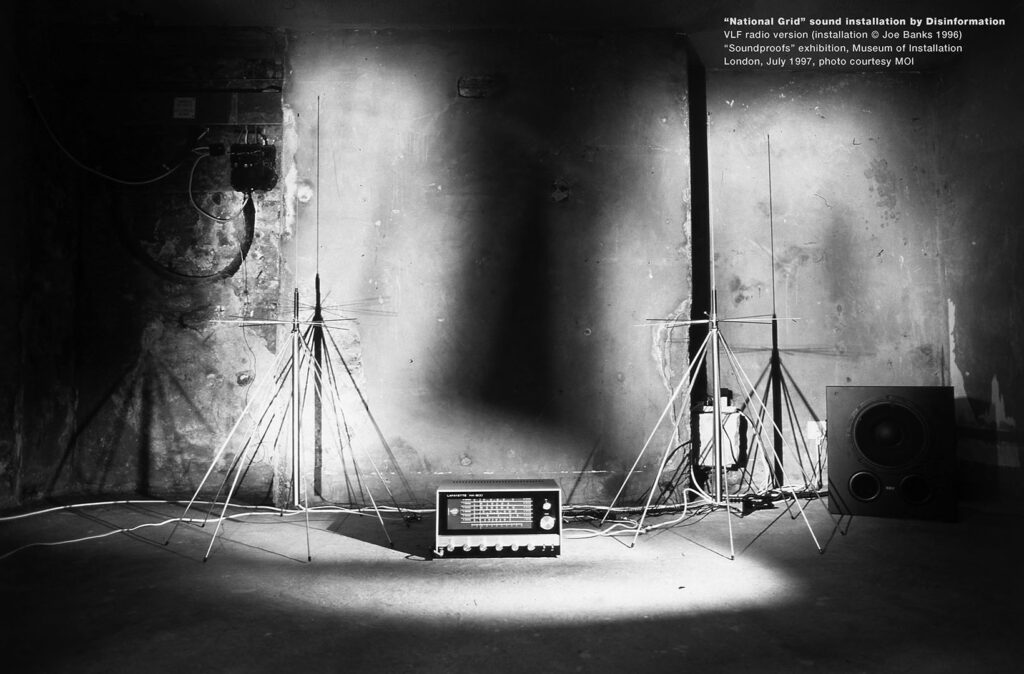
In 1999 Joe Banks, who often works under the name Disinformation, and Drew Mulholland co-curated two events organised by “Fife Council in association with Via Satellite Records and Disinformation” at a once “secret” Cold War era bunker in Scotland near Anstruther, Fife.

The “secret bunker” where this event took place was built 100 feet beneath a field on two levels across 24,00 square feet and was originally opened in the 1950s as a Royal Air Force radar bunker after which it became a “Regional Seat of Government” location that would have been used in the event of a nuclear attack and the destruction of Britain’s cities etc. It was eventually decommissioned in 1993 after which, as with the Kelvedon Hatch “secret bunker”, it was opened to the public as a Cold War museum.

Text which has been published at Joe Banks’ Disinformation Flickr account provides an overview of one of the events:

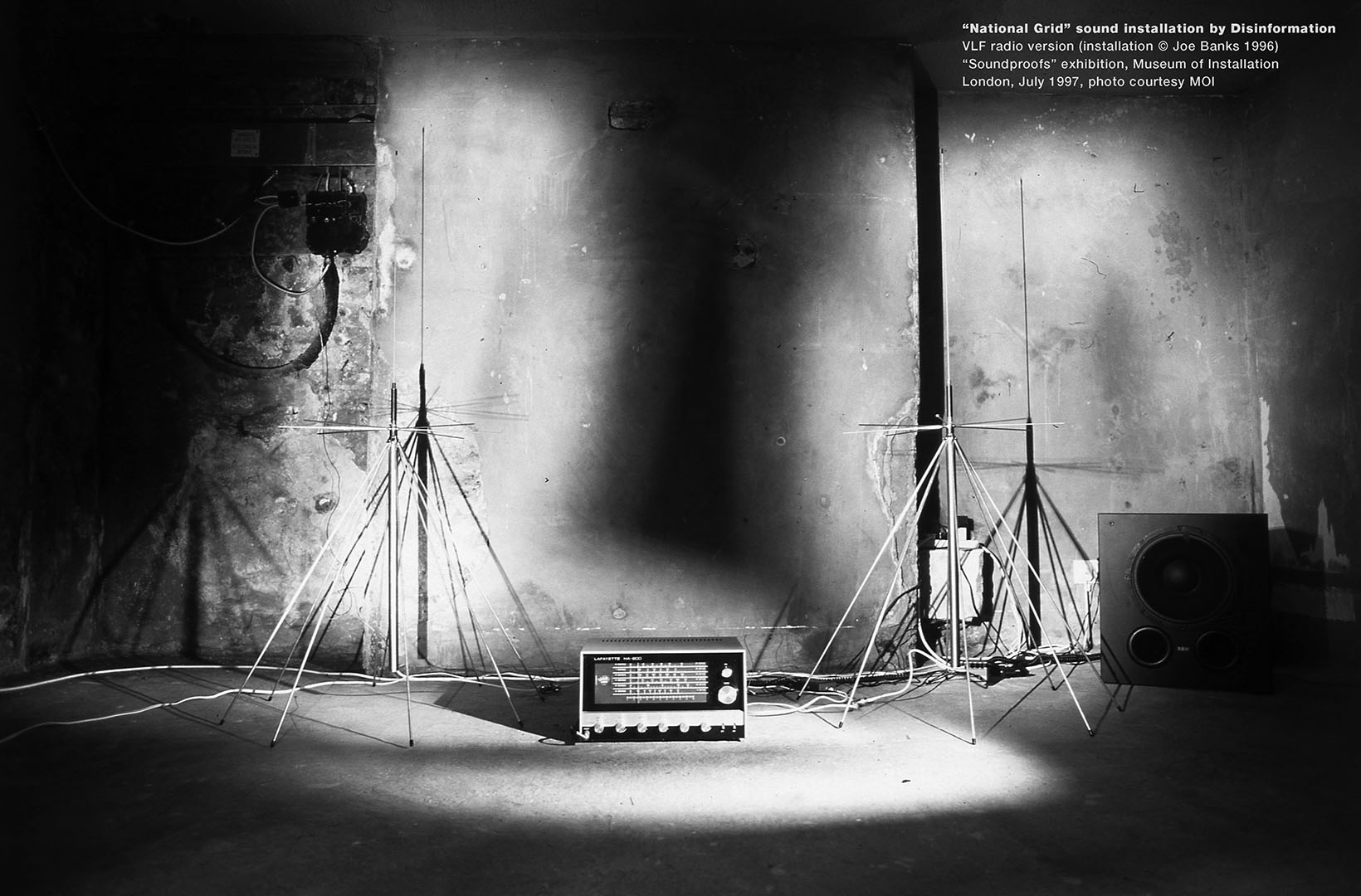
“Visitors arrived outside a superficially innocuous rural outbuilding, and entered to find, not in fact a ground floor in a building filled with conventional furnishings etc, but a large open stairwell going down. One storey underground, visitors then found a 50-metre access corridor, disappearing off to one side, sloping down into darkness and into a mass of shockingly powerful and exhilarating [ultra-low frequency] sub-bass sound [which was an installation by Disinformation]. Beyond the steel blast doors at the end of the corridor, visitors entered a two storey deep underground complex, filled with radar screens, military plotting tables and communications equipment…. [The] concert featured electronic music from E.A.R. (Pete Kember, aka Sonic Boom), Disinformation, Add N to X, Project DARK and Mount Vernon Arts Lab [aka Drew Mulholland].”
The ground level entrance building to both the “secret bunker” where this event took place and the one at Kelvedon Hatch are remarkably similar in design as both look like fairly conventional single-story bungalow-like domestic homes with pillared fronts and a single loft window on the front side of the roof. Alongside which footage and photographs etc of either events could almost have tumbled forwards or backwards in time from one to the other due to the similarity of the two bunker’s entrance buildings, the utilitarian Cold War era design of their subterranean levels and equipment, the two event’s exploration and use of Cold War imagery etc and the experimental left field electronic nature of the music which was performed and/or created at them.

While due to the nature of their locations etc some similarities between the two events might be expected, the degree to which they have parallels is somewhat intriguing in a “porosity of time and journeying of cultural ideas” manner as they took place almost two decades apart and, to my knowledge, they were not directly connected in terms of their organisers nor did The Delaware Road event in 2017 appear to have been inspired or make reference to the Disinformation co-organised event in 1997.

Returning more directly to the heritage and tourist industry repurposing of such installations, on British roads you can find official road signs that direct you towards the tourist destination of a “Secret Nuclear Bunker”, often appearing on the same sign as one which also points drivers to an industrial estate and various towns.

Viewing these signs may bring kind of mental disconnect – a mixture of disbelief, humour and relief that we are no longer living in a political situation where these bunkers are considered necessary and possibly a touch of sadness, anger and grief for us having once done so.

In part this disconnect is due to the very Britishness of names like Chipping Ongar and Chigwell that the road signs also point to. It may also be due to their sometimes positioning in amongst day-to-day normal housing or the gentle grey-green of the landscape, all of which are juxtaposed with these signposts to once end-of-days refuges.

Accompanying and interconnected with such road signs are the bizarre seeming estate agent signs for when a decommissioned bunker has been made available for sale; the hoardings name the property for sale as a nuclear bunker and list its square footage and acreage of land.

Which begs the question: is this a buyer’s or a seller’s market?

There is scarcity value to the property but presumably only a very limited number of potential buyers and allowable uses (data storage seems to be one such usage that is mentioned on these boards).

Which caused me to think of the equally bizarre prospect of people coming across them on general commercial property websites and seeing search results that, for example, brought up a warehouse for rent that was listed as having plenty of onsite parking and then just after it a former secret nuclear bunker listed as razor wire and emergency air filtration system included (!)