Posted on — Leave a comment

Day #161/365: Artifact #23/52 released: Arborea #2 (Day/Night Version) 12 x badge set

Arborea #2 (Day/Night Version) 12 x badge set. £9.95.
Artifact 23-Front of pack-A Year In The Country

Artifact 23-Badges-A Year In The Country

Artifact 23-Back of pack-A Year In The Country

Artifact 23-artwork-A Year In The Country

Limited edition of 52 sets.
Each badge is 2.5cm / 1″ in diameter.

The badges are packaged in a see-through pack, with a card header. The card header is printed using Giclée archival pigment ink on 245gsm card/paper.

Each pack is signed and hand numbered.

Free UK shipping.

 Available at our Artifacts Shop and in our Etsy shop.


Posted on — Leave a comment

Day #160/365: Edgelands Report Documents; Cases #1a (return), #2a-5a.

Karl Hyde-Kieran Evans-Edgeland-Outer Edges-A Year In The Country-lighter
File under: Trails and Influences: Recent Explorations. Case #21/52.
Edgelands Report Documents: Cases #1a (return) #2a-5a.

I think for much of my life I’ve been fascinated by what have become known as edgelands, way before I even knew that’s what they have come to be called.

Karl Hyde-Kieran Evans-Edgeland-Outer Edges-A Year In The Country 2Edgelands, what are they you may ask? It’s a phrase that refers to the edges of towns and cities that are neither urban nor countryside, the undeveloped or developing areas, out-of-town retail areas, the land surrounding power stations, scrublands, wastelands, semi-derelict areas, semi-industrial areas and so forth.

These are often the places where society creates, stores, repairs, discards, forgets about and disposes of the things it physically needs and they are often starkly aesthetically neglected, though in contrast can also become something of a haven for nature and wildlife.

Karl Hyde-Kieran Evans-Edgeland-Outer Edges-A Year In The Country 6I think in part my experience of the countryside was more such places for much of my childhood, something that Paul Farley and Michael Symmons Roberts talk about in their book Edgelands. Maybe in part because they were as far as it was easy (or allowed) to travel when I didn’t have independent access to motorised transport.

Maybe also because they were/are places I was drawn to: they contain many of societies overlooked and often unsupervised nooks and crannies and so represent an ideal playground when you’re a child.

Karl Hyde-Kieran Evans-Edgeland-Outer Edges-A Year In The Country 5Even when I did (briefly) live in the actual countryside when I was young, the places I often played in, explored and was fascinated by often had more than a touch of the edgelands to them: building a dam across the river next to an old crystal deposit encrusted  railway tunnel, a concrete military pillbox sat incongruously at the edge of a field (as contemporary war planes flew low overhead, practising avoiding radar detection), an overgrown and more or less abandoned local graveyard where you could scare yourself by moving and peering inside the walls of old monuments…

…a road that had broken up and collapsed down a hillside and where the intrepid could pry the cats-eyes from the remains of the middle of the road (these were reflective glass markings that were used on UK roads)… the craters on hillsides where we would excitedly scavenge rusted machine remains, thinking they were sites where planes had crashed (they may well have been, quite a few planes had crashed around those parts and there was even a semi-mythical map in the local information centre that told you where the sites were)…

Karl Hyde-Kieran Evans-Edgeland-Outer Edges-A Year In The Country 8

And that’s before we get to playing in actual edgelands, places that could have been real life Public Information Film settings that warned children of the dangers to be found there: playing below humming electricity pylons and tumbling amongst the abandoned fridges and washing machines on a hillside that led down to a river that would change colour depending on what was being pumped into it (see Day #81/365)…

Edward Chell-Soft Estate-Bluecoat-Cornerhouse-A Year In The Country 7…or the edge of town once airforce base, now camping park complete with can, bottle and possibly spectre filled air raid shelters (see Day #94/365) or in later years wandering on grey Sundays through the local industrial estate, where a coffin factory shared space sandwiched between fields and the main road with a poultry processing establishment, all to the soundtrack of suitably upliftingly depressing music on a borrowed portable cassette player.

So, anyways, it’s been interesting of late discovering that there is a whole body of literature and creative work which has focused on these hinterlands.

This work travels from Edward Chell’s Soft Estate book/exhibition on such places when they are found at the side of motorways (see Day #115/365 and image to the above left) and his use of the dust and debris that  can be found there to create his artwork…

Edgelands book-Paul Farley and Michael Symoons Roberts-Robert Macfarlane-A Year In The Country…through to the literary, poetic exploration of such things in the aforementioned book by Paul Farley and Michael Symmons Roberts: Edgelands – Journeys Into England’s True Wilderness, wherein the authors collaborate and document their travels, personal memories and connections to these liminal landscapes, taking in along the way childhood dens, container ports, wastelands, ruins, mines and the endpoints for societies automobiles.

…and then onto the Edgeland/The Outer Edges film/music/photography project by Karl Hyde/Kieran Evans (from which most of the photographs on this page are taken) which is in many ways a psychogeographic wandering through what feel like semi-uncharted lands and lives which are overlooked, strewn with debris, a faded, battered beauty, nature and pylons…

…or the roots and origin of the word Edgeland’s via Marion Shoard’s moving, artful Edglands essay (the start of which is below, read the full essay here):

“Britain’s towns and cities do not usually sit cheek by jowl with its countryside, as we often casually assume. Between urban and rural stands a kind of landscape quite different from either. Often vast in area, though hardly noticed, it is characterised by rubbish tips and warehouses, superstores and derelict industrial plant, office parks and gypsy encampments, golf courses, allotments and fragmented, frequently scruffy, farmland. All these heterogeneous elements are arranged in an unruly and often apparently chaotic fashion against a background of unkempt wasteland frequently swathed in riotous growths of colourful plants, both native and exotic. This peculiar landscape is only the latest version of an interfacial rim that has always separated settlements from the countryside to a greater or lesser extent. In our own age, however, this zone has expanded vastly in area, complexity and singularity. Huge numbers of people now spend much of their time living, working or moving within or through it. Yet for most of us, most of the time, this mysterious no man’s land passes unnoticed: in our imaginations, as opposed to our actual lives, it barely exists.

When we think of the land of Britain we think of town and village, countryside and coast. Our image of Kent is still one of towns, wealden or coastal, neatly demarcated from downs, orchards and fields. When we think of Scotland we think of Edinburgh Castle and heather-clad hills. We are, of course, also well aware of the great conurbations. But not of the edgelands.

The apparently unplanned, certainly uncelebrated and largely incomprehensible territory where town and country meet rarely forms the setting for films, books or television shows. As we flash past its seemingly meaningless contours in train, car or bus we somehow fail to register it on our retinas.”

Richard Mabey-The Unofficial Countryside-Little Toller Books-A Year In The Country…or back to one of the early documents (celebrations?) of such overlooked, often unloved parts of our world, Richard Mabey’s The Unofficial Countryside book.

That has been relatively recently republished by Little Toller Books and you can view the faded introduction by him of the accompanying film here (the start of which couldn’t be more hauntological friendly if released as part of a Ghost Box Records project with title graphic design by Julian House… see image below).

That particular book was published in 1973, which considering the social/political/economic strife of the UK at that time makes its subject matter of plants and nature creeping and surving through broken concrete, covering bombsites, thriving in cities and the associated sense of neglect and collapse somehow appropriate.

Richard Mabey-The Unofficial Countryside-The World About Us-documentary-Little Toller Books


Richard Mabey-The Unofficial Countryside-The World About Us-documentary-Little Toller Books 2-lighter

Posted on — Leave a comment

Day #157/365: The Dalesman’s Litany; a yearning for imaginative idylls and a counterpart to tales of hellish mills

Tim Hart and Maddy Prior-Folk Songs of Olde England-A Year In The CountryFile under: Trails and Influences. Other Pathways.
Case #24/52.

Now, I’m wary of harking back to some imagined pre-industrialisation idyll; as one of those whose thoughts are recorded in the book Akenfield: Portrait of an English Village says, the old ways which were often quite harsh at the time can come to seem like pleasant ideas and past times as the years put a distance between now and then.

Having said which this song, as sung by Tim Hart and Maddy Prior and which takes as it’s subject matter a yearning for a return to pastoral idylls, has stuck with me.

(A reasonably well-known example of where such pastoral impulses can lead is the modern folkloric legend of Vashti Bunyan briefly living in the forest before travelling by horse-drawn caravan over a period of years to arrive at an island community where you’re drawn to the old ways of doing things, while the local inhabitants are busy modernising, moving away from the old stoves, technology and associated ways of life.

Tim Hart and Maddy Prior-Folk Songs of Olde England-A Year In The Country 2I suppose to a degree in the era, the later 1960s and earlier 1970s, when this song and its fellows were recorded, that idyllic olde england view, the use and reinterpretation of traditional folk music and lore were sometimes part of a more experimental, exploratory strand in music and culture – or as I’ve mentioned before and to once again quote Rob Young from his book Electric Eden, a tendency towards a form of imaginative time travel.

Over time such music and culture has become subsumed into a more twee, conservative, chocolate box take on folk/folkloric culture, where now it’s almost hard to disconnect it from such baggage and even taint.)

Anyway, back to the song. The Dalesman’s Litany is a tale of an agricultural worker who has to choose between a life on the land he loves and knows and a life with his beau, as he is forced from his home to work in towns, cities and mines because the local landowner doesn’t want married workers.

It’s a very evocative recording, in particular in the imagery it conjures of the tongues of fire thrust out by furnaces as the once dalesman walks the lanes of Sheffield at night and also in the way it imparts a sense of an aching yearn to return to the moor and leave the coalstacks.

In some ways it’s a more personal counterpart to William Blake’s Jerusalem and it’s words of dark satanic mills.

Tim Hart and Maddy Prior-Folk Songs of Olde England-A Year In The Country 4

“It’s hard when folks can’t find the work where they’ve been bred and born

When I was young I always thought I’d bide ‘midst roots and corn
But I’ve been forced to work in town so here’s my litany
From Hull and Halifax and Hell, good Lord deliver me

When I was courting Mary Jane, the old squire he says to me
I’ve got no rooms for wedded folk, choose whether to go or to stay
I could not give up the girl I loved, so to town I was forced to flee
From Hull and Halifax and Hell, good Lord deliver me

I’ve worked in Leeds and Huddersfied and I’ve earned some honest brass
In Bradford, Keighley, Rotherham I’ve kept my bairns and lass
I’ve travelled all three Ridings round and once I went to sea
From forges, mills and coaling boats, good Lord deliver me

I’ve walked at night through Sheffield lanes, ’twas just as being in hell
Where furnaces thrust out tongues of fire and roared like the wind on the fell
I’ve sammed up coals in Barnsley pits with muck up to my knee
From Barnsley, Sheffield, Rotherham, good Lord deliver me

I’ve seen fog creep across Leeds bridge as thick as the Bastille soup
I’ve lived where folks were stowed away like rabbits in a coop
I’ve seen snow float down Bradford Beck as black as ebony
From Hunslet, Holbeck, Wibsey Stack, good Lord deliver me

But now that all our children have gone, to the country we’ve come back
There’s forty mile of heathery moor ‘twixt us and the coalpits’ stack
And as I sit by the fire at night, I laugh and shout with glee
From Hull and Halifax and Hell the good Lord delivered me”

Tim Hart and Maddy Prior-Folk Songs of Olde England-A Year In The Country 5The song was originally found on the album Folk Songs of Olde England Voume 1 (or even more originally Folk Songs of Old England) and can be found more easily nowadays on the Heydays compilation or listened to here.


Posted on — Leave a comment

Day #156/365: Drcarlsonalbion; taking the tropes and traditions of folklore to modern climes…

Lancashire Folklore Tapes Vol 1-Drcarlsonalbion And The Hackney Lass-Thee Betrothal of Alizon Device-A Year In The Country 2Trails and Influences: Electronic Ether. Case #20/52.

Every so often I come across/stumble across/am pointed towards a song on my A Year In The Country travels that genuinely blows me away, that I feel brings something new to the world of what could be loosely called folk music.

Thee Betrothal of Alizon Device by Drcarlsonalbion And The Hackney Lass is one of those moments.

Blimey, what a song.

In these digital pages I don’t tend to explore the more pagan, witchy, demonic/supernatural* or horror aspects of otherly pastoralism all that much: when I do I’m more drawn to them because of the aesthetics, cultural connections and so on than their shock and well, horror.

But for Thee Betrothal of Alizon Device I shall make a definite exception.

It’s an entrancing, chilling, beautiful song. It takes the tropes and traditions of folk and folklore and journeys to somewhere… well modern. But still keeping the spirit of its source.

In a way it reminds me of how somebody like Josh T. Pearson has reinterpreted dusty Americana in his own image.

Lancashire Folklore Tapes Vol 1-Drcarlsonalbion And The Hackney Lass-Thee Betrothal of Alizon Device-A Year In The CountryUnless you have a fair few pennies spare then a-listening to it in the electronic ether may well be your only option, something that I’m doing as I type. It can be found nestling at the start of Lancashire Folklore Tapes Vol. 1 here.


*When I think of the word occult I tend to think more of its use to infer hidden stories, history and knowledge than a particular kind of rituals in the woods: in that sense something like David Peace’s GB84 has been, can be (should be?) referred to as an occult history of the mid-1980s British miner’s strike; it delves into the untold, secluded corners of history, beneath the top-layers of official, well-known and accepted narratives and tries to offer an alternative or indeed otherly view of such things.

To my mind and ear, the explorations of arcane folklore carried out via the Drcarlsonalbion project are nearer to that sense or root of the word occult.

And with that I may well set off exploring this particular set of explorations further and return later to this place with my findings…


Posted on — Leave a comment

Day #155/365: Hand of Stabs… delving amongst the soil and roots for the hidden stories of the land…

Hand of Stabs-A Year In The Country 4
File under: Trails and Influences. Other Pathways. Case #23/52.

Now, Hand of Stabs are a curious and intriguing proposition, trio and well, phenomena.

In their own words:

“Hand of Stabs, from the South East of England, are a three-man collective who’s work draws inspiration from their exploration of local, often forbidden, landmarks. They create improvised sound pieces which can be simultaneously uplifting, difficult and intense using both traditional and homebuilt instruments.

Sharing a love of the history and sacred past of Medway Towns and surrounding countryside, and inspired by regular, often night-time walks through these spaces, they are creating a series of soundworks evoking and celebrating their essence.”

Hand of Stabs-A Year In The Country

Their recorded music is resolutely experimental but also very listenable-to, it is both warm and unsettling and although often created in part with resolutely non-electronic equipment, it makes me think of electronica played on and summoned from the land and soil.

Also, when I think of Hand of Stabs I’m reminded of the likes of COUM Transmissions, Throbbing Gristle, maybe a touch of Einstürzende Neubauten and even Herman Nitsch. There seems to be some kind of line or continuum from such cultural explorers and boundaries pushers to these gents but HoS have replaced forms of aggressive transgression with something more pastoral in its themes, while still creating work very far the centre of things and which delves in the hidden.

Hand of Stabs-A Year In The Country 3They often describe their work as Aktions and much of it exists only as a performance in a very particular time and space, often occurring in the green spaces and woodlands of this fair land. I find that somewhat refreshing in these days of zeros and ones where every single utterance and performance is recorded and pinned for posterity.

To intrigue the imagination, here are some of the themes and the ornithological soundtrack from one of their recent performances:

“…the demise of Beowulf, Medway estuarine piracy and fresh-water mermaids – with an awe-inspiring accompaniment from the cuckoos, nightingales, rooks, marsh harriers and herons of Northward Hill RSPB Reserve…”

While earlier in the year they collaborated on a performance, with dance accompaniment, based around a piano which was left in the woods for a year and played at the same time once a month, exploring and making use of it’s changing state.

Hand of Stabs-Piano In The Woods-A Year In The Country

Well, if that doesn’t capture the attention of ones curiousity, I’m not quite sure what will.

They cut a very particular dash to. Nice jib chaps. Always appreciated around these parts.

Hand Of Stabs-Stuart Ody of the New Brompton Postcard Co-A Year In The Country
(The above photograph is of Hand of Stabs beside the ruined schoolhouse in the lost village of Elmley, Isle of Sheppey. Infrared photography by Stuart Ody of the New Brompton Postcard Co.)

Hand of Stabs-Kevin Geraghty-Shewan-A Year In The Country copy
(Above photograph by Kevin Geraghty-Shewan.)

Hand of Stabs can be found in the 0/1 forests here. Piano In The Woods can be found here.


Posted on — Leave a comment

Day #154/365: Artifact #22; Portals and Pathways #2 badge, fridge magnet, keyring & makeup mirror set

Portals and Pathways #2 badge, fridge magnet, keyring & makeup mirror set. £6.95.
Fridge magnet etc set-in packaging-A Year In The Country

Fridge magnet etc set-back of pack-A Year In The Country

Fridge magnet etc set-A Year In The CountryFridge magnet etc set-back of items-A Year In The CountryFridge magnet etc set-designs-A Year In The Country
Limited edition of 52 sets.
Each item is 5.6cm / 2.2″ in diameter.

The four items are in a see-through pack, with a card header.
Each pack is signed and hand numbered.

Free UK shipping.

Available at our Artifacts Shop and in our Etsy shop.


Posted on — Leave a comment

Day #153/365: Stepping through into… Berberian Sound Studio

Berberian Sound Studio-Peter Strickland-Julian House-Ghost Box Records-Broadcast-A Year In The Country-12
File under: Trails and Influences. Other Pathways. Case #22/52.

Now, I know there’s been an awful lot written about Berberian Sound Studio and it has been heaped with many a selection of praise but to be honest… well, the first time I watched it in the escape and darkness of a once celluloid emporium, I enjoyed it for about 45 minutes but then… well, I just became restless and it felt like a conceit that had gone on too long.

Berberian Sound Studio-Peter Strickland-Julian House-Ghost Box Records-Broadcast-A Year In The Country 2

But still I was quite excited and intrigued by it as a piece of culture, the surrounding cultural connections and so forth.

So I bought it on shiny high pixel count disc the first day it came out for home perusing and watched it in wide-screen glory.

And the same thing happened. After about 45 minutes it lost me.

Berberian Sound Studio-Peter Strickland-Julian House-Ghost Box Records-Broadcast-A Year In The Country 3

Move forward to approximately a year and a half later and for a third time I watched it again. This time on a tiny (for these days) non-widescreen television screen, briefly interrupted by adverts throughout, in the hours after midnight, having been up until the wee hours the night before taking photographs…

And this time it got me and drew me in. Maybe it helped because I was able to share it and its cultural connections with an also somewhat tired companion. I’m not sure.

And boy oh boy does this have some cultural connections. It’s hardly a hop, skip and jump before you wander into an unsettling pastoralism, lost celluloid, Ghost Box Records, the design of Julian House, the music of Broadcast, discarded recording mechanisms, past genre films within films…

Berberian Sound Studio-Peter Strickland-Julian House-Ghost Box Records-Broadcast-A Year In The Country 4

In part I think what drew me in this time was the visual imagery, experimentation and atmosphere of the film.

In that and a wider sense it may not have the ragged energy that something like Videodrome does (with which it shares a number of similar themes – the stepping into an altered reality via recorded media, the degradation of its listeners/watchers/participants and so forth); it’s still quite a slick and polished presentation but it’s good to see a contemporary film which plays with presentation and form.

So many leftfield/independent/mainstream films are actually very conservative in their use of imagery, a shame in a cultural form which should be able to lend itself to flights of visual fantasy, ones that aren’t merely rooted in an attempt to provide ever more technical drawing accurate attempts at digital simulacra realism.

So, anyway, I don’t intend for this to be a review, more a few points of interest or questions accompanied by a bakers (devils) dozen of images from and around the film:

1) Julian House’s (Ghostbox Records/Intro/Focus Group) film within a film intro sequence. Lovely stuff (well, in an unsettling way), I can hear the score as I type.

Berberian Sound Studio-Peter Strickland-Julian House-Ghost Box Records-Broadcast-A Year In The Country 5

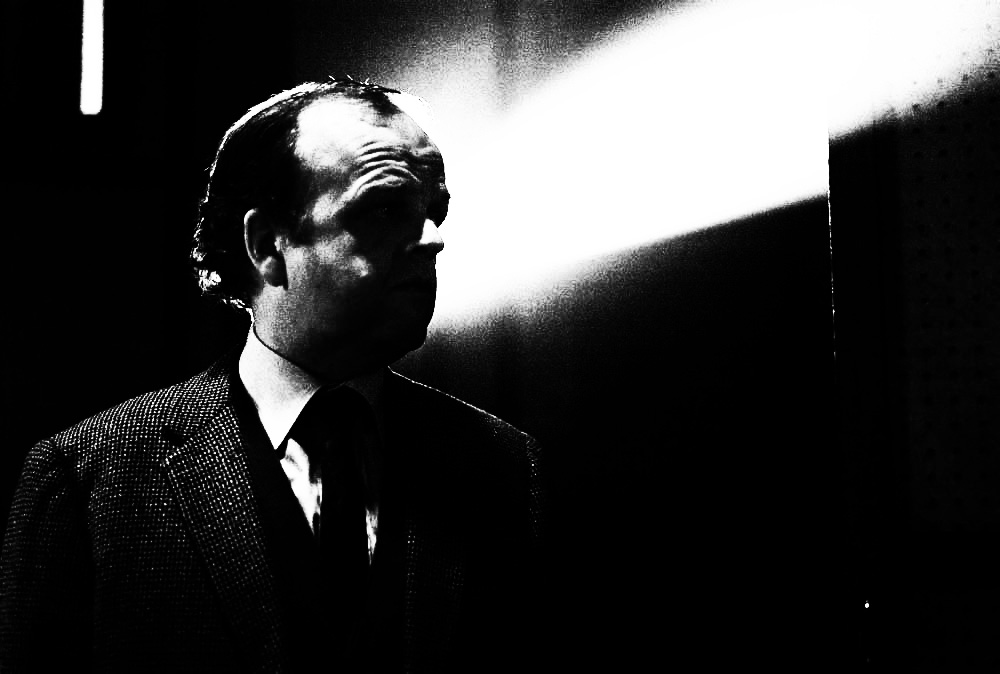
2) The studio manager (?) looks as though he has genuinely fallen from a 1970s Italian giallo film. His presence, physiognomy and physicality are just right.

Berberian Sound Studio-Peter Strickland-Julian House-Ghost Box Records-Broadcast-A Year In The Country 6

3) I love soaking in the tape boxes, edit sheets etc, knowing that Mr House designed them all… and the ferrous technology, its physical form and noises become such an intrinsic part of this story and it’s world.

4) Where was Toby Jones characters bedroom before it becomes adjacent to the studio?

5) Favourite part: where the film breaks through into the English countryside. A brief break into and relief via greenery and daylight, in contrast to the corridor, studio, bedroom, and night-time courtyard where the remainder of the film is set.

6) It’s a genuinely saddening film due to this being the last (?) piece of work that Trish Keenan of Broadcast worked on. It’s hard to shake that sense when watching the film. Hard not to wander what other fine pieces of work she would have brought into the world. A tip of the hat to you Ms Keenan.

Oh and the plot/setting… Well, basically a gentle, garden shed based British sound effects expert travels to Italy to work on a disturbing horror film and once he’s there life and art implode and fall into one another, his sanity possibly crumbles and he becomes increasingly part of/implicit in a culture and celluloid of misogyny which is masked/masquerading as art.

It is set in 1976 and in many ways is an homage to (comment on?) that period’s giallo genre (essentially stylish/artistic/left-of-centre gore/slasher films).

Berberian Sound Studio-Peter Strickland-Julian House-Ghost Box Records-Broadcast-A Year In The Country

View more of Julian House’s Berberian Sound Studio posters here. Exhibition of same that I really wish I’d seen here.

Visit the soundtrack here and here.

Watch The Equestrian Vortex trailer here (and then if you’re like me, watch it again a few more times and want to see the whole of this film within a film).

The Berberian Sound Studio-Julian House-A Year In The Country

Berberian Sound Studio-Peter Strickland-Julian House-Ghost Box Records-Broadcast-A Year In The Country-9 Berberian Sound Studio-Peter Strickland-Julian House-Ghost Box Records-Broadcast-A Year In The Country 7
Berberian Sound Studio-Peter Strickland-Julian House-Ghost Box Records-Broadcast-A Year In The Country-10 Berberian Sound Studio-Peter Strickland-Julian House-Ghost Box Records-Broadcast-A Year In The Country-11Berberian Sound Studio-Peter Strickland-Julian House-Ghost Box Records-Broadcast-A Year In The Country 8


Posted on — Leave a comment

Day #150/365: Parade Of Blood Red Sorrows

Jane Weaver-Intiaani Kesä-Parade Of Blood Red Sorrows-Kiss Of The Damned-A Year In The CountryFile under: Trails and Influences: Recent Explorations. Case #20/52.

Parade Of Blood Red Sorrows is a piece of music by Jane Weaver. It’s a haunting, tumbling, reverberating work that for me creates and conjures a world all of its own… I’m not sure I want to write much more about it as I think it’s something that needs to be listened to in order to be fully appreciated.

And to be honest writing about it just makes me want to put down my pen and go and listen to it once more… which I seem to have just done again.

Kiss Of The Damned poster-Xan Casavetes-Jane Weaver-Demdike Stare-A Year In The CountryIt can be found on the Le Rose De Fer / Intiaani Kesä album at Finders Keepers Records and alongside Demdike Stare and Brigitte Fontaine on the soundtrack to the reverent reinterpretation of earlier eras celluloid dreams and nightmares, Kiss Of The Damned

You can listen to it here.

As recompense for the brevity of my writing, here is some background on the making and release of the Intiaani Kesä record on which it can be found, which I think in discussing its technical creation also manages to capture something of the spirit of the song/the album:

“Recorded in an old vicarage near the Peak District, housing a unique analogue experimental studio, Intiaani Kesä hears Weaver deploy a wide range of instruments including tubular bells, bowed guitars, vintage Goblinised Roland string synths, detuned pianos, church bells, Roland guitar synths, harpsichords and ex-Radiophonic Workshop custom equipment as accompaniment to wordless and onomatopoeic chorale vocals recorded on valve microphones with space echo, sonic room reverbs and bespoke experimental tape delays. Made in a disciplined and unforgiving environment without modern technological shortcuts these self-initiated creative research prototypes were not initially intended for commercial release but are thankfully gathered here as songs in there own right independent of context.”


Jane Weaver-Fallen By Watchbird-A Year In The CountryAs a postscript: If you’ve read back to near the start of A Year In The Country you may well have stumbled upon Jane Weaver’s Fallen By Watchbird album/project at Day #6/365. If not, it’s well worth a wander along to, which you can also do via here and here.

Posted on — Leave a comment

Day #149/365: Phase IV – lost celluloid flickering (return to), through to Beyond The Black Rainbow and journeys Under The Skin

Phase IV-Saul Bellow-A Year In The Country

File under: Trails and Influences: Touchstones. Case #22/52.

Renowned designer Saul Bass (think The Man With The Golden Arm if you’re wandering who that is) only made one film: Phase IV.

Something of a favourite around A Year In The Country. If I was only going to get to make one film then I would hope it would equal this.

In some ways it’s a film which could be said to fit with other ecological disturbance films of the 1970s (No Blade Of Grass, Soylent Green, Silent Running etc) but this is a much stranger piece of culture and I expect Paramount Pictures were a little suprised when they saw what they had financed.

Phase IV-Saul Bellow-A Year In The Country 3

Essentially two scientists and one young lady they rescue are held hostage in a desert research facility by ants who seem to have gained some form of collective consciousness and higher intelligence.

In some ways it could be seen as an alternative mirror view of the rising of the apes in other films…

Phase IV-Saul Bellow-A Year In The Country 2

Now that could easily result in a man vs beast horror exploitation film (and some of the posters attempt to show it as that) but this isn’t that story. It’s a much stiller, more contemplative film which has something else, something otherly running under it’s surface, which more or less literally explodes in a psychedelic coming of age sequence at the end…

Well… sort of.

I say sort of because there was a full flight-into-and-through-the-new-world fantasy sequence filmed as an ending but it wasn’t used for the general release and it has only fairly recently been shown to the wider public via a limited cinematic outing and has never been officially released for home viewing.

Phase IV lost ending-collage-bw-Saul Bellow-A Year In The Country

The film that most people have seen ends with a taste of this new world but it’s but a brief taste.

I can understand the logic of film studio executives thinking they wanted to try and salvage something a little more normal from the film they’d been presented with but it was too late really and to have cut this quite frankly fantastic sequence feels like a crime against culture.

Fortunately, due to the magic of the ether, it can at least be seen, though in a degraded quality version. View that here. View the trailer of the film here.

I have to say that this is quite a beautiful and beautifully shot film. A strange beauty but beauty nonetheless. It’s not all 1970s grim and grime and there is some kind of utopian undercurrent to what occurs.

And it’s one of those films that though not all that well known (and the semi-lost ending hardly at all), feels as though somehow or other it has reverberated through and influenced culture since it’s inception: some of it’s themes I can recognise in much later big budget Hollywood science fiction films and I can connect it’s very particular take on psychedelia to the videos made for Broadcast and The Focus Group (see Day #33/365).

beyond the black rainbow movie poster-mondo-A Year In The CountryAlong such lines… It’s not a long hop, step and jump from the atmosphere and lost ending visuals of Phase IV to Beyond The Black Rainbow and it’s Arboria Institute. Not always a pleasant film but an astonishing, hypnotic dream of one; or a Reagan Era fever dream to quote it’s author…

Or even from there and before to Under The Skin and it’s dream like processing sequences…

Beyond The Black Rainbow-A Year In The Country 3 Beyond The Black Rainbow-A Year In The Country

Posted on — Leave a comment

Day #148/365: Folk Archive

Folk Archive-Jeremy Deller-Alan Kane-A Year In The Country-burning tar barrel carryingFile under: Trails and Influences.
Other Pathways. Case #21/52.

I’ve never been especially drawn to what is often called fine art, whether contemporary or from previous eras. I’m not anti it but I suppose the culture I’ve been drawn to has tended to be a bit more democratically accessible and purchasable: more likely as I grew up to cost 30p, £5 or £10, to come from Woolworths, through the speaker of the radio, the local newsagents, a library or two and later bookshops and record shops than to be found in galleries and in the possession of a few more wealthy folk.

Along such lines…

In a library I used to frequent the books of Jeremy Deller’s work would generally be found in the fine art section but to me his work existed separately to much of what surrounded it: his work seemed to exist in a genre unto itself, it felt like there was a curious lack of ego, often it made me think more of a creative enabler, curator and event organiser than an artist with a capital A and in some ways his work bridged the gap between what is known as fine art and accessible popular art.

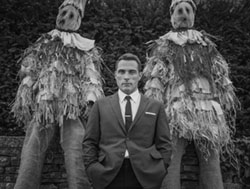
Folk Archive-Jeremy Deller-Alan Kane-A Year In The Country 3Folk Archive-Jeremy Deller-Alan Kane-A Year In The Country 5-Straw Bear Dancer
In keeping with that is the Folk Archive book/exhibition collection he worked on with Alan Kane. In it creative work from every day life in the UK, often things which may not be considered art by its makers or wider society, is collected and recorded photographically,

In the pages of the book you can find everything from tattoos/tattoo guns and artwork from prisons, burger van signs, illustrations painted onto the bonnets of cars and crash helmets, fairground paintings, sandcastles, cake decorations, Christmas decorations, protest banners, shop and cafe signs, decorative costume for a night out or a carnival, clairvoyant hand signs, crop circles and the trappings of what could be considered traditional folkloric rituals.

Folk Archive-Jeremy Deller-Alan Kane-A Year In The Country 4-Straw Owl sculpture-A303

The use of the word folk in Jeremy Deller and Alan Kane’s work I assume refers more to a sense of art from the people, of the people, by the people, for the people than to the roots of the word folk, which essentially refers to a sense of music and culture from the wald or wild woods (see Day 40/365). But in some ways it is still work from the wild woods, in that this is unregulated art, work which sidesteps definitions and hierarchies surrounding what is allowed into the canon of art and high culture.

Folk Archive-Jeremy Deller-Alan Kane-A Year In The Country-7-sandcastlesFolk Archive-Jeremy Deller-Alan Kane-A Year In The Country-scarecrow

Jeremy Deller’s work often involves, incorporates and is accessible to the public and as I said earlier, bridges the gap between what is thought of as art and popular culture.

In the past that has included taking modern music technology to record with retired musicians in an English seaside town, re-enacting pitched battles in political disputes in conjunction with those involved at the time and re-enactment enthusiasts (see Day #78/365), taking a bouncy castle version of Stone Henge around the country (!), a traditional brass band playing acid house records to a young dance audience or a procession through Manchester that incorporated everything from a local pensioner friendly snack bar re-created on the back of a float to Mancester independent music played by a calypso band.

Folk Archive-Jeremy Deller-Alan Kane-A Year In The Country 2-Burry ManThe images on this page concentrate on the more folkloric ritual side of the collection (apart from the sandcastles, because they made me smile and took me back to seventies film stock coloured younger days and the scarecrow because, well, that made me smile as well and every so slightly childhood scared): burning tar barrel carrying, a Straw Bear Dancer, the Burry Man and so on.

That’s partly in keeping with the themes of A Year In The Country and also because many of the images link back and interestingly even quite directly mirror photographs found in other records of such things that I have written about before. Specifically Homer Syke’s Once A Year (see Day #19/365) and Sarah Hannant’s wander through the English ritual year (see Day #66/365).

Visit Jeremy Deller in the ether here. View more on the Folk Archive here, more on Alan Kane here and the Folk Archive book here.

Unsophisticated-Arts-Barbara Jones-Little Toller books-A Year In The Country(As a postscript, in many ways the Folk Archive collection reminds me of a modern-day revisiting of some of the themes of Barbara Jones Unsophisticated Arts, the book which told the story of her explorations in the 1940s of everyday art throughout Britain and which took in some similar subject matter: fairgrounds, tattoo parlours, taxidermists, houseboats, high street shops, seaside piers and amusement arcades. Well worth a look-see.)


Posted on — Leave a comment

Day #147/365: Artifact #21/52; Arborea #2 waterproof sticker pack

Arborea #2: 12 x waterproof sticker set. £6.50.
Artifact 21-stickers and front of insert-A Year In The Country

Artifact 21-stickers-A Year In The Country

Artifact 21-sticker artwork-A Year In The Country

Artifact 21-stickers and back of insert-A Year In The Country

Artifact 21-in see through pack-A Year In The Country

Limited edition of 52 sets.

Stickers are 5.6 cm / 2.2″ in size and are printed on a waterproof, tear resistant vinyl like material.

Each pack is shipped in a resealable transparent bag and includes a hand signed, hand stamped and numbered 15.9 x 11.5 cm / 6.2 x 4.5″ insert card.

The front of the insert card is printed using Giclée archival pigment ink on 245gsm card/paper.

Free UK shipping.

Available at our Artifacts Shop and in our Etsy shop.

Posted on — Leave a comment

Day #146/365: Glimpses of Albion in the overgrowth

Hollyoaks-Savage Party-folklore-A Year In The Country 12

Trails and Influences: Electronic Ether. Case #19/52.

Now, Hollyoaks.

Wait before you run for the hills, hear me out.

A couple of years ago there was a trailer running for the British television youth orientated soap opera Hollyoaks, for an episode I think called Savage Garden.

I’ve never actually seen Holly Oaks. I suspect I’m not it’s intended demographic or advertisers target audience (!) but whenever this promo would come on it would make me smile and cheer me up.

It’s basically a sort of high street take on some of the visual language, themes and tropes of folklore via the likes of The Wickerman and Kill List: a glimpse of Albion in the cultural overgrowth, a step through the gates into the secret garden (with spangly hotpants as your attire).

Hollyoaks-Savage Party-folklore-A Year In The Country 9

And yes it’s a simulacra of suck folklore inspired culture but still one I seemed to enjoy: if I think about that I soon wander down thought processes and pathways where I start to consider the notions of authenticity, what that actually means, why we (including myself) place such a high value on authenticity; it’s such an elusive, intangible thing but at the same time often seems very apparent when it’s there and when it’s not.

Hollyoaks-Savage Party-folklore-A Year In The Country

For some reason this promotional video blurs those lines a touch for me. I find it joyous, ridiculous, a copy and created with some sense of love or passion for its source material, even if that is but a flickering, passing moment of interest.

All stories are created or summoned forth from imagination at some point, even the most precious folkloric tales probably originally stumbled out of the mind/s of individuals but somewhere along the line they have become authentic.

Hollyoaks-Savage Party-folklore-A Year In The Country 2

The Wickerman, say: this was created with a pile of cash by the monied side of the culture business as a commercial project, the music was created by a band put together for this purpose; its authentic roots could be considered to be only just venturing through the topsoil but it has become an authentic totem of a particular kind of otherly Albion and folklore.

Hmmm, curiouser and curiouser said Alice.

Hollyoaks-Savage Party-folklore-A Year In The Country 4

Musically the trailer is accompanied by Stealing Sheep’s Shut Eye, which is a lovely catchy sort of psych-folk indie-pop song. I don’t know all that much about the band but they remind me in a way of a more youthful, British Coco Rosie.

I suppose in part my debate around authenticity is maybe a generational thing: I grew up in a time when to have your music used in an advert was considered just cause to be taken off the artistic roll-call for good (to paraphrase Bill Hicks). Today, that doesn’t seem to be such a consideration. Possibly, mine and similar generations were more than a touch didactic, my way or the highway about such things, a bit up our own rears for a bit too long (to paraphrase Stewart Lee).

Hollyoaks-Savage Party-folklore-A Year In The Country 5

I expect some part of me is still with Bill Hicks on this, it’s quite deeply ingrained but I’m also more accepting of the realities of life, the greys rather than the black and whites of beliefs and actions and the effect that Mother Hubbard-ed cupboards can have as I’ve become older.

I guess I still have some sense of “selling out” but it’s hard to put into words what that really means. Even back in the day, it was okay(ish) to sell your music/culture as part of a commercial transaction whereby larger corporations were one way or another involved in the production, releasing, promotion, selling and/or distribution of your work (although often disguised behind all kinds of smoke and mirrors). It was a world of curiously arbitary standards where you had to tread carefully or you might lose your “the real thing” tag.

Hollyoaks-Savage Party-folklore-A Year In The Country 3

Of course, people didn’t turn up on my/subcultures doorstep with a suitcase of cash and a “sign here and this is all yours and your works is ours to use” contract so much back in those days; what could be considered not so mainstream culture didn’t seem to be so visible, interesting or acceptable to the mainstream and the accompanying cheque books, so those somewhat purist beliefs weren’t thoroughly tested. Or maybe what I’ve been drawn to/worked amongst has always been a little off the beaten track, a little too “from the wild woods” (see Day #40/365) in one way or another.

In the meantime, I still enjoy this trailer. It’s a guilty pleasure, yes but a pleasure nonetheless. I’ve just watched it again and it still makes me smile. As I say earlier it’s a glimpse, a glint of Albion in the overgrowth.

View the trailer here. Visit Stealing Sheep here.

Hollyoaks-Savage Party-folklore-A Year In The Country 6

Hollyoaks-Savage Party-folklore-A Year In The Country 7

Hollyoaks-Savage Party-folklore-A Year In The Country 8

Hollyoaks-Savage Party-folklore-A Year In The Country-10Hollyoaks-Savage Party-folklore-A Year In The Country 11

Posted on — Leave a comment

Day #143/365: Central Office Of Information + Mordant Music = MisinforMation

MisinforMation-Mordant Music-Central Office Of Information-BFI-DVD cover-A Year In The CountryFile under: Trails and Influences.
Other Pathways. Case #20/52.

Well if, as was once said, writing about music is like dancing about architecture, what is writing about an audio-visual piece of work like? Dancing about two buildings with an adjoining door or overhead walkway?

That was a thought that occurred to me when I watched MisinforMation and for some reason a conventional piece of writing didn’t seem appropriate.

What follows are the notes I quickly made as I watched (and half re-watched) the DVD, presented largely as written:

“Rats in a maze… non-future vision/visuals… cutting edge blunted… This segment is distressing. Don’t need to see it again… Illusions… Walking in circles… None actually used… Return to edgelands… Boschian concrete… A wander through a carpark: a view from a dystopian, paranoid period piece/drama?… Waste… A very real simulacra… Why does the Ideal/show homes part feel more like Protect and Survice?… Overspill areas… Decay like this can set in anywhere… The only solution is…

The future, technological dreams and hope… Is now our friend… Yolk, knife, finger, sleeve, fork… Again and again: repeat… Orchid, living, tomorrow, good… bye…

Boffins… In every dream home a heartache… Mannequins, countdown, stone circles… Sun flare. Beauty. Glints of beauty. Stands alone (through time?)… Distant breeze… crystal clear… And this. And this. Etched in his features/face?…

Britain: echo + fade… There are other ways… Shadows on the landscape: don’t usually see that/the vessel…

The end (tone?)… They appear over the hill. Cagoules. COI: curiously Orwellian? Monolothic?

MisinforMation-Mordant Music-Central Office Of Information-BFI-menu titles-A Year In The Country

Nematode. Cronenberg-esque? Black screen. Nulation. Exudation. Black Screen. Under The Skin?
Modernism vs nature; blunt + brutal; what it brings to the forefront…

Tractor drives down country lane – scan to flat-roofed new builds on hillside…

Made from/covered in concrete dust… Outdoor holiday necessities… The Golden Eagle… Bare empty conurbations, devoid of beauty + ornament…

Collapsed new buildings (that never stood up?)… Washington New Town – anything but new… Boxes/box houses…

Domestic building vehicle: militaristic vehicle (bleak)… Intercut: utopia + end of modernity… Spaceship Earth… the sick man of Europe… yellow haze…

Estrual slurry… expensive to leave, expensive to stay… Brief snatches of green but all looks like edgelands…

Rapid solutions, bent institutions…

Nuclear storage not sure where yours is.

All scrubland…

Eastbourne… Remoteness? Peter Greenaway… Hitchcockian burglar birds…

Early building – director chap… about terrifying… “Your child is at risk”…

Oddly out-of-place utopian cartoons…

Population as virus… Teeming… Pink salmon bleached out colours… Unsettling… The sea is in their blood… Driving music at odds with pastoral visuals but fitting… seaside; giving a different rhythm…

England protected: fallout?”

MisinforMation-Mordant Music-Central Office Of Information-BFI-A Year In The Country 2MisinforMation is a DVD released by the BFI where Mordant Music was let loose with and rescored films from the archives of the Central Office Of Information – short films/programs/adverts intended for educational or instructional use from the 1970s and 1980s.

It is an unsettling, entrancing piece of work. These films in their original form now often have a disturbing around the edges, spectral feel, often they are visions of a future hoped for but never quite reached, snapshots of a society which now looks stuck or mired (though history has marched on). This unsettling aspect is added to by the fading of their colours over the years – the films show a world which often looks full of grimy shadows even out in the open and afternoon daylight let alone under unlit concrete structures and stairwells; often the colour palette is that of a sickly, washed out salmon pink.

MisinforMation-Mordant Music-Central Office Of Information-BFI-A Year In The CountryAdd to this the musical rescoring and re-interpretation of Mordant Music and… well there are some parts that I’m not sure if I want to watch again.

Though I have to say, it’s not all unrelenting hauntological worry and grimness: there are glimpses of beauty, sun and the rolling landscape in amongst this. Glimpses mind.

It has been asked by Simon Reynolds if this is the ultimate hauntological artifact, which is quite probably a fair question. Visit him here.

Visit Mordant Music here. Visit the disc at the BFI here. Peruse a clip or two here and here.

A more conventional overview of the disc can be found at Boomkat here; ah, you see, dancing about music/audio-visual work can be done effectively.

MisinforMation-Mordant Music-Central Office Of Information-BFI-A Year In The Country-egg

Posted on — Leave a comment

Day #142/365: Fog Signals/Ghost signals from lost transmission centres

Howlround-Robin The Fog-the-ghosts-of-bush-A Year In The CountryFile under: Trails and Influences.
Other Pathways. Case #19/52.

Ghosts of Bush is a recording by Robin The Fog (under the name Howlround) which documents the last days of Bush House, the once home to that broadcasting stalwart the World Service. It is a kind of indoors field recording which was captured late at night in the empty rooms and corridors of the building.

It’s something that I’ve kept returning to over the months and years leading up to and during this Year In The Country. It’s a fascinating and intriguing piece of work; a tribute to its subject/from whence it sprang, one which is made up of many layers; whether literally in terms of the sounds it contains and how they were made, the history of where it was made or the author’s own connection to the work (he was a studio manager at Bush House)…

Part of that layering process, how the recording was made, comes about by a literal layering of sound. The record was created using purely analogue equipment, via tape loops and so on which utilised some of the last remaining of such machines in Bush House. This process feels like an important, intrinsic part of the work, a way of reflecting and capturing the spirit and history of the building, the institution and its technological stories and legacy.

Robin The Fog-Howlround-The Ghosts Of Bush-A Year In The CountryWhen I listen to Ghosts of Bush I often think of the distant howls of long-lost and departed creatures, huge as dinosaurs. Which in these days of almost ubiquitous free market culture, may well be kind of appropriate as Bush House was responsible for transmissions from that possibly endangered philosophical idea, publicly owned broadcasting.

And I have to use this word/phrase: it’s a haunted and haunting album, whether in terms of the sounds it contains, or it’s subject matter… but to be honest as I type I’m not sure I can put pen to digital paper and write anything better or which sums up and captures a sense of the work than what Robin The Fog has said himself:

“These are the sounds the building makes when it thinks no-one is listening, the sounds of many sleepless nights spent isolated in a labyrinthine basement surrounding by a crepuscular soundtrack of creaks and crackles. It’s an attempted homage to the work of the BBC Radiophonic Workshop who crafted the most incredible of sound-worlds from the most basic of sources. But mostly it’s my way of saying goodbye to a building that I and so many people have loved. 

When talking of historic structures, the old clichéd approach is to wonder what one might hear if the ‘walls could speak’. I like to think that with ‘The Ghosts Of Bush’ we come closer to hearing them sing: One last song about the passage of time and the impermanence of all things, with the ghosts of the machines joining in. The last hurrah of a bygone era, of obsolete equipment and of a studio that has since fallen silent forever.”

Which is a lovely, evocative, sad and celebratory piece of writing.

Howlround-Robin The Fog-the-ghosts-of-bush-alt-press-release-Ghost Box-Scanner-Simon Reynolds-A Year In The Country

Robin The Fog is a busy chap. Alongside his own releases (under various names including the aforementioned Howlround – available for appearances at your local music hostelry accompanied by their ferrous wheel sound machines) he is often to be found sending his own broadcast signals out into the world.

Robin The Fog-OST show-Jonny Trunk-A Year In The Country-old radio.jpgAs part of that, he helps out on Jonny Trunk’s OST show on Resonance FM (his job description would probably include manning the phones for a series of make-me-chuckle-out-loud competitions, technical assistance and affectionate bickering) and occasionally stands in for Mr Trunk. I would heartily recommend his The Foggy Record Box show from the 27th October 2010: in large part this is a joyous wander through educational records from times gone by. Some truly wonderful stuff, which for me featured some good “Ah, that’s what that is/that’s where that’s from” moments.

It made me want to send off missives to all kinds of people I know who have young folk who may well appreciate such things. To quote Mr Fog it’s “fun for all the family” (although strictly speaking I probably wouldn’t let it run until the end as there is a collage piece that may have young folk checking under the beds and in the wardrobes for weeks to come).

Robin The Fog-The Fog Signals-A Year In The CountryYou can listen to that broadcast at Robin The Fog’s site here.

Howlround can be visited here.

You can listen to/purchase Ghosts Of Bush in its digital form here.  You may still be able to purchase it as a white spinning disc at Boomkat here (whose writing on some of the further flung pathways of music have often been a point of reference for A Year In The Country wanderings). If you have the space for such things, the appropriate playback technology and the spare pocket-money, it’s a record that’s well worth casting a net over.

And as a final note, as somebody who at this time of year has to often brave on a daily basis some slightly over attentive bovine creatures, the line “Trampled by cow is an embarrassing death” on his track “Notes On Cow Life” (accompanied by Guy J Jackson) made me smile. Listen to that here.