Posted on — Leave a comment

Day #121/365: Skeletons; a world, time and place of it’s own imagining

Skeletons-Nick Whitfield-Soda Films-A Year In The CountryFile under: Trails and Influences: Other Pathways.
Case #15/52.

I think the first time I became aware of Skeletons was when I picked up a postcard for it at the independent cinema in my once home town…

I was drawn in by and to it and I couldn’t say why. I didn’t get to watch it until it came out for home perusing but recently I was able to see it at a cinema… I was curious what I would think of it now that to some degree I’ve been spending this year in amongst various otherly, separate or fantastical landscapes.

Briefly the plot involves two suited, slightly shabby or even seedy in one case, privately contracted investigators who walk through the English countryside to visit couples and others who want to exhume the secrets and skeletons in one another’s closets before say getting married. This is done via visiting a form of portals to the couples lives accessed via the cupboards in their houses, which allow the investigators to view and experience the hidden parts of their customers* lives.

Things are complicated though because one of the investigators is a glow chaser – he is hooked on visiting scenes of his own childhood and such behaviour can corrupt their official contracted viewings.

They are asked to help locate the lost husband of a wife who has a daughter who will nolonger speak. However, the home where she lives is situated on a path which misdirects the readings they need to take… I won’t go into it more as, well, I would be ruining the plot.

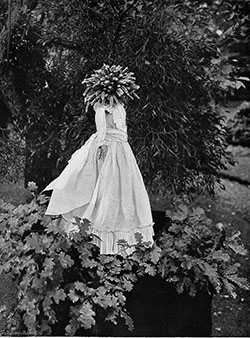
Skeletons-2010-Nick Whitfield-British film-A Year In The Country-4

It’s a curious item in the pantheon of British film; one which at first glance has some visual similarities with realist film but which is actually a journey through a fantastical world, one set alongside but slightly apart from the “real world” but it’s done in a subtle, not fully explained way; the science, methods, techniques, the organisation they work for etc of the investigators is just taken as is: people contract them to do their work, what they do works.

(As an aside, I suppose you could slightly link this to a film like The Wall/Die Wand – see Day #13/365; pastoral science fiction as a genre, set in a landscape where the fantastic happens/has happened but where the reasons, whys and wherefores are not fully explained.)

Their working methods seem curiously lo-fi and understated for what is actually quite a mind-blowing activity: the ability to step into and view the lives of others at different times and places. Their work isn’t shown in a big budget flash-bam-whallop way though, which seems to line up with and compliment the lo-fi techniques of the investigators**.

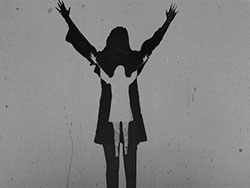
Skeletons-2010-Nick Whitfield-British film-A Year In The Country-8

I wondered if on re-seeing the film I would connect it with views of otherly goings on in the landscape which can be found in a small section of British television in the late 1960s and 1970s (The Owl Service, Children Of The Stones, Penda’s Fen). No, not exactly but…

Well, one thing that surprised me was just how similar it was to the late 1970s British television series Sapphire and Steel. I don’t think in a deliberate manner (indeed when I asked the director at a Q&A about it, he was aware of the series but couldn’t remember it particularly).

Both series and film deal with a pairing of investigators who in some ways could be said to be working with problems based around a modern updating of supernatural concerns; some place where science and the preternatural combine and co-exist, where a domestic freezer can be reconfigured to freeze malevolent spirit creatures from the beginning of time or valve like instruments can measure the readings required for screenings and visitings of other times and places of people’s lives.

And both series seem to exist a time and place of their own imagining: yes, Sapphire and Steel is rooted in the 1970s via the colours and light trails of its video recorded existence but really it could be at almost any time in the last century.

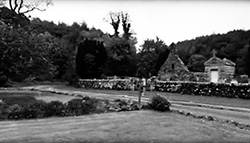
Skeletons-2010-Nick Whitfield-British film-A Year In The Country-3

Skeletons-2010-Nick Whitfield-British film-A Year In The Country-2In Skeletons there is little reference to the contemporary world: the instruments they use could be post war, the suits the investigators wear are contemporary-ish, the aprons and goggles they wear for protection when carrying out their viewing seem to hark back to some earlier later mid-twentieth century industrial Britain when men sweated in jobs that were “the backbone of the country”. Their boss could have tumbled from the parade ground of a 1960s comedy (and is a standout turn as it were), there are no mobile phones or computers. We hardly see a car. It’s now but not.

Geographically also it’s largely isolated in its own time and space: almost all of the film takes place in the countryside and the investigators seem to walk to wherever their next job is, over stiles and down railway tracks which seem to be free of their rolling stock.

Skeletons-2010-Nick Whitfield-British film-A Year In The Country-6

One of the only references to modernity are the power station cooling towers that background one of their homes but even then what decade are we in? Such modern-day monuments, their design and utilitarian stance tend to make me think I’m looking at a scene from previous decades, nearer to the 1970s than today.

Skeletons was released in 2010, written and directed by Nick Whitfield. It’s well worth an hour or two of your time and I expect a few more hours after that while your mind wanders amongst its stories.

Something of a gem in amongst British film, one which in part deals with the sense of loss associated with unrecapturable moments and people in our lives, the way we humans can want to try and revisit the gossamer strands of those now gone butterflies. However, it’s not a heavy or dark view of such a subject. It’s humorous, touching, fantastical, intriguing.

Visit the film in the ether here. View the trailer here.


*One thing I’ve just wandered: how much are the investigators paid for their services? Is it a reasonably well recompensed thing to do? Are they paid in monetary form? We never see the exchange of lucre during the film.


**Actually, just looking the film up I saw it described as “a very British Ghostbusters”. I thought that was quite lovely. If you were to put Ghostbusters through an English pastoral filter, it might just come out a little like this.

Posted on — Leave a comment

Day #120/365: Plinth’s Wintersongs; a sometime walking companion for other landscape travellers

Plinth-Wintersongs-Michael Tanner-Kit Records-Rusted Rail-A Year In The Country-1File under: Trails and Influences:
Recent Explorations. Case #16/52.

This album was made by Michael Tanner with Steven Dacosta, accompanied by Nicholas Palmer and Julian Poidevin…

Now with somebody like Michael Tanner who has put out/collaborated on a fair few records (there are 20 releases to listen to at his ether victrola, over 50 records listed here), it can be a little hard to know where to start a-listening…

Well, near the start is probably not a bad idea. And with that…

Wintersongs. This is lovely album to drift off into. I suppose it could be loosely described as a kind of folkloric or pastorally themed ambient or even soundscape album but I don’t think it’s an easy piece of work to pigeonhole in such a way.

It wanders through a landscape not dissimilar in parts to Virginia Astley’s From Gardens Where We Feel Secure (see Day #118//365); like that album it could be seen as a soundtrack for the landscape of these isles, one that is in parts gently melancholic but also subtley magical… and on a track like Bracken it almost feels like a walking companion for the From Gardens album.

Plinth-Wintersongs-Michael Tanner-Kit Records-Rusted Rail-A Year In The Country-2Ah, Bracken, it was just playing as I typed… I could listen to that all day. Lovely stuff.

However, like From Gardens Where We Feel Secure this isn’t a twee trip through the land; while in parts it may be a journey through a certain kind of pastoral reverie there is also something else going on amongst the hills and trees. There’s heartbreak in the pathways of it’s songs at points; Hearth makes my mind wander towards losses along the byways of life…

In the sleevenotes Michael Tanner seems almost apologetic, though fond of this early work of his:

“these were our first attempts at making a record. and although i say it through squinted eyes, the naivety which used to make me run for cover is now kind of endearing…”

Plinth-Wintersongs-Michael Tanner-Kit Records-Rusted Rail-A Year In The Country-3All I can say is if my first recording put out into the world felt like such a complete encapsulation of a particular world, view and journey, well, I think I would sleep easily.

The album has gone through various incarnations over the years since it was first released: as a cassette in 1999, CDrs in 2002/2006 by Dorset Paeans and then Rusted Rail and of late a limited edition vinyl record release by Kit Records, housed in a rather lovely and lovingly produced linocut sleeve.

All sold out I’m afraid but you can still listen to, purchase and peruse the album as zeros and ones at Michael Tanner’s music site here or at Kit Records here.


As an aside, the instruments listed in it’s making include glockenspiel, trumpet, clarinet, guitar, clocks, fireplace, ring modulator, birds, teapot, train, voices, piano, garden, sleigh bells, cymbals, melodica…

My first proper listening probably added a few more instruments to that mix: I was sat outside letting my mind wander over the valley in front of me as the album played.

The birds in the trees around me were singing and chirruping their hearts out, local dogs would break into barking, cars would pass, the neighbours were nattering and the wind was gently rustling. At points I couldn’t tell quite which sounds were on the album and which in the world around me; as the sound of somebody’s footsteps played I found myself turning round thinking I had a visitor coming up the steps to my side and the album became almost like a live field re-recording, which seemed kind of fitting in a way as the first time to properly appreciate it.


Posted on — Leave a comment

Day #119/365: Artifact #17/52 released: Monitoring The Transmissions triptych print set

Monitoring The Transmissions triptych print set. £25.00.

Triptych print set-A Year In The Country-printsTriptych print set-A Year In The Country-numbering Triptych print set-A Year In The Country-signature

Monitoring The TransmissionsTriptych Print Set:
Monitoring The Transmissions (#2)
Once Dark, Now Stilled
The Departure Before The Storm

Limited edition of 31 sets of prints. Each print is signed and numbered.
Size Per Print 42 x 16 cm / 16.5 x 6.3″ (includes 2cm/0.8″ unprinted border).

Printed with archival Giclée pigment inks on Hahnemühle Photo Rag 100% cotton paper.

Free UK/International shipping. Ships rolled in a strong poster tube.

Triptych print set-A Year In The Country-all 3 images copy

Available at our Artifacts Shop.

Posted on — Leave a comment

Day #118/365: Virginia Astley’s From Gardens Where We Feel Secure

File under: Trails and Influences: Touchstones. Case #19/52.

Virgina Astley-From Gardens Where We Feel Secure-vinyl-Rough Trade-A Year In The Country 2I think I’ve possibly been putting off writing about this album as, well, it’s such a precious thing to me and I’m just not quite sure what I’m going to write about it. So, here goes…

I’ve just put the album on and it’s like saying hello once more to a very welcome old friend. It’s the very definition of bucolic and is an album which summates England’s pastoral, edenic dreams…

I first listened to music from this album late one hot, hazy, balmy summer night and I was just transfixed and transported. Appropriately I think one of the first songs I listened to was It’s Too Hot To Sleep, which is a gentle lullaby of a song, all lilting and the soft hoots of owls; which in a way could describe much of the album.

The title says so much about being English, some of our needs and wants, the small spot of greenery which accompanies our domestic castles in which, well, we can hopefully feel secure.

I think I came across the album via Rob Young’s Electric Eden book (well, I’ve not mentioned it for a while, so it’s probably due for one). It features in probably one of my favourite sections of the book: The final Poly Albion gathering of writing, in the chapter Towards The Unknown Region, wherein he considers more the outerlying areas of the music and culture which has sprung forth from secret gardens, the more hauntological side of things, the spectres of the land in cathode ray transmissions, Ghost Box Records and the like.

Virgina Astley-From Gardens Where We Feel Secure-vinyl-Rough Trade-A Year In The Country 4

In this section when describing the music in the album he begins by saying that it “doesn’t go anywhere”, in I think an attempt to show the albums ambient, non formal song structure. It’s an interesting choice of phrase as it also suggests how as a nation we sometimes hanker after these unchanged, unending idylls where we can lock the gates, rest, slumber and dream, with the rambunctious march of progress safely held at bay even if just for a moment.

Although the album largely a suite of music which invokes such an Albionic Arcadia, conjuring up lives spent in timeless English villages, it’s not merely a chocolate box or twee reverie; there’s a sense that there is a hidden reverse to that dream, that the nightmare may well intrude on that eden… and that comes to pass as The Summer Of Our Dreams gives way to When The Fields Were On Fire, which is a darkly ambient piece of quietly unsettling pastoralism, which though the album was originally released in 1983 wouldn’t be a surprise to find on a more contemporary Ghost Box Records release or maybe nestling away in an outtake from Coil’s Horse Rotorvator.

Virgina Astley-From Gardens Where We Feel Secure-vinyl-Rough Trade-A Year In The Country 5

Virgina Astley-From Gardens Where We Feel Secure-vinyl-Rough Trade-A Year In The Country 3It possibly wanders some of the same fields as the outer regions of an alternative albion which could be found in say The Wickerman or some psych/acid folk music but here while the sense of an idyllic rural eden has a otherly quality it’s not overt; more a kind of wistful nostalgia or reverie, even where it is most present on say When The Fields Were On Fire.

Virginia Astley photograph-A Year In The CountryThe music? How to describe it? It’s an ambient mostly instrumental work but very melodic, the main instruments seem to be piano and a touch of woodwind instruments but the sense is largely one of music which has been painted and layered rather than played and made; rurally collected field recordings of the English countryside being a large part of the pigments and paint it uses.

Ms Astley, all I can say is I salute you for this piece of work.

The album is out of print. It can be found second-hand, although you may well pay a pretty penny for a CD copy.

Listen to It’s Too Hot To Sleep here and When The Fields Were On Fire here.

Visit Virginia Astley in the electronic ether here. Have a trawl for the album in physical form here.

And once again: Rob Young’s Electric Eden here.

Virgina Astley-From Gardens Where We Feel Secure-vinyl-Rough Trade-A Year In The Country

As a final note, below is the text from Electric Eden on From Gardens Where We Feel Secure; “Furtive music hiding in the shrubbery” is a good concise way of describing the albums subtle pastoral otherlyness.

Rob Young-Electric Eden-From Gardens Where We Feel Secure-A Year In The Country


Virgina Astley-From Gardens Where We Feel Secure-vinyl-Rough Trade-A Year In The Country

Posted on — Leave a comment

Day #115/365: Edward Chell’s Soft Estates – documents of autobahn edgelands

Edward Chell-Soft Estate-Bluecoat-Cornerhouse-A Year In The Country 5File under:
Trails and Influences: Recent Explorations.
Case #15/52.
Edgelands Report Document: Case #1a

The phrase Soft Estate refers to the description given by the UK Highways Agency to the natural habitat that the motorways and trunk roads it manages occupy; an often unstepped on hinterland that most of us only view as a high-speed blur from the corner of our eyes as our transport travels down these autobahn edgelands.

Soft Estate is also the name of a book/project/exhibition by Edward Chell, which interacts with and documents these verges and landscapes; literally interacting with as some of the work is printed using road dust from such places, other work uses (I assume) engine oil, features plant life illustrations from these verges laser etched onto brightly chromed exhaust pipes or uses the same materials and colours as road signs themselves.

I only really quite recently came across his work but I very much connected with it, in particular his oil on shellac on linen prints; I thought I saw an echo of my own imagery, spirit and inclinations there, although to my knowledge neither of us had seen one another’s work when embarking on making it.

Edward Chell-Soft Estate-Bluecoat-Cornerhouse-A Year In The Country 9In the paintings of the tubing which protects sapling trees (many millions of which have been planted on such lands), my eye and mind see them rather as gravestones.

Indeed there is a ghostly, spectral quality to these paintings; they are literally hauntological in that though they are created in contemporary times, there is something about them that makes them seem like documents of a modernities future and past.

They’re just a lovely capturing of the point and spirit at which nature tumbles alongside and into mankind’s march of progress.

And there is a meditative, calming sense to them. I’m not quite sure why but they ease the soul and provide a moment’s respite.

This post/page is largely concerned with Edward Chell’s own artwork, as featured prominently in the Soft Estate book.

However, the book is also a collection of essays and effectively an exhibition catalogue, albeit one which exists as a handsomely produced artifact in its own right.

It includes a piece of writing by Richard Mabey, one of the original authors on what have become known as edgelands (the overlooked landscapes at the edges of town and cities; often undeveloped or transitional/liminal areas where nature meets industry and bleeds into the ragged edges of urban development). The inclusion of his writing here can be seen as providing a continuing line from and through considerations of edgelands in their various forms. Peruse the reprint of his Unofficial Countryside book at Little Toller here.

Edward Chell-Soft Estate-Bluecoat-Cornerhouse-A Year In The Country 3As an aside, with Soft Estate it was also rather pleasant to come across a book which while often academic in tone and intent, did not neglect the visual side of the work.

I may well return to the book around these parts later in A Year In The Country. In the meantime, if you should like to peruse a more in-depth consideration of the book and it’s themes then a visit to Landscapism’s page on it here may well provide such sustenance or in more concise manner New English Landscape’s thoughtful review of the book can be visited here.

The book was published by Bluecoat, who also hosted the exhibition. Visit them here.  A review of the exhibition at corridor8 here. The book is distributed by Cornerhouse, visit them here.

View Edward Chell’s superlative oil paintings and other work at his site here.

Edward Chell-Soft Estate-Bluecoat-Cornerhouse-A Year In The Country 2Edward Chell-Soft Estate-Bluecoat-Cornerhouse-A Year In The Country 1


As a final point, some of Edward Chell’s work has been installed in Little Chef restaurants. For those of you who don’t know these places, they are British roadside family cafes/restaurants. As a child we would visit them occasionally (which was a real treat back then before the days when eating out had become more the norm) and they were one of the first places that I ever ate and tasted what I suppose could be considered more American style burger and chips. Though they were served on a plate  with knives and forks in a more traditional restaurant setting. Another transitional/liminal point I suppose.

I don’t know how many of them still exist but I rarely see them anymore and when I do I always have a momentary frisson of excitement, I’m back to being that kid looking forward to visiting them. On those rare spottings they feel like endangered species, a quaint remnant of times gone by before the ubiquity of transnational chains and the utilitarian installations of motorway service stations.

It made me smile to see his work here. A nice, humorous coming together of cultures.

Edward Chell-Soft Estate-Bluecoat-Cornerhouse-A Year In The Country 4Edward Chell-Soft Estate-Bluecoat-Cornerhouse-A Year In The Country 7Edward Chell-Soft Estate-Bluecoat-Cornerhouse-A Year In The Country 12

Edward Chell-Soft Estate-Bluecoat-Cornerhouse-A Year In The Country 6Edward Chell-Soft Estate-Bluecoat-Cornerhouse-A Year In The Country 8

Edward Chell-Soft Estate-Bluecoat-Cornerhouse-A Year In The Country 10Edward Chell-Soft Estate-Bluecoat-Cornerhouse-A Year In The Country 11


Posted on — Leave a comment

Day #114/365: Waiting For The End Of The World and havens beneath our feet

Richard Ross-Waiting For The End Of The World-A Year In The Country 3Trails and Influences: Electronic Ether. Case #15/52

I go into this in more depth in the About page but one of the roots of A Year In The Country and the way it intends to express a duality about a sense of bucolic pastoralism (the countryside as both an idyll and a place of otherlyness) comes from my experiences around and discovery of the possible end of the world via nuclear annihilation  in my youth, during one of the peaks of the Cold War.

It was a simple thing really; the rest of the family were playing Monopoly (at which my dad no doubt won, possibly via £500 notes hidden under the board) while I watched something like Panorama or some similar weekly  news topic program which just happened that week to be covering a potential nuclear conflict, the UK government’s Protect And Survive program (leaflets/adverts on how to protect you and your family from a blast with the power of over a hundred suns by whitewashing your windows and hiding behind a mattress leant against the wall)…

Richard Ross-Waiting For The End Of The World-A Year In The Country 4Where does the countryside/landscape come in? Well, at the time we were living in a small country village which only really had one lane and as I mention in the About page, by day I was living a Famous Five-esque existence of bike rides, rolling down hills and trying to dam rivers… by night my mind would be full of childhood fears, which after watching the program above took on a very contemporary conflict directed form.

Richard Ross-Waiting For The End Of The World-A Year In The Country 5The discovery of the possible end of the world was compounded by both the office on our forecourt (my dad was one of two local village bobbies) and a friend’s front room (his house was attached to the local Tourist Information centre) having old-fashioned bakelite looking nuclear air raid sirens in them; smallish things about the size of a microwave oven just sat on shelves with notices on the side explaining what noises they would make when the silver finned harbingers were about to fall from the sky into these mole-hilled fields or the winds were to carry their after effects.

All of which kind of blew my young mind. It was probably both exciting and terrifying. I still find it hard to type the actual terms which refer to the type of weapon, those wind-borne after effects etc.

One of the things that really stuck with me was the fact that in Switzerland every house had to have a fully stocked and functioning air raid bunker. I suspect that I really wanted us to have one.

Richard Ross-Waiting For The End Of The World-A Year In The Country 2It’s a bizarre idea really; digging up your idyllic back garden to install an underground haven to protect you from the end of the world, which in real terms won’t actually do that, it will just delay the inevitable

The two weeks or so shelter they would give you before air filters, power, food etc ran out would be unlikely to be of much genuine use in terms of long term survival as the world you emerged into would most likely be poisoned, destroyed and have a blackened sky from the debris thrown into the atmosphere.

Transverse Tunnel, Salt Lake City, UtahAround the same time as discovering the above, the countryside/edgeland landscape around me seemed to be scattered with crumbling and discarded military emplacements, weapons, crashed planes and the scarifying mythology of air raid bunkers which we would descend into, knowing not what we would find (but I expect hoping they would contain a ghost or two).

It’s curious how these things still remain and survive over the years in the countryside (as I type there is a WWII air raid shelter not twenty yards from me in the back garden); probably the march of redevelopment and modernity is not so all-consuming in such parts* of the world and so such things are left alone until needs be, quiet reminders or ghosts of conflicts both real and feared.

Backyard Entrance to Shelter, Salt Lake City, UtahAnd ever since there has always been a fascination at the back of my mind with the mysteries of bunkers and the sirens of impending doom. Such things still have a power to haunt me; occasionally around these parts the wind will carry the sound of the klaxon call that declares they’re about to blow up part of a hill for quarry excavation and my mind holds it’s breath for just a moment as the young me wanders if this is the sound that means it’s time to head for a bunker.

Perhaps part of A Year In The Country is hoping to lay these ghosts that still inhabit the back of my mind to rest a little, even if just personally as it’s in the face of the continuing physical, corporeal presence of the roots of those fears.

Control Panel, Conroe, TexasThe end of the world via the weapons which the Swiss still have their bunkers to defend them is now rarely spoken of but the weapons still exist and the ghosts of that once more prominent fear are still dotted around the world in bunker havens, both those instigated by families/individuals and projects built by governments/institutions.

One document of these havens/ghosts is the book/project Waiting For The End Of The World by Richard Ross, from which the images on this day are taken.

One intriguing thing about some of these photographs of domestic shelters are the details of the way they have been made to feel homely and how their aesthetic consideration is often given to their entrances, in the face of and opposition to what their occupants would be faced with if their intended purpose was ever called upon.

Richard Ross-Waiting For The End Of The World-A Year In The Country 9That’s not said in a mocking manner but with a sense of genuine affection for the foibles, eccentricities and concerns of people. How it is pictured in some of the photographs makes it seem not all that different to the urge to create your own jam or any one of a hundred other quaint, homely hobbies…

To semi-quote Virginia Astley; From Gardens Where We Hope To Feel Secure.

View more of Richard Ross’ work here.


Exterior Entrance Group Shelter for Scientists at Lawrencce/Live*Having said which, I did visit a nuclear attack bunker buried underneath Berlin a few years ago, a spectral reminder of the Cold War. It was full of outdated technology, still fully functioning and maintained, designed to hold 20,000 people in the near dark and almost total humidity, without medical care. Row upon row of metal bunk beds. Not a fun place. They had a short video that showed the attack sirens sounding and the bunker door slamming shut. I still think of and pity the young student guide who in a tremulous voice said that it didn’t get any easier watching this sequence of events day after day…


Posted on — Leave a comment

Day #113/365: A box of rural horror films and glances at unlit landscapes…

Trails and Influences: Electronic Ether. Case #14/52.

The Wicker Man-Blood On Satans Claw-Whistle and Ill come to you-Village Of The Damned-BFI 10 Great Rural Horror films-A Year In The Country

“Landscape-based anxiety… rendering strange and dangerous what many think of as the ideal community… the first great ‘strange village’ movie in British cinema… secrets lurk in the Cornish countryside, atmospherically presented even though the filmmakers never went anywhere near Cornwall… a skin for dancing in… it is not the landscape itself that is the source of unease but rather the savagery of the people who occupy it… takes place entirely in France, yet it presents a rural setting as alienating as anything presented in other rural horrors and refracts it through a distinctive English sensibility… A desolate and appalling landscape… for here there really are witches and demons on the loose in the English countryside…  This is still Britain but it is also something else… I will never forget the way I felt when I came out of that film…”

Now if any of that intrigues or draws you in for a night of stealing glances away from the flickers of the screen, out of the windows at a landscape full of a darkness unlit by sodium orange… well then a visit to the BFI’s 10 Great British Rural Horror Films may well be on the cards (as may be a debate on what you would’ve/should’ve been included etc).

Posted on — Leave a comment

Day #112/365: Artifact #16/52 released: Intricacies and Intrigueries A2 print

Intricacies and Intrigueries A2 print. £35.00

Artifact 16-Print-A Year In The Country

Artifact 16-Numbering-A Year In The CountryArtifact 16-Signature-A Year In The Country

Artifact 16-String tied-A Year In The Country

Artifact 16-Image-A Year In The Country
Limited edition of 31. Each print is signed and numbered.

Size A2: 59.4 x 42 cm / 23.4 x 16.5″ (includes 2cm/0.8″ unprinted border).
Printed with archival Giclée pigment inks on Hahnemühle Photo Rag 100% cotton paper.

Shipped rolled, tied with string.

Free UK/International shipping.

Available at our Artifacts Shop.

Posted on — Leave a comment

Day #111/365: Ms Jean Ritchie’s Field Trip-England and recordings from the end of an era…

A Field Trip England-Folkways Records-Jean Ritchie and Georg Pickow-A Year In The Country 2File under:
Trails and Influences: Recent Explorations. Case #14/52.

Now along the winding ways of A Year In The Country I’ve come across all kinds of fascinating cultural projects and artifacts… right now, this is something of a favourite.

A Field Trip England-Folkways Records-Jean Ritchie and Georg Pickow-A Year In The Country

It’s a 1960 album released by Folkways where Jean Ritchie and George Pickow travelled around England recording literally the music of the folk of the land; from the peels of church bells to children’s rhymes via sailors laments and folk songs passed down through generations of families.

A Field Trip England-Folkways Records-Jean Ritchie and Georg Pickow-A Year In The Country 3bHere are stories of sea fairers who squander their money and life wandering with “flesh-girls” (ladies of the night shall we say), a grand old gardner singing crackedly of riding up to Widdecombe Fair with “Phil Lewer, Jan Brewer, Harry Hawkins, Hugh Davy, Philly Whitpot, George Pausley, Dick Wilson, Tom Cobley and all”…

A Field Trip England-Folkways Records-Jean Ritchie and Georg Pickow-A Year In The Country 6

…a childs instructions for chopping off of heads in Orange and Lemon, tabloid scandal mongering and sensationalism from days gone by via folk song in Death Of Queen Jane, a paper costume adorned Mummers Play and a particularly boozy version of John Barleycorn from the Haxey Hood games (He’ll make a maid dance around this room, Stark naked as ever she was born; He’ll make a parson hold his boots, With a little John Barleycorn. He’ll turn your gold into silver, Your silver into brass; He’ll make a man become a foll, And a foll become an ass”).

A Field Trip England-Folkways Records-Jean Ritchie and Georg Pickow-A Year In The Country-7I’ve said this before about different items but this is an album that feels as though it’s a long lost project that has been sent out into the world by a modern day cultural rarities curator such as Jonny Trunk: it almost feels too authentic, too real.

These Folkways records had lovely packaging and a really solid physical presence; all matt printing on textured stock, they feel built to stand the tests of time.

And this particular copy of the album has: it’s one of the original 1960 issues, as far as I know it’s not been reissued on vinyl and it was one of those rare occasions in the electronic ether where it was actually quite hard to find a copy. Though it is available as a print on demand CD I felt that for me do it justice I wanted to hear and feel how it looked and sounded at the time when it was first sent out into the world, crackles and all.

Jean Ritchie grew up in the Cumberland Mountains in Viper, Kentucky, one of 14 (!) children and was part of a generation in that area where traditional living finally began to succumb to technological, travel etc, long after much of the rest of the US had already done so.

Apparently she grew up singing traditional and more recent folk songs with her family, which in part lead her to travel the British Isles in order to trace the sources of her family songs.

And I’m glad she did as in these recordings there is a document of a sense of an end of an era which possibly parallels her own family/cultural history; a sense of some kind of final golden age of pre-technological transmission of songs and stories.

This isn’t done in a capturing and preserving things just so way but rather the recordings feel like living, breathing documents, which capture a very human spirit. The album is allowed to retain it’s raw field recordings; you can hear laughter at the end of songs and is it just me or can I hear the reels of the tapes going round?

A Field Trip England-Folkways Records-Jean Ritchie and Georg Pickow-A Year In The Country-5You can listen to clips from the album and view a digital version of the accompanying booklet at Fokways here.


Posted on — Leave a comment

Day #108/365: Let me grab your soul away – Kate Bush and darkly cinematic flickerings through the meadows, moors and mazes…

Trails and Influences: Electronic Ether. Case #13/52.

And while we’re talking about The Innocents (see Day #106) and much of the world has been a-twitter about Ms Bush (including me just presciently before she announced her live dates – see Day #71/365 – maybe there was something in the air)…

Miss-Jessell-Clytie-Jessop-manifests-by-the-lake-The Innocents 1961-A Year In The Country

Now, I’ve been a-listening to Ms Bush’s work on and off for a fair few decades but curiously I didn’t know about all that many of the sometimes quite direct cinematic influences with regards to a number of her songs.

Although I’ve read a book or two on her, I think that part of my mind has wanted to deliberately avoid unravelling the mysteries of a somewhat unique English Lionheart.

Night Of The Demon-A Year In The Country

Having said which, this article on things cinematically Kate Bush from the BFI was an interesting find…  it travels from Wuthering Heights to The Shining (isolationist pastoral horror?) via Powell and Pressburger’s The Red Shoes (which influenced both a song of the same name and also her film The Line, The Cross and The Curve), the song Hounds Of Love borrowing of a line of text from 1957’s Night Of The Demon (“It’s in the trees! It’s Coming!”… ah, so that’s where that’s from)…

…to the aforementioned The Innocents influence on a song from her Never For Ever album and it’s referencing of Willow O Waly from the films soundtrack, Hammer Horror as both song and film studio (“The first time in my life I leave the lights on to ease my soul” indeed), the audiological conspiracies of Experiment IV and the possible influence of Witchfinder General on the sorcery accusations and trials of her Waking The Witch song (which is a brutally unsettling experimental song and would be wherever it was found, let alone on a hit album… it starts as a gentle rousing from the sweet comforter of sleep and then… well I’m quite nervous listening to it as I type, let’s just say every night time creature tumbles from out of the cupboard and from under the bed)…

night-of-the-demon-1957-BFI article-A Year In The Country

Read the article here.

Experiment IV Kate Bush-A Year In The Country


Posted on — Leave a comment

Day #107/365: Archie Fisher & Acid Tracks – An Introduction to the roots of psych-folk: subculture not from beneath the paving stones but from under the plough

Acid Tracks-An Introduction to the roots of psych-folk (compiled by The Owl Service)-Rif Mountain-A Year In The CountryTrails and Influences: Electronic Ether. Case #12/52.

When I was first really discovering and connecting up the dots between much of the music which I’ve visited on the way to and through A Year In The Country, this compilation put together by The Owl Service and released as a download by record label Rif Mountain (home of Jason Steel, Straw Bear Band, Nancy Wallace and former home of The Owl Service) was something of a particular point of reference.

It does what it says in the title – it is an introduction to some of the headier concoctions of what has become known as acid or psychedelic folk.

Here’s a full tracklisting:

Spirogyra at The Foundry-A Year In The Country01 – Spiggly – Spirogyra
02 – Sea Song – Caedmon
03 – Dragonfly – The Strawbs
04 – Thruxton – Dando Shaft
05 – Kilmanoyadd Stomp – Dr Strangely Strange
06 – Carnival & Penitence – Heron
07 – Ten Maidens Fair – Caedmon
08 – Orfeo – Archie Fisher
09 – Missing the Head – Dulcimer
10 – Old Boot Wine – Spirogyra
11 – Nottamun Town – Oberon
12 – September Wine – Dando Shaft
13 – The Skater – Midwinter
14 – Psalm 42 (edit) – The Trees Community

Ah, listening to it again, that’s where I know Caedmon’s The Sea from and why listening to it on vinyl felt like rediscovering an old friend (see Day #93/365).

Well, if you should want a soundtrack for wandering through gently lysergic fields, this would be it… in many ways it feels like a companion piece to Bob Stanley’s acid/folk underground Early Morning Hush and Gather In The Mushroom compilations. In common with the first of those albums, this compilation takes in a fair number of songs from privately released albums (see Caedmon, Midwinter, Oberon).

Interesting as well how such, well, out there music sometimes came from very religious inclinations (both Caedmon and The Trees Community came from such a background)…

Heron-folk band-A Year In The CountryIn fact, when you think about it, it’s both interesting and curious how acid/psychedelic folk grew from a mixture of sources, which incorporated at different times religious beliefs, traditional folk song (though thoroughly reinterpreted) and the late 60s counter-culture.

Subcultural/counter-cultural movements tend to be thought of as having sprung from the cracks beneath the cities walkways, whereas psych-folk seems to have been created by participants who were either physically located out in the cottages and meadows or who used a form of imaginative geographical travel to create a culture which, in contrast to urban influenced/inflected cultural movements, was hazily narcotically pastoral. Heady days.

Archie Fisher-Orfeo-Decca vinyl album-folk-A Year In The CountryThe particular standout song on the Acid Tracks compilation for me is Archie Fisher’s Orfeo… possibly one of the recording artists on the compilation who at first glance would appear the least acid/psych like but Orfeo is a magnificent, epic song, cinematic in scope… and there are these monstrous horns/pipes/foghorns (?) which appear repeatedly throughout the song and arrive like depth charges.

The album, also called Orfeo, on which it originally appeared was first released in 1970 and though it had been re-released on both LP and CD since it’s still something of a rarity, so here’s good luck if you should go a-hunting.

Listen to Archie Fisher’s Orfeo song here.

Listen to the compilation… well, that may take a bit more ether trawling.

rif mountain logo-A Year In The CountryThe Owl Service via Stone Tape Recordings here. Rif Mountain here. The Orfeo album here.

Early Morning Hush and Gather In The Mushrooms at A Year In The Country here and here.

Posted on — Leave a comment

Day #106/365: The whisperings of Willow O Waly

The Innocents-O Willow Waly-George Auric-Isla Cameron-Finders Keepers 7 inch vinyl-Finders Kreepers-A Year In The Country 2File under:
Trails and Influences: Other Pathways.
Case #14/52.

Willow O Waly is the song which is the recurring motif for the 1961 film The Innocents…

Haunting. Lilting. Lovely. Indeed.


Finders Keepers Records fairly recently released a version of it on 7″ vinyl as part of their Finders Kreepers series:

“Starting the series off on a good foot Finders Kreepers bring you a mysterious and beguiling piece of music that has enchanted and eluded fans of vintage horror for decades. A game changer for the new wave of British horror when it was originally released the most unnerving attribute of The Innocents was the recurring childlike song that haunted the corridors and gardens of a haunted house in between bursts of concrète effects and drones (made by an uncreditted Daphne Oram). A forerunner to a generation of lullaby lead horror scenes (such as Rosemary’s Baby and Profondo Rosso) whilst drawing comparison with other macabre music featuring minor maestros such as The Night Of The Hunter and The Wickerman, this song is an oft requested gem of a micro-genre which seldom passes through second hand record stores and bookshops undetected in its original vinyl form. Produced as an ambitious commercial tie-in for the release of the film in 1961 this elongated studio version sung by the lead Scottish born actress Isla Cameron (who many will also recognise as a prolific traditional folk singer on the early 60s) was casually marketed to a small audience of movie fans who perhaps liked the idea of bringing the ghost into their own house. This rare original studio version is one of the only ways to capture the short leading motif that has echoed, in limbo, through the consciousness of film enthusiasts for over five decades.”

Ah, re-reading that piece helps makes sense of something that I thought when I recently watched the film: that the music/sounds which accompanied Willow O Waly were curiously experimental sounding, so it’s not a suprise to see that they were created by a pioneer of electronic music (see Daphne Oram here).

The Innocents-O Willow Waly-George Auric-Isla Cameron-Finders Keepers 7 inch vinyl-Finders Kreepers-A Year In The Country

You can listen to the Finders Kreepers version of the song here. Listen to the simpler, purer version as featured in the film here.

The Innocents-O Willow Waly-George Auric-Isla Cameron-Finders Keepers 7 inch vinyl-Finders Kreepers-A Year In The Country 5As an aside, I’m still mildly annoyed with myself for missing a talk that Martin Stephen, the main male child actor from The Innocents gave which I had the change to go to. ‘Twould have been interesting I expect and something of a rarity to hear him talking about such things as after appearing in The Innocents, The Hellfire Club, Village Of The Damned, the Nigel Kneale penned The Witches etc he gave up acting at 18.

Ah well.

The Village Of The Damned poster-French-A Year In The Country-Martin Stephens

The Midwich Cuckoos-John Wyndham-A Year In The CountryJohn Wyndham’s book The Midwich Cuckoos on which Village Of The Damned was based was one of the earliest pieces of adult science fiction I read and has been mentioned in these pages before, see  Day #46) borrowed from the shelves of books that ran round most of the side of one of the two classrooms in the small country school I attended at the time… the final page or so was missing and so the end was a mystery for a fair while.

The unsettling visions of Mr Wyndham’s fiction seems to have stayed with me somewhat over the years and keeps cropping up around these parts… I think I may have to be a-returning to such things in a more indepth manner during the journey of this year in the country…

Posted on — Leave a comment

Day #105/365: Artifact #15/52 released: Nature’s Calligraphy 12 x Giclée card/print set

Nature’s Calligraphy 12 x Giclée card/print set. £15.00.

Artifact 15-all prints with envelope-A Year In The CountryLimited edition of 31 sets.
Each set is held in a hand made/rough textured envelope.

Each envelope is hand stamped and signed/numbered.
Printed using archival Giclée pigment inks.

Each card is hand signed and numbered on the reverse.
Card size: A6; 14.8 x 10.5 cm / 5.8 x 4.1 inches.

Printed on matt 245gsm matt paper.

Artifact 15-all prints-A Year In The Country

Free UK/International shipping.

Available in our Artifacts Shop.

Posted on — Leave a comment

Day #104/365: Anthromorphic Leporids; a wander down some otherly rabbit holes and the fantastic visions of childhood tales

Anthromorphic Leporids-via Becky Wells on Pinterest-rabbits-bunnies-folklore-A Year In The Country 4Trails and Influences: Electronic Ether. Case #11/52.

Well, that should probably be Anthromorphic Leporids (the rabbit family), the occasional companion and a possible interloper…

There is something unnerving about bunny/rabbit masks on a human. I’m not quite sure why.

When I see rabbits/hares in the wild (or the occassional time I’ve seen them bounding around inside a home), there is a a surreal air to them, again I’m not quite sure why.

Maybe those Adventures of Alice in Wonderland that I read/watched back in childhood have set down deeper roots than I think… the waistcoated, time keeping rabbit (and associated rabbit holes) is such an iconic character and theme.

The Wickerman-Sproatly Smith-anthromorphic-bunny-rabbit-goat-mask-A Year In The CountryThe Wickerman (yes, that again) probably hasn’t helped lessen such things… see image to the left, from the film…

…which coincidentally for quite a while was the only photograph of Sproatly Smith (see Days #85, #92, #101 of A Year In The Country) that I’d seen. Well, not that it was of them but that was the only photograph they had put forth into the world.

Hmmm.

Most of these images are gleaned from a collection in the ether by Becky Wells*. I’m not sure where they are originally from and whether some of them are her own work. The collection errs towards the more gothic/creepy side of folkloric and related imagery. Tread gently…

Anthromorphic Leporids-via Becky Wells on Pinterest-rabbits-bunnies-folklore-A Year In The Country 3 Anthromorphic Leporids-via Becky Wells on Pinterest-rabbits-bunnies-folklore-A Year In The Country 8

Anthromorphic Leporids-via Becky Wells on Pinterest-rabbits-bunnies-folklore-A Year In The Country 12Anthromorphic Leporids-via Becky Wells on Pinterest-rabbits-bunnies-folklore-A Year In The Country


Anthromorphic Leporids-via Becky Wells on Pinterest-rabbits-bunnies-folklore-A Year In The Country 5Anthromorphic Leporids-via Becky Wells on Pinterest-rabbits-bunnies-folklore-A Year In The Country 2Anthromorphic Leporids-via Becky Wells on Pinterest-rabbits-bunnies-folklore-A Year In The Country 11Anthromorphic Leporids-Nadja Jovanovic-rabbits-bunnies-folklore-A Year In The Country 14Anthromorphic Leporids-via Becky Wells on Pinterest-fox-folklore-A Year In The Country 9
*All images are via Becky Wells except the above trio of faceless rabbits which is by Nadja Jovanovic, which puts me in mind of 1970s genre fiction paperback covers by way of vintage East European cinema poster art…

Talking of such genre fiction, I expect an interest in things otherly was propagated in part by being left alone with an uncle’s collection of such 1970s science fiction paperbacks on family visits as a child, books which endlessly fascinated me with their visions and promise of fantastical worlds; I would try to plough through and read at probably too young an age to be able to fully take in their concepts but the stories of which seemed to have stayed with me over the years.

Looking back I think many of those books were possibly from a point at which science fiction often seemed to be an expression of/lean towards the counter culture and non-mainstream thinking rather than being strictly standard genre fare, including classics by those such as H.G. Wells in that collection which often dealt with social problems, divides etc from a liberal/progressive perspective.

Hmmm again.

Posted on — Leave a comment

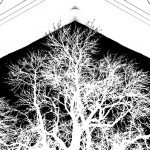
Day #103/365: Image D/2: Once Dark, Now Stilled

Image D2-Once Dark Now Stilled-A Year In The Country
File under:
A Year In The Country: Work

Something of a nod towards William Blake’s Jerusalem poem and it’s reference to “dark Satanic mills”.

I think I’ve tended to think of that part of the poem being about mills etc in cities but living in the countryside for the first time since I was a child I’ve realised just how much industry, mining and engine works etc there were in the countryside. As I’ve learned about where I live I’ve discovered about all kinds of long forgotten works, subterranean tunnels and abandoned mines which have sucked down the concrete foundations of newer buildings and so on.

Now these once mighty industrial edifices and engines are largely tourist attractions or have been left to crumble, although there is still a suprising amount of industry of one sort or another that occurs slightly off the main track in amongst the “pleasant pastures” and “clouded hills”.