Posted on — Leave a comment

Robin and Marian – “He has become a legend. Have you ever tried to fight a legend?”: Wanderings, Explorations and Signposts 5/52

Robin and Marian-1976-DVD-Richard Lester-Sean Connery-Audrey Hepburn-Robert Shaw

The 1976 film Robin and Marian is an interesting take on the myth and history of the tales of Robin Hood.

This isn’t a flash, escapist take on those tales, rather it is in parts a quite melancholic film about in part ageing, loss, past glories and what happens to the life, loves and myths of a living legend as the years pass.

Robin and Marian-1976-Richard Lester-Robert Shaw-lobby card-castle

While a number of the locations seem to be fairly undisguised and barely reconstructed actual crumbling rural castles/keeps.

It was directed by Richard Lester, who is also known for the likes of The Beatles’ romps A Hard Day’s Night and Help!, The Knack… and How to Get It, post-apocalyptic curio and BFI Flipside release The Bed Sitting Room, the star studded 1973 version of The Three Musketeers and in the 1980s the superhero blockbusters Superman II and III.

Robin and Marian-1976-Richard Lester-lobby cards-Audrey Hepburn-Sean Connery-stroke

The film features Sean Connery as Robin, Nicol Williamson as Little John (who would go on to play Merlin in John Boorman’s 1981 film Excalibur, which reimagines of the myths of King Arthur) Audrey Hepburn as Marian (returning to cinema for the first time in eight years) and Robert Shaw as the Sheriff of Nottingham.

Robin and Marian-1976-Ronnie Barker-Denholm Elliot

Alongside which the film is also noticeable for the number of classic British dramatic and comic actors in the cast: Richard Harris, Denholm Elliot, Ronnie Barker, Ian Holm and Bill Maynard (the one time Selwyn Froggitt).

In the plot many years have passed since Robin led the fight for the poor of Nottingham, he has been off fighting in the Crusades under the command of King Richard the Lionheart. He has returned to England, which is now ruled by “mad” King John and Robin regroups the members of his old Sherwood Forest band of merry men.

Robin-and-Marian-Richard-Lester-1976-Nicol Williamson-1

Robin’s old nemesis the Sheriff of Nottingham is ordered by the king to remove the clergy from the countryside, causing Robin to go to the aid of and rescue his old love Marian, who is now part of a religious order.

Even after his extended time away Robin retains a legendary status and following amongst the common folk of the land, who gather around him in his forest stronghold to stand against the forces of authority and the scene is set for a final confrontation between Robin and his men and the Sheriff and his troops.

As I just mentioned though, this isn’t a swashbuckling rerun of the myth of Robin Hood – possibly reflecting a wider trend in 1970s television and film it is in parts quite downbeat and even a gritty realist film.

(Although accompanying which at times it seems to almost be two films in one, as at points it becomes a sort of old fashioned Hollywood melodrama accompanied by a traditional and possibly even old fashioned cinematic score.)

Robin and Marian-1976-Richard Lester-Japanese soundtrack vinyl LP-Audrey Hepburn
(The curiously glam packaging for the Japanese edition of the soundtrack.)

Robin and the other characters are all shown in a largely unstyled manner, with their ageing allowed to be on show in a naturalistic way, in contrast with much of modern film: there is a sense that they are well past their prime but still trying to carry out physically demanding feats of courage.

Robert Shaw as the Sheriff seems to just be almost acceptingly weary of the whole inevitability of the Robin/Sheriff game of cat and mouse, of the battles between folk hero and upholder of the laws of the land and the whims of its rulers: in fact in the film they are shown to be men who as much as anything seem to be more just carrying out their expected roles, fates and duties, with a certain acceptance of that inevitability and there seeming to be a certain recidivism to the character and actions of Robin.

The ending which (spoiler alert) effectively involves a double suicide/murder/poisoning between Robin and Marian, is also not what would be expected from say a Hollywood take on the tales of Robin Hood. It is curiously both downbeat and also strangely affirming of the enduring love and acceptance between Robin and Marian, seeming to be a final acceptance of this being the only way out of an otherwise unending cycle of violence and conflict due to the inherent character and restlessness of Robin.

(Although Marian is not shown as at all weak willed, there is a certain dichotomy portrayed between her femininity and searching for peace and the opposite characteristics in Robin – something which is made more explicit in the film’s French title La Rose et la Flèche, which translates as The Rose and the Arrow.)

Robin and Marian-1976-Sean Connery-Robert Shaw-film still

Acceptance as the years pass and an accompanying affection, even tenderness, seems to be some of the main themes of the film – between Robin and Marian, Robin and Little John and even a certain not-all-that-grudging respect and affection between Robin and the Sheriff, which includes a certain gentlemanly chivalry being shown during their final conflict.

Robin and Marian-1976-Sean Connery-Robert Shaw

Alongside the film’s open depiction of the ageing process and its effects, the final conflict between Robin and the Sheriff is shown in a more realist manner than is often the way in cinema, with the two men becoming relatively quickly increasingly physically tired and almost unable to fight due to their exertions and injuries.

Robin and Marian-1976-Audrey Hepburn's script
(Audrey Hepburn’s personal copy of the script – which sold for a fair few pounds and pence at auction.)

In some ways the film could be seen as a battle between the old ways, the freedoms and unrulability of the traditional untamed forest lands and the castle dwelling rulers and forerunners of the more “civilised” or centrally controlled town/city settlements.

Robin and his men normally hold sway and a strategic advantage over the better equipped King’s/Sheriff’s men within the forest. However the powers-that-be are shown as being prepared to gather and camp outside its boundaries, waiting for the rashness of Robin to be his force’s undoing and he eventually breaks cover from the forest to meet his enemy.

His ensuing attempts to settle the conflict through a more evenly matched duel solely between him and the Sheriff are cast aside when the promise of acceptance of the outcome as the deciding factor in the conflict, which was made before their duel by the Sheriff, is ignored by the authorities when Robin is victorious (although this victory is nominal due to the mortal injuries he sustains).

His men are hunted down and defeated – the underlying implication being that this is possibly the end of a certain way of life, freedom, resistance and the rallying call of the legend of Robin, a passing of the old into the new accompanied by the strengthening of the authorities’ rule and power.

Robin and Marian-1976-Richard Letter-Richard Harris-2

The film is well worth a look-see for a different take on the longstanding myths of Robin Hood and performances by a gathering of actors nolonger in the first flush of youth but undoubtedly at the top of their game in terms of charisma and their invocations of character and a sense of experience gained and life lived.


Elsewhere:
The Robin and Marian DVD – which at the time of writing is available for a rather reasonable pocket money price.
The trailer.


Posted on — Leave a comment

Cuckoos in the Same Nest – Hauntological and Otherly Folk Confluences and Intertwinings: Chapter 4 Book Images

The Owl Service-TV series and band-The Wicker Man-Radiophonic Workshop-Broadcast-Focus Group-Children of the Stones-Ghost Box Records-3

“A curious occurrence in an area or two of music and culture is the way in which folk music and folkloric-orientated work, of the underground, acid, psych, wyrd and otherly variety, has come to share common ground with synthesised work and electronica, of a left field and hauntological variety.

This is an area of culture where the use, appreciation and romance of often older electronic music technologies, reference points and inspirations segues and intertwines with the more bucolic wanderings and landscapes of exploratory, otherly pastoralism and folk culture, a part of the cultural landscape:

“…planted permanently somewhere between the history of the first transistor, the paranormal, and nature-driven worlds of the folkloric…” (author, artist, musician and curator Kristen Gallerneaux.)

On the surface such folkloric and electronic musical and cultural forms are very disparate and yet both have come to explore and share similar landscapes.”

The Owl Service-The View From A Hill-albumBroadcast and the Focus Group investigate witchcults of the radio age-album cover-warp records-Ghost Box recordsGather In The Mushrooms-Bob Stanley-The British Acid Folk Underground-album-A Year In The Country

“…looking back to some of the early cultural explorations that would lead to A Year In The Country, three of the first albums that provided some of the seedlings, wellsprings or inspirations were The Owl Service’s The View from a Hill (2010), Broadcast and the Focus Group Investigate Witchcults of the Radio Age (2009) and the compilation Gather in the Mushrooms (2004).

These wander respectively from a subtly experimental revisiting and reinterpreting of folk rock that has taken the name of a seminal otherly pastoral book and television series (Alan Garner’s book and Granada Television’s TV adaptation of The Owl Service from 1967 and 1969 respectively), to an overtly experimental sample and synthesiser-created phantasmagorical vocal and dreamlike cut-up exploration of hidden cultural layers and transmissions via a delving and unearthing of late 1960s and early 1970s underground British acid folk.

Somehow, it all made sense that these things fitted together.”

The Changes-DVD cover-BFI-BBCAlan Garner's The Owl Service-DVD cover-NetworkChildren of the Stones-DVD cover-Network

Nigel Kneale's The Stone Tape DVD cover-BFIThe Wicker Man-The Directors Cut-DVD cover-strokeDoctor Who-The Stones of Blood-DVD cover-Tom BakerDoctor Who-The Daemons-DVD cover-BBC-John Pertwee

“Such television series… provide a point of confluence for these areas of otherly folk music and hauntology. To semi-quote the A Year In The Country website and referring back to cultural folklore:

“In contrast to the often oral telling of tales from the wald/wild wood in times gone by, today the stories that have become our cultural folklore we discover, treasure, pass down, are informed and inspired by, are often those that are transmitted into the world via the airwaves, the (once) cathode ray machine in the corner of the room, the carrying of tales via the zeros and ones of technology that flitter around the world and the flickers of (once) celluloid tales.”

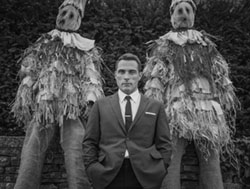
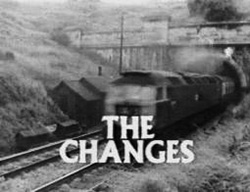
This cultural folklore would probably take in the likes of television programmes The Changes (1975), The Owl Service (1969), Children of the Stones (1977), The Stone Tape (1972) and the film The Wicker Man (1973), and a touch or two of the odder side of Doctor Who from way back when.”

While often being set rurally, in contrast to much of popular culture which concerns itself with towns and cities, they have come to be touchstones or lodestones that seem to invoke a hidden, layered history of the land but which also encompass and intertwine with a wider hauntological, parallel, alternative version of Britain.

Some of their musical accompaniments could well be said to form an early part or antecedent of the meeting of the strands of otherly folk and hauntology.”

The-BBC-Radiophonic-Workshop-Delia Derbyshire

“In the above list the “patterns beneath the plough” are soundtracked by imagined and re-imagined folk music (The Wicker Man), synthesised elsewhere explorations by the BBC Radiophonic Workshop (The Changes, Doctor Who and The Stone Tape), spectral yet beautiful choral nightmares (Children of the Stones) and quite frankly still unnerving and experimental collaging (The Owl Service).

All quite different musically/aesthetically and yet all conjuring both (to again quote the A Year In The Country website) “an underlying unsettledness to the bucolic countryside dream” and a Midwich-ian take on the landscape.

If you should consider the descriptions of the above soundtracks, you may well find that a line could be drawn between them, the earlier description of three early A Year In The Country wellspring albums and much of more recent work that could be called hauntological and/or which explores the outer reaches and undercurrents of folk music.

These two strands of otherly folkloric and hauntological work and culture may appear at first to be cultural cuckoos in the same nest but have come to be fellow travellers in an alternative landscape, informing and accompanying one another’s journeys; this is a sharing of ground founded in similar exploratory and sometimes visionary or utopian spirit rather than divided by aesthetics.”


Online images to accompany Chapter 4 of the A Year In The Country: Wandering Through Spectral Fields book, alongside some text extracts from the chapter:

Details of the book and the collection of its accompanying online images can be found at the Book’s Page, which will be added to throughout the year.


Posted on — Leave a comment

Halloween III: Season of the Witch – A Curious Slice of Culture and Collisions with the Past: Wanderings, Explorations and Signposts 4/52

Halloween III-complete soundtrack-John Carpenter-Alan Howarth-and DVD cover

Well, Halloween III. Where to start and where to finish, it’s something of a multi-layered subject and film…

Back around Autumn 2017 I started to find myself increasingly interested in the work of John Carpenter. I’d been watching his work on and off since a young age but something sparked off a renewed interest…

…and then during the weekend just before Halloween last year I found myself in one of the bargain-about-£1-per item shops that dot the land…

There for but £1 was the DVD of Halloween III: Season of the Witch – I rather liked the synchronicity of coming across the film at that time of year and so I wandered home with it.

Halloween III-John Carpenter-Tommy Lee Wallace-Alan Howarth-Nigel Kneale-1982-6

I’m not quite sure I was completely ready for it as a film. It’s an odd (but also intriguing) cinematic and cultural experience.

Originally released in 1982, it’s not actually a John Carpenter film, rather part of the Halloween franchise which was created by John Carpenter, with the film being co-produced by John Carpenter, with a soundtrack by him and Alan Howarth and was written and directed by Tommy Lee Wallace.

Well, sort of written by him. More on that in a moment.

How to describe it? Well, if you imagine a mixture of the work of John Carpenter at one step remove, Invasion of the Bodysnatchers, The Stepford Wives, a more b-movie and less arthouse take on earlier David Cronenberg and the work of Nigel Kneale, you may not be far off.

Why Nigel Kneale? Well, he wrote the original screenplay and was asked to do so in part because John Carpenter was an admirer of his Quatermass series. Nigel Kneale delivered a script that was apparently based more on psychological shocks rather than more conventional horror and physical ones but Dino De Laurentiis, who owned the distribution rights, wanted more traditional horror/violence.

Director Tommy Lee Wallace revised the script and Nigel Kneale asked for his name to be taken off the finished film.

Halloween III-John Carpenter-Tommy Lee Wallace-Alan Howarth-Nigel Kneale-1982-2

However, watching the film I think it has a surprisingly small amount of gore and violence considering the above and its genre – much of such things happen offscreen and in comparison to the often gratuitous imagery and special effects of a number of films today, this seems relatively tame (if still at times quite shocking).

The spirit of Nigel Kneale’s work remains quite strongly in the finished film; the plot involves a novelty toy/trick manufacturing company that has incorporated a microchip which includes fragements from one of the stones from Stonehenge in their halloween masks – which are proving massively popular with the children of the US.

The stone fragments contain some form of ancient power, which via the microchip will be triggered by the flashing images in the company’s television adverts on Halloween, causing the death/sacrifice of the wearers and those nearby, effectively reviving a ritual that last happened 3000 years ago and bringing about the resurrection of an ancient age of witchcraft.

Halloween III-John Carpenter-Tommy Lee Wallace-Alan Howarth-Nigel Kneale-1982-1

Ancient, buried rituals. The power of standing stones. The collision of ancient powers and modern science. Nothing Nigel Kneal-esque there then.

As mentioned earlier, Halloween III brings to mind the earlier films Invasion of the Bodysnatchers and The Stepford Wives –  this is in particular due to the company’s power over and replacement of the local town and it’s population.

Halloween III-John Carpenter-Tommy Lee Wallace-Alan Howarth-Nigel Kneale-1982-3Halloween III-John Carpenter-Tommy Lee Wallace-Alan Howarth-Nigel Kneale-1982-8

The town is completely run and controlled by the company, complete with a threatening sense of electronic surveillance, a curfew announced in the evening over a tannoy system and a sense that the population is being replaced by androids.

Halloween III-John Carpenter-Tommy Lee Wallace-Alan Howarth-Nigel Kneale-1982-5

Returning to David Cronenberg, Halloween III, put me in mind in part of Cronenberg’s Videodrome, which was released around a similar period in 1983.

Although more overtly b-movie like than Cronenberg-arthouse-esque, at times Halloween III seems to have some of the emotional distance that Cronenberg’s films can have.

(As an aside, John Carpenter’s films – particularly his earlier work – could well be considered the less arthouse but possibly at times more entertaining flipside to David Cronenberg’s earlier films).

Halloween III-John Carpenter-Tommy Lee Wallace-Alan Howarth-Nigel Kneale-1982-9

As with the manipulative organisation in Videodrome, in Halloween III, despite planning on effectively taking over/changing the world and having the resources to mass-manufacture convincingly human androids, the novelty manufacturing company, their factory and infrastructure seems curiously low-key and non-high tech: this isn’t some big gleaming futuristic corporation, more a small-ish local factory with a slightly down-at-heel, paint chipped locale.

(As a further aside the town where the factory is based seems to be a fairly typical small sized town, with the factory work seeming quite blue collar manual when carried out by humans, while in contrast the android “workers” are corporately, white collar suited.)

And in both films television/video are shown as being used for a form of signal transmission which controls the minds and/or causes a physical alteration/mutation and/or destruction in those who watch it.

Halloween III-John Carpenter-Tommy Lee Wallace-Alan Howarth-Nigel Kneale-1982-4Halloween III-John Carpenter-Tommy Lee Wallace-Alan Howarth-Nigel Kneale-1982-10

Along which lines, the opening sequence where CRT television scan lines, pixels and glitches build into the graphic of a Halloween pumpkin capture a sense of early 1980s technology and it’s at times period use as a malignant or threatening force particularly well.

Halloween III-John Carpenter-Tommy Lee Wallace-Alan Howarth-Nigel Kneale-1982-7

John Carpenter and Alan Howarth’s minimal synth score for Halloween III is well worth seeking out and to my mind it is one of the finest of John Carpenter’s classic synth soundtracks. In but a few notes, synth washes and spare percussion it creates an intriguing, entrancing and possibly seductive atmosphere while also being almost subtly, gently ominously portentous.

Halloween III-complete soundtrack-John Carpenter-Alan Howarth-1
(For those who should appreciate vintage synth and audio equipment.)

The original releases of the soundtrack are now quite rare, as are most of the re-issues: it has been re-released several times, first on CD in 1989, a complete extended CD version of the soundtrack was released by Alan Howarth in a limited edition of 1000 in 2007 and a vinyl version was issued by the Death Waltz Recording Company in 2012, all of which are out of print.

However, the complete version is still available as a print-on-demand CD in the US and on import elsewhere and can also be found on various online streaming services if you should have a hankering to listen to it.


Elsewhere:
The various editions of the soundtrack.
The soundtrack’s Main Title.
The trailer via the Shout! Factory Collector’s Edition Blu-ray.


Posted on — Leave a comment

Hauntology – Places Where Society Goes to Dream, the Defining and Deletion of Spectres and the Making of an Ungenre: Chapter 3 Book Images

Day 162-Hauntology-A Year In The Country

The Owl Service TV program-A Year In The Country 2Children Of The Stones-TV series-A Year In The CountryThe Changes-1975-BBC-A Year In The Country-8

Daphne Oram-Radiophonic WorkshopBruton Music Flexi-Steens Dilemma-via James CargillSeasons-David Cain-Jonny Trunk-BBC-A Year In The Country

“Although it is hard to precisely define what hauntology is, it has become a way of identifying particular strands of music and cultural tendencies. As a cultural form it is fluid, loose and not strictly delineated but below are some of the recurring themes and characteristics of hauntological work:

1) Music and culture that draws from and examines a sense of loss of a post war utopian, progressive, modernist future that was never quite reached.

2) A tendency to see some kind of unsettledness and hidden layers of meaning in public information films, TV idents and “a bit too scary and odd for children though that is who they were aimed at” television programmes from the late 1960s to about 1980, which include the likes of The Owl Service (1968), Children of the Stones (1977) and The Changes (1975).

3) Graphic design and a particular kind of often analogue synthesised music that references and reinterprets some forms of older library music, educational materials and the work of the BBC Radiophonic Workshop, often focusing on the period from around 1969 to 1979 and related culture which is generally of British origin.

4) A re-imagining and misremembering of the above and other sources into forms of music and culture that seem familiar, comforting and also often unsettling and not a little eerie, creating a sense of work that is haunted by spectres of its and our cultural past, to loosely paraphrase philosopher Jacques Derrida.

5) The drawing together and utilising of the above elements to conjure a sense of a parallel, imagined, often strange or Midwich-ian Britain.”

Day 162-Hauntology-A Year In The Country faded 2

“For a while the phrase hauntology when used to refer to a genre of music had been deleted on Wikipedia.

As author Simon Reynolds – who as just mentioned was, along with Mark Fisher, one of the first people to use the phrase hauntology in relation to such culture – points out, those doing the deleting have taken a fair few steps to make sure their own comments on Wikipedia are not deleted or modified. “Do as I say and not as I do” as it were.

Just as with deletion via consensus, a larger mass of consensus does not necessarily mean something is correct, but typing the word “hauntology” alongside “music” into a search engine at the time of writing brought up 170,000 pages to look at, while “hauntology music genre” returned over 50,000 results.

That would tend to imply that there is not a “consensus to delete” in the wider world, or at the very least there is a “consensus to discuss, explore, consider, create and debate”.

So, maybe rather than deleting the whole notion, making the debate around whether hauntology exists part of its page would have been a more reasonable or culturally democratic thing to do.”

Pye Corner Audio-Sleep Games-Ghost Box Records-album artwork Pye Corner Audio-Stasis-Ghost Box Records-album artwork

Beyond The Black Rainbow-still-1
“The creation of work which conjures a parallel world via a misremembered past need not necessarily draw purely from one particular period or set of cultural reference points, as has often been the case with hauntological work but rather that concept and process could be used as a general framework to also explore other eras and cultural areas.

To a certain degree this has been the case in the earlier mentioned hypnagogic pop, which draws more from the 1980s period and related culture and Italian Occult Psychedelia which focuses on non-British culture and Pye Corner Audio, who Ghost Box Records have released recordings by, appears to also extend the hauntological palette to incorporate a more 1980s VHS-esque aspect…

…while a film such as Beyond the Black Rainbow (2010) could be seen as a form of hauntological work in its creation of a parallel world that creates a “Reagan era fever dream”.”


Online images to accompany Chapter 3 of the A Year In The Country: Wandering Through Spectral Fields book, alongside some text extracts from the chapter:

Details of the book and the collection of its accompanying online images can be found at the Book’s Page, which will be added to throughout the year.


Posted on — Leave a comment

Barbara Bosworth & Margot Anne Kelley’s The Meadow – Recordings and Reflections of an Unhurried Space: Wanderings, Explorations and Signposts 3/52

The Meadow-Barbara Bosworth-Margot Anne Kelley-Radius Books-7The Meadow is a book by Barbara Bosworth & Margot Anne Kelley, published by Radio Books, which is part photographic exploration/documentation, part journal and part scientific study.

The two authors have been wandering, studying and photographing the same single meadow in Carlisle, Massachusets for more than a decade and the book is a collection of the resulting work.

There is a reflective, thoughtful calm to the photographs of the meadow, with them seeming to reflect the unhurried character of this space and the sense of the book being the result of the authors both (to quote the publishers) “meandering” and studying this one place over an extended period of time.

Accompanying Barbara Bosworth’s photographs are a number of text pieces by Margot Anne Kelly, many of which provide a fascinating insight into the meadow and the nature that has made its home there.

The Meadow-Barbara Bosworth-Margot Anne Kelley-Radius Books-5

This includes explaining how different species of fireflies co-exist relatively peacefully in the same areas by dividing time and space, which they do by flying at different heights, times of the day etc and also that the lichens which you may find on stones are actually a symbiotic co-operation of fungus and algae rather than being just one plant – and even through millions of years of evolution they have remained separate but connected species.

The Meadow-Barbara Bosworth-Margot Anne Kelley-Radius Books-6

One of the things that struck me on perusing the book was just how few animals there are in the photographs – a bird appears just once and there are some photographs with glowing specks that are actually those just mentioned fireflies, although you would not necessarily realise that without reading the accompanying text.

That may well reflect the reality of wandering through such fields – apart from if they contain livestock, animals are generally hidden from view, with possibly (in the fields I’m used to wandering through) just the occasional flash of say a hare or rabbit off in the distance and even the noises that you may hear will generally largely only be those of birds.

The Meadow-Barbara Bosworth-Margot Anne Kelley-Radius Books-4 The Meadow-Barbara Bosworth-Margot Anne Kelley-Radius Books-3

A fascinating aspect of the book are the Bird Doors, which date from the 1930s onwards and which document the details of birds visiting the meadow etc.

The Meadow-Barbara Bosworth-Margot Anne Kelley-Radius Books-2

The book is somewhat sumptuously and beautifully produced with inserts, a de-embossed inner cover, foldouts, separately printed and bound sections and so forth. A labour of love in a number of ways I expect.

The Meadow-Barbara Bosworth-Margot Anne Kelley-Radius Books-1

The Meadow is well worth a perusal, particularly for the way in which it interlinks and interweaves an expressive exploration of one particular meadow with the rigour of scientific study, albeit a form of study which in keeping with the character of the project still retains a literary, creative character.

Elsewhere:
The Meadow at Radius Books
Peruse The Meadow at Idea Books


Posted on — Leave a comment

Gather in the Mushrooms – Early Signposts and Underground Acid Folk Explorations: Chapter 2 Book Images

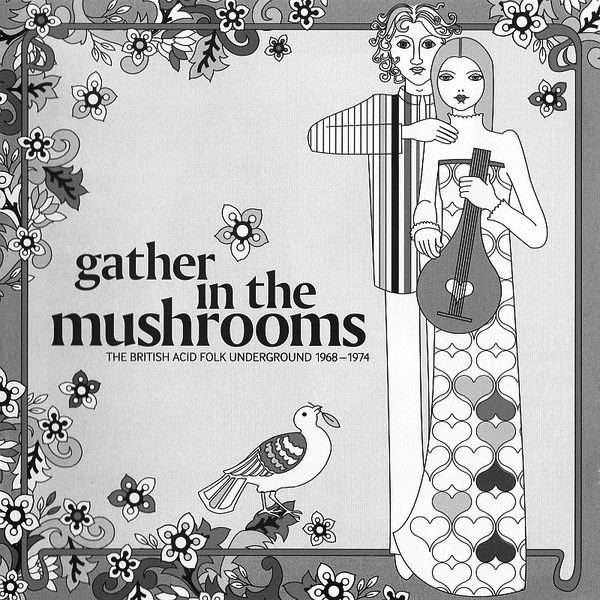
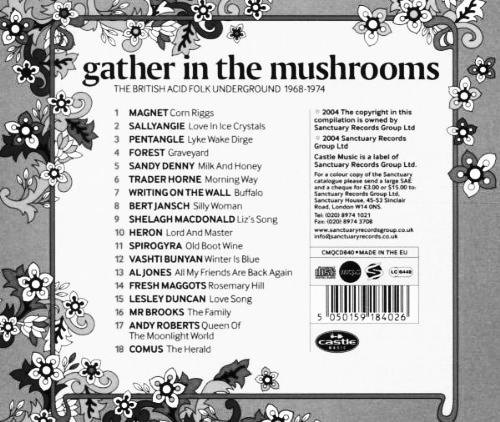
Gather In The Mushrooms-Bob Stanley-The British Acid Folk Underground-album-A Year In The CountryGather-In-The-Mushrooms-Bob-Stanley-The-British-Acid-Folk-Underground-album-inner sleeve artwork copy0001-A Year In The Country-Gather In The Mushrooms-backGather In The Mushrooms album-folk-Bob Stanley-Vashti Bunyan sleevenotes image

“While Wandering down the A Year In The Country pathways, there have been an awful lot of cultural reference points that have inspired, influenced and intrigued (the three I’s as it were).

The Gather in the Mushrooms album is one of the first. It is a 2004 compilation curated by Bob Stanley who is a member of the band Saint Etienne, subtitled “The British Acid Folk Underground 1968-1974” and it does what it says on the can.

The period of time that the album focuses on was a point in music/culture when the likes of Fairport Convention were reinterpreting traditional folk music, combining it with the more contemporary elements of rock to produce what has come to be known as folk rock.

Acid or psych folk was an extension or offshoot of such work, which often tended to wander down more overtly exploratory or experimental avenues and at times intermingled aspects of psychedelia with folk and rock elements.”

Morning Way-Trader Horne-Judy Dyble-A Year In The Country-2

“The first lines on “Morning Way”, a track on Gather in the Mushrooms are “Dreaming strands of nightmare are sticking to my feet”, followed closely by a somewhat angelic female voice in counterpart. It is odd and appealing.”

The Pentangle-Basket of Light-album cover The Sallyangie-Children Of The Sun-Love In Ice Crystals-cover

Forest-Full Circle-psych folk-acid folk-A Year In The Country

“Subcultural/countercultural movements tend to be thought of as having sprung from the cracks beneath the city’s walkways, whereas acid/psych folk seems to have been created by participants who were either physically located out in the cottages and meadows or who used a form of imaginative geographical travel to create a culture which, in contrast to urban influenced and inflected cultural movements, was hazily narcotically pastoral.”

Early Morning Hush-Folk Underground-Bob Stanley-album-A Year In The CountryEarly Morning Hush-Notes from the UK Folk Underground-album-inner sleeve artworkEarly Morning Hush-Notes from the UK Folk Underground-album-tracklisting


Text extracts from and online images to accompany Chapter 2 of the A Year In The Country: Wandering Through Spectral Fields book:

Details of the book and the collection of its accompanying online images can be found at the Book’s Page, which will be added to throughout the year.


Posted on — Leave a comment

Penda’s Fen and The Edge Is Where The Centre Is – Explorations of the Occult, Otherly and Hidden Landscape: Wanderings, Explorations and Signposts 2/52

The Edge Is Where The Centre Is-books-Texte und tone-Pendas Fen-David Rudkin-Mordant Music

The Edge Is Where The Centre Is is a book that focuses on Alan Clarke and David Rudkin’s 1974 British television play Penda’s Fen.

Aside from the intriguing and multi-layered nature of Penda’s Fen, the book is a fascinating and rather lovely cultural artifact in itself – and a good example of the way in which a relatively small core of television and film work from previous decades which focuses on for example the flipside and undercurrents of the landscape and folklore continues to inspire contemporary work and projects, which draw inspiration from that core but which can also be appreciated, exploratory and inspirational in their own right.

The book has been released in two editions, both prior to the play’s official DVD/Bluray restoration and release by the BFI in 2016, at a time when it was generally only viewable as a not-officially sanctioned multi-generational blurred digital copy online or at one of the rare public screenings.

At the core of the book is a conversation between Gareth Evans, William Fowler and David Rudkin where Penda’s Fen is discussed – hence the subtitle of the first edition of the book: David Rudkin and Penda’s Fen: A Conversation.

In the first edition of the book this was accompanied by several articles, a short biography of David Rudkin, a synopsis of the film and a screening history.

The Edge Is Where The Centre Is-synopsis-books-Texte und tone-Pendas Fen-David Rudkin-Mordant Music
(Above is the “short” synopsis of the play – which considering the multi-layered nature of Penda’s Fen rather surprisingly captures and represents its themes concisely in but a few words.)

The second edition has been considerably expanded, redesigned and at times rewritten to include the core conversation, articles, the synopsis etc but with the sections now numbering fourteen, the addition of a flexi-disc by Mordant Music and the subtitle changing to be: David Rudkin and Penda’s Fen: An Archaeology.

The Edge Is Where The Centre Is-inner page 1-books-Texte und tone-Pendas Fen-David Rudkin-Mordant Music

Both books were designed by Rob Carmichael of SEEN and are collages that seem to reflect a sense of a multi-layered, spectral or hidden/occult exploration of the landscape.

This is enhanced by them having been printed using the Risograph process, which utilises copying machines which produces print output that seem to exist in its own hinterland somewhere between digital photocopying and hand screenprinting and has a particularly appealing tactile, matt quality.

The Edge Is Where The Centre Is-inner page 2-books-Texte und tone-Pendas Fen-David Rudkin-Mordant Music

That spectral/hidden sense of the landscape is one of the core themes of the book, with it taking Penda’s Fen as something of a starting point or wellspring for what a number of year/decades later has grown to be a loosely defined cultural exploration of “weird”, “wyrd” or “eerie” Britain – an otherly, at times hauntological unearthing of rural pastures and interests.

(A number of reasons for such cultural phenomena and interest could be put forward, one of which – as referred to in a quote by Robert Macfarlane in the book – is that it is an attempt to make sense, explain, account for and possibly act as a respite/allow refuge from/act as a bulwark against the current dominant capitalist system: in part a utilising or reconfiguring of the spectral or preternatural as a form of expression, exploration and escape from related turbulence and pressures.)

The books were published by Texte und Töne in collaboration with the Colloquium for Unpopular Culture: the first edition coincided with/marked the screening of the film/play at The Horse Hospital on the anniversary of King Penda’s death in AD 655 and the second edition coincided with/marked a screening at the Whitechapel Gallery.

Texte und Tone-Colloqium of Unpopular Culture-books and posters-Nigel Kneale-Pendas Fen-David Peace

They seem to form a continuum of the unearthing of the weird, wyrd, eerie, occult, otherly, hauntological landscape of Britain by Texte und Töne and the Colloquium for Unpopular Culture which has taken in public events and Risograph printed publications.

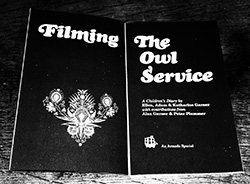
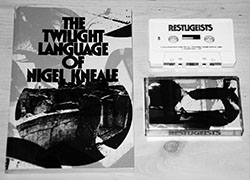
These include the book The Twilight Language of Nigel Kneale, which was released to mark the event A Cathode Ray Séance: The Haunted Worlds of Nigel Kneale and The Stink Still Here book which is a conversation between Paul Myerscough and David Peace which centres around his novel GB84 and The Stink Still Here: The Miner’s Strike on Film event, both of which focus around the 1984-1985 British Miner’s Strike.

The Edge Is Where The Centre Is-inner page 3-books-Texte und tone-Pendas Fen-David Rudkin-Mordant Music

The Edge Is Where The Centre Is books are edited by Gareth Evans, Will Fowler and Sukhev Sandhu, who aside from taking part in the core conversation, all also have articles in the book/s.

Sukhev Sandhu’s “You’re Like The English, You Have Foreign Parents” article positions the film in amongst an interior English countryside that is often unknown or unexplored territory:

“If cities are in the ascendant, it’s the countryside that is increasingly terra incognita in the public imagination. British people, weaned over twenty years on cheap international travel delivered by budget airlines, are as likely to be familiar with Spanish and Greek pastures as they are with their own national interiorities.”

William Fowler’s Deep Dreaming article considers the countryside as a focus for exploration within film in the 1970s, placing Penda’s Fen within a background of the likes of Psychomania, Children of the Stones, The Ballad of Tam Lin, Winstanley, The Wicker Man and the work of Derek Jarman:

“The green space became a place to resist authority, explore sexualty, open-up portals between different time zones and expose the soul…”

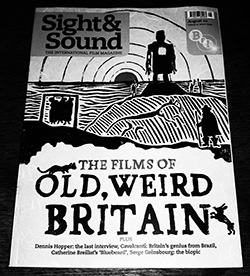
BFI Sight & Sound-The Films Of Old Weird England-Rob Young William Fowler-A Year In The Country 2

As an article it explores not dissimilar territory to that which he, alongside Rob Young, wrote about in the The Films of Old Weird Britain issue of Sight & Sound magazine in 2010 and indeed could well be a companion piece to their articles in that issue.

Indeed “open-up portals between different time zones” implies a not too dissimilar sense of cultural exploration as Rob Young has referred to as a form of “imaginative time travel”.

If you have never seen Penda’s Fen or are not likely to watch it, the two editions of The Edge Is Where The Centre Is are able to stand alone as fascinating explorations and documents of the underlying patterns, myths and stories of the landscape and rural areas – books which, as Sukhev Sandhu says of Penda’s Fen, are:

“…a deconstruction of the pieties of the English landscape tradition at the same time as a loving wassail to the occult potential of that very cartography…”

Elsewhere:
The Edge Is Where The Centre Is at Texte und Töne.
The Edge Is Where The Centre Is at SEEN.
The Edge Is Where The Centre Is at the BFI.

Elsewhere at A Year In The Country:
Day #4/365: Electric Eden; a researching, unearthing and drawing of lines between the stories of Britain’s visionary music
Day #15/365. The Twilight Language Of Nigel Kneale
Day #80/365: The Films Of Old Weird Britain… celluloid flickerings from an otherly Albion…
Day #143/365: Central Office Of Information + Mordant Music = MisinforMation
Day #191/365: Penda’s Fen; “Cherish our flame, our dawn will come.”
Wanderings #36/52a: The Wicker Man Revisited / Refreshed – The Long Arm Of The Lore


Posted on — Leave a comment

Electric Eden – Unearthing Britain’s Visionary Music – Folk Vs Pop, Less Harvested Cultural Landscapes and Acts of Enclosure, Old and New: Chapter 1 Book Images

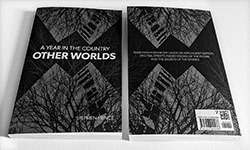
A Year In The Country-Wandering Through Spectral Fields-book-Stephen Prince-front coverAs mentioned at the start of this year, later in the year (probably around March/April time, more details to come) I am going to publish a text based book called A Year In The Country: Wandering Through Spectral Fields which across 52 chapters collects, revises, revisits and interweaves the writing from the first three years of A Year In The Country.

Each week of this year I will be posting a gathering of images, alongside text extracts from the book, which are intended to become an online “cut out and keep” set of visual accompaniments to the chapters of the book.

So, without further ado…

Chapter 1: Electric Eden: Unearthing Britain’s Visionary Music: Folk Vs Pop, Less Harvested Cultural Landscapes and Acts of Enclosure, Old and New

Extracts from the text of the book and accompanying online images:

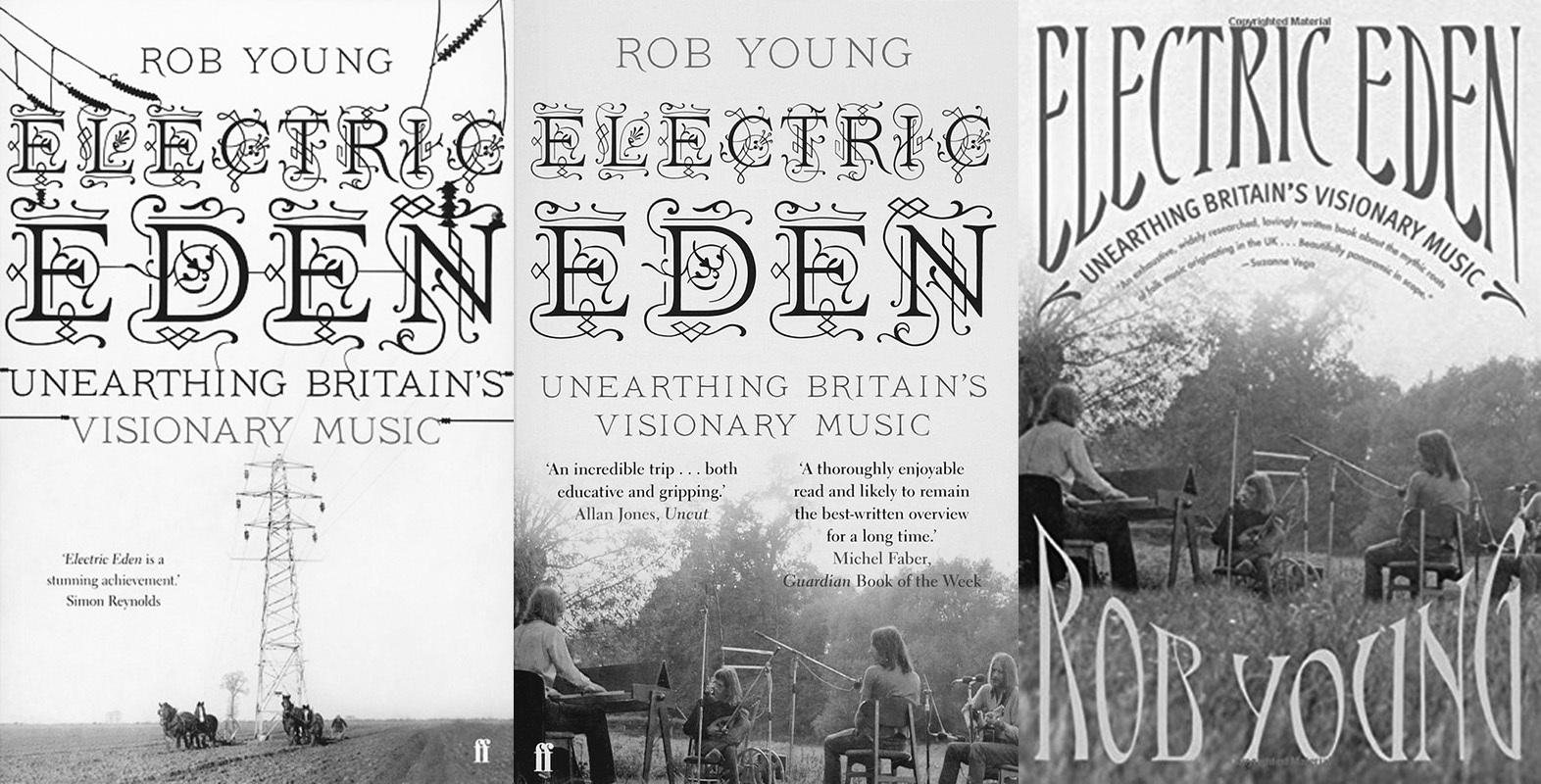
Rob Young-Electric Eden-book covers-1st edition-2nd edition-US edition

“(Electric Eden) the 2010 book by Rob Young, served as an ongoing reference for much of the earlier years of A Year In The Country.

It is an epic tome of a book which, in simple terms, is a journey through British folk and pastoral music and related culture from its roots to the modern day, but instead of serving as a straightforward documenting of such things, is more an exploration of its undercurrents, of at times semi-hidden or overlooked cultural history and its interconnected strands.

The book travels with folk revivalist collectors such as Cecil Sharp, the social idealism of William Morris and Ewan MacColl, the late 1960s/early 1970s folk rock of the likes of Fairport Convention and Pentangle, the acid or more experimental folk of Comus and Forest, The Wicker Man film from 1973 and related occult folklore, contemporary esoterically interconnected hauntological practitioners such as Ghost Box Records, the pastoral tinged work of pop music explorers Kate Bush, David Sylvian and Talk Talk and pastoral speculative/science fiction.

There is a sense within the book of folk and related culture seeming to point towards an otherly Britain: an imagined Albion of hidden histories and sometimes arcane knowledge, wherein there is still the space or possibility to sidestep some of the more ubiquitous, dominant and monotheistic tendencies of modern day culture and systems.”

Forest-Full Circle

Kate Bush-Lionheart-vinyl-A Year In The Country

The Wicker Man-construction-production photograph

Ghost Box Records logo

Steeleye Span-All Around My Hat-single-1975-The Wombles

“Which brings things round to to The Wombles and what happens when folk meets or tries to become pop. What appeared to happen in the mid-1970s is that music arrived at a point where one of folk rock’s more popular bands Steeleye Span have a hit single with their version of the traditional folk song “All Around My Hat”, which reached number five in the UK singles charts in 1975.

The single was produced by Mike Batt, who also oversaw records for the novelty pop band The Wombles: these were a musical offshoot of an animated children’s television series originally broadcast from 1973-1975 where furry, pointy-nosed creatures who live in burrows on Wimbledon Common spend their time recycling rubbish in creative ways.

All Around My Hat is folk that has wandered quite a way from its roots and seems intrinsically to be nearer to pop, a kind of glam romp with folk trappings.

Which is not to dismiss this version as it is a rather catchy and full of life interpretation, with the video and the song capturing a certain point in time and period nuances of British cultural history: of pop music and culture not yet overly-styled, honed and marketed, which in its own particular way is still from a less tamed cultural landscape.

This is one of the themes of Electric Eden; a sense of a taming of the cultural and at points literal landscape, of what Rob Young presents as music and culture of a utopian or visionary nature that draws from the land and folk culture.”

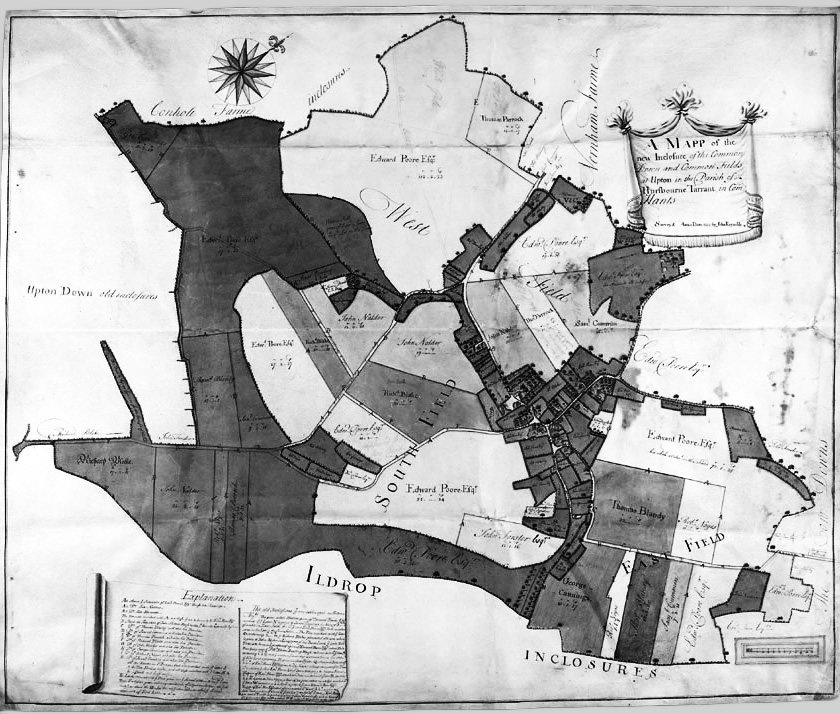
Acts of Inclosure map-A Year In The Country

“He has discussed the connection between such areas of work and culture and how there is a connection to historic acts of land enclosure and clearance; the way in which from around 1760 onwards common land was put into private ownership by government Inclosure Acts, forcing agricultural workers towards the newly expanding cities and factories and how this displacement could be one of the roots of the British empathy with the countryside, with relics such as songs or texts from the world before this change having come to be revered as they seem to represent or connect to a pre-industrial “Fall” golden age.”


Details of the book and the collection of its accompanying online images can be found at the Book’s Page, which will be added to throughout the year.


Posted on — Leave a comment

Hazel’s Kaboodles Corn Husk Doll Kit – Opening a Time Capsule from Back When and Faceless Folkloric Precedents: Wanderings, Explorations and Signposts 1/52

Hazels Kaboodles Corn Husk doll kit-box and instructions

For the first cultural wandering of this still new year I thought I would post about something that I stumbled on online a while ago and which I’m rather fond of…

The Hazel’s Kaboodles “Corn Husk” Doll Kit.

This is boxed kit that comes with all that you need to make various different sized corn husk dolls and accessories and I think it is American in origin and was made or originally released around 1976.

If you should not know, corn husk dolls are, well, dolls made from the husks of corn.

Corn Maiden-Corn Dollies-3 in a row

A connected phrase and form of traditional craft is corn dollies, although that is more often associated with the decorative, symbolic shaped harvest orientated designs that originated in pre-Christian, pagan European culture.

In those times it was thought that the spirit of the corn lived amongst the crop and that the harvest made it effectively homeless. Hollow shapes were made from the last sheaf of wheat or other cereal crops and the spirit of the corn would live there until this “corn dolly” was plough into the first furrow of the new season.

Corn dolly illustration

There a were number of traditions based around corn dollies, including one where the person who cuts the last ears of corn makes them into a doll, which is called the Corn mother or the Old Woman and is brought home on the last wagon.

Or alternatively, there were beliefs that the Corn Spirit lived or was reborn in a plaited straw ornament or corn doll made from the last sheaf of corn cut, which was kept until the following spring to ensure a good harvest, with the corn dolly often having a place of honour at the harvest banquet table.

(As an aside “dolly” is thought to be a corruption of “idol” or possibly the Greek word “eidolon” which means apparition or that which represents something else, which read about today and with a certain cultural mindset invokes a sense of it having a hauntological folklore aspect.)

Hazels Kaboodles Corn Husk doll kit-front of box detail

However, the Kaboodle kit is for the creation of actual dolls or rather corn husk dolls, although sometimes such dolls are also referred to as corn dolls or dollies.

Before the availability of the mass production of dolls for childrens and ornaments, leftover husks from corn were an accessible and I suppose probably cheap material with which to make dolls, with it thought to be a traditional form of crafting that was probably carried out in America since harvesting began around a thousand years ago.

Hazels Kaboodles Corn Husk doll kit-contents 2

The kit is a lovely thing, designed to make 22 dolls and accessories and comes with all the required husks, twine (Hazel’s Ribbon Straw), dried flowers, balls for the dolls’ heads, paper based gingham and patchwork fabric, instructions etc.

Opening the box feels like stepping into a small time warp or capsule from back when…

Hazels Kaboodles Corn Husk doll kit-witch and cat-2

…and I particularly liked that the kit I bought came with an unexpected surprise as it contained its own little piece of repurposing from back when, as one of the doll heads had been used by a former owner to create a traditional Halloween-esque witch on broomstick hanging ornament, complete with black cat riding on the tail of the broomstick.

Hazels Kaboodles Corn Husk doll kit-illustrations

There can be something slightly sinister or subtly unsettling at times about faceless corn dollies but generally this kit has a quite friendly, welcoming air to it.

Although possibly the illustrations on the side of the box that shows how many dolls can be made from the kit wanders a bit more towards having a quietly worrying aspect or possibly even 1970s British science fiction and fantasy television scary monsters along the lines of something that had come to life in say Doctor Who or it’s like in that era.

Sapphire and Steel-faceless character

Although I expect if they had been featured in that era’s television fantasy then they may well have had featureless faces, as the more eerie creatures and characters from then seemed to, such as the one above from Sapphire & Steel.

Traditional corn husk dolls

It turns out that tales of such faceless characters have a folkloric precedent…

Delving further into the history of corn husk dolls, I discovered that there is a reason that they often don’t have faces or features, which can be found in a traditional Native American legend called The Story Of The Corn Husk Doll, which tells of how the Spirit of Corn, one of the Three Sisters (the sustainers of life – the three main agricultural cops of various Native American groups in North America), made a doll or dolls from corn husks.

As is often the way with folkoric tales, there are a number of variations on the story and why the Spirit of Corn made the doll/s: these include because after making moccasins, salt boxes, mats etc from corn husks she wanted to make something different or because she was so thrilled at being one of the sustainers of life that she asked the Great Spirit or Creator what more she could do for the people and was told that she could make a doll from her husks that could entertain children.

Corn Husk Doll-instruction illustration-how to make-4

One of the dolls the Spirit of Corn made and which was given life to was very beautiful and when she want into the woods and saw herself in a pool she saw how beautiful she was and became very vain and badly behaved (or in different tellings she began to spend less time with children and more time merely contemplating her own loveliness or when travelling from village to village to entertain the children she was repeatedly told she was beautiful, which resulted in her becoming vain).

The Great Spirit spoke to her and warned her that her vanity was not the right kind of behaviour but she ignored his warning and was given a punishment where she would have no face and not be able to converse with the birds, animals or people: she would be left to roam the earth forever, looking for something that would enable her to regain her face.

Corn Husk Doll-instruction illustration-how to make-6-black

(An alternative telling says that when she walked by a creek she glanced into the water and as she admired herself couldn’t help thinking how beautiful she was, because indeed she was beautiful. Worried about her vanity, the Great Spirit sent a giant screech owl out of the sky and it snatched her reflection from the water. When she looked again, she had no reflection, which was her punishment in this telling of the tale.)

Well, that started out as a cheery consideration of a 1970s corn husk doll kit and seemed to wander somewhere a little darker – and as a plot the above would not seem out of place in a more contemporary television or cinematic fantasy and indeed does not seem all that far removed from say the twists in the tales of for example The Twilight Zone, a 1970s horror/fantasy anthology film or their television series equivalent.

Corn-Husk-Crafts-Facklam-Phibbs-A-Year-In-The-Country-3 in a row-stroke

I have wandered towards the sometimes darker, at times faceless and/or otherly folkloric intertwinings of such things before, such as the images above from a 1970s book on corn husk dolls.

Links to related posts can be found below…

Elsewhere at A Year In The Country:
Day #87/365: Faded foundlings and Tender Vessels…
Week #47/52: Shirley Collins voyages anew…
Wanderings #17/52a: Not So Abounding Faceless Automatons And Not-Quite-So-Mainstream Crafting


Posted on — Leave a comment

Image AA/1

Image AA1-A Year In The Country Year 4 image-journeys in otherly pastoralism, the outer reaches of folk and the parallel worlds of hauntology

File under: A Year In The Country ocular explorations


For a fair old while I’ve been fascinated by traditional cathode ray images, broadcasts and related analogue video recordings – their visual characteristics, the way that they connect with or imply a particular now rapidly vanishing into the distance period of history and technology.

Just as traditional chemical film based photography has its own distinctive grain, cathode ray images have their own “grain” or loss of quality – the scan lines, the glitches and wobble of analogue video tape and their degradation over time and multiple generation copies, the snow, noise and ghosting that results from a poor quality broadcast signal etc.

At times there can be something accidentally beautiful about such characteristics – close up or enlarged they can become abstract patterns.

Within visual work, as with sections of music/audio, the above characteristics and related technology have come to have a form of romance or even nostalgia attached to them, accompanied by an at times hankering after an era before the loss of loss that digital replication may be thought to have brought about.

(Although it could be argued that through the compression techniques of digital storage and replication that the contemporary era has its own form of loss, we just have not necessarily overly recognised it at as such yet. Just as modern digital technologies, restoration, audio, photography, video etc all have their own distinctive character and transformation processes.)

Within visual art there has been the use and application of some of these “lossy” previous era characteristics, alongside the likes of exploring earlier data limited imagery: essentially using modern technology to say create the sense of an image being stored on a degraded multi-generational video tape recording, captured via the ghosts of faded analogue transmissions, having been replicated over and over again on an uncalibrated early photocopier or created via early digital computer technology, resulting in 8-bit art, glitch art and so forth.

Generally such aesthetics and styles are used in connection with imagery of an urban nature and I thought it could be intereresting to see what would happen if I took such styles and applied them to those of a more rural or pastoral origin.

The plan is to take the “classic” A Year In The Country style and effectively transmit and broadcast it through a contemporary portal that in some ways connects it back to the aesthetics and visual fingerprints of earlier eras: a re-interpretation and interweaving rather than a replication, allowing the signals to at times fade and be scrambled as they tumble backwards and forwards through time…

That “classic” and the “transmitted” styles may well become intertwined and/or sit next to one another as the weeks and months pass by. We shall see where the year takes us (!)…


Posted on — Leave a comment

Here’s To The New Year / The A Year In The Country: Wandering Through Spectral Fields Book

A Year In The Country-Wandering Through Spectral Fields-book-Stephen Prince-front cover

So, the start of a New Year…

…and behind the scenes of A Year In The Country I have been working away on something (and at times burning the midnight oil)…

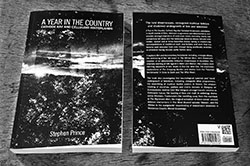
The result of that beavering away is the now completed book A Year In The Country: Wandering Through Spectral Fields, subtitled Journeys in Otherly Pastoralism, the Further Reaches of Folk and the Parallel Worlds of Hauntology.

Across 52 chapters and 340 pages the book gathers, revisits and revises writing from the first three years of A Year In The Country, alongside some new wanderings and is intended to draw together and connect layered, at times semi-hidden cultural pathways and signposts; wandering from acid folk to edgelands via electronic music innovators and pioneers, folkloric film and photography, dreams of lost futures and misremembered televisual tales and transmissions.

The book will be published most probably around the start of Spring 2018 (i.e. March or April). I will post more details around these parts soon.

In the meantime, here’s to the New Year and I trust this finds you good, well and full of (post) festive cheer…


PS Details of the book and the collection of its accompanying online images can be found at the Book’s Page, which will be added to throughout the year.


Posted on — Leave a comment

Rounding The Circle: Wanderings #52/52a

Gather In The Mushrooms-Bob Stanley-The British Acid Folk Underground-album-A Year In The Country
(File under: Trails and Influences / Year 3 Wanderings)

One of the albums/cultural items that quite possibly first set me on the path towards A Year In The Country and/or was an early touchstone was the Bob Stanley curated Gather in the Mushrooms: The British Acid Folk Underground 1968-1974.

On listening to it I thought “Ah, so folk can be this then? This isn’t what I expected.” (More of such things in a mo’).

There was playfulness, experimentation, darkness, psychedelia, intimate tales and more to be found in the album… a world away from some of my more traditional ideas of folk music.

Early Morning Hush-Folk Underground-Bob Stanley-album-A Year In The Country

It was one of those points when it’s almost as if new pathways (and future pathways) have opened up in your mind, as though the world has changed in some way once you have experienced it.

It was actually the first album/cultural item that I wrote about as part of A Year In The Country – way back in Year 1, Day #3/365.

Back then I said:

“A few years ago for a while I had quite a few of one of my friends records and CDs stored at my house.

In amongst his platters and shiny digital discs he had quite a few folk albums. Now, to be honest I think I had tended to write folk off as all being a bit fiddle-di-di, knit your own jumper, earnest kinds of things.

I was drawn to this album, Gather in the Mushrooms and I’m glad I was. I knew next to nothing about the music, hadn’t read the sleevenotes but for some reason it had ended up on my iPod.

folk_is_not_a_four_letter_word-Andy Votel-Cherry Red-Delay 68-A Year In The Country folk_is_not_a_four_letter_word 2-Andy Votel-Cherry Red-Delay 68-A Year In The Country

The first time I can really remember it grabbing me was on a late night walk through the mostly deserted backstreets of a slightly industrial city. A curious place to discover an interest in oddball folk music maybe…

I think it was Forest’s Graveyard or maybe Trader Horne’s Morning Way that first grabbed my attention and made me realise that something other than my preconceptions about folk music was going on here. The first lines on Morning Way are “Dreaming strands of nightmare are sticking to my feet…”, followed close after by a somewhat angelic female voice in counterpart and well, I thought “This is odd, I like this…””

And so, in those darkened semi-industrial backstreets, some kind of journey started…”

The History Of U.K. Underground Folk Rock 1968 to 1978-volume one-A Year In The Country The History Of U.K. Underground Folk Rock 1968 to 1978-volume two-A Year In The Country Dust On The Nettles-A Year In The Country

Anyways, over the years since, every now and again I’ll find myself having a wander and browse to see if anything similar has slipped/escape into the world, any new foraging and collecting of semi-lost tracks.There are a few similar albums that delve amongst the undercurrents of folk from back when but they appear only very occasionally and I suspect that much of the seams of such things have been thoroughly mined, gems discovered and so forth.

Anyways, I thought as it is the end of the year, it would be good to round the circle, to revisit Gather in the Mushrooms and its fellow companions.

I thank you all for wandering this way, visiting, perusing, contributing. It has been much appreciated.

A tip of the hat to all.

Thanks.


Posted on — Leave a comment

From The Marks Upon The Land to All The Merry Year Round… An (Almost) End of Year Gathering: Artifact Report #52/52

A Year In The Country-2017 albums-CDs-The Marks Upon The Land-The Restless Field-From The Furthest Signals-Undercurrents

So, with the year and this year of A Year In The Country almost at an end, (almost) all that remains is to gather together the audio work and releases from the year…

Artifact #1a: The Marks Upon The Land and The Dark Chamber EP

A 60 page book that collected the artwork from the first year of A Year In The Country, accompanied The Dark Chamber EP by A Year In The Country…

Oh and a free cassette copy of Airwaves: Songs From The Sentinels by A Year In The Country.

The images in the book are part of A Year In The Country’s explorations of an otherly pastoralism, a wandering amongst subculture that draws from the undergrowth of the land – the patterns beneath the plough, pylons and amongst the edgelands…

“The Marks Upon The Land… converts the bucolically familiar into something more eerie or even sinister, a series of widescreen mutations that create pareidolia spectres through symmetry and layering. Seen in isolation, these images are arresting enough but they gain power by being collected together, fashioning a statement of intent.”
John Coulthart at his Feuilleton site

The Restless Field-Night and Dawn Editions-A Year In The Country

Artifact #2a: The Restless Field

The Restless Field is a study of the land as a place of conflict and protest as well as beauty and escape; an exploration and acknowledgment of the history and possibility of protest, resistance and struggle in the landscape/rural areas, in contrast with sometimes more often referred to urban events.

It takes inspiration from flashpoints in history while also interweaving personal and societal myth, memory, the lost and hidden tales of the land.

The Restless Field-landscape sticker artwork

Featuring Field Lines Cartographer, Vic Mars, Bare Bones, Assembled Minds, Grey Frequency, Endurance, Listening Center, Pulselovers, Sproatly Smith, Polypores, Depatterning, Time Attendant, A Year In The Country and David Colohan.

“…murky and ominous as befits the guiding thematic: places that are spectrally imprinted with past conflicts and struggles…”
Simon Reynolds Hauntology Parish Newsletter at Blissblog

From The Furthest Signals-A Year In The Country-Night and Dawn Editions opened

Artifact #3a: From The Furthest Signals

From The Furthest Signals takes as its initial reference points films, television and radio programs that have been in part or completely lost or wiped during a period in history before archiving and replication of such work had gained today’s technological and practical ease… soundtracks imagined and filtered through the white noise of space and time…

From The Furthest Signals-landscape sticker-A Year In The Country

Featuring Circle/Temple, David Colohan, Sharron Kraus, A Year In The Country, Time Attendant, Depatterning, Field Lines Cartographer, Grey Frequency, Keith Seatman, Polypores, The Hare And The Moon, Pulselovers and Listening Center.

“This music creates a world of its own which could be viewed either as defiantly anachronistic or as an example of cutting edge experimentalism… Either way, any attempt to quantify it in terms of modernity or tradition seems redundant or to miss the point. Better to think of as chronologically challenged and revel in its strangeness.”
Whisperinandhollerin

Undercurrents-Night Edition-all items-A Year In The Country

Artifact #4a: Undercurrents

By A Year In The Country… a wandering amongst nature, electronic soundscapes, field recordings, the flow of water through and across the land and the flipside of bucolic dreams.

Undercurrents-Night sticker landscape-A Year In The Country

“…the chimes of a music box, the creak of a gate, the rush of the wind, the crackle of static, the turning of pages.  Cathode hiss and transistor hum from the bottom of the lake.”
Dave Thompson at Spin Cycle / Goldmine magazine

The Quietened Cosmologists-six Night and Dawn editions-front

Artifact #5a: The Quietened Cosmologists

…a reflection on space exploration projects that have been abandoned and/or that were never realised, of connected lost or imagined futures and dreams, the intrigue and sometimes melancholia of related derelict sites and technological remnants that lie scattered and forgotten.

The Quietened Cosmologists-landscape artwork-4

Featuring Field Lines Cartographer, Pulselovers, Magpahi, Howlround, Vic Mars, Unit One, A Year In The Country, Keith Seatman, Grey Frequency, Time Attendant, Listening Center, Polypores and David Colohan.

“(Pulselovers’ Lonely Puck)… a wonderfully serene and affectionate love note mailed out from across the outer edges of the cosmos, a transmission from a long lost and forgotten outpost if you like, twinkle toned and radiantly awash in what sounds like shimmering cosmic church bell celebrations…”
Mark Barton at The Sunday Experience (here and here)

All The Merry Year Round-CD album-Dawn Edition-all items-A Year In The Country

Artifact #6a: All The Merry Year Round

…an exploration of an alternative or otherly calendar that considers how traditional folklore and its tales now sit alongside and sometimes intertwine with cultural or media based folklore… travelling alongside straw bear and cathode ray summonings alike.

All The Merry Year Round-landscape artwork 4-A Year In The Country

Featuring United Bible Studies, Circle/Temple, Magpahi, Cosmic Neighbourhood, Field Lines Cartographer, Polypores, A Year In The Country, Sproatly Smith, Pulselovers, The Hare And The Moon & Jo Lepine, Time Attendant and The Séance.

“A Year In The Country… operating like some sinister rustic arts and crafts movement manifesting online via a Wi-Fi connected scrying mirror… an almanac of unearthly sonics to tide you through the winter nights.”
Ben Graham at Shindig! magazine

Which leaves me to make just one (almost) final tip of the hat to all concerned… those who created the music, those who listened to and bought the work, those who wrote about and broadcasted it and all at Norman Records.

Thanks and cheers!


Posted on — Leave a comment

Kate Bush’s The Ninth Wave: Ether Signposts #52/52a

Kate Bush-The Ninth Wave-posterWell, the year is nearing to its close and so in a rounding the circle manner I thought I would return to The Ninth Wave, the themed collection of tracks on the B-side or second half of Kate Bush’s 1985 album The Hounds of Love album.

I was thinking, for myself what would I consider to be some of the earliest roots of the flipside of bucolia or otherly pastoralism that A Year In The Country has explored?

Well, I expect it would be something of a multiple-sided coin that took in possibly Bagpuss, other Smallfilm work and interconnected television from my younger years…

…but probably more likely the work of Kate Bush and in particular The Hounds of Love.

And even more in particular The Ninth Wave.

I’m listening to it as I type and I still find it a captivating, transportative listen… and it makes me wander what it is about some cultural work that can cause it to still resonate so thoroughly all these years and listenings later.

Kate Bush seems to have tapped into something very deeply rooted within the nation or land’s consciousness or soul with this collection of songs.

Or to quote myself quoting Mike Scott:

“Mike Scott of The Waterboys recently said that when Kate Bush’s Wuthering Heights went straight to number one in the charts that it “was like an old British soul got returned to us”.”

Kate-Bush-Hounds-of-Love-Cover-Back-LP-A Year In The Country Experiment IV Kate Bush-A Year In The Country Kate Bush-Under The Ivy Running Up That Hill vinyl-A Year In The Country Kate Bush-Lionheart-vinyl-A Year In The Country

The Ninth Wave contains dreamlike beauty, a sense of bucolic bliss, unsettling folk-horror like passages, references to traditional folk music, cosmic sunrise optimism, nature, story telling, experimental elements, very accessible song structures and an underlying narrative all interwoven into one coherent whole.

I shall leave this post on this note:

“Let me sleep and dream of sheep…”

(File post under: Other Pathway Pointers And Markers)

Directions And Destinations:
The Ninth Wave


Posted on — Leave a comment

Rounding the Circle with a Magical Saggy Old Cloth Cat: Audio Visual Transmission Guide #52/52a

Bagpuss intro-1a

Well, the end of the year is almost here, as is another seasonal cycle of A Year In The Country.

Bagpuss intro-2b

And so, in a rounding of the circle manner (I expect there are a few of such roundings going on around these parts of late), I thought I would return to one of the early touchstones and quite possibly inspirations from way, way back of A Year In The Country…

Bagpuss and in particular the intro sequence:

Bagpuss intro-3b

There it is
It was rather an unusual shop because it didn’t sell anything
You see, everything in that shop window was a thing that somebody had once lost
And Emily had found
And brought home to Bagpuss
Emily’s cat Bagpuss
The most Important
The most Beautiful
The most Magical
Saggy old cloth cat in the whole wide world

Bagpuss intro-1aa

Well now, one day Emily found a thing
And she brought it back to the shop
And put it down in front of Bagpuss
Who was in the shop window fast asleep as usual
But then Emily said some magic words:

Bagpuss intro-2aa

Bagpuss, dear Bagpuss

Old fat furry cat-puss
Wake up and look at this thing that I bring
Wake up, be bright

Be golden and light
Bagpuss, Oh hear what I sing

Bagpuss intro-3

And Bagpuss was wide awake
And when Bagpuss wakes up all his friends wake up too
The mice on the mouse-organ woke up and stretched
Madeleine, the rag doll
Gabriel, the toad
And last of all, Professor Yaffle, who was a very distinguished old woodpecker
He climbed down off his bookend and went to see what it was that Emily had brought…

Bagpuss intro-6

In terms of capturing a sense of a lost almost Edenic way of life, I’m not sure if it has ever been bettered.

It’s interesting as I don’t find it twee or chocolate box-ish, its more just sweetly evocative and contains a certain yearning and even melancholia.

Bagpuss intro-5

Anyways, it wouldn’t feel right without letting the old chap go to sleep:

Bagpuss gave a big yawn, and settled down to sleep
And of course when Bagpuss goes to sleep, all his friends go to sleep too
The mice were ornaments on the mouse-organ
Gabriel and Madeleine were just dolls
And Professor Yaffle was a carved wooden bookend in the shape of a woodpecker
Even Bagpuss himself once he was asleep was just an old, saggy cloth cat
Baggy, and a bit loose at the seams
But Emily loved him

Bagpuss intro-8b

Misters Oliver Postage, Peter Firmin, John Faulkner and Ms Sandra Kerr (and Emily of course), a tip of the hat to you all.

Bagpuss intro-Small Films

(File Post Under: Cathode Ray & Cinematic Explorations, Radiowave Resonations & Audiological Investigations)

Audio Visual Transmission Guide #1:
Bagpuss wakes up…
…Bagpuss goes to sleep…

Local Broadcasts:
Day #164/365: A saggy old cloth cat and curious cultural connections…


Posted on — Leave a comment

The Studies, Explorations and Conjurings of a Quietly Parallel Library: Wanderings #51/52a

Prefab Homes-Elisabeth Blanchet-Shire books-A Year In The CountryI’m quite taken by the books published under the Shires imprint.

They are generally slim, almost pocket money priced reference books that focus on one particular subject and which apply the same level of importance to all their subjects, whether that be allotments, amusement park rides, beach huts and bathing machines, biscuit tins, British film studios, British tea and coffee cups, bungalows, buttonhooks and shoehorns, haunted houses, thatch and thatching, straw and straw craftsmen…

From the concerns, equipment and activities, of kings and queens to coalminers, these books are a great leveller…

…and also, whatever their subject, as a series they seem to quietly conjure up or hark back to some almost imagined, parallel, simpler, less troubled time; there’s a sort of cosy chocolate box-ness to the series of books, without them becoming twee.

Two of my favourites are Pillboxes and Tank Traps by Bernard Lowry and Prefabs by Elisabeth Blanchett.

Prefab Homes-Elisabeth Blanchet-Shire books-A Year In The Country-2

Pillboxes And Tank Traps-Bernard Lowry-A Year In The CountryIn a way, prefabs could be seen as a form of brutalist, utilitarian architecture/building but there’s something very welcoming about them… when I was a younger chap and visited folk in them, they always felt quite magical, to have a certain character all of their own that I was drawn to and fascinated by.

And although pillboxes were built at a time of great national worry, conflict and alarm, there is something about how they are presented in the Shires book which seems to respect that but also to regard them with a certain fondness or affection, to acknowledge their history but also to incorporate them amongst the more bucolic aspects of the land.

Bernard Lowry-Pillboxes And Tank Traps-A Year In The Country-2

(File under: Trails and Influences / Year 3 Wanderings)

Intertwined wanderings around these parts:
Day #228/365: Studys and documentation of the fading shadows from defences of the realm…

Wanderings #7/365a: Brutalist Breakfasts

Elsewhere in the ether:
Elisabeth Blanchett along with Jane Hearn is the co-founder of The Prefab Museum. Well worth a visit here. Shire books can be visited here, their history here.