Posted on — Leave a comment

The Ballad Of Shirley Collins Trailer and Wandering Amongst Shadowed Furrows/The Hidden Reverse: Audio Visual Transmission Guide #19/52a

The Ballad Of Shirley Collins-4

I fairly recently accidentally came across the first official trailer for Rob Curry and Tim Plester’s documentary film Ballad Of Shirley Collins…

…they’ve called it a “Teaser” and it is that indeed, it makes me most curious about the finished film.

One of the things I thought after watching it was how much the trailer reflects the way that Shirley Collins and her work now seem to be intertwined and connect with the modern day tropes, themes and interests in what could variously be called underground, neo or wyrd folk, folk horror and a sort of Arcanic Britannia.

The Ballad Of Shirley Collins-5

In particular this is the case with what I assume are images, sequences and characters within the trailer created by Nick Abrahams (who created similar work for her contemporary Death And The Lady video) which are of a folk horror-esque or otherly folkloric nature.

The Ballad Of Shirley Collins-1

This positioning amongst such strands of folk is also made quite implicit by naming Shirley Collins as “The High Queene Of English Folk” in the trailer, with its connotations of an almost occult, arcane take on such things.

The definitions, phrases and cultural strands wyrd folk, folk horror and the like which I just mentioned did not overtly exist or at least had not been specifically named as such when Shirley Collins was performing and recording in earlier decades.

However, looking back at her recording of say the traditional folk song Poor Murdered Woman (as featured on her 1971 album No Roses and the Bob Stanley curated compilation Early Morning Hush – Notes From The UK Folk Underground 1969-1976), although it was inspired by true events, listening to it today with its dark unsettling tone it could well be seen as a pointer or harbinger for the darker elements of folk and folk horror.

The Ballad Of Shirley Collins-2

Moving towards such strands and areas within and around Shirley Collins’ work may also be connected back to David Tibet of Current 93’s championing of it for a number of years and his releasing a compilation of her 1960s and 1970s recordings called Fountain Of Snow back in 1992.

Current 93’s “idiosyncratic meeting of old English folk, apocalyptic Christianity, and haunted horror” (to quote Louis Pattison) has been called neo-folk, a form of often dark, experimental folk music which emerged from post-industrial circles.

Such neo folk could also be seen as a further forebear for contemporary interest in wyrd folk and related folk horror-esque music.

Those post-industrial strands of experimental music also include Nurse With Wound and Coil, which while musically different and not necessarily folk orientated, has been described and connected as being “England’s Hidden Reverse” by David Keenan, in the title of his book of the same name in which he writes about their work.

The Ballad Of Shirley Collins-7

That title creates and captures a sense of the hidden, flipside, underlying strands and patterns of culture which their work often seems to reflect and explore – which connects back to the likes of wyrd folk and its exploration of similar areas and undercurrents within a more pastoral, landscape and rural based context.

Alongside the connection to David Tibet, such strands are further connected with Shirley Collins’ recent work due to Stephen Thrower and Ossian Brown performing on her new album, both of whom have worked with Coil.

They currently work together as Cyclobe and their releases mix and combine aspects of folk or traditional music and instruments amongst other elements including drone, audio collage, soundscaping and electronic instrumentation within an experimental or exploratory context.

The Ballad Of Shirley Collins-6

In a further intertwining of the underground, darker, flipside and undercurrents of folk related culture, Ossian Brown compiled a book released in 2010 called Haunted Air which collects found photographs of Halloween from previous eras.

The images in Haunted Air, despite them having originally been family snapshots etc, over time have often gained a genuinely unsettling, otherly air.

The Ballad Of Shirley Collins-3

Such a gathering and layering of the uncanny over time is also present within The Ballad Of Shirley Collins trailer; at one point a framed photograph is shown of Shirley Collins and her sister Dolly stood either side of what I think is somebody in a traditional folkloric ram’s head costume…

Once upon a time, although possessing a certain inherently odd or eery aspect due to its intrinsic nature, this may well have been a more standard, typical example of folklore costume.

However, in the overall context of the trailer and the above cultural points of connection it now seems to belong to considerably more shadowed, unsettled furrows.

(File Post Under: Cathode Ray & Cinematic Explorations, Radiowave Resonations & Audiological Investigations)

ATV Guide:
The Ballad Of Shirley Collins trailer and accompanying words at Fire Records.
At the film’s website.
At Youtube.


Posted on — Leave a comment

The Folk Roots Of Peak Time Comedians From Back When / Wandering The Layers: Wanderings #19/52a

Jasper Carrott at the Fletch-invite-A Year In The Country

When I was younger I used to thoroughly enjoy the likes of then very mainstream, often peak time TV viewing comedians such as Mike Harding, Jasper Carrott and Billy Connolly.

Back then I didn’t necessarily know or look into all that much the cultural origins or history of such entertainers – they just made me laugh and that was all good and fine.

Over the years I have accidentally come across things such as an old folk club flyer in an exhibition that features one of those comedians or the documentary Acoustic Routes on folk musician Bert Jansch, that was presented by Billy Connolly, in which he discusses his roots and connections with folk back when, which made me realise these comedians’ folk roots.

bert-jansch-davy-graham-ralph-mctell-martin-carthy-acoustic-routes-music-from-the-television-documentary-A Year In The Country-strokeMike Harding-One Man Show-A Year In The Country

Which leads me back to Mike Harding.

Mike Harding-Walking The Peak And Pennines-book-1

A recent(ish) charity shop find was Mike Harding’s Walking The Peak And Pennines book.

It’s a nicely put together book that, well, does what it says on the can/cover – it’s an almost diary like document of Mike Harding walking that part of the country, with some good scenic photography taken by him.

It was the quote on the back cover that I was drawn to in particular:

Mike Harding-Walking The Peak And Pennines-book-2 copy“Wherever you walk on the hills, moors and in the valleys of the Peak and Pennines, you walk on the bones of those who have been there before you – from Roman legions to itinerant packmen, from monks to ranting Methodist parsons, from hand-loom weavers to mill poets – and if you listen carefully enough you can hear the echoes of their voices still singing in the wind.”

The Detectorists-BBC-Mackenzie Crook-Toby Jones-A Year In The Country

It put me in mind of the quietly left-of-centre-ness take on the layering of the land’s history and tales in Johnny Flynn’s title track for the TV series Detectorists (itself in part a quietly left-of-centre-ness take on the layering of the land’s history and tales):

“Will you search through the lonely earth for me
Climb through the biar and bramble
I’ll be your treasure…
I felt the touch of the kings and the breath of the wind, I knew the call of all the song birds…
I’m with the ghosts of the men who can never sing again…”


(File under: Trails and Influences / Year 3 Wanderings)

Intertwined wanderings around these parts:
Day #316/365: The Detectorists; a gentle roaming in search of the troves left by men who can never sing again

Elsewhere in the ether:
Later wanderings amongst the byways of folk by the gents who made me laugh:
Jasper Carrott looking back on his days at the Boggery Folk Club.
Billy Connolly presenting the Acoustic Routes documentary about sometime Pentangle-r Bert Jansch.
Mike Harding still listening and transmitting amongst the airwaves.
Further Midlands folk clubbery from back when.
Walking The Peak And Pennines For But A Few Pence can be found here.


Posted on — Leave a comment

The Restless Field Transmissions and Reviews: Artifact Report #19/52a

The Restless Field-Night and Dawn Editions-A Year In The Country

Various airwaves/online transmissions from and reviews of The Restless Field…

BBC-logo-Radio-4-Freak Zone-Stuart Maconie

Vic Mars’ Mortimer’s Cross (1461) was played by Stuart Maconie’s on his Freak Zone show at BBC Radio 6, where it can be found in some rather fine company as he celebrates what would have been Delia Derbyshire’s 80th birthday. Visit the show here.

The Seance Radio show-wider logo

Sometimes fellow A Year In The Country travellers Mr Pete Wiggs and Mr James Papademetrie played Assembled Minds’ 3am M5 Field Raid on their The Séance phantom seaside radio show, which was originally broadcast on Radio Reverb FM and Sine FM and can be found archived at The Séance’s site here.

(Visit The Forest / The Wald album which includes The Séance with Lutine’s “pastoral gothic” contribution here.)

Music Wont Save You website-Raffaello Russo-The Restless Field review

Raffaello Russo reviewed the album on his site Music Won’t Save You, with the same review also featured in Rockerilla magazine… thanks to him for the ongoing support… Visit the review here.

We Are Cult website logo-The Restless Field

Martin Ruddock reviewed the album at We Are Cult:

“The Restless Field is something quite special, a concept album that shows its references but lets you do the thinking. We Are Cult highly recommend spending a little time in the long grass with it.”

Visit the review here.

A Closer Lister-The Restless Field review

A Closer Listen featured Richard Allen’s review of the album:

“…the instrumental topography of the current set makes it one of the label’s finest to date… From the very start, the listener gets the feeling that there’s something bigger going on here than the music… Sproatly Smith provides a suitable elegy, calling on ancient intonations to imply something lost, lying just outside the reach of comprehension.”

Visit the review here.

You the night and the music-radio show-mat handley-A Year In The Country

David Colohan’s Beyond Jack’s Gate and Sproatly Smith’s Ribbons from The Restless Field were played on the You, the Night & the Music radio show by fellow Restless Field traveller Mat Handley of Pulselovers. That show was also originally broadcast at Sine FM and is archived at the YtN&tM Mixcloud page, which you can visit here.

Blimey, something of a rather decent smorgasbord of transmissions and considerations of the album.

Aside from the connections to The Restless Field, all the above sites/shows are well worth a wander if you should have a hankering after salving your cultural curiosity.

Tip of the hat to all concerned.

The Restless Field-Night Edition-landscape sticker artwork 2-A Year In The Country

Previous transmissions, reviews etc of The Restless Field:
Artifact Report #14/52a: The Restless Field at Simon Reynold’s blissblog and the sunday experience

Artifact Report #16/52a: The Restless Field at Flatland Frequencies, Syndae and whisperandhollerin

Artifact Report #17/52a: The Restless Field at Sunrise Ocean Bender and John Coulthart’s Feuilleton


The Restless Field-Night Edition-all items-A Year In The CountryThe Restless Field is a study of the land as a place of conflict and protest as well as beauty and escape; an exploration and acknowledgment of the history and possibility of protest, resistance and struggle in the landscape/rural areas, in contrast with sometimes more often referred to urban events.

It takes inspiration from flashpoints in history while also interweaving personal and societal myth, memory, the lost and hidden tales of the land.

The album contains audiological explorations by Field Lines Cartographer, Vic Mars, Bare Bones, Assembled Minds, Grey Frequency, Endurance, Listening Center, Pulselovers, Sproatly Smith, Polypores, Depatterning, Time Attendant, A Year In The Country and David Colohan.

Listen to clips/tracks from the album at our Soundcloud Ether Victrola Mark II and at the album’s Bandcamp page.

Further details on the album can be found here.

(File Post Under: Encasments / Artifacts)


Posted on — Leave a comment

Martin Parr’s Abandoned Morris Minors of the West of Ireland via the Café Royal Books Archive: Ether Signposts #19/52a

Martin Parr — Abandoned Morris Minors of the West of Ireland

I’ve written about various photographic books and documents of lost, forgotten and abandoned infrastructure, objects and places before, in particular Josh Kemp Smith’s Illuminating Forgotten Heritage, various books on the ruins of Detroit such as Andrew Moore’s Detroit Disassembled and those that collect views of derelict and left behind relics and reminders of the Soviet Union such as Rebecca Litchfield’s Soviet Ghosts and Daniela Tkachenko’s Restricted Areas…

…and online there are whole swathes of sites and photography that explore such things…

…but even amongst something of a plethora of such things, Martin Parr’s Abandoned Morris Minors of the West of Ireland particularly caught my eye.

Martin Parr — Abandoned Morris Minors of the West of Ireland

(As with Homer Sykes’ Biddy Boys Ireland 1972 book which I also recently wrote about, this was published by Café Royal Books as part of their limited edition, one book released per week schedule.)

Perhaps it was the specificity of its subject matter that made me stop and look – one particular make and type of car in one particular part of the world. But I think it was more than just that…

The photographs were shot between 1980 and 1983 but they seem to hark back to a much earlier era, possibly because the Morris Minor evokes an almost postcard sense of Postwar 1940s and 1950s (although production of the car actually ended in 1972).

Martin Parr — Abandoned Morris Minors of the West of Ireland

(As an aside, the above photograph makes me think of director Philip Trevelyan’s 1971 The Moon And The Sledgehammer and its often backgrounded images of the scrapped cars scattered around the grounds of the rural living-almost-in-the-past family’s home.)

At times the cars seems to be returning to the earth, not in a crumbling and rusting away manner but rather, as also in the photograph above, it is more a sense of burrowing, encompassing or maybe becoming one with.

Martin Parr — Abandoned Morris Minors of the West of Ireland Martin Parr — Abandoned Morris Minors of the West of Ireland

Accompanying that, in many of the photographs there seems to be little sense of the hand of man, even in the more urban photographs (apart from in one photograph where cut logs and branches have been quite methodically piled nearer to the car).

The cars more appear to have just been genuinely left to their own devices, allowing nature, natural processes of decay and a returning to the land to take place, with them becoming part of, entwined by and succumbing to the natural world and landscape.

Martin Parr — Abandoned Morris Minors of the West of Ireland

And as is often the way with this general area of photography, there is a melancholia coupled with a silent resilient grace in the face of the objects’ fate to the photographs.

That melancholia seems to be offset by the sort of warm, cosy nature of the Morris Minor, something that possibly comes from its curved, friendly design and also possibly is due to the way that it has come to be an iconic representation of a particular era and type of British-ness; it is imbued with a certain little England chocolate boxness but without the overtly twee or negative aspects that can be associated with such things and the cars retain a sense of having been day-to-day, practical workhorses.

Despite the neglect, abandonment and even the sleeting rain shown in the cover image there is something about the photographs that often puts a smile on my face rather than them seeming overtly, relentlessly bleak.

That possibly stems from in part from the character of the Morris Minor and may also be due to the rural settings and the associated beauty that is captured in many of the photographs and which lends a certain romance to them.

Martin Parr — Abandoned Morris Minors of the West of Ireland Martin Parr — Abandoned Morris Minors of the West of Ireland

This is contrasted to a degree by the photographs which show the Morris Minors in either a more urban, rubbish strewn setting or the more dismembered car which lies on the the edge of a lake or the sea, the second of which contains a certain brutishness rather than a sense of quietly crumbling with grace.

Anyways, well worth a look-see, although between the limited edition and popular nature of the Café Royal editions and Martin Parr being somewhat well known as a photographer the print edition has sold out.

However, the images from the book and photographs of the book itself can be viewed via the links below.

Directions and Destinations:
Abandoned Morris Minors of the West of Ireland at the Café Royal Books Archive.
Abandoned Morris Minors archival scans.


(File post under: Other Pathway Pointers And Markers)

Posted on — Leave a comment

RTÉ Archives – Saint Brigid Day Customs and Traditions 1965: Audio Visual Transmission Guide #18/52a

Saint Brigid Day Customs and Traditions 1965-RTE Archives-2 copy

I recently wrote about Homer Sykes’ Biddy Boys book, which collected his photographs of folkloric customs and costumes in Ireland in 1972.

When I was looking up what the Biddy Boys and their traditions were, I came across this footage of the Saint Brigid Day Customs and Traditions from 1965 in the RTÉ Archives.

(If you should not know, RTÉ is a semi-state company  and the national public service broadcaster of the Republic of Ireland – not all that dissimilar, from the relatively small amount I know about it, to the BBC in the UK.)

Saint Brigid Day Customs and Traditions 1965-RTE Archives-3 copy

The footage of the Biddy Boys shown here presents a much more organised, regulated and respectable public face  of such customs than the behind the scenes, at home and in the public house view that can be found in many of Homer Sykes’ photographs, which seem to often reflect a more untamed, celebratory, carnivalesque atmosphere.

The description of the customs that accompanies the footage say:

“The Biddy Boys are grown men dressed in costumes, who carry Saint Brigid Dolls called ‘Brideogs’, traditionally made from their grandmother’s hair.”

Saint Brigid Day Customs and Traditions 1965-RTE Archives-1 copy

In this footage the imagery does not seem to as overtly contain unsettling undercurrents as in Homer Sykes’ photographs, possibly due to it being a more formal “official” public service broadcaster viewpoint but it does contain a sense of these traditions having deep roots within the community and family life as one Biddy is said to have been made using hair cut from a participant’s great grandmother more than a century and a half ago.

Saint Brigid Day Customs and Traditions 1965-RTE Archives-4 copy

Heres To The Health Of The Barley Mow-BFI-folk customs DVDAnyways, fascinating to watch as a snapshot of a particular time and place, that can be taken as a companion piece from just over the water to the BFI’s Here’s a Health to the Barley Mow DVD set, which gathered documentaries, unseen television reports and silent film footage of British folk customs and ancient rural games.

ATV Guide: RTÉ Archives – Saint Brigid Day Customs and Traditions 1965


(File Under: Cathode Ray & Cinematic Explorations, Radiowave Resonations & Audiological Investigations)

Posted on — Leave a comment

Further Not-Quite-So-Mainstream Pastoralism And 1970s British Science Fiction Costume And Effects Prototyping: Wanderings #18/52a

Charles Freger-Wilder Mann-Dewi Lewis Publishing-A Year In The CountryWilder Mann 001

And while we’re talking about worrisome fantastical creatures from back when and not-quite-so-mainstream pastoralism…

The abominable snowman-doctor who-A Year In The Country-1

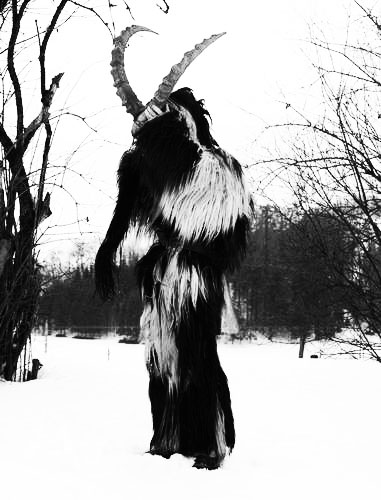
I find the the yetis/abominable snowmen from vintage Doctor Who rather reiminiscent of the folk costumes from over the seas in Charles Fréger’s Wilder Mann book.

Wilder Mann 008

Wilder Mann 004

In fact, many of the costumes in Wilder Mann could well be escapees (prototypes?) for the 1970s British BBC costume and creature effect department.

Wilder Mann 006

Some of my favourite photographs of the yetis are the behind the scenes ones.

They’re curiously disarming, especially considering how they once had a nation wanting to hide behind the sofa…

The abominable snowman-doctor who-A Year In The Country-2

…particularly this image with the yeti being groomed while “going over lines” with that gent from Gallifrey…


(File under: Trails and Influences / Year 3 Wanderings)

Intertwined wanderings around these parts:
Day #69/365: Charles Fréger’s Wilder Mann and rituals away from the shores of albion

Other behind-the-scenes views of fantastical fictions from back when:
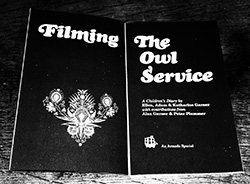
Day #202/365: Filming The Owl Service; Tomato Soap and Lonely Stones

Wanderings #17/52a: Not So Abounding Faceless Automatons And Not-Quite-So-Mainstream Crafting

Elsewhere in the ether:
Charles Fréger’s Wilder Mann in it’s natural habitat and at Dewi Lewis Publishing (often worth a look-see at what they’re sending out into the world I find).


Posted on — Leave a comment

The Restless Field Released: Artifact Report #18/52a

The CDs are now sold out but the album is available to download at our Bandcamp page, Amazon, The Tidal Store, 7digital etc and can be streamed on Spotify, Apple Music, Deezer, YouTube etc.

Dawn Edition £11.95. Night Edition £24.95.

The Restless Field-A Year In The Country-dawn and night editions opened-2
Released today 2nd May 2017.
Available via our Artifacts Shop, our Bandcamp Ether Victrola and at Norman Records.

Audiological contents created by Field Lines Cartographer, Vic Mars, Bare Bones, Assembled Minds, Grey Frequency, Endurance, Listening Center, Pulselovers, Sproatly Smith, Polypores, Depatterning, Time Attendant, A Year In The Country and David Colohan.

The Restless Field is a study of the land as a place of conflict and protest as well as beauty and escape; an exploration and acknowledgment of the history and possibility of protest, resistance and struggle in the landscape/rural areas, in contrast with sometimes more often referred to urban events.

It takes inspiration from flashpoints in history while also interweaving personal and societal myth, memory, the lost and hidden tales of the land.

References and starting points include: The British Miners Strike of 1984 and the Battle Of Orgreave. Gerrard Winstanley & the Diggers/True Levellers in the 17th century. The first battle of the English Civil War in 1642. The burying of The Rotherwas Ribbon. The Mass Tresspass of Kinder Scout in 1932. Graveney Marsh/the last battle fought on English soil. The Congested Districts Board/the 19th century land war in Ireland. The Battle Of The Beanfield in 1985.

Preview clips from the album at our Soundcloud Mark II Ether Victrola.

The Restless Field-Night Edition-booklet artwork-A Year In The Country

“…another exquisitely packaged affair… One of their best efforts so far… murky and ominous as befits the guiding thematic: places that are spectrally imprinted with past conflicts and struggles.” Simon Reynolds, author of Retromania and Energy Flash


Dawn Edition. Limited to 104 copies. £11.95.The Restless Field-A Year In The Country-dawn editions opened
Hand-finished white/black CDr album in textured recycled fold out sleeve with inserts and badge.
The Restless Field-Dawn Edition-front-A Year In The CountryThe Restless Field-Dawn Edition-opened-A Year In The Country The Restless Field-Dawn Edition-back-A Year In The CountryThe Restless Field-Dawn Edition-white black CD-A Year In The Country
Top of CD.                                                          Bottom of CD.

Further encasement details:
1) Custom printed using archival giclée pigment ink.
2) Includes 25mm/1″ badge, secured with removable glue on string bound tag.
3) Back of one insert hand numbered.


“…a beautifully curated and packaged collection of tracks… The Restless Field is something quite special, a concept album that shows its references but lets you do the thinking. We Are Cult highly recommend spending a little time in the long grass with it.”
Martin Ruddock at We Are Cult


Night Edition. Limited to 104 copies. £24.95.The Restless Field-A Year In The Country-night editions and CD-2
Hand-finished box-set contains: album on all black CDr, 12 page string bound booklet, 4 x badge pack, 1 x large badge, 2 x landscape format stickers.
The Restless Field-Night Edition-box front-A Year In The CountryThe Restless Field-Night Edition-opened box-A Year In The Country copyThe Restless Field-Night Edition-all items-A Year In The CountryThe Restless Field-Night Edition-booklet pages-A Year In The Country
The Restless Field-Night Edition-all black CD-A Year In The Country
Top of CD.                                                            Bottom of CD.

Further encasement details:
1) Booklet/cover art custom printed using archival giclée pigment ink.
2) Contained in a matchbox style sliding two-part rigid matt card box with cover print.
3) Fully black CDr (black on top, black on playable side).
4) Black string bound booklet: 12 pages (6 sides printed);
Printed on textured fine art cotton rag paper, heavy card and semi-transparent vellum.
Hand numbered on the reverse.
5) 4 x badge set, contained in a see-through polythene bag with a folded card header.
6) 1 x large badge.
7) 2 x vinyl style landscape format sticker.


The Restless Field-A Year In The Country-Night edition large badges-3

Further audiological exploration details:
1) Ghosts Of Blood & Iron – Field Lines Cartographer
2) Mortimer’s Cross – Vic Mars
3) [ fears ] avaunt! upon ‘the’ hill – Bare Bones
4) 3am M5 Field Raid – Assembled Minds
5) Agrarian Lament – Grey Frequency
6) Beneath The Cherry Trees – Endurance
7) Congested District – Listening Center
8) Badby 80 – Pulselovers
9) Ribbons – Sproatly Smith
10) Graveney Marsh – Polypores
11) Last Best West (circ. 1896) – Depatterning
12) Black Slab – Time Attendant
13) A Mutable History Under A Bright June Sky – A Year In The Country
14) Beyond Jack’s Gate – David Colohan

Preview clips from the album at our Soundcloud Mark II Ether Victrola.

The Restless Field-A Year In The Country-Night edition booklets

Artwork / encasment design by AYITC Ocular Signals Department.

Both editions hand-finished and custom printed using archival giclée pigment ink by
A Year In The Country.

Artifact #2a
Library Reference Numbers: A008TRFN / A008TRFD

The Restless Field-Night Edition-booklet artwork 3-A Year In The Country

Available via our Artifacts Shop, our Bandcamp Ether Victrola and at Norman Records.
Released today 2nd May 2017. 


(File Under: Encasments / Artifacts – Artifact #2a)


Posted on — Leave a comment

Homer Sykes Biddy Boys Ireland 1972 / Café Royal Books: Ether Signposts #18/52a

Biddy Boys Ireland 1972—Homer Sykes

British traditional folk rituals and costumes have been fairly well documented photographically/in books such as Sarah Hannant”s Mummers, Maypoles and Milkmaids, Henry Bourne’s Arcadia Britannica and Homer Sykes Once A Year, all of which I have written about around these parts previously.

However, I hadn’t seen all that much published photography that focused on Ireland…

Recently though I came across more work by Homer Sykes where he photographed folk customs; Biddy Boys Ireland 1972, published by Café Royal Books.

The book is a time capsule view of those involved in the customs and traditions surrounding Saint Brigid’s Day.

One description I found online of those traditions was:

“The Biddy Boys are a group of males who dress up in straw hats and women’s clothes and who go around houses carrying a straw doll or Brideog. They demand entrance to the house and entertain the occupants with music and song and then demand a reward.”

Biddy Boys Ireland 1972—Homer Sykes

Café Royal are an interesting publisher: founded in 2005, every week they publish a new nicely produced zine like booklet in an ongoing similar format, generally in a limited edition of 150 and monochrome, with each book containing work by one particular photographer.

The books broadly focus on aspects of change within the UK, often reflecting such change by including archival documentary photographs, many of which have not been published before.

Anyways, Homer Sykes’ Once A Year, which is subtitled Some Traditional British Customs, was something of an early point of reference for what became A Year In The Country and his Biddy Boys photographs are an extension, companion or counterpart to those in Once A Year

Biddy Boys Ireland 1972—Homer Sykes

As with his photographs in Once A Year, Homer Sykes’ Biddy Boys photographs are interesting in part because they seem to capture and reflect a place, time and history which though recognisable as being from reasonably recent history, they also seem to be from somewhere almost impossibly distant from our own times.

And to my eye the costumes in the photographs are genuinely quite odd.

Biddy Boys Ireland 1972—Homer Sykes Biddy Boys Ireland 1972—Homer Sykes

That may be partly because sometimes as time passes what was quite normal, in terms of local celebrations and traditions, can gain some kinds of layers of otherlyness… but even so, some of these images seem to have a genuinely unsettling air to them.

And again, I don’t know if it is the cultural associations that have come to be connected with some folk culture over time but some of the masks worn in the photographs seem as though they should belong in a darker strand of 1970s science fiction/fantasy television, saying Sapphire & Steel or Doctor Who when they tipped over more that way and/or folk horror from back when.

Biddy Boys Ireland 1972—Homer Sykes

While the photograph above seems as though Devo/some new wave band had somehow crossed beams and time paths with local folk customs (curiously, looking it up Devo did actually form around a similar time as the photographs were taken).

Anyways, Biddy Boys is out of print, as is often the way with the Café Royal editions and it does not seem to have been added to their Archive section yet but you can still view a selection of images from it via the links below at their CRB: Notes blog which accompanies their main site:

Destinations and Directions:
Café Royal Books: Notes – Homer Sykes Biddy Boys Ireland 1972
Biddy Boys photograph carousel starts here.
Café Royal Books: Main site

PS At the time of writing Café Royal have sold out of copies but Homer Sykes still has some signed copies available from himself. You can contact him via his website and at his Photoshelter site.


(File post under: Other Pathway Pointers And Markers)

Posted on — Leave a comment

Keith Seatman – all hold hands and off we go / boxes with rhythms in: Audio Visual Transmission Guide #17/52a

Keith Seatman- all hold hands and off we goSometimes A Year In The Country fellow traveller Keith Seatman’s new album appeared recently.

Its title is all hold hands and off we go.

(Which yes, should be in lower case and it being so I think suits the album in some way that I can’t quite fully define but which is possibly connected to a sense of childlike play or innocence that the title and some of the music implies.)

How to describe the album?

Well, it is a curious and intriguing dreamscape of a record. It makes me think of floating off into odd and surreal landscapes.

Carl Griffin in Electronic Sound magazine used the phrase/word “haunted fever dreams” and “woozy” when describing the album, which capture and reflect a sense of it conjuring a world and atmosphere not quite awake, of travelling in a reality that is half-dream, half-awake, elsewhere…

Keith Seatman-all hold hands and off we go-2

In say older science fiction book covers, comics and films and sometimes in previous decades science related factual television programmes there would from time to time be blank virtual landscapes demarcated by a grid of lines that stretched off into the horizon.

Well, if you imagine something like that but which somehow or other was actually also a representation of a quietly parallel British landscape…  somewhere an organ that was used on a lost library music album appears… fragmented wisps of memory keep appearing here and there… and you put such things through a filter of odd synthesisers that nobody thought still existed anymore and the exploring spirit of the Radiophonic workshop…

Well, that’s what this album sounds and looks like in my mind.

A particular standout on the album for myself is boxes with rhythms in, with vocals and lyrics by Douglas E. Powell.

When I first listened to the track and heard the lyrics, I initially laughed out loud as they seemed to sum up something about humans, our drives, natures and relationship with culture:

“I’ve been messaging to send more oxygen
And all your sending is
Boxes with rhythms in”

Keith Seatman-all hold hands and off we goThis is a Space Oddity for contemporary times. In a very few words set to a buzzing, whooshing, flittering in and out synth background it conjures up a whole world and scenario of its own particular Major Tom.

However, whereas Space Oddity seemed quite grounded in a recognisable reality, here, as with the album as a whole, the atmosphere it creates is something more otherly, one that while connected to our own reality also runs along its own separate path.

And although this is quite experimental, far from mainstream music, boxes with rhythms in has an underlying pop sensibility, accessibility and an ear for a catchy refrain/chorus.

(In fact, returning to earlier mentioned quietly parallel British worlds and landscapes, in some other parallel existence, of a Thursday night it would not be all that much of a surprise to hear on BBC1: “And tonight on Top Of The Pops with their new single, which has gone straight into the Top 20, we have Keith Seatman with Douglas E. Powell playing boxes with rhythms in.” Cue slightly awkward dancing and possibly a balloon drop. In the history of pop in that parallel world it could well be filed alongside Laurie Anderson’s O Superman in terms of experimental work with an intriguing pop edge.)

The mixture of experiment and accessibility is something that runs throughout the album – it’s quite “out there” at points but also very listenable to.

Carl Griffin also wrote in Electronic Sound Magazine about the album being “uniquely psychedelic”, which is quite apt.

Keith Seatman-all hold hands and off we go-4However, as with me mentioning the Radiophonic Workshop, the sense of psychedelic is more an expression of its spirit and intentions, rather than being a replication of a previous era’s sound or ways of going about things. It is psychedelic in the sense of being a portal for exploration, one accompanied by entering into a dreamlike state via the transportive aspects of music rather than lysergic acid.

That dreamlike state is given quite overt expression on with salt and candy, where a sample of a child’s rhyme loops repeatedly, disappearing and reappearing in amongst a synthesised soundscape that manages to be unsettling and playful, distant and familiar, warm and comforting and seemingly reflecting and creating somewhere far removed from normality.

The mixing and seamlessly combining and bringing together of atmospheres that you would not normally connect with one another is probably one of the defining aspects of the album; this is an unsettling, playful, warm, comforting, distant, familiar, experimental, accessible record.

(File Post Under: Cathode Ray & Cinematic Explorations, Radiowave Resonations & Audiological Investigations)

ATV Guide: all hold hands and off we go/ boxes with rhythms in


Posted on — Leave a comment

Not So Abounding Faceless Automatons And Not-Quite-So-Mainstream Crafting: Wanderings #17/52a

Doctor Who-Spearhead from Space-A Year In The Country

Now, in my head 1970s/early 1980s British television is awash with faceless creatures and automatons, come to carry out their wickedness and fill dreams full of night terrors.

But funnily enough when I recently(ish) looked up such things, there weren’t all that many I could find.

Actually it came down to a creature/character in Sapphire & Steel and the “still terrifying all these years later” shop dummies come to life in Doctor Who (which strictly speaking aren’t faceless but in my head they are).

I suppose that as an effect it was cheap and relatively easy to do but there is still something particularly unnerving about such featureless faces.

They crop up from time-to-time around these parts and I though I would gather a few of them together.

So, we have the aforementioned bowler hat wearing character from Sapphire & Steel…

Sapphire and Steel-A Year In The Country-3Day 25-Christopher Priest Dreams Of Wessex-A Year In The Country 5

And something of a classic and possibly one of my all time favourite book covers: the paperback cover to the virtual reality prescient pastoral-esque science fiction of Christopher Priest’s A Dream Of Wessex…

The faceless corn husk folk art-like figures from around these parts…

Corn Husk Crafts-Facklam Phibbs-A Year In The Country-1 Corn Husk Crafts-Facklam Phibbs-A Year In The Country-4 Corn Husk Crafts-Facklam Phibbs-A Year In The Country-3

Which set me a-wandering…

Corn Husk Dolly And Crafts books-A Year In The Country-4

There seem to have been a fair few books along such lines published, often from back when. And maybe it’s just me or a layering/other connections that have happened and gathered over time  but they can seem to have an air of quiet unsettledness or not-quite-so-mainstream pastoralness to them…


(File under: Trails and Influences / Year 3 Wanderings)

Intertwined wanderings around these parts:
Day #26/365. Christopher Priest – A Dream of Wessex and dreams of the twentieth century

Day #87/365: Faded foundlings and Tender Vessels…

Day #284/365: Sapphire and Steel; a haunting by the haunting and a denial of tales of stopping the waves of history…

Elsewhere in the ether:
Contemporary not-quite-so mainstream pastoralness: Tender Vessels #1. Tender Vessels #2.


Posted on — Leave a comment

The Restless Field at Sunrise Ocean Bender and John Coulthart’s Feuilleton: Artifact Report #17/52a

Sunrise Ocean Bender-background-2Sunrise Ocean Bender-logo-250Several tracks from The Restless Field were featured on the Sunrise Ocean Bender radio show, broadcast at WRIR FM and also available online.

The radio show is an offshoot/companion off the record label with the same name, which releases records that wander from “psych rock to psych pop, prog to space rock via kosmische… detours”…

Sunrise Ocean Bender at Mixcloud. The podcast is here. WRIR’s player is here.

The album is also featured amongst the wanderings of John Coulthart’s Feuilleton, alongside/interconnected with considerations of the hidden reverse explorations of Coil:

John-Coulthart-Feuilleton-A-Year-In-The-Country-stroke“… by 2000 Coil’s music had moved away from the urban orientation of the 1980s to a pastoral mysticism that also had a political impetus: “The forest is a college / Each tree a university”. Late Coil also involved the construction of fields of sound, the products of fields of another kind: electrical and (possibly) psychical. I can’t speak for the latter quality but there’s plenty of the former in this collection of restless fields.”

Feuilleton-John Coulthart-Fractures-A Year In The Country-1px stroke

Thanks to Kevin and John. Much appreciated.

The Restless Field-Dawn Edition-front-A Year In The CountryThe Restless Field is a study of the land as a place of conflict and protest as well as beauty and escape; an exploration and acknowledgment of the history and possibility of protest, resistance and struggle in the landscape/rural areas, in contrast with sometimes more often referred to urban events.

Audiological contents created by Field Lines Cartographer, Vic Mars, Bare Bones, Assembled Minds, Grey Frequency, Endurance, Listening Center, Pulselovers, Sproatly Smith, Polypores, Depatterning, Time Attendant, A Year In The Country and David Colohan.

You can preview clips from the album at our Soundcloud Mark II Ether Victrola and listen to a  selection of tracks at our Bandcamp Ether Victrola.

Further details on the album can be found here.


(File Post Under: Encasments / Artifacts – Artifact #2a)


Posted on — Leave a comment

Et Mourir De Plaisir, Arthouse Transgressions And Folk Horror Forebears: Ether Signposts #17/52a

Et Mourir De Plaisir-Blood And Roses-1960-Roger Vadim-Il Sangue e la Rosa posterVia one small still in an old-ish film book I recently came across Roger Vadim’s 1960 film Et Mourir De Plaisir (or Blood And Roses to give it its American title).

This is nominally, possibly a vampire movie (I say possibly as there is some debate within the film about the existence of such things ) but it is one that while working with some related themes also transcends that genre and also possibly the films of its time.

In some ways it is a quite straightforward, mainstream-esque, almost period Hammer Horror-esque horror film…

…but there is something else within the film, some other underlying strands of intelligence, exploration and emotional resonance (the latter particularly in terms of its ending).

Et Mourir De Plaisir-Blood And Roses-1960-Roger Vadim-6

It is a beautiful looking and sumptuous film, with its rich vivid Technicolor palette giving it an almost surreal or hyperreal atmosphere and air, as is often the way with films which used that technique.

Et Mourir De Plaisir-Blood And Roses-1960-Roger Vadim

For a large duration of the film it travels along fairly conventional cinematic paths but then…

…well, then there is the famous (or infamous) dream sequence, which even to eyes used to modern less censored work left my mind and sensibilities reeling for a number of days. I can only imagine how thoroughly shocking it must have seemed at the time.

Et Mourir De Plaisir-Blood And Roses-1960-Roger Vadim-4

It is a woozily surreal, transgressive sequence that puts me in mind of Jean Cocteaus’s work but as reimagined by a strange mixture of David Lynch and a B-Movie borderline experimental exploitation film that you might see in the small hours on the archival film British television channel Talking Pictures TV.

Which, now that I have typed it, seems like an apt summing up of Et Mourir De Plaisir; it is a curious and intriguing mixture of mainstream, transgressive, almost exploitation and arthouse cinema, with the tropes and themes of all such areas of work contained in its relatively brief running time.

For a long time Et Mourir De Plaisir  was a film that was only available in variously edited, censored, cropped, badly restored, dubbed etc versions and apparently was only really known in terms of its visual glories via cinematic legend, stills in film books etc.

Et Mourir De Plaisir-Blood And Roses-1960-Roger Vadim-soundtrack 1

In recent years there has been an official DVD release of a largely restored version available, although that was a limited edition and seems to have sold out. There is a legitimately downloadable version of the film doing the rounds under the name Blood And Roses but I think that is the American re-edited and dubbed version.

Which I am actually mildly curious about as apparently the English language version was shot at the same time as the French version and I am curious to see how it was reinterpreted and apparently more obviously signposted in terms of plot and symbolism when compared to the French version.

Looking back there seemed to be something in the water in relation to horror films from around the time Et Mourir De Plaisir was made, something that caused the creation and coming about of rather classy, exploratory and nuanced work.

Et Mourir De Plaisir-Blood And Roses-1960-Roger Vadim-5

Along which lines I would include Mario Bava’s Black Sunday from 1960, starring Barbara Steele and Jack Clayton’s The Innocents from 1961.

Their tone and expression varies from the classic black and white gothic and grotesque horror of Black Sunday to the almost decadent aristocratic Technicolor sensuality of Et Mourir De Plaisir  via the repressed supernatural hauntings amongst the reeds and willows of the British countryside in The Innocents.

These films seem to be a small grouping of horror and/or supernatural films from that period which in some way make me think of them as being forebears or part of a lineage that would one day become or bring about what is known as folk horror.

All these films are set rurally but it is not this which makes me gather them together in this way (and what has come to be known as folk horror does not have to be exclusively set rurally)… it is something more subtle and underlying, possibly something in their atmosphere, their spirit and a sense that they are tellings of the stories of unsettled landscapes…

Hmmm. Something to think about and explore further I think…

Et Mourir De Plaisir-Blood And Roses-1960-Roger Vadim-US press bookThe trailer below makes me smile as with its period almost 1960s Batman-esque cartoon style text, “Plunging You Into The Midnight Zone… Beyond Reason! Beyond Belief!” tag lines, “Starring two alluring continental beauties” voiceover and accompanying US promotional material makes the film seem much nearer to being purely what you might think of as having been played at a drive-in cinema back when… as I mention above it does have elements of such work but it is not by any means just that…

(File post under: Other Pathway Pointers And Markers)

Directions and Destinations: Blood And Roses Trailer


Posted on — Leave a comment

The Living And The Dead: Audio Visual Transmission Guide #16/52a

The Living And The Dead-BBC series

The BBC’s series The Living And The Dead seemed to be one of the more overt explorations of some of the themes of folk horror and the spectres and patterns beneath the land that I have seen in mainstream broadcast drama in recent times.

It also had an underlying sense of the schisming, fracturing, crossing over and fragmenting of time, in a manner that brought to mind both Sapphire & Steel and some more hauntological concerns.

This was not all that unsurprising when I read that The Living And The Dead was co-created by Life On Mars and Ashes To Ashes writers/co-creator Ashley Pharaoh, both of which series were almost like a mainstream take on hauntology and which dealt with travelling and possible portals through the fabric of time.

In a further interconnected Mathew Graham also wrote the script for the Radio 4 adaptation of Nigel Kneale’s The Stone Tape, which as part of its subject matter deals with the layering, resonance and travelling through time of past events.

The plot/premise of the series? Below is some of the accompanying text from the DVD release:

“…set in rural England in the 1890s… Nathan Appleby, a pioneering psychologist, inherits Shepzoy House in a beautiful but isolated Somerset valley… he decides to make a new life for himself and his… wife, Charlotte… soon the idyll is compromised by strange and disturbing occurrences that all seem to inexplicably swirl around the increasingly troubled Nathan. Is he being haunted? Why? And by whom?”

Although a treat for the eyes in many ways, at times I found The Living And The Dead difficult in that it lacked a certain lived in texture which seems prevalent in British science fiction, fantasy and period drama television.

This coupled with the self-contained mystery-to-be-solved nature of each episode (after about the second or third of which I was thinking “Well, I expect I’d be planning on leaving the village about now”) threw me off course with the series somewhat when I first watched it but I thought it was an interesting and intriguing take on its themes in the way that it explored preternatural events and the clash and interaction between the old ways and the new, folk/supernatural beliefs and modern scientific thought within a rural setting.

John Benjamin Stone-A Record of England-folk customs and traditions-A Year In The Country-5

Some of the imagery used in the series put me in mind of Benjamin Stone’s photographs of British folkloric customs, which I suppose is not that surprising considering it was set around a similar time as when he was travelling the country photographing such things.

Ossian Brown-haunted air-2

While some of the folkloric hooded figures from the series made me think of the found photographs of halloween in previous eras that Ossian Brown collected in his book The Haunted Air, particularly in spirit (pardon my unintended pun) if not precisely in terms of aesthetics.

The Living And The Dead-BBC series-2

One aspect of the show which was of particular interest was the music, which was by The Insects and in the first episode the traditional folk song was sung in a rare modern appearance by former Cocteau Twin member Elizabeth Fraser. Something of an additional treat indeed.

Stan Brakhage-Mothlight-1963

Also, the introductory credits featured excerpts from Stan Brakhage’s experimental film from 1963 Mothlight, which was in a previous AVT Guide and in which layers of natural detritus and insects were filmed without the use of a camera but rather he “…pressed them between two strips of 16mm splicing tape. The resulting assemblage was then contact printed at a lab to allow projection in a cinema. The objects chosen were required to be thin and translucent, to permit the passage of light.”

In a further intertwining and interconnecting with rurally set fantastical worlds, as I have said previously around these parts, Mothlight was a direct influence on a dream sequence in The Duke Of Burgundy…

The Living And The Dead-BBC series-5

Elsewhere Elizabeth Fraser also sings a brief excerpt from the traditional folk song The Lover’s Song, which is a variant of the night-visiting ballad The Grey Cock and which involves a young woman who has passed from the mortal realm visiting her lover.

When she is asked where here sheets and maids are, she replies:

“The clay it is my bed, my dearest dear,” she said,
“The shroud is my white Holland sheet.
And the worms and creeping things are my servants, dear,” she said,
“That wait upon me whilst I am asleep.”

It could be seen as belonging to a strand of folk music that could well be considered folk horror but that was created before that phrase existed

(The filing of this song alongside Forest’s Graveyard, Mr Fox and Comus may well be appropriate, although they belong to 1970s folk explorations rather than traditional folk.)

The soundtrack also features a version of A Lyke Wake Dirge, as once taken into the pop charts by Steeleye Span, which according to Wikipedia is:

“…a traditional English song that tells of the soul’s travel, and the hazards it faces, on its way from earth to purgatory. Though the song is from the Christian era and features references to Christianity much of the symbolism is thought to be of heathen origin.”

The Living And The Dead-BBC series-4

So nothing of folk horror-esque concern there then.

The version in The Living And The Dead is not so much Steeleye Span-esque but rather if you imagine a contemporary take on the fringes of mid-80s goth and a touch of Nick Cave in years gone by you may be heading in the right direction.

And finally on the soundtrack is a version of traditional harvest supper folk song The Brave Ploughboy.

The version sung by The Watersons features these lyrics:

“So early in the morning to harrow, plough, and sow
And with a gentle cast, me boys, we’ll give the corn a throw
Which makes the valleys thick to stand
With corn to fill the reaper’s hand
All this, you well may understand, comes from the ploughing boy.”

The Living And The Dead-BBC series-3

Well, I rest my case in terms of pre folk horror folk horror-esque folk music in terms of the soundtracks themes and intertwinings.

(File Under: Cathode Ray & Cinematic Explorations, Radiowave Resonations & Audiological Investigations)

ATV Guide:
The Living And The Dead trailer
A Lyke Wake Dirge
The Reaper’s Ghost
Soundtrack:
(Although it does not seem to be widely available and I don’t think it is available on a physical format, The Insects soundtrack to the series is available to download at their site.)


Posted on — Leave a comment

A Lionheart-ess In Amber / Amongst The Biscuit Crumbs: Wanderings #16/52a

16 of 52-Kate Bush-first five albums-A Year In The Country

Although I still tend to have a look-see at Kate Bush’s ongoing work, I think for me my main interest is caught in the amber of her first five albums and the surround visual work/imagery.

From The Kick Inside to The Hounds Of Love, they seem to stand unparalleled and on their own and even after all these years I often find myself thinking when I listen to them “Blimey…” (or should that be “wow”) “…this is impressive stuff.”

As I’ve said around these parts before, she seemed to tap into something ancient, some form of underlying archetypes of the British soul, tales, history and land… and it’s hard to quite get your head around those albums having been created by somebody who was relatively so young, they seem like the world of a… well, not much older but maybe timeless soul.

It’s curious as well when you look back at the early more traditional pop style promotion of those albums and their singles: when she was say performing in the prosaic surrounds of a lunch time light entertainment program in the later 1970s she was part of it all but also a space unto herself.

Kate Bush-Mojo Magazine-2016-United Biscuit Network radio-A Year In The Country

And talking of prosaic settings…

When she recently(ish) appeared on the cover of Mojo magazine, the interview and article was carried out by Jim Irvin, who apparently had also done her first ever radio interview back in 1978.

That interview was for the United Biscuits Network – basically radio broadcasting for the workers in, well, biscuit factories.

The very idea of which seems to conjure up a very far away, distant history.


(File under: Trails and Influences / Year 3 Wanderings)

Intertwined wanderings around these parts:

Day #71/365: Kate Bush, Under The Ivy and secret gardens…

Trails of bread (biscuit?) crumbs: Day #108/365: Let me grab your soul away – Kate Bush and darkly cinematic flickerings through the meadows, moors and mazes…

Week #3/52: I Still Dream Of Orgonon; A Book Of Dreams, the rarity of argent chains and moments of discovery…

Considerations of ancient souls: Week #36/52: Gone To Earth – “What A Queen Of Fools You Be”, Something Of A Return Wandering And A Landscape Set Free

Elsewhere in the ether:
Biscuits and airwaves.


Posted on — Leave a comment

Vashti Bunyan: From Here To Before and Whispering Fairy Stories Until They Are Real: Ether Signposts #16/52a

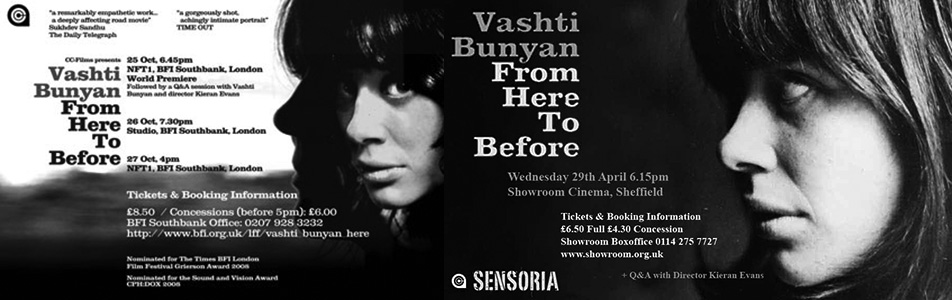
Vashti Bunyan-From Here To Before-Kieran Evans-2008 film-NFT BFI Sensoria Showroom Sheffield

When I was planning and researching in the run up to starting A Year In The Country and during its first year in 2014 I tried in vain to watch Vashti Bunyan: From Here To Before, the 2008 documentary about her fabled horse drawn trip across the country at the end of the 1960s and turn of the decade, the album she made at the time.

Other films and documentaries made by its director Kieran Evans, including the Saint Etienne collaboration Finisterre, edgelands exploration/Karl Hyde collaboration The Outer Edges and dramatic film Kelly + Victor, have all had fairly widespread releases in the cinema and/or on DVD.

Vashti Bunyan-From Here To Before-Kieran Evans-2008 film

However, From Here To Before although covered in the press to a certain extent seemed to have a fairly limited cinematic release and then, apart from a few clips that can be viewed online, it seems to have more or less disappeared from view and as far as I know has never had a commercial home release.

(“Vashti Bunyan’s tale of… exile and rediscovery is already one of this century’s most enduring musical legends. Kieran Evans’ gorgeously shot, achingly intimate portrait retraces Bunyan’s infamous voyage by gypsy caravan, from Inner London to the Outer Hebrides, during which she wrote her stunning… 1970 album ‘Just Another Diamond Day’… the film explores a very slim slice of Bunyan’s life in loving detail, pausing only to wonder at the enduring charm and mystery of this prodigious, prodigal talent.” From the Time Out review at the time of the film’s release.)

Anyways recently, almost purely by accident as I wasn’t looking for it, I stumbled upon the film and was able to watch it.

If you should not know about Vashti Bunyan and the subject matter of the documentary, below is a brief précis of the background to it:

Born in 1945, in the mid 1960s Vashti Bunyan worked with Rollings Stones manager Andrew Loog Oldham, released two singles which did not sell in great numbers and recorded further songs for Oldham’s Immediate records which remained unreleased for many years.

Vashti Bunyan-From Here To Before-Kieran Evans-2008 film-3

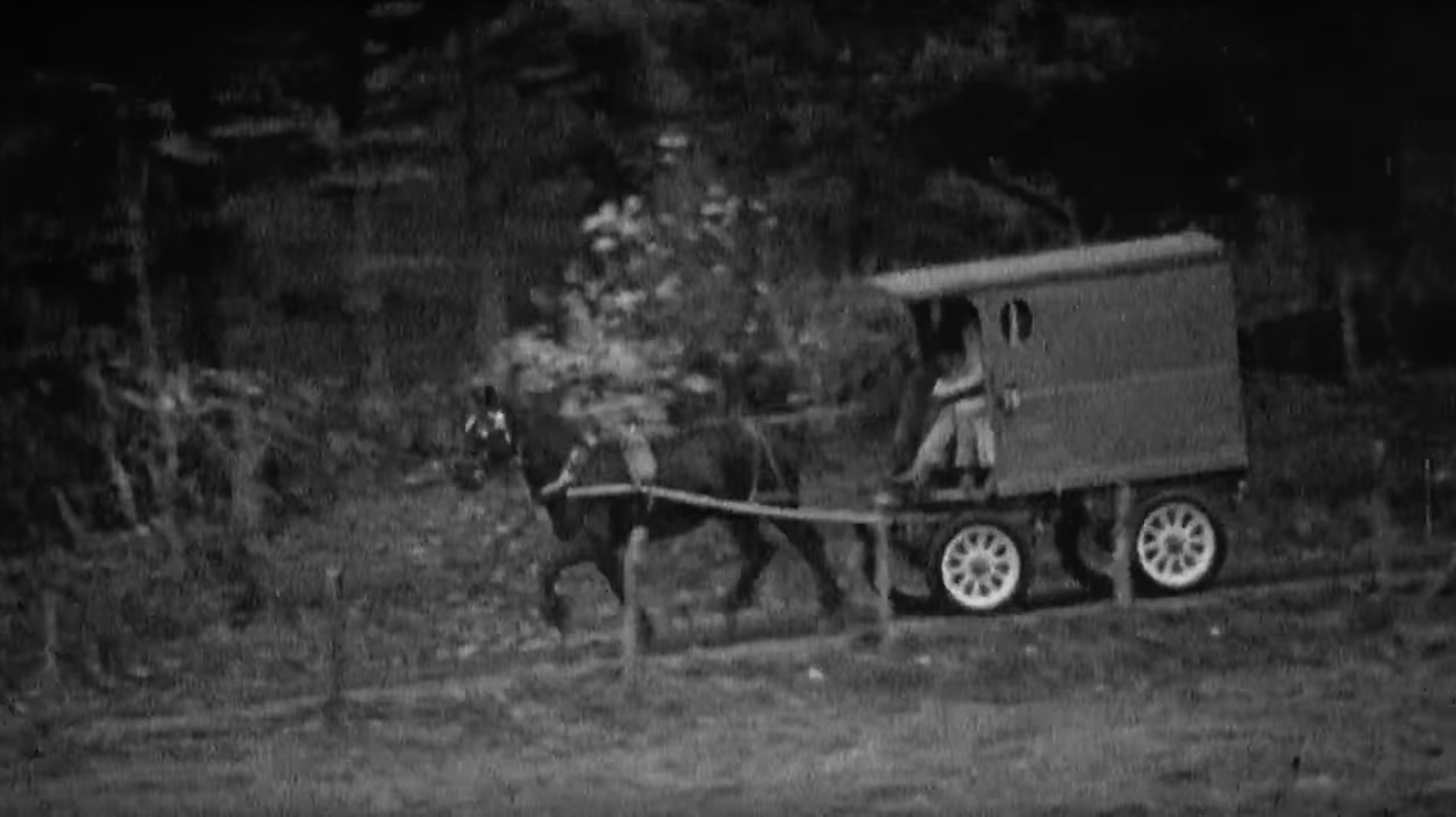
After this she decided to travel with her boyfriend Robert Lewis by horse and cart to the Hebridean Islands to join a commune planned by a friend, fellow singer/songwriter Donovan. During the trip she began writing the songs that eventually became her first album, Just Another Diamond Day, released in 1970.

The album sold very few copies and Vashti Bunyan, discouraged, abandoned her musical career.

By 2000, her album had acquired a cult following and it was re-released, with her work and story becoming inspirational to a new generation of musicians who were loosely connected under labels including freak folk, including Devendra Banhart and Joanna Newsom.

Vashti Bunyan-From Here To Before-Kieran Evans-2008 film-8

After this re-release and a gap of more than 30 years Vashti Bunyan began recording again, collaborated with contemporary musicians and appeared live. She released the album Lookaftering in 2005 and in 2014 what she said was to be her final album Heartleap (both on Fatcat).

Vashti Bunyan-From Here To Before-Kieran Evans-2008 film-10

Vashti Bunyan: From Here To Before accompanies her as she retraces the horse drawn journey she made with Robert Lewis and sets it against the backdrop of her first high-profile London concert and the associated rehearsals.

The film serves as an entrancing exploration of a youthful journey of exploration and searching and also the associated unreality.

Vashti and her partner appeared to want to step aside from mainstream society and the modern world’s ways of doing things and to seek out some kind of rural, previous era way of of life.

Watching the documentary it was as though they were searching for some pure, unobtainable dream, an escape, refuge and respite from the wider world; to quote Rob Young, they seemed to be undertaking a form of “imaginative time travel”, a wish to get back to the land and simpler ways of life, which seems to have been fairly widespread at the time within certain often folk leaning areas of culture and music.

Vashti Bunyan-From Here To Before-Kieran Evans-2008 film-7

Just Another Diamond Day has become a totem and reflection of such yearnings due in part to the almost dreamlike bucolic subject matter of its songs, its gentle farside of folk delivery and vocals, the almost fantasy like rural atmosphere conjured by the cover image of Vashti Bunyan in period rural clothing and headscarf outside her  cottage where she is accompanied by painted animals and the story of her journey.

However, as she says in the documentary “The songs represented the dream. They didn’t represent reality” and she also says “I wasn’t living in the… beautiful hills, I was living in my head.”

Alongside recording Vashti Bunyan’s thoughts and memories of her journey, life and work as she revisits places from that journey or prepares for a live appearance, contemporary interviews make up part of the film.

Vashti Bunyan-From Here To Before-Kieran Evans-2008 film-11 Vashti Bunyan-From Here To Before-Kieran Evans-2008 film-9

These include amongst others Andrew Loog Oldham, her 1960s producer Joe Boyd, Adem Ihan who is one of the musicians rehearsing for her return to the stage and artist John James who was a companion for parts of the journey.

Vashti Bunyan-From Here To Before-Kieran Evans-2008 film-4

The film also includes archival footage and photographs of Vashti and her partner in their folkloric, late 1960s-esque, gypsy like garb that they wore at the time, clothing that at times is almost medieval and which accompanied by images of them travelling in their horse and cart shows the degree to which they lived out their dreams and attempted to remake their lives in the image of those dreams.

John James comments on how the “leaders” of the journey (by which I assume he means Vashti Bunyan and Robert Lewis) took the dedication, single-mindedness and purity of their quest very seriously with it gaining an almost religious aspect or puritanical zeal.

Vashti Bunyan comments on this saying how she would look disfavourably on people who say went off to get a shop bought chocolate bar and how she wanted everything to be as natural or what she thought of as natural, handmade or created by themselves as possible.

From Here To Before also effectively becomes a document of the landscape as it records her return to locations of her journey and a line could be drawn from its more rural views and capturing of their beauty and Kieran Evans later film The Outer Edges exploration of edgeland landscapes.

Vashti Bunyan-From Here To Before-Kieran Evans-2008 film-2

The realities of Vashti Bunyan and her fellow travellers’ lives during their journey and after that are shown and discussed in the film were far from an idyll as much of it was physically and materially hard, reflecting the practicalities of long distance horse and cart travel in the twentieth century, particularly when undertaken with little financial cushioning, as was so in their case.

Vashti Bunyan-From Here To Before-Kieran Evans-2008 film-12b

The refuge at the end of their horse and cart journey was a cottage in the Outer Hebrides which they eventually settled in for a while and which had a mud floor and a leaky thatched roof (although in From Here To Before Vashti Bunyan remembers being very appreciative after their horse and cart journey of the fact that it had a roof, whatever its condition.)

Vashti Bunyan-From Here To Before-Kieran Evans-2008 film-6

The dream did not last, with her saying in the film that they felt they were not wanted there and in contrast to her interests in the old ways of doing things the local people, particularly the young, were embracing modern ways and the coming of electricity, with the timing of her journey meaning that they arrived just as the old way of life was noticeably changing.

Although not made overly implicit in the film, it seemed that such things caused her to return with her partner to London.

This decision was also due to practical considerations about childbirth when she became pregnant and realising that no matter how beautiful the place and landscape, she actually wanted to be around friends and family (although she talks in the film about an ongoing journey and searching; they later moved variously to The Incredible String Band’s Glen Row cottages, then Ireland and also back to Scotland but did not return to the cottage).

Vashti Bunyan’s music of the time and her journey have created an iconic story, set of images and songs; a modern day fable or almost fairytale.

From Here To Before was made over four years around the mid to later 2000s, when interest in Vashti Bunyan’s work was flowering and she began to express herself again publicly via music and live performance and is a respectful observation of this period in her life and her earlier stories.

Vashti Bunyan-From Here To Before-Kieran Evans-2008 film-5

It is a reflection and exploration of this fable like nature but it also captures the realities and hardships of their journey and subsequent home but without shattering the allure or spell of that dream.

(File under: Other Pathway Pointers And Markers)

Directions and Destinations:
Extract from the film.
Extract from the film #2: Whisper Fairy Stories ‘Til They’re Real


Posted on — Leave a comment

The Restless Field at Flatland Frequencies, Syndae and whisperandhollerin: Artifact Report #16/52a

The Restless Field-whisperandhollerin review-Syndae podcast-Flatland Frequencies radio show-A Year In The Country

whisperandhollerin logo-A Year In The Country

There is fine review and exploration of the themes of The Restless Field at whisperinandhollerin:

“… the music speaks volumes with a brooding, eerie quality that is more menacing than celebratory. As such, it is more like a score for a low budget horror movie or as a soundtrack to a radical makeover of BBC’s Country File…”
Martin Raybould at whisperandhollerin

Thanks to Martin and Tim, much appreciated.

Flatland Frequencies banner-A Year In The Country

Plus Depatterning’s Last Best West (circ. 1896) can be found at the Flatland Frequencies radio show.

The show traces “…electronic music from its roots to present day… Playing the finest in electronic explorations, from early electroacoustic and musique concréte, to new and upcoming ambient and drone.”

Well worth a wander to and an hour or two of listening time.

Visit and listen to the episode of the show at Mixcloud. The show was originally broadcast on Future FM, which you can visit here.

Thanks to Luke Sanger, also much appreciated.

Syndae logo-A Year In The Country

And Assembled Minds 3am M5 Field Raid was included at episode 382 of the Syndae podcast.

Thanks to Stefan for the ongoing support in amongst his explorations of a broad spectrum of electronic music, which in this episode also takes in Chris Gate (In and Out), Erik Seifert (Aotearoa), Cialyn (Off Season), FUS. (Physical Feeling) and Mythos (Jules Vernes. Around the World in 80 Minutes).

Tip of the hat to all involved.

Ta!


(File Under: Encasments / Artifacts – Artifact #2a)