Day #260/365: A return to OST… from teacake time to sacred relics…
 Trails and Influences: Electronic Ether. Case #33/52.
Over the days, weeks and months, here and there I’ve mentioned Jonny Trunk’s OST radio show…
However, I think it’s deserving of a day or so all of its own.
In a brief nutshell, The OST Show is one of the places where Mr Trunk explores his appreciation of and penchant for the often overlooked nuggets of gold and sometimes tarnished with neglect gems of audiological culture, concentrating on soundtracks of celluloid and cathrode ray origin, library music and other such interrelated music and sonic thingymabobs.
One of the things that makes it particularly fine are the guests that he has along, who bring with them their own findings, collections and stories, all of which are added into an eclectically flavoured musical stew.
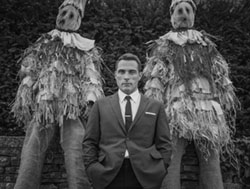
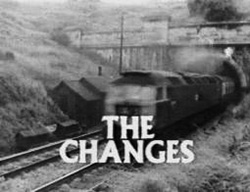
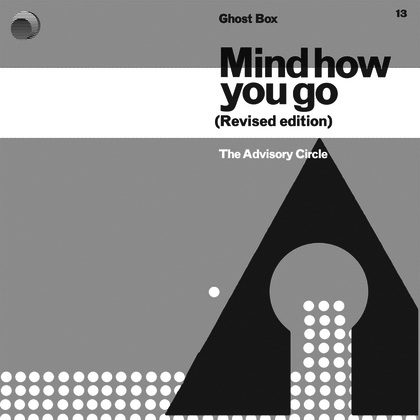 So, over the years, guests have included Jon Brooks (The Advisory Circle… and as has been mentioned around these parts before, accompanied by a good deal of knitting and “doing” the actions to a mining safety song by Max Bygraves… yes indeed), sometime singular swordsman Andrew Weatherall, monsterist illustrator Pete Fowler, Jim Jupp and Julian House of Ghost Box Records, Radiophonic explorer Paddy “The Changes” Kingsland, more Radiophonic exploring courtesy of David “Seasons” Cain, teacake time with Mr Ian Hodgson of Moon Wiring Club, some excellent delving and wandering courtesy of Broadcast…
And that’s before we come to one off themed specials which have included shows on John Barry, Eno Moriconne, Bruton Library music, Kenneth Anger, Ms Delia Derbyshire, BBC Records… well, quite frankly a whole smorgasboard of spinning delights.
Fine stuff.
…oh and one of my favourites, where Ms Fenella Fielding slinks and sveltes by. I still find myself chuckling when she compares her “attributes” to Barbara Windsors and Mr Robin Fog has cause to mention that it’s suddenly gotten very warm in the studio (cue steaming up of glasses and tugging of collar).
 Along which comedic lines, the show is ably assisted and sometimes hosted by the just aforementioned Mr Fog. I am again chuckling out loud as I think of the plays on words that he sends forth into the world via his co-organising of the weekly competitions, wherein the general public will pick up their telephonic devices in order to try their arm at having the postie deliver them a handful of goodies, via some punning and playing on film names, characters and actors.
One of the highlights of the show indeed. I won’t spoil first time hearing of said puns other than to say they are often worth the price of admission on their own.
 So, if you should have a spare hour or two and would appreciate a fair few “Oh, what’s that, that’s nice” accompanied by a sprinkling of “Ah, that’s what that is” moments, then a quick pop along to Mr Trunk’s weekly transmissions could well be just the ticket.
Peruse tracklists of past shows at Trunk Radio. Visit an archivic sprinkling of said shows at Resonance FM here.
A few interconnections from around these parts: Day #33/365: Broadcast. Day #52/365: Jon Brooks. Day #142/365: Robin The Fog. Day #125/365: The Seasons.
And while I’m on the subject of Mr Trunk’s endeavours, I feel it somewhat necessary to mention this… I shall pass you over to Mr Stewart Lee for a sentence or two…
“Jonny Trunk has taken the astonishingly thorough archive of Smallfilms… and presented it as one would a collection of artefacts in an exhibition detailing some much-admired 20th century art movement, like Fluxus or Dada. The Smallfilms’ partnership’s sacred relics repay his trust, and our repeated viewings.”
A tome well worth a viewing and considering of. 320 pages of a saggy old cloth cat and his companions. The Art of Smallfilms here.
PS More than a touch of glorious hauntological curmudgeonliness courtesy of Mr Lee here.
Day #259/365: Artwork variations…

One of an occasional series of experiments and variations on A Year In The Country artwork.
Day #258/365: Image W/3

File under:
A Year In The Country: Work
View more visual work from the A Year In The Country project in the Gallery.
Day #257/365: Further coruscations; Lutine, White Flowers and textural voyages…
 File under: Trails and Influences: Recent Explorations. Case #33/52.
Well, I’ve been quietly looking forward to the arrival and completion of this particular project for a fair while now…
…and then one day it fell through my (electronic) letterbox, fully formed and a thing of beauty.
I’m listening to it as I type and this is thoroughly transportative music.
Rooted in folk music but it is work all of its own.
Which is something I must emphasise before I begin the following paragraphs: Lutine don’t sound like anybody but themselves but…
How to describe this music? Well a few pointers may give you an idea…
 If you should take sprinklings, seedings and pathways to and from the following then you may arrive at some sense of this body of work; the songbird travellers of Finders Keepers, in particular Paper Dollhouse and Magpahi, the coruscating journeys of Espers, possibly the purity of that teller/re-teller of old stories Anne Briggs, voices such as Audrey Copard from past revivals of folkloric music that seem to have stepped aside and into spaces of their own, the swooping ancient tellings of Dead Can Dance and Lisa Gerrard, the encompassing tranquil dramaticisms of the Cocteau Twins, interrelated Songs From The Siren and their journeying alongside swathes of minimalist piano from Mr Harold Budd…


Actually, as I type, it’s curious how White Flowers puts me in mind of a peak point of the label 4AD, when it was a home for fragile, textured beauty and explorations, such journeys being enhanced, accompanied and often encased by the work of Vaughan Oliver/v23.
(Curiously, upon exploring Front and Follow – who will be sending White Tree out into the world – the travelling clothes of fellow releases by the likes of Kemper Norton are not all that many pathways away from such things).
 I’ve just gone away and revisited His Name Is Alive’s Livonia and I could draw a line between some of that and Lutine. I feel I must type these words, though they are a quite obvious way to describe their work; ethereal beauty.
If you take ethereal as one of its literal definitions as being “something which is extremely delicate and light, in a way not of this world” then you may be heading towards Lutine… but they do such work without wandering into pastures of tweeness or cloyingness and there is a shimmering seam of something far from such things that underpins their work.

And I don’t think that seam could be described as a darkness but there is a subtle sense of stepping away from the light here…

Dream pop is another phrase which comes to mind/has been mentioned in connection with Lutine and one which could also connect back to that Vaughan Oliver cloaked era of music and other fellow wanderers through chimeric soundscapes and melodic will-o’-the wisps such as Virginia Astley.
 This is chamber music from a time neither then, today or tomorrow. Thoroughly modern and yet steeped in waters from before, gently experimental but particularly accessible (a combination of strands which is somewhat appreciated around these parts).
Visit Lutine here. Visit those who would/shall envelop and envoy them here.
Other aforementioned pathways around these parts:
Paper Dollhouse. Magpahi. Anne Briggs. Audrey Coppard. Espers. Virginia Astley.
Day #256/365: Image V/3

File under:
A Year In The Country: Work
Day #255/365: Beyond The Black Rainbow; Reagan era fever dreams, award winning gardens and a trio of approaches to soundtrack disseminations… let the new age of enlightenment begin…
 File under: Trails and Influences:
Touchstones. Case #31/52.
“Hello, my name is Dr. Mercurio Arboria and I am the founder of the Arboria Institute.
It has long been my dream to find the perfect way for people to achieve simply…
happiness,
contentment,
inner peace.
These seem to be things that strangely elude us all but it doesn’t have to be that way.
We at Arboria have found a path to achieve them.
Here at the Institute, we are in the forefront worldwide in neuro-psychology and new therapeutic technologies.
Dr. Barry Nyle,|our head of research, myself and our dedicated team of herbalists, naturopaths, and healers have found a way to make that dream a reality.
Through our unique blend of benign pharmacology, sensory therapy and energy sculpting, we can guide you gently along the path to a new, better, happier you, all in the comfortable surroundings of our state-of-the-art facility and our award-winning gardens.
We invite you to join us…
and find out for your…
self.”
 For a fair while now Beyond The Black Rainbow has been an ongoing touchstone, intrigue and point of fascination for me and this year in the country.
It is in a way that I can’t obviously describe or connect the dots between it and the more folkloric aspects of culture from these shores but the links are there all the same… it may have something to do with reimagining of past culture… Along which lines…
It has been described as “a Reagan era fever dream“.
I’ll have to type that again: “a Reagan era fever dream“.
That is a particularly evocative phrase and seems to collate and sum up many of the themes which I visit/revisit around these parts; although referring to a different time period than that which much of hauntological leaning work tends to (the early 1980s rather than late 1960s to late1970s), it shares a sense of the reimagining of cultural memories.

And along with some hauntologically labelled work, Beyond The Black Rainbow also has a strong sense of being a rediscovered lost artefact; this is a film which could easily sit amongst the further reaches of early 1980s video shelves. More than a little I felt when I was watching it that I had discovered some overlooked David Cronenberg film from that time.
 Accompanying the visual beauty and entrancing of the film, is the analog synthesizer score by Jeremy Scmidt (also of Sinoia Caves).
If the film could be a rediscovered Cronenberg project, the music could well be what my minds tends to imagine a Tangerine Dream soundtrack from another era could sound like.
(As an aside, I should say that neither the film nor the music are an exercise in retreading; though they may have taken their initial impetus from preceding work and aesthetics, they have taken their source material/inspirations and created something that stands linked to but definitely separate from that which was sent out into the world before).
 One of the themes of the film could well be seen to be a thorough corrupting of new age principles; a curdling of philosophies of empowerment and enlightenment. And along which lines, the soundtrack puts me in mind of the further reaches of what has been loosely labelled new age music, in particular Emerald Web or some of work that can be found via I Am The Center: Private Issue New Age In America – 1950-1990 such as that by Wilburn Burchette.
(It’s strange to think of anything with the phrase new age connected to it as being left-of-centre, counter-cultural, sometimes rather underground and quite out there culturally but in such cases it is somewhat that).
The audio accompaniment/soundtrack is a thing of beauty in itself and for a long time it existed only as “bootlegged” digital versions, borrowed and recorded from the film itself and was accompanied by non-separated/non-separable elements of the award winning gardens and environs from which it came.

After something of a wait the “official” soundtrack arrived from over the seas (a different but same version can also be found on these shores) encased in the grooves of vinyl and heavyweight gatefold sleeves. A rather lovely artefact in itself.
On first listen and after much hankering after this purer distillation of this part of the work, I found myself enjoying it but also missing the accompanying dialogue and sound effects. It felt possibly that it had become more music than spell in a way through this process of trimming away.
Those non-musical elements on the non-fully separated version caused the film to play and re-play in the mind, they are pointers towards it…
It was still a fine piece of music but there was a sense of it having been shorn a little and when voices from its original home appear distantly on the record then those stories began to play once again.
(As an aside and on the inclusion and non-inclusion of such things on various vessellings of The Wickerman’s soundtrack:
“The extra atmosphere was… important… you started creating your own narratives. It’s a powerful thing…”
From part of an interview with Joseph Stannard where James Cargill and Trish Keenan discuss such things – see Day #250/365…
Ah, I wandered how long it would be before I looked out and towards particular constellators once again… not long in this instant).
 Though, as I type it has just begun an inaugural spinning rather than magnetic recalling and…
Previous listening to the “official soundtrack” release was carried out via less corporeal encapturings of the music which accompanied the purchase of said artefact and access to which preceded its physical arrival, as is often the modern way… free zeros and ones when you should purchase a disc for spinning (or storing).
Interestingly, though I am often not overly aligned to particular forms via which the music I peruse/listen to/explore has been recorded and transmitted to the world, there is something about the growl and growth of this particular record on its modern-day shellac that makes sense, that belongs… that spell returneth, connected but changed. This is work which has its roots in its arboric home but has become another, separate, massive sounding thing.

 As a final aside, in my mind’s eye I tend to think of the bespoke poster design by Jay Shaw (just above/to the left/below/at the top of the page) as being the “official” poster for the film. I find it to be somewhat possessing of a deal of beauty and alongside it’s re-illustrating of the Arboria Institute, it is also an artefact which seems to connect backwards and sideways with the earlier mentioned new age corruptions.
…and connecting to the sense of it being a rediscovered/lost artifact, it was also sent out into the world on the reels and strands of a limited run video cassette, artwork once again by Jay Shaw…


Before I point out the following signposts and pathways, I feel it fair to say that Beyond The Black Rainbow and some of its connected artifacts are not always an easy or light watch/peruse… tread carefully…
Visit Beyond The Black Rainbow audiologically here and with additional information here. Visit the beginnings of those award-winning gardens here.
Visit the non-official official poster creator here. Visit his reinterpretation of albionic pastures here.
Lost celluloid flickers and other particularly sharp travels in forms of modernist psychedelia: step under the dome of antecedents and begin Phase IV here. Omega: shades and shadows of another prescient journey.
Day #254/365: Image U/3

File under:
A Year In The Country: Work
Day #253/365: One For Sorrow; Helter skelter, hang sorrow, public minded urgings from times when the lights may well go out of an evening and heading towards Rocket Cottage-isms…
 File under: Trails and Influences. Other Pathways. Case #43/52.
Now, folk music, folklore and traditional English ways can become a somewhat trapped in amber, Toby Jug and chocolate box twee version of such things. The imagined village idyll, lazy afternoons amongst the just goldening grass, striped deckchairs, warm beer and all that.
Doesn’t sound all that unpleasant in a way but I suppose that I have tended to wander off to the side of such approaches to culture and its older stories.
(Venturing too far into those bucolic pastures could well become a little “Rocket Cottage”, to semi-quote Rob Young in his book Electric Eden… the point when folk/folkloric concerns, reinterpretations and contemporisations tip over into an almost comedic semi-caricature of themselves.)


(Above… extracts from a meta-fictional(?) narrative section in Electric Eden.)
One For Sorrow is a book which quite pleasingly walks a line. It begins with a consideration that despite the modern-day “definites” of science and technology, often now often ancient pieces of lore still belong in and punctuate our day-to-day lives.
(Along which lines, one of the ongoing points of interest is just how much of such lore was actually based upon informal ongoing observation – everyday scientific collation without the lab coat robes and their conferring of legitimacy, particularly as concerns predictions of the weather).


It is a collection of sayings, often rural in origin, from yesteryear and considerations of their uses, meaning and from when they have sprung; there is a rigour to its research and explanations, while maintaining a thoroughly accessible approach.
Here are a few that caught my eye on a recent revisiting, both in their current incarnations and their lore-ic roots
“Birds of on kynde and color flok and flye allwayes together… Better a wolf in the fold, than a fine February… You are like what is said that the frying-pan said to the kettle, ‘Avant, black-browes’… Whan the sunne shynth make hey. Which is to say. Take time when time cometh, lest time steal away… While that iren is hoot, men sholden smyte… Helter skelter, hang sorrow, care’ll kill a Cat, up-tails all, and a louse for the Hangman… If you run after two hares you’ll catch neither… Cold is the night, when the stars shine bright… As an ook cometh of a litel spyr… Hares may pull dead lions by the beard… If wishes were horses then beggars would ride… Ne’er lose a hog for a half-penny worth of tarre… When the moon lies on her back, then the sou’-west winds will crack…“.
And so, with that, I shall step a little further away from considerations of such pastoral dreams before the booster rockets are fired up.
 As a postscript… planting a tree for prosperity reminded me of another piece of rhyme from a time of turbulence and social consensus ending… Plant A Tree In ’73 (and Plant Another in ’74)…
…it’s that year again. 1973. It does have a tendency to crop up around these parts.
I always find it curious how images from the relatively recent past can so quickly come to appear to be from a land, history and culture far away and removed from current times.
Here are a couple of such things (stumbled upon here):


Electric Eden in the ether and a few of its resting places amongst this year in the country:
Day #40/365: From the wild woods to broadcasts from the pylons.
Day #190/365: Acts of enclosure, the utopian impulse and why folk music and culture?
Out in the ether: the isle is full of noises, the magic box and other considerations.
Day #252/365: Artifact #36/52; The Arrival (#3) – Woodland Visitations archival print
The Arrival (#3): Woodland Visitations archival print. £30.00.


Limited edition of 52. Each print is signed and numbered.
59.4cm x 21 cm / 23.4″ x 8.3″.
Printed with archival Giclée pigment inks on Hahnemühle Photo Rag 100% cotton fine art paper.
Shipped string tied.
Free UK shipping.
Available at our Artifacts Shop.
Day #251/365: Broadcast; constellators and artifacts

File under: Trails and Influences: Recent Explorations. Case #32/52.
I’ve been (pleasantly) slightly surprised and intrigued during this year in the country by just how much I’ve returned to the work and interconnections of Broadcast.
A fair few years ago now I bought their first full album when it first arrived on these shores and the shelves of bricks and mortar music encasement emporiums… I think I was given/sent the second album as part of previous days of spinning (and occasionally writing about) the platters that matter…
…and I’d always been aware of their work but hadn’t overly closely observed it all those years ago.
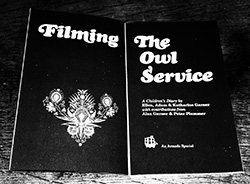
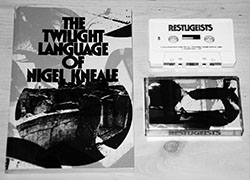
However, looking back, the first time I consciously sat down (and spent the wee hours into the morning sifting and selecting) and broke open my zeros and ones coin collection to purchase a small number of cultural artifacts that related to this year… well, one of those was the Broadcast and The Focus Group Investigate Witchcults of the Radio Age album. One of its few other companions was The Owl Service View From The Hill, alongside a touch of literature via Mr Jonny Trunk…
And in way those three items I expect bring together some of the strands that have had me intrigued and returning to the work of Broadcast over the years…
…which would be in part the hauntological re-imaginings and yearnings for lost pasts and futures (The Focus Group/Mr Julian House/Ghost Box Records), delving into folk/folklore/the old stories and using the resulting findings as source material for new journeys, alongside returning to hazy memories of cathode ray transmissions that have gained over the years/possessed a certain otherlyness (The Owl Service, in songsmith and visual/textual story forms)…
 …and further delving, rummaging, connecting, sending out into the world small hordes of overlooked cultural treasure (Jonny Trunk/Trunk Records).
If I was to go back and write down all the cultural connections, touchstones and references from/to that have occurred around Broadcast during this journey, well this page would probably grow way past A Year In The Country’s allotted sustenance and repast time.
As a first example of such connections, the extract to the left (from an interview with Broadcast, which is in the below mentioned issue of Wire), seems to be a possible antecedent/seedling/fellow traveller for Rob Young’s idea of “imaginative time travel”, that he uses to describe certain strands in music/culture in the pages his Electric Eden; see Day #4/365…


...and the to go on to a few more: the recalibrations required in order to adjust to the different pacing of those aforementioned hazy cathode ray transmissions (see Day #33/365), along the lines of The Owl Service, Sky, The Children Of The Stones etc…
 …the “modernist, retro-futurological, hauntological psychedelia” issue of Shinding magazine that took in Broadcast’s past, present and future, Ghost Box Records, Italian giallo film and its referencing/reimagining via Berberian Sound Studio, flickering stories from childhood’s past courtesy of the Childrens Film Foundation (see Day #178/365)…
(As a second aside, considering the often lysergic themes of Shinding magazine, it would seem a fitting home or at least an inn for the night for Broadcast.)
…or indeed audiological and visual accompaniments for Berberian Sound Studio itself; see Day #153/365.)

…and then flipping the pages backwards and forwards, it is but a hop, step and jump to return to the design work of Mr Julian House in those aforementioned oft lysergic pages (see above and Day #59/365)
…the wonderful, sometimes gloriously shambolic OST show and its musicological delvings – hosted by Mr Jonny Trunk and ably assisted by soundscape locative tape wrangler and splicer Robin The Fog, in particular their tribute re-transmitting of the Broadcast guested edition of the program (see also see Day #33/365)…

…the other imagined version of Curse Of The Crimson Altar, with a soundtrack presented and co-ordinated by Broadcast and their laying down of “sonic laws that break through the corrective systems of timing and keys” (see Day #184/365).
Which is but a few of the points of reference to the work of Broadcast and interconnected cohorts around these parts…
And while I’m on the subject, on this page are a selection of photographs of/from four of my favourite Broadcast/related cultural artifacts:
 1) Magazine: Joseph Stannard’s interview with Broadcast from when they were on the front of Wire magazine in 2009. This is a just lovely interview, I daren’t even pick it up again right now as there are too many points of reference and pathways it sends me off on. Good stuff indeed.
(As an aside, I often find myself particularly drawn to Wire magazine when it is covering what could be considered non-populist or explorative pop music. As Trish Keenan considered, the avant-garde without the popular can be rubbish, popular without avant-garde can be rubbish – see Day #167/365, which could well be some kind of manifesto for Broadcast, one of our most avant-garde-ist pop(ular) music combos.)
And as an aside to the aside… even within a page on the reference points and pathways that Broadcast have appeared amongst/on during this year in the country, they are cropping up as further reference points.)


 2) Book: sampler2 – art, pop and contemporary music graphics; I recently re-stumbled upon this on the shelves of a slightly tumbling/tumble-down bibliotheque almost corner shop… It made me wistful for a particular point in culture and years gone by, being a snapshot of the graphic work that accompanied audio releases just at the slightly abitarily selected point when a duo of a thousand years had passed in our collective history. It was a point just before the zeros and ones cable/airwave transmission of music began to fully take hold and the work contained within tends to veer towards designs to accompany abstract(ish) electronica and is often kind of lovely, slightly arch, slightly distant, deeply philosophic and also thoroughly surface orientated… all descriptions could well also describe much of the music as well as its visual accompaniments.

The book was put together by Intro, the “day job” graphical Imagineering company in which Mr Julian House of Ghost Box Records/The Focus Group is a partner and indeed he is one of the co-creators of this particular publication… and sat there, nestled away in amongst the pages is Broadcast and some of his early work for/with them.
They feel like the cuckoo in the nest in a way. A sneaking in and back through time.
 3) Recording: Tender Buttons. Well, what can I say? If I should be talking about non-populist, exploratory pop music, this is that.
It is resolutely pop music but… It is catchy, fractured, danceable to, heartbreaking, full of what could well be Burroughsian textual cut ups via the Black Country.
And it does features the “Michael, Michael, Michael… come on, your father was a teddy boy”. Which just makes me shake my head and chuckle. It seems to sum up so, so much of the experience, nature, character and culture of these lands and lives. Probably one of the finest lines or two in English music.


(As another aside and in an interconnected manner, I thoroughly treasure Bob Stanley’s line on Trish Keenan, in relation to appreciation of her/her work meaning that she was presented with a “wardrobe of fineries” by swanky fashion design folk; “…she might have had beans on toast for tea, but she was the best dressed girl in Birmingham” (discovered in his touching tribute, via the streams, brooks and tributaries of Caught By The River).

4) Visual document: And finally, this particular promotional photograph. Thoroughly modernist (not in the three button suit manner, the other kind of vaguely connected modernist) and makes me think of Alphaville (no, not the pop band, the other Alphaville). This is pop(ular) music and its accompanying imagery at some kind of peak of exploratory sharpness, playfulness and elswhereness (although I do tend to find the Tommy Boy logo a little perturbing).
Mark Fisher in Ghost Of My Life (see Day #163/365) talks about how it is the culture that surrounds and constellates around music that has been as important as the music itself in conjuring seductively unfamiliar worlds; that during the 20th century these gatherings of culture acted as a probe for such explorations and alternatives to existing ways of living and thinking.
I suppose that is much of the semi-conscious impetus for this page; Broadcast were/are a fine, brightly shining example of such constellations and constellators.
And so, with that, I shall leave such patterns and twinkling points of light (though I expect I shall turn my gaze towards and upwards in their direction again at some point).
So, a tip of the hat to Broadcast and all who have travelled with/alongside them.
Day #250/365: Image T/3

File under:
A Year In The Country: Work
Day #249/365: Image S/3; The Eagles Are Flying

File under:
A Year In The Country: Work
Day #248/365: John Barleycorn Reborn: definitions/explorations of a particular otherlyness and wandering off elsewhere via the old stories of source material…
 File under: Trails and Influences. Recent Explorations. Case #31/52.
This is a series of albums which has grown into, indeed started as, a somewhat massive collecting/collating project which considers music that has sprung forth from (but is not hidebound by) old stories/traditions; something of a gathering of the patterns under the plough.
Thus far it takes in four volumes: beginning with John Barleycorn Reborn and growing to include John Barleycorn Reborn: Rebirth, We Bring You A King With A Head Of Gold and Hail Be You Sovereigns, Lief and Dear.
Mark Coyle, who collated the volumes and who has something of a history of such work, says that his intention was to include music by those “working in the broad area of folk music and folklore who were doing something unconventional with the form” and that “there’s a wealth of musicians who fuse experimentation with the inherently conservative musical form; that’s a tension which produces interesting results.”
 The music herein is a result of those tensions. As what has become known as traditional folk may well once have changed, grown and adapted over the years as it was passed down via oral transmission, so the spirit of these compilations is to find and send out into the world work which doesn’t treat its source material as impermeable handed down relics and styles but rather a starting point and inspiration.
The collections subtitle is Dark Britannica but it’s not all doom and gloom in this particular cultural corner. The series collator Mark Coyle says that the use of the phrase dark folk was more a useful initial tag:
‘Dark folk’ doesn’t particularly mean anything to me, certainly not anything religious or political. I chose to use the term like the ‘dark ages’: a time of cultural development that was assumed not to have happened because nobody wrote about it. It’s exactly what has happened with this music. The media assumes because they aren’t covering the music, it doesn’t exist or grow. There are those who fuse psychedelic music, paganism, folklore, rock and other aspects with folk that makes it sound unconventional, strange or experimental. This may be seen as curious in comparison with traditional folk performed using the authentic instruments. I think folk music can possibly be traced back in some way to our lives on these Islands tens of thousands of years ago through the song motifs, symbology, simplicity and communal basis. The past is dark, unknown and strange to us so ‘dark folk’ is I suppose on this release, me trying to trace these threads back to our past via the songs.”

 (As an aside I also recently noticed – renoticed? – that the first album is included in the Musical/Discographic Timeline in Rob Young’s Electric Eden, alongside a fair few fine companions. Those companions include some of those who were just aforementioned alongside other travellers towards “the unknown region” (such as Ghost Box village parishioners Belbury Poly and The Focus Group) and other investigators and renewers of old stories such as Alisdair Roberts and Vashti Bunyan.)
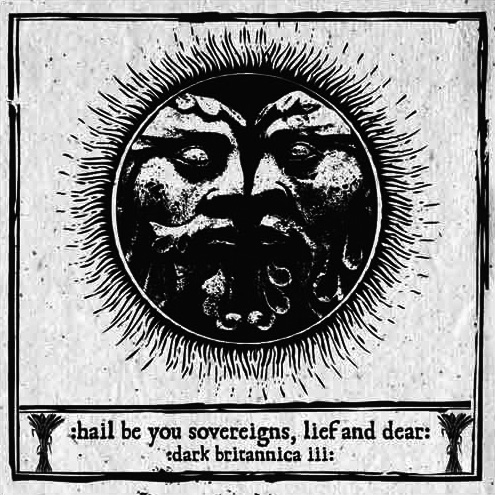 A few other pathways:
If you should wish to explore further, there is an extensive interview with Mark Coyle (from which the quotes on this page were taken) and a somewhat indepth overview on the first volume from over the seas at Terrascope here.
Weirdlore: A fellow collating traveller.
Visit the albums at Coldspring here, here, here, and here.
More from Mark Coyle on definitions/intentions and explorations here.

The albums feature a fair scattering of work by those I have visited around these parts, including The Owl Service, Sharron Kraus, English Heretic, The Straw Bear Band, Michael Tanner, Novemthree, Sproatly Smith and Ruby Throat… but that is just a brief scattering of the many hours of recordings and explorations that the series now contains…
Day #247/365: Folk Is Not A Four Letter Word and voyages through other playful fancies from behind the once ferrous drapes…

File under: Trails and Influences. Other Pathways. Case #42/52.
I can’t remember the order I came to this in. Did I find this album in advance of the audiological unearthings of Finders Keepers Records and Jane Weaver’s Fallen By Watchbird or was it after those explorations? I’m not sure but I think I found it in my then local library.
Ah, the good old library system. There’s nothing quite like a publicly available and owned cultural hub, one which is in part curated by people with an eye, ear and mind for the edges of culture.
What I do know is that the cover art of both of the Folk Is Not A Four Letter Word releases is some of my favourite from before and during this year in the country. Put together, if I’m not mistaken, by Mr Andy Votel, who also compiled these albums.
 (As a first aside, the albums are a good old delve and forage through the world’s sometimes dusty, forgotten and overlooked record crates; a condensation of that feeling when you stumble upon some rare and precious long-lost album/s in the corner of a carboot or hidden under the clothes racks in a charity shop… not dissimilar in a way to Gather In The Mushrooms – see Day #3/365 – but in this case the enclosed folk gems have been scattered and discovered from across the globe rather than the shores, meadows and nooks of albion.)
The artwork is playful and curiously stylish, harks back to yesteryears but is thoroughly modern. It also seems like a harbinger of future Finders Keepers and related releases, cultural strands and influences, in particular the somewhat magical fairy tale visions of Czech new wave films such as Saxana – Girl On A Broomstick (Dívka Na Koštěti) and The Little Mermaid (Malá Mořská Víla) and Jane Weaver’s Fallen By Watchbird project/album which was apparently sparked in part by coming across that particular shimmering sea fable.

(And as a secondary aside, when I’ve recently revisited such films, I was struck by how much in a way they remind me of such 1960/1970s British television that I have visited around these parts – The Owl Service, Children Of The Stones and the like. Why? Well, maybe it’s because these are stories which have/have gained a sense of otherlyness, which take variously childhood/childish themes/production circumstances and intentions but have come to signify and represent fantastic otherly worlds, tales and interests, often well beyond their original intended audiences and intentions.)


(Ah, the beauty and intrigues of former Eastern Bloc celluloid illustrations…)
Well, all I can say is that whatever order I stumbled upon such things (Folk Is Not A Four Letter Word-Fallen By Watchbird-Finders Keepers Records), they have helped send me on a fair few rather intriguing pathways.
Along which lines, a few pathways…
 Step under the oceans.
It’s winged brethren (and another nesting here).
Those winged brethren around these parts
A duo of related audiological unearthings from around these parts: 1. 2.
Other fables from behind the once ferrous walls and curtains: Blossoming escapades courtesy of a playful avant gardism. Seven days of wonders. A re-Broadcast-ing of those wonders.
The fringes of stories courtesy of English libraries: 1. 2.
Day #246/365: The Singing Loins – The cuckoos in the nest and thee English “kitchen sink” folk music…
 File under: Trails and Influences. Other Pathways. Case #41/52.
And while I’m talking of music from the Medway Delta and a certain under-the-radar, away from the cultural rhythms / expectations / fashions of the time, kitchen sinkness (see Day #243/365)…
I suppose one of the first times I properly sat down and lost myself to what could (loosely) be called a folk record (or two) were the early recordings by The Singing Loins, a fair few years ago now. I don’t think I thought of it as folk music at the time, it was just music to me. It still is.
And fine music at that.
Back then I only saw them perform live once, in amongst a largely otherwise garage punk bill and they described themselves as “the cuckoos in the nest”.
The cuckoos in the nest? Well that would probably refer to their sharing an evening and stage with more rawk’n’roll raucousness. And what were they doing on a largely garage punk bill? Well, I expect it was because they’re from the Medway part of the world and had worked with/had records put out by Hangman Records, Billy Childish’s record label.
(For anybody who shouldn’t know, Billy Childish is from that part of the world and is variously a musician, poet, author, painter who has put out over a 100 albums, thousands of paintings, a fair few dozen books of poetry and prose etc. A good starting point could well be the Billy Childish Is Dead documentary.)

Steak and Gravy and At The Bridge were the two records that I really lost myself to. Steak and Gravy is full of songs that are heartbreaking, moving snapshots of life and loves, while at times it is also stacked to the brim with ire and anger at the prejudices of smaller town overlooking of murderous crimes.
 (Though a special mention should probably be almost made for Songs For The Organ and Songs To Hear…)
Kitchen sink in more ways than one: this is music that reflects the lives of its makers in an artful but away from artifice manner and was also sometimes recorded (on half-track, whatever such a thing might be) literally in Mr Billy Childish’s kitchen (or thereabouts).
To be honest, as I type and look away for a second at the titles of its songs, I want to just step away for a moment and here these songs once more…
 On spinning vinyl mind, rather than digitally.
Not in a holding back the transmission mediums of time way…
Just that it’s never felt quite right to listen to these particular records via shiny or magnetic discs full of zero and ones. Their sound and stories for me seem to belong in amongst those shellac grooves and cliff edges.
Time to step away and think and dream of years gone by, those particular spinning discs and the stories they told.
The aforementioned spinning discs here and here.
A little history here and a touch of associated damaged goods here.
(Ah, so half-track is this…
“Billy recorded us on a circa l960 Revox half-track – Half track means you record live into two mics which mix straight down to one mono track. Billy would set the levels as loud and trebly as they would go, turn the clunking great knob to start the tape, and dash into the bog to join in with the general stamping, bashing and singing.
“Songs for the Organ” and “Steak & Gravy” were recorded like this, live in Billy’s toilet (for the acoustics), with whatever guests were available, standing in the bath, kneeling on the toilet seat, the taps dripping, the phone going off in the kitchen next door…“)
Day #245/365: Artifact #35/52; Michael Tanner – Nine of Swords CD album – Night/Day editions
The CDs are now sold out but the album may be available to download from Michael Tanner’s Bandcamp page.

Michael Tanner – Nine of Swords CD album. Night Edition £25.00. Day edition £18.00.

Audiological Research and Pathways; Case #3
Audiological contents: Nine of Swords (54.20 minutes).
Nine tarot cards allocated to nine sonorous, percussive instruments, played in the order of their drawing from the deck.
Available via our: Artifacts Shop, Discogs Audiological Archive and our Bandcamp Ether Victrola.
Prices include free UK shipping. Normally ships within 7-14 days.
Night Edition: Limited to 52 copies. £25.00.
Box-set contains: album on all black CDr, 12 page string bound booklet hand signed by Michael Tanner, 4x25mm badge set & 8 x sticker set.


Top of CDr. Bottom of CDr.


Night edition details:
1) Booklet/cover art printed using archival Giclée pigment ink.
2) Contained in a matchbox style sliding two-part rigid matt card box.
3) Printed box cover print.
4) Fully black CDr (black on top, black on playable side).
5) Black string bound 12.8cm x 12.8cm booklet:
a) Hand signed by Michael Tanner.
b) Hand numbered.
c) Hand bone creased cover.
d) 12 pages (6 sides printed).
e) Contains 4 image, 1 image/credits and 1 credits page.
f) Front and rear covers are printed on 310gsm textured fine art cotton rag paper.
g) Two inner sheets are printed on 245gsm paper.
h) Two inner sheets are printed on semi-transparent 110gsm vellum paper.
6) 4 x 25mm/1″ badge set contained in a see-through polythene bag with a folded card header.
7) 8 x 35mm/1.4″ waterproof sticker set contained in a see-through polythene bag with a folded card header.
Day Edition: Limited to 52 copies. £18.00.
White/black CDr album in 10 page string bound booklet packaging hand signed by Michael Tanner.


Top of CDr. Bottom of CDr.


Day Edition Details:
1) Booklet artwork printed using archival Giclée pigment ink.
2) Wrapped in wax sealed, hand stamped black tissue paper.
3) White/black CDr (white on top, black on playable side).
4) Jute string bound 14.4cm x 13.2cm booklet:
a) Hand signed by Michael Tanner
b) Hand bone creased cover.
c) 10 pages (5 sides printed);
d) Contains 3 images, one credits/image page, one credits page.
e) Front and rear covers are printed on 310gsm textured fine art cotton rag paper.
f) Two inner sheets are printed on 245gsm paper.
g) One inner sheet is printed on semi-transparent 110gsm vellum paper.
h) Hand numbered.
5) CDr held in protective fleece-lined sleeve.
Album credits:
All music written & played by Michael Tanner.
Recorded at Greenwitch 04/06/2014 using an X-Y positioned Beyer M101 and Shure SM57.
4 x Water Bowls. 2 x Singing Bowls. 2 x Temple Bells. 1 x Cymbals.
No plug-ins or FX were used in the making of this piece.
Artwork and packaging design by AYITC Ocular Signals Department.
Available via our: Artifacts Shop, Discogs Audiological Archive and our Bandcamp Ether Victrola.
Prices include free UK shipping. Normally ships within 7-14 days.
An excerpt from this Audiological Case Study can be listened to via our Mark II Ether Victrola below:
Visit Michael’s work at Day #120/365 of A Year In The Country.
Visit Michael Tanner in the ether here: www.iamplinth.bandcamp.com
(where you may also find him working under the names Plinth, The Cloisters, Taskerlands and The A. Lords).
The full current library of the A Year In The Country Audiological Research and Pathways series:
Case Study #1: Grey Frequency: Immersion
Case Study #2: Hand of Stabs: Black-Veined White
Case Study #3: Michael Tanner: Nine of Swords
Case Study #5: She Rocola: Burn The Witch / Molly Leigh Of The Mother Town


Day #244/365: Rosy Parlane, Willow

File under: Trails and Influences. Other Pathways. Case #40/52
I know little or nothing about Rosy Parlane or their Willow release. It came out in around 2008 and was released on 7″ vinyl by Touch and I seem to be trying to mildly avoid knowing much more.
 I don’t know how I came across it but it’s quietly hung around my consciousness
There is something about the music and the back of the vinyl packaging that puts me in mind of documents of edgelands…
Willow is a gently, slightly unsettling track, ambient but to the side of soothing, a touch glitchy, full of initially smoothened crackles (static? rain?). It begins with what sounds like the hope of a new day and then slowly builds into a disintegrating full stop.
Visit it tangibly here and intangibly here.
If you should like such things, then a perusal of Ghosts of Bush and Grey Frequency may also take your fancy. Visit them at Day #142/365 and Day #192/365.


Something a little more long form.
Day #243/365: Travelling For A Living; tea served in the interval at nine o’clock and a return to populous stories and wald tales
 File under: Trails and Influences. Recent Explorations. Case #30/52.
And while I’m thinking of fleeting glances and Anne Briggs (see Day #242/365)…
Travelling For A Living.
This is a mid 1960s documentary by Derrick Knight on The Watersons. It was originally sent out into the nations living rooms via a venerable public broadcasting body but now it rarely seems to have an outing or outlet; it was available on the pre-digital ferrous reels of video cassettes and quietly nestles away in an out of print boxset. Not an all that easy cultural artefact to track down and peruse.
I think one of the reasons I’m drawn to the film is that it provides a glimpse or two of a culture which, though it existed in what is now looked back upon as a time of swinging Britannia and heading towards the psychedelia of the late 1960s summer of love, appears to be very separate from the more often considered views and aesthetics of the time.
 This is a much more grassroots, kitchen sink, gritty culture/counter-culture and to my eye makes me think more of the 1950s than the 1960s; all monochrome steaming breath and black wearing beat style.
In a way it reminds me of images of the 1980s Medway garage punk scene, such as those taken by Eugene Doyen; it shares that sense of a culture that is occurring separate to the mainstream stories and histories of the time and shares a similar kitchen sink, no frills and fripperies aesthetic.
Or possibly even a touch of minimal beat-ness of The Velvet Underground, though without the more arch self-consciousness. The two groups were separated by a somewhat large body of water and different musical aesthetics but they could be considered counter-cultural historical contemporaries, although one has come to exemplify a particular kind of “cool” or “hipness” somewhat more than the other. Along which lines…
 I find the film curious in part because I find it hard to connect the images on the screen with the music that comes from the speakers; on the screen are young, proto/post-beat hipsters in black turtle necks and with swishingly angular bobs – cool if you like.
The music is a particular strand of traditional folk that now seems at odds with the sometimes hip images and styles it accompanies in the film.
Over the years the music of this once underground/counter-culture has become tarred with the “uncool” brush. This documentary serves as an interesting insight into a time when that wasn’t the case.
Possibly this sense of hip-ness is in part a side effect of just being young and cutting a dash at a particular age.
 Alongside which, as part mentioned but a moment ago, the accepted stories/history of coolness of the time tends to be predicated towards pop culture rather than folk culture or populous stories vs wald tales. So the once counter-cultural stories of say The Velvet Underground have been allowed and even welcomed into the tomes of canonised cool. Their then folk singing contemporaries have been anything but.
Which I suppose in part highlights one of the pathways of this particular A Year In The Country; exploring and discovering such sometimes more widely overlooked tales from/via the fields and pastures and taking a sometimes step aside from more well paved cultural municipalities.
Not necessarily in an either/or, good/bad, zero/one manner. More just casting a gaze and curiousity elsewhere.
As an (almost) final aside: the tale in the film of setting up a club without ever having been to one and serving a cup of cha at the nine o’clock interval. Fine stuff.
 A few pathways:
Day #11/365: a previous document of indie-mod-folk-beatnik stylings.
A few fleeting glances and edits from the back of the van, an appreciation of a good cup o’cha and down in the basements.
Cold war dread (and hope) somewhat before hauntology.
Days #40/365 and #190/365: From the wild woods to broadcasts from the pylons; previous considerations of pop(ulous) and wald/volk/folk culture.
Day #242/365: The return of old souls; fleeting glances of Anne Briggs
 File under: Trails and Influences: Touchstones. Case #30/52.
Well, it seems like a while since I visited folk music itself around these parts…
Mike Scott of The Waterboys recently said that when Kate Bush’s Wuthering Heights went straight to number one in the charts that it “was like an old British soul got returned to us”.
Which puts me somewhat in mind of Anne Briggs and her music.
Looking back, her music was some of the earliest I listened to when the more recent roots and seedlings of A Year In The Country began to grow. Although connected with the folk revival of the 1960s, I’ve tended to think of her as separate to it, somebody who’s work and music trod its own path, the roots of which stretched backwards and forwards to old stories, now and its own particular place under the sky.
Or indeed, listening to her work is like hearing the return of an old soul/s.

There’s a beauty, purity and transcendence to her music. I’ve just started to play the A Collection album, where I first discovered it and I’m finding it physically hard to type. Lowlands… her voice quite simply stops me in my tracks and transports me somewhere else.
And like that other earlier mentioned lost British soul, Kate Bush, her work is characterised in part by a stepping back and away from the bright lights and hurly burly of public life; aside from a handful of collaborative/compilation appearances there are but three recorded albums and an EP to document her music, one of which didn’t venture out into the world for a long time after it was recorded, after a certain point her performances and taking to the stage became rare things indeed.
And in terms of photographic documentation, there is very little of her. On this page are a few of those fleeting, tumbling glances and their repetitions; a baker’s dozen or brace of Ms Briggs.
Ms (Mrs?) Anne Briggs, a tip of the hat to you.


Other (flickering) glances:
I was recently watching Acoustic Routes, the documentary on/around Bert Jansch and suddenly there was Ms Briggs singing, accompanied just by guitar. It felt like a rare and precious treat.